AT A CHARITY GALA, A BILLIONAIRE FAMILY POURED WINE OVER A MAN THEY CALLED A WAITER—UNAWARE HE WOULD DECIDE WHETHER THEIR COMPANY HAD A FUTURE – Life Story
Bradley Blackwell tilted his wineglass, and red wine ran down the front of a stranger’s white shirt.
Before the man could reach for a napkin, Bradley’s father pushed a hundred-dollar bill into his jacket and told security to take him out.
The stranger looked toward the ballroom doors, not because he was frightened, but because someone there had just recognized him.
The first drops reached Thomas Fischer’s collar before he understood that Bradley had tipped the glass on purpose.
A waiter passing with a tray froze beside them.
Beyond the man’s shoulder, two hundred guests in evening clothes stood among white orchids and gold-framed auction displays, their voices thinning into an embarrassed silence.
Thomas looked down at the spreading stain.
The wine was cold enough to make him catch his breath, and the rented tuxedo jacket hung strangely from his damp shoulders.
On the floor near his shoe, a single red drop landed on polished marble and broke into smaller ones.
“Somebody call the rental company,” Bradley announced. “The waiter needs a replacement.”
A few people laughed.
Others looked away.
The phones came up anyway.
Thomas had an invitation in his inside pocket, his name on the seating chart, and a reason to attend the Children’s Futures Foundation gala that had nothing to do with serving champagne.
For three weeks, he had been preparing to meet the family now watching him as if he’d wandered in from the loading dock.
He could have corrected Bradley in front of everyone.
Instead, he asked, “Was that necessary?”
Bradley’s smile widened.
He was thirty-two and wore his entitlement as easily as the velvet dinner jacket that cost more than some of the foundation’s annual scholarships. “Don’t get sensitive.
It’s wine.
People spill things.”
“You didn’t spill it.”
“Are you calling me a liar?”
A woman’s hand caught Bradley’s sleeve.
His sister, Vanessa, spoke without quite looking at Thomas. “Brad.
Enough.
There are donors here.”
Her concern was not for the man with the stained shirt.
Her eyes had gone straight to a photographer beside the auction stage.
Then Harrison Blackwell arrived.
He was broader than his son, silver-haired, and dressed in a midnight-blue tuxedo with a small foundation pin.
The people around him shifted automatically, making room.
He had paid for the ballroom, or at least enough of it that everyone behaved as if he had.
“What’s the trouble?” Harrison asked.
“Some staff member bumped me,” Bradley said. “Got dramatic about it.”
Thomas opened his mouth, then stopped.
The lie had traveled six feet and acquired a new shape.
He was suddenly the person responsible for his own humiliation.
“Your staff member?” Thomas asked quietly.
Harrison gave him a once-over, from the inexpensive bow tie to the wet lapels. “You heard him.
There’s no reason to upset our guests.” He took a folded hundred-dollar bill from his money clip and pushed it into Thomas’s breast pocket. “Here.
Get yourself cleaned up.”
“I don’t work here.”
“Then you’re making an even bigger nuisance of yourself.” Harrison patted his cheek twice, brisk little taps that turned the entire exchange into something uglier. “Know your place.”
The applause near the auction stage died completely.
Thomas felt the money against his shirt, damp at one edge.
His first instinct was to throw it back.
His second was to say his full name and watch these people recalculate.
Both would be easy; neither would tell him anything he didn’t already know.
A security officer approached, one palm open. “Sir, could we step outside?”
Thomas looked at the man’s uneasy expression, then at Harrison’s impatient face.
“I’m an invited guest,” he said. “You can check.”
Harrison waved a hand. “We have important people to look after.”
From behind the security officer came the sound of a walking stick striking marble once.
An older woman in a dark green gown moved toward them, her face unreadable as she took in the wine, the phones, and the bill protruding from Thomas’s pocket.
“Before anybody moves him,” she said, “I’d like to know exactly what happened.”
THE MAN THEY MISTOOK
“Eliza,” Harrison said, his voice changing immediately. “We were just handling a small disturbance.”
Eliza Thornton stopped beside Thomas and placed both hands on the silver handle of her walking stick.
At seventy-one, she had the compact build of someone who had spent a lifetime walking quickly between laboratories, lecture halls, and boardrooms.
Her hair was white, her expression unsentimental, and her name carried considerable weight among the people attending the gala.
“Then it shouldn’t take long to explain,” she said.
Bradley made an impatient sound. “The guy bumped me, my drink spilled, and now he’s turning it into some big accusation.”
“Did you see him bump you?” Eliza asked.
Bradley stared at her. “What?”
“It’s a simple question.”
“I’m telling you what happened.”
“That wasn’t my question.”
Harrison stepped between them with the smooth ease of a man accustomed to managing uncomfortable conversations. “Eliza, I respect your position with the foundation.
But my family is sponsoring tonight’s scholarship auction, and I won’t have our guests inconvenienced by someone who doesn’t understand the circumstances.”
Eliza looked at Thomas’s stained shirt.
“Which circumstances would those be?”
Thomas could see the calculation behind Harrison’s eyes.
Arguing with an anonymous young man had been entertaining.
Arguing with Eliza Thornton, a former MIT professor whose foundation had helped fund engineering research for two decades, presented a different problem.
“Perhaps we should all return to dinner,” Harrison said.
“An excellent idea,” Eliza replied. “After someone brings this gentleman a towel and checks his invitation.”
The security officer nodded, visibly relieved to receive a practical instruction.
He radioed the event coordinator while a server hurried toward Thomas with several clean napkins.
Harrison looked at Thomas once more.
“Some people don’t know when to stop,” he muttered.
Thomas met his eyes.
“That’s becoming clear.”
Bradley laughed sharply, though nobody joined him.
Vanessa caught her brother’s arm and pulled him toward their table.
She said something close to his ear, and his smile disappeared for a moment.
Harrison followed them after offering Eliza an exaggerated nod.
As soon as they were beyond hearing distance, the security officer addressed Thomas.
“Sir, I’m sorry about that.
May I see your invitation?”
Thomas removed the envelope from his inside pocket.
The officer checked the name against a list on his tablet.
“Mr.
Fischer.
You’re at table fourteen.”
“Yes.”
“Your reservation is confirmed.
Would you like someone to show you to your seat?”
“Not yet.
I need to find a restroom.”
The officer nodded. “Down the hall on your left.”
Eliza waited until he had moved away.
“You’ve got your father’s eyes,” she said.
Thomas looked at her.
“Professor Thornton.”
“Retired professor, thank goodness.
I prefer having opinions without committee approval.”
Despite himself, Thomas smiled.
“I didn’t know you’d be here.”
“I chair the foundation’s education committee.
The larger question is why you walked into this room without saying hello.”
“I was going to find you after the auction.”
“And now?”
“Now I need a new shirt.”
She examined the stain.
“Possibly a new jacket, too.”
“My luggage didn’t arrive from Boston this afternoon.
I rented the tuxedo on my way here.”
“That explains the poor fit.”
“Thank you.”
“I’m seventy-one, Thomas.
I’ve earned the right to tell the truth about tailoring.”
She touched his sleeve lightly.
“Come with me.
The foundation keeps emergency clothing for volunteers and speakers.”
As they crossed the corridor, Thomas heard a burst of laughter from the ballroom.
He didn’t need to look back to know which table it came from.
The service room contained a narrow mirror, a garment rack, and several cardboard boxes filled with table decorations.
Eliza asked an event employee to find a spare dress shirt, then closed the door halfway to give Thomas some privacy.
“You’re meeting the Blackwells tomorrow,” she said.
“At nine.”
“I thought so.”
Thomas removed the stained jacket carefully.
“Did you recognize me before tonight?”
“Of course.
I recognized your name on the guest list.
And I knew you’d be representing Nexus.”
“Please don’t tell them.”
Eliza raised an eyebrow.
“Why?”
“Because I want tomorrow’s meeting to happen without anyone rewriting what occurred tonight.”
“Thomas, they’re perfectly capable of rewriting it with or without your cooperation.”
“Then I’d rather know what they choose to say.”
She regarded him for a long moment.
“When you were my student, you could sit for six hours with a circuit diagram and refuse to accept that an error was random.”
“Usually it wasn’t.”
“People aren’t circuits.”
“No.”
“And humiliation isn’t a laboratory experiment.”
That reached him.
He had spent the last ten minutes trying to convert his anger into something useful.
He knew how to do that with technical failures.
He was less certain what to do with the sting of Harrison’s hand against his cheek.
“I didn’t come here to test their manners,” he said.
“Then why did you come?”
“To understand what kind of partnership they’re proposing.”
Eliza leaned against the counter.
“And?”
Thomas folded the stained shirt.
“I’ve seen enough to ask harder questions.”
“Good.
Ask them.
But don’t confuse the satisfaction of saying no with the responsibility of making the right decision.”
He looked at her.
“That sounds like something my father would say.”
“Your father borrowed half his best advice from me.”
A knock came at the door.
The event coordinator had found a spare white shirt, still folded in its packaging.
The collar was slightly large, but it was clean.
Thomas thanked her, paid the cleaning fee requested by the rental service, and changed.
When he emerged, Eliza was waiting near a window overlooking the hotel’s courtyard.
Beyond the glass, rain had begun to fall in fine silver lines.
“You’re still going back in?” she asked.
“Yes.”
“Why?”
“Because tonight’s event isn’t about the Blackwells.”
She smiled faintly.
“That’s the first thing you’ve said that makes me confident you haven’t lost your judgment.”
They returned to the ballroom together.
At the far end of the room, a large projection screen displayed photographs of students participating in engineering workshops funded by the foundation.
A girl in safety glasses held a small robotic arm.
Two boys stood beside a solar-powered vehicle, their hands raised in triumph.
Thomas stopped to look.
Three years earlier, Nexus had provided components for the same program.
He had helped build the original teaching kits during weekends, before the project became large enough to employ full-time instructors.
He knew the cost of every motor, sensor, and battery in those photographs.
Harrison had pledged a million dollars to expand the program.
That generosity was real.
So was the contempt he’d displayed ten minutes earlier.
Thomas disliked the fact that both could be true.
Eliza followed his gaze.
“People are rarely consistent,” she said.
“No.”
“The trick is not allowing their generosity to excuse what they do when nobody important is supposed to be watching.”
They approached table fourteen.
An event employee pulled out Thomas’s chair with a quiet apology.
Thomas told him none was necessary.
At the next table, a young server struggled to balance a heavy tray while Bradley Blackwell complained that his champagne was warm.
Thomas recognized the server from earlier in the evening.
His name was Adrian Morales.
He had been responsible for the table near the stage and had already been publicly reprimanded twice.
Bradley snapped his fingers.
“Hey.
You.
This is room temperature.”
Adrian examined the bottle.
“I can bring you a chilled one, sir.”
“You should have done that the first time.”
“Yes, sir.”
Bradley leaned toward his friends.
“It’s incredible what people consider service these days.”
Thomas saw Adrian’s face tighten.
Then the young man turned away and continued working.
A few minutes later, he reached Thomas’s table.
“Water, sir?”
“Please.”
Adrian filled the glass.
Thomas lowered his voice.
“You handled that professionally.”
Adrian glanced toward Bradley.
“I need this job.”
Thomas nodded.
“What are you studying?”
The server looked surprised.
“Electrical engineering.
Community college for now.
I’m hoping to transfer next year.”
“What kind of engineering interests you?”
“Power systems.
Maybe semiconductor design.”
Thomas smiled.
“That’s a good field.”
Adrian’s expression changed slightly.
“You work in tech?”
“Yes.”
“Then you know how competitive internships are.”
“I do.”
Adrian gave a tired laugh.
“Everybody wants experience.
Nobody wants to give you a chance to get any.”
Before Thomas could respond, the auctioneer called for attention.
Adrian returned to the service corridor.
Thomas watched him go.
The evening had shown him three versions of power: money used to purchase generosity, influence used to command obedience, and quiet dignity maintained by someone who couldn’t afford to answer an insult.
Only one of those impressed him.
Then his phone vibrated.
A message from Leah Grant, Nexus Technologies’ chief financial officer, appeared on the screen.
Final Blackwell diligence summary is ready.
There’s one issue I’d like you to review before tomorrow.
Thomas stared at the message.
Across the ballroom, Harrison raised his glass toward a room full of applauding donors.
And Thomas began to suspect that the worst thing about the Blackwell family wasn’t what they’d done to him.
THE NUMBERS BENEATH THE GOLD
Thomas left the gala shortly after ten.
The hotel valet brought around his eight-year-old sedan, its windshield glittering with rain.
The attendant seemed surprised when Thomas climbed into the driver’s seat rather than waiting for someone to open the rear door.
He drove through Midtown Manhattan with the heater running and his jacket hanging over the passenger seat.
The hundred-dollar bill rested in the center console.
He had pulled it from his pocket in the restroom, intending to return it immediately.
But by then Harrison was making a speech about opportunity, responsibility, and creating a better future for children.
Thomas had decided that interrupting the speech would accomplish nothing useful.
Now the bill lay beside his phone like an object from an unpleasant dream.
At a red light, he glanced at it.
He could still feel the two sharp taps against his cheek.
He thought of Adrian, forced to smile because rent would still be due the following week.
Then the light turned green.
His apartment occupied the third floor of a converted warehouse in Brooklyn.
It was comfortable but unremarkable, with exposed brick, shelves crowded with engineering textbooks, and a narrow kitchen that overlooked an alley.
Thomas had lived there for five years.
People occasionally assumed his father had bought it for him.
In fact, Thomas paid the mortgage from his salary, though he knew that having a wealthy family meant he could take professional risks that many people couldn’t.
He had never pretended otherwise.
His father, James Fischer, founded Nexus Technologies twenty-nine years earlier in a rented industrial unit outside Boston.
The company’s first commercial success came from manufacturing specialized processing components for medical imaging equipment.
Now Nexus employed more than four thousand people.
Its next-generation processor, a quantum-assisted architecture designed for specialized industrial optimization, represented the largest research investment in the company’s history.
Thomas had led the team responsible for its core design.
He wasn’t merely James Fischer’s son.
He was an engineer with patents, failed prototypes, sleepless testing nights, and a scar on one finger from an early laboratory accident.
He had also benefited from access to the company his father had built.
That was why he insisted the board evaluate him under the same technical and management standards as other executive candidates.
His promotion to chief innovation officer would become official the following week.
Until then, he was acting head of advanced development and chair of the technical partner-selection committee.
The Blackwells knew they were meeting James Fischer’s son.
They simply hadn’t understood that the man at the gala was him.
Thomas put a kettle on and opened the diligence report.
Leah had organized the materials into three categories.
Financial capacity.
Technical readiness.
Governance and operational risk.
Blackwell Industries performed well in the first category.
The company had a market valuation approaching nine hundred million dollars, an extensive network of industrial customers, and manufacturing facilities across the United States.
Its balance sheet showed significant debt, but nothing unusual for a company funding a major technology transition.
The second category was more complicated.
Blackwell had promised clients new products using advanced processing capabilities it did not yet possess.
Its public reports described the Nexus licensing opportunity as a potential catalyst, although no agreement had been signed.
The third category contained the problem Leah had mentioned.
Several facilities had received workplace-safety citations over the previous five years.
Some had been resolved.
Others remained subject to corrective-action monitoring.
The records were public, and Nexus had obtained supporting documentation through ordinary due diligence.
There were also unresolved allegations from former employees concerning retaliation after safety complaints.
No court had established liability on those allegations.
Thomas knew the distinction mattered.
He read every page anyway.
One report described a production manager at Blackwell’s Ohio facility who had warned that a staffing reduction would leave technicians responsible for maintaining equipment without adequate coverage.
The complaint had been referred to outside counsel.
The manager left the company several months later.
Another record concerned hazardous-waste handling at a manufacturing site.
The corrective order required improved monitoring and periodic reporting.
Thomas opened the executive summary.
Blackwell’s lawyers had assured Nexus that all material compliance matters were under control.
But the documents showed uneven progress.
He called Leah.
She answered from her home office, where he could hear a dishwasher running in the background.
“Please tell me you didn’t just leave the gala,” she said.
“I did.”
“Was it terrible?”
“Educational.”
“That sounds ominous.”
He told her what had happened.
She listened without interrupting.
When he finished, she said, “Are you okay?”
“I’m angry.”
“That’s a reasonable response.”
“I need to make sure it doesn’t drive tomorrow’s decision.”
Leah was quiet for a moment.
“Then let’s talk about the decision.”
She shared her screen.
“The technical team likes Blackwell’s distribution network,” she said. “Their customers would give us access to industrial applications we can’t easily reach ourselves.”
“I agree.”
“But the operational review raises questions about how they manage risk.”
“That’s what concerns me.”
“Thomas, we’ve known about those concerns for two weeks.”
“Yes.”
“Tonight didn’t create them.”
“No.”
“It may change how you weigh them.
That’s human.
But if we reject the partnership, the decision needs to stand on evidence that anyone reviewing the file could understand.”
He leaned back.
“That’s exactly what I want.”
Leah opened a matrix comparing four prospective partners.
Blackwell Industries.
Thornton Group.
Rivera Enterprises.
Fujimoto Technologies.
Each had strengths.
None was flawless.
Thornton offered advanced manufacturing capacity.
Rivera brought industrial distribution and renewable-energy customers.
Fujimoto had extensive experience integrating specialized processors into existing equipment.
Blackwell’s advantage was a broad domestic client base.
Its disadvantage was elevated operational and compliance risk.
“We can still ask for further evidence,” Leah said.
“Would that delay the agreement?”
“Yes.”
“By how much?”
“Depends on whether they cooperate.”
Thomas looked at the clock.
Nearly midnight.
“Don’t rush a conclusion tonight,” Leah said. “We already have the records.
Tomorrow, ask the questions.
Document the answers.”
He rubbed his forehead.
“Bradley told me his father always gets what he wants.”
“That must be exhausting for everyone around him.”
Thomas smiled tiredly.
“It seemed to be.”
“Go to sleep, Thomas.”
“I have one more call.”
“Your father?”
“Yes.”
“Tell him I said this isn’t a family feud.”
“I will.”
“And Thomas?”
“What?”
“You don’t have to pretend tonight didn’t hurt.”
He looked toward the stained jacket.
“I know.”
But he wasn’t sure he did.
James answered from Tokyo, where it was already afternoon.
A large window behind him showed a gray skyline.
He was wearing a white shirt with the sleeves rolled up, his tie draped across the back of his chair.
“Son.”
“Dad.”
“How was the gala?”
Thomas told him.
James listened without interruption.
When Thomas described Harrison pressing the bill into his jacket and patting his cheek, his father looked down.
For several seconds, neither spoke.
Finally, James said, “I wish I had been there.”
“Why?”
“Because you’re my son.”
Thomas swallowed.
“I didn’t need you to defend me.”
“I know.”
“I could have told them who I was.”
“Why didn’t you?”
“Because it would have changed their behavior for the wrong reason.”
James considered that.
“Maybe.”
“Not maybe, Dad.
They were comfortable humiliating someone because they believed he had no power over them.”
James leaned closer.
“Then make sure you don’t become the same kind of man when you discover you have power over them.”
Thomas closed his eyes briefly.
“That sounds familiar.”
“I’ve been repeating myself for thirty years.”
“You’ve earned the habit.”
James smiled.
Then his expression became serious again.
“What’s your assessment of the partnership?”
“I haven’t completed it.”
“Good.”
Thomas frowned.
“Good?”
“If you’d reached a final decision tonight, I’d worry you were allowing the insult to make it for you.”
Thomas looked at Leah’s comparison matrix.
“Blackwell has meaningful commercial advantages.
But their compliance record is troubling, and their leadership behavior tonight makes me question the reliability of the assurances we’ve received.”
“That sounds like a reason for deeper review.”
“Yes.”
“Then ask for it.”
“What if they refuse?”
“You already know the answer.”
Thomas sat with that.
James continued.
“The board approved the partnership criteria months ago.
Your responsibility is to apply them.
You don’t need my permission to reject a partner who doesn’t satisfy our standards.”
“I know.”
“Then why did you call?”
Thomas looked at the hundred-dollar bill.
“Because I wanted to hear my father tell me not to do something stupid.”
James smiled sadly.
“I’m telling you something harder.
Don’t do something merely because it feels satisfying.”
They ended the call shortly afterward.
Thomas worked another hour, reviewing the technical milestones and questions his team had prepared.
He did not order a secret investigation.
He did not call the Blackwells’ competitors to arrange their downfall.
He wrote a list of questions that would have been appropriate even if Bradley had never touched his wineglass.
Then he added one more.
How does Blackwell Industries ensure that employees can report operational concerns without retaliation?
He printed the list.
Beside the printer sat an old photograph of James Fischer in his first workshop, standing with six employees in front of a machine that had broken down three times that week.
All seven people were smiling.
Thomas remembered his father telling him why.
Because they’d finally discovered the fault.
He went to bed shortly after two.
At seven the next morning, he was back at Nexus headquarters.
Leah waited outside the conference room with two cups of coffee.
“You look awful,” she said.
“Thank you.”
“I mean professionally awful.
Personally, I’m sure you’re very distinguished.”
He took the cup.
“Are the Blackwells here?”
“Not yet.”
“Good.”
She handed him the revised partner-comparison summary.
“The board’s technology committee reviewed the criteria again this morning.
You have authority to make a recommendation, but the final commercial approval still goes through the committee.”
“As it should.”
Leah glanced at his suit.
“You’re not wearing a tuxedo.”
“Thought I’d try something different.”
She laughed.
Then she looked at the folder in his hand.
“Are you ready?”
Thomas glanced toward the glass elevators.
Three black SUVs had just pulled into the visitor lane.
Harrison Blackwell stepped onto the sidewalk.
Vanessa followed.
Bradley emerged last, looking at his phone.
For a moment, Thomas could see the photograph on Bradley’s screen.
A man in a stained tuxedo.
Head slightly lowered.
Surrounded by people laughing.
Thomas straightened his jacket.
“Let’s hear what they have to say.”
THE MEETING THEY THOUGHT THEY OWNED
The Blackwells arrived fifteen minutes early.
Harrison considered punctuality a weapon.
He liked appearing before other people were ready because it gave him an opportunity to control the first few minutes of a meeting.
At Nexus headquarters, the tactic accomplished little.
The receptionist confirmed their appointment, offered coffee, and directed them to a seating area beside a wall of photographs showing the company’s research teams.
Harrison barely glanced at the display.
“Will James Fischer be joining us?” he asked.
“Mr.
Fischer is in Tokyo,” the receptionist replied. “You’ll be meeting with the partner-selection committee.”
“His son is running it?”
“Yes.”
Bradley laughed.
“Must be nice.”
Vanessa looked toward the photographs.
One showed a research team standing around an early processor prototype.
At the center stood a dark-haired man wearing safety glasses.
She moved closer.
The image was several years old, and the man was younger, thinner, and dressed in a laboratory coat.
But the shape of his face was familiar.
Vanessa felt a small uneasiness.
She had spoken with someone at the gala who said he worked at Nexus and led processor development.
She had laughed.
She had assumed he was exaggerating.
“Dad,” she began.
Harrison was already checking his watch.
“What?”
“Do we have a current photograph of Thomas Fischer?”
“Of course.”
“Can I see it?”
“Vanessa, please.
We’re here to discuss technology, not prepare for a wedding.”
Bradley snickered.
She ignored him.
When the receptionist announced that the committee was ready, Vanessa had a strange desire to delay.
The elevator opened onto the executive floor.
Leah welcomed them professionally.
Then she led them into a conference room where Thomas stood beside a large screen.
Harrison stopped.
Bradley collided lightly with his father’s shoulder.
Vanessa’s stomach tightened.
Thomas wore a dark charcoal suit, a pale blue shirt, and a plain tie.
Without the ill-fitting tuxedo, he looked like the executive they’d been preparing to impress for weeks.
But his face was unmistakable.
“Good morning,” he said.
Nobody answered.
Then Harrison recovered.
“Thomas.”
His voice was almost affectionate.
“What a surprise.”
Thomas gestured toward the chairs.
“Please sit.”
Harrison offered his hand.
Thomas shook it briefly.
The gesture was professional, nothing more.
“I believe we met last night,” Thomas said.
“Yes, well.” Harrison laughed. “A rather unfortunate misunderstanding.”
Bradley stared at the floor.
Vanessa remained standing.
“I owe you an apology,” she said.
Thomas looked at her.
“For what?”
“For how we treated you.”
Harrison turned sharply.
“Vanessa.”
“No, Dad.
We were rude.
All of us.”
Thomas nodded.
“Thank you for saying that.”
Then he pointed toward the seats.
“We have a full agenda.”
The Blackwells sat.
Leah introduced the other Nexus representatives: Nora Bell from legal, Dr.
Samuel Ortiz from engineering, and a senior commercial officer responsible for licensing.
Thomas opened the presentation.
He did not begin with the wine.
Instead, he described the processor architecture.
The technology combined conventional processing with specialized quantum-assisted optimization modules designed for complex industrial scheduling, materials analysis, and energy-management tasks.
It was not a universal solution to every computing problem.
The hardware remained in controlled commercial trials.
But early results showed substantial advantages in certain carefully defined applications.
Nexus needed partners who could manufacture, integrate, support, and deploy the technology responsibly.
That made partner selection as important as the invention itself.
Harrison leaned forward.
“We understand the opportunity.
Blackwell has the market reach to put this platform into thousands of industrial installations.”
“Your distribution network is attractive,” Thomas agreed.
Harrison smiled.
A little confidence returned to his face.
“We’ve built relationships over generations.”
“That’s clear from the materials.”
Thomas moved to the next slide.
It listed technical integration requirements.
The Blackwell team answered several questions competently.
Vanessa, who had overseen product partnerships for the company, provided specific information about their testing facilities and customer-support structure.
Thomas listened carefully.
She knew her business.
That mattered.
Then he moved to the risk section.
“Our due diligence identified several open compliance matters,” he said. “We need clarification before recommending an agreement.”
Harrison’s smile diminished.
“Every industrial company has regulatory matters.”
“Of course.
We’re not asking for a flawless history.
We’re asking for verifiable remediation and reliable controls.”
Leah distributed the relevant questions.
Harrison scanned the first page.
“Some of these issues are years old.”
“Several are,” Thomas said. “Others involve ongoing obligations.”
“Are you questioning our integrity?”
“I’m asking about the status of specific corrective actions.”
Bradley shifted in his chair.
“This feels a little personal.”
Nora Bell looked at him.
“Mr.
Blackwell, the questions were prepared through our ordinary diligence process.
They address matters in the records your company supplied and public regulatory filings.”
Bradley looked away.
Harrison placed the papers on the table.
“Thomas, I think we’re getting distracted.
The commercial value here is enormous.
We can make both companies a great deal of money.”
“I agree that the opportunity is significant.”
“Then let’s behave like businessmen.”
The room went quiet.
Thomas rested his hands on the table.
“What does that mean, Mr.
Blackwell?”
Harrison smiled tightly.
“It means recognizing that no company operates in a perfect world.
Some issues are better handled privately after a partnership is established.”
“What assurance would Nexus have that the problems would be corrected?”
“Our word.”
Thomas looked at the papers.
“That’s not sufficient.”
Harrison’s expression hardened.
“You’re going to jeopardize a major commercial agreement because you’re still upset about last night.”
Thomas felt the familiar heat rise in his chest.
For one second, he imagined returning the hundred-dollar bill across the table and telling Harrison exactly what he thought of him.
But the questions were bigger than the insult.
“If last night had never happened,” Thomas said, “we would still need these answers.”
Harrison leaned back.
“Then you must understand how insulting it is to be interrogated over routine matters.”
Thomas looked directly at him.
“I understand what it feels like to be judged before anyone examines the information.”
Vanessa lowered her eyes.
Bradley folded his arms.
Harrison’s face turned red.
“So that’s what this is.”
“No.
This is a partner-selection meeting.”
“Don’t play games with me.”
Thomas slid the compliance summary toward him.
“These are the outstanding issues.
You can provide supporting documentation, propose corrective commitments, or decline to participate.
The standards are the same for every prospective partner.”
Harrison barely looked at the page.
“We’re not accepting corporate supervision from a company half our age.”
“Then we may not be compatible partners.”
“You need us.”
Thomas glanced toward Leah.
She remained still.
“We need partners,” he said. “We don’t need any one partner at any price.”
Harrison stood.
“Your father and I have known each other for years.
He won’t allow a valuable business opportunity to be lost because his son wants to prove a point.”
Thomas rose as well.
“My father participated in approving the selection criteria.”
“Then call him.”
“He’s available through the normal committee process.”
“Now.”
Thomas looked at Nora.
She gave a slight nod.
The meeting had been scheduled to include the possibility of executive escalation.
There was no reason to avoid it.
Thomas called the secure conference line.
James Fischer appeared on the wall screen from Tokyo.
“Good morning,” he said.
Harrison immediately adopted a warmer tone.
“James.
Thank God.
Perhaps you can help us cut through this nonsense.”
James looked at Thomas.
“What’s the issue?”
Thomas explained the outstanding compliance questions and Blackwell’s reluctance to provide the requested assurance.
He did not describe the gala.
He did not mention the wine.
Harrison interrupted twice.
James waited until Thomas finished.
Then he turned to Harrison.
“Are the questions factually inaccurate?”
Harrison hesitated.
“That’s not the point.”
“Are they inaccurate?”
“Some of the underlying matters are disputed.”
“Then provide the relevant information.
We’ll consider it fairly.”
Harrison’s jaw tightened.
“James, we’ve known each other for twenty years.”
“Yes.”
“Doesn’t that count for anything?”
“It means I expected this conversation to be easier.”
The words were quiet.
They landed heavily.
Harrison looked from father to son.
“You’re letting him make this decision?”
“He’s leading the technical evaluation.
The committee will make the commercial decision under our governance procedures.”
“And you’ll support him?”
“I’ll support a decision reached under the standards we’ve approved.”
Thomas felt something settle inside him.
He hadn’t needed his father to announce that he was powerful.
He had needed him to respect the process.
Harrison gathered his papers.
“This is a mistake.”
“Perhaps,” Thomas said. “But it would be a larger mistake to sign an agreement before resolving the concerns.”
Vanessa remained seated.
She looked toward the financial projections.
“How much time do we have to respond?”
“Until Friday for the initial documentation,” Leah said. “The committee will continue evaluating the other candidates in parallel.”
Vanessa nodded slowly.
“That seems reasonable.”
Harrison turned toward her.
“We’re leaving.”
She stood.
Bradley reached the door first.
Before stepping out, he looked back.
“You really think this makes you better than us?”
Thomas met his eyes.
“No.”
Bradley seemed almost disappointed.
“Then what?”
“I think it makes me responsible for the decision in front of me.”
The Blackwells walked out.
Leah waited until the door closed.
Then she looked at Thomas.
“You managed that better than I expected.”
“That’s a worrying compliment.”
“I’m a CFO.
My compliments are supposed to be worrying.”
Nora gathered the documents.
“We should note that they were offered an opportunity to respond.”
“Agreed,” Thomas said.
“And we need to keep the personal incident separate from the technical and compliance findings.”
“Agreed.”
Samuel Ortiz stood beside the window.
“There’s something the Blackwells don’t seem to understand.”
Thomas looked at him.
“What?”
“Our processor isn’t a prize they win by being the biggest bidder.”
Samuel tapped the technical specification folder.
“It’s something other people’s work depends on.”
Thomas thought of the engineers who had spent nights debugging the architecture, the manufacturing technicians who had built the prototypes, and the future customers who would rely on the technology.
“Yes,” he said.
“That is exactly what they don’t understand.”
At noon, the committee received a message from Blackwell’s legal department requesting an extension.
At one, Harrison called James privately.
James referred him back to the committee.
At three, Bradley posted the photograph from the gala.
The caption was short.
Some people will do anything to get attention.
Within an hour, someone identified Thomas Fischer.
By evening, the photograph had acquired a very different meaning.
And the story the Blackwells thought they controlled was beginning to escape them.
WHEN THE MARKET LEARNED THE TRUTH
Thomas first saw the photograph on Leah’s phone.
She brought it into his office without knocking.
“Before you open social media,” she said, “you should know what’s circulating.”
The image showed him standing beside the Blackwell table with wine across his shirt.
Harrison’s hand was near his face.
Bradley was laughing.
The photograph had been taken a fraction of a second before Harrison pushed the money into his pocket.
Thomas remembered the camera flash.
He hadn’t known who took the picture.
“Bradley posted it?” he asked.
“Yes.”
“Why?”
Leah gave him a tired look.
“I’m not qualified to explain that level of poor judgment.”
Thomas read the caption.
Then he saw the responses.
Several guests had recognized the scene.
Someone posted that Thomas had been an invited attendee, not a member of the catering staff.
Another person identified Eliza Thornton as the woman who had intervened.
The story spread from a social-media account to business discussion forums and then to a financial publication.
By six, reporters were asking whether Nexus had rejected Blackwell Industries because of the gala incident.
Thomas called Nora.
“I want a statement prepared.”
“About the photograph?”
“About the selection process.
No private diligence details.”
“We can confirm that no agreement exists and that partnership evaluations are ongoing.”
“Good.”
“Should we deny that the gala influenced your opinion?”
Thomas considered the question.
“It influenced my assessment of leadership behavior.
I’d be lying if I said otherwise.”
“Then we shouldn’t claim it had no relevance.”
“No.”
Nora made a note.
“But we also shouldn’t suggest the agreement is being withheld as personal retaliation.”
“Because it isn’t.”
“Then our statement can explain that partner selection involves technical, financial, operational, and compliance criteria.”
Thomas agreed.
Before the statement was released, Blackwell Industries issued its own.
The company described the gala encounter as an unfortunate misunderstanding and suggested that personal animosity had disrupted an otherwise promising business negotiation.
Thomas read the statement twice.
It contained no acknowledgment that Bradley had deliberately poured wine over him.
No mention of the hundred-dollar bill.
No apology.
Only the suggestion that a misunderstanding was now interfering with valuable business.
He closed the page.
Then he called Eliza.
She answered on the first ring.
“I wondered when you’d call.”
“Have you seen the photograph?”
“Unfortunately.
Bradley has a remarkable talent for making himself look worse.”
“The family is saying the incident was a misunderstanding.”
“Would you like me to tell the truth publicly?”
Thomas hesitated.
Eliza had been a witness.
She had also been a friend of his family for years.
Her statement would carry weight, but he didn’t want to use their relationship to create the appearance of manufactured support.
“Only if you’re comfortable,” he said. “And only what you actually saw.”
“Thomas, I witnessed a man put money into another man’s pocket and pat his face as if he were an animal who’d misbehaved.
I don’t need you to provide me with an interpretation.”
He closed his eyes.
“Thank you.”
“And don’t thank me for telling the truth.”
The next morning, Eliza released a brief statement through the foundation.
She confirmed that Thomas had been an invited guest and that the treatment she’d witnessed had been inappropriate.
She did not discuss the Nexus negotiations.
She did not speculate about motives.
Her statement was more damaging than a furious accusation would have been.
It gave the public a clear account from someone who had no reason to exaggerate.
Meanwhile, Blackwell’s investors began asking a different set of questions.
For months, company presentations had emphasized next-generation processing capabilities as a major opportunity for growth.
Analysts knew Blackwell was seeking technology partners.
Some had assumed the Nexus discussions were advanced.
Now the company appeared to be in conflict with the very firm supplying the technology it hoped to license.
At first, the share price fell modestly.
Then Blackwell disclosed that no definitive agreement existed and that its product-development forecasts depended on securing suitable technology through one of several possible channels.
That clarification intensified the questions.
The market did not collapse because Harrison had insulted a man at a gala.
It reacted because investors began reassessing the company’s strategy, its assumptions, and its ability to deliver what management had projected.
The distinction mattered to Thomas.
He watched the financial coverage from his office with growing discomfort.
Some commentators described the situation as revenge.
Others called it poetic justice.
A few treated the stock price as if it were a score in a personal contest.
But Blackwell employed thousands of people.
Those employees had not poured wine over anyone.
They had families, mortgages, and medical bills.
They did not deserve to be used as background characters in a story about the humiliation of their executives.
On Thursday morning, Thomas asked Leah to review potential consequences for the workforce if Blackwell lost access to the Nexus licensing program.
She looked surprised.
“Are you reconsidering?”
“I’m considering the people who didn’t make the decisions.”
Leah opened a financial model.
“If Blackwell fails to secure a comparable technology partner, they may have to delay several product launches.”
“Which facilities are most exposed?”
“Likely the advanced manufacturing division.”
“How many employees?”
“Several hundred directly associated with the proposed product lines.
But the company could redeploy some of them.”
Thomas stared at the screen.
He had wanted to avoid giving the Blackwells a technology platform they could use irresponsibly.
Now he was being forced to confront the reality that withholding it could have consequences beyond the executives.
Leah seemed to read his thoughts.
“You can’t make Blackwell’s management decisions for them.”
“I know.”
“And you can’t choose an unsuitable partner solely to protect jobs that another company has placed at risk.”
“I know that, too.”
“Then what can you control?”
Thomas looked at the partner criteria.
“The standards.”
“Exactly.”
He asked the committee to document specific corrective conditions that would allow any candidate, including Blackwell, to remain eligible for future licensing.
The conditions concerned measurable safety improvements, reliable reporting, independent verification, and protections for employees who raised concerns.
He did not make them impossible.
He did not demand that the Blackwell family surrender ownership.
He did not include an apology to himself.
If the company could demonstrate compliance, the committee could evaluate it again under the same rules.
On Friday, Blackwell submitted its response.
Vanessa had prepared most of it.
The technical section was detailed.
The commercial projections were plausible.
The compliance section contained promises of improvement but lacked independent confirmation for several unresolved issues.
Thomas spent the afternoon reviewing it with Nora and Leah.
“We can’t certify this,” Nora said.
“No,” Thomas agreed.
Leah pointed to a paragraph.
“They’re promising a safety committee, but they haven’t described how employees can report directly to it.”
“And there’s no independent audit date,” Thomas said.
“Correct.”
The committee sent a written request for additional support.
An hour later, Harrison called Thomas directly.
Thomas answered.
“Mr.
Blackwell.”
“Let’s stop pretending this is about paperwork.”
Thomas looked at the files on his desk.
“I’m reviewing the information your company submitted.”
“Do you understand what you’re doing to my business?”
“Your company is free to pursue other technology providers.”
“Don’t insult me.”
“I’m not.”
Harrison’s breathing grew audible.
“My father built this company from a machine shop with four employees.
I spent forty years turning it into an international operation.
I’ve survived recessions, strikes, lawsuits, and people who wanted everything handed to them.
I will not lose it because you were embarrassed at a party.”
For the first time, Thomas heard something beneath the arrogance.
Fear.
Harrison had inherited the foundation of the business, but he had also spent decades expanding it.
He understood competition.
He understood debt.
He understood the consequences of falling behind.
What he did not understand was why the way he’d treated people should matter to a technology agreement.
“I know you’ve spent your life building Blackwell Industries,” Thomas said.
“Then show some respect.”
“I respect the work required to build a company.
That doesn’t mean I can disregard the risks.”
“You think you’re better because your father gave you an invention?”
Thomas felt the accusation land.
It was not entirely absurd to question the privileges he’d received.
He had been given opportunities unavailable to most engineers.
But Harrison was wrong about the work.
“My father gave me access to a laboratory,” Thomas said. “My team and I spent seven years developing the processor.
The company owns the intellectual property.
I don’t get to distribute it according to my personal feelings.”
Harrison was silent.
Thomas continued.
“You have an opportunity to provide the information we need.
If you don’t want to do that, we’ll proceed with other candidates.”
“And if I apologize?”
Thomas looked toward the window.
An apology would have mattered.
It would not have corrected a safety issue.
“It would be a beginning,” he said. “Not a substitute for the work.”
Harrison gave a short, bitter laugh.
“You really are your father’s son.”
“Maybe.”
The line went dead.
That evening, Thomas received a message from Vanessa.
I’d like to speak with you without my father or brother.
Not to change your decision.
To understand what we have to fix.
He read it twice.
Then he called Leah.
“Do you think I should meet her?”
“Not privately about active negotiations,” Leah said. “But if she wants a documented discussion with counsel present, there’s no reason to refuse.”
Thomas looked at the message again.
For the first time, someone in the Blackwell family was asking what needed to change rather than what it would take to win.
He agreed to meet on Monday.
THE WOMAN WHO STOPPED DEFENDING THEM
Vanessa arrived alone.
She wore a gray pantsuit rather than the elaborate designer clothing Thomas remembered from the gala.
Her hair was pulled back, and she carried a plain black binder with colored tabs sticking out along the edges.
Nora joined the meeting.
Vanessa looked around the small conference room.
“I expected something more intimidating.”
Thomas gestured toward the coffee.
“We save the intimidating rooms for budget meetings.”
She gave a brief smile.
Then she sat.
“I want to apologize properly,” she said.
Thomas waited.
“At the gala, I saw what Bradley did.
I knew the wine wasn’t an accident.
I also knew my father was making it worse.”
“Why didn’t you say anything?”
She looked down.
“Because I’ve spent most of my life preventing public embarrassment for my family.”
“That explains your choice.”
“It doesn’t excuse it.”
“No.”
She nodded.
“I understand.”
Nora opened her notebook.
“Ms.
Blackwell, you’ve asked for clarification on the compliance conditions.
We can discuss those.
We can’t negotiate outside the committee’s established process.”
“I know.”
Vanessa opened her binder.
Inside were summaries of the company’s manufacturing operations, employee-reporting procedures, and internal oversight structure.
She had prepared specific questions.
Not about how to persuade Thomas.
About how to establish a system that would withstand outside scrutiny.
Thomas answered carefully.
He explained the difference between a written policy and evidence that employees could use it.
He described independent reporting channels and the importance of protecting workers from retaliation.
Vanessa listened.
At one point, she asked, “What if we discover problems worse than the ones already reported?”
“Then your board needs to understand them and respond.”
“Even if disclosure hurts the company?”
“Especially then.”
She sat back.
“My father would say that gives competitors ammunition.”
“Sometimes it does.”
“And you still think we should do it?”
“I think hiding a problem usually increases the eventual damage.”
She was quiet for a moment.
Then she closed the binder.
“I used to think my job was to protect the company from criticism.”
“What do you think now?”
“I think I’ve been protecting the people who made the criticism necessary.”
Thomas didn’t answer immediately.
He remembered how she’d watched Bradley pour the wine.
How she’d worried about the photographer.
How she’d walked away.
“I can’t tell you how to handle your family,” he said.
“I’m not asking you to.”
“What are you asking?”
She looked directly at him.
“Whether you think Blackwell Industries can become a company worth partnering with.”
Thomas considered the question.
“I think companies can change when their leadership accepts responsibility and establishes controls that don’t depend on everyone being afraid.”
“And if the leadership refuses?”
“Then the people with governance authority have to decide what happens next.”
Vanessa looked toward the window.
“I’ve never challenged my father on something this important.”
“Then you should understand what it may cost before you do.”
She nodded.
For a moment, she seemed less like a corporate executive than a daughter who had spent her entire life trying to earn approval from a man who regarded disagreement as betrayal.
“I thought you would enjoy watching us fail,” she said.
“I don’t.”
“Bradley says you’re planning to destroy us.”
“Bradley has been wrong about several things.”
That brought a real, brief smile to her face.
Then it faded.
“I’m not innocent, Thomas.”
“I know.”
“I approved some of the productivity targets.
I defended my father’s decisions.
I told myself it was necessary.”
“Then you have work to do.”
She held his gaze.
“Yes.”
When she left, Nora closed her notebook.
“That was more productive than Friday.”
Thomas nodded.
“Do you trust her?”
“I trust that she asked serious questions.”
“That’s not the same thing.”
“No.”
He looked toward the door.
“But it’s more than we’ve had so far.”
The next week brought difficult news.
A former Blackwell production manager, Naomi Hale, agreed to speak with an independent investigator retained by the Blackwell board.
Her account concerned staffing decisions and the handling of safety complaints.
Thomas knew her name from the diligence reports.
The investigator had not been hired by Nexus, and Thomas had no role in directing the review.
Still, the development mattered.
Blackwell’s board had finally begun examining issues its executives had previously described as routine.
At the same time, Nexus’s partner-selection committee completed its commercial evaluation.
Thornton Group and Fujimoto Technologies satisfied the initial technical requirements.
Rivera Enterprises had strong capabilities but needed additional verification concerning labor practices at one subcontracting facility.
Blackwell remained ineligible for immediate licensing because it had not resolved several material diligence concerns.
The committee recommended proceeding with limited pilot agreements for Thornton and Fujimoto, while deferring other partnerships pending verification.
Thomas supported the recommendation.
The board approved it.
When the announcement was made, Blackwell’s share price fell further.
The decline wasn’t instantaneous annihilation.
It unfolded over days as analysts adjusted product forecasts, lenders reviewed borrowing terms, and customers asked whether Blackwell could deliver the capabilities it had discussed.
By the end of the month, the company’s valuation had fallen substantially from its earlier level.
Harrison called the decline a market overreaction.
Bradley blamed Thomas.
Vanessa began meeting with independent directors.
Then the pressure reached Nexus.
One of the company’s largest investors questioned whether Thomas had allowed personal concerns to influence the partner-selection process.
A financial commentator suggested that Nexus was sacrificing revenue for publicity.
The company’s board requested a detailed review of the decision.
Thomas welcomed it.
But during the meeting, he learned that the scrutiny would not stop with Blackwell.
A major customer had expressed concern that the slower licensing rollout could delay a large order.
Several executives worried the delay would affect hiring plans at a new production facility.
Leah showed Thomas the projections.
“If we don’t secure enough commercial commitments this quarter, we may have to defer part of the expansion.”
“How many positions?”
“About eighty planned hires.
Not layoffs, but jobs we intended to create.”
Thomas stared at the screen.
He had spent years telling engineers that their work mattered.
Now his insistence on careful partner selection could delay opportunities for people who had done nothing wrong.
Leah watched him.
“You’re thinking about making an exception.”
“No.”
“Good.”
“I’m thinking about whether our framework is strong enough.”
She folded her arms.
“Explain.”
“If we’re going to hold Blackwell to these standards, we have to apply them to everyone.”
“We are.”
“Even when it costs us.”
Leah looked at the projections.
“Yes.”
Thomas exhaled.
“That makes the decision harder.”
“It should.”
He thought of Harrison’s voice telling him that business meant getting what you wanted.
For the first time, Thomas understood why that view was attractive.
It made every difficult choice simple.
The company that offered the most money won.
The people affected became numbers.
The risks could be explained away later.
He refused to do that.
But when he returned home that evening, he couldn’t escape the uncertainty.
His father called from Boston, where he’d returned after the Tokyo meetings.
“You’ve been quiet,” James said.
“It’s been a difficult week.”
“I know.”
“We may delay hiring.”
“I saw the projections.”
“People are going to be disappointed.”
“Yes.”
Thomas rubbed his forehead.
“What if I made the wrong decision?”
James didn’t answer immediately.
Then he said, “What evidence would change your mind?”
Thomas considered.
“Verified corrections.
Reliable oversight.
A business case that protects the technology and the people using it.”
“Do you have that evidence?”
“Not yet.”
“Then you haven’t made the wrong decision by refusing to pretend you do.”
Thomas looked out at the street.
“It’s easier when you’re designing a processor.”
James laughed softly.
“No, it isn’t.
You just know where to put the error messages.”
After the call, Thomas opened his laptop.
An email from Vanessa waited in his inbox.
The Blackwell board has agreed to an independent review.
My father is furious.
Bradley says I’m betraying the family.
I don’t know what happens next.
Thomas read it once.
Then he replied:
If the review is independent, let the findings stand.
Don’t try to control the result.
He hesitated before sending the message.
There was no reassurance in it.
No promise that everything would work out.
Only the responsibility she’d chosen to accept.
He pressed send.
Across the city, Harrison Blackwell was preparing for a board meeting that could determine whether he remained in charge of the company he’d spent his life expanding.
And Thomas was beginning to understand that refusing to abuse power was only the first part of learning how to use it well.
THE COST OF KEEPING HIS WORD
The following Thursday, Thomas walked into a Nexus board meeting knowing that the room might not be friendly.
The company had announced the Thornton and Fujimoto pilot agreements, but several directors were concerned about the pace of commercialization.
One investor representative wanted Nexus to reconsider Rivera Enterprises before its subcontractor review was complete.
Another suggested returning to Blackwell if Harrison agreed to sign stronger contractual assurances.
Thomas had prepared a detailed comparison of the options.
He also brought a separate document.
A revised governance proposal requiring the same partner-risk review for every major licensing agreement, regardless of projected revenue.
Leah read it before the meeting.
“This will make our approvals slower,” she said.
“At first.”
“It will cost money.”
“Yes.”
“And people will complain.”
“They already are.”
She looked at him.
“You’re really going to ask the board to make these controls permanent.”
“I am.”
“Even if it affects your own division’s growth targets?”
“Especially then.”
Leah set the document down.
“Then I think you should lead with that.”
The meeting began at nine.
Thomas presented the commercial forecasts first.
He did not hide the expected delay in hiring.
He did not pretend alternative partners could instantly replace Blackwell’s distribution network.
He described the tradeoffs honestly.
Then he reviewed the operational risks.
Several directors questioned whether the company was becoming too cautious.
Thomas answered with data.
He explained the costs of failed integration, inadequate safety oversight, contractual disputes, and unreliable customer commitments.
He also acknowledged the limits of the available information.
One director, Daniel Mercer, leaned forward.
“Thomas, I understand your concern.
But you’re asking us to give up significant upside.”
“I’m asking us to distinguish projected revenue from dependable revenue.”
“Every business decision involves uncertainty.”
“Yes.”
“Then at some point you have to accept risk.”
“I agree.”
Mercer raised his eyebrows.
“Then where’s the line?”
Thomas opened the new proposal.
“Here.”
He explained the framework.
Partners would be evaluated against published, consistent criteria.
Corrective plans would have objective milestones.
Independent verification would apply when material concerns arose.
Commercial exceptions would require documented board approval.
The system would be reviewed periodically to ensure it did not become an excuse for arbitrary exclusion.
Mercer read the document.
“You’re willing to apply this to the companies we already selected?”
“Yes.”
“And if one fails?”
“We address the problem under the same process.”
“Even Thornton?”
“Yes.”
Thomas felt the room become more attentive.
Thornton Group had powerful investors.
Eliza Thornton was connected to its founding family, although she no longer held an operating role.
Some people had assumed Thomas favored the company because of his relationship with her.
He had been careful to disclose that relationship and recuse himself from any decision where a personal conflict required it.
Now he was making clear that no partner would receive privileged treatment.
Mercer looked at him.
“Do you understand how much flexibility you’re surrendering?”
“Yes.”
“Why?”
Thomas thought about the hundred-dollar bill still sitting in his desk drawer.
“Because I don’t want the rules to change depending on who has influence.”
The board discussed the proposal for nearly two hours.
Several amendments strengthened the independence of the review process.
Others clarified the company’s responsibility to make timely decisions rather than leaving applicants in indefinite uncertainty.
Thomas accepted those changes.
By noon, the board approved the framework.
The decision reduced some short-term flexibility.
It also created a process that could survive Thomas’s eventual departure.
That mattered more to him than having the final word in every negotiation.
After the meeting, Leah found him standing near the window.
“You know what the frustrating part is?” she asked.
“What?”
“You could have made your life much easier by signing the Blackwell deal and collecting the bonus.”
Thomas smiled faintly.
“I’ve been told.”
“Instead, you’ve spent a month making everyone read compliance reports.”
“I apologize.”
“No, you don’t.”
“No.”
She stood beside him.
“The hiring delay still hurts.”
“I know.”
“But at least we can explain why we’re doing it.”
He looked toward the busy streets below.
“Let’s make sure we don’t use principles as an excuse to ignore the people who pay the price.”
Leah nodded.
“I’ll work with operations on alternatives.”
They spent the afternoon identifying research and production projects that could proceed without waiting for the larger licensing commitments.
Some hiring could begin earlier than anticipated.
Other positions would remain delayed.
There was no miraculous solution.
But there were responsible choices.
That evening, the Blackwell story took another turn.
The company’s independent review committee announced that it had identified serious weaknesses in management reporting and oversight.
The board suspended several executives’ operational authority pending further review.
Harrison remained chairman and chief executive for the moment, but his position had become uncertain.
Vanessa had cooperated with the investigators.
Bradley criticized the process publicly.
Thomas did not comment.
Then, just after eight, Vanessa called.
He almost let the phone ring.
Instead, he answered.
“Vanessa.”
“My father knows I spoke to the investigators.”
Thomas sat down.
“Are you safe?”
“Yes.
He’s angry, not dangerous.”
“What happened?”
“He told me I’m no longer welcome at the family house.”
Thomas waited.
“I knew that was possible,” she said. “I just didn’t think he’d actually do it.”
“I’m sorry.”
She gave a short laugh.
“He said everything I’ve accomplished came from him.”
Thomas thought of her detailed presentation at the licensing meeting.
“That isn’t true.”
“I know.
At least, I think I know.”
“Vanessa, you don’t need me to decide what your work is worth.”
She was quiet.
Then she said, “You really don’t understand how strange that sounds to someone who’s spent her life waiting for permission.”
Thomas leaned back.
“I understand more than you think.”
“Your father supports you.”
“Yes.”
“Mine thinks disagreement is disloyalty.”
“That must have been difficult.”
“It was normal.”
They sat in silence for a moment.
Finally, Vanessa said, “The investigators asked whether I knew the safety reports were being minimized.”
“What did you tell them?”
“The truth.
I knew some reports were being softened before they reached the board.
I didn’t always know the details, but I knew enough to ask questions.”
Thomas closed his eyes.
“That must have been hard to admit.”
“It was harder to keep pretending I didn’t know.”
He didn’t offer absolution.
She wasn’t asking for it.
“I hope you get through the next few days,” he said.
“So do I.”
Before ending the call, she added, “I wanted you to know something.
I’m not doing this to earn the Nexus agreement.”
“Good.”
“If we lose it, we lose it.”
Thomas waited.
“But I don’t want another employee standing in a room while my family decides whether they’re worth treating decently.”
He looked at the rain beginning to streak his window.
“That sounds like a reason to continue.”
After the call, Thomas sat alone.
The public had made him into a symbol.
Some people called him the humble heir.
Others called him the man who punished billionaires.
He disliked both descriptions.
They reduced a complicated set of choices to a story in which the person with power simply needed to reveal himself.
In reality, he’d spent weeks questioning his decisions, defending the criteria, and accepting consequences he couldn’t predict.
The most difficult moment had not been the gala.
It was realizing that he could destroy his own credibility by making the right decision for the wrong reason.
He opened his desk drawer.
The hundred-dollar bill lay inside an envelope.
He had considered sending it back to Harrison.
He had considered donating it.
He had even considered throwing it away.
Instead, he’d kept it.
Not as a trophy.
As a reminder of how easily a person could confuse authority with permission.
The next morning, Leah arrived with new numbers.
A potential manufacturing partner had offered to fund part of the delayed Nexus expansion under the revised governance framework.
The proposal was smaller than the Blackwell opportunity.
It would take longer to implement.
But its financial commitments were more clearly defined, and the company had provided the required verification.
Thomas read the materials carefully.
For the first time in weeks, he allowed himself to feel something close to relief.
Then Leah turned to the final page.
“There’s one more thing.”
“What?”
“Blackwell’s board has called an extraordinary meeting for Monday.”
Thomas looked up.
“About Harrison?”
“Among other things.”
He closed the folder.
Whatever happened there would not be his decision.
But the consequences of Harrison’s leadership were finally being judged by the people responsible for the company.
And Thomas knew that the outcome would matter far beyond one family’s pride.
THE VOTE THAT CHANGED THE ROOM
Harrison Blackwell entered his boardroom on Monday morning carrying the same leather portfolio he’d used for twenty years.
The room occupied the top floor of Blackwell Tower.
Behind his chair hung a large photograph of his father standing beside the original machine shop in Pennsylvania.
The younger Harrison appeared at the edge of the photograph, barely twenty, wearing work boots and holding a clipboard.
He had grown up inside the company.
He remembered the smell of welding smoke and hot metal.
He remembered the years when every unpaid invoice threatened payroll.
He remembered believing that if he worked hard enough, nobody would ever have power over him again.
Over time, that determination had become something harsher.
He no longer wanted to avoid being humiliated.
He wanted to make sure he was always the person capable of humiliating someone else.
Now he sat before a board that no longer appeared willing to accept his instructions.
The independent chair opened the meeting.
The company’s outside counsel summarized the review findings, including deficiencies in reporting material operational risks to directors and inadequate oversight of certain employee complaints.
Several matters remained under investigation.
Others were sufficiently documented to require immediate action.
Harrison disputed the conclusions.
He argued that the board was reacting to publicity and market pressure.
He insisted that temporary setbacks did not justify undermining decades of leadership.
Some directors listened sympathetically.
Others had spent the previous weeks explaining to lenders and investors why the company had allowed serious concerns to remain unresolved.
Vanessa sat near the end of the table.
She was not a voting director, but she’d been invited to answer questions concerning her responsibilities.
Bradley had declined to attend.
The board chair asked Harrison whether he supported the corrective plan.
“Of course,” Harrison said. “Within reason.”
“What does that mean?”
“It means we cannot allow outside consultants and disgruntled employees to run this company.”
The chair looked at him.
“That’s not what the plan proposes.”
Harrison leaned forward.
“I know how to run Blackwell Industries.”
“That’s precisely what we’re here to evaluate.”
For the first time, Harrison’s voice rose.
“I built this company.”
A director sitting opposite him answered quietly.
“You helped build it.
Thousands of other people did, too.”
Harrison stared at him.
The sentence seemed to offend him more than any financial criticism.
The discussion continued.
By early afternoon, the board concluded that new leadership was necessary to restore confidence and implement the remediation plan.
The directors voted to remove Harrison from his executive position under the company’s governance procedures.
His continued role on the board would be addressed separately through the applicable process.
The decision was not a public spectacle.
There was no cheering.
No dramatic security escort.
Harrison gathered his papers and left through the same door he’d used for decades.
In the corridor, Vanessa was waiting.
He stopped.
“You got what you wanted.”
She shook her head.
“No.”
“You turned against your family.”
“I told the investigators what I knew.”
“You think that makes you noble?”
“No.”
“Then what do you think it makes you?”
She looked at him for a long moment.
“Responsible.”
Harrison’s expression changed.
For an instant, she saw the exhausted man who had once taken her to the factory floor and shown her how to identify the rhythm of a functioning production line.
He had been proud of the people who worked there.
He had known their names.
Somewhere along the way, he had stopped seeing them.
“You’ll regret this,” he said.
“Maybe.”
He waited.
She added, “But I would have regretted lying more.”
He walked away.
Vanessa stood in the corridor until the elevator doors closed.
Then she went back into the boardroom.
There were hundreds of employees whose futures depended on what happened next.
Her family’s disgrace would not help them pay their bills.
The new interim leadership team began working with lenders, customers, and independent advisers to stabilize the business.
Some product plans were revised.
Certain expansion projects were postponed.
The board commissioned a comprehensive review of workplace reporting, safety controls, and financial disclosures.
Blackwell Industries did not disappear overnight.
It remained a large company with valuable equipment, skilled workers, established customer relationships, and problems that could not be solved by replacing one man.
Bradley’s role was also reviewed.
He lost his position in corporate communications after the board concluded that his public handling of the gala incident had violated company standards and worsened the crisis.
He continued to dispute the decision.
Harrison retained financial interests in the company, though the decline in share value had reduced their worth.
Neither man faced a magical punishment.
They faced the consequences of decisions they had made and responsibilities they had failed to meet.
At Nexus, Thomas learned of the changes through the same public corporate disclosure available to investors.
He read the announcement once.
Then he returned to a meeting about processor reliability testing.
Samuel Ortiz was presenting a problem with one of the cooling assemblies.
“We’re seeing inconsistent performance after prolonged operation,” Samuel said.
Thomas leaned forward.
“Show me the thermal data.”
The meeting lasted two hours.
They identified a likely manufacturing tolerance issue and assigned a team to test it.
Nobody mentioned Harrison Blackwell.
When Thomas finally returned to his office, Leah was waiting with a folder.
“Blackwell has requested information about future eligibility under our licensing framework.”
“Who signed the letter?”
“The interim chief executive.”
“Does it address the outstanding conditions?”
“Some of them.”
“Then we’ll review it.”
Leah watched him.
“You really would consider them again?”
“If they meet the standards.”
“Even after everything?”
Thomas looked at her.
“The standards don’t mean much if we only apply them when we like the result.”
She smiled faintly.
“I knew you’d say that.”
“Then why ask?”
“Because sometimes I enjoy hearing the answer.”
They spent the afternoon reviewing the new information.
Blackwell was not ready.
But for the first time, its leadership had provided a meaningful corrective timeline and independent verification plan.
Thomas instructed the team to respond with specific requirements rather than an outright dismissal.
He did not promise an agreement.
He did not close the door permanently.
He treated the company as a potential partner that still had work to do.
That evening, James Fischer visited Nexus headquarters.
He arrived carrying two paper cups of coffee and a small bag from a bakery near the train station.
Thomas looked up from his computer.
“Dad.”
“Your mother says you aren’t eating properly.”
“I’m eating.”
“Coffee isn’t dinner.”
“Neither is whatever’s in that bag.”
“It’s a sandwich.”
Thomas accepted it.
They sat at the small table beside his office window.
For a while, they talked about ordinary things: a laboratory renovation, a cousin’s wedding, and a fishing trip James had been promising himself for ten years.
Then James asked, “How do you feel about the Blackwell decision?”
Thomas considered.
“Relieved that the company is taking the problems seriously.”
“That’s all?”
“Sad for the people caught in the middle.”
James nodded.
“And Harrison?”
Thomas looked at his father.
“I don’t know.”
“You don’t have to feel sorry for him.”
“I know.”
“You don’t have to enjoy it, either.”
Thomas picked at the sandwich wrapper.
“I keep thinking about how quickly everyone decided this was a story about revenge.”
“People like simple stories.”
“It wasn’t simple.”
“No.”
James leaned back.
“When I started Nexus, I thought success would make difficult decisions easier.
I had a small company, bills to pay, and people depending on me.
I imagined that money would solve most of the problems.”
“Did it?”
“Some.”
“And the others?”
“It made my mistakes more expensive.”
Thomas smiled.
James continued.
“Power doesn’t make you wiser.
It just gives your choices a longer reach.”
Thomas looked toward the city.
“I think I’m beginning to understand that.”
James stood.
“Good.
Now finish your sandwich.”
As his father left, Thomas noticed the reflection of the office lights against the glass.
For years, he’d wanted to prove he deserved a place in the company his father built.
The Blackwell incident had forced him to confront a different question.
What kind of company would he help leave behind?
THE SECOND GLASS
Six months after the gala, Thomas returned to the same ballroom.
The Children’s Futures Foundation was hosting a smaller event to recognize the completion of several new engineering classrooms.
There were no extravagant auction displays.
The decorations were simpler.
The tables were set with white cloths, small arrangements of blue flowers, and printed photographs of students working with the equipment funded by the program.
Thomas arrived in a dark suit.
His invitation was checked without difficulty.
Nobody mistook him for staff.
That should have felt satisfying.
Instead, it made him think about all the people who had never been given the chance to prove they belonged.
Eliza Thornton met him near the entrance.
“You’re on time,” she said.
“I’m improving.”
“You still need a better tailor.”
Thomas looked down at his jacket.
“This one actually fits.”
“Progress comes in many forms.”
They walked toward the reception area.
Several students from the foundation’s scholarship program were demonstrating projects built with donated components.
One young woman had designed a low-cost device for monitoring energy consumption in older buildings.
Another student had developed a system for detecting failures in industrial cooling equipment.
Thomas spent twenty minutes asking questions.
He liked the way their faces changed when they realized he wanted to understand the engineering rather than simply congratulate them.
Near the refreshments table, he recognized Adrian Morales.
The young server was no longer wearing a catering uniform.
He wore a navy blazer and held a notebook beneath one arm.
“Mr.
Fischer?”
Thomas smiled.
“Adrian.”
“I wasn’t sure you’d remember me.”
“You were studying electrical engineering.”
Adrian laughed.
“Still am.”
“How’s it going?”
“Better than I expected.
I transferred to a four-year program this semester.”
“Congratulations.”
“Thank you.”
Adrian hesitated.
“I applied for a Nexus summer internship.”
Thomas raised his eyebrows.
“Which department?”
“Hardware verification.”
“Good choice.”
“I didn’t ask you for a recommendation.”
“I know.”
“I wanted to earn it.”
Thomas nodded.
“Then let the hiring team evaluate your work.
That’s what they’re there for.”
Adrian smiled.
“I figured you’d say something like that.”
“Have you heard back?”
“Not yet.”
“Then good luck.”
Adrian looked toward the ballroom.
“Last time I was here, I spent the whole evening trying not to make anybody angry.”
“And tonight?”
“I’m presenting my project.”
Thomas grinned.
“That’s a much better reason to be here.”
Across the room, Vanessa Blackwell stood speaking with two members of the foundation’s education committee.
Her family no longer sponsored the event.
After leaving Blackwell Industries, she had taken several months away from corporate work.
She had begun volunteering with a nonprofit that provided education and job-transition support for manufacturing employees.
Her involvement was still new.
She had not asked the public to celebrate her transformation.
Thomas respected that.
When she saw him, she approached slowly.
“Thomas.”
“Vanessa.”
“Thank you for coming.”
“I was invited.”
She smiled.
“Yes.
I suppose you were.”
They stood in an awkward silence.
Then she said, “I heard your new partner framework is working.”
“It’s improving.”
“That’s a careful answer.”
“I’m becoming very boring.”
“I don’t think anyone who knows you would agree.”
She looked toward the student displays.
“Blackwell’s new leadership sent another compliance update last week.”
“Yes.”
“They’ve made progress.”
“Some.”
“Do you think the company will eventually qualify?”
“I don’t know.”
She nodded.
“I appreciate that you haven’t promised anything.”
Thomas studied her.
“How’s your father?”
She looked away.
“Still angry.”
“I’m sorry.”
“He’s trying to decide what to do with the rest of his life.
Some days he talks about starting another company.
Other days he just watches financial news and complains about the world.”
Thomas said nothing.
Vanessa continued.
“I’ve stopped trying to make him understand everything at once.”
“That sounds wise.”
“I don’t know if it’s wisdom.
Maybe exhaustion.”
They shared a small smile.
Then she grew serious.
“I’ve been thinking about that night.”
“So have I.”
“I should have stopped Bradley.”
Thomas looked at her.
“Yes.”
“I knew he was wrong.”
“I know.”
She swallowed.
“I didn’t want to embarrass my family.”
“And instead you let them embarrass someone else.”
Her eyes filled, but she didn’t look away.
“Yes.”
For a moment, Thomas felt the old anger.
He remembered the cold wine.
The laughter.
The hundred-dollar bill.
Then he looked at the woman standing before him.
She wasn’t asking him to erase the past.
She was acknowledging it.
“I appreciate you saying that,” he said.
She nodded.
“That means more than you know.”
A foundation volunteer approached to tell Vanessa that the student presentations were beginning.
She excused herself.
Thomas watched her walk away.
Eliza appeared beside him.
“She’s trying,” the older woman said.
“Yes.”
“That’s not the same as succeeding.”
“I know.”
Eliza smiled.
“Good.
You’re still learning.”
They entered the ballroom.
The first student presented a project designed to make industrial equipment safer and more energy efficient.
Thomas listened with genuine interest.
After the presentation, the students gathered near the refreshments table.
Someone knocked a glass of red wine.
It tipped toward the edge.
A young server caught the stem too late.
A small amount spilled across the white tablecloth.
The server froze.
For an instant, Thomas saw the same fear he’d seen in Adrian’s face six months earlier.
The fear of making one mistake in a room full of people who might treat it as proof that he didn’t belong.
Thomas reached for a napkin.
“It’s all right,” he said.
He placed it over the spill.
Another guest moved the glasses out of the way.
A woman from the foundation helped lift the tablecloth’s edge so the liquid wouldn’t reach the floor.
The server exhaled.
“I’m sorry, sir.”
“No need.
It happens.”
The young man smiled uncertainly.
Then he continued working.
Nobody laughed.
Nobody raised a phone.
Nobody reached into a pocket to buy the right to humiliate him.
Thomas stood beside the table for a moment, looking at the small red stain.
He thought about the hundred-dollar bill in his desk drawer.
He had never returned it to Harrison.
He no longer felt the need.
The money had been meant to remind him of his place.
Instead, it had reminded him what kind of authority he never wanted to exercise.
Eliza touched his arm.
“Ready?”
Thomas looked toward the students, their faces bright with anticipation as they waited to demonstrate what they’d built.
“Yes.”
They walked toward the stage.
Behind them, the server replaced the stained cloth with a clean one.
The room filled again with conversation.
And this time, no one looked away.
Recommended Stories
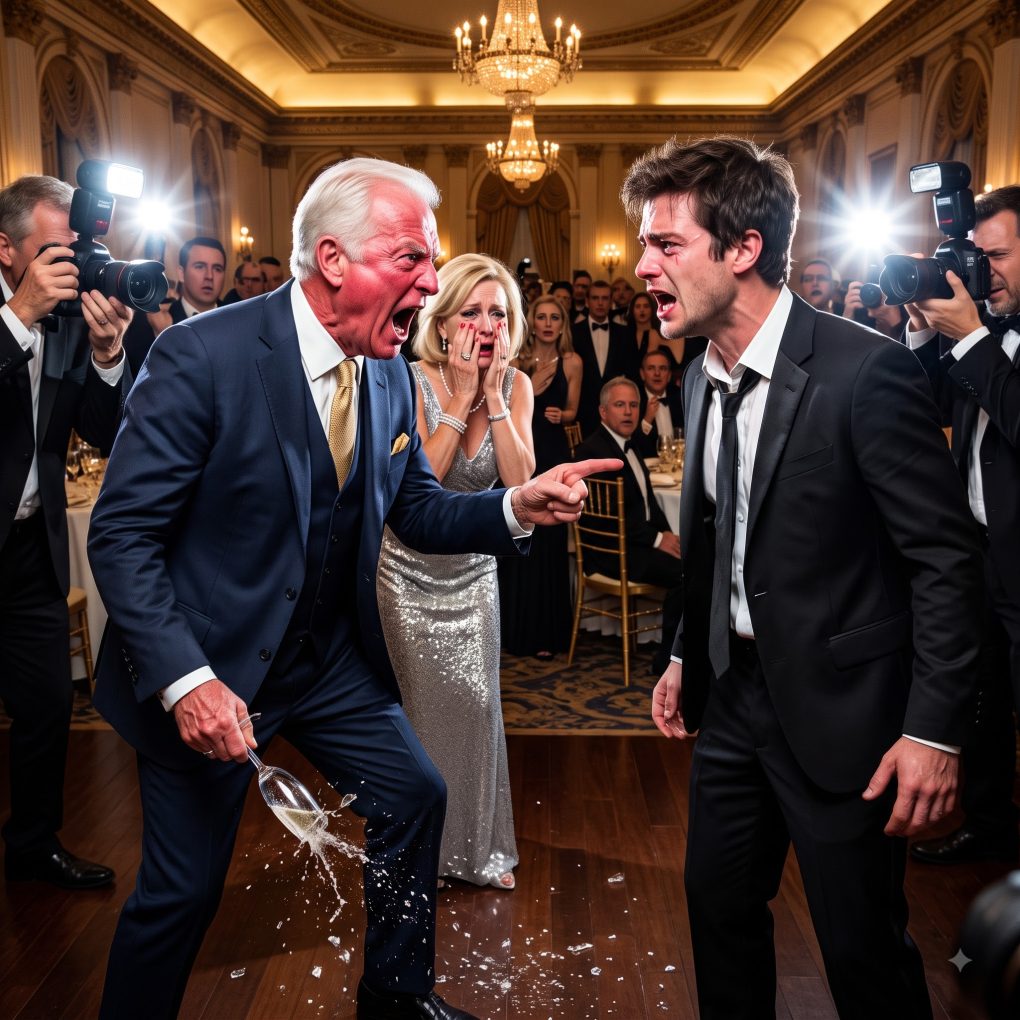
My father thanked 12 people at his retirement party—but not me. Then the CEO revealed who had saved the company with $15 million in 2019. He turned to me, and my father’s glass slipped from his hand…
The crystal champagne flute shattered against the hardwood floor, spraying prosecco across my father’s polished Italian shoes. Seconds earlier, Arthur...
“Somebody be charitable,” my mother-in-law said, making my pie the joke of the church Thanksgiving auction again.
“Somebody be charitable,” my mother-in-law said, making my pie the joke of the church Thanksgiving auction again. Her daughter’s pie...
MY WIFE ERASED THE DOORBELL FOOTAGE AFTER TWENTY-SEVEN YEARS OF MARRIAGE—THEN HER CONFESSION, OUR DIVORCE, AND ONE HOSPITAL CALL FORCED ME TO CHOOSE WHO I WOULD BECOME – Life Story
The man on my doorbell camera walked into my house at p.m.—and never walked back out. By morning, the clip...