The 44-Day Stand: How 24 Australian Pilots Held Back Three Japanese Air Fleets
On the morning of March 21, 1942, twenty-four Australian pilots lifted off from Townsville, bound for a strip of coast in Papua they had never seen.
They were the only fighter planes Australia had north of the Coral Sea.
Behind them: nothing.
Beside them: nothing.
Ahead: a half-built dirt runway, a malaria-infested swamp, and a Japanese air force ten times their number.They had been in the squadron for just seventeen days.
Their average flying time on the P-40 Kittyhawk was nine hours.
They had fired its guns once.
And they were flying into a fight that would last forty-four days and end with a single airworthy plane on the tarmac.This is the story of 75 Squadron, Royal Australian Air Force.
A story that begins with 24 and ends with 1.But before the countdown starts, look at them as men, not numbers.There is Squadron Leader John Francis Jackson—35, bald, stocky, a mining engineer from Queensland, a veteran of the Western Desert.
His men call him “Old John.” He is said to be the oldest fighter pilot in the world.
He is afraid of nothing.There is his younger brother Les, quieter, also a pilot.
There is Flight Lieutenant John Piper, strict and professional.
There is Pilot Officer Wilbur Wackett, son of Sir Lawrence Wackett, who built half of Australia’s aviation industry before the war.
There is Sergeant David Stuart Brown, 25, a banker’s son from Sydney—not an officer, just a sergeant, with steady hands and a quiet manner.They come from cities and cattle stations and law offices.
They have parents, girlfriends, farms, and desks waiting for them back home.
They are real.
They are here.
And they are about to face the worst the Japanese can throw at them.On the morning of March 22, Old John does not wait.
He has been in Port Moresby for less than a day.
He takes nine Kittyhawks over the Owen Stanley Range before dawn, skims low over the sea, and catches the Japanese at Lae completely by surprise.
Twelve Japanese aircraft are left burning on the ground—three bombers, nine Zeros.
It is the worst air defeat the Japanese have suffered in the Pacific so far.But the cost is immediate.
Pilot Officer Bruce Anderson’s Kittyhawk is hit and crashes into the sea.
He is the first of the 24 to die.
Pilot Officer Wilbur Wackett is forced to crash-land in the jungle and begins a 320-kilometer walk back through some of the most brutal terrain on earth.That night, the count is 23 planes and 23 pilots.
The Japanese now know 75 Squadron exists.
And they will not stop coming.
Within days, the pattern of the campaign settles into something the pilots feel in their bones.
They wake before dawn, walk to the strip in darkness, listen to coastwatcher reports crackling over the radio in the ops tent, drink kerosene-tasting coffee, and wait.
The Japanese prefer to come mid-morning.
The pilots sit in cockpits with parachutes open, sweat soaking their shirts under the equatorial sun, and listen.When the bell rings, they start engines, roll onto the strip, and take off in pairs.
They climb west over the harbor into a sky that is always hazy, always smeared with cloud and Japanese aircraft they cannot see until they are close enough to shoot.The Kittyhawk is heavy.
It is honest.
It is not a Zero.
It cannot turn like a Zero.
It cannot climb like a Zero.
But it can dive.
It has six .50-caliber machine guns.
It has armor behind the pilot.
If a Kittyhawk is hit, it often takes the damage and brings its pilot home.
If a Zero is hit by a .50-caliber round, it often explodes.The Australians learn in the first two weeks what the Americans are learning in the Philippines and the Dutch East Indies, what they will learn a few months later at Midway.
Do not turn with a Zero.
Do not climb with a Zero.
Come down on it from above, fire one burst, and keep diving.
Use the dive.
Use the weight.
Use the guns.
Do not stop.
The pilots who do not learn this rule die.
Those who do live a little longer.By mid-April, the men are sick.
The mosquito at Seven Mile Strip carries falciparum malaria, the deadly kind.
It also carries dengue fever.
There is no proper malaria treatment.
Quinine is scarce.
Pilots fly with fevers of 39 degrees.
They fly shaking.
Their fingernails turn dark gray.
Dysentery spreads through the ground crew and the cockpits.
Water in Port Moresby is contaminated.
Food is canned beef and dog biscuits, and very little else.Letters from home take weeks to arrive.
Some never do.
Cigarettes are the currency of the place.
A man with cigarettes can buy almost anything.
A man without them is poor.Old John Jackson does not get sick.
Old John Jackson does not seem to need sleep.
In fact, Old John Jackson seems made of a different material than the men around him.
He leads nearly every mission.
He takes the most dangerous position, the front position, the one any pilot looking for a kill is aiming for.
He does not give it up.
His men notice.
Many of them say later they would have followed him anywhere because of it.Around him, the squadron shrinks.
Three aircraft are lost in the week of April 4–11.
Two more the following week.
The mechanics begin working twenty-hour days in shifts.
A Kittyhawk that comes in damaged at p.m. is stripped, its parts inspected, and the usable pieces bolted onto another plane by sunrise.
The mechanics work by hurricane lamp and tarpaulin.
The mechanics are under fierce attack from insects.
But the mechanics do not stop.When interviewed long after the war, the mechanics use the same phrase the pilots use.
They say the strip is what had to keep flying.
They say it is not about individual planes, but about a Kittyhawk being in the sky over Port Moresby at any hour of any day.
That is the mission: keep a Kittyhawk in the air.
Port Moresby cannot be invaded from the sea, and the Japanese will not land transports near the coast as long as a Kittyhawk is in the sky.
So the planes must keep flying.
And so they keep flying.Count of aircraft in service, April 20, 1942: 12.
Count of pilots in service: 17.The last week of April brings the worst of it.
The Japanese have identified Port Moresby as the southern cornerstone of their entire Pacific defense perimeter.
They decide to take Port Moresby in May with a naval invasion supported by the same air fleets that have been bombing the town for two months.
They intensify the bombing in late April to pave the way.
With every dawn, waves of bombers cross the harbor.
With every dusk, another round.
The Kittyhawks fly, then land.
Sometimes they land on the strip, sometimes in the harbor, sometimes in the hills behind the town.
The pilots are so exhausted it is no longer ordinary fatigue but something close to collapse.On April 24, a Kittyhawk piloted by John Le Gay Brereton is shot down, burning, over Port Moresby.
His plane breaks up in the air.
He does not survive.
He is 23.
He was a clerk in Sydney before the war, and he had a fiancée he never married.
His name is added to the list of the dead on the 26th of the month.On the 27th, a Kittyhawk returns from a mission and lands safely, but during inspection a Japanese bullet is found lodged in the engine block one inch from a part that, if hit, would have seized the engine in flight.
When the pilot’s attention is drawn to it, he looks at the bullet for a moment, then goes to get a cup of tea.On April 28, it is Old John Jackson’s day.
The morning comes up gray.
The coastwatcher report says the Japanese are coming in heavy.
Bombers, many bombers.
Zeros above them, many Zeros.
The squadron has only five airworthy Kittyhawks left.
Five.
Old John leads the five.
He takes the lead.
He has a strict rule about this.
He does not give it up to anyone.
The five Kittyhawks climb over the harbor at dawn.
The Japanese formation comes in from the northeast.
The Australians dive on them.As the surviving pilots later tell it, Old John gets a Zero almost immediately.
He catches it, hits it, destroys it.
The Zero falls away trailing smoke into the sea.
Old John comes back into the fight.
Another Australian Kittyhawk is in trouble, a Zero on its tail.
Old John turns to protect his mate.
The Zero pilot sees him coming.
The Zero pilot pulls up and turns into him.
Old John’s Kittyhawk is caught by two Zeros at once.
He cannot out-turn one, let alone two.
He does not run.
He keeps turning into them.
His plane falls burning over the hills outside Port Moresby.His brother Les, also in the air in the same fight, sees it happen.
Les returns to the strip.
Les walks into the ops tent, takes off his helmet, and says his brother is dead.Squadron Leader John Francis Jackson, DFC, mining engineer, brother, husband, the man who at 35 was probably the oldest fighter pilot in the world, is killed in action over Port Moresby.
The international airport in modern Port Moresby is named in his honor.
They call it “Jacksons.” Every plane that has landed there in the last eighty years has landed in his memory, though most passengers do not know it.Les Jackson takes command the next morning, April 29.
The younger brother of the bigger man who is no longer there.
Les does not talk about it much.
He puts on his harness, walks out to the strip, and stands looking at the four Kittyhawks still airworthy.
He turns to the engineering officer and asks what can be ready to fly by morning.
The officer says he will do his best.
They have been doing their best for 38 days.Count of aircraft on April 29: 9.
Count of pilots: 13.
Three of the nine are not airworthy, only repairable.
The number of airworthy planes is four.
The last week of the campaign is a slow unravelling of the arithmetic.
On April 30, the Americans arrive—two squadrons of US Army Air Force P-39 Airacobras.
The Australians watch the strange American fighters land on the Seven Mile Strip and stare.
They have been alone for forty days.
They have buried twelve pilots out of twenty-four in forty days.The Americans climb out and look at the strip, at the wrecked Kittyhawks at the edge of the dispersal area, at the pale, feverish men standing in the shade of the ops tent, and do not know what to say.
What the Americans see is that 75 Squadron is no longer a squadron in any practical sense.
There are three airworthy Kittyhawks left in the field.
Three.
There are seven others in various stages of dismantlement, maybe flyable again on a good day with a spare part on the next supply run.
The pilots are sick.
The pilots are exhausted.
The pilots are down to half their original strength.The Japanese do not stop.
On May 1 they raid again.
On May 2, another raid.
On May 2, two more Kittyhawks are lost.
The Americans fly alongside, learning the lessons the Australians paid for.
By the morning of May 3, the squadron’s remaining aircraft is a number the squadron leader does not want to say at first: one.
One airworthy Kittyhawk.The Japanese come on the morning of May 3.
They come with bombers.
The Australians and Americans fly together.
The Australian contribution is that single Kittyhawk.
One plane.
The last of a squadron that began the war with 24 airworthy aircraft.
The pilot who flies it that morning lifts off the strip beside the Airacobras, climbs into the haze over the harbor, makes his attack, and brings the plane home.That mission is the last operational sortie 75 Squadron flies from Port Moresby.
The Americans are now the air defense of the town, and the Australians hand over the fight.
The remaining men walk from the ops tent to the strip in the afternoon and look at the single Kittyhawk on the dispersal.
They stand there for a while, silent.
Forty-four days.
Count of aircraft in service, May 3, 1942: one.
Count of pilots: 12.The squadron is withdrawn from operations the same day.
On May 7, the surviving men are ordered back to Australia.
They leave behind the wreckage of more than 20 Kittyhawks in the long grass at the edge of the Seven Mile Strip.
They leave behind the graves of 12 men.
They leave behind the makeshift workshops, the ops tent, the trenches, the hand-painted signs.
They leave behind the war they were fighting alone and hand it to the Americans who will carry it on with them.The numbers in the squadron record are precise. 24 pilots arrived, 12 were killed, 22 Kittyhawks were destroyed—six in accidents, the rest in combat or on the ground.
The squadron was credited with 35 Japanese aircraft destroyed during those 44 days, probably four more, and 54 damaged.
The squadron was outnumbered in the air by roughly 10 to 1 on most days.
The Zero outperformed the Kittyhawk in almost every measurable category.
And yet the squadron held at Port Moresby.
It denied the Japanese the invasion fleet that would have entered the harbor.
It bought the time the rest of the Allied forces needed to build their bases at Milne Bay and along the northern coast of Queensland.The squadron, in the words of its historian, achieved a moral victory of incalculable value.
Most historians of the squadron have since confirmed the same.
Without those 44 days, the Japanese would have taken Port Moresby in May 1942, established a bomber base there, and begun a long campaign to cut American supply lines to Australia.
The Battle of the Coral Sea, fought in early May, would have been entirely different if the Japanese had already controlled Port Moresby from the air.
The Kokoda Track battles, fought later that year, would have begun with the Japanese already holding the place they were trying to reach.
The Battle of Milne Bay, fought in August, which General Rowell described as the turning point of the entire Allied campaign in Papua, and where the Japanese Army suffered its first land defeat at the hands of Allied troops in open battle, would not have been possible at all without those 44 days.A squadron of 24 young men in unsuitable aircraft, sick with malaria, sleeping in holes beside the runway, living on coffee and willpower, kept the door shut.
They kept it shut for 44 days.
They kept it shut until the defensive line was reinforced.
It cost them half their pilots killed and nearly all their aircraft.
When the survivors stepped off the transport in Townsville on May 8, the men who met them did not know how to look at them.
They were pale as yellow paper, thin, unshaven for weeks, and they smelled.
Their eyes were the eyes of men who had done a thing most people would not believe unless they had been there.
Les Jackson was at the head of them.
He had taken command of the unit five days before his brother was killed and brought what was left of it home.The squadron was rebuilt at Kingaroy, then at Lowood, and replacement pilots arrived, including men who had flown Spitfires over Europe.
Replacement aircraft arrived, and the unit was re-formed.
It returned to New Guinea in July.
By the end of July it was operating from Milne Bay alongside 76 Squadron, also flying Kittyhawks.
In August it fought a savage battle against the Japanese who landed at Milne Bay and inflicted a crushing defeat on them in the coconut plantations there.
Then it took part in the Kokoda campaign in support of Australian infantry.
It fought bitter battles along the coast of New Guinea and entered Borneo.
It kept fighting until the last weeks of the Pacific War.But those 44 days, between March 21 and May 3, 1942, are the ones that have always carried within them the story of a unit that began with 24 and ended with one.
The story of a countdown that did not stop for the entire period.
Old John Jackson lies somewhere in the hills outside Port Moresby.
His grave has never been precisely located.
Some sources say he is buried in the Bomana War Cemetery on the edge of the modern city.
Others say he never came down in a place that could be easily reached.
Either way, his name is carved on the memorial there.
The Distinguished Flying Cross he won is with his family.
His brother Les fought on until the end of the war, became an accomplished pilot, and survived.
Wilbur Wackett, who walked 320 kilometers back to Port Moresby through the jungle after the Lae raid, survived and became a prominent figure in Australian aviation after the war.
John Piper, who scored the squadron’s first aerial victory on the afternoon of their arrival, survived.
Barry Cox survived.
Bruce Anderson, David Brown, and John Le Gay Brereton did not.
Nine other men did not.
Their average age was 23.
Their average flying time was less than two years.
They were, on average, a long way from the towns where they were born.
They came from Sydney, Melbourne, Brisbane, Adelaide, and rural places no one in the city had heard of.
They were flying aircraft they had known for only a few weeks before they died.
They held a line they had not seen on a map until they stood on it.
And they held it long enough for the rest of Australia to catch up.If you go to Port Moresby now, you can land at Jacksons International Airport.
The runway is paved.
The control tower is concrete.
The terminal is air-conditioned.
There is nothing on arrival in that heat to suggest you are standing on what was once called the Seven Mile Strip.
There is nothing to suggest that this strip was defended by 24 men for 44 days, with a record that begins with 24 aircraft and 24 pilots and ends, exactly six and a quarter weeks later, with one airworthy Kittyhawk and 12 survivors.
The strip itself is the monument.
The airport’s name is the monument.
The existence of the city of Port Moresby in Papua New Guinea, instead of a Japanese fortress by another name, is the monument.Count of aircraft on the Seven Mile Strip on the evening of March 21, 1942: 24.
Count of pilots: 24.
Count of aircraft on the Seven Mile Strip on the evening of May 3, 1942: one.
Count of pilots: 12. 44 days, 24 young men, one squadron, three Japanese air fleets.
The numbers are what they are.
The counter runs in one direction only.
And yet, the men flew.
They flew until there was only one plane left, and then one of them climbed into it, lifted it off the strip one last time, and made sure the line was not broken.
That is the whole story.
No more words are needed.But the countdown never really stopped, did it?
Every time you board a flight at Jacksons, you walk across their runway.
What would you say to those 24 young men if you could stand beside them on that dirt strip tonight?
Recommended Stories

The F-14’s Secret Vietnam Deployment
In the final, chaotic days of April 1975, as North Vietnamese tanks rumbled toward Saigon, a sleek new fighter appeared...
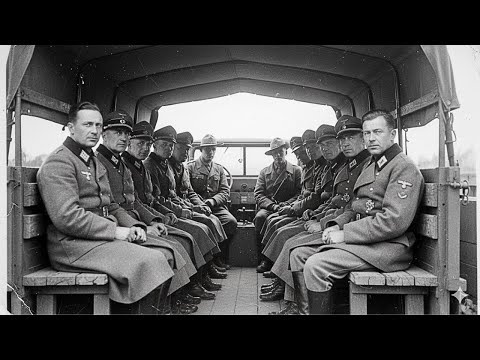
The Day German Generals Realized Hitler Lied: Australia’s Unlikely POW Story
September 1941. The German generals stepped off the transport ship onto Australian soil, fully expecting a primitive, starving prison colony...

13 Forgotten 1950s Monster Movies That Deserve a Comeback
You've seen Godzilla. You've shuddered at The Thing from Another World. But the 1950s unleashed a tidal wave of creature...