I Woke Up To Find That My Wife Came Home At 3 AM, Disheveled, And Taking Her Phone…
I Woke Up To Find That My Wife Came Home At 3 AM, Disheveled, And Taking Her Phone…
Part 1 — The Night My Marriage Began to Unravel
At a.m., my wife came home with her blouse wrinkled and a cologne I didn’t recognize clinging to her coat.
She kept one hand wrapped around her phone, as though the little black screen could protect her from whatever I might ask.
Before sunrise, a message from a man named Luke would tell me that the woman I’d trusted for nine years had been living a life I knew nothing about.
I heard her car before I heard the garage door.
The tires crunched slowly over our gravel driveway, followed by a pause that lasted long enough for me to wonder whether she was sitting outside, gathering the courage to come in.
Then the garage motor started, and a narrow strip of headlights disappeared across our bedroom ceiling.
I was lying on my side, staring at the digital clock.
Emily had told me she was meeting her friends Erin and Leah for drinks in downtown Columbus, something she had been doing more frequently over the past few months.
She’d kissed me on the cheek around seven, promised she wouldn’t be late, and asked me not to wait up.
I hadn’t intended to wait.
Around eleven, I’d sent a simple message asking whether she needed a ride home, and she’d answered almost an hour later.
I’m fine, babe.
Having fun.
Love you.
That had been the last I’d heard from her.
The front door opened carefully.
I heard the soft scrape of her shoes against the hallway floor, followed by the metallic sound of keys being placed on the little oak table beside the stairs.
Emily knew every noisy floorboard in our house, and I could hear her deliberately avoiding them.
When she appeared in the bedroom doorway, I noticed three things immediately.
Her dark hair, normally smooth and straight, was tangled around her shoulders.
Her pale-blue blouse was wrinkled near the waist, and the small silver necklace I’d given her for our seventh anniversary was hanging backward.
But it was her phone that held my attention.
She carried it pressed against her ribs, the screen facing inward.
When it vibrated, she glanced down so quickly that she almost stumbled over the bedroom rug.
Her thumb moved across the screen, and whatever she’d seen made her expression tighten.
“Long night?” I asked.
Emily stopped so abruptly that the floorboard beneath her heel squeaked.
“Jesus, Jonathan.” She pressed a hand against her chest. “You scared me.”
“Sorry.
I wasn’t sleeping.”
She stood in the doorway for another moment, studying my face.
Then she smiled, but it was a peculiar smile, arriving a fraction too late.
I’d seen her smile that way at company dinners when someone told a joke she didn’t find funny.
“Why are you still awake?” she asked.
I glanced at the clock. “It’s three in the morning, Em.”
“I know what time it is.”
“I was worried.”
Her shoulders lowered slightly, though she still didn’t come closer. “We lost track of time.
Erin wanted to stop somewhere else after the bar, and then we got talking.
You know how it gets when everyone’s had a long week.”
I nodded, waiting for the rest.
“Did you have fun?” I asked.
“Yeah.
It was good.”
She started unbuttoning her coat, and I noticed a faint reddish mark on her collarbone, just above the neckline of her blouse.
It could have been anything.
A scratch from her necklace, irritated skin, even a shadow from the hallway light.
I wanted it to be anything.
“Everything okay?” I asked.
Emily looked at me, then down at her hands. “Of course.
Why wouldn’t it be?”
“You’re acting a little strange.”
She gave a short laugh. “I’m tired, Jonathan.
I’ve been out all night, and you’re sitting here interrogating me.”
The word interrogating surprised me.
I’d asked three questions, all of them questions I thought any husband might ask when his wife came home hours later than expected.
But something in her voice warned me that another question would turn the conversation into an argument.
“Okay,” I said. “Get some rest.”
She hesitated, as though she’d prepared a defense and was disappointed not to need it.
Then she stepped into the bathroom and closed the door, taking her phone with her.
I listened to the shower running.
Nine years of marriage teaches you things about another person that you never consciously set out to learn.
I knew Emily preferred the cold side of her pillow, hated the texture of mushrooms, and cried at commercials involving elderly dogs.
I knew she rubbed the inside of her left wrist when she was worried and hummed old Fleetwood Mac songs when she cooked.
I also knew she had never taken her phone into the shower before.
We lived in a modest two-story house in Clintonville, the kind of neighborhood where children rode bicycles past old maple trees and neighbors brought casseroles when someone was sick.
We had bought the house six years earlier, when the kitchen cabinets were yellow, the roof needed repairs, and neither of us could believe a bank had trusted us with so much money.
For the first month, we ate takeout on the living room floor because we couldn’t afford a dining table.
Back then, Emily had called the place our beautiful disaster.
My father had helped us repair the porch before he died.
The cedar bench beside the front door was the last thing we built together, and Emily used to sit on it with me on summer evenings, her bare feet resting across my knees.
She would point at the upstairs windows and talk about all the life we would someday fill those rooms with.
There had been years when I couldn’t imagine wanting anything more.
Lately, however, our conversations had become strangely practical.
We discussed grocery lists, bills, the roof repair estimate, and whose turn it was to buy coffee.
Whenever I tried to ask about her day, she offered a few details about work before reaching for her phone.
I had noticed the distance.
I’d simply convinced myself that marriage sometimes went through quiet seasons.
When Emily emerged from the bathroom, she was wearing one of my old Ohio State T-shirts.
She placed her phone in the drawer of her nightstand, turned the lamp off, and slipped beneath the blanket.
A few minutes later, her breathing settled into the familiar rhythm I’d listened to for nearly a decade.
I remained awake.
At , I turned toward her and whispered her name.
She didn’t move.
I stared at the nightstand for a long time before opening the drawer.
There are decisions you can feel changing you even before you make them.
Looking through my wife’s phone was one of those decisions.
I knew it was a violation of her privacy, and I knew that whatever I found wouldn’t erase the fact that I had crossed a line myself.
But I also knew I could no longer pretend that my fear had come from nowhere.
The phone recognized the six-digit passcode we’d used for years, the date of our wedding anniversary.
For some reason, that small detail hurt more than I’d expected.
She had changed so many things without telling me, yet she’d left the number that represented our marriage untouched.
A message notification appeared near the top of the screen.
Luke Mercer: Can’t wait to see you again.
Tonight was perfect.
For several seconds, I didn’t understand what I was reading.
Then I opened the conversation.
The first messages seemed harmless enough.
Luke had complimented Emily on a presentation she’d given at the nonprofit arts organization where she worked.
She’d thanked him and asked about an upcoming project.
There were jokes about impossible deadlines and terrible office coffee.
Then the tone changed.
I keep thinking about yesterday.
You shouldn’t say things like that.
Why?
You told me you felt it too.
I scrolled farther.
There were photographs of restaurants I’d never visited with her, messages about meeting at places outside our usual neighborhood, and conversations that stopped abruptly whenever I returned home from work.
He called her beautiful.
She called him the only person who made her feel exciting again.
One exchange, dated three weeks earlier, held me motionless.
Luke: Does he ever ask where you go?
Emily: Sometimes.
But Jonathan trusts me.
Luke: And you don’t feel bad?
Emily: Of course I do.
Please don’t make me talk about him tonight.
I put the phone down.
For almost a minute, I stood beside our bed watching my wife sleep.
Her face was turned toward the window, one hand tucked beneath her cheek.
She looked exactly like the woman I’d married, and somehow that made the messages harder to understand.
I picked up the phone again.
There was a photograph from the previous Saturday.
Emily stood beside Luke in a softly lit restaurant, his arm wrapped around her waist.
She was wearing the green dress she’d told me she bought for an upcoming work event.
Beneath the picture, she’d written:
I wish I didn’t have to go home.
My stomach contracted so sharply that I had to sit down.
I wanted to wake her and demand an explanation.
I wanted her to tell me it was a joke, a misunderstanding, anything that could put the world back where it had been a few hours earlier.
But the evidence was there, in her own words, and I knew I’d never be able to forget them.
Then another message appeared.
Luke: Thursday, Emily.
You promised you’d tell him by Thursday.
I’m done being your secret.
I stared at the screen until it went dark.
It was Saturday morning.
Whatever Emily and Luke had planned for Thursday, I had five days to discover the truth before they tried to tell it to me themselves.
And I had just realized something worse than the affair itself.
My wife wasn’t merely hiding another man.
She was preparing for a future that apparently didn’t include me.
Part 2 — The Kiss Through the Café Window
By Sunday morning, I had learned that heartbreak could look remarkably ordinary.
I stood in our kitchen making coffee while Emily sat at the counter scrolling through her phone.
Sunlight fell across the yellow dish towel she’d draped over her knees, and the radio played a song we used to sing together on long drives.
Nothing in the room acknowledged that my marriage had changed overnight.
“Want eggs?” I asked.
She shook her head. “Just toast.
I’m still recovering from last night.”
I placed two slices of bread in the toaster.
My hands were steady enough, though I’d barely slept, and every time her phone vibrated my shoulders tightened.
She noticed me looking once and turned the screen facedown.
“You seem distracted,” she said.
“Didn’t sleep well.”
She reached across the counter and briefly touched my wrist. “You work too much, Jon.
You need to relax.”
It was such a familiar thing for her to say that I almost laughed.
I worked as a senior construction estimator for a commercial building firm.
The job meant long days, complicated bids, and occasional weekends spent checking numbers other people had overlooked.
Emily liked to tease me about treating everything as a problem that could be solved with a spreadsheet.
I’d never imagined trying to calculate how long my wife had been deceiving me.
“How’s the gallery project?” I asked.
She brightened. “Actually, pretty good.
Luke’s helping us rethink the whole campaign.
He has some really interesting connections.”
I kept buttering the toast.
“Luke?”
“Yeah, Luke Mercer.
I told you about him.”
She had mentioned a Luke before, months earlier, but never like this.
I remembered hearing his name in passing when she complained about a difficult sponsor or a meeting that ran late.
I’d never known he occupied so much of her life.
“Sounds like he’s been helpful,” I said.
“He has.
It’s nice working with someone who understands what I’m trying to accomplish.”
Her words were casual, but there was something faintly defensive beneath them.
I looked up, and for an instant her expression changed, as though she wondered whether she’d revealed too much.
Then the toaster popped, and the moment passed.
I spent the rest of Sunday repairing a loose railing on our back steps.
It was work that needed doing, and it gave me a reason to stay outside.
Every few minutes, I caught myself waiting to hear Emily laugh through the open kitchen window, the way she used to when she called me hopelessly particular about the house.
The laugh never came.
That afternoon, my younger sister Rachel called to ask whether we were coming to her son’s birthday dinner the following weekend.
I told her we probably were, but she heard something in my voice.
“You sound terrible,” she said. “Everything okay?”
I looked toward the kitchen, where Emily was standing with her phone tucked between her shoulder and ear.
“I’m tired.”
Rachel was silent for a moment. “You’re allowed to tell me when it’s something worse than tired.”
I nearly told her everything.
Instead, I promised to call back.
On Monday, I told Emily I’d be working late.
She was standing in front of our bedroom mirror fastening her earrings.
She wore a cream sweater, fitted black trousers, and the perfume I’d bought her for Christmas.
The careful way she’d dressed made me think of the early months of our relationship, when she’d change outfits twice before meeting me for dinner.
“Big meeting?” I asked.
“Just a few things I need to handle.”
She kissed my cheek as she passed.
“Don’t wait up, babe.”
I waited until her car disappeared around the corner before taking my keys.
I wasn’t proud of following her.
Halfway down High Street, I considered turning around and going to work, telling myself I already had enough evidence and didn’t need to see anything else.
But the messages still had an unreal quality, as though they’d been written about strangers.
I needed to see what was happening when she believed no one was watching.
Emily drove downtown and parked near a little café in German Village.
We had been there together several times, most recently on our anniversary, when she ordered a cinnamon latte and complained that my photograph of her made her look sleepy.
I’d saved the picture anyway because she was smiling at me.
I parked across the street, far enough away that she wouldn’t recognize my car.
For a few minutes, she remained beside hers, checking her reflection in the window.
Then she looked down at her phone and smiled.
It was a full, unguarded smile, the kind I realized I hadn’t seen directed toward me in months.
A man approached from the corner.
He was tall, broad-shouldered, probably in his early forties, with dark hair beginning to gray near his temples.
He wore a charcoal jacket and carried himself with the relaxed confidence of someone accustomed to being welcomed.
Emily saw him and stepped forward before he reached the curb.
She kissed his cheek.
He placed a hand against the small of her back and whispered something near her ear.
She laughed, then followed him into the café.
I gripped the steering wheel.
At first I told myself the kiss had been harmless.
People kissed friends on the cheek, especially people who worked in creative industries and attended fundraising events.
But I knew how ridiculous the explanation sounded when combined with everything I’d read.
Inside, they chose a table beside the back window.
I could see them clearly enough to recognize their movements, though I couldn’t hear their conversation.
Emily leaned forward when Luke spoke.
He reached across the table and rested his fingers over hers, and she left her hand where it was.
I sat in my car with the engine off, listening to pedestrians passing and the distant rumble of delivery trucks.
I kept remembering a night two years earlier when Emily had cried because I’d forgotten the date of an exhibition she had organized.
I’d been overwhelmed with work and assumed she understood.
She told me she was tired of being something I fitted into the spaces between responsibilities.
I’d apologized, gone to the exhibition, and made a point of attending everything important afterward.
But sitting outside that café, I wondered how much of the distance between us I had failed to recognize.
The thought made me sad.
It did not make what she was doing acceptable.
After more than an hour, they stood to leave.
Luke helped Emily with her coat.
Before opening the café door, he bent his head and kissed her on the lips.
She didn’t pull away or hesitate; instead, she touched his jaw and kissed him again.
I looked down at my hands.
There was a thin white scar across my left thumb from the day I’d cut myself helping her assemble bookshelves in our first apartment.
She’d wrapped the wound in a dish towel, then driven me to urgent care while crying harder than I was.
That woman had loved me once.
The woman on the other side of the street was kissing someone else.
I waited until both cars had left before starting my engine.
I didn’t follow them any farther.
Seeing the kiss had answered the question I’d been asking myself since Saturday morning, and I couldn’t stand the idea of spending another hour watching my marriage disappear.
When Emily returned home that evening, she was cheerful.
She set a grocery bag on the counter and told me she’d found the good pasta sauce on sale.
She asked about work, complained about traffic, and hummed while rinsing cherry tomatoes in the sink.
I watched her move through our kitchen as though she hadn’t spent the afternoon holding another man’s hand.
We ate dinner at the table my father had helped us build.
“So,” I asked, keeping my voice neutral, “how was your day?”
“Good, actually.” She twirled pasta around her fork. “Met Luke for coffee.
He’s been really supportive lately.”
I put my fork down.
“Supportive how?”
She shrugged. “With work.
My ideas.
Everything, really.
Sometimes it’s just nice having someone to talk to.”
I watched her face.
She wasn’t denying that she’d seen him.
She was doing something worse: offering me a carefully edited version of the truth, with just enough honesty to make any suspicion seem unreasonable.
“Does he know you’re married?” I asked.
Her fork stopped halfway to her mouth.
“Of course he does.
What kind of question is that?”
“Just wondering.”
She exhaled and shook her head. “Jonathan, please don’t make everything weird.”
I nodded and picked up my fork.
For the rest of dinner, she talked about a new fundraising proposal while I tried to remember the last time we’d spent an entire evening without her phone appearing between us.
Later, after she fell asleep, I walked downstairs to get some water.
My laptop was still open on the kitchen counter.
An email from our bank had arrived that afternoon, reminding us to review recent activity on our joint savings account.
I opened it without thinking, expecting to see the balance we’d been building for our roof replacement.
Three months earlier, we’d had $31,400 saved.
The account now held $12,200.
I scrolled through the transactions until I found the missing money.
External Transfer: $19,200.00 — Mercer Creative LLC.
The transaction had been authorized twelve days earlier.
I read the name three times, unable to believe it.
Luke Mercer.
My wife’s lover hadn’t merely found a place in her heart.
Somehow, he’d also found his way into the money we’d spent years saving for our future.
And Emily hadn’t said a word.
Part 3 — The Nineteen Thousand Dollars She Never Told Me About
The next morning, I sat at my desk staring at a bank statement instead of the construction estimate I was supposed to finish.
The transfer was legitimate in the narrowest possible sense.
Emily and I were both authorized users of the joint account, and either of us could move money without the other’s signature.
We’d set things up that way when we married because we believed sharing a life meant sharing responsibility.
Apparently, we’d developed different definitions of the word sharing.
I checked the transaction date again.
Twelve days earlier, Emily had told me she was spending Saturday morning helping Leah prepare for an upcoming charity auction.
That afternoon, she’d returned home with a bouquet of grocery-store flowers and asked whether we could postpone the roof repairs until spring.
I’d agreed, despite the brown water stain spreading across our upstairs hallway ceiling.
Now I knew why she’d been so eager to delay.
My coworker Marcus found me staring at the same page an hour later.
We’d worked together for almost eleven years, long enough for him to recognize when something was wrong.
He placed a coffee beside my keyboard and pulled a chair across from me.
“You’ve looked at that number for twenty minutes,” he said. “Either it’s a terrible bid or your house is on fire.”
I closed the laptop.
“Emily’s having an affair.”
Marcus didn’t say anything.
The silence gave me enough courage to continue.
I told him about Saturday night, Luke’s messages, the café, and the missing savings.
I expected him to become angry on my behalf, perhaps to suggest confronting Luke or doing something reckless.
Instead, he asked one question.
“Have you slept?”
I shook my head.
“Then whatever you’re planning, don’t do it until you have.”
Marcus had been through a difficult divorce himself, although his marriage had ended without infidelity.
He knew how easily fear could disguise itself as certainty, and how tempting it was to make permanent decisions during temporary moments of rage.
“You already know she’s cheating,” he said. “You don’t need to keep following her around to prove that to yourself.
Get advice, protect your finances, and decide what kind of man you want to be when this is over.”
I looked at him. “I thought I knew what kind of man I was.”
“You do.
You’re just hurting.”
He slid the coffee closer.
“And hurting people sometimes make decisions that give everyone else another story to tell.”
His words stayed with me all afternoon.
I made an appointment with a family-law attorney named Dana Pierce, whose office was twenty minutes from our workplace.
I told her I needed to understand my options, not that I had already decided what to do.
She listened without interrupting, occasionally making notes on a yellow legal pad.
When I finished, she asked about our home, savings, debts, and whether we had children.
“No,” I said quietly. “We don’t.”
She noticed the way I answered but didn’t press.
We had once talked about children constantly.
Then work became demanding, my father died, Emily changed jobs, and the right time always seemed to move another year into the future.
Eventually we stopped bringing it up, not because we’d made a decision, but because neither of us knew how to reopen the conversation.
Dana explained that the transfer required careful examination but wasn’t automatically illegal simply because I hadn’t agreed to it.
We would need to determine what Emily had purchased or funded, whether a repayment agreement existed, and how it should be handled if we separated.
She advised me to preserve records I was entitled to access, avoid hiding money, and stop trying to investigate the affair personally.
“You’re not here to win a competition with the other man,” she said. “You’re here to decide how to protect your future.”
I hadn’t realized how much I needed someone to describe the situation that way.
When I returned home, Emily was in the dining room surrounded by folders.
She closed one quickly when I entered, then asked whether I wanted to order Thai food.
I told her I wasn’t hungry.
She studied me for a moment.
“You’ve been really distant lately.”
I almost said, So have you.
Instead, I asked, “Are we okay financially?”
Her expression barely changed, but her hand moved toward the folder.
“Why wouldn’t we be?”
“I was thinking about the roof.
We should probably get another estimate.”
“Jonathan, I told you we could handle that next spring.”
“I know.
I just wanted to make sure we’re not spending money we shouldn’t.”
She looked down at the table.
“We’re fine,” she said.
It was another lie, delivered with the same calm certainty she’d used when describing her girls’ night out.
I went upstairs before I said something I couldn’t take back.
That evening, after Emily left to pick up a prescription, I went through the household paperwork stored in our shared filing cabinet.
Among the mortgage documents and insurance statements was a folder labeled Studio Proposal.
I’d seen Emily carrying it before, and she’d said it contained ideas for a possible professional opportunity.
Inside was a business plan for a creative design studio in the Short North neighborhood.
The proposal was sophisticated.
Emily would lead visual campaigns and client relationships while Luke handled business development and commercial partnerships.
There were sample portfolios, projected revenue figures, photographs of an attractive brick storefront, and a twelve-month plan for attracting clients.
I could see why Emily had been excited.
She’d dreamed of running her own creative studio since before we married.
Years earlier, I’d helped her design a website and encouraged her to build a freelance client base.
We’d even discussed converting the spare bedroom into an office, although she eventually decided she wasn’t ready to leave her steady job.
Luke had offered her something larger, faster, and more glamorous.
The problem wasn’t that she wanted a business.
The problem was that she’d financed it with money we’d promised each other we would keep for emergencies, while telling me we couldn’t afford to repair our roof.
Attached to the proposal was a copy of a signed loan agreement.
Emily had lent Mercer Creative LLC $19,200, with repayment scheduled for the end of the year.
Both she and Luke had signed it, making the transaction more than a casual favor between colleagues.
There was also a separate document indicating that Emily might receive an ownership interest if the business met certain milestones.
I stared at her signature.
I’d watched her write that name on thousands of birthday cards, checks, restaurant receipts, and little notes tucked into my lunch.
Seeing it beneath an agreement that excluded me from a major decision about our shared money made my hands feel strangely cold.
I returned the documents to the folder and closed the drawer.
For the first time, I understood that Emily’s affair was connected to something larger than attraction.
Luke wasn’t only promising her romance.
He was promising her the life she had once described to me while we ate dinner on the floor of our first apartment.
The difference was that she’d invited him to help build it while leaving me to pay for the foundation.
That night, I searched Luke’s company online.
His website was sleek and carefully designed, filled with photographs of renovated offices, expensive restaurants, and smiling business owners.
On a page describing the firm’s recent work, I found several pictures from a fundraiser held the previous Friday.
Luke stood near the center of one photograph, wearing a dark suit and holding a glass of champagne.
Beside him was a beautiful woman in an emerald-green dress.
The caption read:
Luke Mercer and fiancée Ava Bennett celebrate the upcoming launch of Mercer Creative’s new Columbus studio.
I stared at the word fiancée.
The photograph had been taken eight days earlier.
Emily wasn’t the only woman Luke was making promises to.
And somewhere in Columbus, another person was preparing to marry a man who had spent Saturday night with my wife.
Part 4 — The Woman Who Didn’t Know She Was Being Betrayed
On Wednesday morning, rain began falling over Columbus before sunrise.
I sat at our kitchen table listening to it strike the windows while Emily searched for her car keys.
A small bucket stood beneath the upstairs ceiling stain because the roof had started leaking again during the night.
She’d stepped around it without comment.
“You haven’t said much all week,” she observed.
“Just thinking.”
“About what?”
I looked at the bucket.
“Things we keep putting off.”
She followed my gaze, then turned away.
“We’ll get the roof fixed, Jonathan.
We always figure things out.”
I wanted to ask whether we still existed outside the sentences she used to reassure me.
Instead, I handed her the keys she’d left beside the coffee machine.
She gave me a distracted kiss and left.
After she drove away, I called Rachel.
This time, when she asked whether everything was okay, I told her the truth.
She listened quietly while I explained the affair, the messages, and the missing money.
When I finished, I heard her breathing unevenly through the phone.
“Oh, Jon.”
The softness of those two words nearly broke me.
“Please don’t do that,” I said.
“Do what?”
“Feel sorry for me.”
Rachel was quiet for a moment.
“I’m not feeling sorry for you.
I’m sad that someone you loved has treated you this way.
There’s a difference.”
I pressed the heel of my hand against my eyes.
Rachel had always been more emotionally direct than I was.
When our father died, she’d stood beside his hospital bed and said everything she needed him to hear.
I’d spent those final hours adjusting his blanket, answering nurses, and checking whether Mom had eaten.
Afterward, Rachel told me that being useful wasn’t the same as allowing myself to grieve.
I hadn’t appreciated it at the time.
Now I was beginning to understand.
“Are you going to leave her?” she asked.
“I don’t know.”
“Do you still love her?”
I looked toward the window, where water ran down the glass in thin, crooked streams.
“That’s the worst part,” I said. “I think I do.”
Rachel didn’t try to tell me what to do.
She simply said, “You can love someone and still refuse to live inside their lies.”
After our conversation, I looked again at the photograph of Luke and Ava.
Ava Bennett owned a floral design business near downtown Columbus.
Her public business page showed wedding arrangements, corporate events, and photographs of beautiful seasonal bouquets.
She and Luke had apparently been engaged for almost a year.
A recent post mentioned their wedding, scheduled for November.
Six weeks away.
I clicked through several photographs of the couple smiling beside friends and family.
In one, Ava held a champagne glass in her left hand, her engagement ring catching the light.
Luke stood behind her with his arms around her waist.
It reminded me of the photograph I’d found on Emily’s phone.
The resemblance was unbearable.
Two women stood in nearly identical poses, smiling at the same man, neither picture revealing what the other represented.
I considered contacting Ava immediately.
Then I thought about how I’d felt when I read the first message from Luke.
That knowledge had changed my life within seconds, and I didn’t want to drop it carelessly into another person’s day.
Ava deserved the truth, but she also deserved to receive it privately, with enough information to decide what she wanted to do.
I wrote a short email to the contact address on her business website.
I introduced myself, explained that our partners might be involved, and asked whether she would be willing to speak somewhere private.
I included my phone number and told her I could provide evidence if she wanted it.
My finger hovered over the send button.
Then I sent it.
I spent the next hour regretting and defending the decision in equal measure.
At lunchtime, Erin called.
She wanted to know whether Emily would be joining everyone for brunch the following weekend.
I asked how late they’d stayed out on Saturday, trying to keep my voice normal.
“Saturday?” she repeated. “I left around nine.
Leah went home even earlier.”
Something cold moved through my chest.
“Emily said you all stayed out.”
Erin paused.
“Well, we had dinner and a couple of drinks, but I was exhausted.
Emily said she might meet someone afterward.”
“Someone?”
“I don’t know who, Jon.
I figured it was another work thing.”
Her voice changed slightly.
“Is everything okay?”
I thanked her and ended the call without explaining.
Another small piece had fallen into place.
Emily hadn’t merely stayed out too late with friends.
She’d used the beginning of an ordinary evening as cover for the rest of the night.
When she came home Wednesday evening, I was on the porch.
She sat beside me on the cedar bench my father had built.
For a moment, she rested her head against my shoulder, and I nearly forgot everything that had happened.
The rain had stopped, leaving the air smelling of wet leaves and fresh earth.
“Remember when we used to sit out here for hours?” she asked.
“Yeah.”
“We should do that more often.”
I looked at our darkened front yard.
“Why don’t we?”
She lifted her head. “What?”
“Why don’t we do the things we used to do?”
She rubbed her wrist.
“I don’t know.
Life gets busy.”
“Is that all?”
Her expression became guarded.
“What is this about, Jonathan?”
I watched a drop of water slide from the porch railing.
“I miss you,” I said.
For several seconds, she didn’t answer.
Then she reached for my hand.
“I’m right here.”
I wanted so badly for those words to be true that I almost told her what I knew.
I almost asked her to choose, right there on the porch, without giving Luke another minute of her time.
But I was no longer certain what she would be choosing between.
I gently withdrew my hand.
“I have an early meeting tomorrow.”
Emily stood beside me.
“Okay,” she said.
Her disappointment seemed genuine, and that made the whole thing sadder.
Thursday arrived gray and cold.
At work, I finished the construction estimate that had occupied my desk all week, emailed it to my supervisor, and requested Friday off.
Marcus stopped by shortly before five and asked whether I’d decided what to do.
“I’m going to talk to her tonight.”
He studied me carefully.
“Talk, Jon.
Don’t punish.”
I nodded.
“I know.”
Before leaving the office, I printed the bank statement, the loan agreement, and the photograph showing Luke with Ava.
I placed them in a plain folder and drove home through rush-hour traffic.
At six, I packed a small suitcase.
At seven, I made coffee and sat at the kitchen table.
At eight, Emily texted to say she was running late.
At , the garage door opened.
I heard her keys, the familiar squeak of her shoes, and the quiet sound of her purse landing on the entryway table.
She appeared in the kitchen wearing the same smile she’d worn every evening since Saturday.
“Hey, babe,” she said. “Sorry I’m late.”
Then she saw the folder in front of me.
Her smile disappeared.
And I finally asked the question I’d been carrying since three o’clock Saturday morning.
“Emily, how long have you been sleeping with Luke Mercer?”
Part 5 — The Night I Walked Away From My Wife
The refrigerator hummed behind us.
Emily stood perfectly still, one hand resting on the strap of her purse.
For a moment, she looked like someone trying to remember a line in a play after the rest of the cast had gone silent.
“What?” she whispered.
I didn’t repeat the question.
She set her purse on the counter.
“Jonathan, I don’t know what you’re talking about.”
I opened the folder and placed the first sheet on the table.
It was a photograph I’d printed from the picture on her phone.
Emily and Luke stood together in the restaurant, his arm around her waist, her cheek turned toward his.
She stared at it.
“Where did you get that?”
“Does it matter?”
“Yes, it matters.
Were you going through my phone?”
I felt the accusation land, and for an instant I wanted to defend myself.
Then I remembered the hours I’d spent debating whether to open that drawer.
“Yes,” I said. “I was.
I shouldn’t have done it, and I’m not pretending otherwise.
But what I found is still real.”
She folded her arms across her chest.
“Luke is a friend.”
“Then why did you tell him you wished you didn’t have to come home?”
The color drained from her face.
I waited.
She glanced toward the hallway, as if there might be someone there who could rescue her from the conversation.
“Jonathan, please.”
“How long?”
She closed her eyes.
“Five months.”
The words arrived quietly.
Five months.
I thought about the summer evenings when we’d grilled dinner together, the anniversary card she’d written, the weekend trip we’d taken to Cincinnati, and the night she’d fallen asleep against my shoulder while we watched an old movie.
Five months of memories suddenly required new explanations.
“Was it physical?” I asked.
She swallowed.
“Yes.”
“Since when?”
“March.”
I nodded, although I couldn’t have explained why.
We had been married nine years, and for several seconds the only thing I could think about was how ordinary her answer sounded.
She hadn’t raised her voice or offered an elaborate confession.
She’d simply confirmed that she’d shared the most intimate parts of our marriage with another man.
“Why?” I asked.
Emily sat down slowly across from me.
“I didn’t go looking for this.”
“That wasn’t my question.”
“I know.” Her voice shook. “I know, Jonathan.
I just don’t know how to explain it.”
“Try.”
She rubbed her wrist.
“Luke and I started working together in February.
He listened to my ideas.
He made me feel like I could actually build something instead of spending the rest of my life helping other people build their dreams.”
I stared at her.
“And I didn’t?”
She shook her head quickly.
“That’s not what I’m saying.”
“Then what are you saying?”
For the first time, she looked directly at me.
“I’m saying I haven’t felt like myself in a long time.
I go to work, come home, make dinner, talk about bills, and fall asleep.
Somewhere along the way, I started feeling like everything exciting about my life was already over.”
I let her finish.
There was pain in her words, and I recognized some of it.
We had become comfortable to the point of carelessness.
I’d spent more evenings with construction drawings than with my wife, and she’d spent more weekends attending work events without me.
But there had been a thousand ways to tell me she was unhappy.
She had chosen another man.
“You could have talked to me,” I said.
“I tried.”
“When?”
She looked down.
“There were times, Jonathan.
You were always busy.
Every time I brought up doing something different, you wanted a plan, a budget, a timeline.”
“Because we have a mortgage, Emily.
Because we agreed not to gamble with our savings.”
She flinched at the word savings.
I placed the bank statement on the table.
“Which brings us to the nineteen thousand two hundred dollars.”
She covered her mouth.
I waited until she lowered her hand.
“Tell me about that.”
Emily stared at the transaction.
“It’s a loan.”
“I know.
I read the agreement.”
“Luke needed money to secure the studio space.
The opportunity came together quickly, and I didn’t want to lose it.
We have a repayment agreement, Jonathan.
It’s not like I gave him the money.”
“You took nearly twenty thousand dollars out of our emergency savings.”
“I was going to put it back.”
“When?”
“Before the end of the year.”
“And if the business fails?”
She didn’t answer.
I leaned back in my chair.
“That money was supposed to fix our roof.
I’ve been putting buckets under the ceiling while you were financing a studio with the man you’re sleeping with.”
Her face crumpled.
“I know how it looks.”
“No,” I said, louder than I’d intended. “You know exactly what you did.”
She began crying then, quietly at first.
I didn’t feel the satisfaction I’d expected from finally confronting her.
Watching Emily cry had always made me want to comfort her, and the instinct was still there.
My body seemed not to understand that the person I wanted to protect was also the person who had hurt me.
“Did you love him?” I asked.
She looked up.
“I thought I did.”
The answer struck harder than a simple yes.
“Thought?”
“I don’t know anymore.”
I stared at her.
“Do you want to leave me?”
She pressed her palms against the table.
“I don’t know what I want, Jonathan.
I thought I knew, but everything has gotten so complicated.”
“Because he has a fiancée?”
Emily went motionless.
I placed Luke and Ava’s photograph beside the bank statement.
“Her name is Ava Bennett,” I said. “Their wedding is in six weeks.”
Emily stared at the picture.
“He told me they were practically separated.”
“Practically?”
“They’ve had problems for a long time.
He said he was figuring out how to end things without hurting her.”
I let out a short, disbelieving breath.
“While planning a wedding?”
She looked away.
“I didn’t know they were still going through with it.”
“Did you know he was engaged when you started seeing him?”
She nodded.
The admission sat between us.
“So you knew there was another woman,” I said.
“He told me it was over emotionally.”
“And you believed him because you needed to.”
She wiped her cheeks.
“I guess I did.”
For a while, neither of us spoke.
Then I asked about Saturday.
Emily closed her eyes.
“Erin and Leah left early.
Luke picked me up afterward.
We went to dinner, then to a hotel downtown.”
The room seemed to narrow around me.
I watched the second hand move around the kitchen clock.
“When did you leave?”
“Just after two.”
“Why didn’t you come home until three?”
She looked at the table.
“I sat in the driveway for a while.
I couldn’t make myself come inside.”
“Why?”
She began crying harder.
“Because I knew what I was doing to you.”
I looked at her carefully.
There was the answer I’d been waiting for, but it brought no relief.
She hadn’t been confused about whether she was betraying me.
She’d understood it clearly enough to fear walking through our front door.
“Luke told you to confess by today,” I said.
She nodded.
“He wanted me to leave you.”
“And were you going to?”
“I was going to talk to you.”
“About leaving?”
“I don’t know.”
I stood.
Emily rose so quickly that her chair scraped the floor.
“Jonathan, please.
I never meant for any of this to happen.”
I turned toward her.
“An affair doesn’t just happen, Em.
You don’t accidentally arrange meetings, book hotel rooms, hide messages, and transfer money.
Every one of those things required a decision.”
She started toward me.
“I’m sorry.
I swear I’ll end it.”
I stepped back.
“Don’t touch me.”
She stopped.
The words sounded harsh even to me, but I couldn’t bear to have her hands on my body while knowing where she’d spent Saturday night.
“Please don’t do this,” she whispered.
“What am I doing?”
“Leaving me.”
I glanced toward the hallway.
“I haven’t told you what I’m doing yet.”
Her eyes followed mine.
Then she noticed the suitcase beside the living room couch.
“Oh, God.”
I walked toward it.
She hurried after me.
“Jonathan, listen to me.
I love you.”
I stopped.
For years, those words had been the safest place in my life.
Now they sounded like something she was trying to use to keep the consequences from reaching her.
“You may love me,” I said. “But you’ve treated me like someone who didn’t deserve the truth.”
“I can fix this.”
“You can’t fix something until you stop pretending you didn’t choose to break it.”
She covered her mouth, and I saw the terror in her face.
I didn’t want her terrified.
I wanted her honest, and I wanted the house to stop feeling like a place where I’d been made a fool of.
“I’m going to stay with Marcus,” I said. “We’ll talk through attorneys about the finances.
I need time away from you.”
She stepped toward the doorway.
“Please don’t go.”
I picked up the suitcase.
“Emily, move.”
For a moment, I thought she might refuse.
Then she stepped aside, pressing her back against the wall.
I walked past her and opened the front door.
The porch smelled of damp cedar.
Behind me, Emily began to sob, and every instinct I’d developed during nine years of marriage told me to turn around.
I wanted to hold her, promise we’d figure it out, and return to a life where loving her had never required so much effort.
But I knew that going back inside would not make the truth disappear.
I closed the door carefully.
Then I walked to my car.
For several minutes, I sat behind the wheel without starting the engine.
Through the kitchen window, I could see Emily sitting at the table, her shoulders trembling beneath the yellow light.
I’d imagined this moment would make me feel powerful.
Instead, I felt as though someone had removed a central piece of my life and left the rest standing without support.
My phone vibrated.
An email had arrived from Ava Bennett.
I opened it with shaking hands.
Jonathan, I received your message.
I don’t know who you are, but if what you’re saying is true, I need to speak with you.
Luke and I live together.
We are getting married in six weeks.
He told me he was working late Saturday night.
I stared at the last sentence.
Then another message arrived.
Please tell me you have the wrong man.
I had spent five days trying to uncover my wife’s secrets.
Now I was holding the truth that could destroy another person’s future.
And I knew exactly how it would feel when she finally heard it.
Part 6 — The Other Woman Who Was Living the Same Lie
I called Ava the following morning from Marcus’s guest bedroom.
I hadn’t slept more than two hours.
My suitcase stood unopened beside the bed, and my wedding ring lay on the nightstand where I’d placed it after arriving.
I’d taken it off because looking at it hurt, then spent half the night wondering whether removing it had been a mistake.
Ava answered on the fourth ring.
“Jonathan?”
“Yes.”
There was a long silence.
“Please tell me this is some kind of misunderstanding.”
I closed my eyes.
“I wish I could.”
We agreed to meet at a quiet coffee shop near her business at ten.
She arrived five minutes early, wearing a gray coat and carrying a leather handbag.
In the photographs I’d seen online, she always looked composed and cheerful; that morning, there were dark circles beneath her eyes.
She sat across from me without ordering anything.
“How long?” she asked.
“Five months, according to Emily.”
Ava stared at the table.
“Luke and I have been together for four years.”
I nodded.
“We bought our wedding invitations in July,” she continued. “My mother’s already paid deposits for the reception.
My sister flew in last weekend to help choose the flowers.”
She pressed her fingers against her lips.
“Saturday night, he told me he had to meet a client.”
I carefully placed the printed messages on the table.
I had brought only the pages that established the affair, not every private conversation I’d read.
Ava looked through them slowly, stopping when she reached the photograph taken at the restaurant.
Her fingers tightened around the paper.
“That’s his jacket,” she whispered.
I said nothing.
“I bought it for his birthday.”
She looked at the picture again, then at me.
“Does your wife know about me?”
“She knew you were engaged.
Luke apparently told her the relationship was ending.”
Ava gave a small, painful laugh.
“Ending?”
She opened her handbag and took out her phone.
After searching for a moment, she turned the screen toward me.
It showed a message Luke had sent her on Saturday evening.
Love you.
Can’t wait until we’re finally married.
I looked away.
For several minutes, we sat without speaking.
Outside, people walked past carrying umbrellas and paper cups, moving through an ordinary Friday morning while two strangers tried to understand how their lives had become connected.
“I keep thinking I should have noticed,” Ava said.
“Me too.”
“Was she different with you?”
I considered the question.
“She was distant.
But she still made coffee, asked about work, reminded me to take my medicine when I had a cold.
There wasn’t some enormous change that made the truth obvious.”
Ava nodded slowly.
“That’s exactly how Luke’s been.”
Her voice broke.
I wanted to say something comforting, but every sentence that came to mind sounded empty.
Instead, I pushed the box of tissues toward her and waited.
Eventually, she looked up.
“Why did you contact me?”
“Because I spent five days wondering whether I was imagining things.
You deserved the chance to know what was happening in your own relationship.”
“Are you trying to get back at him?”
The question was fair.
I’d imagined hurting Luke more than once.
On Tuesday night, I’d wanted to drive to his studio and demand that he look me in the eyes.
There were moments when anger felt easier to survive than grief.
But revenge wasn’t why I’d come.
“No,” I said. “I don’t want to spend the rest of my life involved with him.
I just didn’t think it was right to leave you planning a wedding without knowing.”
Ava stared at me for a moment.
“Thank you,” she whispered.
Her gratitude made me uncomfortable.
Neither of us had received anything worth being thankful for that morning.
When we parted, she told me she would speak to Luke herself.
I didn’t ask what she planned to do, and she didn’t ask whether I intended to stay married.
We had given each other the truth; the decisions that followed belonged to us separately.
That afternoon, Emily called seventeen times.
I didn’t answer.
Her messages changed as the day progressed, moving from frantic apologies to promises that she would end the affair and repair the financial damage.
Eventually, she left a voicemail so quiet I had to turn up the volume to hear it.
“Jon, I know you don’t want to talk to me.
I ended things with Luke last night.
I’ve called an attorney about the money, and I’m going to make sure you don’t lose what we saved.
I know that doesn’t fix anything.”
She paused.
“I keep looking at your coffee cup.
It’s still beside the sink, and I can’t bring myself to move it.”
I sat on Marcus’s bed listening to the recording.
There had been nights when that voice could calm me after the worst day of my life.
Now it belonged to someone who wanted forgiveness for things I hadn’t even finished grieving.
I saved the message, then put the phone away.
On Saturday, Ava sent me a brief text.
I confronted him.
The wedding is off.
A second message followed several minutes later.
He blamed Emily.
He said she pursued him and that you should have known your marriage was already over.
I read it twice.
For a moment, the old anger returned, hot and immediate.
Luke had been sleeping with my wife while preparing to marry another woman, yet somehow he believed the consequences were everyone else’s responsibility.
He seemed unable to understand that Ava had made her own decision after learning the truth.
I typed a reply, deleted it, and started again.
I’m sorry you’re going through this.
You don’t owe me an explanation or any more updates.
I hope you have people around you who care about you.
She answered with a single sentence.
I do.
I hope you do too.
I set the phone down and looked through the open bedroom door.
Downstairs, Marcus was arguing with his teenage son about whose turn it was to empty the dishwasher.
His wife was laughing, and somewhere a dog barked at the vacuum cleaner.
It was the kind of ordinary noise I’d once taken for granted.
I went downstairs and asked whether I could help with dinner.
For the first time since Saturday morning, I wanted to be somewhere other than inside my own thoughts.
But the following week brought another lesson.
Leaving a marriage was one decision.
Untangling the life we’d built together would require hundreds more.
Part 7 — The Price of Walking Away
Three weeks after I left our house, I filed for divorce.
Dana had helped me review our finances, prepare the initial paperwork, and understand what a separation would involve.
She warned me that even an uncontested divorce could take time and that the financial questions needed careful attention.
Emily didn’t contest the decision.
She sent one email after receiving the documents.
I understand why you’re doing this.
I wish I had been brave enough to tell you how unhappy I was before I made everything worse.
I won’t stand in your way.
I read it several times before forwarding it to Dana.
I was staying in a small furnished apartment by then, having moved out of Marcus’s guest room after two weeks.
The apartment had plain white walls, a narrow kitchen, and a balcony overlooking a parking lot.
It felt temporary because it was, but at least every object in it belonged to a life I had chosen.
I bought two plates, two mugs, and a cheap coffee maker.
For the first time in nine years, I didn’t have to consider whether anyone else liked the furniture.
The freedom was less exhilarating than I’d imagined.
Most evenings, I came home from work, cooked something simple, and ate while watching television.
I occasionally reached for my phone to tell Emily a story, only to remember that she was no longer the person I could call.
One afternoon, I saw a woman wearing the same green sweater Emily owned.
I followed her with my eyes for half a second before realizing how ridiculous I was being.
Grief had become woven into ordinary habits.
Rachel tried to keep me from disappearing into the apartment.
She invited me to dinner, called during her lunch breaks, and insisted I attend her son’s birthday party.
I almost refused, knowing Emily’s absence would be noticed, but Rachel wouldn’t accept another excuse about work.
At the party, my eight-year-old nephew came running toward me with chocolate frosting on his fingers.
“Uncle Jon!
Where’s Aunt Emily?”
I crouched beside him.
“She couldn’t come today, buddy.”
“Is she sick?”
“No.”
He considered this.
“Did you have a fight?”
Children could be painfully direct.
“Something like that.”
He looked disappointed, then held out a small plastic dinosaur.
“You can play with me instead.”
I took the dinosaur.
For twenty minutes, we built a cardboard city on the living room floor.
He explained complicated rules about which dinosaurs could cross the bridge, and I followed every instruction.
It was the first afternoon in weeks when I hadn’t checked my phone.
Later, Rachel sat beside me while the children played outside.
“You look better,” she said.
“I feel terrible.”
“I didn’t say you looked happy.”
I smiled despite myself.
She rested her hand on my shoulder.
“You don’t have to rush through this just because you made the right decision for yourself.”
I looked toward the yard.
“I keep wondering whether there was a version of this where we talked before it got so bad.”
“Probably,” Rachel said. “But you weren’t the only person responsible for having that conversation.”
Her answer stayed with me.
I could acknowledge that I’d become distracted by work and less attentive than I wanted to be.
I could admit that I’d sometimes mistaken stability for intimacy and avoided difficult conversations because I hated conflict.
But none of those things had forced Emily to cheat.
A marriage could have problems without either person being entitled to betray the other.
During the following weeks, our attorneys worked through the financial details.
The loan to Mercer Creative remained outstanding, and Emily agreed that the money had been taken without discussing it with me.
She accepted responsibility for accounting for the amount in our settlement rather than expecting me to absorb the loss.
The discussions were practical and uncomfortable.
We had to decide what to do with the house, how to divide our possessions, and which accounts or obligations each of us would retain.
Every document reduced nine years of shared decisions to columns of numbers.
I found it especially painful when Dana asked for the estimated value of the dining table.
My father and I had built it over two weekends.
Emily had sanded the edges and chosen the stain.
One of the legs was slightly uneven because we’d assembled it on the garage floor without checking the level.
I couldn’t imagine assigning a price to the memory.
Eventually, we agreed to sell the house.
It was too expensive for either of us to keep comfortably on one income, especially with the roof repairs still needed.
More importantly, I couldn’t imagine returning to the bedroom where I’d discovered the messages and pretending it was still home.
Emily asked whether she could speak to me once before the final paperwork.
I agreed to a brief meeting in Dana’s conference room.
When she arrived, I was startled by how tired she looked.
She wore a simple gray sweater, with no makeup beyond a little concealer beneath her eyes.
Her wedding ring was gone.
We sat across from each other with our attorneys present.
Emily spoke first.
“I’ve resigned from the studio project.
Luke’s company still owes the loan, but I’ve agreed to cover the amount in our settlement whether he pays it back or not.”
I nodded.
“Okay.”
“I’ve also started taking freelance clients on weekends.
I’m not asking you to wait for the money.”
“Thank you.”
She looked at my hands.
“Are you doing okay?”
I thought about giving her the usual answer.
Then I decided she’d heard enough carefully edited truths.
“No,” I said. “But I’m getting better.”
Her eyes filled with tears.
“I’m so sorry, Jon.”
I looked at the woman I’d loved for almost a decade.
For once, she didn’t reach for me or beg me to come home.
She simply sat with the consequences of what she’d done.
When the meeting ended, I held the conference room door open for her.
She paused beside me, her expression twisting with something she seemed unable to say.
Then she thanked me and walked down the hallway.
I watched her disappear around the corner.
Part of me wanted that to be the last time I thought about the affair.
But Luke Mercer had other ideas.
The first message arrived that evening from an unfamiliar number.
Jonathan, we need to clear a few things up.
I ignored it.
Two days later, another appeared.
This situation has gotten completely out of hand.
We should talk.
I blocked the number.
He contacted me again through a business email address, accusing me of interfering with his company and turning Ava against him.
He claimed Emily’s decision to withdraw from their project had created financial problems and that our attorneys were making unreasonable demands.
I forwarded the email to Dana.
She advised me not to engage in an argument.
I intended to follow her advice.
Then, late one Thursday evening, another message appeared from a different number.
Luke: We need to talk.
This isn’t over.
I sat staring at those words.
He was right about one thing.
The affair had ended, but the damage it had caused was still moving through four people’s lives.
I was tired of Luke behaving as though every consequence of his own choices was an attack against him.
Against Dana’s recommendation to leave communication entirely to the lawyers, I made one final decision.
Tomorrow.
Eight p.m.
The bar on Sixth Street.
Public place.
One conversation.
His reply came almost immediately.
I’ll be there.
I put the phone down.
For weeks, I’d wondered what I would say if I ever faced the man who had helped destroy my marriage.
By the following evening, I understood that the answer might be much simpler than I’d imagined.
Part 8 — The Man Who Thought He Had Won
Luke Mercer walked into the bar at p.m.
I recognized him immediately.
He wore a black jacket, dark jeans, and the same expensive watch I’d noticed in the café photograph.
His hair was neatly styled, and his expression carried the faintly irritated confidence of someone who believed he had been summoned to correct another person’s misunderstanding.
He spotted me near the back and approached without hesitation.
“Jonathan.”
“Luke.”
He sat across from me.
For several seconds, we looked at each other in silence.
Up close, he seemed less impressive than I’d expected.
He wasn’t unusually handsome or intimidating, and there was nothing extraordinary about his face.
He was simply a middle-aged man who had made several selfish decisions and appeared surprised that people were angry about them.
“I didn’t think you’d agree to meet,” he said.
“Neither did I.”
He glanced at my untouched glass of water.
“Look, I know this has been difficult.”
I almost laughed.
“Difficult?”
“That’s not what I meant.”
“Then say what you mean.”
Luke leaned back.
“Emily and I developed feelings for each other.
It wasn’t planned, and I’m not proud of how things happened, but you need to understand that your marriage had problems before I came along.”
I studied him.
“Did Emily tell you that?”
“She told me she was unhappy.”
“I’m sure she did.”
Luke shifted in his chair.
“I didn’t force her to do anything.
She came to me because she felt like you weren’t listening.”
I placed both hands on the table.
“You’re right about one thing.
Emily made her own decisions.
I’m not going to pretend you hypnotized her into having an affair.”
He looked momentarily relieved.
“But you were engaged to Ava,” I continued. “And you lied to her while sleeping with my wife.
So don’t sit here pretending you were just an innocent participant in someone else’s unhappy marriage.”
His jaw tightened.
“Ava was already having doubts about us.”
“Then you should have ended your relationship before starting another one.”
“You don’t know what was happening between us.”
“Neither did Ava, apparently.”
He looked away.
For the first time, the confident expression slipped.
I understood then that Luke had expected me to shout.
He’d probably imagined a confrontation where he could accuse me of jealousy, justify the affair, and leave convinced that he was the more reasonable man.
I had no intention of giving him that.
“What do you want, Luke?”
He leaned forward.
“I want this financial mess to stop.
Emily signed a legitimate business agreement.
Now she’s trying to get her money back immediately, and your lawyers are making it sound like I stole something.”
“The money came from our joint savings.”
“She had access to it.”
“Yes.
And the business signed an agreement promising to repay her.”
“Businesses don’t work like personal checking accounts, Jonathan.
You can’t just demand every dollar back because a relationship goes bad.”
I watched him carefully.
“Then honor the contract.
If there’s a dispute, deal with the attorneys.
That’s what they’re there for.”
He exhaled sharply.
“You’re making this impossible.”
“No.
You’re facing the consequences of agreements you chose to make.”
He stared at me.
I could see the frustration building beneath his controlled expression.
His business was in trouble, his engagement had ended, and the woman he’d encouraged to leave her husband no longer wanted him.
He had come looking for someone to blame.
“You could have handled this privately,” he said. “There was no reason to involve Ava.”
I felt my patience finally beginning to thin.
“She was six weeks away from marrying you.”
“That was between me and her.”
“Exactly.
She deserved to know who she was marrying so she could make her own decision.”
Luke looked down at the table.
“She canceled everything.”
“I’m sorry she had to.”
“Do you know what that’s done to me?”
I held his gaze.
“Did you ask what it did to her?”
He didn’t answer.
For a moment, I imagined the night Emily came home at three in the morning.
I remembered the sound of the gravel, the perfume, the wrinkled blouse, and the phone held against her ribs.
Then I remembered the way Ava’s hands shook while she looked at the photograph.
I realized that neither of us had been particularly interested in punishing Luke.
We had wanted our lives back.
Luke shook his head.
“You know what?
I think you’re enjoying this.
You lost your wife, so now you’re trying to make sure I lose everything too.”
I studied him for a long moment.
“Emily isn’t something I lost to you.”
His expression changed.
“What?”
“She’s a person who made choices.
I can’t own her, and neither can you.
If she wanted to leave our marriage, she had every right to do that.”
I leaned forward.
“What she didn’t have the right to do was lie to me for months while using our shared money to build a future with you.”
Luke opened his mouth, but I continued.
“And you didn’t have the right to lie to Ava while encouraging Emily to believe you’d leave her.”
The table fell silent.
I took a slow breath.
“I don’t forgive you, Luke.
And I haven’t forgiven Emily.
Maybe one day I won’t feel angry anymore, but that doesn’t mean either of you gets to decide how I should feel.”
He stared at me.
“I came here because I wanted to look you in the face and say one thing.”
I stood.
“You didn’t take my dignity.
You didn’t take my future.
And you don’t get to take another year of my life by keeping me trapped in an argument about whose fault this is.”
Luke remained seated.
He looked almost disappointed.
“That’s it?”
“That’s it.”
I turned toward the door.
“Jonathan.”
I stopped.
He was staring at the table.
“She doesn’t want me, you know.”
I said nothing.
“Emily.
She ended things the night you left.
I thought she’d come to her senses after a few days, but she didn’t.”
I watched him carefully.
“Then why are you telling me this?”
He swallowed.
“Because I thought you should know I didn’t get what I wanted either.”
For the first time that evening, I saw something other than arrogance in his face.
It wasn’t exactly remorse.
It was the bewilderment of a man discovering that other people could walk away from him.
“Luke,” I said quietly, “this was never a competition.”
I walked outside.
The October air was cold enough to make me zip my jacket.
Cars moved along Sixth Street, and somewhere nearby a group of people laughed as they crossed an intersection.
Life continued around me without any acknowledgment that I’d just confronted the man I’d hated for weeks.
I expected to feel triumphant.
Instead, I felt exhausted.
But underneath the exhaustion was something unfamiliar.
Relief.
I had nothing left to prove to Luke Mercer.
When I reached my car, my phone vibrated with a new email from Dana.
Emily has provided an updated financial agreement and written confirmation that she’s withdrawn from Mercer Creative.
We should review it before proceeding with the settlement.
I read the message twice.
Luke had lost his fiancée, his relationship with Emily, and the business partnership that had brought them together.
But the documents waiting in Dana’s office suggested that Emily had made another choice.
She had walked away from the dream she’d once been willing to destroy our marriage to pursue.
And for the first time since discovering her affair, I wondered whether she was finally beginning to understand what had really been lost.
Part 9 — What Remained After Everything Was Gone
The divorce took several more months to complete.
There were documents to review, appointments to attend, and financial details that required more patience than either Emily or I had left.
The loan to Mercer Creative remained a business obligation, but Emily’s revised settlement terms ensured that I wouldn’t be left bearing the financial loss created by her decision.
Eventually, part of the money was recovered from the company, and the remaining amount was accounted for through Emily’s share of our marital assets.
It wasn’t a dramatic victory.
No judge delivered a speech about betrayal, and nobody applauded when the paperwork was completed.
The resolution came through ordinary negotiations, careful accounting, and two people agreeing that there was no point causing more damage than we already had.
Emily followed through on what she’d promised.
She withdrew from Luke’s studio and returned to freelance design work outside her regular job.
She stopped calling me every evening, stopped leaving emotional voicemails, and communicated through the attorneys whenever the subject involved money or property.
Once, she sent me a handwritten letter.
I left it unopened for three days.
When I finally read it, I was sitting on the floor of my apartment, surrounded by boxes of books we’d divided between us.
Jonathan,
I’ve written a dozen versions of this letter, and every one of them sounds like I’m trying to convince you that my unhappiness justified what I did.
It didn’t.
I was unhappy with parts of my life, but I wasn’t honest enough to tell you how bad things had become.
I wanted change, and when Luke offered me attention and excitement, I chose the easiest way to feel different without accepting responsibility for what I already had.
I let myself believe you were the reason I couldn’t become the person I wanted to be.
That was unfair.
You encouraged me to pursue my career.
You helped me with my first website.
You stayed up late reviewing proposals even when you had to work in the morning.
I convinced myself those things didn’t count because they weren’t the kind of excitement I thought I needed.
I lied to you, Jonathan.
Repeatedly.
And I watched you trust me while I did it.
I can’t make that right with an apology.
I’m not asking you to come home.
I only want you to know that our marriage wasn’t a lie from the beginning.
I loved you.
I was happy with you for many years.
I was just too selfish and afraid to face what had changed.
I’m sorry I made you question whether any of it was real.
Emily.
I read the letter twice.
Then I folded it carefully and put it back in the envelope.
There were things in it I believed.
I believed Emily had loved me.
I believed we’d once been happy, that our memories weren’t suddenly meaningless because of what happened at the end.
I also believed she had finally begun to recognize the difference between being unhappy and giving herself permission to hurt someone else.
But believing those things didn’t mean I wanted her back.
For weeks, I’d been afraid that letting go of my anger would somehow mean letting her escape responsibility.
I imagined forgiveness as a door that would open only if I agreed to forget everything that had happened.
Gradually, I began to understand that I didn’t have to choose between hatred and reconciliation.
I could accept the past without returning to it.
A few weeks before the house was sold, Emily and I met there one last time.
The rooms were almost empty.
Our photographs had been taken down, the dining table had gone into storage, and the kitchen walls showed pale rectangles where decorations had once hung.
The upstairs ceiling had been repaired in preparation for the sale.
Emily stood beside the window when I entered.
She was wearing jeans and a plain white sweater.
“Hey,” she said.
“Hey.”
We looked around the room.
“It’s strange seeing it like this,” she said.
I nodded.
The house seemed smaller without our furniture.
I could see marks on the hardwood where the dining table had stood and a faint scratch beside the hallway door from the time we’d moved a cabinet upstairs.
Every mark held a memory.
Emily noticed me looking at the floor.
“Remember when you dropped that dresser?”
“I didn’t drop it.”
She smiled faintly.
“You absolutely dropped it.”
“The wheel broke.”
“While you were carrying it.”
I almost smiled.
For a moment, we were simply two people who knew each other’s stories.
Then the silence returned.
Emily looked toward the stairs.
“I left the things from your dad in the garage.
The old tools, the photographs, everything.”
“Thank you.”
“And the porch bench.
I thought you’d want that.”
I looked at her.
She swallowed.
“He made it with you.
It should stay in your family.”
I nodded again.
Outside, a moving truck passed slowly down the street.
Emily folded her arms.
“I read through the settlement papers this morning.
Everything looks okay.”
“Good.”
She hesitated.
“Jonathan, can I ask you something?”
“Sure.”
“Do you hate me?”
I looked at her carefully.
There had been a time when I wanted to answer yes.
I wanted her to experience even a fraction of the pain she’d caused, to understand what it felt like to wake up beside someone and realize they were living another life.
But standing in our empty house, I couldn’t summon that feeling.
“No,” I said.
She closed her eyes.
“I did for a while,” I continued. “Or at least I thought I did.
But I don’t want to carry that around anymore.”
Tears slipped down her cheeks.
“Does that mean there’s any chance—”
“Emily.”
She stopped.
I shook my head gently.
“No.”
She looked at the floor.
“I know.”
“I loved you for a long time,” I said. “I don’t regret loving you.
But I can’t be your husband again.”
She nodded slowly.
“I understand.”
I wanted to believe she did.
We talked for a few more minutes about the remaining boxes and the closing date.
There were no accusations, no desperate promises, and no last attempt to rewrite the past.
When I finally picked up my keys, Emily walked with me to the front door.
We stopped beside the empty space where my father’s bench had stood.
“Take care of yourself, Jon,” she whispered.
“You too, Em.”
I stepped onto the porch.
She didn’t ask me to stay.
And this time, I didn’t have to struggle against the urge to turn around.
After the divorce was finalized, I didn’t speak to Emily again.
Not because I wanted to punish her, but because there was nothing left between us that required another conversation.
We’d said what needed to be said, divided what needed to be divided, and reached the point where continuing to speak would only make it harder to move forward.
Luke never contacted me again either.
I heard through Dana that Mercer Creative had downsized its planned studio launch and renegotiated several business commitments.
Ava had canceled the wedding and returned to running her floral business.
I didn’t look for more information about either of them.
Whatever futures they built would no longer involve me.
My own future began quietly.
I rented a small townhouse closer to work, with a narrow backyard and enough space for a workshop.
Marcus helped me move furniture, Rachel brought groceries, and my nephew insisted on choosing a plant for the kitchen windowsill.
He selected a cactus.
“Because you can’t kill it,” he explained.
“That’s encouraging.”
He grinned.
I put the cactus beside the sink, where it received sunlight every morning.
On weekends, I started repairing old furniture again.
It was something my father had taught me as a teenager, but I’d gradually abandoned it as work and marriage consumed more of my time.
I bought a used workbench, organized my tools, and spent entire afternoons sanding wood while listening to music.
Sometimes I thought about Emily.
A certain song would remind me of our wedding.
A restaurant we’d visited would catch my eye as I drove past.
Occasionally, I’d find myself laughing at something and remembering how easily she used to laugh at the same things.
Those memories still hurt, but they no longer felt like evidence that I’d been foolish to love her.
They were evidence that part of my life had been real, even if it hadn’t lasted.
One Saturday in early spring, Rachel invited me over for lunch.
When I arrived, I found the cedar bench from our old porch sitting beneath a flowering dogwood tree in her backyard.
Marcus had helped me restore it the previous weekend, replacing a damaged board and smoothing the weathered edges.
Rachel came outside carrying two mugs of coffee.
“Dad would love that,” she said.
I ran my hand along the armrest.
There was a small mark near the corner where Dad had accidentally struck the wood with a hammer.
He’d laughed when it happened and told me not to sand it away because every handmade thing needed proof that a human being had touched it.
I’d forgotten that conversation until I saw the mark again.
For a long moment, I couldn’t speak.
Then I sat down beside Rachel.
We drank our coffee while her children played in the grass, and I listened to the sound of birds moving through the trees.
The afternoon was warm, the sky was clear, and there was nowhere else I needed to be.
I hadn’t felt that kind of peace in a very long time.
That evening, I returned to my townhouse, put away the groceries, and made dinner.
After washing the dishes, I sat in the living room with a book until I began to feel sleepy.
At ten thirty, I turned off the lights.
I placed my phone on the nightstand.
Then I went to bed.
Sometime during the night, I woke suddenly.
For a few seconds, I didn’t know why.
The room was dark, and the house was quiet except for the faint sound of the heating system.
I turned toward the digital clock, half expecting to hear tires on gravel or the careful movement of someone trying not to wake me.
It was a.m.
The same time I’d watched my wife come home months earlier.
I lay still.
For a moment, the memory returned with astonishing clarity: Emily standing in the bedroom doorway, her hair tangled, her blouse wrinkled, and her phone clutched against her chest.
I remembered the messages.
The café.
The bank statement.
The kitchen table where I’d finally demanded the truth.
And the front door closing behind me.
I looked toward my own phone.
Its screen was dark.
There were no messages I needed to check, no explanations I needed to demand, and no one whose footsteps I was waiting to hear.
For the first time in months, the silence didn’t feel like abandonment.
It felt like safety.
I turned onto my side and pulled the blanket over my shoulder.
As I closed my eyes, I thought about the man I’d been before that terrible Saturday morning.
He had believed that loving someone meant trusting them completely, and that if he worked hard enough and kept every promise, the life he’d built would remain safe.
I no longer believed love came with guarantees.
But I hadn’t stopped believing in it.
I still believed in kindness, in honesty, in the quiet work of showing up for someone.
I still believed that ordinary evenings, shared meals, and familiar laughter could become the most valuable parts of a life.
What had changed was my understanding of what love required.
Trust couldn’t survive without truth, and loyalty meant nothing when it existed only on one side.
Emily’s betrayal had ended our marriage, but it hadn’t taken away everything that made me who I was.
I still had my family.
I still had my work.
I still had the things my father taught me, the friends who stood beside me, and a future that no longer depended on someone else’s willingness to be honest.
And somewhere between leaving that house and waking in this one, I’d recovered something I hadn’t realized I was losing long before the affair.
My sense of peace.
I closed my eyes again.
And when the morning came, I woke to sunlight instead of suspicion.
There was no dramatic new beginning waiting outside my bedroom door.
There was simply another day.
For the first time in a very long time, that was more than enough.
Recommended Stories
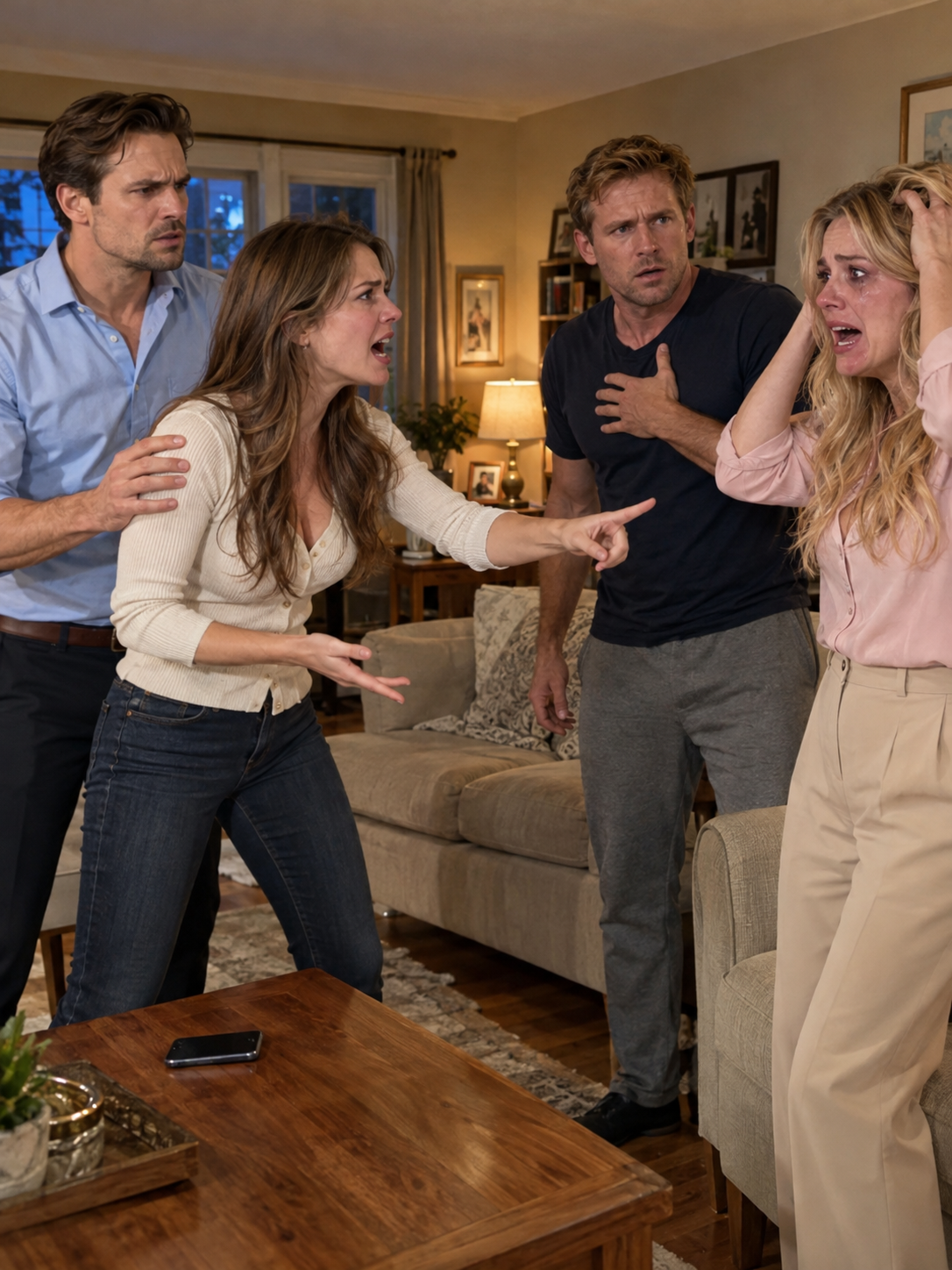
GHUB. My sister walked into my husband’s office and told him I had married him for his money. Twenty minutes later, she was crying in our parents’ kitchen, claiming I’d confessed everything. My father
FULL STORY CONTINUATION IF FACEBOOK BROUGHT YOU HERE, HERE’S THE CONTINUATION YOU’VE BEEN WAITING FOR. ENJOY! 👇 CHAPTER 2 For...
Cast Out on My 18th Birthday, My Parents Dropped Me at the Airport With a One-Way Ticket and a Ruthless Warning to Never Return, Only for a Strange Woman to Claim My Dead Grandfather Waited Eighteen Years for My Arrival.
The morning of my eighteenth birthday didn’t begin with pancakes or presents. It began with two duffel bags sitting by...
“YOU OWE HER THIS VENUE,” my aunt snapped—then my mother saw the look on my face.
Part 1: My mom secretly hijacked my wedding venue for my cousin and charged my card. So, I canceled the...