THREE YEARS AFTER JACKSON’S GIRLFRIEND VANISHED, HE FOUND HER WITH TWO LITTLE GIRLS AT DINNER—THEN A SINGLE LOOK FROM HIS FATHER MADE THE REUNION FEEL LIKE A WARNING – Life Story
Jackson Miller dropped his fork when he saw Amanda Wilson across the restaurant with two little girls who had his mother’s green eyes.
Before he could cross the room, Amanda saw him and reached for the girls’ coats as though somebody had sounded an alarm.
Then Jackson spotted his father outside the window, watching them with the expression of a man who knew why she was afraid.
THE GIRLS AT TABLE NINE
The fork struck the white plate with a sharp, embarrassing crack.
Across the table, Eleanor Miller stopped describing the hospital fundraiser she’d chaired that afternoon.
Jackson barely noticed.
Three years of unanswered calls, three years of searching for a woman who had apparently chosen to disappear, had collapsed into the distance between his chair and table nine.
Amanda was wearing a navy dress he didn’t recognize.
She’d cut her blond hair to her shoulders.
A narrow silver chain disappeared beneath her collar, and she was wiping applesauce from the chin of a small girl in a yellow cardigan.
The second girl was pressing a bread roll flat with both palms, completely absorbed in the work.
Both had dark curls.
Both had Eleanor’s eyes.
“Jackson?” his mother asked. “Are you sick?”
He turned his glass slowly, as if he could keep his hands from shaking by giving them something ordinary to do. “Look behind me.
The woman with the two children.”
Eleanor looked.
Her expression changed so quickly that Jackson understood she recognized Amanda before she noticed the girls. “Oh,” she said, almost without sound.
“Tell me I’m imagining it.”
One child looked up from the ruined bread roll.
Her eyes traveled across the dining room and settled on him.
She lifted one sticky hand in a solemn wave.
Jackson felt something painful shift beneath his ribs.
“Those girls can’t be more than two,” Eleanor said.
“Two and a half, maybe.” He did the arithmetic automatically.
Amanda had left in October, three years ago.
If she’d been pregnant then, a child born the following summer would be just over two now.
Two children.
Two identical faces.
One impossible explanation.
Amanda followed the girl’s gaze.
Her napkin fell to the floor.
For a second, neither of them moved.
He saw her recognize him, saw the shock and then the fear, and the fear hurt more than the years of silence.
She reached for a coat hanging over the back of her chair.
The little girl in yellow started protesting as Amanda lifted her from the booster seat.
“She’s leaving,” Jackson said.
Eleanor caught his wrist. “Don’t frighten the children.”
He looked at his mother.
Her grip was firm, her face pale.
In all his thirty-seven years, he’d rarely seen her frightened of anything.
“I’m not going to frighten them,” he said. “But I’m not going to pretend I didn’t see them.”
He crossed the room slowly, past a waiter carrying a tray of wineglasses.
He could hear the muted scrape of chairs and the piano near the bar, but his attention stayed on Amanda’s hands.
She was trying to fasten the yellow coat with fingers that would not cooperate.
“Amanda.”
Her shoulders went rigid. “Please don’t do this here.”
“Then tell me where.”
The second girl stared at him over the back of her chair, bread crumbs clinging to her sleeve.
She held up half the roll as if offering him a peace treaty.
“What’s her name?” Jackson asked.
Amanda swallowed. “Isabella.”
“And her sister?”
“Sophia.”
He repeated the names silently.
Until tonight, they had belonged to strangers.
Now they seemed to have been waiting inside him for years.
“Are they mine?”
Amanda looked toward the front windows instead of answering.
Jackson followed her eyes.
On the sidewalk, beneath the gold light of the restaurant’s awning, stood Richard Miller.
His father had told him he was spending the evening at a private meeting across town.
Richard was looking straight at Amanda.
And when he saw Jackson watching, he turned away.
Jackson remained beside the table, suddenly aware of the absurdity of his position.
He was the chief operating officer of Miller International, a company with offices in twelve countries.
He had negotiated contracts worth hundreds of millions of dollars without raising his voice.
Yet he couldn’t make himself ask the one question that mattered again.
Amanda pulled Sophia’s coat closed.
“Please,” she said. “They’re tired.”
“I understand that.”
“No, Jackson.
You don’t.”
The words came out sharper than she intended.
Sophia pressed her cheek against Amanda’s shoulder and began twisting a strand of her mother’s hair.
Jackson stepped back to give them space.
“I’m not stopping you from taking them home,” he said. “But if they’re my children, we cannot leave this room and pretend tonight never happened.”
Amanda’s eyes filled.
“They are,” she whispered.
The restaurant seemed to become strangely quiet.
Jackson looked at Isabella, who was still holding out the bread.
A daughter.
Two daughters.
He had spent years wondering whether Amanda had stopped loving him.
He had never once imagined that while he was attending conferences and negotiating shipping agreements, two little girls were learning to walk without him.
“Why didn’t you tell me?”
“I tried.”
Her answer was so quick that he almost missed it.
“What?”
“I tried to tell you.”
Before he could ask what she meant, Eleanor approached.
She had brought the restaurant manager, a discreet woman who offered them a small private room adjoining the dining area.
Amanda hesitated, then agreed to move the conversation away from the other guests.
“May I help with the girls?” Eleanor asked.
Amanda looked at her for a long moment.
“You don’t have to.”
“I know.”
Something in Eleanor’s voice made Amanda nod.
They moved into the private room together.
Isabella insisted on carrying her ruined bread roll.
Sophia refused to surrender the little stuffed rabbit she had apparently been hiding beneath her mother’s coat.
Jackson watched them settle at a small table with crayons provided by the manager.
Sophia looked up at him.
“Picture,” she announced.
He frowned gently. “What picture?”
She pointed at his face.
“Mommy picture.”
Amanda closed her eyes.
Eleanor quietly drew the children into a coloring game, giving Jackson and Amanda a little privacy at the opposite end of the room.
Jackson pulled out a chair.
“Start wherever you need to,” he said.
Amanda sat down, folded her hands, and stared at the tablecloth.
For the first time since she’d disappeared, she looked at him without trying to escape.
“Three years ago,” she began, “I found out I was pregnant the day before your presentation to the board.”
Jackson remembered that day.
He remembered his father’s excitement, the late-night preparations, the champagne waiting in the conference room.
He remembered Amanda arriving at his apartment with a paper bag from his favorite bakery.
And he remembered how distracted he’d been.
“You brought me those lemon cookies,” he said.
She gave a tiny, miserable smile.
“I was going to tell you over dinner.”
“What happened?”
Amanda looked toward the windows, where Richard was no longer visible.
“Your father happened.”
THE CONVERSATION BEHIND THE GLASS
Three years earlier, Amanda had stood in the lobby of Miller International holding a paper bag and three positive pregnancy tests tucked inside her purse.
She hadn’t planned to carry the tests to Jackson’s office.
She’d planned to tell him at home, with something sweet on the table and enough time for them both to be terrified before they began imagining their future.
But Jackson had called to say he would be working late.
Again.
He sounded exhausted and excited, caught between his father’s demands and his own desire to prove himself.
Amanda loved that ambition when it belonged to Jackson.
She had never loved what Richard Miller did with it.
That afternoon, as Amanda approached the elevators, her purse slipped from her shoulder.
The contents spilled across the polished marble floor.
Richard was coming out of a meeting.
He stopped to help.
One of the pregnancy tests rolled against his expensive shoe.
Amanda remembered the change in his face, not anger exactly, but calculation.
He picked up the test by its plastic end and returned it to her without a word.
Then he smiled.
“Amanda,” he said, “why don’t you come upstairs for a moment?”
She followed him because she had known him for nearly four years.
He had invited her to family dinners and sent flowers when her mother died.
He remembered her birthday.
He had once assured her that the Miller family looked after its own.
In his office, he poured her a glass of water.
Then he began talking about Jackson.
“He’s worked so hard for tomorrow,” Richard said. “The Crawford partnership could establish him as the company’s next chief executive.”
Amanda agreed.
She was proud of Jackson.
Richard nodded as if they were having a pleasant conversation.
Then he asked whether she understood what the expansion would require.
Three years of international travel.
Months in Shanghai.
Board scrutiny.
Long hours.
A public profile.
Amanda told him that she and Jackson would figure it out.
Richard’s expression became sympathetic.
“Of course,” he said. “But sometimes loving someone means understanding the cost of asking him to choose.”
She remembered the silence after that sentence.
She remembered the view across Boston Harbor, the ferries moving below his office windows, and the way the water in her glass trembled when she set it down.
“I wasn’t asking him to choose,” she told Richard.
“Not yet.”
He opened a presentation on his computer.
The numbers were familiar.
Growth projections.
Operating costs.
The Crawford contract.
Richard showed her the succession schedule, including Jackson’s proposed overseas assignment.
Then he explained what could happen if the board believed Jackson was reconsidering his commitments.
He never said that a child would ruin Jackson’s life.
He said something worse.
He made her believe Jackson would eventually see the child as the reason he’d lost it.
Amanda had grown up watching her mother apologize for needing things.
Money for groceries.
A ride to work.
Someone to stay home when she was sick.
She had promised herself that her own family would be different.
But Richard understood exactly where to press.
“Jackson will tell you what you want to hear,” he said. “He’s a good man.
He’ll promise you everything.
And then, five years from now, he’ll realize what he gave up.”
Amanda asked him to stop.
Richard folded his hands.
“I am asking you to think before you change three lives.”
She left his office shaking.
That night, Jackson barely looked up from his laptop when she entered his apartment.
He kissed her cheek and apologized.
“Just one more hour,” he promised.
Amanda put the cookies on the counter.
She waited through one hour.
Then another.
At nearly midnight, she stood in the doorway of his study.
“Jackson, can I tell you something?”
He turned in his chair.
“Of course.”
His phone rang.
He glanced at the screen.
“It’s Crawford.
Give me five minutes?”
She nodded.
Five minutes became forty.
When he finally came into the bedroom, she was pretending to sleep.
He kissed her forehead.
“I love you,” he whispered.
Amanda cried after he turned out the light.
Across the restaurant table three years later, Jackson held very still as she described that night.
“I remember the call,” he said.
“I know.”
“I should have put the phone down.”
“You didn’t know.”
“I knew you wanted to talk.”
Amanda looked at him.
For a moment, her familiar expression returned—the one that used to appear when he was trying to win an argument by taking responsibility for something that wasn’t entirely his.
“That wasn’t why I disappeared,” she said. “It was part of why I was afraid.
There’s a difference.”
Jackson nodded slowly.
“Go on.”
The morning after his presentation, Amanda had returned to her apartment and found Richard waiting outside.
He held a thin envelope.
Inside was an offer for private accommodation, medical expenses, and a monthly allowance.
The terms required her to remain out of contact with Jackson during the overseas assignment.
She refused.
Richard appeared almost relieved.
“Good,” he said. “Then you’re not interested in the money.”
Amanda asked what he wanted.
“I want my son to have the future he’s worked for.”
“And I want him to know about his child.”
Richard’s expression hardened.
“If you tell him now, I cannot guarantee the board will preserve his position.”
“Then he can make that decision.”
“Can he? Or will you make it for him?”
She told Jackson how she’d spent that afternoon packing.
How she’d driven north to her aunt’s small house in Vermont.
How she’d promised herself it would only be a few days.
How she had imagined Jackson finishing his presentation, realizing she was gone, and finally thinking about what he wanted.
Then she stopped talking.
Jackson noticed.
“What happened after you left?”
Amanda traced a crease in the tablecloth.
“I didn’t just vanish, Jackson.”
“You changed your number.”
“Afterward.”
“You quit your job.”
“Afterward.”
“Then tell me what I missed.”
She looked him directly in the eyes.
“I wrote you a letter.”
Jackson sat back.
“What letter?”
“A letter telling you I was pregnant.
Telling you where I was.
Asking you to call me before making any decisions.”
“I never received a letter.”
Amanda’s face changed.
Not with relief.
With something closer to dread.
“That can’t be true.”
“Why?”
“Because your father told me you’d read it.”
The quiet between them deepened.
At the children’s table, Isabella dropped a green crayon and began searching beneath her chair.
Eleanor bent to retrieve it.
Jackson barely heard them.
“Richard told you I’d read a letter?”
Amanda nodded.
“He said you didn’t want me to contact you anymore.”
Jackson looked at the dark window.
He understood then that the thing he’d believed for three years—that Amanda had chosen to leave without explanation—might have been another decision his father had made for him.
A decision that had cost him two daughters.
He stood.
Amanda reached for his hand.
“Jackson, please.
Not in front of them.”
He looked down at her fingers resting against his wrist.
They were the same hands he remembered holding in the rain, the same hands that had once steadied him before a difficult presentation.
He sat back down.
“You’re right.”
She looked surprised.
“Whatever happens next,” he said, “I’m not going to let him decide how I behave around my children.”
He glanced toward the small table.
Sophia had covered an entire sheet of paper with uneven purple circles.
Isabella was watching him.
For the first time, Jackson smiled at her.
She smiled back, cautiously.
Then she hid her face behind the bread roll.
He had a thousand questions.
But he began with the simplest.
“Would it be all right if I said goodnight to them before you leave?”
Amanda wiped her cheeks.
“Yes.”
THE HOUSE WHERE THEIR FATHER WAS A PHOTOGRAPH
Amanda’s apartment occupied the third floor of a brick building in Jamaica Plain, above a family-owned bakery that began preparing bread before sunrise.
Jackson followed her car in his own sedan.
He had offered to drive them, but Amanda pointed out that his car didn’t have child seats.
It was the first practical fact he had learned about fatherhood.
He found it more sobering than the entire conversation at the restaurant.
The apartment building had a narrow staircase and a front door that stuck in damp weather.
Amanda balanced Sophia against one hip while holding Isabella’s hand.
Jackson carried the diaper bag, two small coats, and a paper sack containing the restaurant’s leftover bread.
“Careful on the second landing,” Amanda warned. “The third step is uneven.”
He stepped around it.
That ordinary instruction touched him unexpectedly.
She knew every dangerous step in this building.
She knew which child needed to be carried when tired, which one would insist on walking, and exactly how much patience remained before someone began to cry.
He knew none of it.
Inside, the apartment smelled faintly of laundry soap and baked cinnamon.
There were drawings on the refrigerator, tiny boots lined beneath a bench, and a collection of board books arranged according to a system only the children understood.
Two stuffed rabbits waited on the couch.
Sophia immediately grabbed one.
“Hop.”
Isabella took the other.
“Skip.”
Jackson placed the bags near the door.
Amanda watched him take in the room.
“I know it’s small.”
He turned toward her.
“It’s beautiful.”
“Jackson.”
“I mean it.”
She looked away.
He wondered how often she’d heard people compliment homes they could leave whenever they wanted.
The girls’ bedroom contained two low wooden beds, a basket of stuffed animals, and a night-light shaped like a moon.
Above each bed hung a framed watercolor.
One showed a rabbit among yellow flowers.
The other showed a rabbit under a blue umbrella.
Jackson recognized Amanda’s painting style.
He used to find unfinished watercolors drying on the windowsill of their old apartment.
“You painted these?”
She nodded.
“They picked the colors.”
Sophia climbed into bed and immediately announced that she wasn’t sleepy.
Isabella rubbed both eyes.
Amanda negotiated pajamas, water, and the correct placement of the rabbits with the calm precision of someone who had repeated the process hundreds of times.
Jackson stood near the doorway.
“Can I help?”
“Would you read to Isabella?”
He looked at the stack of books beside her bed.
“Absolutely.”
Isabella considered him.
Then she handed him a book about a little bear who couldn’t find his red boots.
He sat on the rug.
His first attempt was too fast.
She frowned.
“Slow.”
“Sorry.”
He started again.
This time, he gave each animal a different voice.
Sophia laughed from her bed.
Amanda appeared in the doorway with an expression he hadn’t seen since before she left.
She was trying not to smile.
By the final page, Isabella had leaned against his shoulder.
Jackson kept reading the last sentence silently, unable to bring himself to move.
When both girls were asleep, Amanda led him to the kitchen.
She put water on for tea.
He noticed she was still using the chipped blue mug he’d bought her at a pottery fair.
“You kept that.”
She looked at the mug in her hand.
“It survived the move.”
He almost laughed.
Instead, he said, “I thought you threw everything away.”
Amanda set the mug between them.
“I didn’t throw anything away.”
She opened a cabinet and removed a photograph album.
Jackson recognized the cover.
It had once contained pictures from their vacations.
Now the pages were filled with photographs of two little girls.
He turned them carefully.
A hospital room.
Two babies wrapped in white blankets.
Amanda, exhausted and smiling, holding them against her chest.
A tiny hand closed around her finger.
Another photograph showed the twins lying beside each other beneath a knitted yellow blanket.
Jackson touched the edge of the page.
“Where were they born?”
“Burlington.
June eighteenth.”
He did the calculation again.
Two years and four months.
He had been in Singapore when they were born.
He remembered complaining about a delayed flight that week.
While he’d been angry about an airport lounge, Amanda had been giving birth to their daughters.
“Was anyone with you?”
“My aunt Rose.”
“Were there complications?”
“No.
We had a few extra appointments because they were twins, but they were healthy.”
He nodded.
Then he looked at the photograph again.
“Were you frightened?”
Amanda’s eyes filled.
“Every day.”
He waited.
“Not of them,” she added. “I was afraid I wouldn’t be enough.”
Jackson closed the album.
He wanted to tell her that she had been enough.
But he knew better than to turn two years of exhausting work into a reassuring sentence.
Instead, he asked, “What was the hardest part?”
Amanda sat beside him.
“The nights when they were both sick.
When one finally fell asleep and the other woke up.
When I needed to call someone and there wasn’t anyone who could get there quickly.”
“You had your aunt.”
“She helped more than I can ever repay.
But she has arthritis, Jackson.
She couldn’t carry them up stairs or take both to appointments.”
He looked toward the hallway.
“I should have been there.”
“Yes,” Amanda said quietly.
He accepted the answer.
She didn’t soften it.
For the first time that evening, he began to understand that rebuilding what they’d lost would require more than declaring his intentions.
He would have to listen to pain that couldn’t be solved.
He stayed until the tea went cold.
Before leaving, he asked whether he could see the girls again.
Amanda looked toward their bedroom.
“They don’t understand what’s happening yet.”
“I know.”
“We need to be careful.
No promises we can’t keep.
No sudden changes.”
“I agree.”
“And please don’t come here with expensive gifts.”
He smiled faintly.
“I wasn’t planning to.”
“Good.
Sophia would prefer an empty cardboard box anyway.”
He laughed.
The sound startled them both.
For one brief moment, he could almost remember how easy it had once been to stand beside her in a kitchen.
Then his phone vibrated.
Richard.
Jackson watched the name illuminate the screen.
He declined the call.
Amanda’s expression tightened.
“You’ll have to talk to him eventually.”
“Yes.”
“Just don’t do it because you think you have to defend me.”
Jackson looked at her.
“Why not?”
“Because this isn’t a contest between your father and me.
It’s about the girls.
And whatever else happens, they need adults who can make decisions without using them to win arguments.”
He looked down at the photograph album.
She was right.
He had spent his entire professional life being taught that every conflict required a winner.
Amanda was asking him to learn something harder.
He needed to become dependable.
He picked up his coat.
“May I come by for breakfast tomorrow?”
Amanda hesitated.
“Seven-thirty.
They’re usually awake by six.”
“I’ll be here at seven-thirty.”
She opened the door.
“Jackson?”
He turned.
“Thank you for not shouting at the restaurant.”
He remembered the effort it had taken to stay seated.
Then he looked back into the warm apartment.
“Thank you for letting me come home with you.”
Amanda didn’t answer.
But she waited until he reached the bottom of the stairs before closing the door.
Outside, the bakery lights were coming on.
Jackson stood beside his car, breathing in the cold smell of yeast and wet pavement.
Then he opened his phone.
There were seven missed calls from Richard.
One message.
We need to discuss the situation before it damages the company.
Jackson read it twice.
For the first time in his life, he didn’t feel obligated to answer immediately.
He typed a response.
The situation has names.
Sophia and Isabella.
You’ll use them if we ever discuss this again.
Then he drove home.
THE MESSAGE SENT IN HIS NAME
At seven twenty-eight the next morning, Jackson stood outside Amanda’s apartment holding a paper bag.
He had stopped at the bakery downstairs.
Inside were four plain croissants and two small cartons of milk.
He’d considered buying flowers.
Then he remembered Amanda’s warning.
No grand gestures.
No expensive gifts.
He rang the bell.
Sophia answered with Amanda standing immediately behind her.
“Picture man!”
Jackson smiled.
“Good morning, Sophia.”
She inspected the bag.
“Food?”
“Breakfast.”
She approved.
Isabella appeared behind her sister, clutching Skip.
She studied Jackson for several seconds before offering him a solemn wave.
He returned it.
Amanda stepped aside.
“You’re early.”
“Two minutes.”
“You used to be twenty minutes late.”
“I remember.”
She looked at him, then took the bag.
“That wasn’t a compliment.”
“I know.”
The morning was messy.
Sophia wanted the same cup as Isabella.
Isabella wanted her toast cut into squares rather than triangles.
Someone spilled milk.
Jackson made the mistake of giving both girls equal portions of strawberries, unaware that Sophia considered the larger strawberry a matter of personal justice.
Amanda watched him attempt diplomacy.
“Don’t negotiate over fruit,” she advised.
He lowered his voice.
“Is that an established household policy?”
“After several difficult mornings.”
For the first time, she laughed without immediately looking sad.
He wanted to remember the sound.
Instead, he wiped the table.
At eight-thirty, Eleanor arrived.
Amanda had agreed to the visit the night before.
She came carrying two children’s books, a packet of washable crayons, and a small tin of cookies.
No jewelry.
No elaborate toys.
Jackson recognized the restraint as a deliberate effort.
His mother had always believed affection should be visible.
Today, she was trying to make it useful.
Sophia greeted her enthusiastically.
Isabella remained close to Amanda until Eleanor sat on the floor and began reading.
Within ten minutes, both girls were beside her.
Jackson watched his mother’s hands turn the pages.
He remembered those same hands checking his homework, fastening his coat, and later straightening his tie before his first board presentation.
Eleanor looked up.
“They’re wonderful.”
Amanda nodded.
“They are.”
Jackson saw something pass between the women.
Grief.
Relief.
And perhaps the beginning of trust.
His phone rang.
Christina Vega, his executive assistant.
He stepped into the hallway.
“Jackson, thank goodness.
The board is asking whether you’re attending the ten o’clock meeting.”
“What meeting?”
“Your father called an emergency session.”
“About the Crawford expansion?”
“Apparently about you.”
He closed his eyes.
“Of course.”
Christina hesitated.
“He’s telling people you’re making impulsive decisions because of a personal crisis.”
Jackson looked toward the apartment.
Sophia was sitting in Eleanor’s lap.
Isabella was carefully arranging crayons in a row.
He lowered his voice.
“Has he mentioned Amanda?”
“Not directly.
But he says there’s an old situation that could become a reputational issue.”
Jackson understood.
His father had spent three years controlling the story.
Now he was preparing to control the explanation.
“Christina, I need two things.”
“Anything.”
“Send me the agenda and the current governance policy.
And find out who has access to the boardroom presentation archive from October 2023.”
There was a pause.
“Why that date?”
“Because I think something happened in this company that nobody bothered to tell me about.”
Christina didn’t ask another question.
“I’ll send what I can access through the normal channels.”
“Thank you.”
When Jackson returned to the kitchen, Amanda was washing dishes.
He offered to dry.
“You have a board meeting,” she said.
“I have twenty minutes.”
She passed him a plate.
For several minutes, they worked in silence.
Then he asked about the letter.
Amanda’s hands stopped.
“Do you still have a copy?”
“Yes.”
“Would you show me?”
She dried her fingers slowly.
“Why?”
“Because I need to know what you told me.”
Amanda looked at him for a long moment.
Then she walked to her bedroom.
She returned with a thin folder.
Inside was a copy of the letter she had written three years earlier, along with a printout of an email.
Jackson read the letter first.
He recognized her handwriting.
Dear Jackson,
I don’t know whether you’ll be angry or frightened when you read this.
I’m both.
I’m pregnant.
I wanted to tell you in person, but I let myself get scared.
Your father knows.
He thinks this will change your future, and maybe it will.
But I don’t want either of us making a decision because somebody else tells us what we’re supposed to want.
I’m staying with Aunt Rose in Vermont for a few days.
Please call me.
Whatever happens, we should decide together.
I love you.
Amanda.
Jackson stared at the page.
The words were simple.
No accusations.
No demands.
Only an invitation to make a decision together.
“Where did you send it?”
“I gave it to the receptionist at Miller International.
I asked that it be delivered directly to your office.”
“Do you remember who took it?”
“A woman named Denise.”
Jackson remembered Denise.
She had retired the following year.
“She said she’d make sure you got it.”
He turned to the second page.
It was an email from Richard, sent from his personal corporate account.
Amanda,
Jackson has received your letter.
He understands your decision and agrees that a clean separation is best while the expansion proceeds.
I strongly advise you not to contact him further.
Any future practical arrangements can be handled through me.
Richard.
Jackson read it again.
Then a third time.
His father hadn’t merely frightened Amanda.
He had told her that Jackson knew about the pregnancy.
He had spoken in Jackson’s name.
He had taken away her reason to believe another conversation was possible.
“I called you after that,” Amanda said.
Jackson looked up.
“Twice.
Both calls went to voicemail.
I thought you weren’t answering because you meant what your father said.”
“I changed phones after a company security update.”
“I know that now.”
“I never heard those messages.”
Amanda’s expression tightened.
“I waited for weeks.”
He looked back at the letter.
“Why didn’t you try again?”
“Because I thought you had answered.”
She pointed at the email.
“Not with your voice.
But with this.”
Jackson sat down.
He remembered Richard telling him that Amanda needed space.
He remembered being instructed not to embarrass her by searching too aggressively.
He remembered his father saying that sometimes people outgrew relationships.
And he remembered believing him because Richard had always sounded so certain.
“I spent six months looking for you,” Jackson said.
Amanda’s eyes widened.
“What?”
“I called your old office.
Your landlord.
I drove to Vermont once.”
“You came to Vermont?”
“In March.
Your aunt wouldn’t tell me where you were.”
Amanda sat down opposite him.
“I was staying at her house.”
“She said you were safe and didn’t want visitors.”
Amanda shook her head slowly.
“She thought she was protecting me.”
Jackson studied the email.
A single page.
A few sentences.
Three years of consequences.
His father had been careful to avoid making a direct statement that could be easily disproved.
He hadn’t said Jackson rejected his children.
He had said Jackson agreed a separation was best.
The distinction was small enough to sound harmless in a boardroom.
In a frightened young woman’s hands, it had changed everything.
Amanda watched Jackson’s expression.
“What are you going to do?”
He folded the paper carefully.
“I’m going to ask him whether he wrote it.”
“And if he lies?”
“Then I’ll know something important about what kind of relationship we can have.”
She looked at the page again.
“I don’t want the girls dragged into a public fight.”
“Neither do I.”
“You say that now.”
He accepted the warning.
“Then we need to make a plan that protects them.”
Amanda studied him.
For three years, she’d imagined this conversation ending with anger.
Instead, Jackson was asking what they should do next.
She wasn’t ready to trust him completely.
But she was ready to answer.
“We start,” she said, “by telling the truth without turning our daughters into evidence.”
He nodded.
And for the first time, he understood that the hardest part of confronting his father would not be proving the deception.
It would be refusing to repeat the same mistake.
WHAT A FATHER CAN BUY
Richard Miller was waiting in the executive conference room when Jackson arrived.
The office windows overlooked Boston Harbor.
A model cargo vessel sat on the table beside a framed photograph of the company’s first warehouse.
Richard liked that photograph.
He often told visitors that he’d built Miller International from a failing family business and thirty thousand dollars in borrowed money.
Jackson had heard the story hundreds of times.
Today, the photograph looked less like a symbol of determination and more like a warning about what a man might sacrifice to protect something he’d built.
Richard stood.
“Thank you for coming.”
Jackson remained near the door.
“Did you write an email to Amanda Wilson in October 2023 telling her that I’d received her letter?”
Richard’s expression changed almost imperceptibly.
“Jackson, I think we should sit down.”
“Did you?”
His father glanced toward the glass wall.
“Close the door.”
Jackson did.
Richard returned to his chair.
“I was trying to contain a complicated situation.”
“That’s not what I asked.”
Richard exhaled.
“Yes.
I wrote to her.”
“Did you receive the letter she left for me?”
“Yes.”
“Did you give it to me?”
“No.”
The simplicity of the admission made Jackson feel strangely dizzy.
“Why?”
“Because you were hours away from signing the most important agreement of your career.”
“Hours?”
Richard looked away.
“Days, perhaps.
The precise timing doesn’t matter.”
“It matters to me.”
“Jackson—”
“You knew she was pregnant.”
Richard folded his hands.
“I knew there was a possibility.”
“You knew enough to interfere.”
“I knew enough to recognize a crisis.”
Jackson sat down.
His father appeared relieved, as if the conversation had finally entered a familiar professional format.
Richard opened a folder.
“I’ve prepared several options for handling this discreetly.”
Jackson stared at him.
“Handling what?”
“The children.
The publicity.
Amanda’s needs.
Your responsibilities.”
He slid the folder across the table.
Jackson didn’t open it.
Richard continued.
“We can arrange financial support, housing, medical coverage, education trusts.
Whatever is necessary.
But we must avoid turning a private matter into a corporate scandal.”
Jackson looked at the folder.
“Do you hear yourself?”
Richard frowned.
“I’m trying to be practical.”
“You’re offering to pay for consequences you created.”
“I’m offering to protect your family.”
“My family needed protection from you.”
Richard’s face hardened.
“Be careful, son.”
Jackson almost laughed.
For thirty-seven years, those words had worked.
Be careful.
Think about the consequences.
Remember what people expect of you.
Every warning had led him back toward his father’s preferred decision.
Not today.
He opened the folder.
Inside were projected financial arrangements, housing suggestions, and a proposed communications strategy.
The girls’ names appeared nowhere.
They were described as dependents.
Amanda was listed as a potential claimant.
Jackson closed the folder.
“Her name is Amanda.”
Richard’s jaw tightened.
“I know her name.”
“And the girls are Sophia and Isabella.”
“I know that now.”
“No.
You know there’s a problem to manage.”
Richard stood.
“You think I’m some kind of monster.”
“I think you’re a man who made a terrible decision and then spent three years protecting it.”
Richard’s face flushed.
“Everything I’ve built was intended for you.”
“Then why didn’t you ask what I wanted?”
“I raised you.”
“That isn’t an answer.”
Richard looked toward the harbor.
For a moment, he seemed older.
“When I was your age, your grandfather’s company was collapsing.
I had employees begging me not to close the doors.
Your grandmother was sick.
There was no safety net.”
Jackson waited.
Richard continued.
“I learned that hesitation costs people their livelihoods.
I learned that families survive because somebody makes hard decisions.”
“And you decided that meant nobody else was allowed to make one.”
Richard looked at him.
“I decided you deserved the chance I never had.”
Jackson shook his head.
“You gave me your ambition and called it my future.”
The room fell silent.
Then Richard said, “You can’t just walk away from the company.”
Jackson hadn’t told him he intended to resign.
But apparently his father had already considered the possibility.
“I haven’t decided how I’ll handle my position,” Jackson said. “I have employees and obligations.
I won’t abandon them to punish you.”
Richard appeared to relax.
“Good.”
“But I won’t let you use the company to control my personal life.”
Richard’s expression hardened again.
“You don’t understand the damage public accusations could cause.”
“Then stop giving me reasons to make them.”
Jackson stood.
“I want access to an independent review of any company resources used in connection with Amanda or with this situation.”
Richard’s eyes narrowed.
“What resources?”
“That question is exactly why there should be a review.”
“You’re threatening me.”
“No,” Jackson said. “I’m telling you I’m done trusting you to investigate yourself.”
Richard rose slowly.
“You’ll destroy everything.”
Jackson opened the door.
“No, Dad.
I’m trying to find out what you’ve already damaged.”
Christina was waiting beside his office.
She looked at him with obvious concern.
“Legal asked whether you wanted the board meeting postponed.”
“No.”
“Your father is furious.”
“I know.”
Christina lowered her voice.
“Jackson, there’s something else.”
He stopped.
She handed him a copy of the meeting agenda.
Several items concerned executive conduct, potential conflicts of interest, and reputational exposure.
At the bottom was a new item.
External communications authorization.
Jackson looked at her.
“Who added this?”
“Your father requested it yesterday.”
“Before I saw Amanda?”
Christina shook her head.
“After.”
He stared at the page.
His father was already preparing a public narrative.
Jackson had spent years helping Miller International respond to competitors, investors, and regulators.
He knew exactly what an external communications authorization could permit.
He also knew how easily a frightened person could be made to look unreliable when someone else controlled the first public statement.
“Christina,” he said, “please tell Patricia Chen I need to speak with her before the meeting.”
Patricia was the company’s general counsel.
She owed her professional duties to Miller International, not to Richard personally.
That distinction had never mattered much inside the company.
Now it mattered enormously.
Patricia met Jackson in a small office beside the boardroom.
She listened without interrupting as he explained the letter, the intercepted message, and Richard’s proposed arrangements.
When he finished, she asked a question he hadn’t expected.
“Did Amanda authorize you to share her letter with me?”
Jackson paused.
“No.”
“Then don’t send me a copy yet.”
He looked at her.
“It’s evidence.”
“It’s also her private correspondence.
Ask her first.”
Jackson sat back.
The answer irritated him for half a second.
Then he understood.
He had nearly repeated the mistake he’d promised Amanda he wouldn’t make.
Patricia continued.
“If company funds were used for personal matters or unauthorized publicity, the board should investigate.
But your father’s treatment of Amanda, however troubling, isn’t automatically a corporate violation.”
“What about the letter?”
“That may be relevant to his conduct.
We need to establish the facts properly.”
She folded her hands.
“And Jackson, I recommend you retain independent counsel for your personal interests.”
He nodded.
“Because you represent the company.”
“Exactly.”
For once, he appreciated a professional boundary.
When he left Patricia’s office, he called Amanda.
She answered on the fourth ring.
“Everything okay?”
“I spoke with my father.”
Silence.
“He admitted keeping the letter.”
Amanda inhaled sharply.
“He admitted it?”
“Yes.”
“What did he say?”
“That he was protecting my career.”
She made a small sound.
Jackson couldn’t tell whether it was laughter or disbelief.
“Of course he did.”
He looked out at the harbor.
“I also spoke with legal.
They need your permission before reviewing the email.”
Amanda was quiet for several seconds.
“You asked?”
“Yes.”
“Before giving it to them?”
“Yes.”
She exhaled.
“Thank you.”
The word made him realize how little he’d actually earned.
He hadn’t solved anything.
He’d simply asked permission.
But after three years of decisions made behind closed doors, asking was a beginning.
“I don’t want to rush you,” he said. “Take whatever time you need.”
Amanda glanced toward her living room.
Sophia was trying to put a sweater on Hop.
Isabella was explaining, with increasing frustration, that rabbits didn’t need socks.
Amanda smiled despite herself.
“Come over after work,” she said.
“Are you sure?”
“Dinner’s at six.
The girls want pasta.”
He looked at his father’s office across the corridor.
Then toward the elevator.
“I’ll be there.”
“Jackson?”
“Yes?”
“Please don’t wear one of those expensive white shirts.”
He frowned.
“Why?”
“Tomato sauce.”
For the first time that day, he laughed.
THE FIRST RULE OF STAYING
The first week taught Jackson that fatherhood didn’t arrive as a revelation.
It arrived as a series of small mistakes.
He bought the wrong brand of yogurt.
He failed to understand why Isabella needed the blue cup even though the green cup was identical.
He put Sophia’s shoes on the wrong feet and didn’t notice until Amanda pointed out that she was walking sideways.
But he learned.
He arrived when he said he would.
He washed dishes without being asked.
He discovered that Sophia liked stories with dramatic voices while Isabella preferred to hear the same familiar ending every night.
He learned not to lift either child without asking when she was upset.
And he learned that Amanda became very quiet when she was frightened.
One Thursday evening, they took the girls to a neighborhood park.
The air smelled of fallen leaves and damp earth.
Sophia ran toward the swings.
Isabella stayed beside Amanda, examining a small yellow leaf she’d found on the path.
Jackson crouched.
“Can I see?”
She handed it to him.
“Broken.”
One edge was torn.
He studied it.
“Still pretty.”
Isabella considered that.
Then she tucked the leaf into her coat pocket.
Amanda watched them from a nearby bench.
“You’re getting better at this.”
“At what?”
“Not trying to fix everything.”
Jackson smiled.
“I’m still working on it.”
They sat together while the girls played in the sandbox.
For several minutes, neither spoke.
Then Amanda asked about his job.
“Are you really considering leaving?”
“Yes.”
“Because of us?”
“Because I need to decide what kind of life I want.”
She looked at him.
“Those are different answers.”
“I know.”
He watched Sophia attempt to build a tower.
It collapsed.
She stared at it in outrage.
Jackson began to stand.
Amanda touched his sleeve.
“Wait.”
Sophia studied the fallen sand.
Then she began again.
Jackson sat down.
Amanda gave him a small smile.
“She doesn’t need us to rescue every tower.”
He nodded.
The lesson stayed with him.
That night, after the girls were asleep, he told Amanda about the board’s independent review.
Patricia had recommended retaining an outside investigator.
The board had approved the process without Richard participating in the vote.
Richard was furious.
But he couldn’t stop it without making himself look more suspicious.
Amanda listened carefully.
“Do they know about the twins?”
“Only what I told them when I first found out.”
Her expression changed.
“What did you tell them?”
“That I had daughters.
That my father knew about the pregnancy.”
“Did you mention their names?”
He hesitated.
“Yes.”
Amanda looked down.
“Jackson.”
“I was angry.”
“I know.”
“I shouldn’t have said more than necessary.”
She looked toward the hallway.
“They didn’t ask to become part of a boardroom dispute.”
“No.”
“And once something leaves your mouth, you can’t always control where it goes.”
He accepted the rebuke.
“I’ll speak to Patricia about keeping their information out of any record that doesn’t require it.”
Amanda nodded.
But he could see that the mistake had unsettled her.
The next day, Jackson met with a family-law attorney.
He wanted to establish legal parentage, understand his responsibilities, and create arrangements that wouldn’t depend on whether Amanda ever wanted a relationship with him again.
The attorney explained the available procedures, including voluntary acknowledgment and testing if both parents wanted confirmation.
Jackson asked Amanda what she preferred.
“Testing,” she said.
He nodded immediately.
“Okay.”
She looked surprised.
“You aren’t offended?”
“No.
We need certainty for the records.
I don’t want there to be questions later.”
The private test confirmed what Amanda already knew.
Jackson was the girls’ biological father.
They began the appropriate paperwork to establish his legal parentage and arrange support.
Jackson didn’t ask Amanda to trade financial security for access.
She didn’t ask him to earn access through money.
They agreed on something more difficult.
Consistency.
For the time being, Jackson would visit according to a predictable schedule.
Overnights would wait until the girls were comfortable.
Major decisions about childcare and medical care would be discussed together.
They would work toward a formal parenting agreement with professional guidance.
When they finished talking, Amanda looked exhausted.
Jackson made tea.
He brought her the chipped blue mug.
“You remembered.”
“Of course.”
She wrapped both hands around it.
“That’s not what I meant.”
He understood.
He had remembered how she took her tea.
He had remembered the mug.
But he hadn’t known the two most important people in her life.
His chest tightened.
“I’m trying to learn what I missed.”
Amanda looked at him.
“You can’t learn two years in a week.”
“I know.”
“You don’t have to keep apologizing for every moment.”
“I don’t know how else to respond.”
She was quiet for a long time.
Then she said, “Stay.”
Jackson looked up.
Amanda smiled faintly.
“Not here forever.
Just until I finish this tea.”
He sat beside her.
The apartment was quiet except for the refrigerator humming and the occasional car passing below the windows.
Amanda leaned back against the couch.
For a little while, they didn’t talk about Richard.
They didn’t talk about legal documents.
They listened to the sounds of the building settling around them.
Jackson remembered evenings like this from their old life.
Amanda reading beside him.
A lamp burning.
A half-finished cup of tea.
The difference was that he no longer assumed those moments would always be available.
When he left, Amanda walked him to the door.
“Tomorrow?” he asked.
“Tomorrow.”
He hesitated.
“Can I ask something?”
She nodded.
“Did you ever stop loving me?”
Amanda’s face changed.
She looked away.
“That isn’t a fair question.”
“I know.”
“Because the answer doesn’t tell us what happens next.”
He waited.
She opened the door.
“No,” she said quietly. “I didn’t.”
He felt the words settle inside him.
Then she added, “But love wasn’t enough to keep us together the first time.”
Jackson nodded.
“I understand.”
“Do you?”
“I’m beginning to.”
She studied him.
“Goodnight, Jackson.”
“Goodnight, Amanda.”
He walked down the stairs slowly.
Outside, the streetlights reflected off the wet pavement.
He realized he wasn’t hoping to return to the life they’d had.
He was hoping they might build a life neither of them had known how to choose before.
Two days later, that hope was tested.
THE PRICE OF A PHOTOGRAPH
The photograph appeared online on a Monday morning.
Jackson standing beside a playground swing.
Sophia laughing in her yellow coat.
Isabella holding Skip beneath one arm.
Amanda in the background, carrying a bag of snacks.
The picture itself was ordinary.
The caption wasn’t.
MILLER HEIR’S SECRET FAMILY EMERGES AS EXECUTIVE CRISIS DEEPENS.
Amanda saw it while preparing breakfast.
Her phone had been vibrating since six.
Messages from coworkers.
An email from the museum where she worked.
A missed call from an unfamiliar number.
She opened the article and felt her stomach tighten.
It described her as Jackson’s former girlfriend.
It questioned why she’d returned to Boston.
It suggested that her reappearance might explain his sudden disagreement with the company’s founder.
Then it mentioned the twins by name.
Amanda put the phone facedown.
“Mama?”
Isabella stood beside her, holding a spoon.
Amanda forced a smile.
“Good morning, sweetheart.”
“Toast?”
“Yes.
Toast.”
She spread butter on bread while trying to slow her breathing.
The phone rang again.
This time it was the director of the historical society where Amanda worked as a collections registrar.
The director sounded apologetic.
Reporters had been calling the office.
Someone had asked whether Amanda had obtained her position through the Miller family.
The suggestion was ridiculous.
She had been hired through a competitive process after years of contract work.
But the museum depended on donations.
Its board was nervous.
The director asked whether Amanda could work remotely for a few days while the organization decided how to handle inquiries.
Amanda agreed.
Then she hung up and stared at the toast.
She had worked hard for the job.
It wasn’t glamorous.
It involved accession records, insurance documentation, condition reports, and endless spreadsheets.
But it was hers.
She had earned it before Jackson knew she was back in Boston.
She had never needed the Miller name to open a door.
Now that name was threatening to close one.
At eight-thirty, someone knocked.
Amanda looked through the peephole.
A man holding a camera stood in the hallway.
Another person waited near the stairs.
“Ms.
Wilson?” the man called. “We’d just like to ask a few questions.”
Sophia appeared behind her.
“Who’s that?”
Amanda moved away from the door.
“Nobody we need to talk to.”
The knocking continued.
Isabella began to cry.
Amanda called Jackson.
He answered immediately.
“What’s wrong?”
“There are reporters outside my apartment.”
He went silent.
“They know the girls’ names.”
“I saw the article.”
“Jackson, how did they find us?”
“I don’t know.”
“Did you tell anyone where I live?”
“No.”
“Did your father?”
“I don’t know.”
She heard him take a breath.
“I’m coming.”
“Don’t bring anyone.”
“I won’t.”
He arrived fifteen minutes later.
The reporters moved toward him as soon as he stepped out of the elevator.
“Mr.
Miller, are the children yours?”
“Is your father forcing you to resign?”
“Did Ms.
Wilson receive financial assistance from your family?”
Jackson kept walking.
He didn’t answer.
Inside the apartment, Amanda was packing the girls’ backpacks.
Sophia insisted on bringing a toy truck.
Isabella carried three books and refused to put any of them down.
Jackson crouched beside them.
“Hi, girls.”
Sophia looked at the door.
“Loud people.”
“I know.”
“Go away?”
“Yes,” he said. “We’re going somewhere quieter.”
Amanda looked at him.
“Where?”
“My mother has a townhouse with a private entrance.
She’s offered it for a few days.”
Amanda hesitated.
She didn’t want to accept more help from the Miller family.
But she also didn’t want her daughters frightened in their own home.
“Only temporarily,” she said.
“Of course.”
Eleanor arranged for a car to meet them at the building’s rear entrance.
Jackson stayed near the front until the reporters moved toward him.
Amanda and the girls left through the service stairwell with Eleanor.
The arrangement worked.
But when Amanda reached the townhouse, relief didn’t come.
She felt displaced.
Again.
Three years earlier, she’d left Boston because Richard convinced her that staying would destroy Jackson’s future.
Now she was leaving her apartment because the Miller family had turned her children into a story.
She watched Sophia explore the unfamiliar living room.
Isabella stood near the door.
“Home?” she asked.
Amanda knelt beside her.
“We’ll go home soon.”
“Promise?”
Amanda looked at Jackson.
He looked away.
That evening, Patricia called.
The board’s outside investigator had identified payments to a communications firm from a corporate account controlled through Richard’s executive office.
The firm had prepared background material about Amanda and a media response describing Jackson’s behavior as unstable.
The investigators were reviewing whether company resources had been used for Richard’s personal interests.
Jackson listened carefully.
“Did the firm release the photograph?”
“We haven’t established that,” Patricia said. “The inquiry is ongoing.”
“Can you stop the coverage?”
“No.
But we can stop the company from contributing to it.”
He looked toward the living room.
Amanda was helping Isabella arrange books on a shelf.
“Then do that.”
Patricia paused.
“Jackson, there’s another problem.”
“What?”
“The photograph appears to have come from material circulated during the emergency board discussions.”
His stomach tightened.
He remembered showing a picture of the twins on his phone while explaining why he was reconsidering his position.
He had wanted the directors to understand that this wasn’t an abstract personal matter.
He had wanted them to see his daughters as people.
Instead, someone had copied or photographed an image shown in a corporate setting.
He had helped expose them.
After the call, Jackson told Amanda.
She listened without interrupting.
Then she asked, “You showed their photograph to the board?”
“Yes.”
“Without asking me?”
He swallowed.
“Yes.”
Amanda stood very still.
“You promised me.”
“I know.”
“You promised me the girls wouldn’t become evidence in your fight with your father.”
“I wasn’t thinking clearly.”
“That doesn’t make it better.”
“No.”
She folded her arms.
“For three years, your father made decisions for us because he thought he knew what was best.”
Jackson looked at her.
“Don’t.”
“Don’t what?”
“Compare me to him.”
“Then don’t make the same kind of decision.”
He felt the words land.
Amanda’s eyes were wet.
“I understand that you love them.
I understand you’re angry.
But every time someone in your family wants to prove a point, my daughters become something to display.”
“They’re my daughters too.”
“Yes,” she said. “And that’s why this matters.”
He looked toward the hallway.
Sophia was humming to Hop.
Isabella was watching them from the doorway.
Jackson lowered his voice.
“What do you need me to do?”
Amanda answered immediately.
“Give us some space.”
He stood motionless.
“How much?”
“I don’t know.”
“Amanda—”
“Please.”
He wanted to argue.
He wanted to explain that he had never intended any harm.
But he remembered the sandcastle.
Not every broken thing needed him to reach in immediately.
He nodded.
“I’ll respect that.”
Amanda wiped her cheeks.
“The girls can still see you.
We’ll work out visits.
But I need time to think.”
Jackson picked up his coat.
He said goodnight to both girls.
Sophia asked whether he would come back tomorrow.
He looked at Amanda before answering.
“I’ll see you soon, sweetheart.
Your mom and I will tell you when.”
It was the first promise he had made without pretending he controlled the answer.
THE NIGHT SHE LOCKED THE DOOR
Amanda returned to her apartment three days later.
The reporters had disappeared after the building’s management tightened access and the news cycle moved on.
The girls were delighted to see their own beds.
Sophia ran into the bedroom shouting for Hop’s favorite blanket.
Isabella carefully inspected every toy as though checking that nothing had changed.
Amanda carried the last bag upstairs herself.
The apartment was quiet.
She had imagined that quiet would feel comforting.
Instead, it reminded her of Vermont.
Those nights when she had stood over two sleeping babies and wondered whether she had made the right decision.
She was tired of uncertainty.
She was tired of being afraid of powerful people.
Most of all, she was tired of wondering whether protecting her daughters required keeping them away from the father they loved.
Her phone rang.
Richard Miller.
She stared at the screen.
Then she answered.
“Amanda.”
His voice was controlled.
Polite.
Almost gentle.
“I know this has been difficult.”
She said nothing.
“I’d like to discuss a way to make things easier for you and the children.”
Amanda looked toward the bedroom.
“What do you want?”
“To help.”
She closed her eyes.
It was the same word he’d used three years ago.
Help.
As if taking control of someone’s life became kindness when enough money was involved.
“I’m not interested in another arrangement,” she said.
“This isn’t about separating you from Jackson.”
“Then what is it about?”
“Stability.
Privacy.
The company’s reputation.”
There it was.
The real concern.
Richard continued.
“The board inquiry is becoming unnecessarily adversarial.
I believe we can resolve the personal aspects privately.”
Amanda felt something cold settle in her chest.
“You want me not to cooperate with the investigation.”
“I want you to consider whether public allegations will benefit your daughters.”
“My daughters will benefit from adults telling the truth.”
Richard sighed.
“You have no idea how complicated this can become.”
Amanda looked at the little yellow cardigan hanging near the door.
For three years, she’d carried the burden of believing she had ruined Jackson’s life.
Now she heard Richard trying to make her responsible for the consequences of his own decisions.
She was done accepting that responsibility.
“Mr.
Miller,” she said, “I know exactly how complicated silence can become.”
She ended the call.
Then she opened her laptop.
Her archived email from October 2023 was still there.
The letter was still in its folder.
She called the independent attorney Patricia had recommended for witnesses whose interests might not align with the company’s.
Amanda had no intention of letting Jackson manage her participation.
She would make her own decision.
The next morning, she met with the attorney.
They discussed confidentiality, the scope of the inquiry, and what information could be provided without unnecessarily exposing her children.
Amanda listened carefully.
She asked questions.
She took notes.
Then she authorized the disclosure of Richard’s email and her account of the conversation surrounding the letter.
She also agreed to be interviewed by the independent investigator.
She didn’t do it to punish Richard.
She did it because she finally understood what silence had cost.
That afternoon, Jackson received a call from his attorney.
The board had scheduled a formal meeting to consider the investigator’s preliminary findings.
Richard’s executive office had authorized the communications firm’s work.
There were documented charges unrelated to ordinary company business.
The investigator was examining whether Richard had misused corporate funds and improperly directed company communications.
Jackson sat in his car outside Amanda’s building.
He had come to collect the girls for a scheduled afternoon visit.
He looked up at the third-floor windows.
A light was on.
He wondered whether Amanda would ever trust him again.
Then his phone buzzed.
A message from her.
The girls are ready.
Isabella wants to show you a leaf she saved.
He smiled faintly.
He went upstairs.
Amanda opened the door.
She looked exhausted but steadier than he remembered.
“I spoke with the investigator,” she said.
Jackson blinked.
“You did?”
“Yes.”
“You didn’t have to.”
“I know.”
He waited.
“I wasn’t ready three years ago,” she said. “I let your father frighten me into believing that my silence was protecting everyone.”
Jackson looked at her.
“This time I wanted the decision to be mine.”
He nodded.
“I’m proud of you.”
She gave him a small, sad smile.
“I didn’t do it for your approval.”
“I know.”
For a moment, they stood in the doorway without speaking.
Then Jackson said, “I’m sorry about the photograph.”
Amanda looked down.
“I know.”
“I wanted the board to see what was at stake.
But I should have understood that the girls weren’t mine to show without talking to you.”
She studied his face.
He didn’t add an excuse.
He didn’t mention his father.
He didn’t ask her to forgive him.
“Thank you,” she said.
From the hallway, Sophia shouted that Hop was missing.
Amanda closed her eyes.
“He’s under the couch.”
Jackson smiled.
“I’ll get him.”
He stepped inside.
Amanda moved aside.
It wasn’t a romantic reunion.
It wasn’t forgiveness.
But when Jackson knelt to retrieve the rabbit, Isabella came over and placed a small yellow leaf in his hand.
“Still pretty,” she reminded him.
He looked at the torn edge.
“Yes,” he said quietly.
“Still pretty.”
THE MAN AT THE HEAD OF THE TABLE
The boardroom was silent when Richard Miller entered.
He had spent most of his adult life at the head of that table.
He knew the directors’ habits.
He knew who preferred printed reports, who checked financial statements twice, and who could be persuaded by a confident explanation.
But this meeting was different.
Patricia Chen sat beside the chair of the independent committee.
An outside investigator had prepared a report.
Jackson sat near the end of the table, accompanied by his own attorney.
He had requested permission to attend the portion concerning his position and the company’s governance.
Richard took his usual chair.
“Let’s begin,” he said.
Charles Whitman, the board’s lead independent director, looked at him.
“Richard, you’ll need to recuse yourself from chairing this meeting.”
The room went still.
Richard’s face tightened.
“This is my company.”
Charles didn’t raise his voice.
“It’s a corporation with shareholders and governance obligations.
The matter concerns your conduct.”
For a moment, Jackson saw the old Richard preparing to argue.
Then his father sat back.
Charles opened the meeting.
The investigator summarized the findings.
The inquiry had established that Richard had received Amanda’s letter in 2023 and had not delivered it to Jackson.
That conduct, by itself, was a deeply troubling personal matter.
But the investigation had also found that Richard used company staff time and corporate resources to assess Amanda’s personal situation without a legitimate business purpose.
More recently, he had approved payments to an outside communications firm to prepare material portraying Jackson as unstable during a succession dispute.
Those expenses had been submitted as ordinary corporate communications costs.
The company had not authorized the campaign as disclosed.
Richard listened without moving.
Then he spoke.
“Every decision was made in the company’s best interests.”
Patricia leaned forward.
“An executive’s personal desire to control his son’s family circumstances is not a corporate purpose.”
Richard looked at her.
“I have protected this company for thirty years.”
Charles nodded.
“And that’s part of why this is so serious.”
The investigator continued.
Amanda’s statement had confirmed the sequence of events surrounding the letter.
Richard’s email demonstrated that he had represented Jackson’s wishes without consulting Jackson.
The communications invoices and authorization records showed a separate, more recent pattern of using corporate resources in a personal conflict.
No one claimed that every public article had been planted by Richard.
The evidence did not establish that.
But the documented conduct was enough for the board to act.
Richard turned toward Jackson.
“You did this.”
Jackson looked at him.
“No.”
“You brought outsiders into a family matter.”
“You brought company resources into a family matter.”
Richard’s expression changed.
For a moment, he looked genuinely wounded.
“I was trying to make sure you didn’t throw your life away.”
Jackson stood.
He had prepared a long statement.
He had written it, rewritten it, and then put it aside.
Looking at his father, he realized he didn’t need every sentence.
“Dad,” he said, “you didn’t protect my future.
You took away my right to choose it.”
Richard opened his mouth.
Then closed it.
Jackson continued.
“Amanda tried to tell me she was pregnant.
You stopped her letter.
You told her I’d rejected her without asking me.
You watched me search for her and let me believe she’d simply stopped loving me.”
His voice shook.
He paused.
Across the table, Patricia lowered her pen.
Jackson looked at the directors.
“I won’t ask this board to punish my father for being a terrible parent.
That’s not your role.”
He placed his resignation letter on the table.
“But I will not remain chief operating officer under a structure where personal loyalty is treated as a substitute for accountability.”
Charles studied the letter.
“Jackson, we can discuss succession.”
“I’ll fulfill a reasonable transition period.
The company has employees who deserve stability.
After that, I’m leaving the operating role.”
Richard stared at him.
“You’re giving up everything?”
Jackson looked down at the letter.
“No.
I’m finally deciding what belongs in my life.”
The board adjourned briefly.
When it reconvened, the independent directors announced that Richard would be removed from his position as executive chair, subject to the company’s governing procedures, and separated from day-to-day management.
The company would pursue appropriate reimbursement and corrective accounting for improperly charged expenses.
An outside communications firm would review the company’s public statements.
The decision did not erase the damage Richard had done.
It didn’t make Amanda’s lost years return.
It didn’t place Jackson beside two hospital bassinets in June 2024.
But it ended Richard’s ability to use his corporate authority to pressure them.
Richard remained seated after the others began leaving.
Jackson approached the door.
“Son.”
He stopped.
Richard looked smaller than he had that morning.
“I never thought it would become this.”
Jackson turned.
“What did you think would happen?”
“I thought she’d stay away.
You’d focus.
Eventually you’d find someone else.”
Jackson felt a sharp ache in his chest.
“You thought she’d stay away with my children.”
Richard lowered his eyes.
“I didn’t know there were two.”
“You knew there was at least one.”
Silence.
Richard looked at the model ship near the window.
“When you were born, I promised myself you’d never have to worry about money.”
Jackson waited.
“I thought that was what a good father did.”
Jackson looked at him for a long time.
“A good father also lets his children become people he didn’t plan.”
Richard’s face crumpled slightly.
He didn’t cry.
He had spent too many years refusing to show uncertainty.
But when he spoke again, his voice was barely steady.
“Can you ever forgive me?”
Jackson looked toward the windows.
He thought of Amanda.
Of Sophia’s stubborn determination.
Of Isabella’s little yellow leaf.
“I don’t know.”
Richard nodded slowly.
It was the first answer Jackson had given him that neither man tried to negotiate.
When Jackson left the building, Christina was waiting near the elevators.
She handed him a small cardboard box.
“Your personal things.”
He looked inside.
A photograph of Eleanor.
A ceramic paperweight Amanda had given him.
A picture from a company picnic taken years earlier, showing him and Amanda laughing beneath a tree.
Everything else could remain.
Christina smiled sadly.
“It’s going to be strange without you.”
He looked at her.
“You’ll be fine.”
She raised an eyebrow.
“That sounds suspiciously like something an executive says when he’s avoiding a difficult transition plan.”
He laughed.
“Then let’s make sure the plan isn’t difficult.”
She nodded.
He carried the box to his car.
For the first time in years, he left the building without looking back at the top-floor windows.
THE GARDEN GATE
The next three months were not easy.
Jackson completed his transition at Miller International.
He attended difficult meetings, answered uncomfortable questions, and helped his successor understand the company’s operations.
He didn’t disappear from his responsibilities overnight.
But when the workday ended, he went to the place where he’d promised to be.
Sometimes that meant helping the girls with dinner.
Sometimes it meant sitting on Amanda’s kitchen floor repairing the loose wheel on a toy truck.
Sometimes it meant arriving to find both girls asleep and washing dishes while Amanda finished paperwork for the museum.
He learned that consistency was less dramatic than rescue.
It was also more difficult.
One evening, Amanda came home from work to find Jackson sitting on the rug with Isabella.
The little girl was crying because a page in her favorite book had torn.
Jackson had a roll of clear repair tape in his hand.
He was waiting.
“Can we fix it?” Isabella asked.
“Yes.”
“Still read?”
“Of course.”
She watched carefully as he repaired the page.
Then she handed him the book.
“Again.”
Jackson began reading.
Amanda remained in the doorway.
She didn’t interrupt.
Later, while the girls slept, she found him cleaning up the scraps of tape.
“You didn’t tell her it was just a book.”
He looked up.
“It wasn’t just a book to her.”
Amanda nodded.
Something in her expression softened.
They began discussing the future more practically.
Jackson wanted to live closer.
Amanda didn’t want to move into his penthouse or become financially dependent on him.
After weeks of searching, they found two separate rental apartments in a converted Victorian duplex in Jamaica Plain.
Each had its own entrance.
Each had a small kitchen.
A shared garden lay behind the building, divided by a low fence and a gate.
Amanda signed her own lease.
Jackson signed his.
They hired a mediator to help finalize a parenting schedule.
The girls would have familiar rooms and predictable routines.
Nobody needed to make a romantic promise to make the arrangement work.
On moving day, Sophia ran back and forth through the garden gate until Amanda insisted she stop before someone fell.
Isabella examined the gate latch.
“Open?”
“When a grown-up says yes,” Amanda explained.
Isabella nodded seriously.
Jackson looked at Amanda.
“A good rule.”
She smiled.
“For all of us.”
They settled into the new routine slowly.
Jackson cooked breakfast on Saturdays.
Amanda handled weekday school preparations.
They alternated bedtime duties according to the agreed schedule.
When one of the girls became sick, they adjusted without turning the inconvenience into a competition.
The first time Jackson stayed up most of the night with a feverish Sophia, Amanda found him asleep in an armchair at dawn.
Sophia was curled against his chest.
A digital thermometer lay on the side table.
The fever had broken.
Amanda stood in the doorway, watching him breathe.
For years, she had carried the image of Jackson as a man who belonged to boardrooms and airports.
Now he was sitting in an old chair with one sock missing, holding a sleeping child.
She realized she was no longer afraid he would resent them for needing him.
A week later, they were preparing dinner together.
The girls were playing in the next room.
Jackson was chopping vegetables.
Amanda was washing rice.
“Can I ask you something?” he said.
She looked at him.
“You always ask that before something difficult.”
He smiled.
“Do you think we could try again?”
Amanda set down the measuring cup.
“Us?”
“Yes.”
She looked toward the doorway.
The girls were arguing over whether Hop could drive a toy bus.
“Jackson.”
“I know.
The girls come first.”
“That’s not the only issue.”
“I know.”
She folded her arms.
“We’ve built something stable.
I don’t want to lose it because we rush into a relationship we’re not ready for.”
He set down the knife.
“Neither do I.”
“Then what are you asking?”
He thought about it.
“Dinner.
Just us.
No assumptions.
No promises beyond the next evening.”
Amanda looked at him.
Then she laughed quietly.
“You’re asking me on a date.”
“Yes.”
“After three years and two children.”
“Yes.”
She shook her head.
“You were always terrible at timing.”
“I’ve been told.”
She studied him.
Then she said, “Dinner sounds nice.”
Their first date was at a small Italian restaurant near the river.
No photographers.
No private dining rooms.
No expensive spectacle.
Jackson arrived early.
Amanda arrived five minutes late because Sophia had hidden her keys inside a dollhouse.
They laughed about it.
Then they talked.
Not only about the girls.
They talked about Amanda’s work, the exhibition she was helping organize, and the restoration project she hoped to lead.
They talked about Jackson’s plans to consult independently for smaller companies that couldn’t afford large corporate advisers.
He admitted he was frightened of failing without his father’s name behind every decision.
Amanda reached across the table.
“You’ll figure it out.”
He smiled.
“That’s what you used to tell me.”
“Back when you listened occasionally.”
He laughed.
They walked beside the river afterward.
The air was cold.
The city lights trembled on the water.
Jackson took off his coat and offered it to her.
Amanda shook her head.
“I’m not cold.”
He put it back on.
Then she slipped her hand into his.
It was a small movement.
He didn’t comment on it.
They walked another block before she stopped.
“I don’t know whether we can recover what we had.”
Jackson looked at her.
“Maybe we shouldn’t try.”
She frowned.
“What do you mean?”
“What we had wasn’t strong enough to survive fear and silence.
I don’t want to recreate that.”
Amanda considered his words.
“What do you want?”
He looked at their joined hands.
“Something where we tell each other the truth, even when it’s inconvenient.”
She stepped closer.
“And when we’re frightened?”
“Especially then.”
Amanda kissed him.
It was brief.
Tender.
Without the certainty of an ending.
When she pulled away, she was smiling through tears.
“That’s a start.”
Richard’s name returned to their conversations several weeks later.
Eleanor told Jackson that his father had begun individual counseling.
He had also written a letter to Amanda.
Not through a lawyer.
Not through the company.
A personal letter.
Amanda read it one evening after the girls went to sleep.
Richard admitted that he’d intercepted her message.
He acknowledged that he’d lied about Jackson’s wishes.
He apologized for treating her pregnancy as a business risk.
He did not ask her to excuse him.
He did not offer money.
He wrote that he understood why she might never want him near her daughters.
Amanda folded the letter.
Jackson waited.
“What do you think?” he asked.
She looked toward the garden.
“I think he may finally understand that an apology doesn’t create a right to forgiveness.”
Jackson nodded.
“Do you want to see him?”
“Not yet.”
He accepted her answer.
A month later, Amanda changed her mind about one thing.
She agreed to a brief meeting with Richard in a public park, with Eleanor present.
The girls would not attend.
It was an adult conversation.
A chance to see whether his behavior had changed without asking two small children to carry the risk.
Richard arrived early.
He looked older.
He wore an ordinary dark coat rather than one of his tailored business suits.
When Amanda approached, he stood.
“Amanda.”
She stopped several feet away.
“Mr.
Miller.”
Richard nodded.
“I owe you an apology.”
“You wrote one.”
“I know.
But I needed to say it to your face.”
She waited.
He took a breath.
“I was wrong to tell you that Jackson had received your letter.
I was wrong to make decisions about your child.
I was wrong to use the company to interfere in your lives.”
Amanda looked at him.
“Children,” she corrected.
Richard lowered his eyes.
“Yes.
Your children.”
She nodded.
He continued.
“I can’t give you those years back.”
“No.”
“I can’t make Jackson trust me again.”
“No.”
Richard looked toward the playground.
A little boy was trying to climb a ladder while his father stood nearby.
“I spent my life thinking love meant making sure nothing went wrong,” Richard said. “I never considered that my need to prevent mistakes could become the worst mistake of all.”
Amanda watched him carefully.
It was the first time she’d heard him describe his actions without insisting that his intentions justified them.
She didn’t forgive him that afternoon.
She didn’t invite him home.
But she told him that if he continued demonstrating change, she and Jackson might eventually discuss a supervised introduction to the girls.
Richard thanked her.
Amanda shook her head.
“Don’t thank me for something that hasn’t happened.”
He nodded.
For once, he didn’t negotiate.
Spring arrived gradually.
The garden behind the duplex filled with new green leaves.
Sophia planted marigold seeds in a crooked row.
Isabella labeled each pot with a picture of a rabbit.
Jackson built a small wooden bench beside the fence.
Amanda painted it blue.
One Sunday, they planned a picnic in the garden.
Eleanor brought sandwiches.
Jackson made lemonade.
The twins insisted on arranging a blanket beneath the largest tree.
The sky darkened just as they began unpacking.
Sophia looked up.
“Rain?”
Amanda laughed.
“Probably.”
Jackson remembered another picnic years earlier.
High Park.
A sudden storm.
Amanda laughing beneath a tree while his shoes filled with water.
He looked at her now.
Her hair was shorter.
There were faint lines near her eyes that hadn’t been there before.
She was stronger in ways he hadn’t understood when they were young.
He loved her differently now.
Not because she’d become someone new.
Because he had finally learned to see all of her.
The first raindrops struck the picnic blanket.
Eleanor hurried to gather the food.
Sophia squealed.
Isabella held Skip beneath her jacket.
Jackson looked at Amanda.
“Should we go inside?”
She glanced toward the girls.
Then toward the open garden gate.
“No,” she said. “Not yet.”
Jackson smiled.
He held out his hand.
Amanda took it.
They began to dance beneath the tree.
Nothing elaborate.
No music except the rain striking leaves and the sound of two little girls laughing.
Sophia ran toward them with Hop.
Isabella followed, more carefully, keeping Skip tucked beneath her arm.
Jackson lifted Sophia.
Amanda lifted Isabella.
The four of them turned slowly in the rain.
Eleanor watched from the porch, smiling.
Across the garden, the gate stood open between the two homes.
Three years earlier, Jackson had watched Amanda reach for two little coats in a restaurant, terrified that someone would take control of her life again.
Now those same little girls were laughing in the rain.
Their father was holding one.
Their mother was holding the other.
Nobody was asking permission from a man in a boardroom.
Nobody was making promises they couldn’t keep.
Jackson looked at Amanda.
She smiled.
And when the rain grew heavier, neither of them reached for the door.
This time, nobody left.
Recommended Stories

The Preacher’s Widow Buried Her Desire—Until a Wounded Drifter Stole One Forbidden Kiss…
The Preacher’s Widow Buried Her Desire—Until a Wounded Drifter Stole One Forbidden Kiss The first bullet struck the chapel bell...
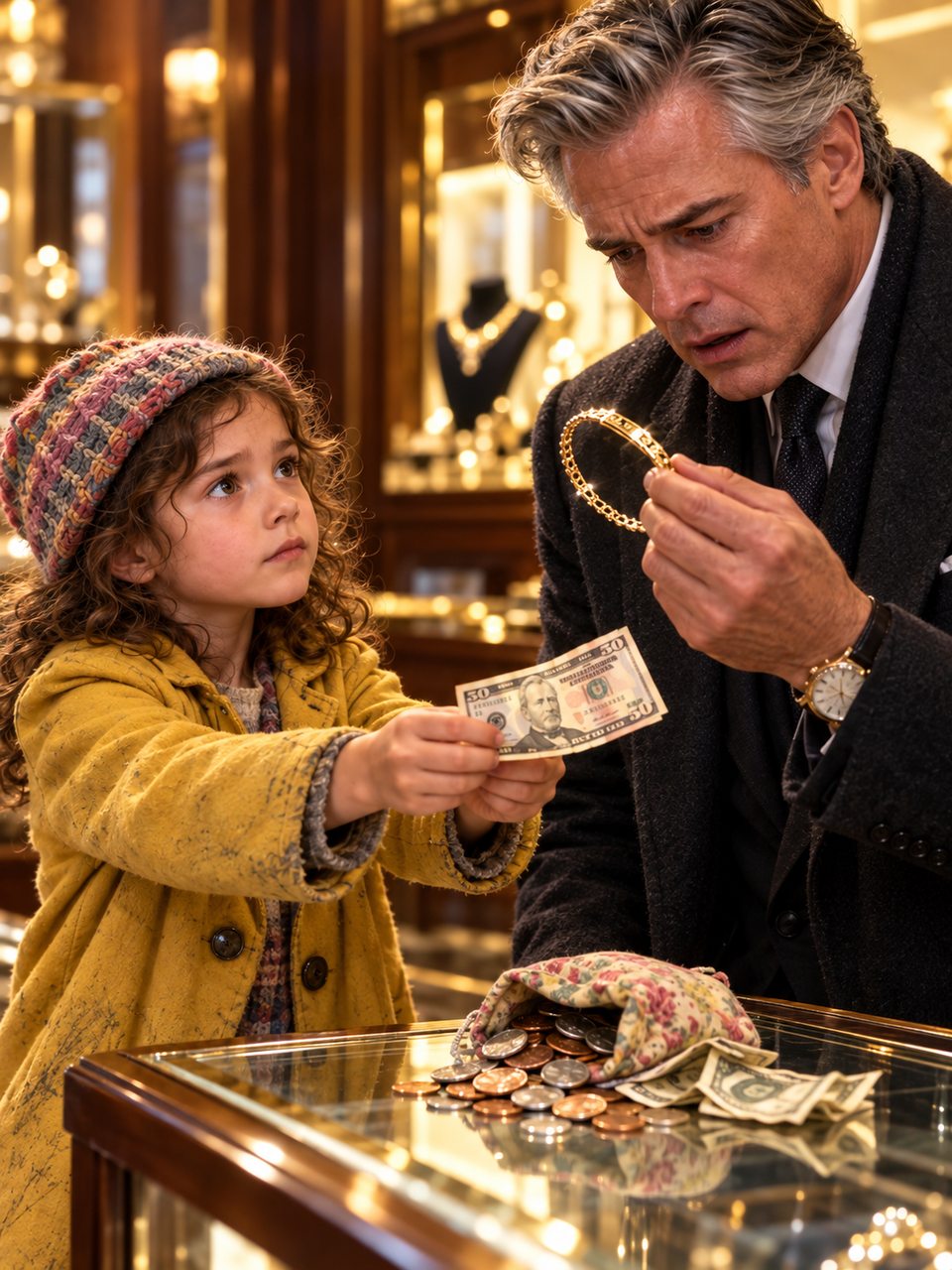
A LITTLE GIRL OFFERED A BILLIONAIRE HER LAST $50 TO BUY BACK HER MOTHER’S BRACELET—THEN HE READ THE HIDDEN ENGRAVING AND ASKED WHO HER MOTHER WAS – Life Story
A little girl pressed a crumpled fifty-dollar bill into a stranger’s hand and pointed toward a gold bracelet locked behind...
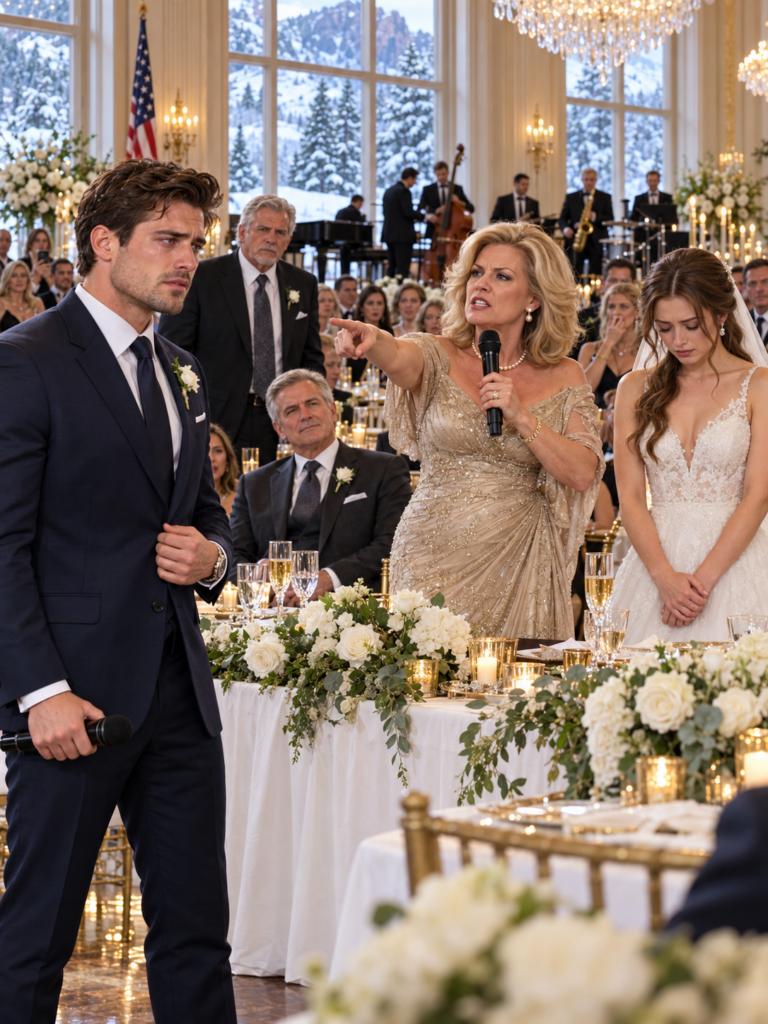
At my wedding, my mother-in-law suddenly stood up and declared: “From today on, you’ll hand over your entire $8,500 salary and every bonus. If you refuse, walk out of this wedding right now.” My heart froze. I glanced at my wife — she stayed silent, standing firmly by her side. I straightened my suit jacket, turned, and walked out of the venue. A few hours later, my phone rang…
At my wedding, my mother-in-law suddenly stood up and declared: “From today on, you’ll hand over your entire $8,500 salary...