“Your Husband Is Amazing,” the Nurse Said — The CEO’s Reply Left the Single Dad Speechless…
“Your Husband Is Amazing,” the Nurse Said — The CEO’s Reply Left the Single Dad Speechless
The nurse called a stranger his wife while Mason Whitaker sat clutching his six-year-old daughter’s tiny pink shoe.
The elegant woman could have corrected her and simply walked away.
Instead, her answer left the exhausted single father speechless—just seconds before the emergency alarm began screaming inside his little girl’s hospital room.
PART 1 — THE WOMAN WHO WASN’T HIS WIFE
The pink shoe had a small silver butterfly stitched near the heel.
Mason Whitaker had bought it at a discount store three months earlier because his daughter, Hazel, insisted the butterfly looked like it was getting ready to fly.
Now he held that shoe between both hands in the hallway of Riverton Children’s Hospital in Pittsburgh, pressing his thumb against the frayed ribbon while trying not to imagine a life in which its owner never wore it again.
Five days earlier, Hazel had been arguing with him about breakfast.
“Daddy, pancakes are better than oatmeal because pancakes are happy.”
Mason had laughed, kissed the top of her head, and told her that happy food still needed fruit.
She had rolled her eyes exactly the way her mother used to, then carefully arranged three blueberries into a smile on her plate.
By lunchtime, his daughter was unconscious on the floor of her first-grade classroom.
The school secretary called while Mason was unloading industrial cleaning supplies behind a grocery distribution center.
He remembered hearing the words Hazel collapsed, but almost nothing after them.
His supervisor had been shouting something about an unfinished delivery when Mason dropped his work gloves beside the truck and ran.
At the hospital, a physician named Dr.
Leila Patel explained that Hazel had developed a serious bacterial infection.
Her fever was dangerously high, and the doctors were concerned about signs that the infection had spread beyond its original location.
They had started intravenous antibiotics and were monitoring her closely.
“We have good treatments,” Dr.
Patel told him. “But she’s very sick, Mr.
Whitaker.
The next several days are important.”
Mason nodded because he couldn’t trust himself to speak.
He had already buried one person he loved.
Three years earlier, his wife, Nora, had died after a sudden illness that turned their ordinary Tuesday evening into a nightmare of ambulance lights and unanswered questions.
She had been thirty-one.
Hazel had been three, still young enough to ask why Mommy couldn’t come home after the funeral.
Mason had never forgotten the afternoon he carried Nora’s belongings out of the hospital in a clear plastic bag.
He refused to imagine carrying Hazel’s things the same way.
For five days, he barely moved from her bedside.
He learned how to silence the television when she slept, how to arrange her pillows without disturbing the tubing, and how to recognize the difference between a restless sigh and a frightened one.
When her fever climbed, he cooled her forehead with damp cloths while the nurses adjusted her care.
He read the same children’s book so many times that he could recite it without looking.
Sometimes Hazel woke enough to whisper, “Daddy, are you tired?”
“Not even a little,” he lied.
His shirt smelled of stale coffee.
The skin beneath his eyes had turned gray.
When a nurse brought him a sandwich, he wrapped half of it in a napkin for later because he wasn’t sure when he would have money to buy another meal.
Mason worked for Harborline Freight, a regional delivery company that employed fewer than forty people.
He earned enough to keep their small apartment warm, pay for groceries, and occasionally take Hazel to the movies.
There was never much left, but he had learned to make an ordinary life feel abundant.
Nora used to say he could turn a cardboard box into a castle if Hazel needed one.
He had built their daughter an entire pretend spaceship from discarded shipping cartons the previous Christmas.
Now all he wanted was to build a future in which she could grow up.
On the fourth evening, he found another exhausted parent standing beside a vending machine.
The woman had been trying to buy crackers for her son, but the machine kept rejecting her crumpled dollar.
Mason handed her the last two bills in his wallet.
She protested, embarrassed.
“Keep them,” he said. “Kids shouldn’t have to wait for us to figure everything out.”
The woman looked at his hospital wristband and the dark circles beneath his eyes.
“What about your little girl?”
Mason glanced toward the pediatric wing.
“She’s got me.”
He wished those words could guarantee something.
By the fifth afternoon, Hazel finally managed to eat a few spoonfuls of soup.
Her temperature was lower, and she asked whether her classroom had finished making paper butterflies without her.
Mason laughed so suddenly that tears slipped down his face.
“Not a chance, Peanut.
I told your teacher the butterfly department is closed until its boss comes back.”
Hazel gave him a weak smile.
For the first time since Tuesday, Mason let himself believe they might go home soon.
He stepped into the corridor to call their elderly neighbor, Mrs.
Alvarez, who had been collecting their mail and leaving groceries outside his apartment.
As he spoke, he noticed a woman near the nurses’ station wearing a cream-colored coat over a tailored navy dress.
She was tall, perhaps forty, with chestnut hair pinned neatly behind her head.
She held a leather folder and listened intently while a hospital administrator explained something about new equipment and patient services.
Mason recognized the type immediately.
Someone important.
Someone whose shoes probably cost more than his monthly grocery budget.
The woman, Evelyn Mercer, was the founder and chief executive officer of Mercer Health Innovations, a healthcare technology company headquartered in downtown Pittsburgh.
She was visiting Riverton to review a partnership involving patient coordination systems and medical supply distribution.
Unlike the administrators following her, Evelyn wasn’t studying the newly renovated walls.
She was watching the people.
She had passed Hazel’s room twice during earlier visits that week.
On one occasion, she’d seen Mason attempting to braid his daughter’s hair while Hazel patiently instructed him from her pillow.
On another, she’d watched him comfort a frightened boy across the hallway while that child’s mother spoke privately with a doctor.
Evelyn remembered him because he never seemed to notice anyone watching.
She remembered Hazel because the child had waved at her through the open doorway.
Now Evelyn paused near the room again.
“Is that the little girl who was admitted Tuesday?” she asked.
Nurse Julia Bell, who had worked in pediatrics for twenty-seven years, followed her gaze.
“That’s Hazel Whitaker.
Sweetest little thing you’ll ever meet.”
“How is she?”
“Improving, we hope.” Julia’s expression softened. “Her father’s been here day and night.”
Evelyn glanced through the window.
Mason was standing beside his daughter’s bed, carefully adjusting the blue knitted blanket Nora had made years earlier.
Julia smiled.
“Your husband is amazing.”
Evelyn turned toward her.
For a moment, she said nothing.
Mason had stepped close enough to hear the conversation.
His first instinct was embarrassment.
The nurse had made an understandable mistake, and he expected the elegant stranger to correct it quickly.
But Evelyn didn’t sound amused or offended.
“No,” she said quietly. “He’s not my husband.
I’ve never even met him.”
Julia’s smile disappeared.
“Oh, I’m so sorry.
I just assumed—”
“Please don’t apologize.”
Evelyn looked directly at Mason.
“I’ve spent fifteen years sitting in rooms with men who measure themselves by how much money they control.
I’ve met executives who own private planes and buildings with their names on them.”
She paused.
“But that man has spent five nights in a hospital chair because his little girl is afraid to wake up alone.
I’ve watched him comfort strangers when he barely has enough strength left for himself.”
Mason stood motionless.
Evelyn’s voice grew softer.
“He’s richer in the things that matter than most people I’ve ever met.
And the sad part is, I don’t think anyone has told him.”
Mason felt something tighten behind his ribs.
Nobody had spoken about him that way since Nora died.
He looked down at the shoe in his hands, suddenly unable to meet Evelyn’s eyes.
“I’m just her dad,” he managed. “I’m not doing anything special.”
Evelyn took one step closer.
“Sometimes the people doing the most extraordinary things are the last ones to recognize them.”
Mason opened his mouth, but no words came.
Then a sharp alarm sounded behind him.
Dr.
Patel appeared in Hazel’s doorway, followed by two nurses.
“Mason, I need you in here.”
Something in her voice emptied his chest.
He rushed inside.
Hazel lay pale against her pillow.
Her breathing had become shallow, and the monitor beside her bed was showing readings Mason had learned to fear.
“What’s happening?” he demanded.
Dr.
Patel spoke carefully while the nurses worked.
“Her blood pressure has dropped.
We repeated her imaging because her blood tests weren’t improving the way we expected.
We’ve found a pocket of infection near her hip that the antibiotics alone may not be able to clear.”
Mason gripped the bedrail.
“But she was getting better.”
“She was showing signs of improvement.
This complication wasn’t clear on her earlier scans.”
Hazel opened her eyes.
“Daddy?”
“I’m here, Peanut.”
She reached weakly toward him.
“Don’t let them take me away.”
Mason pressed his lips against her forehead.
“Nobody’s taking you away from me, sweetheart.”
Dr.
Patel waited until Hazel settled.
Then she said the words Mason had been praying never to hear.
“We need to take her into surgery urgently.
If we can’t control this infection, it could become life-threatening.”
Mason stared at the consent form placed in front of him.
His fingers shook so badly that he couldn’t hold the pen.
From the doorway, Evelyn watched him struggle to sign his name.
And when Mason finally looked up, his voice broke.
“Doctor, please tell me something.”
Dr.
Patel met his eyes.
“If I sign this paper… is my little girl going to come back?”
The physician did not give him a promise she couldn’t keep.
“We’re going to do everything we can.”
Mason lowered his head.
Behind him, the woman everyone had mistaken for his wife quietly removed her expensive coat.
Then she pulled a chair beside him.
And when the surgical team wheeled Hazel through the double doors, Evelyn Mercer did something no one in that hospital expected.
PART 2 — THE CHAIR SHE REFUSED TO LEAVE
Evelyn Mercer had a board meeting scheduled for four o’clock.
At three forty-seven, her assistant called to remind her that several investors were already waiting.
The meeting concerned a major expansion agreement, and postponing it would irritate people who were not accustomed to having their schedules rearranged.
Evelyn looked across the surgical waiting area.
Mason was sitting beneath a television he wasn’t watching, holding Hazel’s blue blanket against his chest.
“Move the meeting,” she told her assistant.
“For how long?”
“I don’t know yet.”
“Evelyn, Graham says the directors won’t appreciate another delay.”
“Then Graham can explain it to them.”
She ended the call and returned to the chair beside Mason.
For twenty minutes, neither spoke.
The waiting room smelled of disinfectant and burnt coffee.
Somewhere beyond the windows, traffic crawled through downtown Pittsburgh while ordinary people hurried home, picked up groceries, and complained about the weather.
Mason wondered how the world could continue doing ordinary things.
His daughter was behind a door he couldn’t open.
Finally, he spoke.
“You don’t have to stay.”
Evelyn looked at him.
“I know.”
“Your people are probably waiting.”
“They can wait.”
He rubbed his palms against his trousers.
“Look, I appreciate what you said earlier.
But you don’t know me.
I’m just some guy whose kid got sick.”
Evelyn glanced at the small shoe beside him.
“I know enough to see you’re frightened.”
Mason gave a humorless laugh.
“That’s a polite word for it.”
For a moment, she considered offering reassurance.
Instead, she asked, “How old was she when her mother died?”
Mason stiffened.
Evelyn immediately lowered her voice.
“I’m sorry.
You don’t have to answer that.”
“Three.”
He stared at his hands.
“She was three.
Nora got sick very suddenly.
By the time we realized how serious it was, everything happened too fast.”
He swallowed.
“I was driving to the hospital when a doctor called and told me to come as quickly as I could.
I’ve hated that sentence ever since.”
Evelyn remained silent.
“I keep thinking there must’ve been something I missed,” Mason continued. “Some sign.
Some moment when I should’ve known.”
“Was there?”
He shook his head.
“Doctors said no.
But knowing that and believing it are different things.”
Evelyn looked toward the operating room doors.
“My father used to drive a delivery truck,” she said.
Mason turned.
“He worked long shifts.
Sometimes he’d leave before I woke up and come home after I’d gone to bed.
I used to be angry about it.”
She folded her hands carefully.
“He died when I was twenty-six.
By then I’d started my first company.
I was so busy trying to prove I could succeed that I kept postponing dinner with him.”
Mason watched her face.
“The last message he left me was asking whether I could come by Sunday,” she said. “I saved it.
I still have it.”
“Did you go?”
“No.”
There was no dramatic change in her voice, but something in her eyes made Mason understand the answer had cost her years.
“That’s why you noticed me?”
“Maybe partly.”
She looked at Hazel’s blanket.
“Mostly because you remind me that being present is a choice.
My father made it whenever he could.
I didn’t understand how much that mattered until I couldn’t ask him another question.”
Mason said nothing.
He had assumed someone like Evelyn lived above the kinds of regrets ordinary people carried.
Instead, her carefully controlled expression reminded him of himself at Nora’s funeral.
A nurse appeared with two cups of coffee.
“Evelyn, the administrator asked me to bring these.”
Evelyn thanked her but didn’t touch her cup.
Mason noticed the expensive watch on her wrist, the perfectly pressed dress, and the phone that kept illuminating with messages she ignored.
“Why are you really here?” he asked.
She understood what he meant.
“Because I don’t think anyone should sit through something like this alone.”
Mason stared at her for a long moment.
Then he turned away.
His shoulders began shaking before the first sob escaped.
He covered his face with one hand, ashamed of losing control in front of a stranger.
Evelyn didn’t reach for him or offer a rehearsed speech.
She simply stayed.
An hour later, Dr.
Patel emerged from the surgical corridor.
Mason stood so quickly that his chair scraped against the floor.
“She’s out of surgery,” the doctor said.
He waited for the rest.
“The surgeons drained the infection successfully.
She tolerated the procedure well.
She’s still very ill, but this gives the antibiotics a much better chance to work.”
Mason bent forward with both hands braced against his knees.
He hadn’t realized he was holding his breath.
“When can I see her?”
“As soon as she’s settled in recovery.”
His relief came in a rush so violent that he nearly lost his balance.
Evelyn steadied the chair behind him.
Dr.
Patel watched him carefully.
“Mr.
Whitaker, I also need you to look after yourself.
Hazel needs her father healthy when she comes home.”
Mason wiped his face with his sleeve.
“I will.”
He meant it.
For the first time in days, the promise felt possible.
That evening, after Hazel was moved back to the pediatric floor, Mason found a small bag waiting on the chair beside her bed.
Inside were a turkey sandwich, an apple, a bottle of water, and a handwritten note.
You can’t take care of her if you don’t eat.
No debt attached. —Evelyn
He read the note twice.
Then he sat down and ate every bite.
The following morning, Evelyn returned with breakfast for both of them.
She had brought oatmeal for Mason and a small stuffed butterfly for Hazel.
Hazel examined the toy suspiciously.
“Does she have a name?”
“Not yet,” Evelyn said.
Hazel considered this with the seriousness of a judge.
“She looks like a Penelope.”
“Penelope it is.”
“Are you Daddy’s friend?”
Mason almost choked on his coffee.
Evelyn smiled.
“I think we’re becoming friends.”
Hazel nodded approvingly.
“Daddy doesn’t have enough friends.
He only talks to Mrs.
Alvarez and the man who fixes our truck.”
“That’s not true,” Mason protested.
“You talk to the mailman,” Hazel added. “But only about packages.”
Evelyn laughed.
It was an unexpected sound—warm, unguarded, and so different from her polished manner that Mason found himself smiling.
For a few minutes, the room felt almost normal.
Then his phone vibrated.
A message from Rick Dalton, his supervisor at Harborline Freight.
Need you to call me today.
We have to discuss your position.
Mason’s smile faded.
He stepped into the corridor.
Rick answered on the second ring.
“How’s your little girl?”
“Improving.
Surgery went well.”
“Good.
That’s good.”
Mason recognized the hesitation.
“Rick?”
A long pause followed.
“We’ve had to restructure the route assignments.
The client wanted guaranteed coverage.
I’ve been doing what I can, but we can’t keep your position open indefinitely.”
Mason pressed his back against the wall.
“I’ve worked for you for seven years.”
“I know.”
“I’ve taken every holiday route.
Every emergency shipment.
Last winter I drove twelve hours through snow because nobody else would take that delivery.”
“Mason, this isn’t personal.”
“My daughter is in the hospital.”
Rick exhaled.
“I understand that.
But I’ve got a business to keep running.”
Mason closed his eyes.
“Are you firing me?”
Another pause.
“I’m telling you your route has been reassigned.
Human resources will send the separation paperwork.
You’ll receive your final wages and whatever paid leave remains.”
The corridor seemed to tilt.
“I need that job, Rick.”
“I’m sorry.”
The call ended.
Mason stood staring at the screen.
Through Hazel’s doorway, he could hear Evelyn helping his daughter invent an elaborate story about Penelope the butterfly.
Hazel was laughing.
He couldn’t bring himself to enter the room.
A few minutes later, Evelyn found him standing near the emergency stairwell.
“What happened?”
Mason forced his mouth into something resembling a smile.
“Nothing.”
She glanced at his hands.
They were trembling.
“Mason.”
He looked away.
“I just lost my job.”
Evelyn went still.
“And I have no idea how I’m going to tell my little girl that getting better might cost us our home.”
For the first time since meeting him, Evelyn reached for his hand.
But before she could say anything, Mason pulled away.
“Please,” he whispered. “Whatever you’re thinking, don’t offer to pay my bills.”
Evelyn stared at him.
“Why not?”
“Because I need to be her father.
I can’t become someone else’s charity project.”
She studied him for a long moment.
Then she answered quietly.
“All right.
I won’t.”
Mason nodded, grateful and miserable.
He believed their conversation was over.
He didn’t know that Evelyn would spend the next three nights examining something his former employer had never bothered to notice.
And what she discovered about Mason Whitaker’s years behind the wheel would make her question the people running her own company.
PART 3 — THE MAN WHO HAD NOTHING LEFT TO GIVE
Mason told Hazel he had lost his job three days after her surgery.
She was sitting upright in her hospital bed, coloring a butterfly purple because, according to her, ordinary butterflies lacked imagination.
Her hair was tangled, and there was a faded adhesive mark on her cheek.
“Daddy?”
“Yeah, Peanut?”
“If your truck isn’t going to work anymore, does that mean you can pick me up from school every day?”
Mason looked at the little girl who had no idea how much fear one question could contain.
“Maybe for a while.”
She smiled.
“Good.
I like when you’re there.”
He turned toward the window before she could see his eyes.
Mason had spent years believing that children needed fathers who could provide everything.
Now he was discovering that Hazel measured his worth in minutes rather than dollars.
But the landlord didn’t accept minutes.
Neither did the utility company.
By the time Hazel was discharged, Mason had less than seven hundred dollars in his checking account.
His insurance covered much of her hospital treatment, but deductibles, unpaid time off, and everyday expenses had left him dangerously close to the edge.
He had never felt wealthier than the moment he carried her through the hospital doors.
He had never been more frightened of the following month.
Nurse Julia walked them to the entrance.
“You know,” she said, watching Hazel carefully hold Penelope against her chest, “this little lady has made the whole floor brighter.”
Hazel grinned.
“That’s because I’m extremely cheerful.”
Julia laughed.
Then she leaned closer to Mason.
“Take the discharge instructions seriously.
Keep those follow-up appointments.
And call if anything worries you.”
“I will.”
Julia lowered her voice.
“And take care of yourself, too.”
Mason glanced at his daughter.
“I’m working on it.”
Outside, the afternoon sunlight looked almost unreal.
Hazel stood beside the old pickup and took a long breath.
“Home smells better than hospitals,” she announced.
“We aren’t home yet.”
“I can already tell.”
Mason helped her into the booster seat, checked her belt twice, and watched her cradle Penelope beneath the blue blanket Nora had knitted.
For one perfect second, he forgot about money.
Then his truck refused to start.
He turned the key again.
A weak clicking sound answered him.
Hazel leaned forward.
“Daddy, is the truck sick, too?”
Mason let his forehead rest against the steering wheel.
“Apparently, everybody in this family needs a vacation.”
He called the mechanic he knew, then waited for a jump-start while Hazel sang to her butterfly.
He didn’t tell her that even a small repair could destroy what remained of their savings.
That evening, Mrs.
Alvarez welcomed them home with chicken soup and fresh bread.
She was a retired elementary school secretary who lived across the hallway and had known Hazel since infancy.
She had been quietly helping Mason for years, never calling attention to the extra groceries or the afternoons she watched Hazel when his shifts ran late.
“Sit,” she ordered when Mason tried to carry everything inside.
“I’m fine, Mrs.
Alvarez.”
“You look like a scarecrow somebody forgot in November.”
“It’s September.”
“Then you’re early.”
Mason laughed despite himself.
Later, after Hazel fell asleep, he spread his bills across the kitchen table.
Rent.
Insurance.
Electricity.
Truck repairs.
Hospital payment estimates.
His last paycheck would cover some of it.
The rest looked impossible.
He opened his laptop and began applying for jobs.
Warehouse dispatcher.
Regional delivery coordinator.
Night-shift inventory supervisor.
He submitted applications until the kitchen clock passed two in the morning.
Whenever a form asked whether he could work evenings, weekends, and overtime without restriction, he hesitated.
Who would care for Hazel during her recovery?
Mrs.
Alvarez was generous, but she was not a permanent solution.
Mason had promised Nora that their daughter would never grow up feeling abandoned.
Now every job listing seemed to ask him to choose between earning money and keeping that promise.
The next afternoon, Evelyn called.
“How’s Hazel?”
“Demanding pancakes and refusing to believe soup counts as a meal.”
“Sounds promising.”
“It is.”
Evelyn paused.
“How are you?”
“Busy.”
“Looking for work?”
He glanced at the laptop.
“Trying to.”
“Have you considered staying in logistics?”
“It’s what I know.”
“That isn’t what I asked.”
Mason leaned back.
“Sure.
I’ve considered it.
But most companies want someone who can work whenever they call.”
“And you need predictable hours.”
“I need to know I can be there when my daughter needs me.”
Evelyn was quiet.
Then she asked, “Did you ever manage deliveries yourself, or were you always driving?”
Mason almost laughed.
“Both.
Harborline was small.
Half the time I was driving, and the other half I was fixing problems nobody wanted to admit existed.”
“What kinds of problems?”
“Missing inventory.
Scheduling mistakes.
Drivers being sent seventy miles out of their way because some software decided two towns were close together.”
Evelyn listened.
“Did you report them?”
“All the time.”
“And?”
“Sometimes Rick fixed them.
Usually the customer kept getting billed until somebody complained.”
A pause followed.
“Did you keep records?”
Mason looked at the filing cabinet near his desk.
“I keep records of everything.”
Evelyn changed the subject, but after the call ended she remained at her desk, thinking.
At Mercer Health Innovations, the company had recently launched a proposal called Community Routes.
The initiative was designed to improve deliveries of medical supplies to smaller rural clinics that often struggled with irregular scheduling, insufficient storage, and complicated vendor contracts.
Its financial projections were poor.
Its human potential was considerable.
And the executive overseeing its planning, Graham Sloane, had spent months telling Evelyn that the project needed experienced leaders who understood efficiency.
Yet when she examined the candidates his team had shortlisted, she found people with impressive degrees and little experience loading a truck in freezing rain or explaining a late delivery to a nurse waiting for supplies.
Evelyn had spent years building an organization filled with intelligent professionals.
She was beginning to wonder whether intelligence had become confused with distance from the people they served.
On Friday morning, an internal analyst named Naomi Chen arrived at her office with a financial report.
“You wanted the Community Routes numbers?”
“Yes.
And the staffing plan.”
Naomi placed both on the desk.
“Graham wants to outsource the entire pilot to Bellmont Distribution.
It would be cheaper up front.”
“Would it work?”
Naomi hesitated.
“On paper.”
Evelyn looked up.
“What does that mean?”
“The software measures successful deliveries when the carrier closes the assigned stop.
But it doesn’t consistently confirm that the clinic actually received the supplies.”
Evelyn slowly closed the folder.
“So we can report a completed route even when the medicine is still sitting in a warehouse?”
“In certain situations, yes.”
“Who approved that definition?”
Naomi looked uncomfortable.
“Graham’s division.”
Evelyn turned toward the window.
For years, executives had been praising the company’s delivery efficiency.
She wondered how many of those impressive numbers had been describing paperwork rather than actual care.
“Find out how many clinics have complained,” she said.
“And the staffing plan?”
“Leave that with me.”
That evening, Mason received a letter from Harborline.
His employment had officially ended.
He read the document twice, then folded it carefully and placed it beneath Nora’s photograph.
He sat alone at the kitchen table, listening to Hazel breathing in the next room.
On the shelf above the sink stood a small ceramic jar Nora had painted during the first year of their marriage.
Across its front, in uneven blue letters, she had written:
For the days when everything goes wrong.
They used to keep spare change inside.
Now the jar was almost empty.
Mason removed the lid and found an old folded note at the bottom.
He recognized Nora’s handwriting immediately.
You are allowed to need help, Mason.
Being strong doesn’t mean doing everything alone.
His vision blurred.
He remembered arguing with her once after he’d insisted on repairing their leaking kitchen sink by himself.
She had watched him soak the floor, handed him a towel, and told him that pride was only useful when it wasn’t making life harder.
He had laughed then.
Now he pressed the note against his forehead and finally allowed himself to cry.
The next morning, Hazel found him at the kitchen table.
“Are you sad, Daddy?”
“A little.”
She climbed carefully into the chair beside him.
“Because you don’t have a job?”
Mason looked at her.
“How did you know?”
“I heard you talking to Mrs.
Alvarez.”
He reached for her hand.
“I’m going to find another one.”
Hazel considered that.
“Can you find one where they let you come home for dinner?”
Mason’s throat tightened.
“I’ll try.”
There was a knock at the door.
Mrs.
Alvarez stood outside holding a cream-colored envelope.
“Someone left this downstairs for you.”
Mason recognized the embossed blue lettering.
MERCER HEALTH INNOVATIONS
Inside was a formal invitation requesting that he attend a meeting at the company’s downtown headquarters on Monday morning.
It included no explanation beyond the words:
Ms.
Evelyn Mercer would appreciate the opportunity to discuss a professional matter.
Mason read it three times.
He looked toward the window, where Hazel had begun arranging her crayons across the sill.
He had no idea why one of the most powerful businesswomen in Pennsylvania wanted to see an unemployed delivery driver.
But he remembered her promise at the hospital.
I won’t make you a charity project.
On Monday morning, wearing his only pressed shirt, Mason stepped into the glass lobby of Mercer Health Innovations.
A receptionist checked his name, smiled, and asked him to take the private elevator.
When the doors opened on the twenty-sixth floor, Evelyn was waiting.
Beside her stood a stern-looking man holding a folder bearing Mason’s name.
Evelyn stepped forward.
“Mason, I’m glad you came.”
He glanced at the folder.
“Am I in some kind of trouble?”
The man beside her answered before Evelyn could speak.
“That depends, Mr.
Whitaker.”
He opened the folder.
“On whether you can explain why your former employer has been reporting successful deliveries to clinics that insist they never received them.”
Mason stopped breathing for a second.
Because he recognized the names of the clinics—and he knew exactly which warning his supervisor had told him to forget.
PART 4 — THE JOB THAT COULD COST HER EVERYTHING
The stern man was Graham Sloane, Mercer’s executive vice president of operations.
He was in his early fifties, with silver hair, an immaculate charcoal suit, and the practiced expression of someone accustomed to winning arguments before they began.
He shook Mason’s hand politely but made no attempt to hide his skepticism.
“Mrs.
Mercer believes you may be able to help us,” Graham said.
Mason glanced at Evelyn.
“With what?”
“Identifying weaknesses in our supply network.
Specifically, several delivery records connected to Harborline Freight.”
Mason felt his stomach tighten.
Harborline had handled medical shipments for multiple clients through Mercer’s existing distribution platform.
The company was small, but its routes reached communities that larger carriers often avoided.
He remembered the warnings he’d written about those deliveries.
He also remembered what happened whenever he raised them.
“There’s nothing mysterious about those records,” he said.
Graham raised an eyebrow.
“Then explain them.”
Mason accepted the folder and opened it.
On the first page was a delivery confirmation for a rural clinic outside Waynesburg, Pennsylvania.
The system showed a successful delivery at p.m., but the clinic had submitted a complaint saying its supplies never arrived.
Mason pointed to the date.
“I drove that route.”
Graham leaned forward.
“And?”
“The clinic closed at four.
Dispatch scheduled us to arrive at four-fifteen.
I called ahead and told them we wouldn’t make it.”
“Yet the system says delivered.”
“Because the vehicle passed the location.
The software closed the stop automatically.”
Evelyn’s expression changed.
“You’re saying it recorded a successful delivery without anyone receiving the supplies?”
“Yes.
I returned the boxes to the warehouse and filed an exception report.
They went out the next morning.”
Graham checked the document.
“No exception appears here.”
Mason gave a tired laugh.
“That’s the problem.”
He opened his battered work bag and removed a notebook with a cracked black cover.
For seven years, he’d recorded difficult routes, missed deliveries, inventory discrepancies, and customer complaints.
He had developed the habit after a dispute involving a missing shipment nearly cost another driver his job.
The notebook was filled with dates, names, warehouse numbers, and hurried calculations.
He found the entry within seconds.
“September fourteenth, last year.
Waynesburg clinic.
Twelve boxes returned.
Dispatch supervisor notified at four twenty-eight.
Replacement delivered at nine-ten the following morning.”
Naomi Chen, who had joined the meeting, compared the entry with the official record.
“The next-day delivery exists,” she said. “But the original shipment wasn’t marked unsuccessful.
Both records were counted as completed.”
Evelyn slowly turned toward Graham.
“How many times can that happen?”
Graham folded his arms.
“Occasional tracking discrepancies are unavoidable.”
“That wasn’t my question.”
Nobody answered.
Mason closed the notebook.
“I don’t want trouble with Harborline.
Rick gave me work for years, and there are good people there.”
“Then why keep all this?” Graham asked.
“Because mistakes get expensive when everybody pretends they didn’t happen.”
Evelyn watched him.
There was no triumph in his voice, no eagerness to embarrass his former employer.
He simply wanted the records to describe what had actually happened.
That mattered more to her than he realized.
The interview continued for almost two hours.
Mason explained route planning, inventory reconciliation, receiving procedures, and the practical difficulties small clinics faced when delivery windows were designed by people who had never visited them.
When Graham suggested that modern software could resolve most operational problems, Mason shook his head.
“Software can tell you the shortest road between two places.
It can’t tell you the loading dock closes early on Wednesdays unless somebody bothers to ask.”
Naomi smiled despite herself.
Evelyn asked him one final question.
“If you were responsible for Community Routes, what would you change first?”
Mason studied the proposed plan.
“Before I changed anything, I’d call the clinics.
Every one of them.”
“Why?”
“Because we’re delivering for them, not for the people who built the spreadsheet.”
Graham looked toward the ceiling.
“We’ve already spent months developing that spreadsheet.”
“Then a few phone calls shouldn’t scare us.”
Silence settled across the room.
Evelyn looked down to hide a smile.
When the meeting ended, Graham excused himself to take a call.
Naomi gathered the documents, leaving Evelyn and Mason alone.
Mason stood awkwardly beside the table.
“I hope I didn’t make things worse.”
“For whom?”
“Your company.
My old boss.
Everybody.”
Evelyn gestured toward the chair.
“Mason, I didn’t invite you here because I feel sorry for you.”
He waited.
“I invited you because you understand problems we have been spending a great deal of money failing to solve.”
She slid a job description across the table.
Community Routes — Regional Operations Coordinator.
The position included a competitive salary, health benefits, predictable scheduling, and responsibility for helping design a ninety-day pilot serving three rural clinics.
Mason stared.
“You’re offering me a job?”
“I’m offering you the chance to earn one.
You’ve passed the technical interview.
We’d still need references, employment verification, and the usual onboarding.”
He turned the page.
The salary was nearly thirty percent higher than anything he’d earned at Harborline.
He looked up, stunned.
“Evelyn, I don’t have a college degree.”
“You have seven years of field experience and a notebook that exposed a flaw in our reporting system in less than ten minutes.”
“But Graham doesn’t seem to want me here.”
“Graham is allowed to disagree with me.”
“And if the project fails?”
“Then we’ll investigate why.
That’s how responsible organizations should work.”
Mason looked at the job description again.
“Why would you take a chance on me?”
Evelyn thought of his daughter lying beneath a blue blanket, the exhausted father who still found time to help strangers, and the notebook he had kept when nobody wanted to listen.
“Because you’ve spent your life taking responsibility for things other people walk away from.”
She paused.
“I’d like to see what happens when someone gives you the authority to fix them.”
Mason sat very still.
Then he extended his hand.
“I won’t let you down.”
Evelyn shook it.
“Don’t promise me that.
Promise you’ll tell me when we’re wrong.”
He nodded.
“That I can do.”
Two weeks later, after the required checks were completed, Mason received his employee badge.
Hazel insisted on decorating his lunch bag with a drawing of a truck carrying butterflies instead of boxes.
“Now people will know you deliver important stuff,” she declared.
Mason kissed her forehead.
For the first time since her illness, he left home with something he had almost forgotten how to feel.
Confidence.
Across town, Graham Sloane reviewed Mason’s appointment notice in his office.
Naomi had attached the initial discrepancies to an internal audit request.
Correcting them would reduce the delivery-success figures Graham had presented to the board while negotiating a lucrative new outsourcing contract.
Graham’s phone rang.
It was Rick Dalton from Harborline Freight.
“I hear you’ve hired Whitaker,” Rick said.
Graham looked at the notebook photograph attached to Naomi’s report.
“Apparently.”
“He’s a decent driver.
But he asks too many questions.”
Graham’s jaw tightened.
“That may be a problem.”
Rick hesitated.
“Are you going to review the old delivery records?”
“Why?”
“Because if you do, there are things in those files that won’t make either of our companies look good.”
Graham stared at his computer screen.
For months, he had assured Mercer’s board that the distribution network was operating with exceptional efficiency.
He had built expansion projections around those numbers.
Now a newly hired coordinator with a child’s drawing on his lunch bag was threatening to expose how much of that efficiency existed only on paper.
Graham lowered his voice.
“Send me everything you have on Whitaker.”
And by the following Monday, someone had begun changing delivery records under Mason’s name.
PART 5 — THE EMPTY SHELF AT THE END OF THE ROAD
On Mason’s first morning with Community Routes, he arrived thirty minutes early.
The distribution center was larger than Harborline’s entire operation.
Automated scanners chirped beside polished loading bays, and rows of climate-controlled storage cabinets stood behind secured doors.
Everything looked organized.
Almost too organized.
Mason walked the floor with Naomi Chen, who had been assigned to help evaluate the pilot.
“How many people work here?” he asked.
“Forty-six on this shift.”
“How many have visited the clinics we’re serving?”
Naomi thought for a moment.
“Probably four.”
“Then that’s where we’re starting.”
Instead of reviewing performance charts at his desk, Mason arranged visits to each participating clinic.
The first was a small community health center outside Waynesburg.
Its director, Dr.
Tessa Brooks, met them beside a narrow reception area filled with folding chairs and children’s drawings.
She was a practical woman in her forties whose expression suggested she had little patience left for corporate promises.
“Another assessment?” she asked.
Mason held out his hand.
“Hopefully a useful one.”
Dr.
Brooks led them into a supply room.
Three shelves stood nearly empty.
“We ordered examination supplies, wound-care materials, and testing kits last week,” she said. “Your system says they arrived Tuesday.”
Naomi checked her tablet.
“Tuesday at eleven forty-two.”
Dr.
Brooks opened a drawer and removed the receiving log.
“Funny.
Because nobody here signed for them.”
Mason compared the two records.
“Do you have a loading entrance?”
“Behind the building.”
“Is it open all day?”
“Until eleven thirty.
After that, staff are helping patients.”
Mason nodded.
The missing shipment had been recorded as completed twelve minutes after the receiving entrance closed.
He knew the pattern.
He had lived inside it for years.
Instead of making excuses, he called the carrier and asked where the shipment had physically been scanned.
The boxes were still at a regional warehouse, awaiting reassignment after an unsuccessful delivery attempt.
The system had closed the stop when the truck entered the geofenced location.
Nobody had confirmed receipt.
Mason arranged a replacement delivery for the following morning and asked Dr.
Brooks to verify the boxes individually before signing.
She looked at him skeptically.
“Isn’t that what you’re supposed to do already?”
“Yes, ma’am.”
Her expression softened slightly.
“At least you’re willing to say it.”
On the drive back, Naomi stared at the delivery records.
“If we correct every false completion, our performance rate is going to drop.”
“Then it drops.”
“Graham won’t like that.”
Mason kept his eyes on the road.
“The clinic didn’t get its boxes because we were too busy congratulating ourselves for delivering them.
That’s the number that matters.”
By Friday, he had identified fourteen similar discrepancies across the pilot’s historical records.
Not all involved missing supplies.
Some were delayed deliveries, duplicate confirmations, or shipments accepted by the wrong receiving department.
But the pattern was consistent.
The official system was measuring completed stops more reliably than completed care.
Mason developed a straightforward process: confirm each clinic’s receiving hours, record actual handoffs, require an authorized signature, and flag any delivery that needed to be rescheduled.
The changes created more paperwork at first.
They also made the reports less flattering.
Graham summoned him to his office.
“Your revised figures show an eighty-two percent successful-delivery rate,” he said.
“Correct.”
“We reported ninety-eight percent last quarter.”
“That number included shipments the clinics never received.”
Graham leaned back.
“Mr.
Whitaker, I appreciate your enthusiasm, but we’re trying to build a sustainable business.
If every operational exception becomes a failure, investors will lose confidence.”
Mason placed a corrected report on the desk.
“Then we need to explain the difference between the old measurement and the new one.”
Graham’s smile was thin.
“You’re new here.
Take some advice.
Learn which problems need solving and which problems need managing.”
Mason thought about Hazel’s hospital room.
He remembered how Dr.
Patel had explained every complication, even when the truth frightened him.
“With respect, sir, patients can’t use supplies that only exist in a report.”
Graham’s expression hardened.
“Your performance review is in ninety days.
I suggest you remember who evaluates it.”
Mason stood.
“I’ll remember.”
That evening, he picked Hazel up from Mrs.
Alvarez’s apartment and took her to the small neighborhood diner where Nora used to order strawberry milkshakes.
Hazel studied him over her grilled cheese sandwich.
“Did you have a good day?”
“Complicated day.”
“That’s what Mrs.
Alvarez says when she burns something.”
Mason laughed.
“Then it was very complicated.”
Hazel pushed half her sandwich toward him.
“You can have mine.
It might help.”
He watched her small hand rest beside the plate.
He had spent so long trying to protect her from every hardship that he’d almost forgotten children notice more than adults think.
“Can I ask you something?” Hazel said.
“Anything.”
“Is Miss Evelyn going to be my new mommy?”
Mason went completely still.
“What makes you ask that?”
“She comes to see us.
And she bought Penelope.
And when you say her name, you don’t look tired.”
He set down his fork.
“Hazel, sweetheart, nobody can replace your mom.”
“I know.”
“She loved you more than anything.”
Hazel nodded solemnly.
“But can somebody else love me too?”
Mason looked toward the empty seat where Nora used to sit.
For years, grief had convinced him that making room for new happiness meant pushing his wife further away.
Now his little girl was asking a question he hadn’t allowed himself to ask.
“Yes,” he said softly. “There’s always room for more people to love you.”
Hazel smiled.
“Good.
Because I like Miss Evelyn.”
Mason squeezed her hand.
“So do I.”
He didn’t tell Evelyn about the conversation.
Their friendship was still too new, too uncertain, and too precious to burden with expectations.
Instead, they continued talking about work, Hazel’s recovery, and small things that had nothing to do with money.
Evelyn began dropping by the distribution center occasionally without an entourage.
She wore practical shoes, asked warehouse employees questions, and listened when Mason explained why a route that looked efficient on a computer could create chaos for a clinic.
One afternoon, she watched him help a young employee named Jordan correct an inventory mistake without embarrassing him.
“You didn’t tell him he was wrong,” she observed.
“He already knew.”
“How?”
“Because he looked like he wanted the floor to swallow him.”
Evelyn smiled.
“What did you tell him?”
“That fixing a mistake matters more than hiding one.”
For several seconds, she said nothing.
Then she asked, “Do you have any idea how different this company could be if everyone believed that?”
Mason shrugged.
“Probably fewer meetings.”
She laughed harder than he expected.
By the end of the third week, Community Routes had begun improving.
Actual deliveries were more predictable, clinic complaints were declining, and staff members were reporting problems sooner because Mason didn’t punish them for telling the truth.
Then Naomi discovered something strange.
She called Mason into her office after everyone else had gone home.
“Did you approve a batch reconciliation yesterday?”
“No.”
“Are you sure?”
“I was at Hazel’s follow-up appointment all morning.”
Naomi turned her monitor toward him.
A group of previously disputed deliveries had been changed back to completed status.
At the bottom of the report appeared an electronic approval.
MASON WHITAKER — REGIONAL OPERATIONS COORDINATOR
Mason stared.
“That’s not mine.”
Naomi opened another record.
Then another.
Every correction he’d made during the previous two weeks had been reversed through a bulk update.
And every reversal carried his name.
“Someone’s using my approval identity,” he said.
Naomi’s face had gone pale.
“If the board sees this, they’re going to think you admitted those shipments were completed.”
Mason leaned closer.
One of the altered records listed the Waynesburg clinic.
The same clinic whose empty shelves had started everything.
Then Naomi clicked the administrative history.
A message appeared.
Approval generated through authorized management import.
She looked up slowly.
“Mason, there’s something else.”
“What?”
“The import was submitted while your employee account was inactive.”
Mason stared at her.
Naomi swallowed.
“Which means someone with higher access attached your name to a decision you never made.”
PART 6 — THE SIGNATURE THAT WASN’T HIS
By eight the following morning, Mason’s access badge had been temporarily suspended.
Human resources informed him that an internal review had begun regarding unauthorized adjustments to delivery records.
He would remain on paid administrative leave while the company’s compliance department examined the evidence.
Graham delivered the news in a meeting room with no windows.
“This isn’t a judgment of your character,” he said.
Mason stared at the letter in front of him.
“Then why does it sound like one?”
“Your name appears on the approvals.”
“Naomi already confirmed I didn’t submit them.”
“We have procedures.”
Mason looked at Evelyn, who sat across the table beside the company’s general counsel.
She wasn’t smiling.
“We’re preserving the underlying logs and assigning an independent review,” she said. “No conclusions have been reached.”
He understood why she couldn’t simply order Graham to dismiss the matter.
But that didn’t make it hurt less.
For the second time in six weeks, he was leaving a workplace without knowing whether he would be allowed back.
Outside the building, cold rain blurred the city skyline.
Mason stood beneath the entrance canopy, struggling to steady his breathing.
Evelyn followed him.
“Mason.”
He turned.
“I told you I’d make this work.”
“You have.”
“Then why am I going home with another letter saying I might not have a job?”
She stepped closer.
“Because someone is trying to make a false record look legitimate.
We need to prove how it happened.”
He stared at her.
“Do you believe me?”
“Yes.”
The answer came without hesitation.
Something in Mason’s expression shifted.
“Then why didn’t you say that in there?”
“Because they’re investigating actions recorded under your identity, and my personal opinion isn’t proof.
If I interfere with the review, Graham will claim the findings were compromised.”
Mason looked away.
“You’re the CEO.”
“And I need to make sure the truth holds up even when I’m not in the room.”
Rain splashed against the pavement between them.
He thought about Nora, about the promise he’d made to protect Hazel, and about the little girl who was finally sleeping through the night without a fever.
“I can’t lose everything again,” he whispered.
Evelyn’s voice softened.
“You won’t have to face this alone.”
At home, Mason tried to behave normally.
He helped Hazel finish her spelling homework, washed dishes, and prepared lunch for the following day out of habit.
When Hazel asked why he wasn’t going to work, he told her the company was checking a problem.
“Did you do something bad?”
“No, sweetheart.”
“Then they’ll figure it out.”
He wished the world were as fair as his daughter believed.
After bedtime, he opened the notebook that had helped him earn the job.
He had spent years believing that keeping careful records would protect him from mistakes other people made.
Now those records had become the reason someone wanted him gone.
He called Rick Dalton.
His former supervisor answered reluctantly.
“Mason.”
“Rick, I need to ask you something.”
“What?”
“Did you give Graham Sloane my route notes?”
Silence.
“Rick?”
“I sent him information about the delivery complaints.
He asked for the old records.”
“Did you tell him I reported those mistakes before the system marked them complete?”
Another silence.
“That’s complicated.”
“No, it isn’t.”
Rick exhaled.
“Look, Harborline was about to lose a major subcontract.
Bellmont offered to keep some of our drivers working if we stayed cooperative.”
Mason closed his eyes.
“So you let them blame me?”
“I didn’t know anybody was blaming you.”
“You told Graham I asked too many questions.”
Rick said nothing.
Mason looked toward Hazel’s bedroom.
“For seven years, I covered your shifts.
I missed birthdays and school programs because you said the company needed me.”
“I know.”
“And when I needed a week beside my daughter, you replaced me.”
“Mason—”
“You didn’t even ask whether she was going to live.”
Rick’s breath caught.
There was no answer that could repair what had happened.
Mason ended the call.
For the first time since being dismissed, he wasn’t devastated by losing Harborline.
He was relieved to understand what it had actually been worth to the people running it.
Across town, Naomi Chen worked with a compliance investigator named Samuel Ortiz.
The company’s audit logs showed that the questionable approvals had not been created through Mason’s account.
They came from a management-level import tool used to reconcile large groups of delivery records.
The tool allowed administrators to select the name displayed as the reviewing manager.
Ordinarily, the underlying system log would identify the person who submitted the import.
This time, the display names and the actual user identities did not match.
Naomi examined the audit trail twice.
The batch had been submitted through Graham Sloane’s operations administration account.
More troubling, the import was part of a series of adjustments stretching back months before Mason joined Mercer.
Thousands of delivery records had been classified as successful based on incomplete confirmations.
Some were legitimate.
Others were not.
Naomi found a message Graham had sent to a reporting analyst three months earlier.
We cannot keep showing unconfirmed stops as failed deliveries.
Use the existing management-close process until the contract review is complete.
Beneath it was a reply from the analyst.
Understood.
But this will inflate completed-delivery figures unless we reconcile the physical receipts.
Graham had answered:
We’ll address that after the board presentation.
Naomi printed the exchange.
Then she called Evelyn.
“We’ve found the source.”
Evelyn listened without interrupting.
“And Mason?”
“He didn’t authorize any of it.
His name was assigned as the reviewer during the latest import.
The actual submission came from Graham’s division.”
Evelyn closed her eyes.
“What about the older reports?”
Naomi hesitated.
“They’re worse than we thought.”
That evening, Evelyn visited Mason’s apartment.
Mrs.
Alvarez was helping Hazel make paper butterflies at the kitchen table.
She greeted Evelyn warmly and insisted she take a seat while Mason finished washing the dishes.
The apartment was small, with mismatched furniture and children’s drawings taped above the refrigerator.
It was nothing like Evelyn’s penthouse.
Yet she noticed how every corner held evidence of someone being loved.
A carefully repaired school backpack.
A small height chart penciled beside the hallway.
A framed photograph of Nora holding baby Hazel beneath a flowering tree.
Hazel ran to Evelyn and offered her a purple butterfly.
“This one is for your office,” she said.
Evelyn accepted it as though it were something precious.
“Thank you.”
Hazel lowered her voice.
“Daddy’s sad again.”
Evelyn looked toward the kitchen.
“I know.”
“Can you make him not sad?”
Evelyn knelt beside her.
“I can help him with something that’s been worrying him.
But feelings don’t always disappear just because we want them to.”
Hazel thought about that.
“Then maybe you should stay for dinner.”
Evelyn smiled.
“I’d like that.”
After Hazel went to bed, Evelyn showed Mason the evidence.
His name had been added to records he never approved.
Compliance had confirmed it.
He read the findings twice.
Then he set them down.
“Does this mean I can go back?”
“The investigation needs to be finalized.
But the evidence clears you of making those changes.”
Mason exhaled slowly.
For the first time in days, his shoulders relaxed.
“What happens to Graham?”
“The board will decide what happens next.
Tomorrow they’ll receive the full audit report.”
Mason studied her expression.
“There’s something you’re not telling me.”
Evelyn looked toward Nora’s photograph.
“Graham has been negotiating a major outsourcing agreement.
His financial projections depend on the same performance data we’ve just proved was unreliable.”
“So he’ll lose the deal?”
“Possibly.
And if the directors decide I failed to supervise the operation, I could lose my position.”
Mason stared.
“Because you hired me?”
“Because I’m responsible for what happens inside my company.”
He shook his head.
“Evelyn, don’t throw away everything you’ve built over this.”
She looked directly at him.
“Do you remember what you told me at the hospital?”
“What?”
“That you were only doing what any parent would do.”
He lowered his eyes.
“You stayed because someone you loved needed you.
I’m trying to do the same thing for people who depend on this company.”
Mason didn’t know what to say.
Evelyn gathered the documents.
“The board meets tomorrow morning.”
She reached the door, then turned.
“If they insist on keeping those false numbers, I’m going to tell them exactly what they represent.”
Mason felt a sudden chill.
“And if they don’t want to hear it?”
Her expression settled into something he had never seen before.
Resolve without fear.
“Then they’ll have to decide whether they still want me as their CEO.”
She left before Mason could answer.
At seven the next morning, a courier delivered a sealed board notice to Evelyn’s office.
Graham had requested an emergency motion.
The directors would vote not only on shutting down Community Routes—but also on whether Evelyn Mercer should remain in control of the company she founded.
PART 7 — THE TRUTH THEY COULDN’T AFFORD
At nine the following morning, Evelyn walked into the boardroom carrying a thin blue folder.
Graham Sloane was already seated.
Eight directors occupied the long walnut table overlooking downtown Pittsburgh.
Several looked irritated.
Others studied the emergency agenda with expressions Evelyn knew well: they were preparing to calculate how much the truth might cost.
The board chair, Margaret Ellis, opened the meeting.
“Graham has raised serious concerns about the Community Routes initiative and the company’s recent financial reporting.
Evelyn, before we consider the leadership motion, we’d like your response.”
Evelyn placed the folder on the table.
“My response is that our delivery numbers were wrong.”
A murmur passed around the room.
Graham leaned forward.
“That’s an oversimplification.”
“Then let’s be precise.”
She turned to Naomi.
Naomi connected her laptop to the conference screen.
The first slide displayed the ninety-eight percent delivery-success figure Graham had presented during the previous quarter.
The next showed the results of an independent reconciliation using receiving signatures, carrier records, and actual clinic confirmations.
The verified performance was substantially lower.
Margaret removed her glasses.
“How long have we been reporting inaccurate figures?”
Naomi answered carefully.
“We’ve identified discrepancies extending back at least nine months.
The full review is ongoing.”
Graham folded his hands.
“The prior reporting method was an accepted operational standard.
We were measuring completion of transport assignments, not necessarily clinic acceptance.”
Evelyn nodded.
“That’s exactly the distinction we failed to explain.
We told directors that medical supplies were reaching clinics when some were sitting in warehouses.”
Graham’s expression tightened.
“You approved the strategy.”
“I approved a strategy based on information I believed accurately represented delivery performance.”
“Then you’re admitting responsibility.”
“Yes.”
The room went silent.
Evelyn did not look away.
“I’m responsible for building an organization where these errors continued.
What happens next depends on whether we’re willing to correct them.”
Graham opened his own folder.
“Community Routes has already increased operating costs.
We’ve spent additional money verifying deliveries that our vendors classify as complete.
If we continue down this path, the pilot will become financially unsustainable.”
Mason, invited to present operational evidence after the compliance findings cleared him, sat beside Naomi.
His palms were damp.
He had delivered speeches only twice in his life: once at his wedding and once at Nora’s funeral.
Neither had prepared him for this room.
Margaret turned toward him.
“Mr.
Whitaker, you’ve reviewed the affected routes?”
“Yes, ma’am.”
“Can you explain why your approach is worth the additional expense?”
Mason stood.
He had prepared six pages of notes, but when he looked at the directors, he suddenly remembered Dr.
Brooks standing beside those empty shelves.
He set the notes aside.
“Because we’re charging people for a service they sometimes aren’t getting.”
One director shifted uncomfortably.
Mason continued.
“I understand that a business has to make money.
I’ve worked for small companies.
I know what happens when customers don’t pay or trucks break down.”
He placed a photograph on the table.
It showed the nearly empty supply room at the Waynesburg clinic.
“But this is what our ninety-eight percent success rate looked like to the people waiting for those shipments.”
Nobody interrupted.
“We aren’t helping anyone by calling that a success.”
Graham’s voice sharpened.
“Emotional examples don’t replace financial analysis.”
“You’re right,” Mason said.
He turned to Naomi.
She displayed the pilot’s latest figures.
Although the verified delivery rate had initially dropped after the audit, performance had improved steadily under the new procedures.
Duplicate shipments had declined, emergency replacement deliveries were becoming less frequent, and several clinics had reported fewer shortages.
The savings were preliminary, not enough to guarantee profitability.
But for the first time, the figures described real deliveries.
Mason faced the directors again.
“I’m not asking you to ignore money.
I’m asking you to measure what you’re actually paying for.”
Margaret studied the screen.
“And these improvements were accomplished without adding permanent drivers?”
“Yes, ma’am.
Mostly by correcting schedules and confirming when clinics could receive supplies.”
“How many additional routes would the full program require?”
“Fewer than the current proposal assumes.
We can reduce unnecessary return trips if we plan around actual receiving hours.”
Naomi presented the supporting calculations.
The room’s atmosphere began to change.
Graham saw it happening.
He leaned toward Margaret.
“Whatever the potential benefits, we cannot ignore the irregular approval records associated with Mr.
Whitaker.”
The general counsel cleared his throat.
“The independent review established that Mr.
Whitaker did not submit those approvals.
The entries were generated through an administrative import controlled by Mr.
Sloane’s division.”
A director looked directly at Graham.
“Did you authorize those adjustments?”
Graham’s face remained controlled.
“I authorized corrections intended to standardize our reporting.”
“Knowing they would inflate the success rate?”
“I relied on my staff’s judgment.”
Naomi opened the email correspondence.
The analyst’s warning appeared on the screen.
This will inflate completed-delivery figures unless we reconcile the physical receipts.
Then Graham’s response.
We’ll address that after the board presentation.
The silence that followed was different from the earlier one.
It was no longer uncertainty.
It was recognition.
Margaret closed the folder in front of her.
“Graham, pending the completion of this investigation, you will be placed on administrative leave.
The proposed Bellmont agreement is suspended.”
Graham slowly stood.
“I’ve dedicated eleven years to this company.”
“And the board will consider your service alongside the evidence,” Margaret replied.
He looked toward Mason.
For a moment, Mason expected an angry accusation.
Instead, Graham said, “You have no idea how difficult it is to run an organization this size.”
Mason met his eyes.
“No, sir.
But I know what happens when the people doing the work stop telling you the truth.”
Graham left without another word.
The directors continued debating for nearly two hours.
Eventually, they voted to retain Evelyn as CEO under enhanced independent oversight and authorized Community Routes to continue for thirty more days.
The next expansion decision would depend on verified deliveries, patient-service outcomes reported by clinics, and credible financial projections.
Evelyn accepted the conditions.
Outside the boardroom, Mason finally allowed himself to breathe.
“You did it,” he told her.
“We did enough to keep going.”
She glanced at the photograph of the clinic.
“Now we have to prove we can make it work.”
Mason smiled faintly.
“Thirty days?”
“Thirty.”
“Then we’d better get started.”
He had barely finished speaking when Naomi’s phone rang.
It was Dr.
Tessa Brooks.
A severe storm had knocked out power across several rural communities overnight.
Backup systems at the Waynesburg clinic were running, but a scheduled delivery of replacement temperature-sensitive medication and essential supplies had been delayed when flooding closed the main access road.
The contracted carrier had returned the shipment to its depot.
The clinic was preparing to transfer patients to other facilities if it couldn’t maintain services.
Naomi looked at Mason.
“The carrier says they can’t complete the route.”
Mason took the phone.
“Dr.
Brooks, how much time do you have?”
“Not much.
We’ve arranged for some patients to go elsewhere, but the nearest alternative clinic is overwhelmed.
We need to know whether these supplies are actually coming.”
Mason looked through the boardroom windows.
Dark clouds had swallowed the skyline.
He had just won back the chance to prove his work mattered.
Now the very community he was trying to serve was facing an emergency.
He turned to Evelyn.
“We’ve got a problem.”
She reached for her coat.
“Then let’s find out what we can do.”
Because the next morning, Mercer Health Innovations would have to choose between protecting its perfect new performance report—and admitting that helping people sometimes meant taking the harder road.
PART 8 — THE ROAD NO ONE WANTED TO TAKE
Rain hammered the distribution center roof as Mason studied a map.
The main highway toward Waynesburg was partially closed, and local authorities had warned drivers away from several flooded secondary roads.
The carrier holding the supplies had confirmed that the sealed shipment remained secure at its depot, but it had no driver available for an approved alternate route.
Mason knew better than to treat bad weather like a test of courage.
He had spent enough years behind a steering wheel to understand that a truck couldn’t help anyone if it ended up in a ditch.
He called the county emergency management office and the clinic’s regional healthcare coordinator.
“We’re not going to send anybody onto a closed road,” he told them. “We need a safe transfer point and a route that’s actually been cleared.”
Naomi worked beside him, checking road updates and available refrigerated vehicles.
Jordan, the warehouse employee Mason had helped weeks earlier, volunteered to coordinate inventory and receiving documentation.
Evelyn arrived wearing jeans, waterproof boots, and a dark jacket instead of her usual tailored suit.
Mason looked up.
“You know this isn’t a boardroom, right?”
“I noticed.”
“You might get wet.”
“I’ve survived rain before.”
“That’s not what those shoes looked like yesterday.”
She glanced down at her boots.
“Good thing I changed them.”
For the first time that day, he smiled.
The plan came together slowly.
The depot would release the sealed shipment to an approved Mercer vehicle with verified temperature controls.
County officials identified a safe route to a fire station outside the affected area, where an authorized clinic representative could receive the supplies and complete the final transfer when local conditions allowed.
The clinic also arranged additional backup power through its emergency partners.
Nothing about it was glamorous.
There were phone calls, forms, delays, and repeated checks to ensure that no temperature-sensitive medication had been compromised.
At one point, Jordan discovered that the original shipment lacked a complete temperature record from an earlier handoff.
Mason immediately separated the affected containers.
“We’re not sending anything we can’t verify.”
“But that leaves us short,” Jordan said.
“Then we get a safe replacement.”
He called a second approved supplier and arranged for properly documented stock to join the shipment.
Evelyn watched from beside the loading bay.
“You could’ve counted the first batch as delivered and sorted it out later,” she said.
Mason shook his head.
“That’s how we got into this mess.”
Her expression softened.
“I know.”
By late afternoon, the approved vehicle reached the transfer location safely.
Dr.
Brooks had arranged for a nurse and a clinic logistics employee to meet it.
They checked the seals, verified the temperature documentation, and signed for each container before the final transport.
When the supplies reached the clinic, the receiving team confirmed the delivery directly with Mason.
He stood in the warehouse office listening to Dr.
Brooks on the phone.
“Everything on the approved list is here,” she said. “We still have work to do, but we can continue seeing patients while the utility crews finish repairs.”
Mason closed his eyes.
“That’s good news.”
There was a pause.
“Mr.
Whitaker?”
“Yes?”
“I’ve spent ten years calling companies that tell me something was delivered when it wasn’t.
Today you called me three times to tell me exactly what hadn’t arrived yet.”
Mason laughed quietly.
“I figured you’d rather know.”
“I would.”
Her voice grew warm.
“Thank you for treating us like we matter.”
After the call, Mason sat down on an overturned crate.
His clothes were damp, his coffee was cold, and his hands smelled faintly of packing tape.
He hadn’t felt this satisfied after a day’s work in years.
Evelyn sat beside him.
“You’re going to need a better chair.”
“These are pretty comfortable once you lose all feeling in your legs.”
She smiled.
They watched Jordan close the receiving records.
For once, every completed delivery had a corresponding confirmation.
Every delay was documented.
Every number meant what it claimed to mean.
It was a small victory.
But small victories had become important to both of them.
Evelyn looked toward the rain.
“My father would have liked you.”
Mason turned.
“You think so?”
“He would have tried to hire you.”
Mason grinned.
“Was he as stubborn as you?”
“Worse.”
They laughed.
Then the silence between them changed.
Evelyn looked at him with an openness that made him suddenly aware of how close they were sitting.
“Mason, there’s something I’ve been meaning to ask.”
He waited.
“Do you ever feel guilty when something good happens?”
His smile faded.
“All the time.”
“Because of Nora?”
He nodded.
“Sometimes Hazel laughs, and for a second I forget how much I miss her mother.
Then I feel terrible for forgetting.”
Evelyn didn’t interrupt.
“I used to think grief was something I had to carry the same way every day.
Like if I got used to living without Nora, it meant I hadn’t loved her enough.”
“And now?”
He looked at her.
“Now I’m starting to think she would’ve hated seeing me punish myself for being alive.”
Evelyn’s eyes glistened.
“She sounds like someone I would have liked.”
“You would have.”
Mason lowered his gaze.
“She would’ve liked you, too.”
Neither moved closer.
There were too many things they still needed to understand: the difference in their circumstances, his responsibility to Hazel, and the professional boundaries neither wanted to ignore.
But for the first time, Mason allowed himself to imagine that his life might contain more than survival.
That evening, he returned home to find Hazel asleep beneath Nora’s blanket.
On her bedside table sat a drawing of three people standing beside a truck.
One was tall, with brown hair.
One was small, with yellow ribbons.
The third wore a blue dress.
Above them, Hazel had drawn a purple butterfly.
Mason studied the picture for a long time.
Then he placed it carefully beside Nora’s photograph.
A month later, Community Routes completed its trial extension.
The verified delivery rate had risen substantially, preventable return trips had fallen, and the participating clinics provided detailed statements about improved reliability.
Naomi’s financial analysis showed that better scheduling and fewer duplicate shipments could offset much of the additional verification cost.
The program was not yet a major source of profit.
But it had a realistic path toward sustainability.
Mason expected the final board meeting to be a straightforward review.
Instead, Evelyn called him the night before.
“Can you come to my office early tomorrow?”
“Of course.
Is something wrong?”
She hesitated.
“The board has offered to fund the next phase.”
Mason smiled.
“That’s wonderful.”
“It is.”
“Then why do you sound like someone just took away your birthday?”
Evelyn looked down at the letter on her desk.
“The independent review has raised questions about my oversight before we corrected the reporting problem.
A few directors think the next phase would be easier to finance if I stepped aside.”
Mason’s smile disappeared.
“Are they asking you to resign?”
“They haven’t voted on it.
But I’ve been offered an exit agreement.”
He stared at the phone.
“Evelyn, this program exists because you believed in it.”
“I know.”
“Then tell them no.”
She was quiet.
“Mason, I have to decide what’s best for the people who work here.
Not just what’s best for me.”
He looked toward Hazel’s drawing.
For the first time, he understood the terrible choice Evelyn was facing.
She could keep fighting for the company she had built.
Or she could leave quietly and hope the work they had started survived without her.
“Don’t make the decision tonight,” he said.
“Why?”
“Because you once told me that being strong didn’t mean having to do everything alone.”
Evelyn closed her eyes.
Mason continued.
“Tomorrow, when you walk into that room, I’m going to be there.
Not because you hired me.
Not because I owe you.”
He paused.
“Because somebody should stand beside you when you’re afraid.”
For a long time, she didn’t speak.
Then she whispered, “Thank you.”
After the call ended, Evelyn unfolded the resignation agreement again.
Her signature line was still empty.
And by morning, the directors would learn that the exhausted father they’d once dismissed as a risky hire had brought something far more powerful than gratitude into their company.
PART 9 — THE MAN WHO CHANGED EVERYTHING WITHOUT ASKING FOR ANYTHING
The next morning, Mason arrived at Mercer Health Innovations carrying a cardboard box.
Inside were letters, photographs, receiving records, and handwritten messages from the clinics participating in Community Routes.
He had spent the previous evening contacting clinic administrators and asking whether they would be willing to describe their experience with the pilot.
He hadn’t asked anyone to praise Evelyn.
He’d asked them to tell the truth.
When the directors entered the boardroom, they found copies of those statements waiting beside their meeting folders.
Margaret Ellis looked up.
“Mr.
Whitaker, what is this?”
“Evidence of what the program has actually accomplished.”
She opened the first letter.
It came from Dr.
Tessa Brooks.
The physician described the clinic’s previous delivery problems, the improvements under the new system, and the staff hours saved through more reliable scheduling.
She explained that supplies were arriving when patients needed them, rather than when a computer happened to mark a stop complete.
The second letter came from a clinic administrator who had previously considered ending its agreement with Mercer.
The third came from a nurse who described how fewer delivery errors had allowed her staff to spend more time caring for patients instead of chasing missing boxes.
Mason stood at the end of the table.
“These people aren’t asking you to ignore the financial results.
They’re asking you to include the service you’re actually providing when you decide whether the investment is worthwhile.”
One director studied the letters.
“And why should that determine whether Evelyn remains CEO?”
Mason looked toward her.
“That’s your decision.
I’m not here to tell you how to run your board.”
He paused.
“But I know what happened when she found a problem.”
The room became quiet.
“She could’ve ignored it.
She could’ve blamed the drivers, the clinics, or the people who built the reports.”
Mason glanced at Evelyn.
“Instead, she admitted the company was wrong and gave us the chance to fix it.”
Margaret folded her hands.
“Do you understand that the company could have lost significant contracts because of those disclosures?”
“Yes, ma’am.”
“Then why are you defending the decision?”
Mason thought of Nora.
He thought of the promises he’d made at hospital bedsides and the nights he’d spent wondering whether he was strong enough to keep them.
Then he answered.
“Because if people only tell the truth when it’s cheap, sooner or later somebody else pays the price.”
Evelyn lowered her eyes.
For a moment, the boardroom was completely still.
Then Margaret turned to the other directors.
“I believe we’ve heard enough to proceed.”
The final discussion lasted forty minutes.
When the vote was taken, the board approved the next twelve months of Community Routes with independent financial oversight, verified delivery standards, and quarterly reviews.
They also voted to retain Evelyn as chief executive while requiring stronger controls throughout the organization.
The investigation into Graham Sloane’s conduct continued under outside counsel.
After the findings were completed, his employment was terminated for knowingly permitting misleading operational reporting.
Mercer’s vendor relationships were reviewed, including Harborline’s involvement, and the company introduced stricter rules for documenting deliveries and reporting problems.
No one pretended the reforms would be simple.
But the company had stopped rewarding the appearance of success over the work required to achieve it.
Outside the meeting, Evelyn found Mason standing beside the windows.
“It’s over,” she said.
He turned.
“You’re staying?”
“I’m staying.”
He smiled.
For a moment, neither spoke.
Then Evelyn reached for his hand.
“Thank you.”
Mason shook his head.
“You don’t owe me anything.”
“I know.”
Her fingers tightened gently around his.
“That’s what makes it mean so much.”
Six months later, Riverton Children’s Hospital held its annual celebration honoring medical staff, community partners, and families whose experiences had inspired meaningful improvements in care.
Mason almost refused the invitation.
He had never been comfortable receiving attention, and the idea of standing in front of hundreds of strangers made him more nervous than any difficult delivery route.
Hazel settled the argument.
“Daddy, the nurses helped me get better.
We should go thank them.”
So they went.
Mason wore a dark suit Mrs.
Alvarez had insisted on helping him choose.
Hazel wore a yellow dress with small white flowers and carried Penelope the butterfly in her purse.
Evelyn attended quietly, sitting beside them rather than at the donors’ table.
When Nurse Julia Bell stepped onto the stage, she began with the story of a little girl who had arrived at Riverton desperately ill.
She spoke about the doctors and nurses who cared for her.
Then her voice softened.
“But there was someone else who reminded us what love looks like when nobody is watching.”
Mason felt Hazel squeeze his hand.
Julia looked toward their table.
“Mason Whitaker spent five nights beside his daughter’s bed.
He was frightened, exhausted, and facing hardships most of us never knew about.”
Mason lowered his eyes.
“Yet he still found time to comfort other families.
He remembered the names of the people caring for his daughter.
And when his own life fell apart, he never stopped showing up for her.”
The audience grew quiet.
“Since then, Mason has helped build a program that gives struggling clinics something every family deserves—reliable care and people willing to listen.”
Julia smiled.
“He showed us that greatness doesn’t always arrive in a white coat or an expensive suit.
Sometimes it arrives wearing worn-out work boots, carrying a little girl’s pink shoe.”
Hazel stood first.
“That’s my daddy!”
Laughter spread through the room.
Then the audience rose.
Mason remained seated for a moment, overwhelmed.
He looked at Hazel, who was clapping as hard as her small hands could manage.
Then he looked at Evelyn.
Her eyes were filled with tears.
He finally stood, not because he wanted the applause, but because Hazel was watching him with the kind of pride he had spent his entire life trying to earn.
After the ceremony, Mason found Julia near the hospital garden.
“I don’t know what to say,” he admitted.
Julia smiled.
“You don’t have to say anything.”
“Everybody keeps acting like I did something extraordinary.”
“You stayed when it was difficult, Mason.
That may not sound extraordinary to you, but it mattered.”
He looked toward the garden doors.
Hazel was showing Evelyn her collection of photographs from the evening.
“She’s doing well,” Julia said.
“Better than I ever dared hope.”
“And you?”
Mason considered the question.
For years, he’d answered it automatically.
I’m fine.
Now he looked at the people waiting for him.
“I’m getting there.”
Julia touched his arm.
“That’s a good answer.”
Over the following year, Community Routes expanded carefully into additional rural communities.
Mason became its regional director after an independent performance review confirmed the program’s results.
Evelyn introduced stronger family-support policies at Mercer, including more flexible scheduling, improved caregiver leave, and emergency assistance procedures that did not force employees to choose between asking for help and protecting their dignity.
Their friendship deepened slowly.
When they decided to pursue a relationship, they made sure Mason’s professional evaluations and compensation remained independent of Evelyn’s decisions.
Neither wanted their personal feelings to undermine the work they had fought to protect.
Their first real date wasn’t at an expensive restaurant.
It was at the small neighborhood diner where Nora used to order strawberry milkshakes.
Evelyn chose the booth near the window.
Mason looked at the empty seat across from him and felt a familiar ache.
She noticed.
“We can go somewhere else.”
He shook his head.
“No.
I’d like to stay.”
They ordered two milkshakes and talked until the staff began stacking chairs.
Mason told stories about Nora without apologizing for remembering her.
Evelyn listened without trying to compete with a woman she had never met.
She understood that loving someone who had lost a spouse meant respecting the life that came before you.
And Mason discovered that happiness did not erase grief.
Sometimes it simply made room beside it.
Two years after Hazel’s hospitalization, Evelyn and Mason married in a small garden ceremony surrounded by friends, coworkers, and the people who had helped their lives become something neither once imagined.
Hazel walked between them carrying a bouquet of white daisies.
Before the ceremony, she approached Evelyn with Nora’s old blue blanket folded over her arms.
“Mommy made this,” she said.
Evelyn knelt.
“I know, sweetheart.”
“Daddy says we don’t have to stop missing her.”
“He’s right.”
Hazel considered her next words carefully.
“Can I love you and still love her?”
Evelyn’s eyes filled.
“Of course you can.”
Hazel hugged her.
“Good.
Because I already do.”
Mason watched from the doorway.
For a moment, he remembered the little girl lying pale beneath that same blanket in the hospital.
He remembered the fear, the helplessness, and the woman who had stayed beside him when she had every reason to walk away.
He crossed the room and wrapped his arms around them both.
Nobody needed to say anything.
Years later, they returned to Riverton Children’s Hospital for another community celebration.
Hazel was older now, confident and curious, and had begun talking about becoming a doctor someday.
While Mason helped her carry gifts for the pediatric ward, Julia approached Evelyn near the nurses’ station.
She looked through the hallway window and saw Mason kneeling beside a frightened little boy, helping him repair the broken wing of a paper butterfly.
Julia smiled.
“Your husband is amazing.”
Evelyn followed her gaze.
This time, she didn’t need to explain that Julia had mistaken a stranger for someone she loved.
She watched Mason patiently straighten the paper wing while Hazel showed the boy how to fold another one.
Then Evelyn turned back to the nurse.
“I know,” she replied softly. “But he was amazing long before he became my husband.”
Mason had heard every word.
He looked up, speechless once again.
Only this time, there was no emergency alarm.
No hospital bed separating him from his daughter.
No terrible uncertainty waiting behind closed doors.
There was only Hazel’s laughter, the warm afternoon sunlight, and a woman who had recognized his worth when he could barely see it himself.
Later that evening, Mason opened the bottom drawer of his desk at home.
Inside lay the tiny pink shoe he’d held during the darkest afternoon of his life.
Beside it was Nora’s faded handwritten note.
You are allowed to need help, Mason.
Being strong doesn’t mean doing everything alone.
He read it one last time before returning it carefully to the drawer.
From the kitchen, Hazel called for him.
“Daddy!
Evelyn says dinner’s ready!”
Mason looked around the home they had built together.
There were school photographs on the walls, flowers on the windowsill, and the comforting sound of people arguing affectionately about who had eaten the last dinner roll.
Nothing about his life was perfect.
There were still difficult days, memories that hurt, and moments when he missed Nora so much that he had to sit quietly until the feeling passed.
But there was love.
There was laughter.
And there was a little girl who had grown up knowing that the people who loved her would stay.
Mason closed the drawer and walked toward the kitchen.
He had once believed that the strongest father was the one who never needed anybody.
Now he understood something far greater.
Strength was not refusing the hand someone offered.
It was knowing when to take it—and having the courage to offer your own when somebody else needed help.
Because the day Nurse Julia mistakenly called Evelyn Mercer his wife had not been the day Mason Whitaker became extraordinary.
It was simply the day someone finally noticed the extraordinary love he had been giving all along.
Recommended Stories
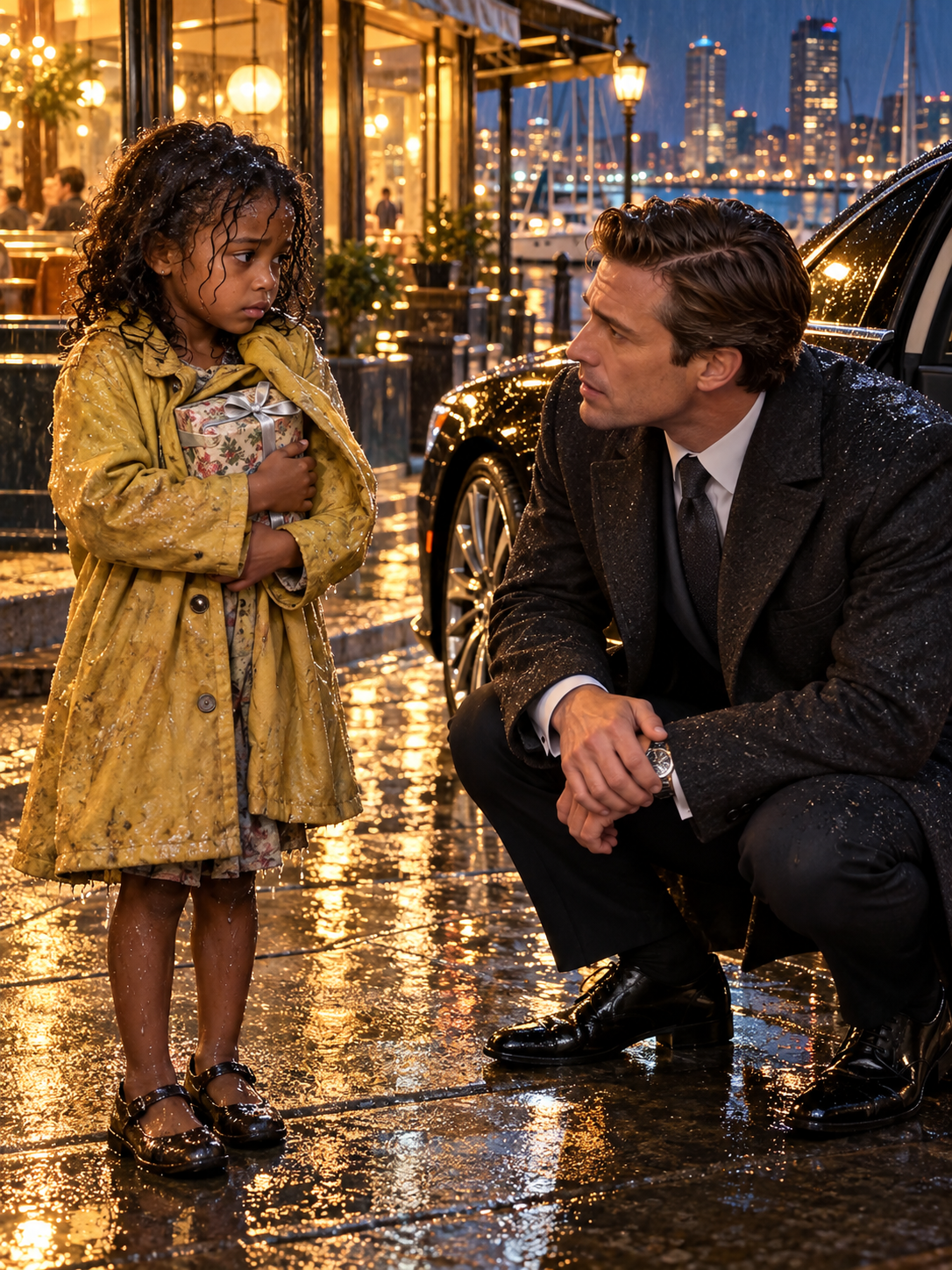
THE MILLIONAIRE THOUGHT THE LITTLE GIRL WAS PROTECTING A BIRTHDAY GIFT—UNTIL SHE WHISPERED THE NAME OF A CHILD HIS FAMILY HAD MOURNED FOR SEVEN YEARS – Life Story
The little girl stepped into the street just as a black sedan stopped for the light, clutching a gift to...
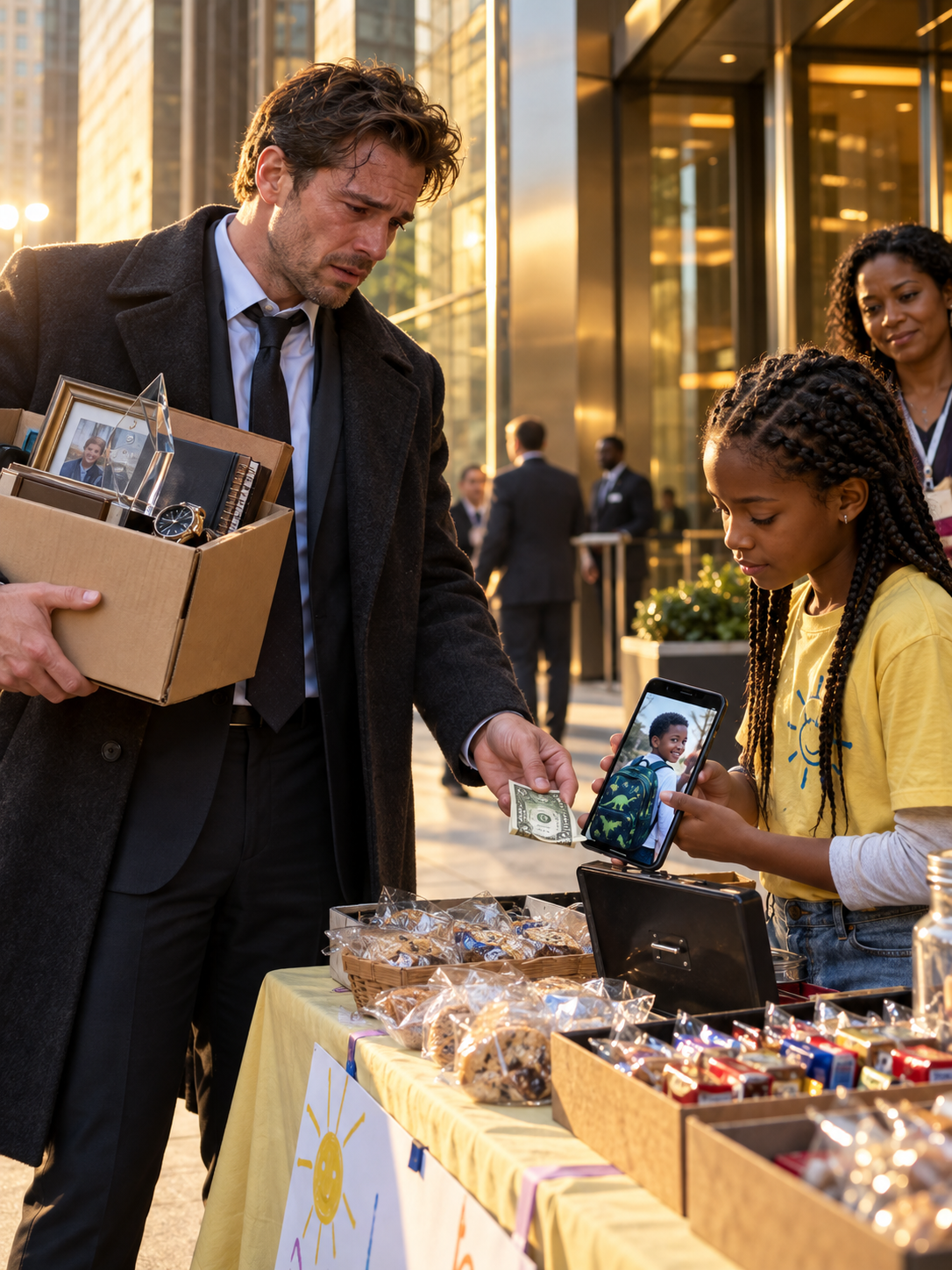
THE BILLIONAIRE LOST HIS COMPANY AND CAME HOME TO AN EMPTY HOUSE—THEN A SCHOOLGIRL ACCEPTED HIS LAST DOLLAR AND ASKED ABOUT THE BOY ON HIS PHONE – Life Story
The pen stopped halfway through Ronan Hale’s signature when his phone lit up beside the closing documents: Caleb and I...

I overheard a conversation between my wife and her friend and found out that she was cheating on me!
I Overheard a Conversation Between My Wife and Her Friend—and Found Out She Was Cheating on Me My wife laughed...