The 90-Day Plan to Isolate Australia: How Operation FS Almost Succeeded
May 1942.
The Pacific stretches vast and indifferent, a 3,000-mile blue expanse between America and Australia dotted with tiny islands that have suddenly become the most important real estate on Earth.
New Caledonia.
Fiji.
Samoa.
Three stepping stones that keep the convoys moving, the reinforcements flowing, and Australia in the fight.
But in Tokyo, Imperial General Headquarters has a plan to finish the job—a plan so audacious that if it succeeds, Australia goes dark.
No convoys.
No reinforcements.
No hope.
They call it Operation FS, and they have just 90 days to execute it.
Singapore has fallen.
Darwin lies in ruins after the heaviest bombing raid in the Pacific.
Japanese carriers roam at will from Burma to New Guinea.
The psychological shock is total.
On February 19th, 188 Japanese aircraft struck Darwin in two waves, and the northern gateway burned for hours.
Order collapsed.
Thousands fled.
And it wasn’t just Darwin—Broome, Townsville, Wyndham.
Japanese reconnaissance flights ranged across the north at will.
Submarine attacks struck Sydney Harbour itself in May.
The war had arrived on Australia’s shores.
Prime Minister John Curtin understood what this meant.
In a national radio address, he made it brutally clear: “Without any inhibitions of any kind, I make it clear that Australia looks to America, free of any pangs as to our traditional links with the United Kingdom.” It was a seismic shift.
For the first time, Australia acknowledged that Britain could not save it.
The empire was overextended.
Singapore had proven that.
If Australia was to survive, it needed America.
That lifeline ran through the blue.
From San Francisco across 4,500 miles of ocean to Nouméa in New Caledonia, then north to Suva in Fiji, then Brisbane.
Every soldier, every tank, every crate of ammunition destined for Australia’s defense traveled this route.
Break this chain and Australia becomes an island in every sense.
Cut off, blockaded, alone.
In Tokyo, Imperial General Headquarters saw exactly the same map.
And they understood that Australia didn’t need to be invaded to be neutralized.
It just needed to be isolated.
By March 1942, inside Japanese military planning, the debate had reached a critical point.
Two institutions—the Navy and the Army—argued over Australia’s fate.
Vice Admiral Shigeyoshi Inoue, commander of the Fourth Fleet, wanted invasion.
His staff drafted plans for landings in Queensland.
The requirement: 10 divisions, 200,000 men.
The goal: occupy the eastern seaboard and force surrender.
The Army refused outright.
According to the official Japanese war history, the Senshi Sōsho, and corroborated by post-war interrogations compiled in Japanese Monograph No. 45, the Army Section of Imperial Headquarters cited three insurmountable problems.
First, shipping.
Japan’s merchant fleet was already stretched thin across Southeast Asia, the Central Pacific, and the China front.
An invasion of Australia would require diverting vessels from every other theater.
The logistics were impossible.
Second, vulnerability.
Any supply line to northern Australia would run through waters dominated by Allied air power.
Convoys would be massacred.
Third, strategic overstretch.
The Soviet Union remained undefeated on Japan’s northern border.
The Kwantung Army, Japan’s largest and most experienced force, could not be committed to an Australian adventure while Stalin’s forces loomed in Siberia.
The compromise was brilliant in its simplicity.
Not invasion, isolation.
Seize the islands, cut the lifeline, force Australia into strategic paralysis without the cost of occupation.
By mid-March 1942, Imperial General Headquarters formally approved Operation FS.
Launch date: late June or early July 1942.
But there was one prerequisite, one absolutely critical stepping stone: Port Moresby.
This port town on the southern coast of New Guinea was the keystone of the entire plan.
From Port Moresby, Japanese bombers could cover the invasion fleets bound for Fiji and New Caledonia.
Without it, those fleets would sail unprotected into Allied air strikes.
Port Moresby had to fall first, and the clock was ticking.
May 4th, 1942.
The Coral Sea.
Task Force 17—the American carriers USS Lexington and USS Yorktown—steams into the Coral Sea, hunting for the Port Moresby invasion convoy.
It was the first carrier battle in history.
For four days, the opposing fleets dueled across 400 miles of ocean, never sighting each other directly.
Aircraft did the killing.
On May 8th, Lexington took multiple torpedo and bomb hits.
Internal explosions tore her apart.
By evening, she slipped beneath the waves.
But Japan paid a price, too.
The light carrier Shōhō was sunk.
The fleet carrier Shōkaku suffered crippling damage.
Her flight deck shattered, fuel fires raging.
And critically, the Port Moresby invasion convoy turned back.
For the first time in the Pacific War, a Japanese offensive had been stopped by naval action alone.
Not on land, not in a siege—at sea.
And without Port Moresby, Operation FS could not proceed.
But Tokyo still believed the window was open.
Four fleet carriers remained.
The Combined Fleet was intact.
If they could destroy the American carrier force, FS could still launch in July.
June 4th, 1942.
Midway Atoll, 1,300 miles northwest of Hawaii.
Admiral Isoroku Yamamoto led the mightiest naval force Japan had ever assembled: four carriers, 11 battleships, over 200 aircraft.
The goal was simple: lure the American carriers into a decisive battle and annihilate them.
What happened instead was catastrophe.
In five minutes on the morning of June 4th, American dive bombers caught three Japanese carriers with their decks full of armed and fueled aircraft.
Akagi, Kaga, Sōryū—all three erupted in flames.
By the end of June 6th, a fourth carrier, Hiryū, joined them on the bottom of the Pacific.
With them went 300 aircraft and their irreplaceable air crews.
Japan’s carrier striking power—the instrument that had brought victory from Pearl Harbor to Ceylon—was shattered in a single afternoon.
The strategic implications were immediate.
On July 11th, 1942, Imperial General Headquarters issued Directive No. 135.
Operation FS was cancelled.
The isolation strategy was abandoned.
Japan would shift to defensive operations across the entire Pacific perimeter.
The 90-day window had slammed shut.
The sea lanes to Australia remained open.
Australia did not simply wait to be saved.
On March 17th, General Douglas MacArthur arrived in Australia after his escape from the Philippines.
His famous words, “I shall return,” made headlines.
But behind the scenes, a new command structure was taking shape.
On April 18th, 1942, the Southwest Pacific Area was formally established with MacArthur as supreme commander.
It was a unified theater stretching from Australia to the Philippines, with Brisbane as its headquarters.
Prime Minister Curtin had formalized the alliance.
For the first time, Australian forces would serve under American strategic command.
It was a pragmatic recognition of reality: only America had the resources to defend Australia and carry the war back across the Pacific.
Australian divisions—veterans of North Africa, Greece, and Syria—returned home and retrained for jungle warfare.
The 6th, 7th, and 9th Divisions, battle-hardened troops who had fought Rommel in the desert, now prepared for a different kind of war.
And they deployed forward—not to defend Brisbane or Sydney, but to hold the line in Papua: at Milne Bay on the eastern tip, along the Kokoda Track across the Owen Stanley Range.
These positions became Australia’s shield.
Let’s zoom in on what this meant.
When Japanese Marines landed at Milne Bay in August 1942, they expected an easy victory—a quick seizure of airfields, minimal resistance.
Instead, they ran into a much larger force than they had anticipated.
When the Japanese landed, Allied strength at Milne Bay included elements of the militia 7th Brigade, elements of the AIF 18th Brigade, 7th Division, and Company E of the US 46th Engineers, plus supporting American anti-aircraft and service troops—together numbering around 9,500 men.
They were supported by the Royal Australian Air Force 75 and 76 Squadrons flying Kittyhawks, providing effective air cover from the outset.
When the Japanese Special Naval Landing Forces came ashore on the 25th of August, they advanced under constant air attack and infantry ambush.
Through nearly two weeks of rain, mud, and night fighting, the Australians broke the assault and drove the enemy back toward their landing points.
By 7th September, the survivors were re-embarking under fire.
About 700 Japanese were killed.
Roughly 1,300 escaped.
Allied losses were 167 Australians and 14 Americans.
It was Japan’s first clear land defeat of the Pacific War.
On the Kokoda Track, Australian militia and regular forces fought a brutal fighting retreat down the mountain spine of Papua.
Then in September, they counterattacked.
By November, Japanese forces were pushed back to the northern coast.
The cost was horrific, but the result was decisive.
Australia had moved from defense to offense.
The isolation plan wasn’t just cancelled—it was reversed.
Let’s address what most people believe about this period, because the popular narrative and the historical record tell very different stories.
In the public mind then and now, the threat was invasion.
Newspaper headlines screamed warnings.
Civil defense preparations assumed Japanese landings were inevitable.
The fear was real.
But here’s what the archival evidence actually shows: No approved invasion plan for Australia exists in Japanese military records.
The Navy’s proposals never progressed beyond staff studies.
Imperial General Headquarters never issued an invasion directive.
What did exist was Operation FS—a plan to isolate, not invade.
A plan to cut the lifeline, not occupy the continent.
And what about the Brisbane Line?
The infamous plan to abandon everything north of Brisbane and concentrate defense in the southeast.
The 1943 Royal Commission into the fall of Singapore investigated these claims exhaustively.
Its finding was unambiguous: No government policy to retreat to a Brisbane defense line was ever adopted.
The concept appeared in early contingency studies by military planners but was explicitly rejected by the war cabinet.
The myth outlasted the fact because the fear was genuine.
Australians believed invasion was coming because Darwin burned, because Singapore fell, because Japan seemed unstoppable across the entire Pacific.
But strategy is not shaped by fear.
It’s shaped by shipping tonnage, troop availability, and logistical capacity.
And on every single measure, Japan lacked the means to invade Australia.
What Japan could have done—and nearly did—was sever the lifeline.
That was the real threat.
Not tanks rolling into Sydney, but convoys that never arrived.
Not occupation, but strangulation.
So what actually happened after Operation FS was cancelled?
The supply line through Nouméa and Fiji never closed.
By late 1942, American troops and equipment poured into Australia at a staggering rate: 15,000 personnel per month, tanks, artillery, aircraft.
The buildup was massive.
Brisbane transformed into a forward operating base.
Airfields expanded across Queensland and the Northern Territory.
Supply depots multiplied.
Training camps processed tens of thousands of troops.
Australia became the springboard for the entire Allied counteroffensive in the Southwest Pacific.
In August 1942—just one month after FS was cancelled—the First Marine Division landed at Guadalcanal.
The island-hopping campaign had begun.
While Marines fought in the Solomons, Australian forces advanced in New Guinea, clearing the Huon Peninsula, then Bougainville.
By 1944, the defensive perimeter Japan hoped to establish in mid-1942 had collapsed entirely.
By 1945, MacArthur returned to the Philippines.
Australian divisions liberated Borneo.
The isolation strategy was not just defeated—it was reversed.
Let’s zoom out and assess what actually determined the outcome.
It wasn’t a single battle.
It was a chain.
Port Moresby blocked at the Coral Sea.
Carrier power destroyed at Midway.
Forward defense established at Milne Bay and Kokoda.
Each link held.
And because each link held, the chain held.
The lessons remain relevant today.
Sea control determines continental security.
Forward defense preserves logistics.
Alliances multiply strength.
Australia’s defense policy still rests on these principles: forward engagement in Southeast Asia and the Pacific, maritime superiority, alliance integration with the United States.
The geography hasn’t changed.
The supply lines still run through the same blue water.
In 1942, these principles emerged from desperation.
Today, they are doctrine.
For ninety days in the spring and summer of 1942, Australia stood on the edge of strategic isolation.
The plan existed.
The forces were ready.
The window was open.
It survived because of leadership—John Curtin pivoting to America when every tradition demanded otherwise, staking Australia’s future on an alliance that didn’t yet fully exist.It survived because of logistics: convoys maintained, airstrips built, supply lines defended not by speeches, but by merchant seamen, engineers, and dock workers who kept the chain moving.
And it survived because of forward defense—Australian troops holding the line in New Guinea when the easier choice was to pull back to the mainland.Above all, it survived because of the sea, where carrier battles in May and June determined the fate of a continent thousands of miles away.
Operation FS failed so completely that most Australians never even knew it existed.
No beaches stormed, no invasions repelled, no dramatic last stands—just convoys that kept sailing, supplies that kept flowing, and a strategic window that quietly closed in a Tokyo conference room on July 11th, 1942.Sometimes the most important victories are the ones that never make the history books.
Those same sea lanes remain critical to Australia’s security today, and as great power competition intensifies in the Indo-Pacific, the lessons of 1942 feel more relevant than ever.
Could forward defense and alliance integration still protect those vital supply routes in a modern conflict—and what do you think?
Recommended Stories

The Collapse of Nazi Germany: A Story of Broken Alliances and Ruined Ambitions
November 1918. Germany had just lost the war. The Armistice was signed, but the humiliation was only beginning. The Treaty...

13 Forgotten 1950s Monster Movies That Deserve a Comeback
You've seen Godzilla. You've shuddered at The Thing from Another World. But the 1950s unleashed a tidal wave of creature...
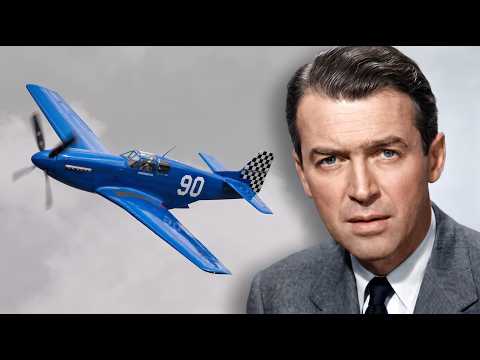
The Mustang That Wasn’t: Jimmy Stewart’s Record-Breaking P-51 and the $27 Scrap Heap That Fooled History
June 1955. A P-51 Mustang plunges into a Nebraska wheat field, exploding into a 45-foot trench of fire. The pilot...