12 Forgotten Sci-Fi Gems from the 1960s That Critics Got Wrong
In the 1960s, science fiction cinema was a battlefield of ideas, but not every visionary film got a fair fight.
While blockbusters dominated the spotlight, a handful of daring movies were dismissed, ridiculed, or outright ignored by critics.
Yet decades later, these so-called failures reveal themselves as prophetic masterpieces.
What if the greatest sci-fi treasures of the decade weren’t the ones everyone remembers?
Take The Damned (1963).
It begins with a roaring biker gang and ends with radioactive children imprisoned in a bunker.
Critics in 1963 were baffled, calling it incoherent.
But today, its chilling vision of government control and sacrificed innocence feels terrifyingly relevant.
Then there’s Planet of the Vampires (1965).
Before Alien made deep space terrifying, Mario Bava was crafting nightmares with colored filters and fog machines.
Critics sneered at its low budget, missing the abstract art beneath.
Its influence echoes through modern horror, proving that atmosphere trumps spectacle.
And who could forget Quatermass and the Pit (1967)?
Hammer Films traded gothic horror for a mind-bending tale of alien genetic manipulation.
Audiences wanted monsters; instead, they got a debate on human nature.
Today, its bold questions about evolution and violence feel more urgent than ever.
Journey to the Far Side of the Sun (1969) asked: what if there’s a mirror Earth hiding behind our sun?
Critics mocked its stiff acting, but its haunting exploration of identity and self-deception lingers.
It’s a “what if” that cuts deeper than any alien invasion.
Meanwhile, The 10th Victim (1965) turned murder into a televised sport long before The Hunger Games.
Critics called it shallow, but its satirical bite about consumer culture and voyeurism now feels like a prophecy.
Ursula Andress, armed and iconic, remains a vision of dystopian chic.
These forgotten gems didn’t just entertain—they challenged.
They asked uncomfortable questions about war, technology, and humanity’s darkest impulses.
And for that, they were punished.
But time has a way of vindicating the brave.
So why did critics miss the mark?
Perhaps because these films refused to fit neatly into boxes.
They blended genres, broke rules, and dared to be bleak.
In an era of optimism, they offered warnings.
And warnings, as we now know, are often ignored until it’s too late.
Consider The Day the Earth Caught Fire (1961), a British film that dared to imagine the entire planet knocked off its axis by nuclear tests.
No heroes in rockets, no alien invaders—just journalists racing to piece together the truth as London burns under a merciless sun.
Critics respected its craft but found it too grim, too real.
Audiences wanted escape; they got a warning.
Today, its collapsing weather patterns and helpless politicians feel like a documentary about climate change, decades ahead of its time.
And then there’s The Last Man on Earth (1964), the first adaptation of Richard Matheson’s I Am Legend.
Vincent Price, stripped of his theatrical grandeur, plays Dr.
Robert Morgan with a quiet, devastating humanity.
Every day is the same: fortify the house, hunt the infected, cling to sanity amid the ruins.
Critics dismissed it as cheap and depressing.
But George Romero openly admitted it inspired Night of the Living Dead—and without it, the modern zombie genre might never have existed.
Price’s isolation is so raw, so believable, that you feel the weight of a world emptied of meaning.
Joseph Losey wasn’t done shocking audiences after The Damned.
A year earlier, he delivered These Are the Damned (1962), which starts as a gritty biker drama and slowly descends into something far darker.
The real “damned” aren’t the leather-clad rebels—they’re the radioactive children hidden in a secret underground facility, bred to survive a nuclear apocalypse.
Cold to the touch, unable to live outside their controlled environment, they are humanity’s last hope and its greatest shame.
Critics called it muddled; audiences expecting street violence got a meditation on generational betrayal.
Today, it resonates as one of the bleakest, most thought-provoking sci-fi films of its era.
Then there’s Fantastic Voyage (1966), which critics waved off as a mere visual gimmick.
A team of scientists shrunk and injected into a dying man’s body—sure, it sounded like a stunt.
But Richard Fleischer turned the human body into an alien landscape: blood clots as avalanches, antibodies as hostile creatures, the heart a collapsing cavern.
It won Oscars for its effects, yet its deeper brilliance was overlooked.
This wasn’t just spectacle; it was a bold reimagining of exploration itself.
Why journey to distant planets when the human body is just as vast, strange, and terrifying?
On television, the BBC’s A for Andromeda (1961) quietly shattered expectations.
Written by astronomer Fred Hoyle, it began with a mysterious signal from space—not a message, but blueprints for a computer.
When scientists build it, the machine orders them to create something even more shocking: a living being designed by an alien intelligence.
Critics found it slow and talky; viewers expecting space battles got ethical dilemmas about AI and blind faith in technology.
Today, its questions about machines dictating human actions feel more urgent than ever.
And finally, Jean-Luc Godard’s Alphaville (1965).
No spaceships, no miniatures—just Paris shot in stark black and white, transformed into a futuristic nightmare ruled by a computer called Alpha 60.
Emotions are forbidden, poetry banned, love itself an act of rebellion.
Critics in 1965 were baffled, calling it pretentious and incomprehensible.
But Godard wasn’t interested in genre rules; he used sci-fi as a weapon, exposing the cold logic of authoritarian control.
Its bureaucratic dystopia paved the way for Blade Runner and Brazil, and Alpha 60’s chilling pronouncements sound eerily like today’s algorithmic overlords.
These twelve forgotten gems didn’t just predict the future—they warned us about it.
And the fact that we’re still catching up to their visions proves one thing: the critics were wrong, and time has finally caught up with their brilliance.
But the story doesn’t end with the films themselves.
What’s truly remarkable is how these overlooked works quietly seeped into the DNA of everything that followed.
Take The Last Man on Earth—its DNA runs through every zombie film, every pandemic thriller, every story of solitary survival against a world gone mad.
Without Vincent Price’s quiet desperation, there is no 28 Days Later, no The Walking Dead.
The lineage is unmistakable.
And Fantastic Voyage?
Its influence extends far beyond cinema.
The film’s visual language—the body as alien terrain—shaped medical imaging documentaries, inspired video games, and even influenced how scientists communicate complex biology to the public.
When you watch a modern film shrink its heroes into the microscopic realm, you’re watching Richard Fleischer’s ghost at work.
What unites these forgotten gems is a shared refusal to comfort.
They didn’t offer easy answers or heroic saviors.
Instead, they asked: what if progress is a trap?
What if survival demands complicity?
What if the monsters we fear most are reflections of ourselves?
These weren’t questions 1960s audiences wanted to hear, but they’re questions we can’t stop asking now.
Consider the legacy of Alphaville.
Godard’s cold, bureaucratic nightmare didn’t just predict surveillance states—it anticipated the quiet algorithmic control that shapes our daily lives.
Alpha 60’s emotionless voice, declaring that “no one has ever loved,” sounds less like science fiction and more like a status update from the digital platforms that now mediate our relationships.
The film’s central question—can human feeling survive in a world optimized for efficiency?—has never been more urgent.
Similarly, A for Andromeda raised the alarm about artificial intelligence decades before the term became a buzzword.
The scientists who build a machine they don’t understand, who follow its instructions without grasping the consequences, are us.
Every time we hand over decisions to algorithms, every time we trust systems we can’t inspect, we’re replaying Hoyle’s cautionary tale.
The BBC may have cancelled the series after one run, but its warnings refused to die.
Then there’s The 10th Victim, which turned murder into prime-time entertainment.
In 1965, critics found the premise absurd.
Today, reality television has normalized the spectacle of human suffering, and social media has turned every life into a competition for attention.
Elio Petri’s satire wasn’t exaggerated—it was simply early.
The film’s most chilling moment isn’t a death scene; it’s the casual way characters discuss killing as a career move, a lifestyle brand, a path to wealth.
That casualness is now everywhere.
Perhaps the most prescient of all is The Day the Earth Caught Fire.
Its vision of climate chaos, of governments scrambling to respond to disasters they created, of journalists trying to communicate truth to a panicked public—it’s not science fiction anymore.
It’s the evening news.
The film’s ambiguous ending, with church bells ringing as humanity waits to learn its fate, mirrors our own moment of climate anxiety.
Val Guest didn’t just predict the future; he captured the exact feeling of living in it.
So why do these films still matter?
Because they refused to look away.
They didn’t offer escapism—they offered confrontation.
And in doing so, they created a template for the kind of science fiction that matters most: the kind that holds a mirror to our worst impulses and asks us to change before it’s too late.
These films weren’t just ahead of their time—they were warnings we finally understand.
They didn’t fail because they were wrong; they failed because they were right too soon.Look at what they predicted: engineered children, televised murder, algorithms dictating love, a planet burning from its own arrogance.
None of it felt plausible in 1965.
All of it feels inevitable now.
The critics who dismissed them weren’t blind—they were simply comfortable, and comfort doesn’t recognize prophecy.What makes these twelve gems endure isn’t nostalgia.
It’s accuracy.
They saw the surveillance state before the cameras were everywhere.
They saw the zombie apocalypse before the pandemic made isolation universal.
They saw the hunger games before reality TV turned suffering into ratings.
They didn’t just imagine the future—they diagnosed it.And that’s why the final question isn’t which film deserves a remake.
It’s whether we’re finally ready to watch them without flinching.
Because the future they warned us about isn’t coming anymore.
It’s here.So which of these overlooked masterpieces do you think deserves a modern reimagining—and more importantly, which one feels like it’s already happening around us right now?
Drop your thoughts in the comments below, hit subscribe, and let’s keep digging up the lost treasures of science fiction history together.
Recommended Stories

The Lost Wooden Highways That Moved Logs Faster Than Trains
In 1890, a single log traveled 20 miles through the Sierra Nevada mountains in under an hour. It never touched...
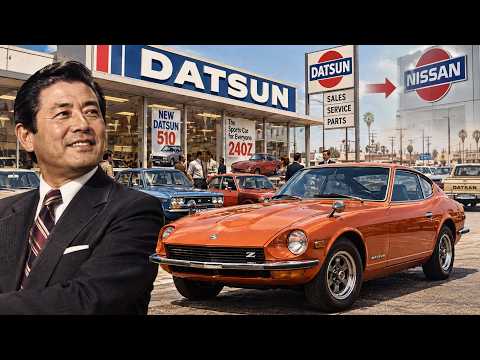
The Brand Nissan Killed to Save Itself
In the summer of 1911, a young Japanese engineer named Masujiro Hashimoto opened a tiny workshop in Tokyo with a...

The Night Sobel Cut the Fence: Dick Winters on the Captain Who Almost Killed Easy Company
It wasn't a secret that Captain Herbert Sobel was a significant source of irritation for Dick Winters—to put it mildly....