The Silent Trick That Made NVA Ambushes Useless
The jungle should have swallowed them whole.
The Viet Cong had chosen the perfect spot: a narrow trail hemmed in by bamboo and steep terrain, claymore mines wired to the trees, a trigger man waiting with his thumb on the detonator.
It was a textbook ambush—one that had destroyed countless Allied patrols.
But the Australians never walked the trail.
They didn’t line up.
They didn’t even move like normal soldiers.
The first man zigzagged off path, low to the ground, his boots avoiding every obvious step.
The second followed at a different angle, thirty meters behind.
The third paused under a tree, motionless.
To the Viet Cong hiding in the bush, it was like watching water flow around rocks.
No rhythm, no formation, no pattern to strike.
The ambush command never came.
The kill zone remained untouched.
Within minutes, the Australians had passed through, leaving the enemy clutching wires that would never be pulled.
It wasn’t luck.
It wasn’t magic.
It was a trick—quiet, deliberate, and devastating in its simplicity.
The SAS didn’t just avoid ambushes.
They broke them without firing a shot.
This is the story of how one subtle shift in movement, spacing, and awareness rendered the Viet Cong’s most feared tactic useless.
And it begins with a man known only as the point scout, whose job wasn’t just to lead, but to sense danger before it was even real.
To understand the brilliance of the SAS trick, you first have to understand what they were up against.
In the dense, humid jungles of Vietnam, the Viet Cong didn’t just operate in the terrain—they owned it.
They lived there, slept there, built tunnels beneath it, and set traps across every inch of it.
And one of their most feared weapons wasn’t a gun or a mine.
It was the ambush.
VC ambush tactics were devastating in their simplicity and terrifying in their frequency.
A narrow jungle trail, a sudden bend, a small open space that forced movement into a kill zone.
That’s all they needed.
Hidden behind tree lines, in spider holes, or beneath foliage, VC soldiers would wait for the perfect moment.
The first man enters, the second follows.
By the time the third or fourth steps in, the jungle erupts with automatic fire, grenades, and claymores triggered by wire or command.
Seconds later, what was once an orderly patrol is scattered in blood and panic.
They were masters of preparation.
Claymore mines, sometimes homemade from scavenged materials, were wired into trees or buried in the soil.
Pressure plates hidden under a thin layer of dirt could trigger explosives.
Trip wires stretched across branches might activate punji pits or fragmentation traps.
They studied the way foreign troops moved, where they tended to step, and how they reacted under fire.
Then they built their ambushes around those patterns.
For most Allied infantry, especially conventional units, the result was often catastrophic.
Troops moved in predictable lines, often on trails already mapped or used by others.
They bunched up, they moved in rhythm, and they didn’t question the terrain.
That predictability gave the VC control.
The jungle became the trap.
An American platoon might clear the jungle with firepower or air support.
South Vietnamese troops might storm through quickly, hoping to trigger nothing.
But the SAS, they did something else entirely.
They didn’t overpower the jungle.
They didn’t outrun it.
They slipped around it—or more precisely, through it—with a trick so subtle, so maddeningly effective that it made entire ambushes miss their mark.
And in doing so, they took the VC’s greatest strength and turned it into a weakness.
Because when your enemy expects you to walk straight into the kill zone, but you never do—when their traps lie untouched, when their carefully timed detonations fire into empty space—that’s not just frustrating, it’s demoralizing.
And it was only the beginning.
The key to unraveling Viet Cong ambushes wasn’t firepower.
It wasn’t technology.
It wasn’t luck.
It was a man—the point scout—and the way he moved through the jungle.
Not like a soldier, not like a hunter, but like water.
Fluid, unpredictable, impossible to grasp.
In a typical infantry unit, the point man follows a trail straightforward, direct, efficient.
But to the Australian SAS, trails were invitations to die.
Trails were where the enemy expected you, where their claymores pointed, where trip wires were set.
So the point man didn’t follow them.
He moved just off to the side, five to ten meters into the foliage, depending on terrain.
He adjusted constantly, drifting left, then right, pausing often, reading the ground, listening to the jungle as if it could whisper secrets.
Every few minutes, he’d stop completely.
No signal, no spoken word.
The rest of the patrol would freeze behind him.
He wasn’t checking a map.
He was checking the air, the way it moved, the smell of it, the tension in the forest.
He’d scan tree trunks for clean cuts or tool marks.
He’d study spider webs looking for gaps or disturbance.
A freshly broken strand in an otherwise perfect web—that meant someone passed through recently.
Human, armed, dangerous.
But his greatest weapon wasn’t vision.
It was rhythm control.
Most soldiers walk with a natural cadence.
Even in jungle terrain, there’s a tempo.
Step, step, pause.
The VC learned this, studied it, used it to time their ambushes.
But the SAS point man broke the rhythm.
One moment, he’d move quickly, weaving through vines.
The next, he’d crawl silently for ten meters, disappear into a tree line, or even backtrack to create false trails.
No two movements were alike, and just as important, no two patrol members followed the exact same path.
Each man offset slightly from the one ahead—ten meters behind, fifteen to the side, sometimes more.
It created a scattered formation with no clean pattern, no clustered group, no single kill zone for the VC to exploit.
To an ambush team lying in wait, this movement was infuriating.
They couldn’t predict where the bulk of the patrol would appear.
One man might enter the kill zone, but the others never would.
Claymores fired into empty space.
Triggers were pulled too early or too late.
And the SAS, they rarely fired back immediately.
Instead, they vanished, repositioned, then struck from behind.
It was like trying to net fog.
The trick wasn’t fancy.
It didn’t require gadgets or intelligence briefings.
It was simply the act of refusing to give the enemy what they needed most: predictability.
The point man wasn’t leading the patrol.
He was guiding it through uncertainty, shaping their path to confuse, mislead, and survive.
And the Viet Cong never saw it coming.
The Viet Cong didn’t just build ambushes.
They built them based on assumptions.
They assumed soldiers would walk in single file.
They assumed they’d speak.
They assumed they’d move in predictable patterns, close together, at a steady pace.
And for the most part, those assumptions were correct—until they met the Australian SAS.
The SAS knew that defeating an ambush wasn’t just about avoiding traps.
It was about denying the enemy every condition they needed to execute it.
They broke ambush logic using three principles so simple they bordered on primitive: spacing, timing, and silence.
Spacing was sacred.
While conventional units often moved in tight lines through the jungle, the SAS stretched out—sometimes fifteen, twenty, even thirty meters between each man, depending on visibility.
In a thick bamboo corridor, this meant one man could be lost to a trip wire or sudden gunfire.
But the others would survive, spread out, ready to flank or withdraw.
There was no bunching up, no stacking at choke points.
They flowed through the terrain like a liquid stream—disconnected, fluid, hard to trap.
The Viet Cong’s command-detonated explosives, designed to strike clusters, became almost useless.
One kill wasn’t worth revealing an entire ambush, and the SAS knew it.
Then came timing.
In most units, foot patrols moved with natural rhythm.
Boots fall into cadence.
Human beings unconsciously sync steps, especially under stress.
But the SAS trained themselves to move offbeat.
One step, pause, three steps, freeze.
The patrol leader might stop without warning, forcing everyone behind him to wait in silence for a minute—or ten.
There was no tempo, no pattern to a VC soldier hidden in a spider hole with a thumb on the detonator wire.
This was a nightmare.
You couldn’t time the shot.
You never knew when the next man would appear.
If you pulled too soon, you missed.
If you hesitated, you saw nothing.
Ambushes only worked if the prey walked into your jaws.
The SAS refused.
But nothing frustrated the enemy more than silence.
The SAS moved through the jungle with the hush of mist—no talking, no footfalls, no gear clinking.
Communications happened through hand signals, touch cues, or in some cases, lines of thin black cord tied from man to man, tugged gently for silent commands.
Even breathing was managed.
On high-alert patrols, troopers learned to regulate their breath, exhaling slowly through cloth or cupped hands to dampen the sound.
Water bottles were wrapped in cloth.
Rifles were padded.
Even bayonets were taped to reduce metal-on-metal friction.
The jungle was already alive with noise—wind, insects, birds.
The SAS didn’t try to overpower it.
They blended into it, became part of the background.
And in doing so, they made themselves untrackable, unhearable, unkillable.
Spacing kept them safe.
Timing made them unpredictable.
Silence made them invisible.
And for the Viet Cong, that made the ambush pointless—because what good is a trap if the prey never steps inside it?
To most soldiers, the jungle was chaos—a blur of heat, insects, and green upon green.
But to the Australian SAS, it was a language, and they had learned to read it not with maps or compasses, but with instinct, observation, and silence.
Ambushes weren’t just found.
They were felt long before the first bullet flew.
The jungle had patterns.
The SAS knew them by heart.
How vines naturally draped over trees.
How leaf litter settled over time.
How spider webs formed across untouched trails.
And more importantly, what happened when something disturbed it.
A broken twig wasn’t always a clue.
But a broken twig with clean edges, recently snapped, pointing outward from a trail—that meant recent movement.
Leaves pushed to the side and not yet fallen back into place.
Someone had passed through hours ago, maybe minutes.
They noticed things others never saw.
A clump of moss missing from a log.
Footprints not just in mud, but in how the dew had shifted.
Bark scraped at knee height from a soldier resting his rifle against a tree.
And then there were the sounds not heard.
The jungle was never quiet.
It buzzed, clicked, croaked, and rustled.
But when birds went silent, when frogs stopped calling, when even the insects grew still—something was wrong.
Nature itself had been interrupted.
And more often than not, it meant humans were nearby, waiting, watching.
One SAS patrol leader once said, “When the jungle goes quiet, so do we.” In those moments, they would halt midstep, drop to the ground, let the silence stretch, and listen.
Then there was scent.
SAS operators trained their senses to detect the unnatural—the acrid tang of gun oil, the metallic trace of disturbed earth, the faint sour scent of unwashed uniforms and nervous sweat, even the ghost of tobacco smoke drifting lazily in still air.
Some could smell cooked rice from over a hundred meters away, and that was all it took.
The SAS also paid attention to terrain itself.
A trail that suddenly widened.
A perfect bend with just enough space for a kill zone.
A dry stream bed too clean, as if swept.
These weren’t paths.
They were invitations.
And the SAS never RSVP’d blindly.They developed a sixth sense—not mystical, but earned, sharpened by thousands of hours in the bush where every rustle could mean death.
And when that instinct whispered ambush, they didn’t debate.
They stopped.
They flanked.
Sometimes they crept even closer—not to escape the trap, but to turn it inside out.Because once they saw the signs, the question was no longer how to survive the ambush.
It became how to break it open and kill what was waiting inside.The Australian SAS didn’t always avoid ambushes.
Sometimes they walked into them on purpose.
It sounds insane—stepping toward an enemy trap, knowing rifles are aimed, wires are armed.
But for the SAS, knowledge was power.
The tactic was called controlled contact: the art of forcing the enemy to reveal themselves on your terms, not theirs.Once a likely ambush site was identified, the patrol would fan out.
One or two men might continue forward just far enough to tempt the trigger.
The rest would loop wide, silently flanking the suspected enemy position.
Slow, deliberate, surgical.
The point wasn’t to bumble into fire.
It was to bait it.In one recorded case, a four-man SAS patrol discovered signs of a claymore ambush along a trail bend in the Central Highlands.
Instead of avoiding it, they left a decoy—an empty pack strapped to a stick, pushed slowly into the line of fire by a length of vine.
The Viet Cong detonated the charge, believing they had hit the lead man.
That’s when the SAS struck from two angles.
The ambushers became the ambushed.
The jungle erupted for less than a minute.
Then it went silent again.Controlled contact wasn’t about recklessness.
It was about shifting initiative.
Viet Cong ambushes depended on surprise, confusion, panic.
The SAS replaced all three with calculation, composure, and counterattack.
Sometimes they used explosives, tossing grenades into ambush lanes to force early detonation.
Other times they’d fake noise—snap branches or drop gear to draw enemy fire.
One patrol even used a portable radio with a looped playback of voices to simulate a distracted squad.
Once the VC fired, their position was compromised—and the SAS, already spread, already flanking, would close in with swift, brutal efficiency.It wasn’t always clean.
Sometimes it went wrong.
Sometimes the bait drew real fire.
But even then, SAS spacing and movement discipline reduced casualties to a minimum.
Their philosophy was simple: You can’t avoid every trap, but you can prepare to survive it and strike back harder.These moments became legend among Allied forces.
American LRPs, SEALs, and MACV SOG units who trained alongside the SAS quickly adopted similar principles.
But even they admitted the Australians didn’t just detect ambushes—they manipulated them.
Where most troops feared the jungle’s hidden teeth, the SAS learned to grab them by the root and turn them outward.
And the Viet Cong, once confident in the power of their ambushes, began to realize something terrifying: the Australians didn’t fear the kill zone.
They turned it into a hunting ground.The jungle didn’t play favorites.
It punished hesitation.
It punished noise.
It punished predictability.
And most conventional units—American, South Vietnamese, Korean—walked straight into its wrath.
Not because they were weak, not because they lacked courage, but because they trusted routine in a place that thrived on chaos.American infantry units often patrolled in columns, tightly packed along trails.
Radio chatter buzzed, boots stomped, cigarette smoke drifted.
Jokes were whispered between squadmates.
Some even played music quietly from small radios—an attempt to push back the weight of tension.
But the jungle absorbed everything.
It heard, it watched, and the Viet Cong listened with it.The VC studied patterns.
They knew how far apart squads spaced their men.
They knew how long it took a platoon to move through a choke point.
They learned how many seconds passed between point man and radio man, between scout and machine gunner.
They set their ambushes like clockwork because their enemies moved like clockwork.
And when the explosions came, they hit hard.
Fire would erupt, bullets tear through bamboo, and panic would follow.
Troops dove for cover, returning fire into an unseen tree line, screaming for air support, for artillery, for God.
But by the time help arrived, the jungle was silent again.
The VC were gone, and the ground was stained.But the SAS, they didn’t play by the jungle’s rules.
They rewrote them.
They spoke in hand signals, moved in silence, smelled the air, touched the ground.
Where others relied on maps, they relied on intuition born from immersion.
They didn’t trust the trail.
They didn’t trust the absence of noise.
They trusted nothing but their senses and each other.
There were no shortcuts, no noise-discipline lapses, no assuming safety just because no shots had been fired in a while.
Every bend in the trail was treated like the edge of a cliff.
Every tree line, a possible gun barrel.And it wasn’t just about ambushes.
The SAS lived differently in the field.
They packed lighter, carried less water, made fewer movements.
American troops often looked like soldiers.
The SAS looked like ghosts—dirty, sweat-streaked, draped in camouflage that blended into the moss itself.
You could be five meters away from an SAS patrol and not see them unless they wanted you to.That’s why other units got caught.
Not because they weren’t brave, but because they were predictable.
And that’s why the Viet Cong began to fear the Australians in a way that was different.
Not because they were louder, not because they were stronger, but because nothing they did made sense.
They didn’t follow the trails.
They didn’t appear when expected.
They didn’t fire when ambushed.
They moved like the jungle itself—quiet, coiled, lethal.
Where most units walked into the trap, the SAS crawled around it, flanked it, and waited in the dark for the ambushers to blink first.In Vietnam, most soldiers feared the jungle.
Its shadows, its silence, its unseen teeth.
It wasn’t just terrain.
It was a predator.
It swallowed men, confused their senses, turned them around, exhausted them, then bled them dry in one perfect ambush.
But not the SAS.
For the Australian Special Air Service Regiment, the jungle was not enemy territory.
It was home.They didn’t conquer it.
They merged with it.
They understood the tempo of its sounds, the angles of its light, the scent of disturbed ground and wet rot.
They knew how long it took a spider to rebuild a web, and what it meant when that web was missing.
This wasn’t textbook warfare.
It was a relationship—a bond between man and environment so complete that the jungle itself became a weapon.
While others hacked and stomped and sweated their way through the undergrowth, the SAS glided.
And when the Viet Cong thought they were being hunted by spirits, they weren’t wrong.One NVA after-action report from 1970 warned of Australians who crawl like snakes and vanish into the earth.
Another advised commanders to avoid night movement in certain areas entirely, citing ghost units who left no tracks and struck without sound.
What they were describing was a doctrine built on restraint, not aggression—on precision, not firepower—on one shot fired at the right moment, not a hundred rounds sprayed in panic.Even among America’s most elite units—SEALs, LRP teams, MACV SOG—there was a quiet respect for how the SAS operated.
They were fewer.
They carried less.
They talked less.
But they were watching.
Always watching.
And when they struck, it was with purpose.
Their survival rate was among the highest of any unit in Vietnam.
But more than that, their impact on enemy morale was disproportionate to their numbers.
The Viet Cong couldn’t ambush what they couldn’t find.
And even when they set the trap, it often sprang in reverse—because the jungle didn’t hunt the SAS.
The SAS hunted in the jungle.They didn’t need air support or fire bases or flare shells to level a hillside.
They needed patience, silence, and a weapon that never jammed.
They needed a still mind and an ear for the unnatural.
They needed each other.
That’s why their legacy endures—not just because of the kills, not just because of the missions completed, but because of how they fought: with discipline, with restraint, with total control over themselves and their environment.
They turned Vietnam’s deadliest terrain into a tactical advantage.
Where others tried to beat the jungle, the SAS let the jungle beat for them.
And when the time came—when the moment was right—they became the sound in the silence.
The breath behind the bush.
The eyes counting the buttons on the enemy’s shirt before the enemy ever knew they were there.So the next time you walk a familiar path, certain of what lies ahead, ask yourself: are you moving like a soldier—or like water?
What would you do if the jungle went quiet?
Recommended Stories
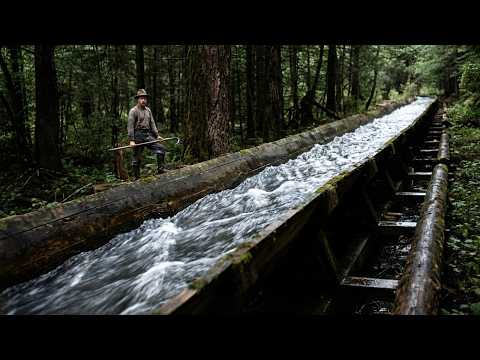
The Lost Wooden Highways That Moved Logs Faster Than Trains
In 1890, a single log traveled 20 miles through the Sierra Nevada mountains in under an hour. It never touched...

The Hidden Sorrows of Old Hollywood’s Children
You've heard the fairy tales—the red carpets, the dazzling smiles, the adoring fans. But what if the most heartbreaking stories...

The Battle of 73 Easting: The Last Great Tank Battle of the 20th Century
The desert of southern Iraq was a place of sudden, violent sandstorms—but on February 26, 1991, it would be torn...