THE BROKE WAITRESS SAVED A MAFIA BOSS’S SON IN A RAINY NEW YORK ALLEY—THEN HIS TERRIFYING FATHER OFFERED HER A JOB THAT EXPOSED THE SECRET BEHIND HIS WIFE’S DEATH – Life Story
Three teenagers were laughing while a little boy cried on the pavement.
Minutes later, black SUVs surrounded the waitress who had saved him.
But before his powerful father reached them, the boy whispered something that made her realize this was no ordinary attack.
The first thing I heard was laughter.
Not the kind that belonged outside a restaurant after midnight, when people stumbled into the November cold with full stomachs and too much wine.
This laughter was sharp and deliberate.
It echoed between the brick walls behind Rosetti’s Bistro, rising over the rain as though someone had decided another person’s fear was entertainment.
I had just finished fourteen hours on my feet.
My name is Kayla Grant.
I was twenty-seven, exhausted, and carrying a paper bag containing leftover garlic bread that would probably be my dinner.
My shoes were soaked, my phone had eleven percent battery, and the only thing I wanted was to get back to my apartment in Queens.
Then I saw the boy.
He couldn’t have been older than nine.
He wore a navy school blazer, one sleeve torn at the elbow, and a white shirt streaked with mud.
His backpack lay several feet away, its contents scattered across the wet pavement.
Three teenage boys surrounded him.
One held a phone, recording.
Another stood directly in his path.
The tallest had a polished black shoe resting on the boy’s backpack.
“Come on, little prince,” the tallest one said. “Your daddy owns half the city, right? Call him.”
The child shook his head.
“Please.
I just want to go home.”
His voice was so small that something inside my chest tightened.
The teenager holding the phone laughed.
“Then tell us why your father thinks he can do whatever he wants.”
The boy tried to retrieve his backpack.
The tallest teenager shoved him backward.
He landed hard on the pavement.
My dinner hit the ground before I realized I’d dropped it.
“Get away from him.”
Three faces turned toward me.
The tallest boy looked irritated rather than frightened.
He was seventeen or eighteen, with expensive sneakers, carefully styled hair, and the casual arrogance of someone who had never seriously considered consequences.
“Keep walking, lady.”
I stepped between him and the child.
“Pick up his things.”
He laughed.
“Excuse me?”
“You heard me.”
The second teenager lowered his phone slightly.
“This doesn’t involve you.”
“It does now.”
I pulled out my own phone and raised it.
“Three teenagers harassing a child behind a restaurant.
One of you filming.
One wearing a St.
Augustine Preparatory jacket with his name embroidered on it.” I glanced at the lettering. “Marcus.
That’s convenient.”
Marcus looked down at his jacket.
For the first time, uncertainty crossed his face.
“We weren’t hurting him.”
I looked at the boy’s bleeding palms and torn sleeve.
“Then you won’t mind explaining that to the police.”
The third teenager muttered something and stepped away.
Marcus hesitated.
I kept my phone raised.
“Pick up his backpack.”
He did.
“Now leave.”
They backed toward the alley entrance, trying to look as though leaving had been their idea.
Then they disappeared into the rain.
I waited until their footsteps faded before turning around.
The little boy had curled against the brick wall.
His arms wrapped around his knees, and his entire body trembled.
I crouched several feet away.
“Hey.
They’re gone.”
He didn’t answer.
“I’m Kayla.
I work right there.”
I pointed toward the restaurant’s back door.
“You don’t have to tell me anything.
I just want to make sure you’re okay.”
His breathing grew faster.
I recognized that frightened, helpless rhythm.
During my mother’s final months with cancer, I’d sat beside her through nights when fear made it difficult for her to catch her breath.
I lowered myself onto the wet pavement.
“Look at me if you can,” I said gently. “We’re going to breathe slowly.
Nothing else right now.”
After several attempts, he began matching my breathing.
I took off my coat and placed it beside him.
He pulled it around his shoulders.
For a while, neither of us spoke.
Rain ran down the fire escape above us.
Somewhere beyond the alley, a taxi honked at someone who apparently believed traffic laws were optional.
Eventually, the boy whispered, “Are they really gone?”
“Yes.”
He looked toward the street.
His eyes widened.
“Did you call my father?”
“No, sweetheart.
I don’t even know who your father is.”
He grabbed my wrist.
“Please don’t tell him I was here.”
Before I could ask why, headlights swept across the alley.
Three black SUVs turned in from the street.
They stopped so suddenly that tires hissed against wet asphalt.
Doors opened.
Men in dark coats stepped out and spread across the entrance.
My coworker Britney appeared behind me, took one look at the vehicles, and whispered, “Kayla, what have you gotten yourself into?”
The boy released my wrist.
Then he looked at the man emerging from the first SUV.
And whispered, “He knows why they found me.”
THE MAN WHO NEVER ASKED TWICE
The man approaching us moved without hurry.
That was what frightened me most.
Everyone else seemed urgent.
Two men scanned the alley.
Another spoke into a phone.
A broad-shouldered driver hurried toward the boy, relief transforming his expression.
But the man in the charcoal coat walked as if the entire city would wait until he finished whatever he had come to do.
He was tall, dark-haired, and probably in his early forties.
Rain glistened on the shoulders of his expensive wool coat.
His face was striking in a severe, almost old-fashioned way, but his eyes were what held my attention.
They missed nothing.
“Luca.”
The little boy stood immediately.
“Papa.”
The man dropped to one knee and opened his arms.
Luca ran to him.
For several seconds, the stranger held his son so tightly that I could see his knuckles pressing against the child’s wet blazer.
“Are you hurt?” he asked.
Luca shook his head against his father’s shoulder.
“Look at me.”
The boy obeyed.
The man checked his face, hands, and torn sleeve.
His expression tightened when he saw the scrapes on Luca’s palms.
“Who did this?”
Luca glanced toward me.
“Those boys.
But she stopped them.”
His father finally looked at me.
“Who are you?”
“Kayla Grant.”
“Why were you with my son?”
Britney stepped forward.
“Because she helped him.
Three teenagers were pushing him around, and Kayla made them leave.”
The man’s gaze never left mine.
“You approached three attackers alone?”
“They were teenagers.”
“Teenagers can still be dangerous.”
“So can leaving a little boy on the pavement.”
Something moved behind his expression.
He stood, still holding Luca’s hand.
“My name is Anthony Ferraro.”
Britney’s fingers closed around my elbow.
I didn’t recognize the name.
She clearly did.
“I appreciate what you did for my son,” Anthony continued. “But I need to understand exactly what happened.”
“Then ask Luca.”
His jaw tightened.
“I’m asking you.”
“And I’m telling you your son was there.
He deserves to be listened to.”
The alley became strangely quiet.
One of Anthony’s men glanced toward him as if waiting for permission to object.
Instead, Anthony looked down at Luca.
“Tell me.”
Luca swallowed.
“They said you were a liar.”
Anthony went still.
“They said you had stolen something from another family.
They knew Mama’s name.”
The change in his father’s face was immediate.
“What did they say about your mother?”
Luca lowered his eyes.
“I don’t want to say.”
Anthony closed his eyes briefly.
“All right.”
He turned to the broad-shouldered man.
“Marco, take Luca to the middle car.
Call Dr.
Reeves and tell her what happened.”
Luca resisted.
“Papa, can Kayla come?”
“I’ll speak to her first.”
The boy looked at me with naked worry.
I forced a reassuring smile.
“Go get warm, okay? Your hands need cleaning.”
Only after Marco guided him away did Anthony speak again.
“Did you hear the boys mention my wife?”
“I heard them talk about his father.
Not his mother.”
“Names?”
“Marcus.
He had a St.
Augustine jacket.
The others gave me names, but I don’t know if they were real.”
I repeated what I remembered.
Anthony took out his phone and sent a message.
“Did they film my son?”
“Yes.”
“Did you get a copy?”
“No.
I made them stop.”
“Did you record them?”
I hesitated.
“I pointed my phone at them.”
“That’s not what I asked.”
“No,” I admitted. “My battery was almost dead.
I was bluffing.”
For the first time, I saw something resembling surprise.
“You confronted three strangers without any evidence you could use against them?”
“I had their faces.
And I had a kid on the ground.”
He studied me.
“Most people would have called for help.”
“I would have, once he was safe.”
A man approached and spoke quietly into Anthony’s ear.
I caught the words restaurant camera and rear entrance.
Anthony nodded.
Then he turned back to me.
“Miss Grant, I’ll make sure you get home safely.”
“I have a subway card.”
“I wasn’t offering money.”
“Neither was I asking for transportation.”
The corner of his mouth moved.
Not quite a smile.
“You’re very determined.”
“I’m very tired.”
His attention shifted to my soaked uniform, cheap shoes, and bare arms.
“Where’s your coat?”
I pointed toward the SUV.
“Your son has it.”
Anthony looked toward the vehicle.
For one fleeting moment, the severity disappeared from his face.
Then he said, “You’ll hear from me.”
I didn’t like how certain he sounded.
“Mr.
Ferraro—”
“Anthony.”
“Mr.
Ferraro, I helped your son because he needed help.
That’s the beginning and end of it.”
He considered that.
“Perhaps.”
Then he walked away.
The SUVs disappeared around the corner, leaving Britney and me standing beneath the alley’s flickering security light.
She stared at me.
“Do you know who that was?”
“A rich guy with an unfortunate talent for making conversations uncomfortable.”
Britney gave a short, disbelieving laugh.
“Kayla.
Anthony Ferraro isn’t just rich.”
“Okay.”
“He controls trucking companies, waterfront businesses, import warehouses, and God knows what else.
People have been arrested around him for years.”
I turned toward her.
“What are you saying?”
She lowered her voice.
“He’s organized crime.
His family has been connected to the Mafia for decades.”
I looked toward the empty street.
Only a few minutes earlier, I’d watched the man kneel in the rain to check his child’s scraped hands.
“Are you sure?”
“Look him up.”
We returned to the restaurant, where our manager was already complaining about the open back door.
Before leaving, I checked the small camera mounted above it.
A green recording indicator blinked steadily.
I made a mental note to ask whether the footage had captured the alley.
Then I went home.
At my apartment, I locked the deadbolt, changed into dry clothes, and sat at my kitchen table.
My mother’s photograph stood beside an overdue credit-card statement.
I looked at her smile.
“Well,” I whispered, “that was stupid.”
The apartment offered no opinion.
At a.m., my phone rang.
Unknown number.
I let it ring.
A message followed.
Miss Grant, this is Anthony Ferraro.
Luca would like you to know that he’s home and doing well.
Thank you again.
I stared at the screen.
Then another message arrived.
I would also like to ask you one question.
I should have ignored it.
Instead, I typed:
What question?
His response came almost immediately.
Before my son saw you tonight, did he say anything about why he was in that alley?
My fingers hovered over the screen.
I thought about Luca grabbing my wrist.
Please don’t tell him I was here.
And then the other words.
He knows why they found me.
I deleted the reply I’d started.
Finally, I typed:
That’s something you should ask your son.
For nearly a minute, nothing appeared.
Then:
I intend to.
I placed the phone facedown.
Outside, a black sedan sat across from my building.
Its headlights were off.
Its engine wasn’t.
And I understood that Anthony Ferraro’s gratitude might be the least dangerous thing he’d brought into my life.
A JOB WITH TOO MANY CONDITIONS
The sedan remained outside the following morning.
It was there when I walked to the subway.
A similar vehicle appeared near Rosetti’s that afternoon.
I couldn’t prove the cars were connected to Anthony.
I also couldn’t pretend not to notice them.
By Wednesday, Britney had stopped asking whether I was frightened.
She was frightened enough for both of us.
“Call the police,” she said during our break.
“And tell them what? A dark car has been parked on a public street?”
“Tell them someone connected to organized crime has been watching you.”
“That ought to make my week more interesting.”
She didn’t smile.
“Kayla.”
I rubbed my forehead.
“I know.”
I had learned to live with uncertainty during my mother’s illness.
Results arrived late.
Bills arrived early.
Doctors explained possibilities in careful language while I stood in hospital hallways wishing someone would simply tell me what to expect.
The one thing that uncertainty had taught me was to separate what I knew from what I feared.
I knew Anthony had my phone number.
I knew someone had found details about my life quickly enough to unsettle me.
I knew Luca had been frightened before his father arrived.
Everything else remained unanswered.
On Thursday evening, Anthony walked into Rosetti’s with Luca holding his hand.
The restaurant seemed to recognize him before I did.
Conversations quieted.
Our manager emerged from the kitchen, straightening his tie.
Anthony ignored the attention.
Luca saw me and smiled.
It was the first genuine smile I’d seen on his face.
“Kayla!”
He hurried forward, stopping just short of hugging me.
I crouched.
“Look at you.
No mud, no ripped jacket.”
He glanced proudly at his clean sleeves.
“Marco says I should never wear that uniform again.”
“Marco sounds practical.”
“He says lots of things.”
The comment was innocent.
But Anthony’s eyes shifted toward his son.
I stood.
“Table for two?”
“Please,” Anthony said.
I led them to a booth beside the window.
Luca ordered chicken Parmesan and asked whether I liked beetles.
“I don’t dislike them.”
“That’s not the same.”
“Fair point.”
He reached into his backpack and produced a book about insects.
For the next several minutes, I learned more about atlas beetles than I had learned in the previous twenty-seven years.
Anthony barely spoke.
He watched.
It wasn’t surveillance this time.
At least, not entirely.
He watched the way Luca explained things without stumbling, how he leaned toward me when excited, how his hands moved freely over the pages.
When I brought dessert, Luca thanked me without being prompted.
Then he asked, “Can you come to our house?”
I nearly dropped the serving spoon.
Anthony set down his fork.
“Luca.”
“Just to see my collection.”
I smiled at the boy.
“Maybe someday.”
He accepted that answer with more grace than his father appeared capable of.
After dinner, Anthony asked whether I could spare a few minutes.
I refused to meet him alone in the restaurant office.
We sat instead at a quiet table near the front, where Britney could see us from the bar.
Anthony noticed.
“Your friend is protective.”
“She’s smart.”
“That’s usually the same thing.”
He placed a cream-colored envelope on the table.
I didn’t touch it.
“What’s that?”
“A thank-you.”
“Your son already thanked me.”
“There’s fifty thousand dollars inside.”
The restaurant noise seemed to recede.
I stared at him.
“Are you serious?”
“Completely.”
“Then take it back.”
His expression remained calm.
“May I ask why?”
“Because you don’t buy what happened in that alley.”
“I’m not trying to.”
“Then don’t put a price on it.”
He studied me for a moment before removing the envelope.
“All right.”
The immediate acceptance surprised me.
Then he said, “I have another proposal.”
I nearly laughed.
“Of course you do.”
“Luca’s mother died three years ago.
Since then, he’s withdrawn from most people outside our household.
Therapy has helped somewhat, but his progress has been inconsistent.”
I thought about the frightened boy in the alley and the excited child describing beetles at dinner.
“He talked to me.”
“Yes.”
“That doesn’t mean I’m qualified to treat him.”
“I’m not asking you to replace his therapist.”
“What are you asking?”
“Spend four afternoons a week with him.
Take him to museums.
Read with him.
Encourage him to do ordinary things with someone he trusts.”
“Like a companion?”
“Exactly.”
“And the salary?”
“Seven thousand dollars a month.”
I stared.
That was more than twice what I normally earned.
I had $31,600 in credit-card balances and personal loans from the years I’d reduced my hours to care for my mother.
The debt was mine, not legally inherited from her, but it carried her illness in every monthly statement.
Anthony could not have known how accurately he’d chosen the amount.
Except, judging from the cars outside my building, perhaps he could.
“No,” I said.
His eyebrows rose.
“No to the position?”
“No to discussing it until you answer something.”
“Go ahead.”
“Have your people been following me?”
He didn’t pretend to misunderstand.
“Yes.”
“Stop.”
“I wanted to make sure you weren’t in danger.”
“Then you should have asked whether I wanted protection.”
He leaned back.
“That’s fair.”
“Is it?”
“Yes.”
He took out his phone, made a brief call, and instructed someone to discontinue the surveillance.
I waited until he put it away.
“If it happens again without my consent, the answer is permanently no.”
“Understood.”
I wasn’t convinced he liked the condition.
I was convinced he’d heard it.
“I want an independent employment agreement,” I continued. “Written duties, payroll documentation, a set schedule, and permission to leave.
No involvement in your business.”
“You’ll have all of that.”
“And Luca keeps seeing his therapist.
I won’t be used as a substitute for professional care.”
Anthony nodded.
“Agreed.”
“One more thing.”
He waited.
“Don’t use your son to make me say yes.”
For the first time, his composure visibly faltered.
“I hadn’t intended—”
“You brought him to my workplace.
You watched him ask me to visit.
Then you offered me enough money to change my life.”
He looked toward the window.
When he spoke, his voice was quieter.
“I’ve spent three years trying to help him.
When he talked about you after that night, I saw a possibility I hadn’t seen in a long time.”
The admission was unexpectedly painful.
I recognized desperation when I heard it.
I’d heard it in my own voice while negotiating hospital appointments.
“That doesn’t make every method acceptable,” I said.
“No,” he acknowledged. “It doesn’t.”
I asked for forty-eight hours.
He gave me the name of his attorney and encouraged me to have someone independent review the agreement.
That night, Britney sat cross-legged on my apartment floor while I spread the proposed documents over the coffee table.
She read them twice.
“Seven thousand dollars,” she murmured.
“I know.”
“Medical insurance.
Paid leave.
Transportation allowance.”
“I know.”
“Kayla, I don’t like this.”
“Neither do I.”
She turned a page.
“But I can see why you’re considering it.”
I looked toward my mother’s photograph.
“I want a life where one surprise bill doesn’t make me sick.”
Britney reached for my hand.
“You deserve that.”
“And that little boy deserves more than a locked house full of people who are afraid to disagree with his father.”
She sighed.
“You’re going to take the job.”
“Only if the attorney I call tomorrow says the contract is safe enough.”
Britney gave me a reluctant smile.
“At least you’re learning.”
On Monday afternoon, I entered the Ferraro residence for the first time.
The Manhattan town house stood behind a high iron fence on a quiet, tree-lined street.
It was less extravagant than I’d expected and much colder.
Marble floors.
Dark wood.
Expensive paintings.
Flowers arranged so precisely that they looked untouched.
A house built for admiration rather than living.
Luca met me in the entrance hall.
“You came!”
I held up a paper bag.
“I brought something.”
He peered inside.
“A notebook?”
“For our insect observations.”
His face brightened.
“Can we use it today?”
“That’s the idea.”
He grabbed my hand and led me upstairs.
His bedroom was the only room I’d seen in the house that seemed entirely alive.
Books lay across the floor.
Carefully maintained insect habitats filled two shelves.
Drawings covered his desk.
For two hours, we recorded observations and constructed a ridiculous cardboard observation tower.
Luca laughed so hard when it collapsed that he had to sit on the floor.
Anthony appeared in the doorway just as we were rebuilding it.
He stopped.
I watched his face change.
The powerful man from the alley disappeared for a moment.
In his place stood a father who had forgotten what his child’s laughter sounded like.
“Papa,” Luca announced, “we’re designing a beetle-proof fortress.”
Anthony glanced at the cardboard walls.
“I see some weaknesses.”
“Exactly!” Luca cried. “Kayla says we need better engineering.”
Anthony removed his jacket.
“Then perhaps I should help.”
He sat on the floor.
His trousers were expensive enough that the decision probably would have horrified whoever tailored them.
Luca didn’t care.
For the next twenty minutes, his father helped rebuild a cardboard fortress.
And I realized that the most dangerous part of my new job might not be Anthony Ferraro’s reputation.
It might be discovering how easy he was to care about when nobody else was watching.
THE ROOMS THAT REMEMBERED
The first month surprised me.
Working with Luca was challenging, but not for the reasons I’d expected.
He was bright, stubborn, and intensely curious.
He could explain the feeding habits of several dozen insects but sometimes struggled to answer an ordinary question about school.
If a teacher asked what he’d done over the weekend, he often said nothing.
If another child approached him unexpectedly, he went quiet.
His therapist, Dr.
Eleanor Reeves, encouraged routine and careful, gradual exposure to social situations.
She also warned me not to mistake progress for a cure.
“Grief in children changes shape,” she told me after a scheduled consultation authorized by Anthony. “He may laugh all afternoon and still have a difficult night.
That’s not failure.”
I remembered those words the first time Luca cried during a perfectly pleasant museum visit.
We had gone to the American Museum of Natural History.
He’d spent nearly an hour examining beetles, asking questions, and correcting my pronunciation of scientific names.
Then, near an insect display, he suddenly became silent.
I followed his gaze.
Across the room, a mother was helping her son adjust a scarf.
Nothing unusual.
Nothing anyone else would have noticed.
Luca sat on a bench.
“She used to fix my scarf like that.”
I sat beside him.
“Your mom?”
He nodded.
“Even when it wasn’t cold.”
“Sounds like something moms do.”
“She said I always looked as though I’d been rescued from a tree.”
I smiled.
“Was she right?”
“Sometimes.”
The smile vanished from his face.
“I can’t remember her voice as well anymore.”
I looked at the exhibit in front of us.
A glass case held pinned butterflies beneath careful labels.
“My mother used to hum while she cooked,” I said. “I didn’t even realize how often until she wasn’t there to do it.”
“Do you remember the song?”
“Most of it.”
“Can you hum it?”
I hesitated.
Then I hummed the Italian lullaby my mother had learned from her grandmother.
Luca listened without moving.
When I finished, he wiped his cheek.
“My mom painted,” he said.
“I heard.”
“She painted me while I slept once.
I got mad because she made my ears too big.”
“Did she?”
“Probably.”
He gave a small laugh.
Then he asked, “Do people stop missing someone?”
I took my time answering.
“No.
But the missing changes.
You make room for other things without having to love them less.”
He considered that.
“Papa doesn’t make room.”
“What do you mean?”
“He keeps her room locked.”
A quiet alarm sounded in my thoughts.
“Her room?”
“Her painting room.”
“Maybe it hurts him to go inside.”
Luca watched a family pass.
“Sometimes I think he doesn’t want to remember what happened.”
I turned toward him.
“Why would you think that?”
He lowered his voice.
“Because when I ask about the accident, he tells me we already talked about it.”
I knew Luca’s mother, Gianna, had died in a car crash three years earlier.
I knew Luca had been in the back seat.
I knew Anthony carried guilt over not being there.
What I didn’t know was why the subject made the child look as though he’d been told something forbidden.
“Did you ask your therapist about that?”
He nodded.
“She says I can ask Papa again when I’m ready.”
“Then maybe you should.”
Luca shook his head.
“He gets sad.”
“That doesn’t mean you’re doing something wrong.”
He leaned against my shoulder.
For several minutes, we watched strangers wander past exhibits.
Then he whispered, “Sometimes being quiet is easier.”
I understood that too well.
For most of my mother’s illness, I’d learned to sound cheerful on the telephone because everyone else sounded frightened.
Quiet could become a habit.
Even when it stopped helping.
That evening, Anthony met us at the front door.
Luca went upstairs to put away his museum notebook.
Anthony looked at me.
“Something happened?”
“We talked about his mother.”
His expression changed.
“What did he say?”
“He misses her voice.”
Anthony looked toward the staircase.
“Of course he does.”
“He also worries about upsetting you.”
A muscle tightened in his jaw.
“I’ve never told him he can’t speak about Gianna.”
“No.
But children notice what adults avoid.”
He said nothing.
I watched him struggle with the remark.
Finally, he asked, “Did the museum help?”
“He enjoyed it.”
“Good.”
I could tell the conversation was over.
But something about the way he’d ended it bothered me.
Two days later, he asked me to stay after Luca went to bed.
We stood outside a locked door on the third floor.
Anthony held an old brass key.
“This was Gianna’s studio.”
The room beyond smelled faintly of linseed oil and dust.
Large windows faced the garden.
Unfinished paintings stood on easels.
Brushes remained arranged in glass jars.
I stopped in front of a portrait of Luca.
He was younger, perhaps five, sitting in the grass with an enormous beetle crawling across his hand.
His ears were slightly exaggerated.
I smiled.
“She really did make them too big.”
Anthony moved beside me.
“She thought they were beautiful.”
I looked at him.
His eyes remained on the painting.
“We had a complicated beginning,” he said. “Our families wanted us married for reasons that had nothing to do with affection.”
“An arrangement?”
“Something like that.”
“Did she agree?”
“Yes.
Though she made it clear that agreement didn’t mean obedience.”
I laughed softly.
“I think I would have liked her.”
“You would have argued constantly.”
“That isn’t an answer.”
He smiled.
“She would have liked you.”
The silence that followed carried more than grief.
Anthony walked toward an unfinished canvas showing a rainy Manhattan street.
“She was going to exhibit these,” he said. “The city paintings.
She wanted to be known for her work, not my last name.”
“Why didn’t she?”
“She ran out of time.”
He touched the wooden frame.
“The night she died, I was supposed to meet her.
I changed my plans.
She took Luca home without me.”
“Anthony—”
“I keep thinking that if I’d been there, I might have done something.”
“You couldn’t have stopped another driver from running a light.”
His hand went still.
For a moment, he looked at me strangely.
Then he said, “No.”
One word.
Nothing more.
I sensed there was another sentence behind it.
But he didn’t say it.
When I turned toward the door, I noticed a small photograph tucked beneath the edge of a frame.
It showed Gianna laughing beside a dark-haired man in a navy coat.
Anthony followed my gaze.
“Marco,” he said. “He handled much of our family security in those days.”
“Your driver?”
“My closest lieutenant.”
I remembered Marco guiding Luca away from the alley.
“He seems devoted to Luca.”
“He’s been with this family a long time.”
Anthony took the photograph and placed it facedown.
I didn’t ask why.
Instead, I asked something harder.
“Do you ever tell Luca stories about Gianna that aren’t about losing her?”
Anthony looked startled.
“Of course.”
“When was the last time?”
He couldn’t answer.
I stepped toward the portrait.
“He needs to know who she was before the accident.”
Anthony stared at the painting.
Then he pulled up a chair.
“She once convinced a hotel manager in Florence that the room was haunted.”
I turned.
“What?”
“She’d made a small watercolor of the hallway.
Every night, she moved it to a different place.
The manager became convinced someone was entering the locked corridor.”
I laughed.
“Why?”
“Because he told her women should paint flowers instead of buildings.”
For the next half hour, Anthony told me stories about his wife.
Not a saint.
Not a tragedy.
A brilliant, difficult woman who hated pretentious restaurants, cried during sentimental films, and refused to let anyone decide what her art should mean.
When he finished, the room felt different.
Less like a tomb.
More like somewhere a person had once lived.
As we reached the door, Anthony touched my hand.
“Thank you.”
“For what?”
“Reminding me that she was alive before she died.”
His fingers remained around mine.
I could have pulled away immediately.
I didn’t.
For one quiet moment, the space between us felt smaller than it should have.
Then I stepped back.
“Good night, Anthony.”
“Good night, Kayla.”
I left before either of us could make the moment more complicated.
But complication had already entered the house.
The next morning, Luca showed me a page from his observation notebook.
He’d drawn our cardboard fortress beside a beetle.
Underneath, in careful handwriting, he’d written:
Papa laughed yesterday.
Then:
I think Kayla makes him remember how.
I stared at the page longer than I should have.
Because I was beginning to remember how, too.
THE BOY WHO RAN FROM HOME
By late January, Luca had returned to school for a shortened schedule.
His therapist coordinated with his teachers.
He made friends slowly, especially with a quiet boy named Michael who shared his fascination with insects.
Anthony started coming home earlier.
Sometimes he joined our activities.
Sometimes he simply sat nearby with a newspaper he rarely seemed to read.
He asked me about my mother.
I asked him about Gianna.
Neither of us rushed the answers.
One evening, Luca brought home a science project about coastal ecosystems.
He spent nearly three hours explaining why the health of an estuary depended on countless small organisms most people never noticed.
Anthony listened through the entire presentation.
Then he helped Luca repair a section of the model that had collapsed during transportation.
Watching them work, I felt an unexpected ache.
The family I’d lost had been small.
My mother and me.
For years, I’d assumed losing her meant losing the only place I could belong.
Now I was standing inside another family’s kitchen, watching a father and son argue about glue, and wanting something I had no right to expect.
Britney noticed before I admitted it.
“You’re falling for him,” she said after my Friday restaurant shift.
I kept tying my apron strings.
“He’s my employer.”
“That wasn’t my question.”
“I know.”
“Kayla, he’s dangerous.”
“He’s also a father trying to raise his son.”
“Both things can be true.”
I looked at her.
That was what made Britney valuable.
She didn’t tell me what I wanted to hear.
She told me what I needed to consider.
“Have you ever asked yourself what happens when those two parts of him collide?” she continued.
I thought about Anthony standing in Gianna’s studio.
“I think about it constantly.”
“Then don’t stop.”
I promised I wouldn’t.
Three nights later, the two parts collided in front of us.
I arrived at the house around four.
Luca had a sore throat and had stayed home from school.
We planned to make tea and watch a documentary about rainforest insects.
As we crossed the second-floor hallway, voices came from Anthony’s study.
The door was partly open.
A man I didn’t recognize said, “The O’Sullivans hit another warehouse.
That’s three in two weeks.”
Anthony answered in a voice I’d never heard before.
Cold.
Controlled.
“They’re testing us.”
“What do you want done?”
“Pressure their operations.
Shut down their access to our carriers.
If that doesn’t work, we respond directly.”
“What about the workers?”
“Keep civilians out of it.”
“And their leadership?”
A pause.
“Make them understand I won’t tolerate another threat to this family.”
Luca stopped walking.
His hand went rigid in mine.
Then another man spoke.
“Marco thinks we should move tonight.”
I looked toward the doorway.
Anthony said, “Tell Marco I make that decision.”
Luca pulled away.
“Papa’s doing it again.”
His voice was barely audible.
I knelt in front of him.
“Come upstairs.”
He shook his head.
“It’s happening again.”
“Sweetheart—”
“They’re going to hurt people.
Then somebody will hurt us.”
His breathing quickened.
I guided him away from the study and into his bedroom.
He curled on the bed, holding his knees.
I sat nearby.
“You’re safe right now.”
He shook his head.
“You don’t understand.”
“Then help me.”
He stared at the carpet.
“Mama wasn’t in an accident.”
My stomach tightened.
“What do you mean?”
“The other car was trying to hurt Papa.”
He spoke the words as though repeating something learned long ago.
“I heard Marco tell him.
After the funeral.
They thought I was asleep.”
I remembered Anthony’s expression in the studio when I’d mentioned the other driver.
The pause.
That single word.
No.
“Did your father explain that to you?”
Luca shook his head.
“He says it was a bad accident.”
My thoughts raced.
“Do you think the boys in the alley knew about it?”
Luca nodded.
“Marcus said Mama died because Papa didn’t pay somebody.”
A chill passed through me.
“Did he say who?”
“No.”
“Did anyone tell you to go to that alley?”
He hesitated.
That hesitation mattered.
“Luca.”
He rubbed his eyes.
“Someone sent me a message.”
“Who?”
“I don’t know.
It was on a school tablet.
They said they had something that belonged to Mama.”
I tried not to show my alarm.
“What did they say they had?”
“A picture.”
“What picture?”
He started crying.
“The one she painted the week before she died.”
The room went still.
His mother’s paintings.
The locked studio.
The photograph Anthony had turned facedown.
“Did you tell anyone?”
“Marco.”
The name struck me harder than I’d expected.
“What did Marco say?”
“He said not to worry.
He would take care of it.”
“Then why did you go?”
“Because the message came again.
It said if I wanted the picture, I had to come alone.”
I kept my voice steady.
“You went out without telling anyone?”
He nodded.
“I thought if I got it back, Papa would stop being sad.”
I sat beside him.
He leaned against me, trembling.
“You weren’t responsible for your mother’s death,” I said. “And you aren’t responsible for your father’s sadness.”
His face crumpled.
“I just wanted to fix something.”
I held him while he cried.
Later, after he’d calmed down, I asked whether he remembered the account that had sent the messages.
He remembered only part of the username.
Enough to make me write it down.
When Anthony came upstairs, he found Luca asleep.
I stepped into the hallway and closed the door.
“We need to talk.”
He took one look at my face.
“What happened?”
“Your son knows his mother was targeted.”
Anthony went motionless.
“He heard you discussing retaliation.
He had a panic attack.”
Anthony dragged a hand across his face.
“I’ve tried to keep him away from all this.”
“Then why are you discussing it in a room he passes every afternoon?”
“I didn’t expect—”
“That’s the problem.
You’re so accustomed to managing danger that you no longer notice when you bring it into your home.”
His expression hardened.
“You don’t understand the pressures I’m under.”
“Then explain them.”
“It’s complicated.”
“Your son doesn’t get to opt out of the consequences just because the explanation is complicated.”
He looked toward Luca’s bedroom.
For a moment, I thought he might argue.
Instead, he asked, “What else did Luca say?”
I told him about the tablet messages.
The picture.
The promise Marco had supposedly made.
Anthony’s face became unreadable.
“Marco knew?”
“According to Luca.”
“Why didn’t he tell me?”
“That’s a question for Marco.”
Anthony looked down the hallway.
Then he said, almost to himself, “That’s impossible.”
The next morning, Luca disappeared on his way to school.
His regular driver had arrived late after being told the schedule had changed.
By the time the confusion was discovered, Luca was gone.
The house erupted.
Security staff moved through the halls.
Phones rang.
Anthony demanded updates while Marco coordinated searches.
I listened carefully.
Luca had not been seen getting into an unfamiliar vehicle.
No one had witnessed anyone force him away.
A school employee had seen him leaving the block on foot.
“He ran,” I said.
Anthony turned toward me.
“What?”
“He heard what happened yesterday.
He thinks violence is coming.
He ran.”
“He’s nine years old.”
“He’s nine years old and terrified.”
“Where would he go?”
I thought about the places we’d visited.
The museum.
The botanical gardens.
A small public library where Luca liked to sit beneath a wall of painted trees.
“The library.”
Anthony stared.
“Why?”
“Because he told me once it was the only place where nobody expected him to be brave.”
I didn’t wait for permission.
I grabbed my coat.
“We need to go.”
Marco stepped forward.
“I’ll send six men—”
“No,” I said.
He looked offended.
“Miss Grant—”
“A frightened child doesn’t need six unfamiliar men surrounding him in a public library.
Call the police and coordinate a proper search.
I’ll check the reading room.”
Anthony watched me for a long second.
Then he said, “I’ll come with you.”
Twenty minutes later, we reached the library.
The children’s reading room was almost empty.
I checked the shelves.
Nothing.
Then I noticed a pair of shoes beneath a reading table in the far corner.
I crouched.
“Luca?”
A small face appeared.
“Kayla?”
“Hey, sweetheart.”
He started crying.
I sat on the carpet beside the table.
He crawled out and wrapped his arms around me.
“I didn’t want Papa to go away.”
“I know.”
“I thought if I disappeared, he’d stop fighting people and come find me.”
I closed my eyes.
The logic was heartbreaking.
And entirely his own.
“Your father loves you,” I said. “But you never have to disappear to prove that.”
Anthony entered moments later.
When he saw his son, he stopped.
Then he knelt.
“Luca.”
The boy ran to him.
“I’m sorry, Papa.”
Anthony held him.
“No.
I’m sorry.”
He looked at me over Luca’s shoulder.
And I saw a man who had spent years controlling other people finally confront something he couldn’t command.
His son’s trust.
Back at the house, Anthony canceled his afternoon meetings.
He sat with Luca in the family room while I stayed nearby.
He explained, carefully and without unnecessary details, that his work had put people in danger and that Gianna’s death was connected to a conflict he’d been involved in.
He did not pretend the attack had been random.
He did not tell Luca that everything was safe.
He apologized for withholding the truth.
Luca listened.
Then he asked the question no one else had dared ask.
“If your work is why Mama died, why do you still do it?”
Anthony opened his mouth.
Closed it.
For the first time since I’d met him, he had no answer ready.
THE TRUTH BEHIND THE LOCKED DOOR
I had planned to leave the Ferraro house that evening.
Instead, Anthony asked me to stay.
Not because he needed another employee.
Because Luca was frightened of sleeping alone.
I agreed to remain until the following afternoon, on the condition that Luca’s therapist be contacted and that Anthony arrange proper professional support.
He accepted without arguing.
That night, after Luca finally slept, Anthony found me in the garden.
The stone benches were wet from earlier rain.
He stood beside the doorway, hands in his pockets.
“I owe you an apology.”
“You owe your son more than that.”
“I know.”
I looked toward the upstairs windows.
“Why did you hide the truth about Gianna?”
He took a long breath.
“Because telling him meant admitting that my choices contributed to what happened.”
“That’s not the same as telling a child he caused it.”
“No.”
“Then why?”
Anthony sat across from me.
“Gianna was driving home from her studio.
A stolen vehicle struck her car at an intersection.
The investigation later connected the driver to people who wanted leverage over me.”
He stared at his hands.
“She’d asked me to step away from certain operations.
We argued about it for months.”
“Did you listen?”
“Not enough.”
The admission surprised me.
He continued.
“After she died, I told myself I was making sure it couldn’t happen again.
More protection.
More information.
More control.”
“And Luca?”
“I thought security would give him back some childhood.”
I looked toward the illuminated garden wall.
“Instead, you built him a beautiful prison.”
Anthony didn’t respond.
For a long time, we listened to traffic beyond the fence.
Then he asked, “Do you hate me?”
I looked at him.
“No.”
“Sometimes I think you should.”
“That’s not my decision to make for you.”
He gave a sad smile.
“You always answer the question I didn’t ask.”
“Someone should.”
He reached across the small space between us.
His hand rested beside mine.
Not touching.
Waiting.
I placed my hand over his.
I did it because I’d seen the man beneath the reputation.
Because he listened to his son describe beetles.
Because he’d kept Gianna’s paintings.
Because he was imperfect in ways he could no longer hide.
And because I was beginning to care about him.
But caring didn’t make the danger disappear.
“Anthony,” I said quietly, “I can’t build a future around pretending your other life doesn’t exist.”
His fingers closed around mine.
“I’m not asking you to.”
“Then don’t ask me to stay silent when your decisions hurt people.”
“I won’t.”
I wanted to believe him.
That frightened me more than anything else.
He moved closer.
“Kayla.”
I turned.
The kiss was tentative.
Nothing dramatic.
His hand rested against my cheek.
Mine stayed against his shoulder.
When we separated, neither of us smiled.
We both understood that affection had made our situation more complicated.
“That shouldn’t have happened,” I whispered.
“Probably not.”
“I work for you.”
“I know.”
“And Luca—”
“I know.”
I moved away.
“We need to figure out what this means before we do it again.”
He nodded.
For once, he didn’t try to negotiate.
The following morning, I returned to my apartment.
Britney opened the door before I could knock.
One look at my face was enough.
“Oh, Kayla.”
I dropped my bag.
“I kissed him.”
She closed her eyes.
“Of course you did.”
“It wasn’t planned.”
“That doesn’t make it harmless.”
I sat on the couch.
“I know.”
She brought me coffee and listened while I explained everything.
The accident.
Luca’s disappearance.
Anthony’s confession.
The way he had looked at me in the garden.
Britney didn’t interrupt until I finished.
Then she asked, “Do you love him?”
I looked into my coffee.
“I think I could.”
“Then you need to know the whole truth before you let yourself.”
I looked up.
“What do you mean?”
“You know the truth about the father he wants to be.
You don’t know enough about the man he is when he’s making decisions behind those locked doors.”
I wanted to argue.
Instead, I remembered Luca saying Marco knew about the messages.
And Anthony looking genuinely stunned.
“Something isn’t right,” I said.
Britney leaned forward.
“Then don’t ignore it.”
Three days later, I found the first piece of evidence.
I was helping Luca organize his school papers when he pulled out his tablet.
“Can you fix something?”
“What happened?”
“The message thing keeps coming back.”
My stomach tightened.
“What message?”
“The one about Mama’s painting.”
I sat beside him.
He showed me a notification from an account with no profile photograph.
The newest message contained only seven words.
Your father still doesn’t know who helped.
Underneath was a photograph.
Not of a painting.
Of Gianna Ferraro standing beside her car outside a downtown parking garage.
The image was dated three days before her death.
I looked closer.
The photograph had been taken from a security camera.
At the lower edge, a small identification code was visible.
F-17 EAST.
I asked Luca whether I could photograph the screen.
He agreed.
Then I called Anthony.
“Come upstairs.”
He arrived within minutes.
I showed him the image.
His face went pale.
“Where did you get this?”
“Someone sent it to Luca.”
Anthony stared at the identification code.
“What does F-17 mean?” I asked.
He didn’t answer immediately.
Then he said, “It was an internal security camera.”
“At your wife’s studio?”
“At a garage our company used.”
“Who had access?”
He looked at me.
“Only senior security staff.”
I remembered the photograph in Gianna’s studio.
Marco standing beside her.
“Did Marco have access?”
Anthony’s expression changed.
“Yes.”
He took out his phone.
I caught his wrist.
“Don’t call him yet.”
Anthony looked startled.
“Why?”
“Because somebody is sending messages that your son can see.
If that person has access to your security system, they might know what happens next.”
He stared at me.
Then slowly lowered his phone.
“What are you suggesting?”
“I’m suggesting we stop assuming everyone around you is loyal.”
The next afternoon, Anthony arranged a meeting with his attorney, a serious woman named Helen Mercer.
She worked primarily on corporate matters but understood the importance of bringing independent counsel and law enforcement into allegations involving a child.
I insisted on meeting her without Marco present.
We reviewed what Luca had received.
The account name.
The dates.
The photograph.
The damaged school tablet’s notification history.
Helen asked careful questions and told us not to delete messages, tamper with accounts, or attempt to investigate the sender ourselves.
She recommended preserving the device and involving authorities.
Anthony hesitated.
I understood why.
Inviting law enforcement into his private world meant risking the parts he had spent years concealing.
“Your son is being threatened,” I said.
Helen watched him.
Anthony finally nodded.
“Do it.”
The first official report focused on the harassment and intimidation of Luca.
A detective took statements.
The school was notified.
Preservation requests were made through proper channels.
I thought the situation might finally begin to make sense.
Then Helen discovered something.
The company maintaining the F-17 security system had been dissolved eighteen months after Gianna’s death.
The archived footage had supposedly been destroyed according to its retention policy.
But a billing record showed that someone requested access to the archive long after that date.
The authorization belonged to Marco Bellini.
Anthony stared at the document.
“Why would he reopen that footage?”
Helen folded her hands.
“That’s what the investigators will need to determine.”
I looked at Anthony.
He was no longer just angry.
He was afraid.
Because the man he’d trusted to protect his family might have known far more about the night Gianna died than he’d ever admitted.
THE HOUSE WITH TOO MANY CAMERAS
The discovery changed the atmosphere inside the Ferraro residence.
Anthony became quieter.
Marco became more attentive.
That was what I noticed first.
He appeared near doors where he’d never previously stood.
He asked how Luca was sleeping, whether the school had contacted us, whether Anthony planned to change drivers.
His questions sounded reasonable.
But they arrived too often.
One morning, while Luca and I were preparing breakfast, Marco stepped into the kitchen.
“Miss Grant, Mr.
Ferraro asked me to confirm whether you’re taking Luca to the museum tomorrow.”
I glanced at Anthony’s empty chair.
“We haven’t decided.”
“Security needs the schedule.”
“I understand.”
“Then where are you planning to go?”
I set down the butter knife.
“I’ll discuss it with Anthony.”
Marco gave me a long look.
Then he smiled.
“Of course.”
After he left, Luca whispered, “Marco doesn’t like when plans change.”
I looked at the doorway.
“Has he always been like that?”
Luca considered the question.
“He used to tell Mama where she could go.”
My hand stopped moving.
“Did she listen?”
“Sometimes.”
“Sometimes?”
“She got mad when he changed the driver.”
I turned toward him.
“When was that?”
“Before the accident.”
My throat tightened.
“What happened?”
“She said she wasn’t a prisoner.”
I remembered Gianna’s paintings.
Her independence.
The stories Anthony had told.
And the man who claimed responsibility for keeping her safe.
“Did your father know about that argument?”
Luca shrugged.
“I don’t know.”
That evening, I asked Anthony.
We sat in his study with the door firmly closed.
“Did Gianna ever complain about Marco?”
Anthony frowned.
“She complained about security in general.”
“Specifically Marco.”
He thought.
“Once or twice.
She believed he was too controlling.”
“Did he ever change her travel arrangements without permission?”
Anthony looked up sharply.
“Why?”
“Luca remembers an argument.”
Anthony leaned back.
For a long moment, he said nothing.
Then he opened a drawer and removed a thin folder.
Inside were copies of incident reports from the night Gianna died.
He handed them to me.
I read slowly.
The first report listed Gianna’s intended route.
The second included the route her driver actually took.
They were different.
“Why?” I asked.
“Construction, according to the original explanation.”
“Who approved the change?”
Anthony turned a page.
A handwritten notation appeared beside the revised route.
M.B.
Marco Bellini.
My heart began beating faster.
“Did you know?”
“I knew the route was changed.
I accepted Marco’s explanation.”
“Did anyone independently verify the construction?”
Anthony stared at the paperwork.
“No.”
“Then why didn’t you question it?”
His face hardened.
“Because I trusted him.”
The room fell silent.
Then Anthony said something that frightened me.
“If Marco betrayed this family, he’ll answer to me.”
I placed the folder down.
“Not like that.”
He looked at me.
“Kayla—”
“Not through some private punishment.
If he was involved in Gianna’s death, the people who investigate crimes need to know.”
“You don’t understand what you’re asking.”
“I understand exactly what I’m asking.”
His expression changed.
“You want me to expose my family to law enforcement.”
“Your son is already exposed to whoever did this.”
Anthony looked toward the window.
I continued.
“Three years ago, you lost Gianna.
You’ve spent every day since trying to control everything around you.
And somehow the person you trusted most may have been standing beside you the entire time.”
His jaw tightened.
“If you’re right—”
“Then Luca deserves the truth.”
Anthony stood.
For a moment, I thought he would walk away.
Instead, he said, “I need to think.”
I hated those words.
But I understood that the decision in front of him wasn’t small.
It could dismantle the structure of his entire life.
The following day, I met Britney for lunch.
I needed someone outside the Ferraro house to hear what I was thinking.
She listened without interruption.
Then she said, “You have to protect yourself.”
“I am.”
“Are you?”
I looked at her.
“Kayla, you’re doing what you’ve always done.
You see someone drowning, and you jump in.
But this isn’t a restaurant alley.
These people have resources, connections, and reasons to protect themselves.”
“There’s a child involved.”
“Then let people trained to handle this help him.”
I rubbed my forehead.
“I don’t know how to walk away from Luca.”
“Then don’t confuse walking away from Anthony’s criminal world with abandoning Luca.”
Her words stayed with me.
That afternoon, I contacted Helen Mercer.
I explained that I needed independent legal advice, not merely advice from Anthony’s attorney.
She gave me a referral to a lawyer who represented witnesses and employees in complicated criminal investigations.
I made an appointment.
For the first time since entering the Ferraro house, I began planning a future that didn’t depend on Anthony’s approval.
It hurt.
But the hurt also brought clarity.
The next evening, Anthony invited me into his study.
He looked exhausted.
“I know you’ve been speaking with an attorney.”
My stomach tightened.
“How?”
“Helen mentioned you’d asked for an independent referral.
She didn’t tell me what you discussed.”
I watched him.
“Does that bother you?”
“Yes.”
I waited.
He continued.
“But I understand why you’re doing it.”
That answer surprised me.
Anthony moved toward the window.
“I spent a long time believing I could keep Luca safe if I kept enough people under my control.”
“How’s that working?”
He gave a humorless laugh.
“Poorly.”
I stood beside him.
He looked toward the garden.
“I love you, Kayla.”
The words arrived quietly.
Not as an argument.
Not as a demand.
As a confession.
I closed my eyes.
“Anthony.”
“I know the timing is terrible.”
“That’s one way to describe it.”
“I’ve been trying not to say it.
But pretending hasn’t helped.”
I turned toward him.
I wanted to say it back.
The feeling was there.
It had grown through ordinary afternoons, difficult conversations, and quiet moments when he allowed himself to be simply human.
But love didn’t answer the question that mattered.
“What are you going to do about Marco?” I asked.
His expression faltered.
“I’m reviewing everything.”
“With whom?”
“My people.”
I stepped back.
“That’s not enough.”
“Kayla—”
“Until you can trust people outside your own organization, nothing changes.”
He looked wounded.
I hated that.
But I couldn’t pretend anymore.
“I care about you,” I said. “More than I meant to.
But I won’t let that become a reason to ignore what you’re doing.”
Anthony stared at me.
Then he nodded slowly.
“I understand.”
I hoped he did.
Two nights later, someone attempted to break into the Ferraro residence.
The alarm sounded shortly after eleven.
A rear security gate had been forced.
Windows on the lower level were damaged, and the house lost power for several minutes.
I was in Luca’s room reading when the lights disappeared.
He grabbed my arm.
“Kayla?”
“I’m here.”
Emergency lights illuminated the hallway.
We followed the established evacuation instructions to a reinforced interior room.
Security staff called emergency services.
Anthony reached us shortly afterward.
His face was pale.
“Stay here.”
“Where are you going?”
“To find out what’s happening.”
I caught his hand.
“Let the police handle it.”
He looked at me.
For one terrible second, I saw the old calculation return.
Control.
Retaliation.
Command.
Then he lowered his voice.
“I’ve already called them.”
We waited together.
No graphic battle unfolded.
No heroic confrontation.
Only sirens, shouting beyond closed doors, and a long period of uncertainty while officers secured the property.
The intruders fled before police arrived.
Two employees had minor injuries during the confusion.
No one was killed.
But Luca shook for hours.
At dawn, an investigator informed Anthony that an exterior camera had stopped recording shortly before the gate was damaged.
The system had received an administrative command.
From inside the house.
Anthony looked at me.
I looked at the child asleep between us.
And I knew the danger had finally reached the place he’d promised it never would.
THE NIGHT EVERYTHING BROKE
The morning after the attempted break-in, Anthony called a meeting with his senior staff.
I wasn’t invited.
I didn’t want to be.
Instead, I packed a small bag and drove to Britney’s apartment.
For the first time since meeting Anthony, I deliberately put distance between myself and his household.
He called twice.
I didn’t answer.
Then he sent a message.
Luca is safe.
He’s asking for you.
I stared at it for a long time.
Finally, I replied:
Tell him I love him.
Tell him I’ll call after his appointment with Dr.
Reeves.
The reply came quickly.
He misses you.
I set down the phone.
Britney watched from the kitchen.
“You can love a child and still need to protect yourself.”
I nodded.
I knew she was right.
But knowing didn’t make it easier.
Later that morning, my independent attorney, Sarah Kendall, met me in a small office near City Hall.
She listened as I explained the messages, the security archive, the route changes, and the attempted break-in.
She asked whether I’d personally copied any protected company records.
“No.
I’ve taken photographs of messages shown to me by Luca with his father’s permission.
Helen has copies of the other documents.”
“Good.”
She explained the importance of preserving original evidence and using appropriate legal channels.
Then she asked a question I hadn’t prepared for.
“Has Mr.
Ferraro ever threatened you?”
“No.”
“Restricted your movements?”
“He had me followed once.
I told him to stop.”
“Has he stopped?”
“As far as I know.”
She made a note.
“Do you believe you’re free to leave your employment?”
I hesitated.
Then I answered honestly.
“Legally, yes.
Emotionally, it’s complicated.”
She looked at me over her glasses.
“Those are different things.
Keep them different.”
I left the office with a plan.
Any further information would go through counsel and investigators.
I would not confront Marco.
I would not attempt to access his devices.
I would not become Anthony’s private detective.
And I would not return to the Ferraro residence until a safe arrangement for Luca had been discussed.
That afternoon, Anthony came to Britney’s building.
He didn’t bring a convoy.
He came alone, carrying the navy coat I’d left at his house.
Britney opened the door.
Her expression could have stopped traffic.
“She’s not going anywhere with you unless she wants to.”
Anthony nodded.
“I understand.”
She looked surprised.
Then she stepped aside.
I met him in the small living room.
He placed my coat over a chair.
“I brought this.”
“Thank you.”
We stood across from each other.
The distance felt enormous.
“I’ve spoken to the detective,” he said.
I looked up.
“And?”
“I turned over the route records and the archive authorization.”
Relief moved through me.
Then he continued.
“There’s something else.”
His voice had changed.
I waited.
“Three years ago, after Gianna died, I received information that Marco may have altered her route for reasons unrelated to construction.”
My stomach dropped.
“You knew?”
“I suspected.”
“Anthony.”
“I confronted him.
He denied it.
He claimed an employee had used his credentials.”
“Did you investigate?”
“Not properly.”
“Why?”
He looked toward the window.
“Because I was afraid of what I’d find.”
I stared at him.
“Your wife died.”
“I know.”
“Your son was in that car.”
“I know.”
“And you let the person who might have helped arrange it continue protecting your child?”
His face tightened.
“I had no proof.”
“You had enough concern to ask questions.”
He didn’t answer.
The silence became unbearable.
“Why are you telling me this now?”
“Because you asked me to stop hiding.”
I stepped backward.
For months, I’d seen Anthony as a grieving man struggling to move beyond guilt.
Now I understood that his guilt had another shape.
He hadn’t simply failed to prevent Gianna’s death.
He’d avoided confronting a possible betrayal because the truth threatened his organization.
I sat down slowly.
“Did you ever intend to tell Luca?”
Anthony’s eyes filled.
“I don’t know.”
That answer hurt worse than a lie.
I looked at him.
“You say everything you do is to protect your family.
But you protected the structure around your family even when it meant leaving them in danger.”
He lowered his head.
“You’re right.”
I had imagined this conversation many times.
In those imagined versions, he fought back.
Defended himself.
Tried to persuade me.
Instead, he stood there accepting the words.
Somehow, that made it more painful.
“I can’t come back,” I said.
His face changed.
“Kayla—”
“Not now.”
He looked devastated.
“What about Luca?”
“I want to remain in his life.
I want to support him.
But we need an arrangement that’s safe and appropriate, with his therapist and legal guardians involved.”
Anthony wiped a hand over his face.
“I won’t stop you seeing him.”
“Thank you.”
I stood.
He reached toward me, then stopped.
“Do you still love me?”
The question almost undid me.
I looked at the man whose son I’d saved.
The man I’d kissed in the garden.
The man who could be tender in a child’s bedroom and terrifying behind a locked office door.
“Yes,” I whispered.
His eyes closed.
“But love doesn’t make this okay.”
He nodded.
I watched him walk out.
When the door closed, Britney sat beside me.
She didn’t ask questions.
She simply took my hand.
I cried harder than I had since my mother’s funeral.
That evening, Luca called.
His face appeared on my phone screen.
“Are you coming tomorrow?”
I swallowed.
“Not to the house, sweetheart.
But we’re arranging somewhere we can meet.”
“Are you leaving us?”
I closed my eyes.
“No.
I’m not disappearing.”
“Papa says everything is changing.”
“Some things need to change.”
He looked down.
“Did I do something wrong?”
The question broke my heart.
“Never.”
“Then why is everybody sad?”
I searched for words that wouldn’t place an adult burden on a child.
“Because grown-ups made mistakes.
And fixing some mistakes means making difficult choices.”
He rubbed his eyes.
“Will you still listen when I talk about beetles?”
I smiled through tears.
“Every single time.”
He nodded.
Then he held up a drawing.
Three figures stood in a garden.
One was small.
One wore a dark suit.
The third had long brown hair.
Above them, he’d drawn a large beetle.
“That’s us,” he said.
I pressed my fingers against my mouth.
“I know.”
He lowered the paper.
“Please don’t let us disappear.”
After the call ended, I sat in Britney’s kitchen until well past midnight.
Then I made a decision.
I would not try to save Anthony from the truth.
I would help make sure the truth could no longer hurt Luca.
WHAT THE CAMERA REMEMBERED
The next week changed everything.
Investigators obtained records from the school, the messaging platform, and the security provider.
The restaurant’s alley camera became important.
Rosetti’s manager had preserved the footage after the original incident because the police had requested it.
I had almost forgotten the camera existed.
Now I sat with my attorney and an investigator while they reviewed the relevant recording.
There I was.
Soaked uniform.
Raised phone.
Three teenagers backing toward the street.
Luca curled against the wall.
Watching myself move toward him felt strange.
I remembered the fear.
The anger.
The moment I’d realized I couldn’t keep walking.
Then the investigator paused the video.
A vehicle appeared briefly beyond the alley entrance.
Not one of Anthony’s SUVs.
A dark sedan.
It slowed near the three teenagers before driving away.
The camera captured part of its license plate.
The detective made a note.
I leaned closer.
“Can you identify it?”
“We’re following that lead.”
Later, investigators learned that the vehicle had been leased through a security subcontractor associated with Marco Bellini.
That wasn’t proof of a larger conspiracy by itself.
But it supported a connection.
The school messages led to another.
One of the teenagers, questioned with his attorney and parents present, admitted that someone had contacted him through an anonymous account.
He’d been told Luca was responsible for spreading an embarrassing rumor about his family.
He’d been given a location and a promise that embarrassing the wealthy boy would make him popular online.
The teenager insisted he hadn’t known anything about Gianna.
Investigators still had to determine which parts of his statement were true.
But the picture was becoming clearer.
Someone had deliberately directed Luca toward the alley.
Someone had known when his usual security would be distracted.
Someone had expected the incident to provoke Anthony.
And someone had chosen a target connected to the same wealthy social circles that overlapped with the O’Sullivan family’s business interests.
Anthony had nearly blamed the wrong people.
Again.
The crucial evidence came from a former security systems contractor.
The company had retained certain access logs for financial auditing, separate from the archived video files.
Those records showed that Marco’s credentials had been used to request footage from the night Gianna died.
They also showed unusual access to family travel schedules in the weeks before the attack on the house.
The records alone didn’t establish who had used the credentials.
But another witness provided a connection.
A former employee had seen Marco meet privately with a representative of an O’Sullivan-linked business shortly before Gianna’s death.
The employee had remained silent for years out of fear.
The recent threats against Luca persuaded him to speak through counsel.
For the first time, investigators had evidence that could be tested across independent sources.
Anthony agreed to turn over additional company documents through his attorneys.
Those records exposed far more than he wanted.
Illegal payments.
Undisclosed ownership arrangements.
Extortion-related transactions.
The machinery of a criminal organization operating beneath legitimate businesses.
I knew what that meant.
Helping expose Marco could also expose Anthony.
The following Friday, I met Anthony at a neutral office.
Helen Mercer attended.
So did my attorney.
Anthony looked older.
He wore a plain dark sweater rather than his usual suit.
He sat across from me, hands folded.
“The investigators believe Marco played a significant role in the attacks,” he said.
“What about Gianna?”
His expression tightened.
“They’re still building that case.”
“And your organization?”
He glanced at Helen.
She answered carefully.
“Mr.
Ferraro is cooperating with federal and local authorities through counsel.
The legal consequences of that cooperation remain uncertain.”
I looked at Anthony.
“Are you going to stop?”
He knew exactly what I meant.
“Yes.”
I searched his face.
“Not just suspend operations until this passes?”
“No.”
“Not move the illegal parts under someone else’s name?”
“No.”
His voice grew rough.
“I spent three years telling myself that stepping away would put my people at risk.
That someone worse would take over.
I used those arguments every time I didn’t want to face the consequences of leaving.”
I waited.
He continued.
“They weren’t entirely imaginary concerns.
But they became excuses.”
The room was silent.
“I’m arranging for legitimate companies to be managed independently while the investigation proceeds,” he said. “Businesses tied to illegal activities will be dealt with through the legal process.”
“And the employees?”
“Those who worked legally will receive proper notice and pay where possible.
The rest will have to answer for their own actions.”
I looked at him for a long moment.
“Why now?”
His eyes met mine.
“Because Luca asked me why I kept doing something that could take me away from him.”
He paused.
“And I realized I didn’t have an answer I could live with.”
I wanted to believe him.
But belief was no longer enough.
“What happens when the prosecutors ask you to account for what you’ve done?”
He lowered his gaze.
“I’ll have to answer.”
That was the first answer he’d given me that didn’t sound like a man trying to control the outcome.
Two weeks later, Marco Bellini was arrested.
The charges included conspiracy and offenses connected to the intimidation campaign targeting Luca and the attempted intrusion at the residence.
Investigators continued examining his possible involvement in Gianna’s death.
Some of the evidence pointed toward a scheme to provoke conflict between criminal organizations while Marco protected his own financial interests.
He had benefited from every increase in private security spending.
He also stood to gain influence if Anthony became consumed by a prolonged fight.
The full conspiracy would take much longer to establish.
I didn’t attend Marco’s arrest.
I didn’t need to.
I knew by then that justice rarely arrived as one dramatic moment.
It arrived through records.
Witnesses.
People deciding that fear would no longer determine what they said.
The biggest choice, however, still belonged to Anthony.
A federal prosecutor’s office was investigating his organization.
He faced serious exposure for his own conduct, independent of anything Marco had done.
No amount of cooperation could erase that.
One evening, he called and asked to meet me in Gianna’s studio.
I almost refused.
Then I remembered the portrait of Luca.
I agreed.
The house felt different when I entered.
Less guarded.
More ordinary.
Several employees had left.
Boxes stood near the hallway.
The elaborate security arrangements were being reviewed and reduced to measures appropriate for the continuing threats.
Anthony waited upstairs.
The studio door was open.
For the first time.
He stood beside Gianna’s unfinished painting of a rainy street.
“I used to think leaving this room locked meant I was protecting her memory,” he said.
I stepped inside.
“And now?”
“Now I think I was protecting myself from remembering what she wanted.”
He handed me a thin folder.
Inside were letters Gianna had written to him during the final months of her life.
I read only the first.
She had asked him to choose a different future.
Not for appearances.
Not for money.
For Luca.
She wrote that she wanted their son to grow up knowing he could walk through the world without being afraid of what his father’s name meant.
My eyes filled.
“Did you know she felt this strongly?”
“Yes.”
“Then why didn’t you listen?”
He looked toward the window.
“Because changing my life meant admitting the life I’d built was wrong.”
I returned the letter.
Anthony took a breath.
“I’ve agreed to a formal cooperation process.
I’m not going to pretend it will be easy, and I’m not asking you to wait for me.”
I stared at him.
“What happens to Luca?”
“I’ve asked my attorneys to work with his therapist and the appropriate court professionals on a stable care arrangement if I’m detained.”
My heart tightened.
“He needs people he trusts.”
“I know.”
He looked at me.
“You’ve become one of those people.”
“Anthony, I can’t promise—”
“I’m not asking you to become his mother.”
He paused.
“I’m asking whether you’d consider remaining part of his life, independently of what happens to me.”
I felt tears rise.
“Of course.”
His shoulders lowered.
“But I need something from you,” I continued.
“Anything.”
“Don’t make promises to him you can’t keep.”
He looked down.
“All right.”
“And don’t tell him every difficult thing is going to be fine.”
Anthony nodded.
“I won’t.”
I stepped closer.
The man in front of me had once offered fifty thousand dollars as though gratitude could be measured and settled.
Now he was offering no guarantee.
No protection from consequences.
Only the possibility of telling the truth.
“I still love you,” I said.
His eyes filled.
“I know.”
“But I don’t know what our future looks like.”
“Neither do I.”
For once, neither of us tried to fill the silence.
Then he reached for my hand.
I let him hold it.
We stood beside Gianna’s unfinished painting while the evening light faded across the floor.
And I understood something I hadn’t understood in the alley.
Saving someone did not always mean keeping them from falling.
Sometimes it meant refusing to help them hide from what they’d done.
THE LIFE WE CHOSE AFTER
The legal process lasted longer than any of us wanted.
Anthony ultimately accepted responsibility for racketeering-related offenses as part of a federal case and received a prison sentence.
His cooperation contributed to further investigations, but it did not erase his own conduct.
Several associates faced separate charges.
Marco’s prosecution moved forward on evidence gathered over months, including witness testimony and records connecting him to the intimidation directed at Luca.
The investigation into Gianna’s death also reopened.
Not every question received an immediate answer.
But the accident was no longer treated as an event the family was forbidden to examine.
Luca began regular trauma-focused therapy.
With Anthony’s consent and legal oversight, he spent an extended period living with relatives he already knew and trusted.
I remained involved as a consistent caregiver and family friend, visiting often, attending agreed appointments, and showing up for school events.
The arrangements were careful.
Sometimes frustrating.
But they were built around what Luca needed rather than what the adults wanted.
That distinction mattered.
I moved into a slightly larger apartment in Queens.
It had a secondhand sofa, an unreliable radiator, and enough light for the plants I kept forgetting to water.
I found work coordinating family support services at a nonprofit.
I also continued volunteering with organizations helping people navigate cancer treatment and the financial strain of caregiving.
The work didn’t make me wealthy.
It made me useful in a way I could understand.
I paid down my debt gradually.
I stopped measuring my life only by what I owed.
Britney came over every Friday for dinner.
She still complained about my cooking.
I still told her she was welcome to leave.
She never did.
Luca visited regularly.
At first, he asked difficult questions.
Why couldn’t his father come home?
Was Marco going to be punished?
Would his mother have survived if different decisions had been made?
We answered honestly, within what was known and appropriate for his age.
We didn’t turn Anthony into a hero.
We didn’t turn him into a monster.
We allowed Luca to love his father while understanding that adults can be responsible for serious wrongdoing.
The first time Luca visited Anthony in prison, he was nervous.
He asked me to help him choose what to bring.
We settled on a drawing.
A beetle perched on a branch beside a small handwritten message.
You can still choose what happens next.
I watched Luca fold it carefully.
He looked up.
“Do you think Papa will like it?”
“I think he’ll love it.”
He smiled.
Then he asked, “Do you?”
I looked at him.
“Love your father?”
He nodded.
I took a breath.
“Yes.”
“Even now?”
“Even now.
But loving someone doesn’t mean every choice they make is okay.”
He considered that.
“That makes sense.”
I smiled.
“You’re getting pretty wise.”
He shrugged.
“Beetles teach you things.”
“Such as?”
“Some of them spend a long time underground before they come out different.”
I laughed softly.
“That’s not a bad lesson.”
Years passed.
Not easily.
There were birthdays without Anthony at the table.
School performances he could hear about but not attend.
Difficult evenings when Luca missed him so fiercely that no amount of reassurance helped.
There were also good days.
Luca joined a science club.
He made close friends.
He started painting in Gianna’s old studio during supervised family visits to the house, which had remained available to him as part of the family’s arrangements.
He painted insects.
Trees.
His grandmother’s garden.
Sometimes he painted his mother from photographs.
Sometimes he painted places he’d never seen.
Nobody told him what his art should mean.
When Anthony completed his sentence and returned to the community under supervision, Luca was older, taller, and considerably less impressed by expensive clothing.
Anthony had lost much of his former wealth and influence.
He lived modestly.
He worked with his attorneys and supervisors to meet his legal obligations.
His life was no longer built around men who obeyed him without question.
That didn’t mean everything was repaired.
Trust took longer.
I refused to pretend otherwise.
Anthony and I started again slowly.
Coffee in public places.
Walks.
Honest conversations about the years we’d lost and the choices we would not repeat.
He no longer employed me.
I paid my own bills.
We disagreed often.
Sometimes those disagreements were painful.
But he listened.
And when he couldn’t answer a question, he learned to say so.
One November evening, we took Luca to dinner near Rosetti’s.
Britney joined us after her shift.
Luca, now old enough to understand more of our history, insisted on visiting the alley.
It had been repaved.
The old security light had been replaced.
A small mural decorated one brick wall.
I stood where I’d first seen him curled against the rain-soaked bricks.
Anthony stopped beside me.
“I’ve thought about this place so many times,” he said.
“So have I.”
Luca looked from one of us to the other.
“You really sat in a puddle with me?”
I laughed.
“A very cold puddle.”
“And you gave me your coat?”
“Yes.”
He grinned.
“I remember.”
Anthony looked at him.
“What do you remember most?”
Luca considered the question.
Then he said, “She didn’t ask who I was before she helped.”
The words settled between us.
Anthony reached for my hand.
I let him take it.
Rain began falling lightly.
Luca pulled up his hood and stepped toward the street.
“Come on.
Britney said she’d save us dessert.”
I looked at Anthony.
The man standing beside me was not the man who had emerged from the black SUV that night.
He still carried the consequences of his choices.
So did the people who loved him.
But he had stopped asking power to solve everything.
“Ready?” he asked.
I squeezed his hand.
“Yes.”
We followed Luca toward the warm light of the restaurant.
Once, I’d walked into that alley believing the only thing I had to offer was a dry coat and a little kindness.
I had been wrong.
Kindness had been the beginning.
Truth had been the harder choice.
And love, I finally understood, meant knowing the difference.
This time, nobody walked away alone.
Recommended Stories
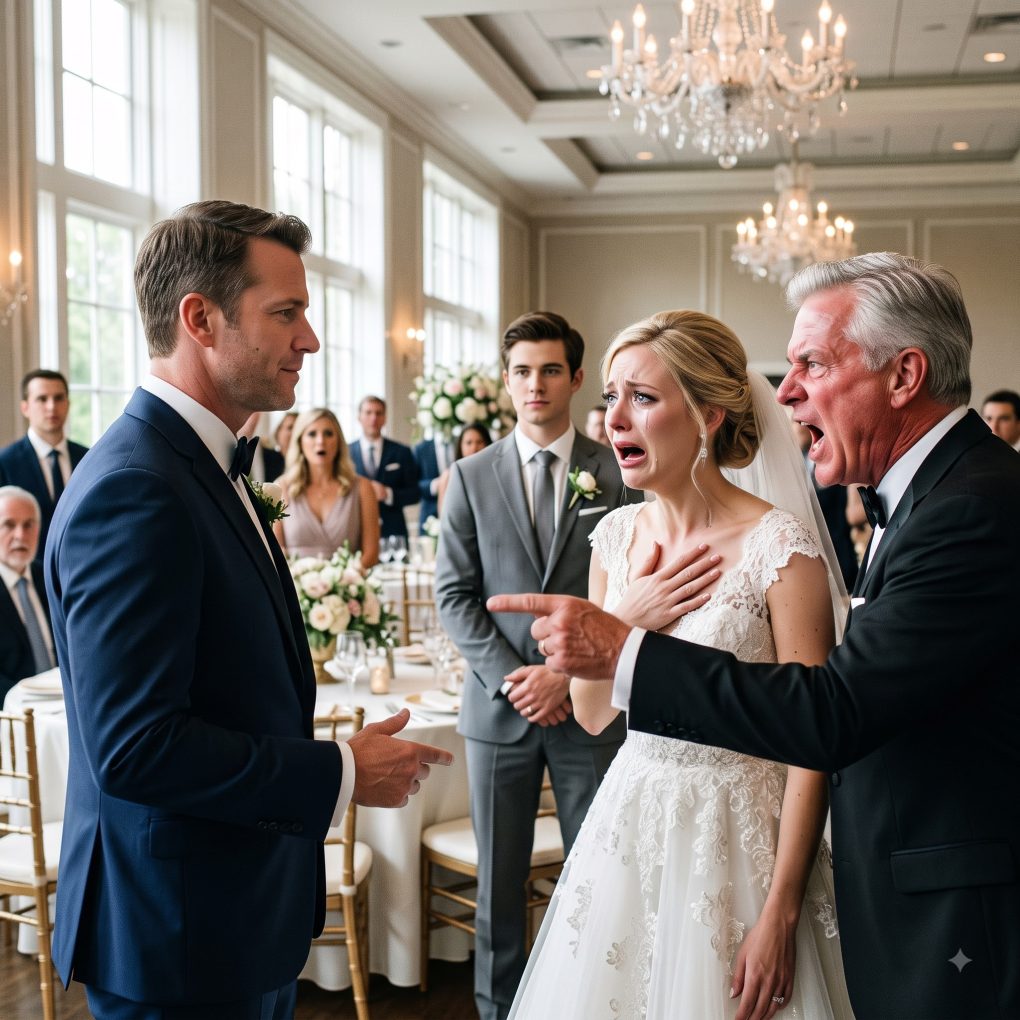
At her wedding, my sister introduced me to her boss as the “family embarrassment” while my parents laughed. Her boss froze the room with five words: “Interesting… because you’re fired.”
Part 3 (FULL ENDING) The crimson lights continued their silent, rhythmic pulse against the high vaulted ceiling. Arthur kept the...
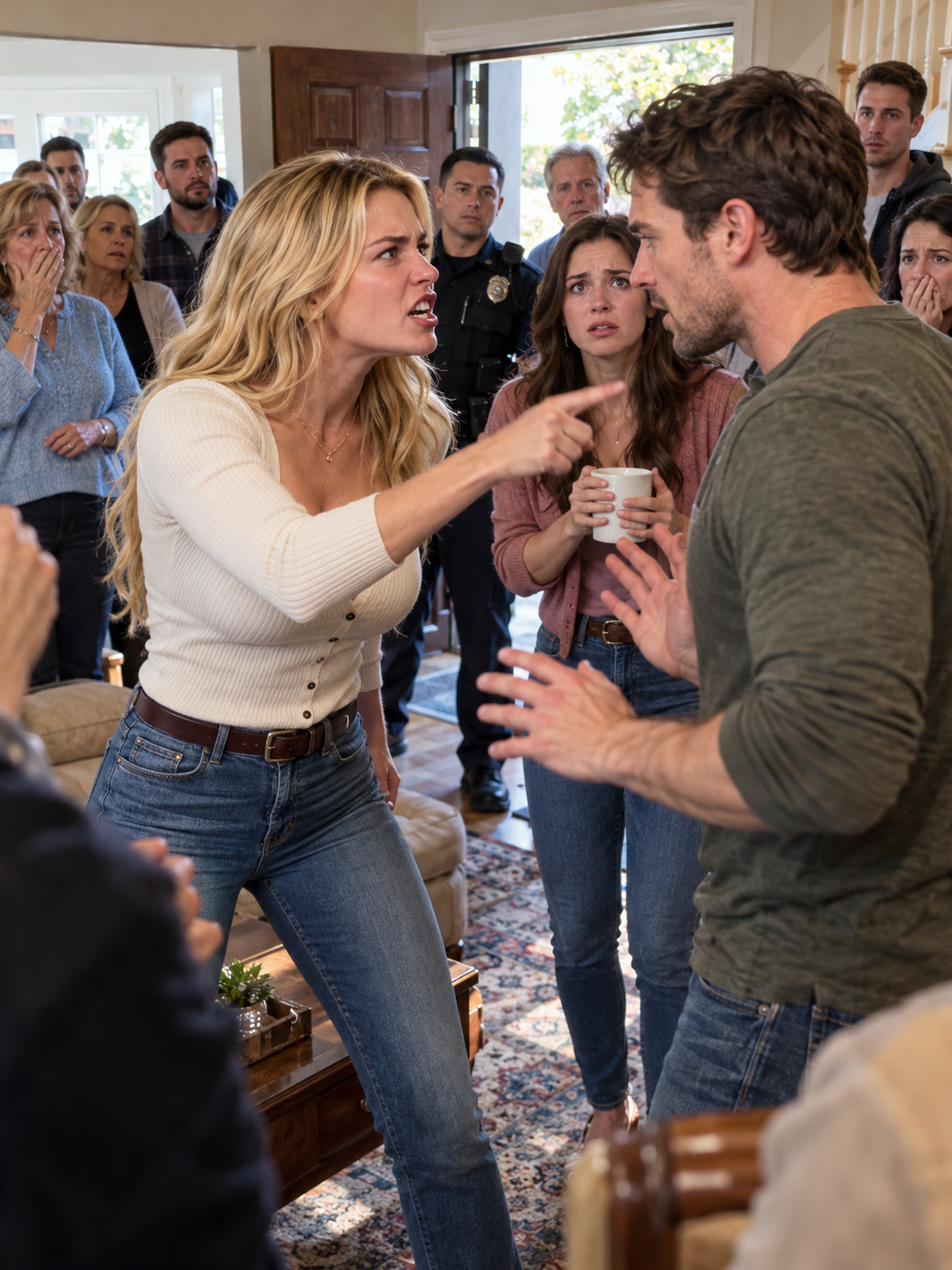
I came home early from a four-week training course and found a strange woman standing in my kitchen
I came home early from a four-week training course and found a strange woman standing in my kitchen, holding my...
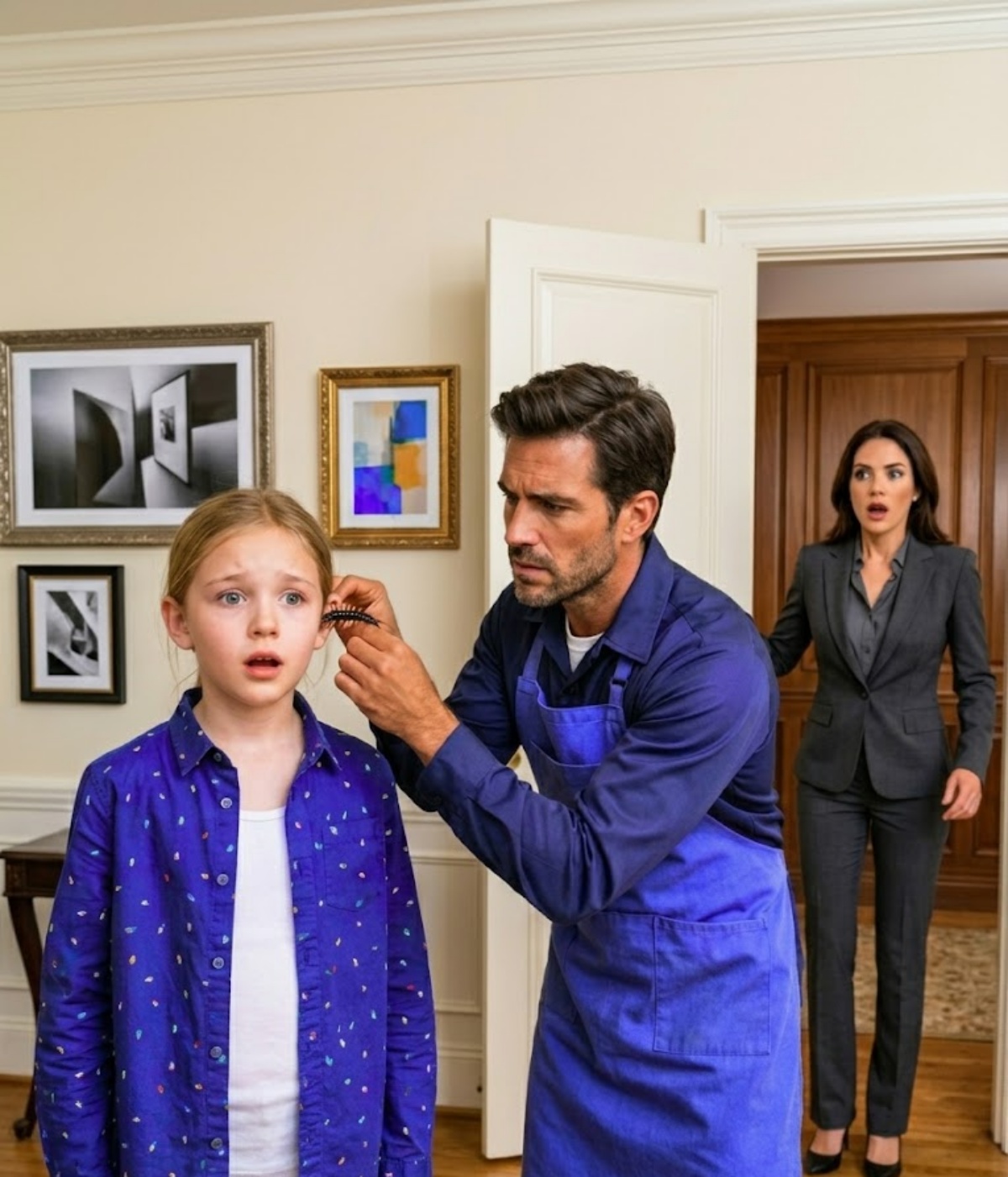
The Billionaire’s Daughter Was Born Deaf — Until the Janitor Pulled Out Something That Shocked Her
A Millionaire Spent Years Searching for a Miracle for Her Deaf Daughter—Then a Night Janitor Opened His Hand She had...