MY STALKER EX WALKED INTO MY RESTAURANT AND THREATENED MY FAMILY—THEN A FEARED STRANGER STEPPED BETWEEN US, AND HIS PROTECTION TURNED MY LIFE INTO A TARGET – Life Story
The night my ex-boyfriend found me, twenty strangers watched my life fall apart.
One man stepped forward to protect me—but everyone in the restaurant seemed afraid of him.
I thought he had saved me from a nightmare.
I didn’t know his world was about to become mine.
Glass on Marble
The tray hit Rossi’s marble floor the moment Tyler Grant pressed his palm against the rain-streaked window.
Four dinner plates shattered.
A wineglass spun beneath a neighboring table.
Twenty conversations stopped, and every pair of eyes in the dining room turned toward me.
Through the glass, my ex-boyfriend smiled as if he had arrived to surprise me with flowers instead of following me to my third job in four months.
My phone vibrated against my apron.
Two hundred seventeen missed calls in a week, fifty voicemails I couldn’t bear to hear, and now one more message: OPEN THE DOOR, MEGAN.
WE’RE FINISHING THIS TONIGHT.
“Megan?” Franco Rossi was already coming around the host stand.
His silver hair had come loose from its usual neat comb-over, and his expression moved from irritation to concern when he saw my face. “Are you hurt?”
I shook my head.
The muscles in my throat refused to cooperate.
Outside, rain hammered Marlborough Street.
Tyler stood beneath the yellow light of the restaurant awning, blond hair dark with water, one hand in his jacket pocket.
He had found my new apartment last month.
Three weeks earlier, he had appeared outside my mother’s pharmacy in Arizona.
He had never touched her, but he had wanted me to know he could.
“It’s him,” Jessica whispered beside me.
My coworker had covered two shifts when I went to ask the police for help.
She knew about the rejected protective-order request, the blocked numbers, and the spare key Tyler had refused to return. “Go into the office.
I’ll call.”
“Don’t leave the floor,” Franco said automatically, glancing at the important-looking diners waiting for dessert.
Then he saw Tyler pull open the front door. “No.
Forget I said that.
Jess, call nine-one-one.”
The room smelled of rosemary, warm bread, and the expensive Barolo I’d poured for the gentleman at table twelve.
I remembered the customer’s charcoal suit, his silver watch, and the unusual way he had watched the exits instead of his phone.
A few minutes earlier, he had asked whether I was all right.
I’d told him I was tired.
I wished that were still the truth.
In the kitchen, my half-finished drawings for a small affordable-housing competition sat folded inside my locker.
I had planned to work on them after closing, when the city finally belonged to people who couldn’t afford to dine here.
Instead I was counting the feet between Tyler and the service corridor, trying to remember which door still locked from the inside.
Tyler crossed the threshold, bringing cold air and rainwater over the polished stone.
A woman near the window lifted her phone to record.
Franco stepped into his path, hands open, his voice carefully even. “Sir, you need a reservation.
And you need to lower your voice.”
“I’m not here to eat.” Tyler looked straight past him. “Megan, sweetheart, enough games.”
The old endearment made my stomach contract.
Four months ago, I’d packed two suitcases while Tyler was at work, left the apartment we’d shared, and written him one final message: Our relationship is over.
Do not contact me again.
Since then, he had treated every silence as a challenge.
“Please leave,” I said.
My voice was quieter than I wanted, but it was mine. “I won’t talk to you.”
He laughed, not because anything was funny, but because people were watching and he needed them to believe I was being unreasonable. “See? This is what she’s been doing.
I came all this way just to have a conversation.”
Jessica held her phone at her ear.
The woman by the window kept filming.
I bent to pick up a piece of broken plate, desperate for something ordinary to do, and the man at table twelve spoke for the first time since my tray fell.
“Leave the glass,” he said quietly. “You’ll cut yourself.”
Tyler looked from him to me.
His smile grew smaller.
Then he took one deliberate step closer, lowered his voice just enough to make me strain to hear, and said the five words I’d spent weeks fearing.
“I know where your mother lives.”
The stranger set down his wineglass.
He didn’t hurry.
That was what I remembered afterward.
While everyone else was reacting to the disturbance, he stood with the measured calm of someone who had already decided what would happen next.
“Your mother is not part of this conversation,” he said.
Tyler turned toward him. “Who asked you?”
“No one.”
“Then stay out of it.”
The man looked at me rather than Tyler. “Do you want him here?”
“No.”
“Have you asked him to leave?”
“More times than I can count.”
He nodded once. “Then the conversation is over.”
Tyler stepped forward, but the stranger moved between us.
There was no dramatic shove, no raised fist, nothing the customers holding phones could turn into a spectacular confrontation.
Just a tall man in an expensive suit occupying the exact space Tyler wanted to cross.
“You have about thirty seconds to reconsider your choices,” he told Tyler.
“Are you threatening me?”
“I’m giving you an opportunity.”
Tyler glanced toward the entrance.
Two men in dark coats had appeared beneath the awning.
One held the door open.
The other stood beside it, speaking quietly into his phone.
I hadn’t noticed them before.
Neither looked particularly interested in dinner.
“Anthony,” Franco said from behind me.
One word.
Barely audible.
The stranger didn’t look away from Tyler. “Franco, take care of your employee.”
Something changed in the room.
Franco’s shoulders straightened, then stiffened.
The woman recording lowered her phone slightly.
Even Tyler seemed to recognize that he had stepped into a situation he didn’t understand.
“Who’s Anthony?” he demanded.
The stranger’s expression didn’t change.
“Someone who heard her say no.”
Tyler made one last attempt to push past him.
Anthony caught his wrist and stopped him.
The movement was so quick that I only understood what had happened when Tyler’s fingers opened.
“Let go.”
“Then stop reaching for her.”
They stood like that for a moment.
I could hear a fork fall against a plate three tables away.
Finally, Anthony released him.
The two men from outside approached.
One spoke to Tyler in a voice too low for me to understand.
Tyler looked at me, then back at Anthony, and the confidence drained from his face.
“Come on,” the man said. “Outside.”
Tyler resisted for a second, then followed them toward the service corridor rather than the front entrance.
I took an involuntary step after them.
Anthony turned.
“Don’t.”
It was the first order he’d given me, and something in his tone made my stomach tighten.
“Where are they taking him?”
“Somewhere he can think about what he’s done.”
“That isn’t an answer.”
His eyes sharpened, not with anger but surprise.
“No,” he admitted. “It isn’t.”
Beyond the corridor door, I heard a muffled argument and the metallic slam of the alley exit.
Jessica touched my elbow. “The police are coming.”
I looked at Anthony.
“I want you to tell me what’s happening.”
He studied me for a long second.
Then he removed a folded white handkerchief from his jacket and offered it to me.
“Your hand is shaking.”
“I know.”
“There’s glass near your shoes.”
“I know that too.”
Something almost like regret passed across his face.
“My name is Anthony Valentassi,” he said. “And tonight, Megan, you need to decide whether you want the police to handle this or whether you’re willing to trust someone you don’t know.”
I stared at him.
“You don’t get to make those the only two choices.”
For the first time, he smiled.
Not the cold smile he’d given Tyler.
A real one, brief and unexpected.
“No,” he said. “I suppose I don’t.”
Behind us, the dispatcher was still speaking through Jessica’s phone.
And somewhere beyond the kitchen, Tyler had gone silent.
Favors and Debts
By the time the police arrived, Tyler was gone.
The two officers who entered Rossi’s looked tired and damp.
One wore rainwater on the shoulders of his uniform; the other carried a notebook already bent at the corners.
They separated us, asking who had witnessed the confrontation, whether anyone had been injured, and whether Tyler had made a specific threat.
Jessica gave her account without embellishment.
Franco confirmed that Tyler had entered without a reservation, refused to leave, and approached me after I had told him to go.
I showed the officers my phone.
The older officer scrolled through the missed calls, his expression becoming increasingly serious.
“Two hundred seventeen in seven days?”
“Yes.”
“And you’ve told him to stop contacting you?”
“Many times.
I have the messages.”
He asked about my mother, so I told him about Arizona.
Then I explained how Tyler had appeared outside my old apartment, how I’d changed numbers twice, and how he’d sent photographs of places I frequented.
The officer stopped writing.
“Why wasn’t any of this included in the report from August?”
“Some of it hadn’t happened yet.”
He nodded, but I could see the question forming before he asked it.
“Did you report the later incidents?”
“I called.
Twice.
I was told to document everything.”
“Who told you that?”
“I don’t remember their names.”
He wrote another note.
Nobody said the situation was harmless.
Nobody promised an immediate arrest, either.
They gave me a new incident number, explained how to supplement my earlier reports, and told me they would attempt to locate Tyler.
Meanwhile, Anthony waited by table twelve.
He hadn’t left.
One of the officers approached him, and they spoke for several minutes.
I couldn’t hear every word, but I heard Anthony identify his attorney, explain that Tyler had left through the side exit, and deny that he had personally transported him anywhere.
When the officer asked for the names of the men who escorted Tyler out, Anthony handed him a business card.
“Your attorney’s information?” the officer asked.
“Yes.”
The officer’s expression hardened.
“That’s not what I asked for.”
Anthony didn’t answer.
The silence between them was different from the silence he’d created with Tyler.
This one belonged to two men who knew the rules and were deciding how far to push them.
By eleven-thirty, the dining room was empty.
Franco had sent the remaining customers home with apologies and complimentary dessert vouchers.
Jessica gathered the broken dishes while I stood near the bar, trying to convince myself that the shaking in my legs would eventually stop.
Anthony approached.
“Can I drive you home?”
“No.”
He accepted the answer without argument.
“Then I’ll arrange a car.”
“I said no.”
His eyebrows lifted slightly.
“I have a cab coming,” Jessica said, stepping beside me. “She’s staying with me tonight.”
Anthony looked at her, then back at me.
“Good.”
I had expected resistance.
Instead he reached into his jacket and took out a simple black card.
A name.
A phone number.
Nothing else.
“If Tyler comes back, call the police first,” he said. “Then, if you want, call me.”
I turned the card over.
“Who are you?”
Franco made a small sound behind the bar.
Anthony heard it.
“Someone who should probably have introduced himself under better circumstances.”
He walked out into the rain.
Only after his car disappeared did Franco speak.
“Megan, come into my office.”
His little room smelled of espresso and old paper.
Behind his desk hung a photograph of Franco with his wife and their son, Paolo, standing on a soccer field.
There were drawings taped to the filing cabinet and a stack of unpaid invoices beside the computer.
He shut the door.
“How much did Mr.
Valentassi tell you?”
“His name.”
Franco rubbed his forehead.
“Anthony’s family owns this building.
And several others around here.
They have interests in shipping, construction, and restaurants.”
“That’s not what you’re trying to tell me.”
“No.”
He sat down heavily.
“His family has been involved in organized crime for decades.
Some of those businesses are legitimate.
Some aren’t.
He’s been running the organization since his father stepped aside.”
I looked at the black card in my hand.
“And you let him use your restaurant?”
Franco’s face tightened.
“Three years ago, Paolo needed surgery our insurance wouldn’t fully cover.
We were facing bills we couldn’t pay.
Anthony helped us find a hospital and paid the remaining expenses.”
“He bought your loyalty.”
“He saved my son’s future.”
“Both can be true.”
Franco looked away.
After a moment, he nodded.
“Yes.
Both can be true.”
I sat in the narrow chair opposite him.
My knees had finally stopped shaking, but my thoughts hadn’t.
“Did you tell him about Tyler?”
Franco hesitated.
That was enough.
“Franco.”
“He asked why you seemed frightened last week.
I told him a customer had seen your ex waiting outside twice.
I didn’t give him your address.”
“You should have asked me.”
“I know.”
The apology came quickly, without excuses.
That made it harder to be angry.
“He was already worried about you,” Franco said. “I thought maybe he could help.”
“By having people take Tyler out through an alley?”
Franco didn’t answer.
I remembered the way Anthony had looked at me when I’d refused his ride.
Surprised, almost pleased.
I remembered the quiet certainty in his voice.
Someone who heard her say no.
But a man who respected my no shouldn’t have needed to be reminded that I could choose a cab over his car.
Jessica knocked on the office door.
“Ride’s here.”
I stood.
Before leaving, I looked back at Franco.
“Does Anthony expect repayment for your son’s surgery?”
Franco rubbed his wedding ring with his thumb.
“He’s never asked me for a dollar.”
“That wasn’t my question.”
Franco’s silence followed me all the way to the cab.
At Jessica’s apartment, we ate leftover pizza standing at her kitchen counter.
Her orange cat, Murphy, inspected my wet shoes and decided they were offensive.
Jessica put a blanket on the couch.
“You can stay as long as you need.”
“I’m twenty-seven years old,” I said. “I shouldn’t need to sleep at someone else’s place because a man refuses to accept that I left him.”
“Age doesn’t make somebody else reasonable.”
She said it plainly, without the sympathy that always made me feel smaller.
I checked my phone.
No messages from Tyler.
For the first time in months, the silence frightened me almost as much as the calls had.
“Do you think Anthony hurt him?” I asked.
Jessica leaned against the counter.
“I think Anthony is dangerous.
I also think Tyler was dangerous before Anthony entered the picture.
Those are separate facts.”
I looked at her.
“You sound like a lawyer.”
“I took two semesters of criminal justice before discovering I preferred tips to student loans.”
She gave a tired smile.
“Don’t confuse someone stopping a bad thing with proof that everything they do is good.”
I didn’t sleep much.
At six-fifteen the next morning, an unknown number sent me a message.
You got home safely?
I knew who it was.
Yes.
A second message appeared.
Good.
Tyler won’t contact you again.
I stared at those words for several seconds.
Then I typed:
How do you know?
The reply took longer.
Because I made arrangements.
I sat upright.
What arrangements?
This time, no answer came.
At eight, I called the number.
Anthony answered on the second ring.
“Megan.”
“Where is Tyler?”
A pause.
“He’s alive.
He’s uninjured in any serious way.
He’s been given money for a flight to Seattle and told to stay away from you.”
“Did he agree?”
“Eventually.”
“Anthony.”
His breath moved softly against the phone.
“My men frightened him.
They shouldn’t have touched him without my stopping them.
I should have handled it differently.”
“You should have let the police handle it.”
“Maybe.”
“Not maybe.”
Another silence.
Then he said, “You’re right.”
I wasn’t sure what to do with that admission.
“You can’t move people around like furniture,” I told him.
“No.”
“And you can’t decide what happens to me because you believe you’re helping.”
“I understand.”
“Do you?”
He didn’t rush to answer.
“I want to,” he said finally.
It was the first thing he’d said that morning that made me believe he might be capable of listening.
Before we hung up, I asked him one more question.
“Why did you help me?”
His voice changed.
“I had a sister named Sofia.”
He stopped there.
Then, very quietly, he added, “I was too late when she needed help.”
And for the first time, I heard something beneath his confidence that sounded like fear.
The Space Between Us
Five days passed.
Tyler didn’t call.
He didn’t text.
He didn’t appear outside Rossi’s or my apartment.
I changed my locks again anyway.
Jessica helped me install a new deadbolt, holding a flashlight between her teeth while I checked the screws against the doorjamb.
“You’re better at this than you look,” she said.
“Architecture school.
Two years of learning why buildings fail, followed by five years of living in one that proves the point.”
She laughed.
I had studied architecture at a state university until my mother’s medical bills and my own tuition costs became impossible to manage.
At nineteen, I’d been certain I would graduate by twenty-three.
At twenty-seven, I was drawing floor plans on graph paper after restaurant shifts because professional software cost more than I could justify.
I still kept the acceptance letter from my first design competition.
It was folded inside a textbook with a cracked spine.
Sometimes I took it out simply to remember that I had once been good at something beyond carrying three plates on one arm.
The Thursday after the incident, Anthony came back to Rossi’s.
He arrived without an entourage, wearing a navy coat over an open-collared shirt.
When Franco approached to seat him at table twelve, Anthony shook his head.
“I’d like to speak with Megan, if she’s available.
If not, I’ll leave.”
Franco looked toward me.
For once, he waited.
I finished pouring water for a family near the window, washed my hands, and approached.
“Hello, Anthony.”
“Hello.”
He glanced at the small scrape across my knuckle.
“From the glass?”
“From installing a lock.”
“Good lock?”
“Better than the old one.”
He nodded.
Neither of us mentioned Tyler immediately.
Anthony had brought something with him: a slim envelope containing copies of the incident report he’d requested through his attorney, and the contact information for a victim-services organization in Boston.
“I thought this might be useful,” he said.
I didn’t take the envelope.
“Is this another arrangement?”
His expression didn’t change.
“No.
It’s information.
You decide what to do with it.”
“Did you tell the police what happened in the alley?”
“My attorney gave them the names of the two men who were present.
They can ask questions.
Those men will have their own legal advice.”
“That’s not quite the same thing.”
“No.”
He met my eyes.
“I won’t pretend it is.”
The honesty didn’t make the situation simple.
It did make it possible to continue talking.
I took the envelope.
“Thank you.”
He hesitated.
“Would you consider having dinner with me? Somewhere you aren’t working?”
I looked toward Franco, who immediately pretended to inspect the wine display.
“Why?”
Anthony seemed caught off guard.
“Because I’d like to know you.”
“You already know more about me than most of my neighbors.”
“That’s not the same thing.”
I considered him.
He was handsome in a way that would have been intimidating even without his reputation.
Sharp features, dark eyes, broad shoulders, and a face that looked as if it had forgotten how to be uncertain.
But he had asked.
He was waiting for an answer.
“I finish at ten-thirty,” I said. “There’s a diner on Boylston that stays open late.
You can buy me pancakes.”
A tiny crease appeared between his eyebrows.
“Pancakes?”
“Unless that’s beneath your standards.”
“No.”
He smiled.
“Pancakes sound excellent.”
At eleven, we sat in a booth under fluorescent lights while a tired waitress brought us coffee in thick white mugs.
Anthony looked almost absurdly out of place.
His watch probably cost more than the diner made in a week.
His coat was folded carefully beside him, and he kept glancing toward the entrance by habit.
But he listened.
I told him about the first building I’d ever loved: a small public library in the neighborhood where I grew up.
Its windows were low enough for children to sit beside them, and its reading room caught the afternoon light without becoming unbearably hot.
“Somebody thought about what it would feel like to be there,” I said. “Not just what it would cost to build.”
Anthony stirred his coffee.
“Most developers think about return on investment.”
“I know.”
“Sometimes they’re right.”
“Sometimes they build apartments where the windows face brick walls.”
He laughed.
It was a surprisingly ordinary sound.
He asked about school, my mother, and the drawings I still made.
He didn’t interrupt when I explained why I hadn’t borrowed more money to finish my degree.
Then I asked about Sofia.
His hand stopped around the coffee cup.
For a while, he studied the surface of the table.
“She was nineteen,” he said. “Eight years younger than me.”
He told me she had fallen in love with a man who gradually isolated her from everyone she trusted.
He had made her apologize for his temper.
He had convinced her that jealousy meant devotion.
When Sofia tried to leave, he followed her.
Anthony had been busy with the family business.
He’d told himself he could fix the problem when his schedule cleared.
Then Sofia died.
He didn’t describe the details.
I didn’t ask him to.
“The man responsible was prosecuted,” Anthony said. “But that didn’t give us her back.”
He watched a city bus pass the window.
“I’ve spent eight years wondering what would have happened if I’d answered one of her calls sooner.”
I put down my fork.
“That’s a terrible thing to carry.”
“I earned some of it.”
“You didn’t cause her death.”
“No.
But afterward I used my grief to justify things I already wanted to do.”
That admission mattered more than a polished speech about being a protector.
“Violence didn’t make you feel better?” I asked.
“For a few minutes, sometimes.”
“And afterward?”
He looked at me.
“Afterward, she was still gone.”
The waitress returned to refill our mugs.
Anthony thanked her by name after reading the little badge on her apron.
It was such a small thing.
I noticed it anyway.
Outside, the rain had stopped.
We walked toward my apartment beneath streetlights that turned the wet pavement silver.
At the entrance, Anthony didn’t reach for me.
“Would you like me to call?”
“Yes,” I said. “But don’t send anyone to check whether I’m home.
If you’re worried, you can ask.”
“Fair.”
“And if I don’t answer immediately, it doesn’t mean there’s an emergency.”
“I’m discovering I have some habits to unlearn.”
“That makes two of us.”
He glanced at the building’s crooked front steps.
“May I kiss you goodnight?”
My heart gave one hard, inconvenient beat.
I wanted to say yes.
That frightened me.
“Not tonight.”
Anthony’s expression softened.
“All right.”
He stepped away.
No argument.
No wounded pride.
No attempt to persuade me.
I climbed the stairs with my pulse still racing, but this time it wasn’t from fear.
For the first time since Tyler, a man had asked for something I wasn’t ready to give.
And when I said no, he had simply let me go.
The following Saturday, I found a paper bag outside the restaurant’s kitchen entrance.
Inside were three used architecture books.
There was no expensive gift receipt, no engraved note, no dramatic declaration.
Just a message on an index card.
The bookstore near my office was closing.
I remembered you mentioned these.
If they’re duplicates, give them away.
I called Anthony.
“Did you buy out an entire bookstore?”
“No.
Three books.”
“How much?”
“Less than dinner at the French place I was going to suggest.”
I opened the first volume.
Someone had underlined an entire chapter on daylighting and passive ventilation.
“Used books,” I said.
“Is that a problem?”
“No.
It’s perfect.”
He was quiet for a second.
Then he said, “I have an old drafting table in a warehouse office.
It’s collecting dust.
Would you like to see it?”
I considered the question.
“Only if you promise not to call it an investment opportunity.”
“I can make that promise.”
Two days later, I stood in a converted waterfront office while Anthony moved stacks of construction drawings away from a scarred oak drafting table.
The room smelled faintly of cedar, printer toner, and the harbor.
He found a pencil beneath a rolled plan and handed it to me.
I ran my fingers across the angled surface.
“This thing is older than I am.”
“So am I.”
“Not by much.”
“Thank you.”
He had changed into a charcoal sweater and dark trousers.
Without the suit, he looked less like a man who controlled half the waterfront and more like someone who might spend Sunday mornings fixing a kitchen cabinet.
He watched me adjust the drawing board.
“Show me something.”
I took a clean sheet from the cabinet and began sketching the small housing concept I’d been developing.
Thirty-two compact apartments arranged around a shared courtyard.
A covered walkway that would keep rain away from the entrances.
Windows aligned to allow natural ventilation.
A community room that could serve as a study space in the evening.
Anthony studied the sketch.
“Where’s the parking?”
“Limited.
The site is near transit.”
“Developers won’t love that.”
“They might like lower excavation costs.”
He raised an eyebrow.
“Interesting.”
I showed him how changing the stair placement created better circulation and freed space for a small childcare room.
“I’m not licensed,” I said. “This would need a qualified architect to develop it properly.
Right now it’s a concept.”
“You’ve thought through more than most people who come into this office claiming to be professionals.”
“Compliments don’t make me qualified.”
“No,” he said. “But work does.”
For nearly two hours, he asked questions while I drew.
We disagreed about storage, access, construction cost, and whether a shared rooftop garden was practical in a New England winter.
He challenged my assumptions; I challenged his.
Neither of us raised our voice.
When I finally looked up, the sun had gone down behind the cranes.
Anthony was watching me with an expression I couldn’t read.
“What?” I asked.
“Nothing.”
“That wasn’t a nothing face.”
He smiled.
“You look different when you’re working on something you love.”
I set down the pencil.
“That’s because for a little while, I stop being the woman who’s afraid.”
His smile faded.
“Then I hope you get more time like this.”
That evening, he walked me to the street.
The harbor wind caught my hair, and I turned to push it out of my face.
Anthony lifted a hand, then stopped.
“May I?”
I nodded.
He tucked a loose strand behind my ear.
No dramatic music played.
No city lights suddenly brightened.
He simply looked at me.
This time, when he asked if he could kiss me, I said yes.
It was a brief kiss, warm and careful, and it ended before either of us could pretend the complications between us had disappeared.
When I pulled away, his forehead rested lightly against mine.
“I don’t know where this goes,” I whispered.
“Neither do I.”
“You probably aren’t used to saying that.”
“No,” he admitted. “I’m not.”
His phone rang before he could say anything else.
He glanced at the screen.
The warmth left his face.
“Lucas,” he answered.
I stepped back.
Anthony listened without speaking, then looked across the harbor toward a row of container cranes silhouetted against the dark.
“Don’t move anything,” he said. “And don’t let Caruso sign until I’ve seen the plans.”
He ended the call.
“Trouble?” I asked.
“Business.”
“What kind?”
His jaw tightened.
“The kind I hoped wouldn’t reach this part of my life.”
For a moment, neither of us moved.
Then he looked down at the drawing tube I held beneath my arm.
“Megan, promise me something.”
“Depends what it is.”
“If anyone asks you about the waterfront properties, tell me.”
I frowned.
“Why would anyone ask me?”
Anthony looked toward the black water.
“Because people in my business are beginning to notice you.”
The Name Beneath the Ink
Three days later, I received an email that made me forget Anthony’s warning for almost a full minute.
The subject line read: Community Housing Design Fellowship — Portfolio Review Invitation.
I’d submitted my sketches six weeks earlier, long before the night at Rossi’s.
The program was run by a Boston nonprofit that partnered with licensed architects on affordable housing projects.
It wasn’t a scholarship, exactly.
Selected applicants could receive paid drafting assignments, mentorship, and support for returning to school.
They wanted to interview me.
I read the message four times.
Then I called Jessica.
“You’re going to think I’m ridiculous,” I said.
“That’s never stopped you before.”
“I got an interview.”
She screamed so loudly I pulled the phone away from my ear.
When she stopped celebrating, I explained that it was only a preliminary conversation.
“Then you’ll have a preliminary conversation while looking spectacularly competent,” she said. “I’m coming over Saturday.
We’re going through your portfolio.”
Saturday afternoon, my apartment looked like a paper factory.
Sketches covered the floor.
Jessica sat cross-legged beside Murphy’s empty travel carrier, sorting drawings into piles marked strong, maybe, and what were you thinking?
She had a talent for criticism that was both merciless and useful.
“This one,” she said, holding up the courtyard concept. “This is the reason they’re interested.”
“It’s unfinished.”
“Everything interesting is unfinished until someone finishes it.”
I laughed.
My phone buzzed.
Anthony.
How’s the portfolio?
Jessica says half my drawings belong in the trash.
His answer arrived immediately.
Then the other half must be excellent.
Jessica read it over my shoulder.
“Oh, he knows how to behave.”
“You don’t know him.”
“I know he’s learning to compliment you without offering to buy the building.”
I threw a pencil at her.
An hour later, while reorganizing my notes, I found something I’d forgotten.
A photocopied zoning map from the city planning archive, downloaded for the housing competition.
The proposed site occupied land just inland from the harbor.
A narrow service road separated it from a row of warehouses, including one Anthony had shown me from his office.
The map included older property boundaries and public easements.
One line caught my attention.
A pedestrian access route had been marked for preservation in the original redevelopment agreement.
But on the newer drawing Anthony had briefly shown me, that route appeared to terminate inside a fenced loading yard.
I frowned.
Maybe the newer plan was incomplete.
Maybe a later approved amendment changed the access.
Architectural drawings were often revised as projects developed.
Still, I made a note to check.
I didn’t know then that the line would become the most important mark on any drawing I’d ever made.
On Tuesday, I met Sarah Whitcomb.
She was forty-two, wore practical black boots with a navy blazer, and had the kind of direct gaze that made me feel as though she’d already found the flaws in my portfolio.
We met in a conference room at the nonprofit’s office, where samples of reclaimed brick and insulated wall panels lined one shelf.
Sarah was the licensed architect supervising the fellowship.
“Your plans aren’t ready for construction,” she said.
I swallowed.
“I know.”
“Your accessibility details need work.
Your fire egress assumptions are incomplete.
And this courtyard is probably too expensive for the funding model.”
My face grew warm.
“Understood.”
She turned a page.
“But you think about how people actually live.”
I looked up.
Sarah tapped my drawing.
“Most applicants give us beautiful renderings.
You gave us a laundry room near the apartments that need it, covered access to transit, and enough storage for families who don’t own houses with basements.”
She leaned back.
“Why?”
“Because I grew up in an apartment where the stroller had to stay beside the kitchen table,” I said. “My mother kept the vacuum in the bathtub because there wasn’t anywhere else to put it.”
Sarah smiled.
“That’s the kind of answer I wanted.”
She offered me a six-week paid trial assignment assisting her team with preliminary layouts and documentation.
It would begin part-time so I could keep my restaurant shifts.
No miracle.
No sudden degree.
No job title I hadn’t earned.
A real chance to prove myself.
Walking out of her office, I felt a happiness so sharp it was almost painful.
I called Anthony.
“Tell me you have good news,” he answered.
“I got the fellowship.”
He went quiet.
Then he said, “Megan, that’s wonderful.”
There was no surprise in his voice, only pleasure.
“Did you have anything to do with it?” I asked.
“No.”
“Anthony.”
“I didn’t know the organization had contacted you until you told me.
I promise.”
I believed him.
“Then I think I’d like to celebrate.”
“Your choice.”
“Pizza.
Something inexpensive.
And you’re not allowed to reserve the restaurant.”
He laughed.
“Those are unusually strict conditions.”
“Can you manage them?”
“For you? I can manage pizza.”
We ate at a small neighborhood place where the tables wobbled and the owner had to shout orders over the oven fan.
Anthony wore jeans and a dark sweater.
For an entire hour, nobody approached him about business.
He listened while I described Sarah’s criticisms.
When I finished, he took a napkin and drew a badly proportioned rectangle.
“Show me how you’d improve the kitchen layout.”
I stared at his sketch.
“Anthony, that’s not a kitchen.
That’s a postage stamp.”
“Then rescue it.”
I laughed so hard that the waitress looked over.
Later, walking to my apartment, he took my hand.
I let him.
It was only when a black SUV rolled slowly past that I felt his fingers tighten.
He recognized the vehicle.
I could tell.
“Who was that?”
“Someone who knows me.”
“Friend?”
“No.”
He stopped beneath a streetlight.
“I need to tell you something.
A few nights ago, a video from Rossi’s appeared online.
Someone filmed the confrontation with Tyler.
It shows me stepping between you.”
“I saw one version.”
“There are others.
One includes your face clearly enough to identify you.
Your name is in the comments.”
My stomach dropped.
“Why didn’t you tell me?”
“I was trying to have it taken down.”
“That’s not an answer.”
He looked ashamed.
“No.
It isn’t.”
I pulled my hand away.
“Anthony, people already know where I work.
Tyler knew.
Anyone watching that video could find me.”
“I know.”
“And you waited?”
“I wanted to fix it before it frightened you.”
I stared at him.
“You don’t get to decide which truths I’m allowed to be frightened by.”
His jaw worked.
Finally, he nodded.
“I’m sorry.”
I wanted to accept the apology.
But something else troubled me.
“Who cares that you helped a waitress?”
His face became still.
“A man named Dimitri Volkov.”
I remembered the phone call at the drafting office.
Lucas.
Caruso.
The plans Anthony had ordered held.
“Who is he?”
“A rival.
He’s been trying to expand into waterfront operations my family controls.
We had a disagreement over a shipping arrangement.”
“What kind of arrangement?”
“One that wasn’t entirely lawful.”
He didn’t look away.
“I’ve been trying to separate the legitimate businesses from those operations.
Volkov would prefer I didn’t.”
“Because he’d lose money?”
“Because he’d lose access.”
The street suddenly felt colder.
“And now he knows about me.”
“Yes.”
I looked in the direction the SUV had gone.
“You told me people might watch me because of you.”
“I did.”
“But you didn’t tell me they already were.”
His silence was answer enough.
Something in the beginning of our story had changed.
The man who’d stepped between Tyler and me hadn’t merely saved me from one threat.
His intervention had been recorded, circulated, and interpreted as proof that I mattered to him.
His reputation, the thing that had terrified Tyler, had made me visible to people Tyler couldn’t have imagined.
And Anthony had known the danger before I did.
I stepped away.
“I need time.”
He looked as though he wanted to argue.
Instead, he put his hands in his pockets.
“How much?”
“I don’t know.”
“All right.”
He waited while I entered my building.
This time, I didn’t look back.
Upstairs, I spread my zoning map across the table and tried to work.
The preserved access route still bothered me.
I opened the city records portal and searched the most recent permit filings for the waterfront parcel.
There were three applications.
The newest identified a property-management company I’d never heard of.
The applicant’s authorized representative was listed as Daniel Caruso.
I remembered the name from Anthony’s phone call.
The drawing attached to the filing showed the route ending inside a private loading enclosure.
Beside the revision was an electronic authorization stamp.
Valentassi Waterfront Holdings.
I stared at it for a long time.
Anthony had told me not to let Caruso sign the plans.
According to the public record, someone had signed them anyway.
The Gray Sedan
I didn’t tell Anthony about the signature immediately.
That decision would haunt me later.
At the time, I told myself it wasn’t my business.
I was an architecture student who hadn’t finished her degree, not an investigator.
I had no reason to assume that a questionable access route proved wrongdoing.
But I downloaded the public documents and saved copies.
Then I showed the drawings to Sarah.
We were reviewing an unrelated affordable-housing layout when I asked whether a developer could remove an existing public access easement simply by changing a site plan.
“Not just by drawing over it,” Sarah said.
She looked at the two versions I’d brought.
“Why?”
“I’m curious about a property near the harbor.”
Sarah compared the plans.
“An easement is a property-rights issue, not just a design decision.
If it’s legally recorded, there should be documentation authorizing any change.
Planning approval doesn’t automatically erase it.”
She pointed to the newer drawing.
“And this is odd.”
“What?”
“The revision cloud.”
She showed me how the altered area had been marked, then explained how the rest of the sheet appeared to carry an earlier revision date.
“Could be a formatting mistake.
Could be an incomplete submission.
But if I were reviewing it professionally, I’d ask for the revision history.”
“Would the city have it?”
“Sometimes.
Depending on what’s been submitted and what’s public.”
I looked down at the line.
The route wasn’t merely missing.
It had been redirected into a secured yard controlled by a private company.
I thanked Sarah and put the papers away.
That evening, I worked my usual shift at Rossi’s.
Anthony and I hadn’t spoken in four days beyond brief messages.
He respected the distance I’d requested, but I caught myself checking my phone whenever the door opened.
I hated how much I missed him.
At ten forty-five, Franco began closing the bar.
Jessica was stacking chairs when she looked toward the parking lot.
“Megan.”
There was something in her voice that made me turn immediately.
A gray Nissan sedan sat beneath the broken security light near the employee exit.
Two men were inside.
The passenger held a phone against his ear.
Neither appeared interested in concealing his attention.
“Don’t go outside,” Jessica said.
I had already stopped moving.
My body remembered Tyler before my mind understood that these were different men.
Franco came around the counter.
“What is it?”
Jessica pointed through the window.
His expression changed.
“Back office.
Both of you.”
This time, I didn’t freeze.
I pulled out my phone and called the police.
Then I called Anthony.
He answered immediately.
“Megan?”
“Two men are watching Rossi’s from a gray sedan.
Jessica saw them.
We’re inside with Franco.
I’ve called the police.”
There was a brief silence.
Then Anthony asked, “Are either of them approaching the building?”
“No.”
“Stay somewhere away from the windows.
I’m contacting Lucas.”
“Who are they?”
“I don’t know for certain.”
“Anthony.”
“They may work for Volkov.”
My stomach tightened.
“Because of the video?”
“Possibly.
Lucas has been watching some of Volkov’s movements.
I’ll tell him where you are.”
The call ended.
Franco locked the employee entrance while Jessica spoke to the dispatcher again.
She gave the license plate number and described the vehicle.
I watched from the office doorway as the gray sedan remained beneath the flickering light.
Ten minutes passed.
Then twelve.
A black SUV stopped on the opposite side of the parking lot.
Lucas Pellagrini stepped out.
He was younger than I’d expected, perhaps thirty-two, with neatly cut dark hair and the alert expression of someone who disliked surprises.
He didn’t approach the sedan.
He stood near Rossi’s entrance, speaking into his phone.
The Nissan drove away.
Two minutes later, Lucas entered the restaurant.
“Megan Turner?”
“I’m Megan.”
He offered his hand.
“Lucas.
Anthony asked me to make sure you’re all right.”
“Did you send them away?”
“I identified myself.
They chose to leave.”
“Do you know who they were?”
“Not yet.”
He didn’t embellish.
I appreciated that.
“The police are on their way,” I told him.
“Good.”
Lucas glanced around the restaurant.
“Does your security system cover the parking lot?”
Franco nodded.
“Two cameras.”
“Keep the footage.
Don’t overwrite it.”
He turned to me.
“Anthony is coming.”
“I didn’t ask him to.”
“I know.”
“Does he know that?”
Lucas’s expression shifted slightly.
“He does now.”
Anthony arrived twenty minutes later, his coat damp from the rain and his face drawn tight with worry.
When he saw me, relief crossed his features so openly that I felt something inside me soften.
“Are you hurt?”
“No.”
He glanced at Lucas.
“License plate?”
“Documented.
Jessica gave it to the police too.”
Anthony nodded.
Then he turned back to me.
“I’d like you to stay somewhere else tonight.
Somewhere those men don’t know.”
I crossed my arms.
“Would that somewhere happen to belong to you?”
“Yes.”
“Anthony—”
“I know.”
He stopped.
Then he tried again.
“You can choose.
My house outside the city is secure.
I can arrange a hotel under your own reservation.
Or you can stay with Jessica, though I would recommend against returning to your apartment tonight.”
I studied him.
He looked exhausted.
For the first time, his confidence seemed less like certainty and more like something he was forcing himself to maintain.
“Are you asking me to disappear?”
“For a few days.
Until I know why Volkov is paying attention to you.”
“And what happens while I’m gone?”
“I’ll deal with him.”
That answer was precisely what frightened me.
I remembered the footage from Rossi’s.
The alley.
Tyler’s abrupt disappearance.
“Not like you dealt with Tyler.”
Anthony looked down.
“No,” he said.
“Promise me.”
He met my eyes.
“I can promise you I won’t have anyone harmed because they frightened me.
I can’t promise Volkov will behave the same way.”
It wasn’t reassurance.
It was, however, the most credible answer he could give.
The officers arrived and took statements.
Jessica and Franco provided the camera footage.
Lucas gave them the names of companies he believed might be connected to the sedan, while making clear he couldn’t yet verify who employed the occupants.
Afterward, Anthony waited beside the door.
I looked at Jessica.
She knew what I was considering before I spoke.
“Call me when you arrive,” she said. “And if you change your mind, call me again.”
I hugged her.
Then I turned to Anthony.
“I’ll stay at the house.
Three nights, to start.
I keep my phone, I can leave whenever I choose, and you tell me what you learn about Volkov.”
He nodded.
“Agreed.”
“And no one enters my room without permission.”
“Of course.”
“I’m serious.”
“So am I.”
We left Rossi’s together.
Anthony drove.
Lucas followed in a separate vehicle.
The city thinned into quiet suburbs, then wooded roads where streetlights grew farther apart.
Rain reflected off the pavement, and the heater hummed softly beneath our silence.
Halfway there, I finally asked the question I’d been avoiding.
“Did Volkov send those men because you helped me that night?”
Anthony kept his eyes on the road.
“Yes.”
I watched the trees slide past.
“Then helping me didn’t make me safe.”
“It made Tyler stop.”
“And brought somebody worse.”
He didn’t contradict me.
We drove another mile.
“Why didn’t you tell me everything?” I asked.
“Because I thought I could keep my business separate from you.”
“You couldn’t even keep it separate from a restaurant.”
His hands tightened around the steering wheel.
“I know.”
The house appeared behind a stand of pine trees, its broad windows glowing warm against the darkness.
It was beautiful.
Low rooflines, natural stone, dark timber, and a long entrance hall that connected two wings of the house.
Someone had designed it to feel open despite its size.
But I noticed the cameras before the windows.
I noticed the private gate, the security lights, and the man standing beside the garage.
Anthony parked.
“Welcome,” he said quietly.
I stepped out into the cold air.
The house looked like every safe place I’d once dreamed of designing.
And every way out had someone watching it.
The House Behind the Pines
The first thing Anthony showed me wasn’t the security system.
It was the kitchen.
“There are groceries,” he said, opening the refrigerator. “I thought you might prefer cooking to having someone serve you.”
I looked inside.
Eggs, vegetables, bread, fresh pasta, a carton of milk.
“Do you normally hide people in houses this well stocked?”
“No.”
“That’s comforting.”
He gave me a tired smile.
“I’ve never brought anyone here for this reason.”
A woman named Elena, who managed the property, showed me the guest room.
She was in her fifties, wore sensible shoes, and spoke to Anthony with the familiarity of someone who had known him since childhood.
“The bedroom locks from inside,” she told me. “There’s a second staircase at the far end of the hall.
The office has a landline if cellular service fails.”
I looked at her.
“Anthony told you what I asked for?”
“He told me you were a guest, not a prisoner.”
She glanced toward the windows.
“Believe me, dear, there’s a difference.”
That night, I called Jessica and my mother.
My mother sounded tired but cheerful from her apartment outside Phoenix.
She’d spent the morning at a medical appointment and the afternoon arguing with her sister over what qualified as a proper dinner.
I didn’t tell her everything.
I told her Tyler had appeared at work and that I was staying somewhere secure while the police followed up.
She went quiet.
“Is he bothering you again?”
“Not directly.”
“Megan, you don’t have to protect me from being worried.”
The words caught me off guard.
For years, I’d assumed my mother resented the obligations of raising me alone.
I’d mistaken exhaustion for disappointment and silence for blame.
“I know,” I said.
“No, I don’t think you do.”
She paused.
“When your father left, I was angry at the entire world.
You were the only person still there.
Sometimes I let you see that anger when you shouldn’t have had to.”
I sat on the edge of the unfamiliar bed.
“Mom—”
“I should have said this a long time ago.”
Outside, wind moved through the pines.
“You never made him leave,” she said. “And you don’t have to earn your right to feel safe.”
After we hung up, I cried harder than I had the night Tyler walked into Rossi’s.
Anthony found me in the kitchen twenty minutes later.
He didn’t ask what was wrong.
He filled the kettle, made tea, and sat at the other end of the table while I waited for my face to return to normal.
Finally, I said, “My mother apologized to me.”
He looked up.
“Was that something you wanted?”
“For twelve years.”
He nodded.
“Then I imagine it hurt.”
I laughed softly.
“Everything good seems to hurt a little lately.”
“Sometimes.”
He pushed the honey toward me.
We sat together without touching.
It was the closest I’d felt to him yet.
The next morning, Anthony made breakfast.
Badly.
He burned the toast, overcooked the eggs, and somehow managed to cover the kitchen counter in flour while making pancakes.
I leaned against the refrigerator, laughing.
“You own restaurants.”
“Ownership and competence are different things.”
“Clearly.”
He looked offended.
“These are perfectly acceptable pancakes.”
“They’re the shape of Nebraska.”
“An important state.”
“Anthony.”
“All right.
They’re terrible.”
We ate them anyway.
Later, he showed me the gardens behind the house.
His mother had planted the roses years earlier, and Sofia had once insisted on adding a stone bench beneath a maple tree.
The bench was crooked.
Anthony had never corrected it.
“She said perfection made people afraid to sit down,” he explained.
I brushed rainwater from the seat.
“I think I would have liked her.”
“I think she’d have liked you.”
For a moment, grief changed his expression.
Then he sat beside me.
“I keep remembering what you said about Tyler.”
“What part?”
“That I can’t move people around like furniture.”
I waited.
“My father believed power meant never hearing no.
I spent most of my life telling myself I was different because I used power to protect people.”
He looked at his hands.
“But if they don’t get to choose, it isn’t always protection.”
I turned toward him.
“That’s why I’m still here, Anthony.
Because you can understand that.”
He gave a quiet, humorless laugh.
“Understanding and changing are two different things.”
“Yes.”
I took his hand.
“Which one are you going to do?”
He didn’t answer immediately.
But he didn’t let go.
That afternoon, Lucas arrived with a folder.
His expression told me something had gone wrong.
Anthony took him into the office, leaving the door partly open.
I stayed in the living room, reviewing fellowship sketches, until I heard the name Caruso.
Then I stood.
Anthony appeared in the doorway a moment later.
“Megan, there’s something we need to discuss.”
I followed him inside.
Lucas spread several documents across the desk.
The first was the same waterfront site plan I’d downloaded.
The second showed ownership records for a shell company called Harbor Meridian Logistics.
The third was an internal approval sheet bearing the Valentassi company name.
I recognized the altered route immediately.
“That’s the drawing I found.”
Anthony looked at me.
“You’ve seen this?”
“It’s in the public permit records.
The access easement was removed.”
Lucas glanced at Anthony.
“She’s right.”
He turned to me.
“Caruso submitted the revision six days ago.
The authorization was supposedly approved through Anthony’s company.”
“Supposedly?” I asked.
“I never signed it,” Anthony said.
He placed another document beside it.
“This is the instruction I gave Caruso.
No approval until the access issue was resolved.”
The dates were different.
His written instruction was older.
The city submission was newer.
I examined the drawings.
“Did Caruso have authority to file applications for the company?”
“Yes,” Anthony answered. “But he wasn’t authorized to approve this change.”
“Then who benefits?”
Lucas tapped the ownership sheet.
“Harbor Meridian is controlled through two other companies.
We’re tracing the ownership, but we have evidence connecting it to Volkov’s associates.”
I understood the geometry before I understood the money.
The preserved public route ran between two industrial parcels.
Redirecting it into a private loading yard would let the adjacent operator consolidate vehicle access and restrict outside observation of the warehouse entrances.
And it would change access for workers in neighboring buildings.
I looked at the drawing.
“Where do the people using this route go?”
Lucas frowned.
“What people?”
“Maintenance staff.
Delivery workers.
Anyone who crosses between the buildings.
The old plan has a gate here.”
Anthony leaned closer.
I pointed to the corner.
“This isn’t just a line on a property map.
That gate connects to the pedestrian exit serving the western warehouse.
On this revision, the gate opens into a secured yard.”
Lucas studied it.
“Could they use another exit?”
“Maybe.
But there should be a circulation review, and depending on the building’s actual configuration, possibly a life-safety issue.”
Anthony looked at the sheet for a long moment.
“Caruso said it was an administrative adjustment.”
“Then he should have the documentation to prove it.”
I looked directly at Anthony.
“And you should have checked before you let him make changes to property other people depend on.”
He didn’t argue.
Lucas gathered the papers.
“We can stop the transaction,” he said. “But if we challenge Caruso publicly, Volkov will know we discovered the connection.”
Anthony’s expression became hard.
“He already knows.”
“How?” I asked.
Lucas took out his phone.
“Because this arrived twenty minutes ago.”
He played a brief video.
It showed the night at Rossi’s.
My broken tray.
Tyler approaching me.
Anthony stepping between us.
The recording stopped just before Tyler left through the service corridor.
Then another clip appeared.
My mother walking into her pharmacy in Arizona.
The camera was positioned across the parking lot.
I felt the room tilt.
“No.”
Anthony reached for the phone, but I took it from Lucas before he could.
The message beneath the video contained a single sentence.
Give us the waterfront approval, or the next conversation won’t happen in a restaurant.
I read it twice.
Then I handed the phone back.
“Call the police.”
Lucas looked toward Anthony.
Anthony didn’t speak.
I turned to him.
“Anthony.”
His face was pale.
“If we bring the police into the waterfront deal, they’re going to examine my family’s operations.”
“Then let them.”
“You don’t understand everything that means.”
“Then explain it.”
He looked toward the window.
For the first time, I saw the full weight of his power as something he was afraid to lose.
“Some of the port companies moved cargo they shouldn’t have.
I’ve been unwinding those arrangements, but records remain.
People will be investigated.
People I care about.”
“And if you don’t?”
He looked back at me.
“Volkov gets what he wants.”
I pointed toward the phone.
“He’s threatening my mother.”
“I know.”
“Then this isn’t only your business anymore.”
Silence filled the office.
Lucas watched Anthony carefully.
Finally, Anthony sat down.
“I need to speak to my attorney.”
“Good,” I said.
“And then we need to go to the police.”
He met my eyes.
I waited.
After a long moment, he nodded.
“Yes.”
But I noticed something that frightened me more than his hesitation.
He hadn’t agreed because he believed it was the right thing to do.
He’d agreed because, for the first time, I had made it clear there was no way to keep me without respecting my choice.
And I wasn’t sure that would be enough.
The Price of Quiet
By the second morning, I learned how quickly a person could lose control of her own story.
The police took the threatening message seriously.
They documented the video and coordinated with authorities in Arizona about the surveillance of my mother.
She agreed to stay with my aunt temporarily while they reviewed the circumstances.
But the investigation didn’t produce instant answers.
The number that sent the video wasn’t registered to anyone useful.
The sedan belonged to a rental company.
Harbor Meridian’s ownership structure was complicated enough that even Lucas couldn’t identify every person involved.
Caruso stopped answering his phone.
And Anthony’s attorney arrived carrying a legal pad and a warning.
Her name was Evelyn Mercer.
She was fifty-one, impeccably dressed, and not remotely impressed by Anthony’s reputation.
“You cannot improvise your way through a criminal investigation,” she told him.
Anthony stood beside the office window.
“I’m aware.”
“Your history suggests otherwise.”
I liked her immediately.
Evelyn reviewed the records I’d collected and asked how I’d obtained them.
“Public filings,” I said. “I didn’t access Anthony’s company’s private systems.”
“Good.
Keep those originals exactly as downloaded.
Don’t annotate or modify them.
Separate copies can be used for analysis.”
She turned to Anthony.
“If you believe a corporate authorization was forged, you can report that.
But I need to know what you actually knew about the transaction, not what you wish you’d known.”
Anthony looked at the desk.
“I knew Volkov wanted access to that corridor.
I knew Caruso was discussing a redevelopment deal.
I told him not to authorize the revision.”
“Did you know why Volkov wanted it?”
He was silent.
Evelyn set down her pen.
“Anthony.”
“Yes.”
I stared at him.
He finally turned toward me.
“Volkov wanted consolidated access for cargo movement.
He also wanted privacy.
Some of his shipments weren’t being handled legally.”
“And you knew that?”
“I suspected it.
I knew enough to tell Caruso no.”
“Did you tell anyone else?”
“No.”
The room became very quiet.
I thought about the workers who used that access route.
The people whose safety depended on design choices made by men who viewed buildings as pieces on a financial board.
“Anthony, you didn’t stop him.
You just refused to sign.”
“I thought refusing would be enough.”
“You told me the police weren’t enough when Tyler was stalking me.
But when your own company was involved, suddenly you believed one instruction would solve everything?”
He flinched.
Evelyn watched us without interfering.
“I was trying to avoid starting a conflict,” Anthony said.
“With Volkov.”
“Yes.”
“And now he’s threatening my family because you didn’t resolve it.”
Anthony looked exhausted.
“I know.”
I left the office before I said something I couldn’t take back.
Outside, the sky was pale and cold.
The garden paths were still wet, and Sofia’s crooked bench sat beneath the maple tree.
I stood beside it, trying to make sense of the man I was falling in love with.
He had rescued me from Tyler.
He had listened to my dreams.
He’d remembered the books I wanted to read and learned how I took my coffee.
He had also built a life in which the people around him measured consequences in money, leverage, territory, and fear.
Both men were real.
I couldn’t choose one and pretend the other didn’t exist.
My phone rang.
Sarah.
I answered, grateful for a reason to think about something else.
“Megan, I need to discuss your fellowship assignment.”
Something in her tone told me it wasn’t good news.
The nonprofit had received an anonymous complaint alleging that I had a personal connection to a waterfront developer involved in an unresolved permitting dispute.
The complaint included a photograph of Anthony and me leaving the pizza restaurant.
My stomach sank.
“I’m not working on any Valentassi project,” I said.
“I know.
But our organization may be asked to comment on the redevelopment controversy.
We need to review whether there’s a conflict with the public advocacy work we’re doing.”
“What does that mean for me?”
“We’re pausing your next assignment until our director completes the review.”
I sat down on the bench.
“How long?”
“I don’t know yet.”
My throat tightened.
“Sarah, I earned that position.”
“I know you did.”
“I didn’t ask him to get me the job.”
“I believe you.”
“Then why am I losing it?”
Sarah’s voice softened.
“Because institutions protect themselves when a risk appears.
That doesn’t mean every decision they make is fair.”
I closed my eyes.
She continued, “I’m not withdrawing your fellowship.
I’m telling you there’s a review.
I wanted you to hear it from me before someone sent a formal email.”
I thanked her.
Then I hung up and stared at the wet gravel beneath my shoes.
For years, I’d fought to return to architecture.
I had saved money in envelopes, worked shifts when my feet ached, and stayed awake until sunrise drawing buildings nobody had asked me to design.
Now a relationship I’d only just begun threatened the opportunity I’d built for myself.
Anthony found me there.
“Evelyn says she can help protect your mother legally.”
I looked up.
“My fellowship is on hold.”
He stopped.
“What?”
I told him.
His expression went cold.
“Give me the director’s name.”
“No.”
“Megan—”
“No.”
“I can explain the situation.”
“That’s exactly what you cannot do.”
He looked confused.
“If they think I’m influencing them, your phone call makes everything worse.”
His mouth closed.
I stood.
“Do you understand what it feels like to work for something for years and then have people assume a powerful man handed it to you?”
Anthony looked at me, and for once he had nothing to say.
“I care about you,” I whispered. “But your name is becoming the loudest thing in my life.”
He stepped closer.
“I’m trying to protect you.”
“I know.”
“Then tell me what you need.”
“I need you to stop treating every problem like something you can buy or frighten into disappearing.”
He looked away.
“My world doesn’t work like yours.”
“Then maybe I can’t live in your world.”
The words landed between us.
Anthony went still.
For a second, I thought he would reach for me.
Instead, he stepped back.
“Would you like Lucas to drive you home?”
“I’d like to call Jessica.”
He nodded.
“I’ll have Elena bring your things.”
There was no argument.
That hurt almost as much as an argument would have.
I left the house that afternoon.
Jessica picked me up at a gas station near the highway.
She drove in silence until we reached the city, then handed me a bottle of water.
“You want to talk?”
“Not yet.”
“Okay.”
She turned up the heat.
By the time we reached my apartment, I was exhausted.
The front door still stuck.
The hallway still smelled like old cooking oil.
The streetlight outside still flickered because my landlord had never fixed it.
I had never been so relieved to see an ordinary, imperfect place.
Then I opened my email.
A message from an unfamiliar address waited at the top of my inbox.
It contained a copy of the waterfront plan.
Across the bottom, someone had typed:
You should have stayed where he could protect you.
Below that was a photograph of my apartment door.
Taken less than an hour earlier.
I called the police.
Then I called Jessica back.
She was only two blocks away.
When she returned, we stayed inside while I documented the message and spoke with the responding officer.
I also forwarded the information to Evelyn, because the photograph and timing suggested that someone was monitoring my movements.
The officer took my statement and arranged additional follow-up.
He told me not to delete the message and to report any further contact immediately.
After he left, Jessica sat beside me on the couch.
Neither of us spoke for a long time.
Finally, I opened my laptop.
I had the original city filing.
I had the earlier route plan.
I had emails showing when I’d downloaded them, and I had a new threatening message containing the very drawing I had been studying.
I still didn’t know who had sent it.
But the sender had connected my personal safety to the waterfront approval in writing.
Jessica leaned forward.
“What are you doing?”
“Making a timeline.”
“For the police?”
“For anyone who needs to understand this.”
I opened a blank document.
At the top, I typed the date Tyler entered Rossi’s.
Then the date the video appeared online.
Then Caruso’s submission date, Anthony’s instruction to stop the approval, the gray sedan, the threat to my mother, and the photograph of my door.
Each event went into its own row.
Evidence source.
Date.
Witness.
What could be verified.
What remained uncertain.
Jessica watched.
“That’s a lot of work.”
“I’m used to drawing complicated things.”
She smiled faintly.
“Buildings?”
“Systems.”
Outside, rain began tapping against the window.
My phone vibrated.
Anthony’s name appeared.
For a moment, I considered ignoring him.
Then I answered.
“I’m home,” I said. “I’m safe for now.”
He exhaled.
“Megan, I heard about the message.”
“I reported it.”
“Good.”
“I’m going to keep working with the police.
I’m not disappearing again.”
“I know.”
“And I’m going to file the information I have about the permit.”
A pause.
Then Anthony said, “That could expose things about my companies.”
“Yes.”
“It could expose me.”
“Yes.”
He didn’t speak.
I could hear traffic on his end.
Then he said, “I won’t stop you.”
I closed my eyes.
“That’s not enough anymore.”
“What do you want me to do?”
I looked at the documents spread across my kitchen table.
“The same thing I’m doing.”
“Which is?”
“Tell the truth, even when it costs you.”
He was silent for a long time.
Then he said the words I’d been afraid he wouldn’t.
“All right.”
But I didn’t know whether he meant them.
And this time, I wasn’t willing to build my future on a promise.
The Door She Chose
Nine days later, I stood outside a municipal hearing room with a folder pressed against my chest.
The building was warm and crowded.
Fluorescent lights hummed above rows of plastic chairs, and a security guard directed visitors toward a registration table.
Across the hall, a woman in a navy coat argued quietly with a man carrying rolled construction drawings.
Two city employees hurried past with coffee.
It looked nothing like the kind of place where lives changed.
That made me feel better.
Jessica stood beside me.
“You’ve got this.”
“I might throw up.”
“Then do it before they call your name.”
I laughed nervously.
Sarah arrived a few minutes later.
She had reviewed my technical notes, corrected three assumptions, and warned me not to present myself as a licensed architect.
“You’re here to explain what you found in public records,” she reminded me. “The city will determine whether the approved plans and property documents are valid.”
“I know.”
“And if they ask something you can’t answer?”
“I say I don’t know.”
“Exactly.”
She squeezed my shoulder.
“You don’t have to know everything to say something important.”
The city had scheduled a review of the disputed waterfront permit after receiving several complaints, including my documented comparison of the plans and a separate objection from a neighboring property owner.
The approval had been placed on administrative hold while staff examined the conflicting records.
That wasn’t a victory yet.
It was an opportunity to make the questions impossible to ignore.
Anthony hadn’t called me that morning.
Two days earlier, Evelyn had contacted me to say he had provided investigators with internal correspondence, records of Caruso’s authority, and company communications relevant to the disputed transaction.
He’d also authorized an independent review of the port businesses.
It was a decision with consequences.
Several contracts had been suspended.
Two senior managers had left.
Federal investigators were examining business records connected to the shipping arrangements, and Anthony’s legal exposure remained unresolved.
He hadn’t asked me to forgive him.
He hadn’t asked me to come back.
He had finally done something that didn’t require me to trust his promise.
He’d created a record other people could examine.
When my name was called, I walked to the front.
Daniel Caruso sat three rows behind the applicant’s attorney.
I recognized him from a photograph Lucas had shown me.
He wore a dark suit and kept his hands folded tightly in his lap.
He didn’t look at me.
I placed the documents on the table.
“My name is Megan Turner.
I’m not a licensed architect.
I work in preliminary design and drafting, and I reviewed these publicly available plans because the changes affected an access route near a housing site I was studying.”
My voice trembled at first.
I kept going.
I explained the original route, the altered drawing, and the revision dates.
I showed how the same access point appeared in earlier public plans but terminated inside a secured loading yard in the newer filing.
I didn’t accuse anyone of a crime.
I asked why the public records didn’t show a corresponding authorization for the change.
One of the reviewing officials leaned forward.
“Ms.
Turner, are you saying the city approved a plan that conflicted with an existing easement?”
“I’m saying I couldn’t locate the documentation resolving that conflict.
I’ve included the property record references and the plan dates so your staff can check them.”
The official studied the papers.
Another asked whether I had personally inspected the site.
“No.
My observations are based on these records.
I believe the physical access conditions should be independently verified.”
The chair nodded.
“Thank you.
That’s helpful.”
Caruso’s attorney stood.
He argued that the application was being mischaracterized and that the access change reflected a proposed private circulation arrangement rather than the extinguishment of any legal right.
The chair requested supporting documents.
The attorney turned toward Caruso.
Caruso opened a folder.
Then he stopped.
For a few seconds, nobody spoke.
The attorney requested additional time.
The chair granted a short recess and directed staff to continue reviewing the conflicting submissions.
I stepped away from the table.
My knees felt weak.
Jessica met me near the door.
“You did it.”
“No,” I whispered. “I asked a question.”
“Sometimes that’s the hard part.”
Across the hall, Caruso hurried toward the exit with his attorney.
I watched them go.
Then I saw Anthony.
He stood near the far wall beside Evelyn.
No bodyguards crowded around him.
No one moved aside to create a path.
His suit was dark, his face tired, and he looked older than the man I’d first met at table twelve.
He approached slowly.
“I didn’t know you were coming,” I said.
“Evelyn told me there was a hearing.”
“Why are you here?”
“Because the company whose name is on that submission is mine.”
He looked toward the hearing room.
“And because I should have been asking these questions long before you did.”
For a moment, I couldn’t speak.
“Did you give investigators everything?”
“Everything my attorney and I identified as relevant.
Including records that may be used against me.”
“Why?”
He took a breath.
“Because you were right.
Refusing to sign wasn’t enough.
And because I kept telling myself I could protect the people around me without changing the business that endangered them.”
I studied his face.
“Anthony, this doesn’t make everything right.”
“I know.”
“You can’t undo what happened to Sofia.
You can’t undo what happened with Tyler.
And you can’t undo the things your family did.”
“No.”
His voice was steady.
“But I can stop pretending that doing one good thing cancels out the others.”
The hearing room door opened behind us.
An official announced that the disputed application would remain on hold pending verification of the property rights, the authorization records, and the actual site-access conditions.
Any work dependent on that approval could not proceed until the required issues were resolved.
It wasn’t an arrest.
It wasn’t a dramatic confession.
No one was led away.
But Caruso could no longer rely on a disputed drawing slipping quietly through the system.
And Volkov couldn’t obtain the approval he wanted simply by frightening me into silence.
I looked at Anthony.
“What happens now?”
“Investigations.
Lawyers.
Decisions I should have made years ago.”
“And us?”
He looked down.
“I don’t know what I have the right to ask.”
I thought about the first night at Rossi’s, when he’d stood between Tyler and me and told him to leave.
Back then, I’d mistaken absolute certainty for safety.
Now I understood how much courage it took to admit uncertainty and choose accountability anyway.
“You don’t have to ask me for anything today,” I said.
He nodded.
For a moment, neither of us moved.
Then he held out his hand.
Not to lead me anywhere.
Just an invitation.
I took it.
Five months later, the waterfront investigation was still unfolding.
Caruso faced criminal charges connected to fraudulent business filings.
Volkov’s associates were under investigation for suspected extortion and other offenses, and prosecutors had filed charges against several individuals as the evidence developed.
None of that meant every question had been answered or every case resolved.
Anthony’s companies faced audits, lost contracts, and restrictions while the authorities examined their operations.
He had stepped away from direct management of the port businesses and was cooperating through counsel.
He hadn’t become an innocent man.
He had become a man willing to face consequences.
Those were very different things.
My mother’s case had prompted additional local safety measures, and she was back in her apartment, complaining about the price of groceries and sending me photographs of Arizona sunsets.
Tyler remained in Seattle.
With the accumulated reports, documented contact, and evidence from Rossi’s, I had obtained a court order requiring him to stay away from me.
I no longer depended on Anthony’s associates to enforce my boundaries.
Jessica continued to work at Rossi’s and had finally convinced Franco to repair the parking lot lights.
My fellowship review ended with my position restored.
Sarah put me back to work on the housing project, and I enrolled in one evening course toward finishing my degree.
The progress was slower than I’d once imagined.
But it was mine.
Anthony and I didn’t move in together.
We didn’t announce an engagement or pretend love had solved the complicated things between us.
We had dinner on ordinary nights.
We argued sometimes.
We spoke honestly about things that would once have remained hidden.
He learned to leave his phone on the table without checking it every three minutes.
I learned that accepting kindness didn’t mean surrendering independence.
One evening, he showed me a photograph of a new community room being developed with support from a nonprofit honoring Sofia’s memory.
It wasn’t one of my designs.
That mattered.
He’d supported the organization without making my career another part of his influence.
“She would have liked this,” he said.
I studied the photograph.
Children’s books lined one wall.
There were wide windows, comfortable chairs, and a small play area near the entrance.
“She would have liked the windows,” I said.
Anthony smiled.
“You always notice those.”
“Somebody has to.”
He took my hand.
“I love you, Megan.”
The words were quiet.
No grand setting.
No audience.
No promise that the future would be easy.
I looked at him, remembering all the times I’d almost said the same thing before I understood what loving him would demand of both of us.
“I love you too,” I whispered.
Then I added, “But I need you to keep choosing the man you’re trying to become.”
He nodded.
“Every day.”
I believed he intended to try.
The rest would have to be proven.
On the following Friday, I returned to Rossi’s for one of my occasional evening shifts.
The dining room glowed beneath warm amber lights.
Rain slipped down the windows facing Marlborough Street.
Franco was arguing with the chef about risotto, and Jessica was telling a customer that no, the tiramisu did not come with extra chocolate sauce.
I carried a tray of clean wineglasses across the marble floor.
The front door opened.
For a fraction of a second, my muscles tightened from old habit.
Then I looked up.
A couple stepped inside, laughing as they shook rain from their coats.
Just ordinary people coming to dinner.
I smiled and continued walking.
Across the room, table twelve waited beneath its small amber lamp.
I remembered the night my tray shattered there.
The humiliation.
The fear.
The stranger who stepped between me and a man who wouldn’t accept no.
I had once believed safety meant finding someone powerful enough to keep the world away.
Now I knew better.
Safety meant having a voice, having choices, and knowing I could use both.
The glasses remained steady in my hands.
This time, I didn’t drop a thing.
Recommended Stories
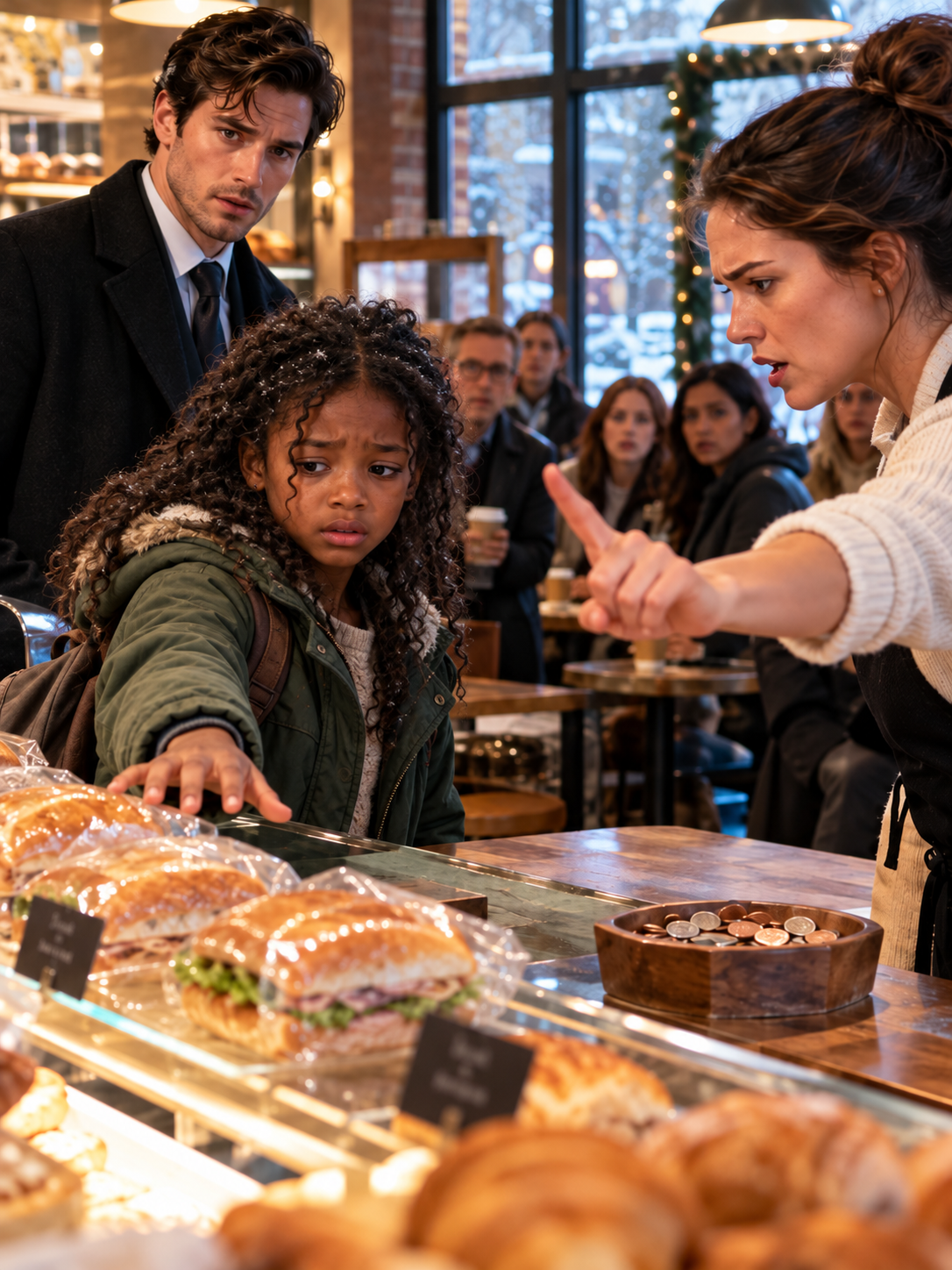
AFTER A HUNGRY TEN-YEAR-OLD GIRL WAS SHAMED FOR REACHING TOWARD A BAKERY SANDWICH, A QUIET BILLIONAIRE FOLLOWED HER INTO THE SNOW—AND FOUND THE FAMILY HIS SUCCESS COULD NEVER BUY THE GIRL’S HAND WAS THREE INCHES FROM THE SANDWICH WHEN THE CLERK’S VOICE STOPPED HER IN FRONT OF EVERYONE. SHE WHISPERED THAT HER LITTLE BROTHER HAD NOT EATEN SINCE YESTERDAY—THEN RAN INTO A SNOWSTORM WITH FOOD SHE HADN’T PAID FOR. CALDER REED THOUGHT HE WAS FOLLOWING A HUNGRY CHILD; HE HAD NO IDEA THE BUILDING SHE LED HIM TO WAS CONNECTED TO HIS OWN COMPANY. – Life Story
THE GIRL AT THE PASTRY CASE “Please don’t touch that unless you’re buying it.” The clerk’s voice was not cruel,...

My husband boarded Flight 912 with another woman on his arm, smugly believing I still thought he was hundreds of miles away in Nashville – Family
The first thing I noticed was that Ethan had forgotten how to breathe.For a man who had spent nearly six...
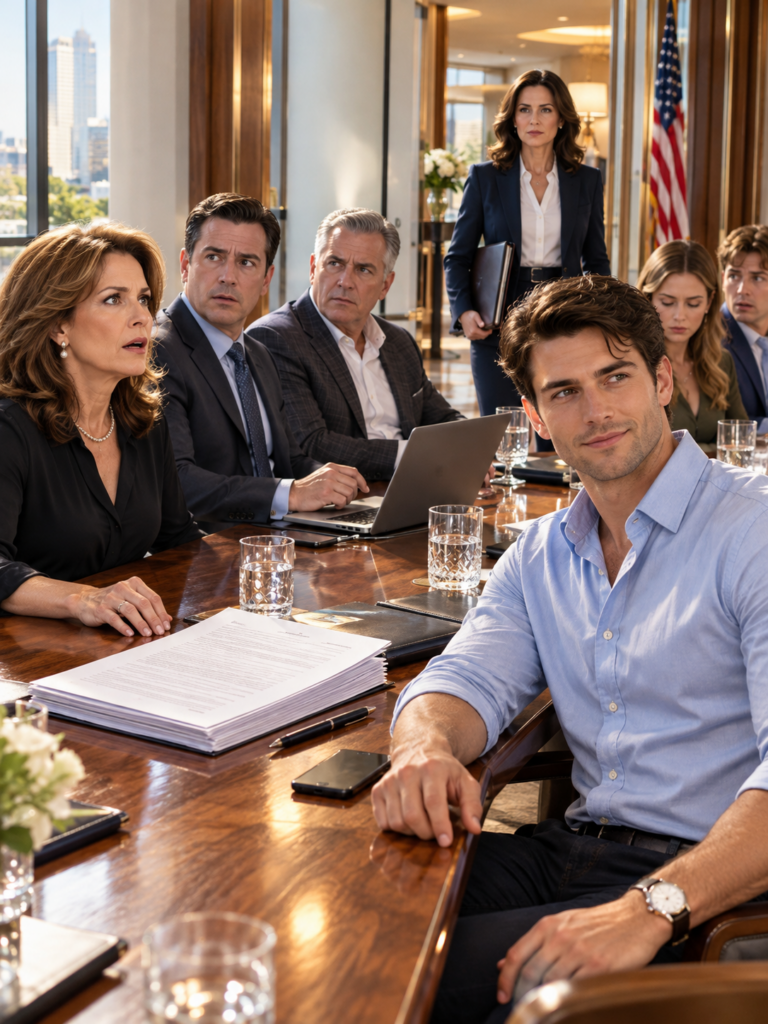
My mom tricked me into a “family meeting.” When I arrived, lawyers were already there, ready to force me to sign everything over. When I refused to hand over the inheritance, they threatened me. I just smiled and said, “Four… five… six. You’re a lot of people.” Then I added calmly, “Funny thing is, I only brought one person too.”
My mom tricked me into a “family meeting.” When I arrived, lawyers were already there, ready to force me to...