MY BILLIONAIRE EX-HUSBAND LEARNED I HAD HIS PREMATURE SON—THEN THE WOMAN HE SHUT OUT MADE HIM PROVE HE COULD STAY WITHOUT BUYING HIS WAY BACK – Life Story
Caleb Lawson closed a sixty-million-dollar deal before lunch, then answered one unknown call that made every number on his desk meaningless.
His ex-wife had delivered a baby at thirty-two weeks, the child was fighting in the NICU, and she had named Caleb as the father.
But when he demanded to know why she had hidden the pregnancy, Maya gave him an answer that turned the accusation back on him.
THE CALL HE ALMOST IGNORED
Caleb Lawson was signing the final page of a sixty-million-dollar acquisition when his phone lit with an unknown Austin number.
He almost ignored it.
Across the glass conference room, six executives were waiting for his signature, his CFO was watching the clock, and the Austin skyline glittered forty-one floors below like a city he had personally taught to obey.
Then he answered.
“Mr.
Lawson?” A woman’s voice was calm but urgent. “This is Dr.
Celeste Rios at St.
David’s Medical Center.
I’m calling regarding Maya Jensen.”
The pen stopped in Caleb’s hand.
He had not heard Maya’s name spoken directly to him in six months.
Not since a quiet conference room, two attorneys, and the final signatures ending a five-year marriage neither of them had known how to save.
“What happened?”
“She underwent an emergency C-section early this morning.”
Caleb stood without realizing he had moved.
“An emergency what?”
“Her son was delivered at thirty-two weeks.
He’s in the neonatal intensive care unit.”
The room around him seemed to lose depth.
A baby.
Maya had a baby.
His mind ran backward through months he had sealed away: the divorce, the silence before it, the last December night when anger had softened for a few hours and they had briefly become the people they used to be.
Dr.
Rios continued.
“Maya identified you as the baby’s father and asked that we contact you.”
Caleb gripped the edge of the table.
“My child?”
“That is what she told us.”
Every executive in the room had gone silent.
Caleb turned away from them.
“How is she?”
“Stable.
Exhausted.
She lost more blood than we would have liked, but she’s recovering.”
“And the baby?”
“Two pounds, nine ounces.
He’s breathing with support.
Premature infants can change quickly, but at the moment he is stable.”
Caleb closed his eyes.
“How long has she known?”
“That’s a conversation you’ll need to have with Maya.”
He opened them.
“I’ll be there in twenty minutes.”
“Caleb,” his CFO said as he ended the call. “We still need—”
“Handle it.”
“You’re the only authorized signatory on the revised term sheet.”
“Then it waits.”
The words startled even him.
Caleb Lawson did not make sixty-million-dollar transactions wait.
People waited for him.
He left his suit jacket on the chair and walked out carrying nothing but his phone and the first fear he could not convert into a plan.
Twenty-four minutes later, antiseptic replaced expensive cedar and leather.
Dr.
Rios met him outside Room 312.
She was in her late forties, composed, observant, and entirely unimpressed by his name.
“She’s awake.”
Caleb put a hand on the door.
Then stopped.
“What do I say?”
Dr.
Rios’s expression softened slightly.
“I’m a physician, Mr.
Lawson.
Not a miracle worker.”
He almost laughed.
Instead, he entered.
Maya lay pale against white sheets, dark hair loose around her face, an IV line disappearing beneath hospital tape.
She looked smaller than the woman who had once filled rooms without raising her voice.
Her eyes opened.
For a second, neither of them spoke.
Then Maya whispered, “You came.”
“You told them I’m the father.”
“I told them the truth.”
His chest tightened.
“Why didn’t you tell me?”
Something changed in her face.
Not guilt.
Anger.
“I tried.”
Caleb went still.
“You changed your number after the divorce,” she said. “You told your office not to put my calls through.
I emailed.
I came to Lawson Tower.
Darla told me you wanted a clean break and no personal contact.”
He remembered giving that instruction.
Not about a pregnancy.
Not about a child.
Just Maya.
Everything personal.
Everything painful.
Gone.
“You could have tried harder.”
Maya stared at him.
“You wanted me erased, Caleb.
I was exhausted from begging for space in a life you had already locked me out of.”
He had no answer ready.
For once, money, authority, and precision offered him nothing.
The door opened behind him.
A NICU nurse looked between them.
“Mr.
Lawson?”
Caleb turned.
The nurse gave him a gentle smile.
“Would you like to meet your son?”
The word son landed differently in a hospital room.
In contracts, people used future words casually.
Expansion.
Legacy.
Succession.
Son was not a future word.
It was happening now.
Caleb followed the nurse through double doors where the light softened and every sound seemed deliberate.
Hand sanitizer.
Gown.
Instructions.
No cologne next time.
No watch near the incubator ports.
Wash to the elbows.
He obeyed without argument.
That alone would have surprised half his company.
The nurse led him to an incubator near the back.
Caleb stopped.
Inside lay a baby so small that every instinct in him rejected the scale of what he was seeing.
Thin legs beneath a diaper.
A cap over dark hair.
Monitoring leads on translucent skin.
A breathing interface beneath the nose.
“This is Baby Jensen,” the nurse said.
Caleb stared at the card.
BABY BOY JENSEN.
No first name.
No Lawson.
Nothing linking the child to him except Maya’s word and one night six months before.
“Can I touch him?”
“Through the port.
One finger, gently.
Still touch is usually better than stroking for preterm babies.”
Caleb slipped his hand through.
His index finger touched the baby’s palm.
The tiny hand closed around it.
Something inside him gave way so quickly that he had to lower his head.
He had stood through hostile takeovers without sweating.
Had watched a bank threaten to call a loan on his first company and calmly negotiated another week.
Had buried his mother and returned to work forty-eight hours later because grief had felt like a room he could outrun.
This was different.
The baby’s hand did not know who Caleb Lawson was.
It did not care.
It simply held on.
“What happens now?” Caleb whispered.
The nurse thought he meant medically.
“Now we watch him.
Help him grow.
Support his breathing and feeding until he can do more himself.”
Caleb nodded.
The answer applied to more than she knew.
When he returned to Maya’s room, Lauren Pierce was there.
Lauren had been Maya’s closest friend since college, executive director of a housing nonprofit and a woman who had disliked Caleb long before the divorce made it socially acceptable.
She stood when he entered.
“Well.”
“Lauren.”
“You look terrible.”
“I’ve had a day.”
Maya’s eyes closed.
“Please don’t.”
Lauren lifted both hands.
“I’m being charming.”
“You’ve never been charming,” Caleb said.
“Good.
You remember something.”
Maya made a weak sound that might have been laughter.
It stopped all three of them.
For one second, the room remembered another life.
Lauren picked up her bag.
“I’m getting food.
Maya, you will eat it.
Billionaire, don’t upset her.”
Caleb looked at the IV pump.
“I don’t think I’m in charge here.”
Lauren paused.
“Maybe there’s hope.”
After she left, Maya studied him.
“You saw him?”
“Yes.”
She looked toward the window.
“What did you think?”
Caleb sat.
“That I don’t know anything.”
Maya’s eyes moved back to him.
It was not the answer she expected.
He continued.
“Why didn’t you name him?”
“I had names.”
“Which?”
“Noah.”
His throat tightened.
Her grandfather.
The retired carpenter who had raised Maya for three years while her mother worked nights.
The man who taught her to use a level, frame a picture, and leave any room better than she found it.
Caleb looked down.
“I thought of Noah too.”
Maya’s expression softened before caution returned.
“That doesn’t mean anything.”
“No.”
They sat with that.
Then Caleb said, “I want a paternity test.”
Maya went very still.
There it was.
The old Caleb.
Proof before feeling.
Verification before trust.
She nodded once.
“Fine.”
He heard the injury in the word.
“Maya—”
“No.
It’s reasonable.”
“I didn’t say you lied.”
“You didn’t have to.”
He leaned forward.
“I believe you.”
“Then why test?”
“Because this is too important to leave room for doubt later.
For me.
For him.
Legally.
Personally.”
Her eyes flashed.
“Legally.”
He hated how it sounded.
“In Texas, because he was born within three hundred and one days after our divorce, there may already be a legal presumption.
I had counsel explain that once when—”
“You called a lawyer already?”
“No.”
He stopped.
He almost had.
In the elevator.
He had opened his contacts, found family counsel, and then closed it.
“That’s what I would have done.”
Maya stared.
“And?”
“I didn’t.”
Some of the tension left her shoulders.
“Do the test.”
“I won’t use it to disappear.”
“You don’t know what you’ll do.”
That was fair.
Caleb nodded.
“No.
I don’t.”
He looked toward the NICU hall.
“But I know what I want to do tomorrow morning.”
“What?”
“Come back.”
Maya said nothing.
He stood.
At the door she called his name.
“Caleb.”
He turned.
“If he’s yours…”
She stopped.
He waited.
Her voice became quieter.
“Don’t make promises to him because you feel guilty about me.”
The accuracy landed hard.
He nodded.
“I won’t.”
The next morning he returned at .
No assistant.
No driver.
No suit.
Dark sweater, jeans, coffee he forgot to drink.
Maya was already at Noah’s incubator.
She looked through the glass at him.
“You’re early.”
“So are you.”
“I had surgery.”
“That makes your attendance more impressive.”
Her mouth almost smiled.
Almost.
He scrubbed his hands and stood beside her.
Noah’s oxygen numbers were stable.
Dr.
Rios used cautious words.
Encouraging.
Appropriate.
Watching.
Caleb learned quickly that NICU language was designed to prevent hope from outrunning physiology.
Later that morning, a social worker explained parental access, discharge planning, and the practical realities ahead.
Caleb asked three dozen questions.
Maya endured nineteen before she interrupted.
“He isn’t a project.”
The room went quiet.
Caleb looked at his notebook.
He had made columns.
Appointments.
Insurance.
Home equipment.
Potential specialists.
“Right.”
The social worker hid a smile.
Maya did not.
“You’re doing it.”
“Doing what?”
“Turning fear into administration.”
Caleb closed the notebook.
It felt like putting down a weapon.
“What should I do instead?”
Maya looked at their son.
“Sit.”
So he sat.
For forty-three minutes, he did nothing useful.
No emails.
No scheduling.
No money.
He watched Noah breathe.
It was the first lesson his son taught him.
WHAT THE DIVORCE DIDN’T SAY
The paternity test came back four days later.
99.99 percent.
Caleb read the result twice.
Then handed the paper to Maya.
She did not look triumphant.
That bothered him more than anger would have.
“You knew,” he said.
“Yes.”
“I’m sorry the test hurt you.”
“It didn’t hurt that you tested.”
“What hurt?”
“That I already knew you would.”
There was no cruelty in her voice.
Just history.
Caleb sat across from her in the family lounge.
“How bad was I?”
Maya laughed softly.
“That’s a dangerous question.”
“I’m asking it.”
“You weren’t cruel.”
The answer surprised him.
“Not usually.”
“Comforting.”
“You want the truth?”
“Yes.”
“You were absent while standing three feet away.”
That was worse.
She looked at the paper cup in her hands.
“When we met, you noticed everything.
If I changed earrings, you noticed.
If I hated a painting but was being polite to the artist, you noticed.
When the gallery’s first major show bombed, you sat on the floor with me until two in the morning helping rehang the entire room.”
Caleb remembered.
She wore a green dress.
He had pretended to understand abstract sculpture because he wanted another reason to speak to her.
“What happened?”
“You started winning.”
He frowned.
Maya continued.
“One company became three.
Then seven.
Every crisis proved you were necessary, so you made more room for crises.”
“That sounds convenient.”
“It was.”
“For me.”
“Yes.”
She looked directly at him.
“You liked being needed where the problem had an answer.”
He felt the sentence settle.
“At the office, you were brilliant.
At home, if I needed something you couldn’t solve in one phone call, you disappeared.”
“I paid attention.”
“You paid for things.”
He almost argued.
The distinction stopped him.
“You renovated the gallery storage room when I said I was overwhelmed.”
“You needed space.”
“I needed you to ask why I was overwhelmed.”
Caleb looked down.
The old anger he used to feel in their marriage rose by instinct.
Why didn’t you tell me clearly?
Why didn’t you ask differently?
Why was he always supposed to guess?
Then he heard the flaw before saying it.
Maya had told him.
Many times.
He remembered an anniversary dinner delayed because he stayed in Dallas for a negotiation.
She had said, “I don’t need another apology gift.
I need you home.”
He sent earrings anyway.
Another night she had said, “I feel lonely in a marriage.”
He had replied, “We’re together all the time.”
As if location disproved loneliness.
Caleb rubbed his hands together.
“When did you stop trying?”
Maya’s eyes lowered.
“The night you missed the gallery award.”
He remembered the award.
Or rather, he remembered arranging flowers because he could not attend.
She had won Austin Emerging Curator of the Year.
He had been in Seattle.
“I sent—”
“White lilies.”
He stopped.
Her favorite flowers were peonies.
His assistant had chosen lilies.
Maya smiled without humor.
“The card said, ‘Proud of you.
C.’”
His chest tightened.
“That was the night?”
“No.
That was the night I realized I could stop being disappointed if I stopped expecting you.”
Caleb looked toward the NICU windows.
The accusation had no villainy in it.
That made it impossible to defeat.
“What about the last night?”
Maya knew which one.
December fifteenth.
Two months before the divorce became final.
They had already agreed to separate.
Caleb closed the Thompson acquisition that afternoon.
He came home late.
Maya was packing books.
He opened champagne because he did not know what else to do with emotion.
They drank.
Talked.
Fought.
Laughed.
Then, somehow, ended up in bed.
The next morning they became strangers again.
“I found out I was pregnant two weeks after we signed the final decree,” Maya said.
“You called me?”
“The old number first.”
“I changed it after a leak.”
“I know now.”
“You emailed?”
“Three times.”
He frowned.
“I never saw them.”
“Your assistant answered the second.”
Caleb went still.
“What exactly did Darla say?”
Maya unlocked her phone.
She still had the email.
The reply was short.
Ms.
Jensen,
Per Mr.
Lawson’s standing instruction, personal communications unrelated to outstanding legal or property matters will not be forwarded.
He has requested a clean separation and no unscheduled contact.
I wish you well.
Darla Kent
Office of the Chairman
Caleb read it.
Something cold moved through him.
He had told Darla exactly that.
Not because he knew Maya was pregnant.
Because every email from Maya after separation reopened something he refused to feel.
Darla had followed his direction perfectly.
“Did you tell her why?”
Maya’s eyes flashed.
“Not in the first email.”
“Why not?”
“Because I didn’t want to write ‘I’m pregnant’ to your assistant.”
Fair.
“The second?”
“I said it was medical and personal.”
“And when you went to the office?”
“Security called upstairs.
Darla came down.”
“What did you say?”
“I told her I needed to speak to you privately.”
“Did you tell her pregnancy?”
“No.”
“Why?”
“Because I was standing in your lobby with two security officers five feet away.”
Again, fair.
Caleb put the phone down.
“She wasn’t hiding this from me.”
Maya frowned.
“Who?”
“Darla.”
“I didn’t say she was.”
“She was obeying me.”
“Yes.”
That was the first major truth Caleb could not redirect.
He had spent four days resenting Maya for making a unilateral decision.
But the walls keeping him from his son had been built from instructions he gave.
He had ordered the clean break.
He had made himself unreachable.
And when the consequence arrived, he had blamed the person locked outside.
That afternoon he called Darla.
She sounded relieved.
“Sir, I’ve been trying to reach you about the board packet.”
“I need to ask you something first.”
A pause.
“Yes?”
“Did Maya come to the office after the divorce?”
Silence.
Darla was sixty-one, had worked for Caleb for fourteen years, and almost never hesitated.
“Yes.”
“Why didn’t you tell me?”
“Because you told me not to.”
The answer was immediate.
He closed his eyes.
“Did you think something was wrong?”
“Yes.”
“And you still didn’t tell me.”
Her voice sharpened.
“Caleb, you told me after the settlement conference that if Maya came, called, sent flowers, set the building on fire, or hired a marching band, you did not want to know unless counsel said it was legally necessary.”
He remembered.
Almost word for word.
Darla continued.
“You were not ambiguous.”
He leaned against the hospital wall.
“She was pregnant.”
Silence.
“Oh.”
Darla rarely sounded shaken.
“I didn’t know.”
“I know.”
“I’m sorry.”
“Don’t be.”
“Caleb—”
“You did what I asked.”
He looked through the NICU window at Maya sitting beside the incubator.
“This one is mine.”
When he hung up, something in him had shifted.
Responsibility felt different when nobody else could be fired for it.
THE TWELVE-HOUR WINDOW
Noah’s first setback arrived on a Wednesday morning.
Caleb knew before anyone told him because Dr.
Rios entered the NICU without her usual coffee.
She asked to speak with both parents.
Maya gripped the back of the chair.
“Just tell us.”
Noah’s oxygen requirements had increased overnight.
His white blood cell count was elevated.
His temperature was unstable.
“Infections in premature infants can become serious quickly,” Dr.
Rios said. “We’ve drawn cultures and started broad-spectrum antibiotics.”
Caleb’s old instincts activated.
“What organism?”
“We don’t know yet.”
“Which antibiotics?”
She named them.
“Probability of sepsis?”
“Caleb.”
Maya’s voice cut through him.
Dr.
Rios continued calmly.
“I’m not going to give you a percentage that will make you feel better while telling you very little about your individual child.”
He stopped.
“What can we do?”
“Be here.”
Again.
The answer he hated because it did not involve leverage.
They stayed.
Noah’s numbers moved in small, terrifying increments.
Lauren brought food.
Maya did not eat.
Caleb did until she looked at him.
Then he slid half his sandwich toward her.
She stared.
“That is not a persuasive medical argument.”
“It’s turkey.”
“Powerful.”
“Eat.”
“You’re bossy.”
“So are you.”
She took it.
It was the first ordinary exchange they had shared since the hospital call.
Hours later, Noah’s temperature rose.
A monitor sounded.
Nurses moved quickly.
Caleb stood.
Maya did not.
For one second she simply stared at the incubator as if movement might confirm the danger.
Then her knees weakened.
Caleb caught her elbow.
“Sit.”
“No.”
“Maya.”
“I’m not leaving him.”
Dr.
Rios looked over.
“We need space for five minutes.”
“No.”
“Maya.”
Dr.
Rios’s voice was firm now.
“You are his mother.
You are also six days out from major abdominal surgery.
Give us five minutes.”
Maya’s face crumpled.
Caleb guided her into the hall.
She pulled away immediately.
“I can walk.”
“I know.”
He let go.
That mattered too.
In the waiting room, Maya sat with both hands pressed between her knees.
“What if this is my fault?”
Caleb stared.
“How?”
“Stress.
The gallery.
The divorce.
I worked until thirty weeks.
I should’ve rested.”
“No.”
“You don’t know.”
“I know enough.”
She looked at him.
“You think everything can be answered.”
“I used to.”
“Then don’t tell me no like you know.”
He sat opposite her.
“You’re right.”
Maya’s breathing shook.
Caleb lowered his voice.
“Then I’ll say this instead.
If you’re allowed to blame yourself for every variable you couldn’t control, I get to blame myself too.”
“For what?”
“Missing the pregnancy.
The divorce.
Stressing you.
The last year of our marriage.”
“That’s not how premature birth works.”
“Exactly.”
She glared at him.
Then, despite herself, laughed through tears.
“You’re manipulative.”
“I prefer illustrative.”
“You’re impossible.”
“Historically.”
The humor disappeared quickly.
Maya covered her face.
“I’m scared.”
Caleb moved from the opposite chair to the one beside her.
He did not touch her immediately.
That was another thing he was learning.
“Me too.”
After several seconds, Maya’s hand shifted across the vinyl seat.
Her fingers touched his.
Caleb turned his palm upward.
She held on.
They remained that way for twenty-three minutes.
No declarations.
No promises.
Just fear shared rather than managed.
Dr.
Rios finally returned.
“Noah responded to the initial treatment.
His temperature is coming down.”
Maya closed her eyes.
“But?”
Dr.
Rios appreciated the question.
“But we’re not calling this over.
Cultures need time.
We watch him closely overnight.”
Maya nodded.
Caleb asked nothing else.
That night Maya fell asleep sitting beside Noah’s incubator.
Her head slowly leaned against Caleb’s shoulder.
He froze.
Not because he disliked it.
Because he understood how easily he could mistake vulnerability for permission.
He stayed still.
Forty minutes later she woke.
“Sorry.”
“Don’t be.”
“You’re uncomfortable.”
“My left arm died twenty minutes ago.”
She sat up quickly.
He smiled.
Worth it.
The word almost came out.
He kept it.
Maya studied him.
“What?”
“Nothing.”
“You’re thinking loudly.”
“I was going to say something stupid.”
“Growth.”
He laughed.
She looked at Noah.
“You know what I hate?”
“Long list.”
“That I’m starting to trust you in here.”
Caleb’s smile disappeared.
“Why do you hate it?”
“Because this place isn’t real life.”
“It feels aggressively real.”
“You know what I mean.”
He did.
In the NICU, priorities were forced into order.
Outside waited company boards, gallery rent, emails, old resentment, sleepless nights, and every habit that had broken them.
Maya continued.
“It’s easy to show up when alarms are going off.”
Caleb looked at her.
“The hard part is showing up when nothing dramatic is happening.”
“Yes.”
He nodded.
“Then judge me there.”
It was the first intimate moment that did not depend on crisis.
The next came three days later.
Noah’s cultures remained negative.
The fever resolved.
His oxygen support decreased.
Dr.
Rios approved skin-to-skin care.
Maya held him first.
Caleb watched her settle into the recliner with the tiny baby against her chest, wires arranged by the nurse, blankets draped over both of them.
Maya cried silently.
No shame.
No apology.
After forty-five minutes, the nurse looked at Caleb.
“Dad?”
He stood too quickly.
Maya smiled.
“Nervous?”
“No.”
“Liar.”
“Extremely.”
He removed his sweater and sat in a hospital T-shirt.
The nurse placed Noah against his chest.
Caleb stopped breathing.
“Dad should breathe too,” the nurse said.
Maya laughed softly.
Caleb looked down.
Noah fit against him like a question he had spent his entire life avoiding.
He whispered, “Hey.”
Maya looked away, suddenly emotional.
Caleb continued quietly.
“I’m your dad.”
His voice cracked.
He did not hide it.
“I don’t know what that means yet.
But I’m going to learn it before you learn enough words to complain.”
The nurse smiled.
Maya wiped her cheek.
Caleb touched one finger to Noah’s back.
“I’m not going to promise you I’ll never fail.”
Maya looked at him.
“I think I’d fail that promise immediately.”
Noah made a tiny sound.
“But I’ll come back after I do.”
Maya’s throat tightened.
That was not the kind of promise old Caleb made.
Old Caleb promised perfection in areas he could measure.
This promise had room for repair.
Later, in the cafeteria, Maya said, “I heard what you told him.”
“I assumed.”
“You meant it?”
“Yes.”
“Coming back after you fail?”
“Yes.”
She studied him.
“That’s what I needed from you.”
“When?”
“In the marriage.”
The words hurt.
Caleb accepted them.
“I thought apologizing meant admitting I wasn’t good enough.”
Maya stirred soup she had barely touched.
“And now?”
“Now I think refusing to apologize is how I made sure I stayed not good enough.”
Maya smiled despite herself.
“That was almost wise.”
“Write down the date.”
She did not tell him she was beginning to remember why she had once loved him.
Not yet.
THE THING MONEY COULDN’T FIX
Noah spent twenty-eight days in the NICU.
By the third week, the medical crisis had softened enough for the rest of Maya’s life to find her again.
It arrived by email.
FINAL NOTICE — LEASE ARREARS.
Maya stared at the message in the hospital courtyard until the screen dimmed.
Her gallery, Meridian House, owed twenty-seven thousand four hundred dollars in back rent and operating charges.
The business had been struggling before the pregnancy.
Then Maya reduced her schedule.
Then bed rest.
Then early delivery.
Art sales slowed across the summer.
A planned corporate exhibition canceled.
Her reserve disappeared one month at a time.
Caleb found her outside with the notice folded in her hand.
He sat beside her.
“What happened?”
“Nothing.”
“Maya.”
She laughed bitterly.
“That line used to make you furious.”
“It still does.”
She handed him the notice.
His eyes scanned it.
His first instinct arrived instantly.
“I’ll pay it.”
Maya took the paper back.
“No.”
“It’s twenty-seven thousand dollars.”
“I can read.”
“This is absurd.”
Her head snapped toward him.
“What is?”
“You losing ten years of work over an amount that—”
He stopped.
Too late.
“An amount that what?”
Caleb closed his mouth.
Maya waited.
“That doesn’t affect me.”
“And therefore shouldn’t affect me?”
“That’s not what I meant.”
“It’s exactly what you meant.”
He rubbed his forehead.
“I can solve this in thirty seconds.”
“There.”
“What?”
“That.”
She stood.
“You still think helping means making the problem disappear.”
“Maya, it’s a commercial lease, not a moral test.”
“It is to me.”
“Why?”
“Because I need to know I can survive without becoming one of your projects.”
He stood too.
“You are not a project.”
“Then stop treating my life like an invoice.”
He watched her walk away.
The fight lasted less than two minutes.
Its echo lasted all day.
That evening, Caleb did something he would once have considered inefficient.
Nothing.
He did not call her landlord.
Did not buy the building through an LLC.
Did not have Lawson Capital’s arts foundation issue a grant.
He asked Lauren what Maya actually needed.
Lauren stared at him across a coffee shop table.
“You’re asking?”
“Yes.”
“Should I document this for science?”
“Lauren.”
She softened.
“Maya needs options that don’t erase her ownership of the solution.”
“What does that mean?”
“It means you can open doors.
She decides which one to walk through.”
So Caleb waited.
The next night, Maya found him beside Noah.
“I have an idea.”
He looked up.
“I’m listening.”
“One final exhibit.”
“What kind?”
“Small works.
Local artists.
Lower price points.
New collectors.
A real community show, not another event trying to impress people who already own too much.”
“Theme?”
“New Beginnings.”
Caleb smiled.
“Subtle.”
“Shut up.”
He did.
Maya continued.
“If sales are strong, I can cover part of the arrears and negotiate the rest.
My landlord doesn’t actually want an empty storefront.
He wants a credible repayment plan.”
“What do you need from me?”
She hesitated.
“Not money.”
“Understood.”
“Contacts.”
Caleb waited.
“People who buy art?”
“Yes.”
“Media?”
“Maybe.”
“Corporate guest list?”
“Selective.”
“Lawson branding?”
“No.”
“Press release about the billionaire heroically supporting his ex-wife?”
She glared.
He smiled.
“I was testing.”
“No rescuing.”
“No rescuing.”
“You don’t buy the art.”
“That seems unnecessarily specific.”
“You absolutely do not buy half the room and pretend strangers did.”
Caleb looked offended.
“I would’ve used subsidiaries.”
Maya laughed.
The sound surprised both of them.
That was their second quiet closeness.
Not touch.
Not romance.
Collaboration without control.
He opened doors.
She chose which mattered.
Meanwhile, another complication appeared.
Travis Lang.
Travis was forty, founder of a boutique hospitality group, longtime gallery patron, and exactly the kind of man Caleb would normally respect.
Confident.
Polished.
Connected.
Maya had met him through an arts board.
He offered sponsorship.
Fifty thousand dollars.
Enough to solve the gallery problem immediately.
Caleb disliked him before the handshake ended.
Maya noticed.
“Don’t.”
“I didn’t say anything.”
“Your face filed a lawsuit.”
Travis smiled.
“I like him.”
“No, you don’t,” Maya said.
“No,” Caleb agreed.
But Travis was not predatory.
His motive was straightforward.
He wanted naming rights for the exhibition, hospitality exclusivity at future gallery events, and a first-look arrangement allowing his design company to source artwork from Meridian House.
Commercial.
Aggressive.
Potentially useful.
Maya reviewed the proposal.
Caleb reviewed it only when she asked.
“You hate it,” she said.
“I hate section six.”
“Why?”
“It gives him too much influence over event programming.”
“Lauren said the same.”
“Lauren is right too often.”
Maya looked at him.
“What if I take it?”
Caleb felt jealousy flare before reason.
Old Caleb would have attacked Travis’s motives.
New Caleb asked one question.
“Do you want it?”
“I want the stability.”
“That wasn’t my question.”
Maya looked at the contract.
“No.”
“Then don’t take it because you’re scared.”
“And if my event fails?”
“Then you deal with the failure you chose, not success someone else bought from you.”
Maya’s expression shifted.
“That sounds dangerously supportive.”
“I’m having a bad month.”
She declined Travis’s full sponsorship.
But she negotiated a smaller arrangement.
He bought a table for opening night, sponsored catering through his company, and received no control rights.
Travis accepted.
That surprised Caleb.
“You expected him to punish her for saying no?” Lauren asked.
“I expected him to negotiate.”
“He did.”
“He stopped.”
“Healthy adults sometimes do that.”
Caleb stared at her.
“Were you born condescending?”
“Gifted as a child.”
The more serious pressure came from Lawson Capital.
Caleb had missed meetings.
Delayed the acquisition vote.
Moved several executive sessions to video.
His CFO, Graham Voss, had tolerated the first week.
By week four, patience was gone.
“This company employs fourteen thousand people,” Graham said in Caleb’s office. “You cannot run it from a NICU waiting room.”
“I’m not.”
“You canceled Singapore.”
“Yes.”
“You delayed the Mercer closing.”
“By forty-eight hours.”
“You missed the lender dinner.”
“They survived.”
Graham shut the office door.
“This isn’t about one dinner.”
Caleb leaned back.
“What is it about?”
“Predictability.”
That word caught him.
Investors tolerated eccentric founders.
They disliked instability.
A billionaire discovering a premature child with an ex-wife had already reached gossip columns after someone photographed Caleb entering the hospital.
Graham worried about governance.
Succession.
Decision concentration.
Image.
For once, his motive was not greed.
It was corporate continuity.
“You built a company around yourself,” Graham said. “Now you’re discovering the problem with that.”
Caleb almost argued.
Then stopped.
He had.
Everything needed his signature because he liked everything needing his signature.
His business and marriage had broken around the same habit.
Control masquerading as responsibility.
“What do you recommend?”
Graham looked suspicious.
“Delegation.”
“I hate it already.”
“An executive committee.
Expanded signing authority.
COO handles deals below a defined threshold.
I take debt negotiations.
You stop being the emergency contact for every department.”
Caleb stared out at Austin.
For years, being indispensable had felt like success.
Now it looked like another form of absence waiting to happen.
“Draft it.”
Graham blinked.
“What?”
“Draft it.”
“You’re agreeing?”
“Don’t make me repeat myself before I recover.”
That week, Caleb gave away more authority than he had in fifteen years.
Not because fatherhood made business unimportant.
Because fatherhood exposed how badly he had designed both his company and his life.
Then Noah’s discharge date arrived.
And with it, real life.
THE HOUSE AFTER THE MONITORS
The first night outside the hospital terrified both of them more than they admitted.
Noah was discharged at a corrected gestational age of thirty-six weeks with follow-up appointments, feeding instructions, weight checks, and a schedule detailed enough to make Caleb briefly feel comforted.
Maya noticed.
“You like the binder.”
“I love the binder.”
“It has tabs.”
“I know.”
“You’ve read it twice.”
“Three times.”
She smiled.
Noah would stay initially in Maya’s apartment.
Caleb did not argue.
He arranged a night nurse consultation only after Maya agreed to interview candidates.
They hired no one for the first week.
That decision lasted thirty-six hours.
At on the second morning, Noah refused half a feeding and both parents became convinced civilization was ending.
Maya called the pediatric line.
Caleb paced.
The nurse calmly explained what to monitor.
Noah ate twenty minutes later.
At , Maya found Caleb standing over the bassinet.
“You can sleep.”
“So can you.”
“I’m the mother.”
“I’m the father.”
“That sounded weird.”
“It felt weird.”
She sat on the couch.
He sat beside her.
Noah slept.
Neither moved.
Maya whispered, “This is what I meant.”
“What?”
“No alarms.
No doctors.
No emergency.”
Caleb looked around the apartment.
“And I’m still here.”
“Yes.”
She looked at him.
“That matters.”
It was the third close moment.
Nothing dramatic.
His shoulder touching hers while their son slept.
Two exhausted people sharing quiet without demanding anything from it.
The next morning Caleb left at seven for a board meeting.
Maya expected the old panic.
The old feeling that once he entered Lawson Tower, the rest of the world would vanish.
At he texted.
FEEDING?
Maya replied.
SUCCESSFUL.
HE SPIT UP ON THE GOOD BLANKET.
Caleb answered.
THEN IT WAS NEVER A GOOD BLANKET.
At noon:
WEIGHT CHECK TOMORROW CONFIRMED?
YES.
At four:
HOME BY SIX.
Maya stared at that one.
She did not answer.
At , the door opened.
Caleb walked in.
No flowers.
No apology.
No dramatic proof.
On time.
She looked at the clock.
He noticed.
“Traffic was offensive.”
“You’re seven minutes early.”
“I’ll waste them later.”
Maya turned away so he would not see how much that tiny thing affected her.
Trust did not return as a grand emotion.
It accumulated in minutes.
He arrived when he said.
He learned bottles.
He attended pediatric follow-ups without attempting to dominate the physicians.
He changed diapers badly, then less badly.
He stopped asking permission to buy things and started asking whether things were needed at all.
Maya learned too.
She learned that accepting help was not surrender if she remained allowed to say no.
She learned that independence had become armor.
Some armor had saved her.
Some was now too heavy.
Their first major setback outside the NICU came from the gallery.
Opening-night reservations looked good.
Sales commitments did not.
Forty-eight hours before the exhibit, one corporate buyer withdrew after a budget freeze.
Projected revenue dropped by eleven thousand dollars.
Maya sat at her dining table surrounded by spreadsheets.
Caleb arrived with dinner.
She barely looked up.
“I’m taking Travis’s money.”
Caleb set the food down.
“The original deal?”
“Yes.”
“You don’t want it.”
“I want the gallery alive.”
“Those are different statements.”
“I don’t have the luxury of philosophical purity.”
“This isn’t philosophy.”
“It’s easy for you to say.”
There it was.
Money.
Class.
Power.
All the differences they had been pretending not to see.
Caleb’s voice became careful.
“What do you want me to say?”
“Nothing.”
“You asked me to help.”
“I asked for contacts.
Not judgment.”
“I’m not judging.”
“You get to call a bad deal bad because failure doesn’t threaten your rent.”
“That’s true.”
Maya stopped.
His agreement disarmed her.
Caleb continued.
“You’re right.
I don’t know what financial fear feels like the way you do.”
She looked down.
“But don’t use that truth to tell yourself fear has better judgment than you.”
Maya’s eyes filled with anger.
“And don’t use self-awareness like it means you understand everything now.”
“I don’t.”
“Good.”
Noah began crying in the next room.
Both moved at once.
They stopped in the doorway.
Maya almost laughed.
Caleb didn’t.
“You go,” he said.
She lifted Noah.
Caleb warmed the bottle.
For ten minutes, the argument waited while their son ate.
That was new too.
Conflict no longer had to destroy the room.
After Noah settled, Maya said, “I’m scared.”
Caleb nodded.
“I know.”
“If I lose the gallery, I don’t know who I am anymore.”
“You’re Noah’s mother.”
“That isn’t enough.”
Caleb did not flinch.
“Good.”
Maya stared.
He continued.
“You shouldn’t have to disappear into parenthood either.”
Something in her expression changed.
She had expected reassurance that motherhood mattered more.
Instead, he had defended the part of her that existed before him and before Noah.
“I’m going to call the landlord,” Maya said.
“To ask what?”
“For sixty days.”
Caleb said nothing.
“If opening night produces enough cash to show momentum, I’ll ask him to restructure the arrears.”
“And if he says no?”
“Then I look for a smaller space.”
There it was.
Choice.
Not rescue.
Caleb nodded.
“Do you want me in the room?”
“No.”
“Okay.”
She made the call herself.
The landlord agreed to thirty days, not sixty, with a written repayment plan contingent on a partial payment after the exhibition.
Not a miracle.
A chance.
Maya hung up.
“Thirty.”
Caleb smiled.
“Good.”
“I asked for sixty.”
“You negotiated.”
“I failed by half.”
“You succeeded by thirty.”
She rolled her eyes.
But she smiled.
Then the story hit the media.
A business blog posted photographs of Caleb carrying Noah’s car seat into Maya’s apartment.
BILLIONAIRE LAWSON REUNITES WITH EX-WIFE AFTER SECRET BABY.
Another outlet used:
ART GALLERY OWNER MAYA JENSEN GETS SECOND CHANCE WITH BILLIONAIRE EX.
Maya read it at six in the morning.
By she was furious.
By she had canceled three interviews.
By she told Caleb not to come over.
He came anyway.
That was a mistake.
She opened the door holding her phone.
“I said don’t come.”
“I know.”
“Then why are you here?”
“Because—”
“No.”
He stopped.
She stepped into the hall so Noah would not hear raised voices.
“This is exactly the problem.”
“The article?”
“The entire story.”
“What story?”
“That I’m your ex-wife before I’m anything else.
That my gallery is being rescued by you.
That my event exists because your guest list is coming.”
“I didn’t plant that.”
“I know.”
“Then don’t punish me for it.”
Her expression hardened.
“I’m not punishing you.
I’m asking for space.”
He heard himself.
Old Caleb would have called communications.
Threatened legal action.
Flooded the narrative with better press.
He would have solved the image problem until Maya’s identity became even more attached to his power.
“What do you want me to do?” he asked.
“Nothing.”
The answer hurt.
He nodded.
“Okay.”
And left.
That mattered more than staying.
THE NIGHT EVERYTHING ALMOST BROKE
Opening night arrived with rain.
Of course it did.
Austin traffic slowed.
Two artists called to say they would be late.
The caterer lost power at its prep kitchen.
One spotlight in the east room failed.
At p.m., three hours before doors opened, Maya stood in the middle of Meridian House and felt her hands begin to shake.
Lauren appeared beside her with duct tape.
“Why do you have that?”
“It’s a nonprofit director’s ceremonial weapon.”
“I’m serious.”
“So am I.”
Maya laughed once.
Then cried.
Lauren put the tape down.
“Oh.”
“I can’t do this.”
“Yes, you can.”
“No.
I mean I actually can’t.”
“You’re currently doing it.”
“I’m behind on rent.
Half the city thinks Caleb bought this event.
Travis is bringing people who expect cocktails named after buildings.
My son has a pediatric appointment tomorrow.
I slept ninety minutes.”
Lauren waited.
Maya whispered, “And Caleb isn’t here.”
“You told him not to come.”
“I know.”
“Do you want him here?”
Maya hated the answer.
“Yes.”
“Then call him.”
“I told him I needed space.”
“And now you need something else.”
“I don’t get to keep changing the rules.”
Lauren stared.
“Maya, relationships are not parking ordinances.”
Maya looked at her phone.
She called.
Caleb answered on the first ring.
“Are you okay?”
“No.”
A pause.
“What do you need?”
“Can you come?”
“I’m downstairs.”
She closed her eyes.
“You said you left.”
“I did.”
“Then why are you downstairs?”
“Because I had a board meeting two blocks away.”
She knew that was probably arranged.
But he had not come upstairs.
He had waited.
“Come up.”
He entered six minutes later carrying no entourage.
Darla was with him.
Maya froze.
Darla Kent was elegant, silver-haired, and looked exactly like the kind of woman who had professionally denied access to presidents.
She approached Maya.
“I owe you an apology.”
Caleb looked surprised.
Darla continued.
“I followed Caleb’s instruction.
Too literally perhaps, but willingly.”
Maya shook her head.
“You didn’t know.”
“No.
But when you came to the building, I knew you were distressed.”
“You were protecting him.”
“Yes.”
Darla looked at Caleb.
“That was my job.”
Then back to Maya.
“But good gatekeepers should know when the gate has become the problem.”
Maya’s anger softened.
“Thank you.”
Darla lifted a folder.
“Now, I have six patrons downstairs asking whether they’re allowed in early because apparently billionaires become feral around free wine.”
Caleb frowned.
“I didn’t invite them early.”
“I know.
Which is why I’m handling them.”
She walked away.
Maya stared at Caleb.
“I like her.”
“So does everyone except me.”
The opening began at seven.
People came.
Not a fantasy crowd.
Real people.
Young collectors.
Established patrons.
Artists’ families.
Corporate guests.
Students.
Neighbors.
A teacher who bought a two-hundred-dollar print on a payment plan.
A hotel owner who purchased three large works for a new property.
An architect who commissioned a sculpture.
Sales accumulated gradually.
Maya kept herself away from the totals for the first two hours.
At nine fifteen, Lauren found her.
“You need to see this.”
Maya looked at the report.
Twenty-one thousand in gallery commissions and direct event revenue.
Not enough.
Close.
Her stomach dropped.
“We’re short.”
Lauren nodded.
“By around sixty-four hundred if every payment clears.”
The event was winding down.
Caleb stood across the room speaking to an artist.
He had bought nothing.
Exactly as promised.
Travis approached Maya holding two glasses of water.
“Congratulations.”
“Not yet.”
“You know the numbers?”
“Yes.”
He studied her.
“My offer remains open.”
Maya looked around the gallery.
The walls.
The people.
The artists talking to buyers.
Everything she had built.
Travis continued.
“Not the old deal.”
She looked at him.
“I revised it.”
He handed her a single-page proposal.
No naming rights.
No programming control.
A twelve-month preferred-vendor referral agreement with a modest guaranteed event-services fee.
Commercial.
Limited.
Fair.
“Why?”
Travis smiled.
“Because you said no.”
“I don’t understand.”
“Most people become easier when they’re desperate.”
Maya’s expression hardened.
“That sounded terrible.”
“It did.”
He laughed.
“What I mean is, you negotiated when you had every reason not to.
I respect that.”
She read the terms again.
“This isn’t sponsorship.”
“No.
It’s business.”
“And the guarantee covers the shortfall.”
“Yes.”
Caleb saw them talking.
Jealousy returned like an old reflex.
He started toward them.
Then stopped.
Maya noticed.
That mattered.
She read every line.
Asked Travis three questions.
Changed one termination provision.
He agreed.
She signed.
Not because Caleb saved her.
Not because Travis seduced her with easy money.
Because Maya converted one relationship into a deal on terms she could live with.
At , the gallery had a path forward.
Caleb approached only after Travis walked away.
“Well?”
“I signed a contract with the enemy.”
“He’s not the enemy.”
“You’ve matured.”
“I hate him professionally.”
“Better.”
Caleb looked around.
“You did it.”
“We did enough to get another month.”
“No.”
Maya looked at him.
“You did exactly what you needed to do tonight.”
Before she could answer, his phone rang.
Dr.
Rios’s office.
Both of them froze.
Noah was with Miss Birdie at Maya’s apartment under the pediatrician-approved care plan.
Caleb answered.
“Hello?”
A nurse explained that the next morning’s appointment needed to be moved earlier because Noah’s most recent lab review showed mild anemia of prematurity requiring reassessment.
Common.
Treatable.
Not an emergency.
But after the NICU, words did not have to mean emergency to feel like one.
Maya’s face went white.
Caleb ended the call.
“He’s okay.”
“You don’t know.”
“I know what they said.”
“That’s not the same.”
She began gathering her bag.
The gallery around her disappeared.
Caleb caught himself before saying calm down.
Another old habit.
Instead he said, “I’ll drive.”
Maya looked at the room.
Her opening.
Her artists.
Her guests.
Her fear.
Lauren appeared.
“Go.”
“I can’t just—”
“You can.”
Maya’s eyes filled.
“What if something happens?”
Lauren nodded toward the paintings.
“This will still be here.”
Then toward Caleb.
“So will he.”
Maya looked at Caleb.
The sentence carried the entire story.
Would he?
When work resumed.
When Noah was stable.
When nobody praised him for showing up.
Would he still be there?
Caleb understood the question in her face.
“I’m coming.”
Not I’ll fix it.
Not I’ll have the best specialist waiting.
Just coming.
They left together.
The next morning, Noah’s evaluation confirmed mild anemia, common in premature infants.
No transfusion was needed.
Nutrition adjustments.
Monitoring.
Follow-up.
Maya nearly cried from relief in the elevator.
Then the doors opened onto the hospital lobby.
A photographer was waiting.
“Mr.
Lawson! Maya! Are you two back together?”
Caleb’s jaw tightened.
The reporter shouted again.
“Did Lawson Capital finance the gallery rescue?”
Maya stopped.
Caleb turned toward her.
“What do you want?”
That question saved everything.
Not What should I do?
What do you want?
Maya looked at the camera.
For months she had let other people’s narratives dictate her fear.
Broke ex-wife.
Secret mother.
Billionaire’s second chance.
Woman rescued.
She handed Noah’s carrier to Caleb.
Then stepped toward the reporter.
“My gallery was not rescued by Lawson Capital.”
The photographer raised the camera.
Maya continued.
“Local artists showed their work.
People bought it.
I negotiated my own commercial agreement and a repayment plan with my landlord.”
The reporter blinked.
“What about Mr.
Lawson’s role?”
Maya looked at Caleb.
He stood holding their son.
Not moving forward.
Not taking the microphone that did not exist.
“He made introductions when I asked.”
“And your relationship?”
Maya smiled slightly.
“That is not a corporate transaction.”
The reporter laughed.
“Are you together?”
Caleb looked at her.
Maya took Noah back.
“We’re parents.”
It was not romantic.
It was true.
And truth was finally enough.
THE CHOICE TO RETURN
Three months passed before Maya kissed Caleb.
Not in the NICU.
Not after a crisis.
Not at the gallery.
Not because he paid anything.
It happened on a Tuesday night while he was washing bottles badly.
Noah was asleep upstairs in the guest room of Caleb’s house.
Maya was reviewing artist invoices at the kitchen island.
Caleb dropped a bottle cap.
It rolled under the refrigerator.
He stared at it.
Maya looked up.
“Problem?”
“It went under.”
“Yes.”
“I can see that.”
“You’re a billionaire.”
“Apparently useless against appliances.”
She laughed.
Caleb got down on the floor.
His shoulder disappeared beneath the refrigerator edge.
“You’re going to ruin that shirt.”
“It’s already seen formula.”
“That shirt probably costs more than my first car.”
“That is an accusation, not a question.”
He found the cap.
Raised it triumphantly.
Maya was still smiling when he stood.
Neither spoke.
The room became quiet.
No alarms.
No crisis.
No external reason for closeness.
Just Tuesday.
Caleb’s smile faded first.
“What?”
Maya shook her head.
“You stayed.”
“I said I would.”
“For three months.”
“I’ve had longer meetings.”
She rolled her eyes.
He became serious.
“I’m not asking you for anything.”
“I know.”
“That’s new for me too.”
Maya stepped closer.
“I know.”
Then she kissed him.
Once.
Soft.
Brief.
Caleb did not reach for her until she kissed him again.
Afterward, Maya rested her forehead against his.
“This does not mean we’re remarrying.”
“Terrible timing.
I have a ring in the dishwasher.”
She laughed against him.
“Caleb.”
“I’m joking.”
“Are you?”
“Yes.”
He paused.
“Mostly.”
She stepped back.
He let her.
They began dating again.
Slowly.
Embarrassingly slowly, according to Lauren.
Dinner once a week without Noah when childcare allowed.
Separate homes.
Co-parenting calendar.
Couples therapy before either of them used words like reconciliation.
Caleb hated couples therapy.
Which Maya considered evidence it was useful.
They revisited old wounds.
The missed award.
The canceled vacations.
Her habit of pretending independence meant needing nothing.
His habit of interpreting provision as intimacy.
Their final year.
That December night.
The divorce.
The pregnancy.
The months Maya spent alone.
Caleb apologized without explaining why he had behaved as he did.
Maya apologized for deciding, after she failed to reach him, that he would not want the baby.
They did not pretend those mistakes were equal.
They did not need to be.
They were theirs.
Noah grew.
At six months corrected age, he laughed for the first time when Caleb sneezed.
At eight months, he developed a fascination with ceiling fans.
At ten months, he crawled directly toward the one object he was not allowed to touch.
Caleb called that “strategic initiative.”
Maya called it “your genetics.”
Meridian House survived the first thirty-day extension.
Then another quarter.
The New Beginnings exhibit did more than produce cash.
It brought younger buyers.
Maya changed the gallery model.
Smaller accessible works alongside major pieces.
More community programming.
Rotating collaborations with hospitality and design firms—including Travis’s company.
Travis became less of a rival and more of a person.
One afternoon he told Caleb, “You know I was interested in her.”
Caleb stared.
“I know.”
“She turned me down before you two got back together.”
“I know.”
“You want to know why?”
“No.”
Travis smiled.
“She said she needed to learn whether she could trust herself before choosing anyone.”
Caleb looked toward Maya across the gallery.
She was speaking with an artist, animated, certain.
“That sounds like her.”
Travis nodded.
“For what it’s worth, don’t waste it.”
Caleb looked at him.
“That almost sounded like advice.”
“Don’t tell anyone.”
The real test of Caleb came nine months after Noah’s birth.
A Lawson Capital acquisition in Singapore hit a crisis.
Old Caleb would have boarded a plane that night.
New Caleb had promised Maya he would attend Noah’s early-intervention developmental assessment the next morning.
Graham called.
“We need you here.”
Caleb stood in his office, staring at the aircraft itinerary Darla had placed on his desk.
“What happens if I don’t go?”
“We lose leverage.”
“Can you handle it?”
Silence.
Then Graham said, “Yes.”
The answer irritated Caleb.
Because it proved how often his presence had been preference, not necessity.
“Then handle it.”
“You sure?”
“No.”
He ended the call.
The next morning Noah sat on a therapy mat and refused to demonstrate anything useful.
The therapist tried to encourage him to reach across his body for a toy.
Noah looked at the toy.
Then at Caleb.
Then lay flat on his back in protest.
Maya covered her mouth.
“Your son.”
“My son negotiates better.”
The therapist laughed.
Noah eventually cooperated.
His motor development was slightly delayed but progressing appropriately for his corrected age.
Nothing dramatic.
No emergency.
A routine appointment.
Caleb attended every minute.
In the parking lot afterward, Maya stopped beside the car.
“You stayed.”
He smiled.
“You keep sounding surprised.”
“I think part of me always will be.”
“That’s fair.”
She touched his coat.
“Singapore?”
“Still there.”
“The deal?”
“Still annoying.”
“Your company?”
“Unfortunately alive.”
Maya smiled.
“Thank you.”
“For what?”
“For proving ordinary days count.”
Caleb looked at Noah asleep in the stroller.
“They count more.”
One year after the hospital call, Caleb stood again in his glass corner office.
Austin hummed beneath him.
Same skyline.
Same polished furniture.
Same long table.
His phone lit with an unknown number.
He stared at it.
Then laughed.
Darla appeared in the doorway.
“You answering?”
“Yes.”
He picked up.
“Caleb Lawson.”
A woman spoke.
“Mr.
Lawson, this is Meredith from Meridian House.
Maya asked me to confirm whether you’re still bringing Noah to the anniversary exhibit at six.”
Caleb looked at the clock.
.
His board packet sat unfinished.
His car was waiting.
“I’ll be there.”
He hung up.
Darla raised one eyebrow.
“The Korea call?”
“Graham.”
“The forecast review?”
“Tomorrow.”
“The board packet?”
“Tonight after Noah goes down.”
Darla nodded.
“You’re becoming deeply inconvenient.”
“I learned from you.”
He took his jacket.
At Meridian House, the first piece Caleb saw was not expensive.
A small mixed-media work hung near the entrance.
Three imperfect lines rising from a dark field toward a strip of gold.
Its title card read:
PRESENCE.
Maya stood beneath it wearing the green dress.
The one from the night they first met.
Caleb stopped walking.
She saw him.
Her smile came slowly.
“You remembered.”
“You weaponized a memory.”
“I curate for impact.”
Noah sat on her hip wearing a tiny navy jacket and chewing one sleeve.
Caleb took him.
“Hey, little man.”
Noah grabbed his tie.
Maya laughed.
Guests moved around them.
Artists.
Collectors.
Lauren.
Miss Birdie.
Travis.
Dr.
Rios, who had come after Maya insisted.
Graham appeared ten minutes late and complained about parking.
No one made a speech about billionaires.
No one called Maya rescued.
The gallery had posted its strongest year.
Caleb’s company had survived delegation.
Noah had survived the beginning of life.
Maya and Caleb had survived each other badly once.
Now they were learning a different way.
After the crowd thinned, Caleb found Maya in the back room checking a sales sheet.
“Still working?”
“You came from an office.”
“Deflection.”
She closed the folder.
“Better?”
“Yes.”
Noah was asleep against Caleb’s shoulder.
Maya lowered her voice.
“I’ve been thinking.”
“Dangerous.”
“We’ve been dating nine months.”
“I have records.”
“You would.”
“We’ve been divorced eighteen.”
“Also documented.”
She smiled.
“I don’t want to go backward.”
Caleb’s expression changed.
“Neither do I.”
“I don’t want our old marriage back.”
“I don’t either.”
“I want…”
She stopped.
Caleb waited.
Old Caleb would have filled the silence.
New Caleb let it belong to her.
“I want to build something new,” Maya said.
His chest tightened.
“With me?”
“With you.”
He swallowed.
“And him.”
Noah stirred.
Maya touched his tiny back.
Caleb’s voice was quiet.
“What does that look like?”
“I don’t know yet.”
He smiled.
“That answer used to terrify me.”
“And now?”
“It still does.”
Maya laughed.
He continued.
“But I’m getting used to surviving uncertainty.”
She stepped closer.
“No proposal tonight.”
“I wasn’t—”
“You absolutely were thinking about it.”
“I think efficiently.”
“No ring hidden in a painting.”
“That would be excellent.”
“No helicopter banner.”
“Offensive.”
“No buying the gallery and naming a wing after me.”
“I’m writing these down.”
Maya smiled.
Then became serious.
“When we get there, if we get there, I want it because we know how to stay.
Not because Noah exists.
Not because we’re repairing history.”
Caleb nodded.
“Agreed.”
“And I keep my name.”
“Obviously.”
“My business stays mine.”
“Yes.”
“You don’t move meetings into the gallery.”
“One time.”
“Caleb.”
“Fine.”
She touched his face.
“And when you get scared?”
“I tell you.”
“When I get scared?”
“You tell me.”
“And neither of us makes the other person’s decision for them.”
He looked at her.
“Deal.”
She shook her head.
“Not a deal.”
Caleb smiled.
“Right.”
He kissed her.
No applause.
No grand gesture.
No contract.
Just choice.
Several months later, they moved into a house neither had lived in before.
Not Caleb’s downtown loft.
Not Maya’s old apartment.
Neutral ground.
Maya chose the neighborhood.
Caleb chose the kitchen.
Noah chose every cabinet they forgot to lock.
They did not marry immediately.
They did not need a ceremony to prove the work mattered.
On Noah’s second birthday, after therapy had ended, after the gallery had opened a second small exhibition space, after Caleb had missed two dinners but called before both and apologized without sending jewelry, Maya found him in the backyard assembling a plastic slide incorrectly.
She stood with coffee.
“You know that piece is upside down.”
“It is structurally innovative.”
“It’s upside down.”
Caleb stared at the instructions.
“Unclear.”
Maya sat beside him on the grass.
Noah was asleep inside after destroying his own birthday cupcake.
Caleb looked at her.
“What?”
“You’re staring.”
“I’m thinking.”
“Again?”
“I’ve been practicing.”
Maya waited.
He reached into his pocket.
She immediately held up a hand.
“If that’s a ring—”
“It is.”
“Caleb.”
“Before you panic, I have no speech.”
“You definitely have a speech.”
“I had one.”
“What happened?”
“I realized the last time we built a marriage, I treated certainty like love.”
Maya’s expression softened.
He opened the small box.
Simple ring.
No absurd diamond.
No spectacle.
“I don’t know that we’ll never hurt each other.”
She looked at him.
“I don’t know that work won’t get hard again.
Or that parenting won’t make us crazy.
Or that you won’t occasionally hate how I load a dishwasher.”
“You load it like a criminal.”
“Exactly.”
She laughed.
Caleb continued.
“I only know I don’t want a perfect ending.”
His voice roughened.
“I want the ordinary days.
The appointments.
The bad exhibits.
The good deals.
The nights Noah won’t sleep.
The arguments we finish instead of abandon.”
Maya’s eyes filled.
“And when I fail, I want to come back.”
He held the ring between them.
“If you want that too, marry me again.”
Maya stared at him for a long time.
Long enough that Caleb’s hand began to shake.
She noticed.
“Are you nervous?”
“Economically.”
“That doesn’t mean anything.”
“I know.”
She smiled through tears.
“Yes.”
Caleb stopped breathing.
“Really?”
“Don’t make me reconsider.”
He laughed and slid the ring onto her finger.
Then Maya caught his collar.
“One condition.”
“Of course.”
“If you ever send lilies for an anniversary, I’m divorcing you again.”
Caleb stared.
“Peonies.”
“Good.”
He kissed her.
Inside the house, Noah woke and immediately began yelling because no one was in the room appreciating him.
Maya pulled back.
“There’s our timing.”
Caleb stood.
“I’ve got him.”
He went inside.
Maya remained in the yard for one moment, looking at the ring.
Not because it was expensive.
It wasn’t, by Caleb’s standards.
Because the first time he married her, he had promised forever as if forever were something wealth and determination could secure.
This time he had promised to return.
That was better.
Later that evening, Caleb carried a sleepy Noah upstairs while Maya turned off the kitchen lights.
His phone vibrated on the counter.
A Lawson Capital number.
He looked at it.
Once, every call had felt urgent.
Every deal had required him.
Every interruption had seemed like proof of importance.
Maya stood on the stairs.
“You need that?”
Caleb looked at his phone.
Then at his son asleep against his chest.
Then at the woman waiting beneath the warm hallway light.
He pressed decline.
“No.”
Maya smiled.
Caleb followed her upstairs.
This time, he stayed.
Recommended Stories

THEY HUMILIATED A BLACK CUSTOMER OVER AN $85,000 WATCH AND ORDERED HIM OUT—BUT THE MEETING WAITING UPSTAIRS WOULD EXPOSE WHAT MADISON’S BOUTIQUE HAD BEEN HIDING – Life Story
At p.m., a saleswoman laughed when Marcus Johnson asked to see an $85,000 watch. By , a security guard was...

A SIX-YEAR-OLD GIRL TOLD A STRANDED MILLIONAIRE HER MOM COULD FIX HIS CAR—HE LAUGHED UNTIL THE MECHANIC FOUND A SECRET HIS OWN COMPANY BURIED – Life Story
His $280,000 car died on an empty Illinois road, and the six-year-old beside it told him her mother could fix...
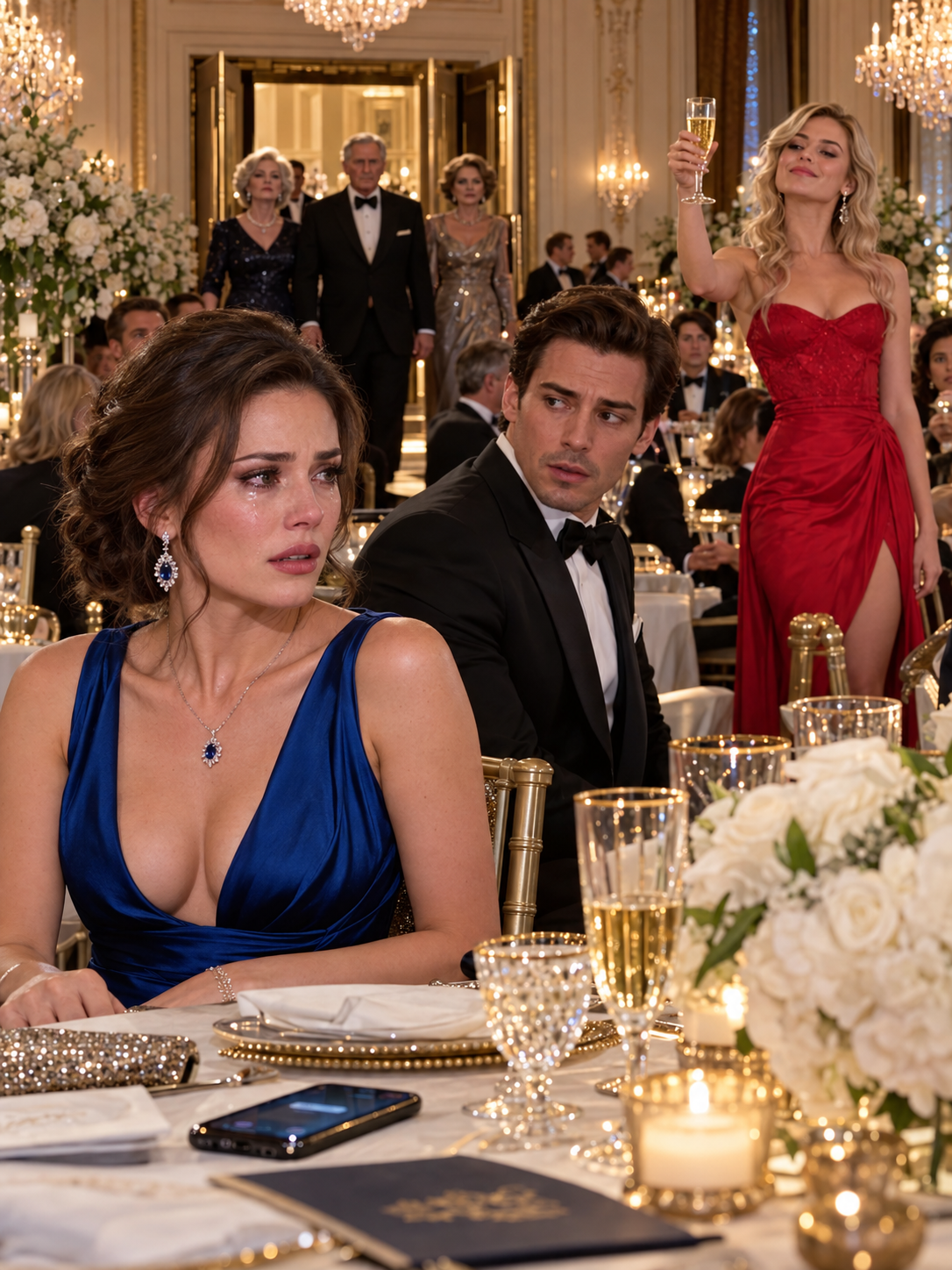
MY HUSBAND LET HIS MISTRESS TOAST THEIR FUTURE AT A CHARITY GALA—THEN MY FAMILY ARRIVED, AND I LEARNED WHY HE NEEDED ME TO STAY SILENT – Life Story
His mistress raised a champagne glass while my husband sat beside me, smiling. Before the room could decide where to...