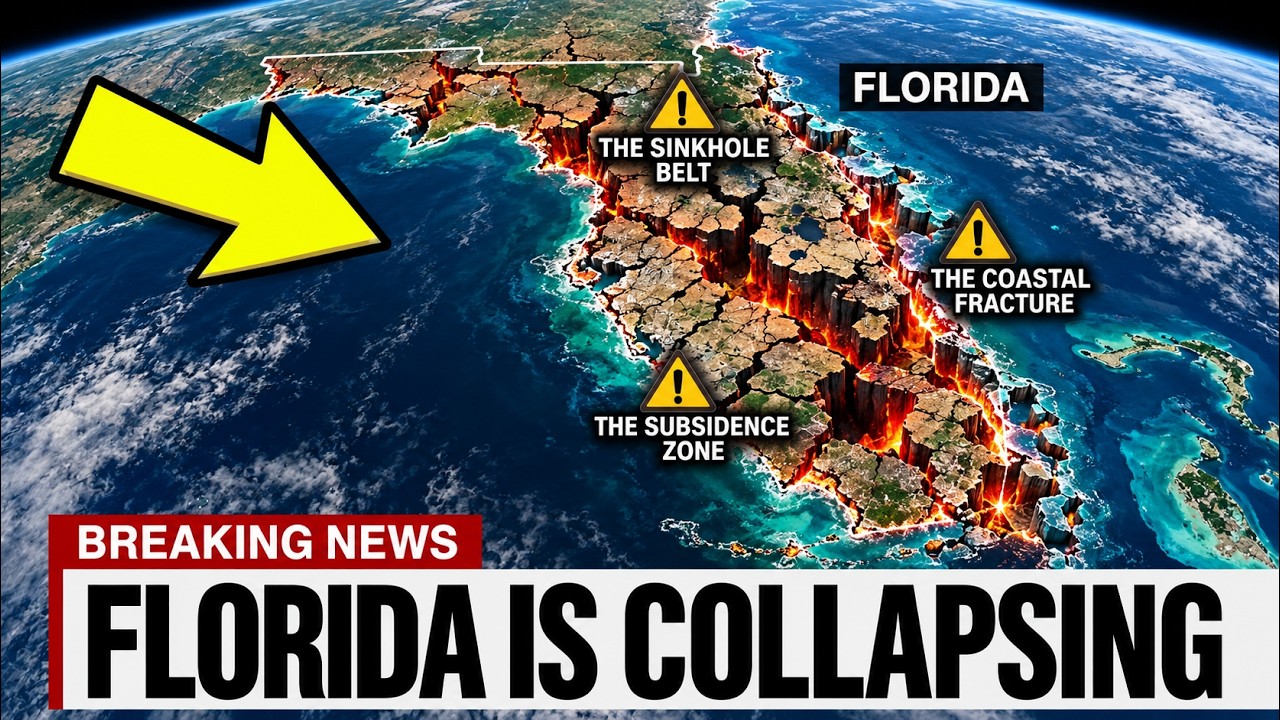
Florida’s ground isn’t just unstable—it’s actively trying to swallow the state whole. Sinkholes form without warning, carving sudden voids beneath homes, roads, and even sleeping residents.
Florida is the exposed portion of a much larger geological platform. According to the Florida Geological Survey, this platform extends for hundreds of miles beyond the modern coastline beneath the Atlantic Ocean and the Gulf of Mexico. The structure is composed primarily of carbonate rocks formed from marine sediments and microscopic organisms that accumulated during periods when warm, shallow sea…
Across southeastern Ohio, Bigfoot sightings are surging, and the pattern emerging from these reports is startling hunters, timber workers, and wildlife officers. The dense, hilly terrain, untouched by ancient glaciers, has been mostly reclaimed by forest since the coal industry left, creating a vast secluded wilderness.
In southeastern Ohio, a stretch of dense forest has become the subject of renewed attention due to a rise in reported sightings of a large, upright, hair-covered figure. Reports of this phenomenon, often referred to as Bigfoot or Sasquatch, have increased in recent years, with accounts clustering in the eastern half of the state.The region’s geography is a notable factor in these reports. Unlike t…
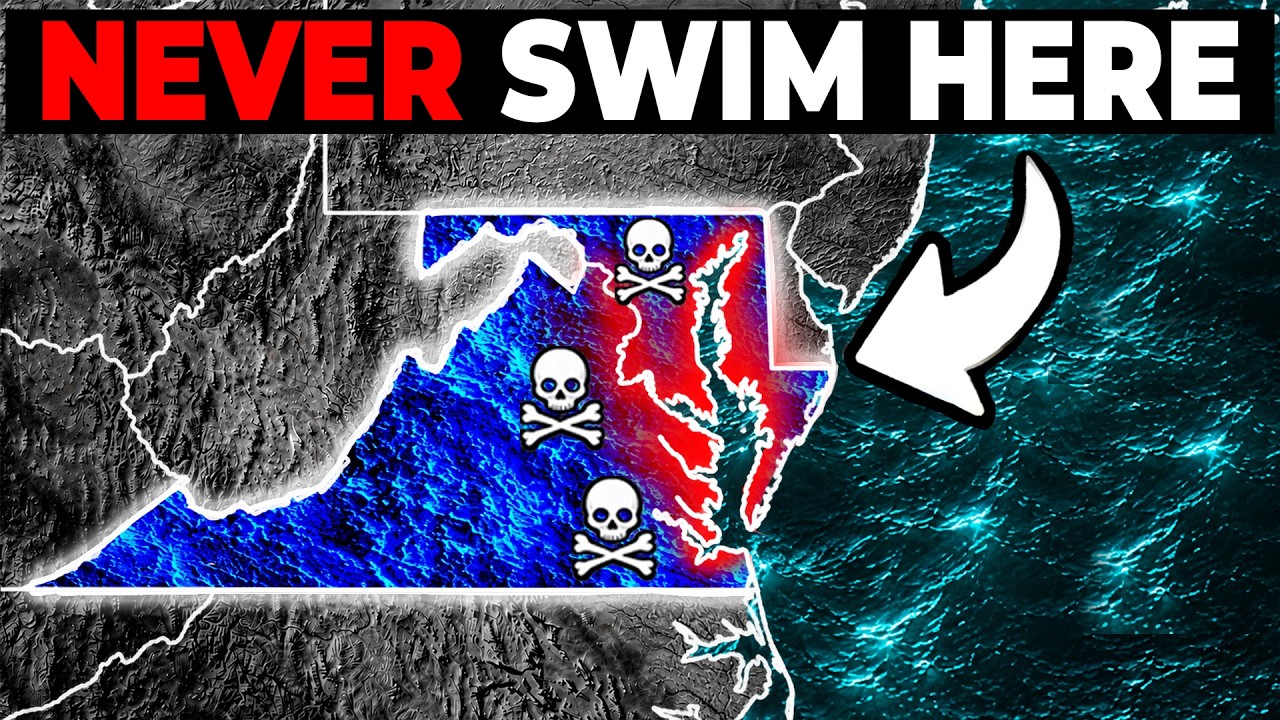
The Chesapeake Bay’s calm surface hides a brutal geological secret: beneath its mouth lies a 56-mile-wide impact crater, and the land is sinking at twice the global rate. Known for its crab houses and sailboats, the bay is actually a drowned river valley, carved by glaciers and still flooded by a daily push-pull of fresh and salt water.
The Chesapeake Bay is often seen as a relaxed corner of the East Coast, known for its crab houses, sailboats, and wide, calm water. Beneath that surface, however, the bay is a dynamic and complex system shaped by geology, history, and ongoing environmental change. Its shoreline has drowned and re-emerged repeatedly, and many of its most familiar features are tied to hidden structures and events th…
In 1918, Australian fishermen abandoned their grounds after a ghostly white shark lifted their heavy crayfish pots straight off the seafloor, mooring lines and all. A government naturalist cross-examined the men and found them genuinely terrified, though their size estimates wildly ranged from 115 to 300 feet.
In 1918, a group of professional crayfish fishermen working out of Port Stevens on the coast of New South Wales, Australia, stopped fishing their regular grounds near Broughton Island for several days. These were experienced fishermen who worked those waters for a living, and taking multiple days off from paid work was an unusual and costly decision.David George Stead, a naturalist who managed the…
A plastic bag filmed at 10,898 meters in the Mariana Trench sat in a Japanese archive for two decades before anyone spotted it. Researcher Sanae Shiba reviewed 5,010 overlooked dives and found more than 3,000 pieces of human waste, with single-use plastic dominating below 6,000 meters.
The water pressure at the bottom of the Mariana Trench reaches roughly 8 tons per square inch, and sunlight never reaches that depth. The first crewed vessel to arrive there did so in 1960, and the first robotic vehicles capable of returning video footage followed decades later. In 2018, researcher Sanae Shiba avoided the ocean entirely and searched an archive of video instead. She reviewed 5,010…