
Grok AI finally revealed a startling explanation for how ancient Egyptians cut granite—and the evidence is turning the history of engineering upside down. The claim centers on a tool that early Egyptologists once dismissed as myth, yet new analysis of quarry marks appears to align perfectly with its unusual cutting pattern.
For over a century, archaeologists have told a consistent story about how the ancient Egyptians cut granite. Workers kneeled in narrow trenches, hammering one of the hardest rocks on Earth with dolerite balls, repeating the motion hundreds of thousands of times until the stone gave way. Every engineer or stonecutter who examined the actual marks in the Aswan quarries recognized a problem with this…
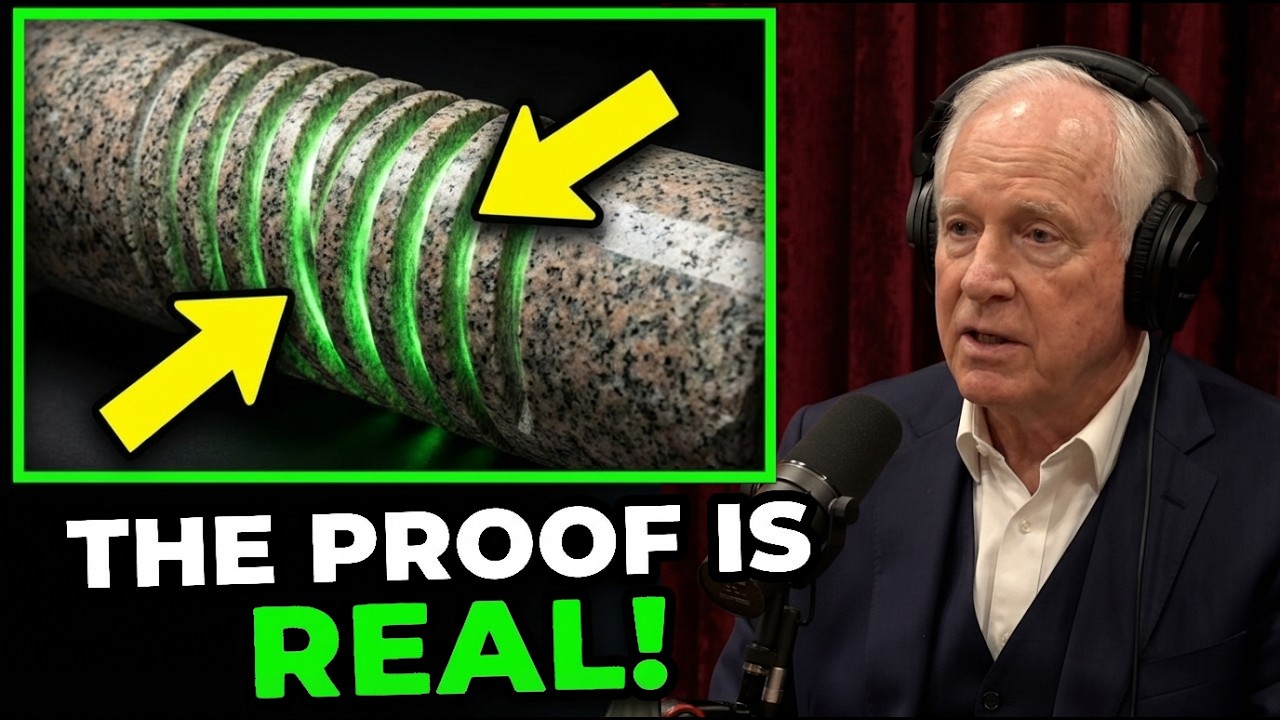
Deep inside the Great Pyramid, engineer Christopher Dunn claims he found physical proof of advanced machining—marks that should not exist in a structure built with copper tools. Examining tight granite passages, he identified what he describes as precision drill grooves and saw cuts, evidence that challenges everything we believe about ancient Egypt.
Christopher Dunn has spent more than five decades working in precision manufacturing, building components for jet engines, satellite guidance systems, and surgical implants. In his field, a deviation the width of a human hair means a part is scrapped. He is not an archaeologist or historian. He is an engineer who understands what controlled cutting processes leave behind in hard materials.In 1986,…