Off Florida’s coast, the ocean floor hides dangers far beyond sharks and rip currents. Divers and scientists have long warned that submerged sinkholes, shifting sandbars, and volatile underwater springs can collapse without warning.
Marine surveys off Florida’s central Atlantic coast have identified geological features that researchers say challenge long-standing assumptions about the region’s stability. The findings include a previously unrecorded underwater fault-like structure, a series of seafloor collapse depressions, and unexplained gas emissions.The discoveries emerged during a routine monitoring mission focused on coa…
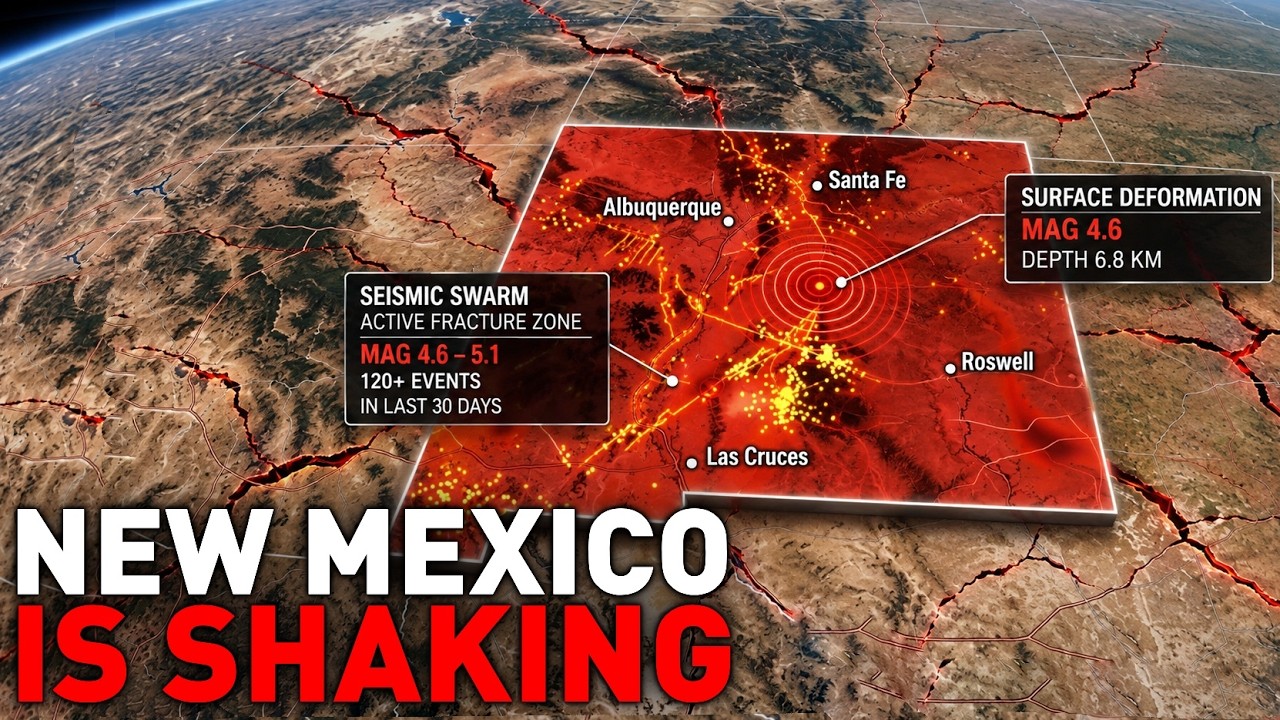
A massive anomaly just appeared beneath New Mexico, and scientists are scrambling to explain it. Ground-penetrating scans revealed a vast, unexplained structure deep below the desert surface, far larger than any known natural formation.
The ground beneath Cornwall contains more than 20,000 abandoned mine shafts, relics of the region’s 18th- and 19th-century mining boom. Many were never properly mapped or secured, and some have begun to fail. In February 2020, a section of garden in Camborne collapsed after a storm toppled a tree. The hole initially measured about three feet wide but grew over the following days to the size of a s…
Beneath the Midwest, a massive anomaly is pulling the Great Lakes downward, and scientists have detected magma deep below the surface. The region is literally sinking, with the crust warping in ways never fully mapped.
Researchers have found several ancient stone structures beneath the Great Lakes, including a formation in Lake Michigan that resembles Stonehenge. The site, located about 40 feet below the surface, consists of two concentric circles of stones. It is estimated to be over 9,000 years old, which would make it considerably older than the well-known monument in England.One of the stones bears a carving…
The Arctic seafloor is cracking open, and scientists say underwater volcanoes are now stirring back to life in one of the most remote places on Earth. Researchers monitoring the region detected sudden fractures ripping through the ocean bed, an event experts haven’t witnessed at this scale before.
The Arctic is undergoing changes that scientists are still working to understand. In the East Siberian Sea, researchers are monitoring possible underwater volcanic activity near remote Bennett Island. Satellite imagery has detected plumes over the ocean that appear similar to volcanic emissions, and the seafloor in the area has shifted by roughly 3 to 40 feet over nine years. These signs suggest t…
The Arctic seafloor is cracking open, and underwater volcanoes are suddenly waking up after decades of silence. Scientists monitoring the remote region first noticed a series of violent tremors, then detected magma shifting far beneath the ice.
Scientists have been monitoring several geological and environmental developments in the Arctic, from potential underwater volcanic activity to shifting permafrost and changing ice conditions. Researchers are also studying the region’s mineral resources and the infrastructure challenges involved in accessing them.Possible underwater volcanic activity near Bennett Island in the East Siberian Sea ha…