
Google’s Quantum AI was asked who built the ancient pyramids, and its response reportedly changes everything. The futuristic system didn’t point to ancient Egyptians.
A 1940 aerial photograph of the Great Pyramid of Giza captured a shadow pattern that revealed the monument’s faces are not perfectly flat. Each of the four sides is slightly indented along its center line, producing an eight-sided structure. The detail is subtle and generally only visible under specific lighting conditions, which has kept it out of most popular accounts of the monument.The photogr…
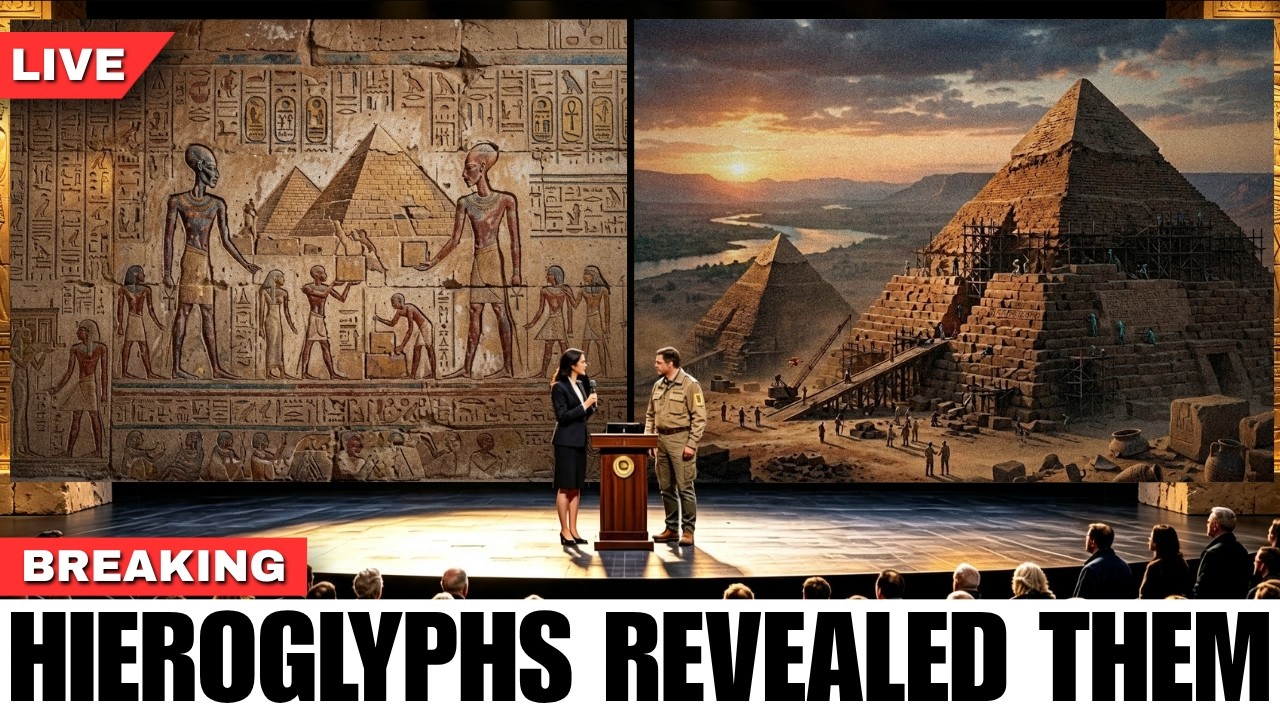
Egyptian tourists have been told for decades that tens of thousands of slaves built the pyramids, but a temple wall suggests something far stranger. High-priest records and village pay stubs reveal the workers were fed, housed, and respected laborers.
For most of recorded modern history, popular understanding of how the Great Pyramid was built rested on a single secondhand account. Around 450 BC, the Greek traveler Herodotus visited Egypt and reported that 100,000 men had labored for 20 years under harsh conditions to raise the monument. He recorded oral tradition passed down across roughly two thousand years, a gap comparable to someone today…
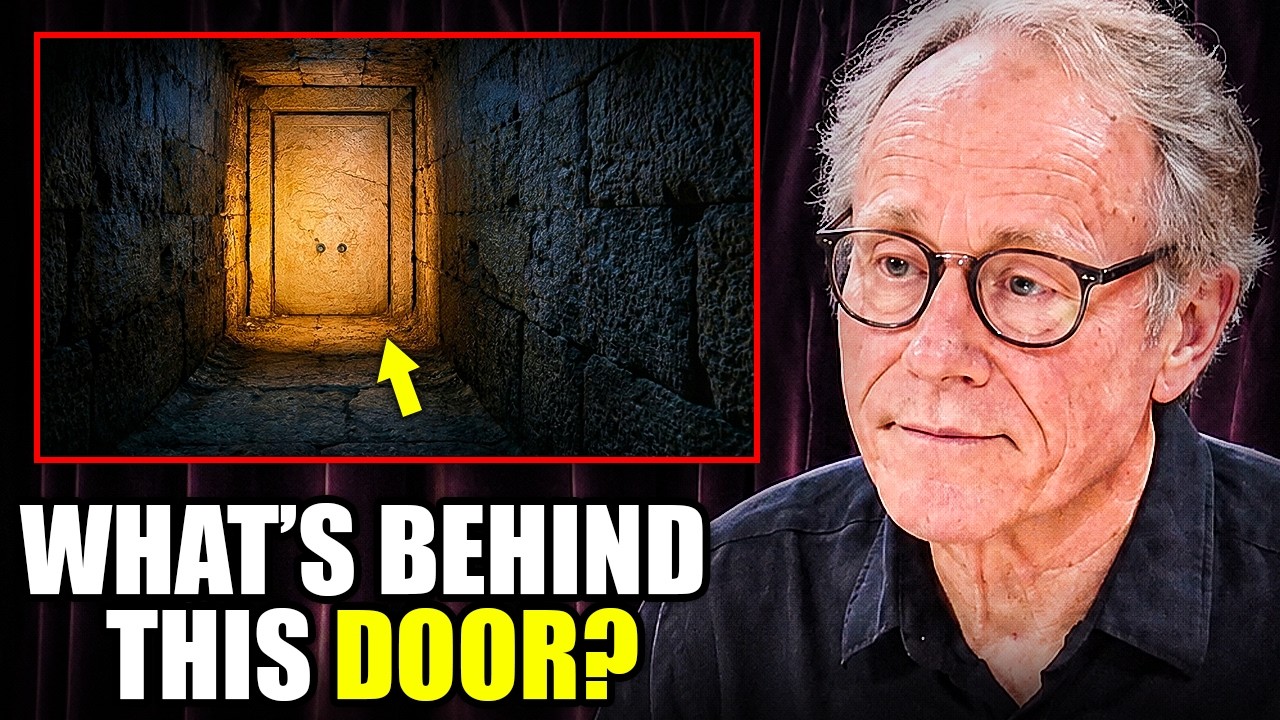
The Great Pyramid’s sealed door was finally breached by a robot, yet Egypt still refuses to say what lies beyond. For the first time in 4,500 years, cameras reached the mysterious chamber behind that ancient barrier.
A 30-meter corridor inside the Great Pyramid of Giza contains a sealed stone door at its far end. Robots have already reached the door, and in 2026, former Egyptian Antiquities Minister Zahi Hawass plans to reveal what lies behind it. The announcement follows a long-running dispute between physicists and archaeologists about whether the pyramid still contained undiscovered spaces.For most of the 2…

A sealed chamber beneath the Great Pyramid has just yielded what experts call a “disturbing” discovery that could rewrite ancient history. The newly found space, long hidden behind a wall of massive limestone blocks, contains artifacts that directly contradict everything we believed about pyramid construction.
The Great Pyramid of Giza has been studied, measured, and debated for centuries. Every stone, angle, and passage has been documented, or so it was believed. In 2025, a research team reported finding structures buried deep beneath its base, a discovery that was not anticipated.Standing at the base of the Great Pyramid is an experience that is difficult to describe. The desert heat rises from the sa…
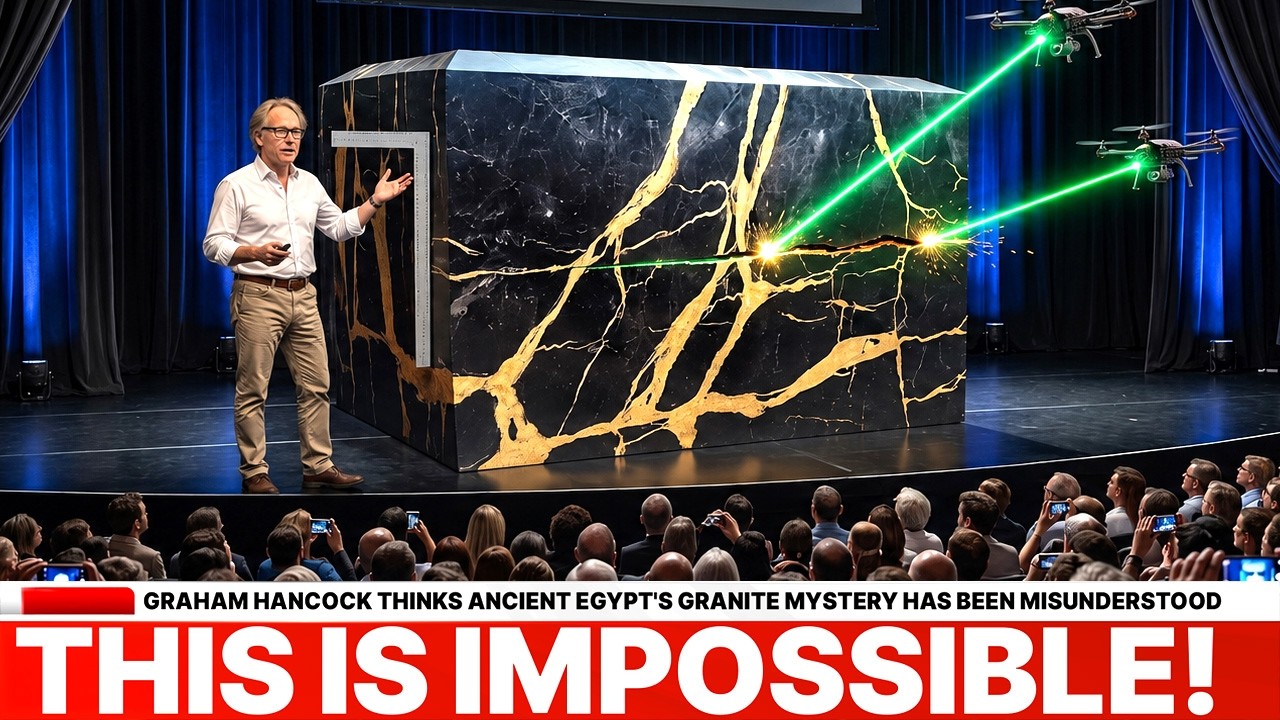
Graham Hancock claims the polished granite boxes inside Egypt’s Great Pyramid were never meant to be tombs, and he thinks mainstream archaeology has the whole purpose wrong. He points to precision cuts so fine they rival modern machinery, suggesting a lost, advanced technology far older than the pharaohs.
The granite used in the Great Pyramid was quarried more than 500 miles to the south. The King’s Chamber, with its walls and ceiling, is made entirely of massive granite blocks. Copper ranks at about three on the Mohs hardness scale, while the quartz within granite ranks at seven. Standard explanations for how ancient Egypt cut its hardest stone depend on the assumption that it was somehow possible…
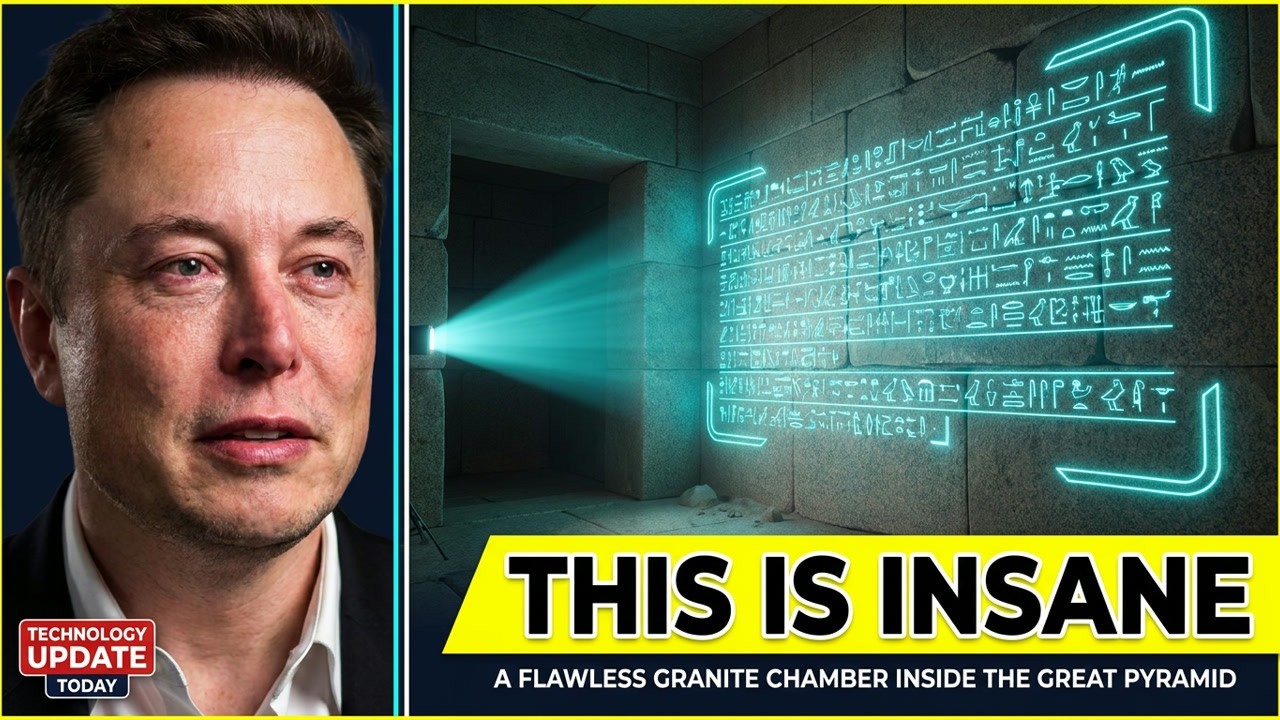
AI decoded the hieroglyphs inside the Great Pyramid—and found what looks like a warning. The carvings, long dismissed as simple religious text, were re-analyzed by a machine-learning model that flagged a hidden, repetitive phrase.
The Great Pyramid of Giza has stood in silence for over 4,500 years. Inside its largest chamber, a granite box without a lid rests in darkness. No inscriptions cover the walls. No carvings depict gods or guide a dead king toward the afterlife. Every other royal tomb in Egypt is covered in texts and artwork. The Great Pyramid, the most precisely built structure of the ancient world, contains none.F…
Researchers just found something behind the Great Pyramid’s sealed door that shouldn’t exist. For decades, the mysterious blocking stone guarding a narrow shaft in the 4,500-year-old structure has frustrated archaeologists with its stubborn silence.
In the depths of the Great Pyramid of Giza, there is a sealed door that appears to have been built for no human visitor. It sits at the top of a passage only 20 centimeters wide, made from polished white stone fitted with two copper fixtures, and it remained closed for roughly 4,500 years. A robot located it in 1993. Researchers drilled through it during a live broadcast in 2002. In 2011, a camera…
The Great Pyramid has hidden a secret for thousands of years—a massive underground cave discovered just beneath its base. Radar scans first hinted at something strange below the ancient stones, but no one could confirm it.
Researchers using muon tomography, a technique that tracks cosmic particles to map dense structures, identified an anomaly beneath the Great Pyramid of Giza during the Scan Pyramids mission. Initial teams suspected an equipment error, but subsequent scans from Nagoya University and France’s CEA confirmed the finding: a vertical cavity beneath the monument, extending more than 30 feet into a chambe…
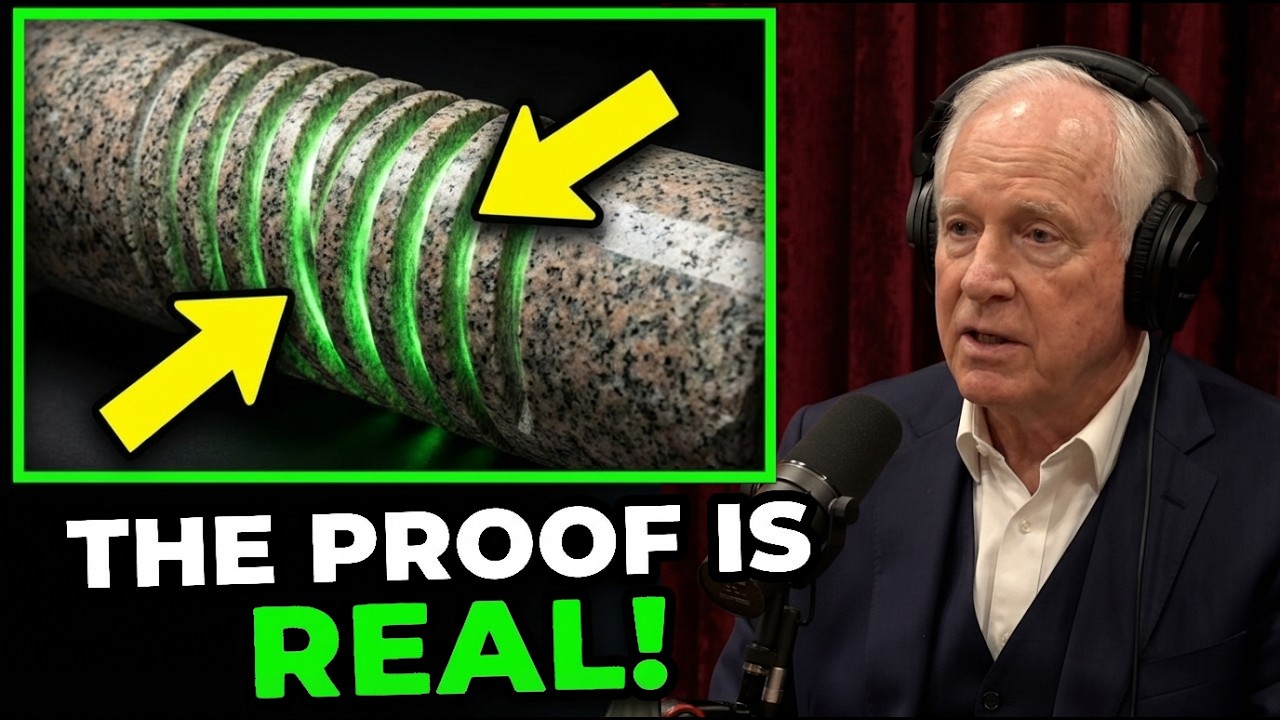
Deep inside the Great Pyramid, engineer Christopher Dunn claims he found physical proof of advanced machining—marks that should not exist in a structure built with copper tools. Examining tight granite passages, he identified what he describes as precision drill grooves and saw cuts, evidence that challenges everything we believe about ancient Egypt.
Christopher Dunn has spent more than five decades working in precision manufacturing, building components for jet engines, satellite guidance systems, and surgical implants. In his field, a deviation the width of a human hair means a part is scrapped. He is not an archaeologist or historian. He is an engineer who understands what controlled cutting processes leave behind in hard materials.In 1986,…
Grok AI’s analysis of ancient Egyptian granite cuts in Aswan has produced results that challenge history books. The grooves are smoother and more uniform than hand-tooled marks, showing only about 4 percent variability—far below the 12 to 20 percent expected from human labor.
The granite used in the Great Pyramid was transported from quarries located more than five hundred miles to the south. The ceiling of the King’s Chamber, for example, consists entirely of massive granite blocks, and its surfaces show details that have been studied closely for years.In the quarries at Aswan, long, curved, and evenly spaced grooves have been cut into one of the hardest rocks on Eart…