
“They lowered a camera into the Kola Superdeep Borehole—what it recorded rewrote science.” Beneath the Arctic, the Soviet Union drilled 12 kilometers into the Earth, deeper than Everest, where they discovered water, hydrogen, and ancient fossils in rocks two billion years old—but the heat from the 180-degree rock bent the shaft shut.
In the Russian Arctic, roughly 10 kilometers from the Norwegian border in the Pechengsky district of Murmansk Oblast, there is a sealed metal cap about 23 centimeters across, bolted and welded into a concrete slab. It covers the Kola Superdeep Borehole, the deepest hole ever drilled into the Earth. The shaft descends more than 12 kilometers into the planet’s crust.The project began on May 24, 1970…
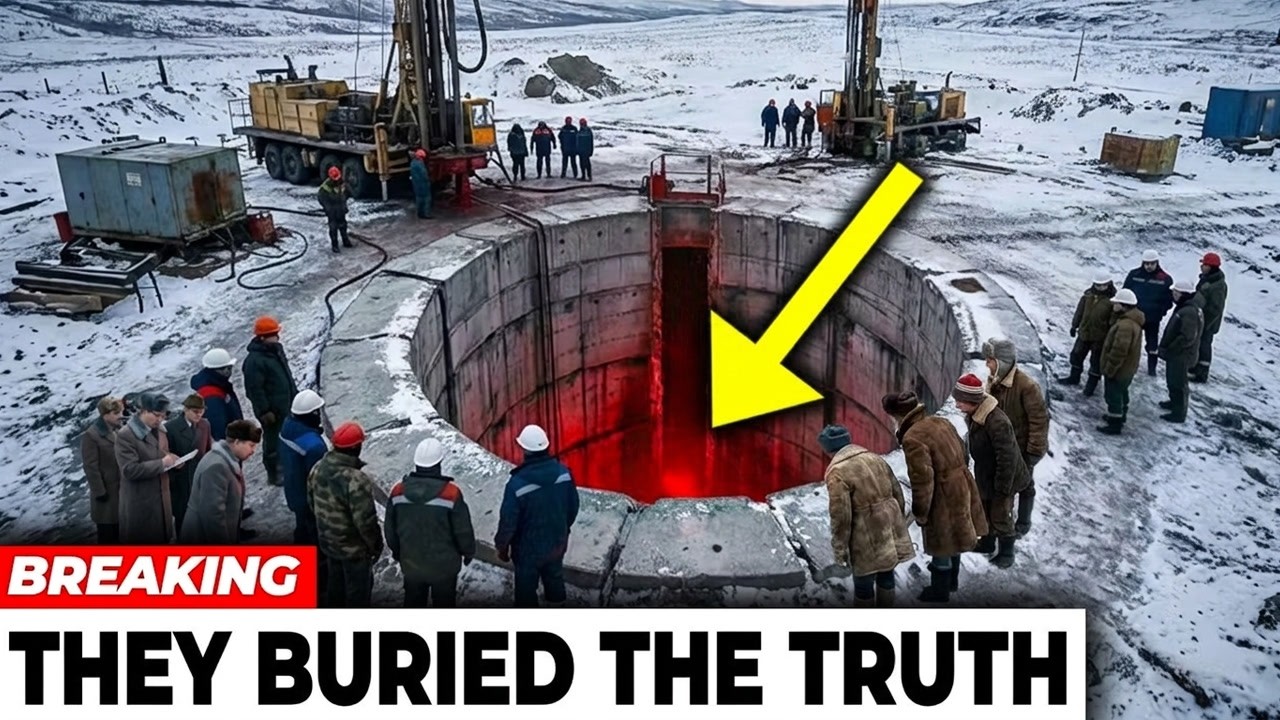
The deepest hole ever drilled still sits capped under Russian grass, but the real discovery Soviet scientists hid was stranger than any legend. At nearly 12 kilometers into the Kola Peninsula, researchers expected granite to give way to basalt—instead, the rock never changed, shattering decades of geological teaching.
In the far northwest of the former Soviet Union, on the Kola Peninsula, a heavy metal cap covers a hole drilled deeper into the Earth than any other. The borehole extends roughly 12 kilometers into the planet’s crust, deeper than the height of the highest mountains. For decades, a legend has surrounded the site, claiming that Soviet scientists heard inexplicable sounds from below. The myth grew ar…