The bottom of the ocean holds mysteries science has barely begun to map, but when NASA was asked what is really down there, their answer reportedly unsettled even seasoned researchers. Vast trenches plunge deeper than Mount Everest, yet less than twenty percent of the seafloor has ever been directly explored.
In March 2012, filmmaker James Cameron piloted a specially built submarine, the Deep Sea Challenger, to the Challenger Deep, the deepest point in the Mariana Trench. He was the first person to complete that particular dive alone.Waiting for him when he surfaced was Kevin Hand, a NASA astrobiologist from the Jet Propulsion Laboratory. Hand had joined the expedition to study the water and sediment s…
At 10,911 meters down, the deepest point on Earth, a cracked window nearly doomed the first crewed dive. Jacques Piccard and Don Walsh pressed on in the Trieste in 1960, and then nobody returned for 52 years.
The deepest point on Earth, located roughly seven miles down in the Mariana Trench, has been reached by only a small number of people since the first attempt in 1960. That initial descent nearly ended in failure, and the risks and costs involved kept government agencies away from the site for decades. It was only through privately funded missions that researchers returned, eventually collecting sa…
A mysterious sound at 35,000 feet has researchers questioning everything they know about deep-sea life. Equipment lowered into the Mariana Trench, the ocean’s deepest point, suddenly detected an unknown living organism far below any recorded habitat.
In July 2011, a research team from the Scripps Institution of Oceanography at UC San Diego, working with engineers from National Geographic, deployed several free-falling camera systems into the Sirena Deep section of the Mariana Trench. The cameras recorded video at a depth of 10,641 meters, about 34,911 feet, confirming the presence of giant single-celled organisms called xenophyophores on the s…
The water pressure at the bottom of the Mariana Trench reaches roughly eight tons per square inch, and sunlight never reaches it. In 2018, researcher Shiba avoided the ocean entirely and searched
The water pressure at the bottom of the Mariana Trench reaches roughly eight tons per square inch, and sunlight never reaches it. In 2018, researcher Shiba avoided the ocean entirely and searched video archives instead, reviewing 5,010 old dives that had received little attention. One scene from 1998 stopped her completely.The trench was first discovered by the Royal Navy survey ship HMS Challenge…
A strange sound just echoed up from Earth’s deepest abyss, and scientists are scrambling for an answer. More than 35,000 feet below the ocean’s surface, the Mariana Trench hides an environment so extreme that almost nothing survives.
In October 2014, a research vessel carrying a team from Oregon State University traveled to the Mariana Trench in the western Pacific Ocean. The group lowered an underwater drone equipped with sensitive listening equipment roughly seven miles into the trench, into a region known as the hadal zone, named after Hades, the ancient Greek underworld.The drone took about three hours to reach the bottom….
Descending 11,000 meters into the Mariana Trench, explorers expected a lifeless abyss, but they discovered a hidden world thriving in total darkness. That alien landscape holds creatures unlike anything on Earth, along with a deeply unsettling secret about human impact.
A popular claim repeated in documentaries for decades holds that more people have walked on the moon than have visited the bottom of the ocean. Researchers who study deep-sea exploration say this comparison is not accurate.Only 12 people have set foot on the moon, and 24 traveled there in total. By early 2023, researchers tracking crewed descents estimated that at least 27 people, possibly more th…
An AI just scanned the Mariana Trench, and what it found has researchers rethinking everything they know about the deep ocean. Earlier expeditions barely scratched the surface, missing formations and anomalies hidden in the crushing darkness.
In 2014, researchers conducting acoustic surveys in the Pacific Ocean recorded an unfamiliar sound from the deepest part of the Mariana Trench. The sound, which lasted a few seconds and had a five-part structure, was later named the “Biotwang.” Scientists could not identify its source at the time.The Mariana Trench is the deepest oceanic location on Earth, with its lowest point, Challenger Deep, a…
Something Bigger Than The Kraken Is Living In The Mariana Trench Scientists just recorded a strange sound deep in the Mariana Trench—over seven miles down. Initial analysis suggests the acoustic signature doesn’t match any known marine species.
The legend of the Kraken, a massive sea creature said to drag entire ships beneath the waves, has been traced by scientists to the real existence of the giant squid. For centuries, stories from Scandinavian sailors described an animal large enough to be mistaken for an island. While many historians dismissed these accounts as exaggeration, the discovery of enormous squid specimens in the 1800s pro…
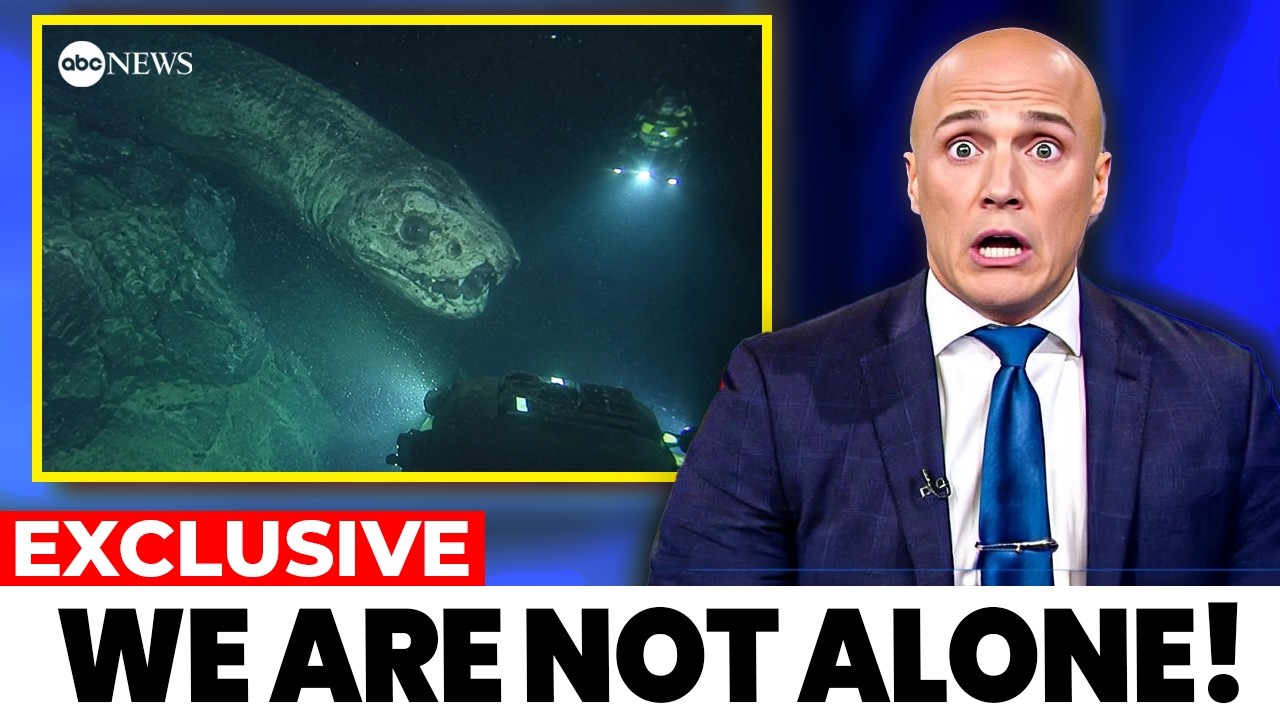
Cameras lowered into the Mariana Trench have captured a mysterious living creature at nearly 36,000 feet deep, and science still cannot explain what it is. The footage emerged from one of the most extreme environments on Earth, where crushing pressure should make survival nearly impossible.
In March 2019, three commercial fishermen were working about 90 kilometers off the coast of Esperance, a remote town in southwestern Australia. Their boat was over water more than 4,000 meters deep. The sonar detected something unusual at roughly 600 meters, and soon after, a large, dark shape moved beneath their vessel.The three men had decades of combined professional experience. The lead fisher…
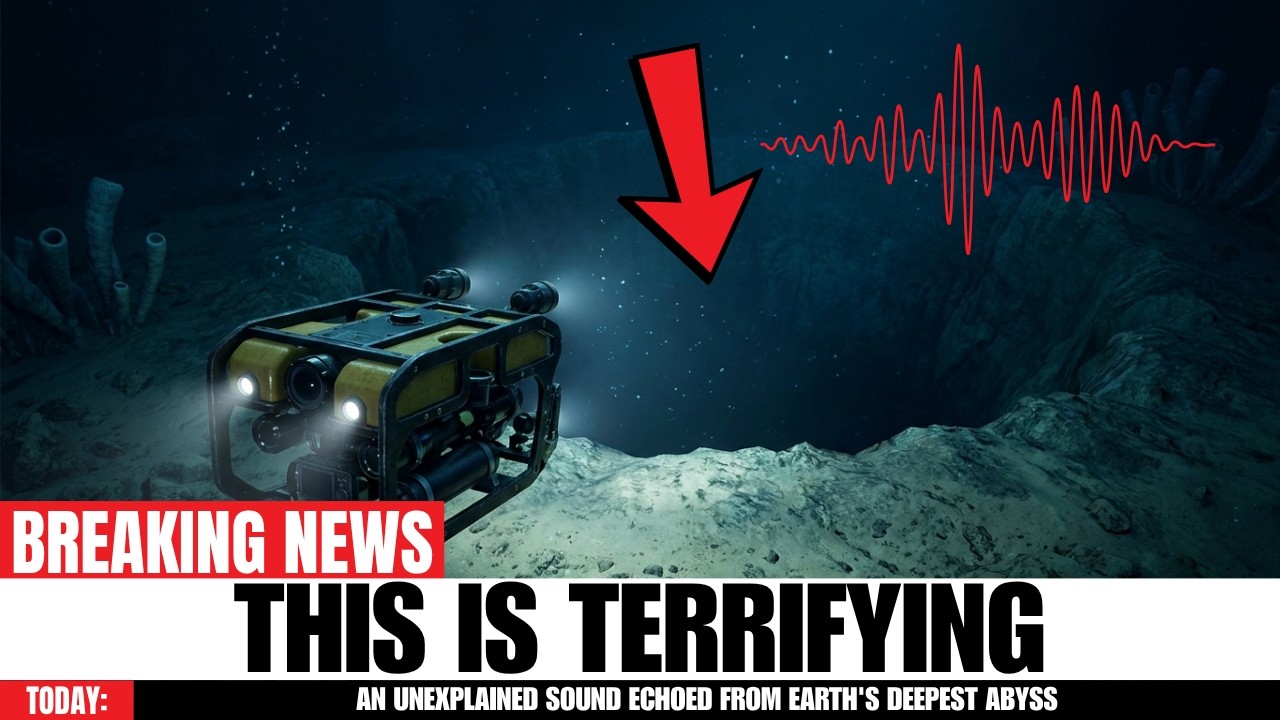
An unexplained sound echoed from Earth’s deepest abyss, and scientists admit they cannot fully identify it. The faint, persistent hum was detected by sensors buried miles below the ocean’s surface, a place where silence should be absolute.
In October 2014, a research vessel from Oregon State University traveled to the Mariana Trench in the western Pacific Ocean to study the deepest part of the seafloor. The team deployed an underwater drone equipped with sensitive listening devices, which descended nearly seven miles into darkness. At that depth, water pressure reaches roughly eight tons per square inch, and sunlight has not penetra…