Lake Superior hides countless wrecks, but one discovery has divers and scientists refusing to speak openly. A sonar sweep recently revealed something massive resting far deeper than the lake’s most
Deep in the heart of North America sits a body of water so vast and so strange that it behaves less like a lake and more like a cold, patient ocean. Lake Superior holds 3 quadrillion gallons of water, so much that if you drained it, the entire landmass of North and South America would sit under a foot of water. It contains half of all the water in the entire Great Lakes system, dwarfing Erie, Onta…
Lake Michigan hides a secret that researchers have spent decades trying to explain. Sonar scans of the deep floor have revealed stone structures that look far too organized to be natural.
Lake Superior is the largest freshwater lake in the world by surface area, covering roughly 31,700 square miles. It holds about three quadrillion gallons of water, which is half of the entire volume of the Great Lakes system. The lake is so deep that its lowest point reaches about 1,333 feet below the surface, and its average depth is around 483 feet.The lake formed through a different process tha…
Experts finally explained the Baltic Sea Anomaly—and the answer is genuinely wild. For over a decade, the strange circular object discovered deep beneath the ocean puzzled researchers worldwide, sparking theories ranging from alien technology to a lost secret military installation.
For more than a decade, every expert who examined the object resting on the floor of the Baltic Sea reached a similar conclusion after years of study. The experience reportedly unsettled them, despite their professional backgrounds. Geologists, engineers, and divers who had spent their careers interpreting underwater formations and inspecting shipwrecks could not easily categorize what they had fo…
The world’s most mysterious underwater object just gave up a secret it kept for 140,000 years—and the truth is terrifying. Divers probing the Baltic Sea Anomaly, the massive disc-shaped structure that sparked endless alien theories, claimed it was just a glacial deposit.
In June 2011, marine surveyors Peter Lindberg and Dennis Asberg were mapping the northern Baltic Sea floor when sonar detected a large, circular object roughly 60 meters across. The shape had unusually sharp edges, and a straight, 300-meter trench extended from one side of it across the seabed. The discovery puzzled the team, which had years of experience locating shipwrecks and recovering cargo f…
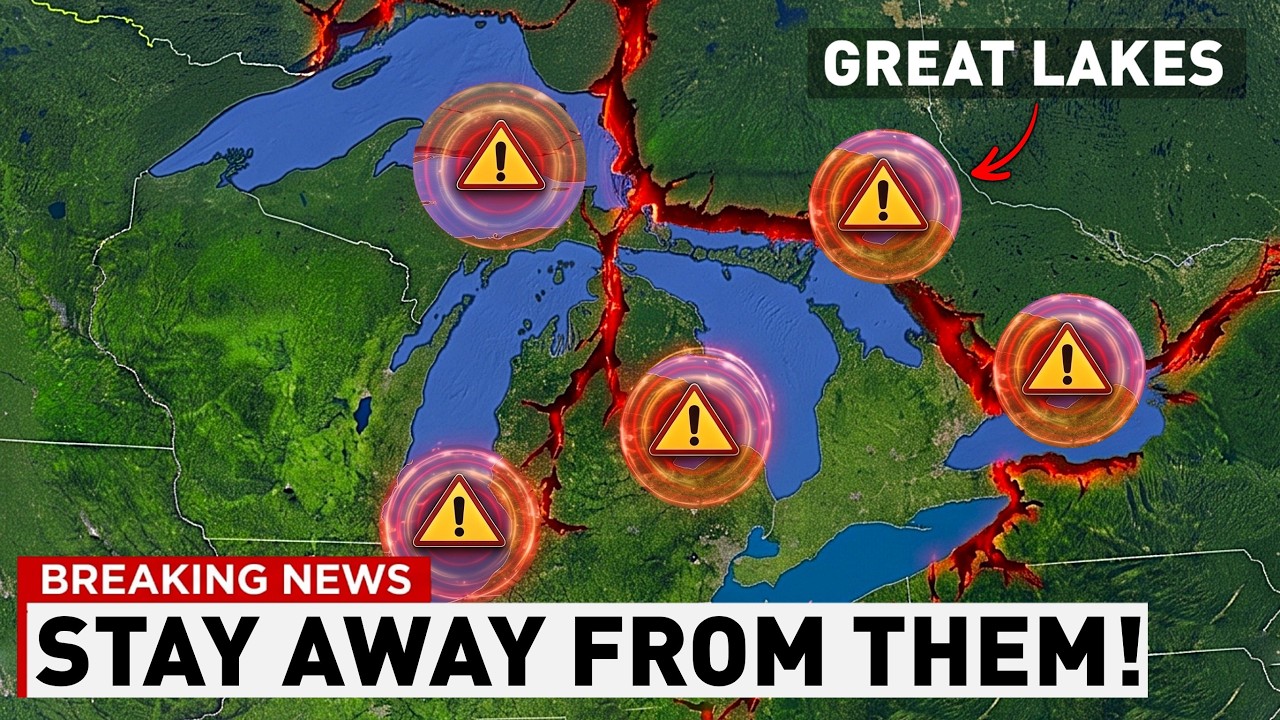
For decades, scientists mapped the Great Lakes as a familiar, ancient landscape—until sonar scans revealed something buried beneath the waves that defied everything they thought they knew. The
In 2022, a team of researchers set out to map the floor of Lake Michigan and search for shipwrecks. They expected typical rocky terrain and sandy patches. Instead, their sonar screens revealed vast, perfectly circular craters scattered across the lakebed, sitting about 500 feet beneath the surface.The formations are enormous, ranging from 300 to 600 feet wide and plunging nearly 40 feet deep. Doze…