Chapter 11
I didn’t wait for King Moretti.
I lived.
For the first time since leaving Detroit, I built a life that didn’t revolve around proving my worth to someone else.
I worked.
I traveled.
I photographed ordinary people in ordinary places.
I learned that the most interesting stories weren’t always the loudest ones.
Sometimes they were an elderly woman keeping a key to a home she’d left fifty years earlier.
Sometimes they were a little girl drawing windows because she wanted everyone to be safe.
And sometimes they were about a man learning that love couldn’t excuse the things he’d done.
Eighteen months passed.
The case against Graham Voss had moved through the courts.
He was convicted of offenses connected to the kidnapping and the falsified financial and inspection records.
The civil proceedings involving Hawthorne House continued, but the families were no longer being asked to accept a version of events that ignored the blocked exits.
The original contractor records had become central evidence.
Peter Grady’s role in approving the inspection had been exposed.
And King’s sworn admission made it impossible for his former company to keep pretending that all the complaints had been resolved.
The families received financial settlements from recovered assets and funds established through the proceedings.
No amount was described as compensation for a life.
Mara had insisted on that.
“You can repay money,” she told me once. “You can’t repay a birthday somebody never got to celebrate.”
I never forgot it.
Bell Street Homes underwent an independent safety review.
The redevelopment plan was revised.
Residents received enforceable protections against improper displacement and access to relocation assistance when necessary.
Eleanor chose to stay.
She told me she was too old to start over in an apartment that didn’t have enough room for her plants.
I photographed her standing beside her window on the day the revised agreement was finalized.
She was smiling.
Not because she’d won a spectacular victory.
Because she’d kept the right to make decisions about her own home.
Sophie Santos was doing well too.
She was seventeen now, taller than when I’d first met her, and interested in studying architecture.
She’d started drawing buildings again.
Not because anyone had asked her to turn her childhood into something inspirational.
Because she liked designing places where people could live comfortably.
Her aunt supported her.
Mara helped her find a summer program.
And Eleanor insisted on feeding her every time she visited.
Sophie was surrounded by people who knew her history but didn’t expect her to spend the rest of her life living inside it.
That mattered.
I thought about her whenever I looked at the little yellow house in King’s photograph.
My own career had changed more than I could have imagined.
The People Who Lived Here traveled to several galleries.
I received commissions from magazines and nonprofit organizations.
June became more than my mentor.
She became the person I called when something went wrong, when something went right, or when I needed somebody to tell me my newest photographs weren’t nearly as brilliant as I thought.
She was remarkably good at that last part.
Eventually, I rented a proper studio.
It wasn’t large.
The heating made a terrible noise in winter.
And the front door stuck whenever it rained.
But it was mine.
I bought a secondhand wooden table, hung my favorite prints on the walls, and kept a little ceramic bowl of peppermint candies beside the entrance.
For Thomas Bell.
For Eleanor.
For all the people whose lives had taught me that being noticed could sometimes make a difference.
King wrote throughout his sentence.
At first, the letters were careful.
He asked about my work.
He told me about the books he was reading and the courses he was taking.
He didn’t ask whether I was dating anyone.
He didn’t demand reassurance.
He didn’t try to make his loneliness my responsibility.
Eventually, his letters became more personal.
He wrote about the family he’d grown up in.
The choices he’d made as a young man.
The strange way power could become an excuse for never admitting fear.
He told me about the first time he’d earned more money than his father had made in a year.
He’d bought an expensive watch.
Then he’d spent the next decade trying to become the kind of man nobody could ever embarrass again.
In one letter, he wrote:
I used to think protecting someone meant making sure nothing could touch them. You taught me that sometimes it means telling them the truth and letting them choose.
I kept that letter.
Not because it promised we’d have a future.
Because it showed he’d been listening.
When King completed his sentence and returned to Chicago under supervision, he didn’t come straight to my apartment.
He sent me a letter.
It was only three paragraphs.
He told me he was home.
He was continuing to cooperate with the conditions placed on him, and he intended to build a life outside the organization he’d once controlled.
Then he wrote:
I would like to see you. Not because you owe me anything. Not because I expect us to pick up where we left off. Just because I’ve missed talking to you.
I read it while sitting on the floor of my studio.
Then I smiled.
I wrote back.
Come to the gallery on Saturday. There’s something I want to show you.
Saturday afternoon, I was rearranging a row of prints when I heard the front door open.
I turned.
King stood in the doorway.
He wore a dark coat over a simple black shirt.
His hair was a little shorter.
There were faint lines around his eyes that hadn’t been there when we met.
But when he saw me, he smiled.
The same smile.
The one that had once made me forget I was standing in a nightclub surrounded by dangerous strangers.
“Hello, Harper.”
“Hello, King.”
For a moment, neither of us moved.
Then he looked around.
“This is beautiful.”
I laughed softly.
“The heater’s broken.”
“Still beautiful.”
He walked toward the photographs.
There was Eleanor holding her brass key.
Mara standing beside a wall covered in names.
Sophie with her architectural sketches spread across a table.
And a photograph of a little yellow house.
Not the old drawing.
A real house Sophie had designed for a school project, with wide windows and accessible exits.
King stopped in front of it.
“She’s still drawing.”
“Yes.”
His expression softened.
“I’m glad.”
We stood together quietly.
Then he turned to me.
“I owe you an apology.”
I smiled faintly.
“You’ve written several.”
“I know.”
“Then maybe we can start somewhere else.”
He looked uncertain.
“Where?”
I took a breath.
“Tell me what kind of life you want now.”
He considered the question.
“A quieter one.”
I waited.
“One where I don’t have to wonder whether somebody’s loyalty is based on fear.”
He looked around the gallery.
“One where I can do useful work without needing my name on a building.”
Then he looked at me.
“And one where the woman I care about never has to wonder whether I’m telling her the truth.”
I felt my throat tighten.
“That’s a good start.”
He smiled.
“What about you?”
I looked around my studio.
“I want to keep working. I want to travel. Maybe teach photography someday.”
He nodded.
“I can see that.”
“And I don’t want to become somebody’s whole world.”
His expression changed.
“Neither do I.”
“I want a partner, King. Not a protector who makes all my decisions.”
He stepped closer.
“Then that’s what I’d like to try to be.”
For a moment, I studied him.
I remembered his bruised face in the photograph.
The fear.
The lies.
The courthouse.
The letters.
And all the ordinary days I’d spent building a life that belonged to me.
I wasn’t the woman who’d left Detroit crying over a boyfriend who didn’t appreciate her.
I wasn’t the frightened girl standing in an exclusive nightclub wondering whether she belonged.
I knew where I belonged now.
Here.
In the life I’d made.
And maybe, if we were both careful with it, there was room for King too.
I reached for his hand.
He looked down at our fingers.
Then back at me.
“Are you sure?”
I smiled.
“I’m sure I want to have dinner with you.”
He laughed.
“That I can manage.”
“No bodyguards at the table.”
“Agreed.”
“No making waiters nervous.”
“I’ll do my best.”
“And no threatening anyone who looks at me the wrong way.”
He raised an eyebrow.
“That’s a very specific rule.”
“King.”
“All right.”
I laughed.
He leaned closer.
“May I kiss you?”
I looked at him.
There was something unexpectedly moving about the question.
The most powerful man I’d ever known was standing in my little photography studio asking permission.
Not assuming.
Not demanding.
Asking.
“Yes,” I whispered.
He kissed me gently.
And for the first time, I didn’t feel like I was being rescued.
I felt like I was choosing.
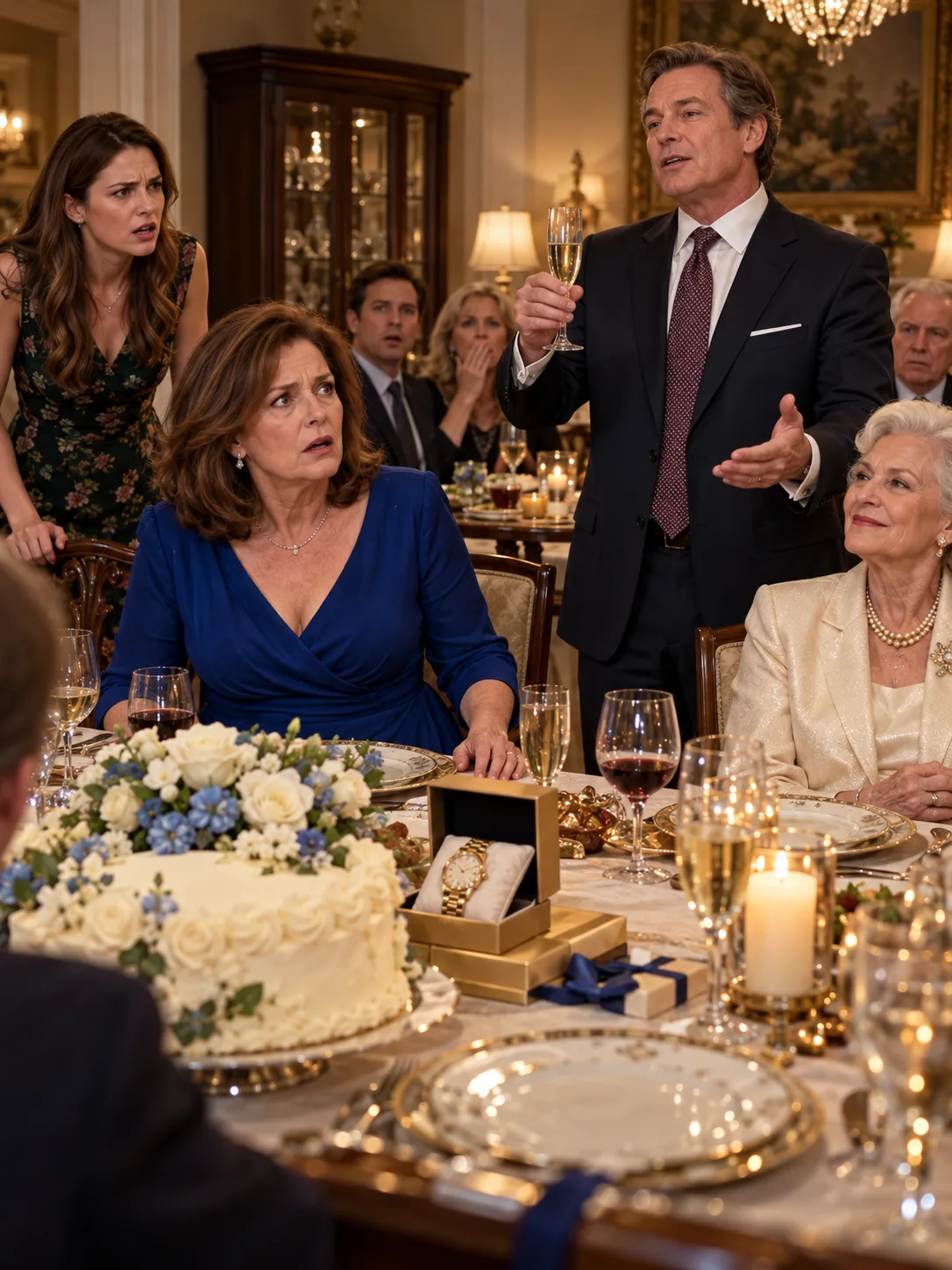
A few weeks later, King came with me to Eleanor’s birthday dinner.
He hadn’t been invited out of obligation.
Eleanor had asked whether he’d like to come.
He’d hesitated before accepting.
At the dinner, he listened more than he spoke.
He thanked Mara for the courage she’d shown.
He didn’t ask anyone to forget his part in what happened.
And when Eleanor handed him a plate of cake, he looked genuinely surprised.
She gave him a stern look.
“Everybody eats at my table, Mr. Moretti. That’s the rule.”
King smiled.
“Yes, ma’am.”
I photographed them together with Eleanor’s permission.
Not because it erased the past.
Because the future was beginning to look different.
That photograph became one of my favorites.
Months later, King and I were sitting in my studio after dinner.
He was reading while I sorted through photographs from a recent assignment.
The rain tapped against the windows.
There was music playing softly.
Nothing dramatic was happening.
Nobody was threatening us.
Nobody was trying to make us prove our love.
King looked up from his book.
“Harper?”
“Hmm?”
“Are you happy?”
I considered the question.
Then I looked around.
At the photographs.
The little bowl of peppermint candies.
The wooden table.
The camera I’d carried all the way from Detroit.
And the man sitting across from me.
“Yes,” I said.
He smiled.
“Good.”
I picked up my camera.
“Don’t move.”
He looked puzzled.
“Why?”
“Because I want a picture.”
He laughed.
“Of me reading?”
“Exactly.”
“That’s not very exciting.”
I raised the camera.
“It doesn’t have to be.”
He watched me for a moment.
Then he closed the book and smiled.
I pressed the shutter.
And I realized something.
The first photograph of King Moretti that had changed my life showed him tied to a chair, injured and surrounded by people who wanted to destroy him.
This one showed him sitting peacefully in a small Chicago studio, loved without being feared.
Neither photograph could tell the whole story.
But I knew the difference between them.
One had been taken to control my choices.
The other was taken because, after everything we’d survived, I was finally free to make my own.
Share