Chapter 11 – The Voice That Finally Came Home
Thomas Calder stood at the front of St. Catherine’s Chapel holding a folded sheet of paper.
His hands were shaking so badly that he had to straighten the page against the lectern.
Nobody hurried him.
Luca sat in the first pew.
Beside him was Samuel Bennett, his white cane resting against the bench.
I sat a few rows behind them, close to Mrs. Carter and several people from the mansion.
The chapel was full.
Not with society guests.
Not with people who had come to be seen.
But with men and women who remembered Michael Moretti.
Thomas looked down at his paper.
“My name is Thomas Calder. I worked with Michael’s family for almost twenty years.”
He paused.
“I was a mechanic. Mostly trucks. Sometimes cars. Whatever needed fixing.”
A few people smiled.
Thomas swallowed.
“Michael used to come into our garage and ask questions the rest of us were afraid to ask.”
He looked toward Luca.
“He wanted to know why damaged trucks were still being used. Why injured workers were being sent back before they were ready. Why people who complained suddenly found themselves without enough hours to pay their bills.”
The chapel was silent.
Thomas continued.
“I used to tell him he didn’t understand how the business worked.”
He gave a small, bitter laugh.
“He’d say, ‘Then explain it to me.’”
Luca lowered his head.
“Michael wasn’t perfect,” Thomas said. “He could be stubborn. He’d argue with you about something until you wanted to throw him out of the garage.”
A few quiet laughs moved through the pews.
“But if he thought somebody was being treated unfairly, he didn’t stop asking questions.”
Thomas looked down at the paper again.
“I should’ve helped him.”
His voice broke.
“I knew there were things wrong. I kept quiet because I needed my job.”
He took a shaky breath.
“And I was afraid.”
Nobody interrupted.
Thomas folded the paper.
“I can’t change what happened. But I can tell you this.”
He looked toward Michael’s casket.
“That man didn’t disappear because he wanted to leave his family. He was trying to do the right thing.”
His voice steadied.
“And I hope people remember that.”
When Thomas returned to his seat, Luca stood and embraced him.
It wasn’t a dramatic gesture.
It lasted only a moment.
But Thomas gripped Luca’s jacket as though he’d been carrying something heavy for nine years and had finally found a place to put it down.
Then Samuel moved to the organ.
He sat carefully.
Found the keys.
And began to play.
The music wasn’t mournful at first.
It was warm.
Almost joyful.
The tune Michael had loved as a boy.
Luca closed his eyes.
For the first time since I’d met him, he looked less like a man everyone expected to be strong.
And more like a brother who was finally allowed to grieve.
After the music, Luca walked to the front.
He stood beside Michael’s casket.
There was a small photograph on the table nearby.
Two boys standing beside their mother.
Luca was maybe fifteen.
Michael looked about ten.
Both were smiling.
Luca touched the edge of the frame.
Then he faced the congregation.
“My brother used to drive me crazy.”
A few people laughed softly.
“He borrowed things without asking. He’d argue about something long after everybody else had decided to move on.”
Luca smiled sadly.
“And he had this terrible habit of showing up when you needed him, even if you hadn’t asked.”
He paused.
“I spent nine years wondering why he didn’t come home.”
His voice tightened.
“Now I know.”
He looked toward the men who had worked at the garage.
“And I also know that when he came to me with concerns about Frank Bellini, I didn’t listen closely enough.”
The room was very still.
“I can’t change that.”
He swallowed.
“But I can make sure the problems Michael tried to address aren’t ignored again.”
Luca explained that an independent review of the old business records was underway.
Where former workers had legitimate unresolved claims, the company would examine them and pursue appropriate restitution.
Current safety procedures would be independently audited.
And no employee would be punished for reporting dangerous conditions.
He looked toward the back of the chapel.
“Michael was trying to protect people who didn’t have much power.”
Then he looked at me.
“I think the least I can do is make sure the people who work for me never have to be afraid of telling the truth.”
I felt my eyes fill.
Not because he was saying something beautiful.
Because I’d seen him begin doing it.
After the service, we gathered in the small parish hall.
Samuel sat near the window with a cup of tea.
People came over to tell him stories about Michael.
A retired driver remembered Michael buying lunch for an entire crew after their paychecks were delayed.
A former mechanic said Michael had once spent a Saturday helping him repair his wife’s car.
An older woman remembered how he’d delivered groceries when her husband was in the hospital.
None of the stories were extraordinary.
That was what made them matter.
They described a man who had been alive.
Not simply a victim.
Not just a missing person.
A brother.
A son.
A friend.
Someone whose ordinary kindness had remained with people long after he was gone.
In the months that followed, the mansion changed.
Not all at once.
But noticeably.
The wedding decorations disappeared.
The guest rooms were returned to their usual arrangement.
And Luca stopped allowing anyone to make important household decisions without clear authority and accountability.
Vanessa faced the legal consequences of her actions.
Her cooperation with investigators was considered, but it did not erase the years of concealment or the harm she’d caused.
She also accepted responsibility for injuring me.
I gave my statement and let the legal process proceed.
I didn’t visit her.
I didn’t send a letter forgiving her.
I hoped she would eventually become someone who no longer used fear to control other people.
But I no longer felt responsible for helping her become that person.
My own life moved forward.
Luca arranged for me to train with Mrs. Carter in household administration.
I learned payroll.
Staff scheduling.
Vendor management.
And the kind of paperwork I’d once been too intimidated to touch.
A few months later, I became assistant household manager.
The position came with better pay, health insurance, and responsibilities I genuinely enjoyed.
My father was proud.
He made me promise not to buy him anything expensive with my first raise.
I bought him a new winter coat anyway.
He complained about the price.
Then wore it every time he went outside.
Some things never change.
Samuel continued teaching music at St. Catherine’s.
Luca helped the parish arrange accessible transportation for older members who could no longer travel easily.
Not as a grand donation with his name displayed somewhere.
As a practical service the parish had needed for years.
Once a month, Luca visited Samuel.
Sometimes they talked about Isabella.
Sometimes about Michael.
Occasionally they simply listened to music.
I think Samuel understood something Luca had only recently begun to learn.
You couldn’t repair every loss.
But you could still care for the people who remained.
On the first anniversary of Michael’s burial, Luca asked me to help arrange a small family dinner.
No guests from the business.
No elaborate menu.
Just a handful of people who’d loved Michael.
Thomas came.
Samuel came.
Mrs. Carter joined us.
And I sat at the table as a guest rather than standing behind it in my housekeeping uniform.
That small distinction meant more to me than Luca probably realized.
There was roast chicken, mashed potatoes, and the lemon cake Isabella used to make for her sons.
After dinner, Luca brought out the restored recording of his mother’s voice.
We listened together.
Her words filled the dining room.
“Luca, sweetheart. If you’re listening to this…”
I watched him.
He no longer looked frightened of what came next.
When Isabella spoke about Michael, Luca smiled through his tears.
At the end, he switched off the recorder.
For a long moment, nobody said anything.
Then Samuel reached across the table.
“Your mother would be proud of you, son.”
Luca looked down.
“I hope so.”
Samuel smiled.
“She wouldn’t care whether the house was perfect. Or whether the business made another million dollars.”
He paused.
“She’d want to know whether you were happy. And whether the people around you felt safe.”
Luca looked toward me.
Then Thomas.
Then Mrs. Carter.
Finally, he looked at Samuel.
“I think I’m beginning to understand that.”
Later, when everyone had gone, I found Luca in the study.
He was standing beside a small shelf near the fireplace.
On it rested three things.
Michael’s silver pocket watch.
The original photograph of him outside the diner.
And the complete recording Isabella had made.
Luca turned when he heard me.
“Emily.”
“Yes, sir?”
“Thank you.”
“For what?”
He looked at the recorder.
“For bringing Samuel inside that night.”
I smiled.
“He wouldn’t let me send him away.”
Luca laughed softly.
“That sounds like him.”
Then he looked at me.
“You know, if you hadn’t opened that dining-room door, I might still be living with a lie.”
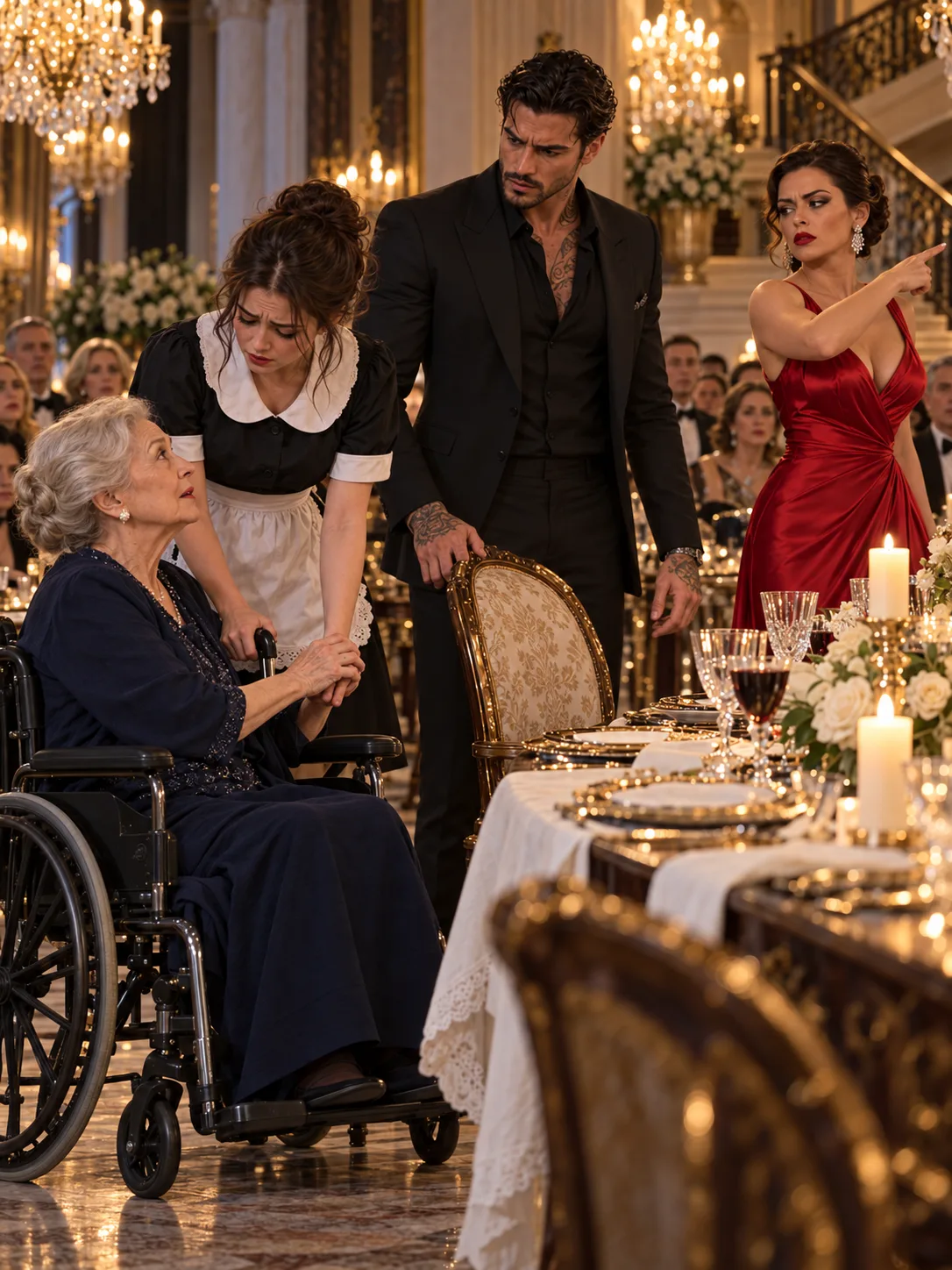
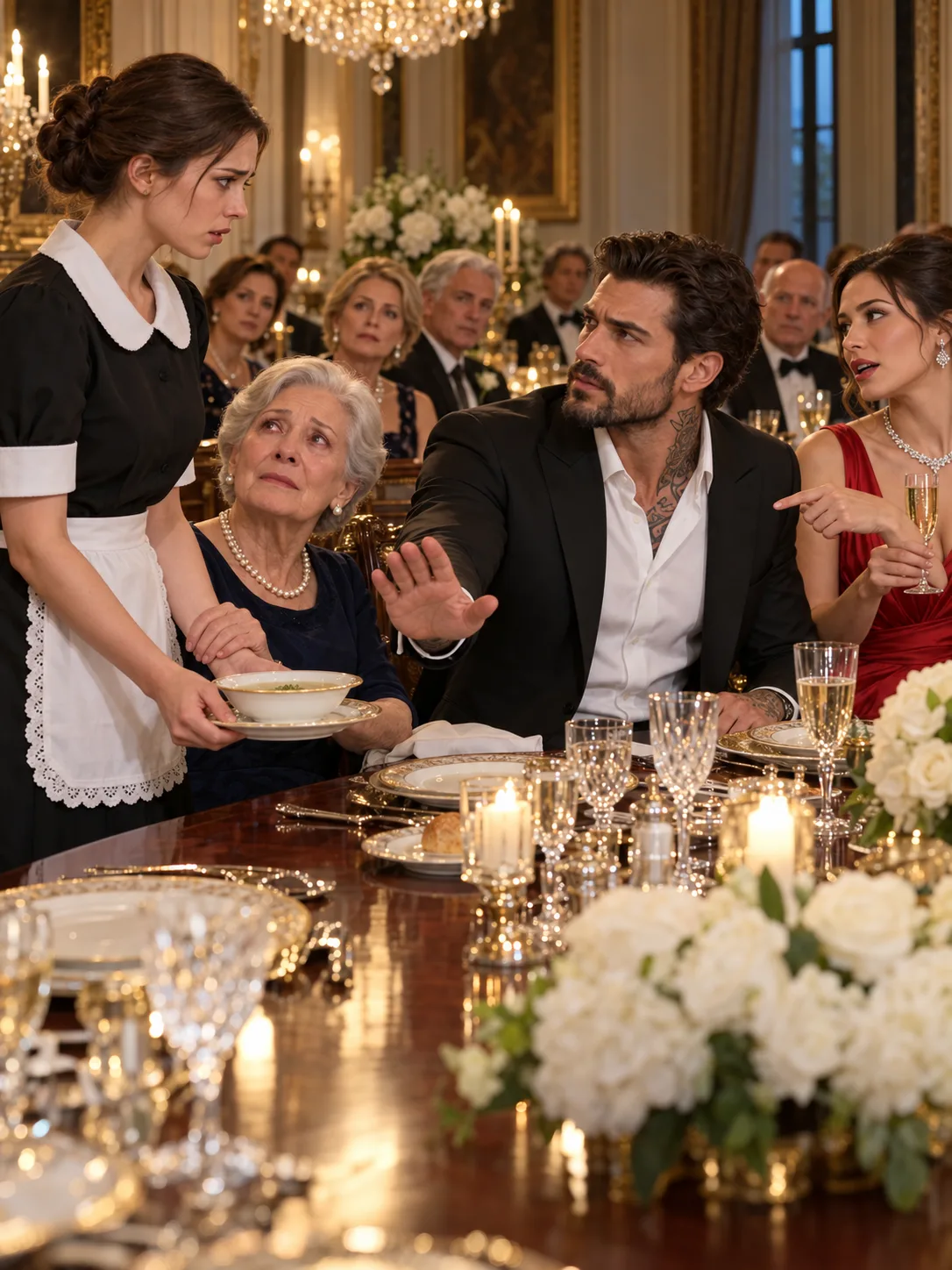
I thought of the evening that had changed everything.
The blood on my collar.
The old man’s trembling hand.
Vanessa’s voice ordering me to send him away.
And the moment I’d decided I couldn’t.
“You helped me open it, sir,” I said.
Luca smiled.
Then he picked up Michael’s watch.
For a moment, he held it in his palm.
The silver case had been cleaned, though the dents remained.
On the back were the words Isabella had engraved for her younger son.
Wherever you go, remember home.
Luca traced the lettering with his thumb.
Then he placed the watch beside his mother’s recording.
He looked toward the dining-room doorway.
For years, that house had been filled with expensive things.
Beautiful furniture.
Polished silver.
Paintings worth more than most people earned in a lifetime.
But now, the things Luca treasured most were small.
A worn photograph.
An old watch.
A recording of his mother’s voice.
And the people who had helped him learn the truth.
When I left that evening, Luca walked me to the front door.
It was a cold Chicago night.
The kind that made you pull your coat tighter before stepping outside.
“Drive carefully, Emily.”
“I will.”
“And tell your father I hope he’s doing well.”
“I will, sir.”
He nodded.
Then he smiled.
“Good night.”
“Good night, Mr. Moretti.”
I walked down the steps toward my car.
Behind me, the mansion glowed with warm light.
For the first time, I didn’t think of it as the place where I’d once been afraid of losing my job.
I thought of Samuel finding his way back to the organ.
Of Thomas finally speaking the truth.
Of Michael being laid to rest with dignity.
Of Luca learning that love wasn’t about controlling every outcome.
It was about showing up, listening, and doing what was right even when it was difficult.
And I thought about Isabella Moretti.
A mother who had known her time was running out, but still found a way to speak for the son who couldn’t come home.
Vanessa had tried to cut away the words she feared.
She had tried to bury the past beneath silence.
But the truth had survived in the hands of a blind old music teacher, a frightened young housekeeper, and the memory of people who refused to forget.
Michael Moretti finally had a grave his family could visit.
His mother finally had her last words heard.
And the house that had been built on silence had finally learned how to listen.
Share