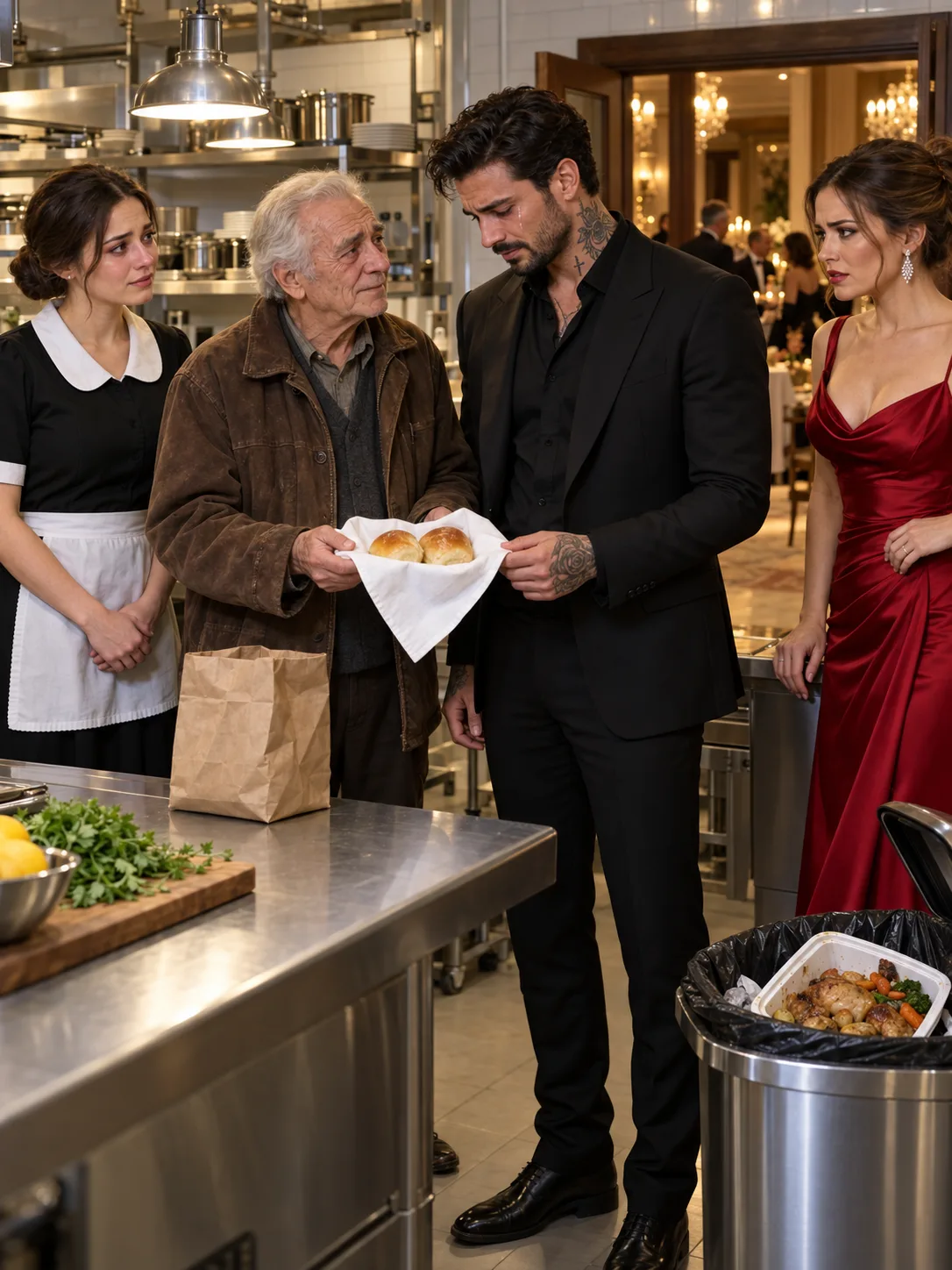
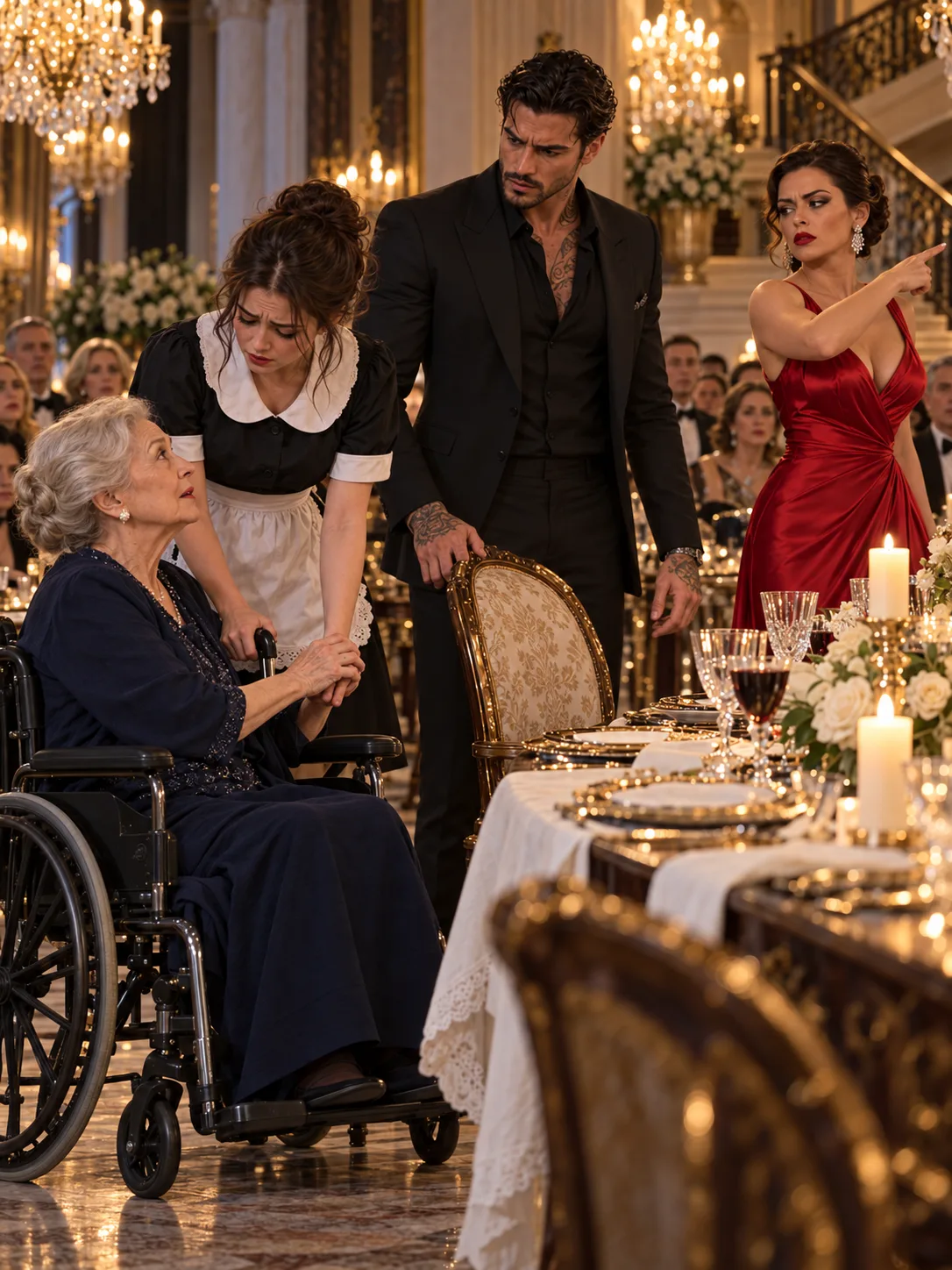
Chapter 11 – The Woman Who Stayed Home
Luca looked at his mother.
Then he took her trembling hands in his.
“Mom, I’m sorry I ever made you feel invisible.”
Teresa’s eyes filled.
“You didn’t mean to.”
“I know. But I was letting other people make decisions I should have discussed with you.”
She nodded.
“And I kept believing them because I didn’t want to cause trouble.”
Luca pulled a chair beside her bed.
“Then we’re both going to do things differently.”
She smiled faintly.
“You sound like your father.”
He laughed softly.
“Is that good?”
“Most of the time.”
For a while, they sat together without speaking.
Then Teresa reached for the brass bell on her bedside table.
She placed it in Luca’s hand.
“I don’t want to be afraid of this anymore.”
He looked at the worn handle.
“Then what should we do with it?”
She thought carefully.
“Keep it somewhere I can use it.”
Luca smiled.
“That’s exactly where it belongs.”
And that was how things began to change.
Not overnight.
Not because one difficult conversation had solved forty years of family history.
But because Luca finally understood that loving his mother required more than giving her a beautiful house to live in.
It required listening.
The following morning, he canceled the arrangements for Teresa’s removal.
He spoke directly with the private residence and made it clear that she had not consented to move.
The transportation was canceled.
Her belongings stayed in the mansion.
Then he sat down with Teresa and asked what she actually needed.
Not what Michael thought she needed.
Not what Vanessa preferred.
What Teresa wanted.
She asked for help dressing in the mornings.
Someone to assist with meals when her hands were particularly shaky.
A chair in the garden where she could sit when the weather was warm.
And one evening each week when Luca would have dinner with her without looking at his telephone.
He wrote everything down.
Then he showed her the page.
“Did I miss anything?”
She thought for a moment.
“Yes.”
“What?”
“Don’t make me eat mashed potatoes every day just because they’re easy.”
Luca laughed.
“Agreed.”
They arranged for a qualified caregiver to visit during the hours Teresa chose.
Her physician reviewed her tremors and discussed ways to make eating and dressing easier.
Simple changes helped.
A steadier chair.
Utensils with wider handles.
Buttons she could fasten more comfortably.
Teresa liked some of the suggestions.
She rejected others.
And for the first time in months, nobody treated her objections as evidence that she was confused.
Luca also began reviewing the financial records.
The independent accounting confirmed that substantial sums from Teresa’s care fund had been diverted through Westbridge.
Michael had used the money to support his failing business and concealed the withdrawals through misleading invoices.
He was removed from financial authority over his mother’s accounts.
Teresa met with an independent adviser and arranged for her finances to be managed transparently, with her approval.
The matter was referred for formal investigation.
Michael agreed to cooperate, provide the missing records, and begin selling personal assets to repay what he owed.
There were consequences he couldn’t avoid simply because he was a Moretti.
Luca made that clear.
The investigation into Antonio’s final evening also continued.
The family sought the surviving medical and emergency records to establish what could be established.
Nobody could promise that an earlier ambulance call would have saved Antonio.
His heart had been failing.
But Michael had delayed seeking help and concealed the circumstances for four years.
That truth would no longer be buried beneath excuses.
Teresa didn’t rush to forgive him.
When Michael asked whether he could visit, she thought about it for several days.
Then she agreed to a short conversation with Luca present.
Michael came without expensive gifts.
Without excuses.
He sat across from his mother and apologized for making her doubt her own memories.
She listened.
Then she told him something he’d apparently never considered.
“I was never ashamed that you needed help, Michael.”
His eyes filled.
“I know.”
“No,” she said gently. “I don’t think you do.”
He looked down.
“I would have helped you find a way to repay the money. Your father would have, too.”
Michael began crying.
Teresa waited.
“But you made me afraid to ask questions in my own home.”
He nodded.
“I did.”
“And that hurt more than losing the money.”
Michael looked at her.
“I’ll do whatever I can to make it right.”
She studied him for a long moment.
“Then start by telling the truth, even when it costs you something.”
He nodded.
It wasn’t a reconciliation.
Not yet.
But it was an honest beginning.
Vanessa moved out of the mansion that week.
Luca didn’t humiliate her publicly or turn their broken engagement into gossip.
He simply ended the relationship.
She accepted responsibility for her treatment of Teresa and me, though forgiveness wasn’t something either of us owed her.
As for my job, Luca met with me privately.
He apologized for allowing a household in which someone could threaten my livelihood for helping an elderly woman eat.
He formally withdrew the dismissal and reviewed my employment terms.
Then he asked whether I wanted to continue working there.
That question mattered.
After everything that had happened, I didn’t want to feel as though my future belonged to whoever happened to be in charge.
I wanted a choice.
“Yes, sir,” I answered. “I’d like to stay.”
He nodded.
“Then I’m glad to have you.”
My responsibilities were clarified so that Teresa’s personal care wouldn’t fall entirely on me.
My wages were increased to reflect the household responsibilities I’d already been handling.
And Luca made sure I knew I could raise concerns without risking my job.
For the first time in eleven months, I stopped worrying that a single disagreement might cost my mother her home.
But the change I remembered most happened three weeks later.
It was Sunday evening.
The dining room had been prepared for a small family supper.
No elaborate decorations.
No fifty-person guest list.
No champagne towers.
Just a white tablecloth, a bowl of flowers, and the smell of roast chicken coming from the kitchen.
Teresa came downstairs wearing her navy dress and pearl earrings.
Her silver-gray hair was pinned neatly.
A pale-blue blanket rested across her shoulders.
She walked slowly toward the table.
Luca stood when she entered.
“Mom.”
She smiled.
“Hello, sweetheart.”
He pulled out the chair beside his own.
Not at the far end.
Not tucked away where nobody would notice her.
Beside him.
“Come sit with me.”
She looked at the chair.
Then at her son.
“Are you sure?”
Luca smiled.
“That’s where you’ve always belonged.”
She sat down.
I brought her dinner.
The chicken had been cut into manageable pieces, just as she preferred.
But when I set down the plate, Teresa reached for my hand.
“Hannah.”
“Yes, Mrs. Moretti?”
“Would you sit with us?”
I hesitated.
“I’m still working.”
She smiled.
“Then consider it a very important part of your duties.”
Luca laughed.
“Mom has spoken.”
I sat across from them.
Teresa picked up her fork.
Her hand trembled.
A small piece of chicken slipped back onto the plate.
For a second, I saw the old embarrassment return to her face.
Then Luca quietly moved his chair closer.
“Want a hand, Mom?”
She looked at him.
“Yes, please.”
He helped her without making a performance of it.
No guests stared.
Nobody sighed.
Nobody suggested she finish eating upstairs.
Teresa took another bite.
Then another.
And slowly, she began to relax.
After dinner, Luca brought out Antonio’s old watch.
He had cleaned the scratched face and replaced the worn strap.
The tiny note remained safely preserved.
He placed the watch beside his mother’s hand.
“Dad wanted me to have this.”
Teresa nodded.
“He did.”
Luca looked at the inscription.
For every hour you gave us.
Then he fastened the watch around his wrist.
Teresa smiled.
“It suits you.”
He looked at her.
“I wish I’d heard what Dad wanted to tell me.”
She reached for his hand.
“He wanted his family to be honest with each other.”
Luca nodded.
“We’ll try.”
Teresa smiled faintly.
“That’s all any family can do.”
The grandfather clock struck eight.
I began clearing the plates.
Teresa looked toward the empty chairs around the table.
For a moment, I wondered whether she was thinking about Michael.
Or Antonio.
Or the engagement dinner that had nearly ended with her being taken away.
Then she turned toward Luca.
“Do you remember when your father used to make Sunday dinner?”
Luca laughed.
“He burned everything.”
“Not everything.”
“The potatoes.”
“Yes.”
“The chicken.”
“Occasionally.”
“And the bread.”
Teresa smiled.
“All right. Most things.”
Luca shook his head.
“But we ate it anyway.”
“Because he worked so hard.”
They both laughed.
I watched them from the other side of the table.
Three weeks earlier, Teresa had been frightened to ask for help cutting her dinner.
Now she was sitting beside her son, laughing about burned potatoes.
Her hands still trembled.
She still needed assistance.
Her grief hadn’t disappeared.
Neither had the pain of what Michael had done.
But she no longer had to pretend she was fine to deserve a place in her own family.
As I finished clearing the dishes, Teresa called my name.
“Hannah?”
I turned.
“Yes, Mrs. Moretti?”
She reached toward me.
I took her hand.
Her fingers were still thin and unsteady.
But her grip was warm.
“Thank you for staying beside me that night.”
I smiled.
“You don’t have to thank me.”
“Yes,” she said softly. “I do.”
She looked at Luca.
Then back at me.
“You reminded my son that I was still here.”
Luca took his mother’s other hand.
He looked at her for a long moment.
Then he said, “I won’t forget again, Mom.”
Teresa smiled through her tears.
And for the first time since Antonio Moretti died, she didn’t look like a woman waiting to be told where she belonged.
She looked like the woman who had built this home.
The woman who had raised her sons.
The woman who had spent forty years making sure everyone at her table had enough to eat.
Now, finally, someone was making sure she did, too.
And nobody would ever make Teresa Moretti apologize for needing a little help at her own dinner table again.
Share