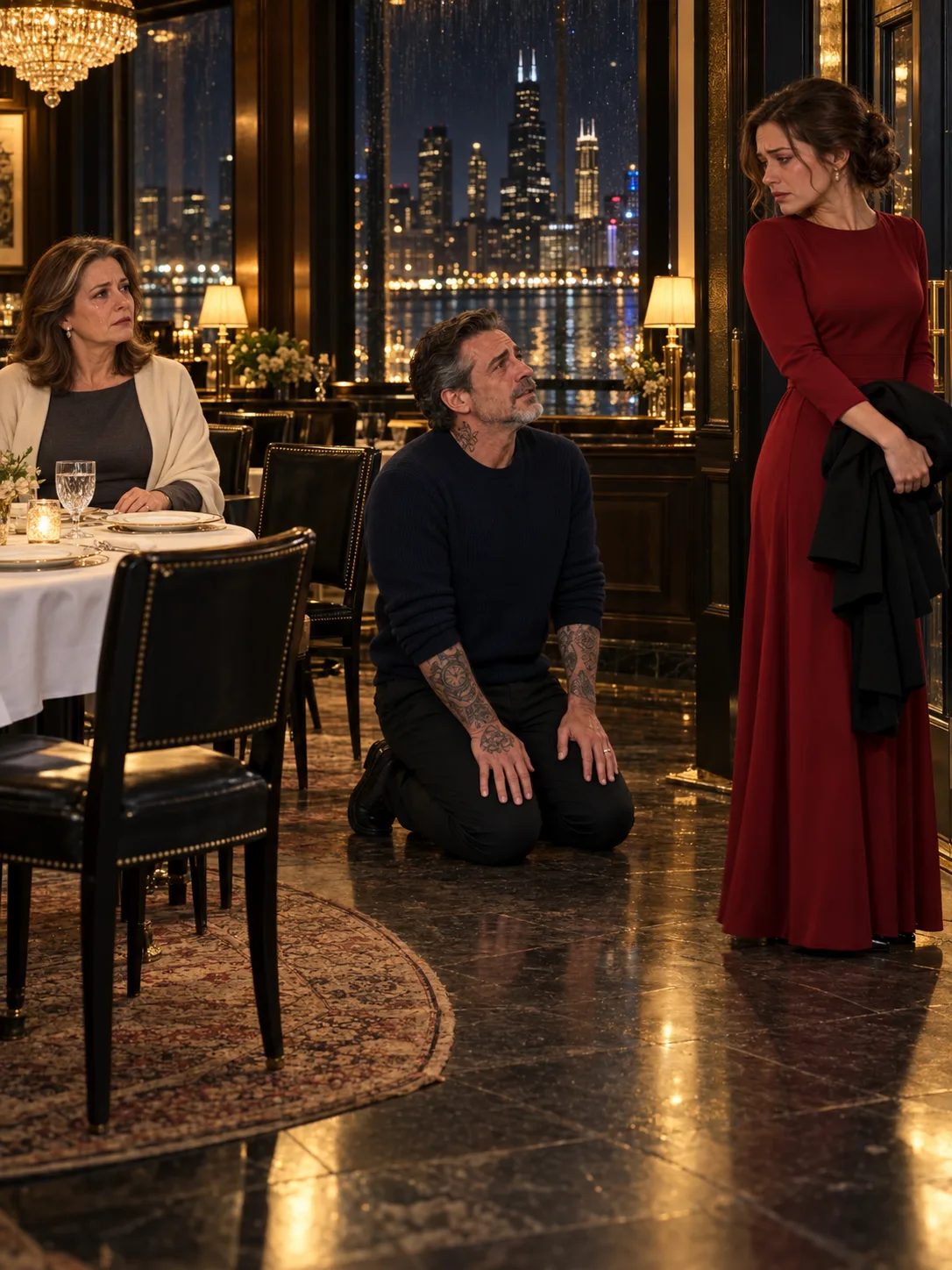
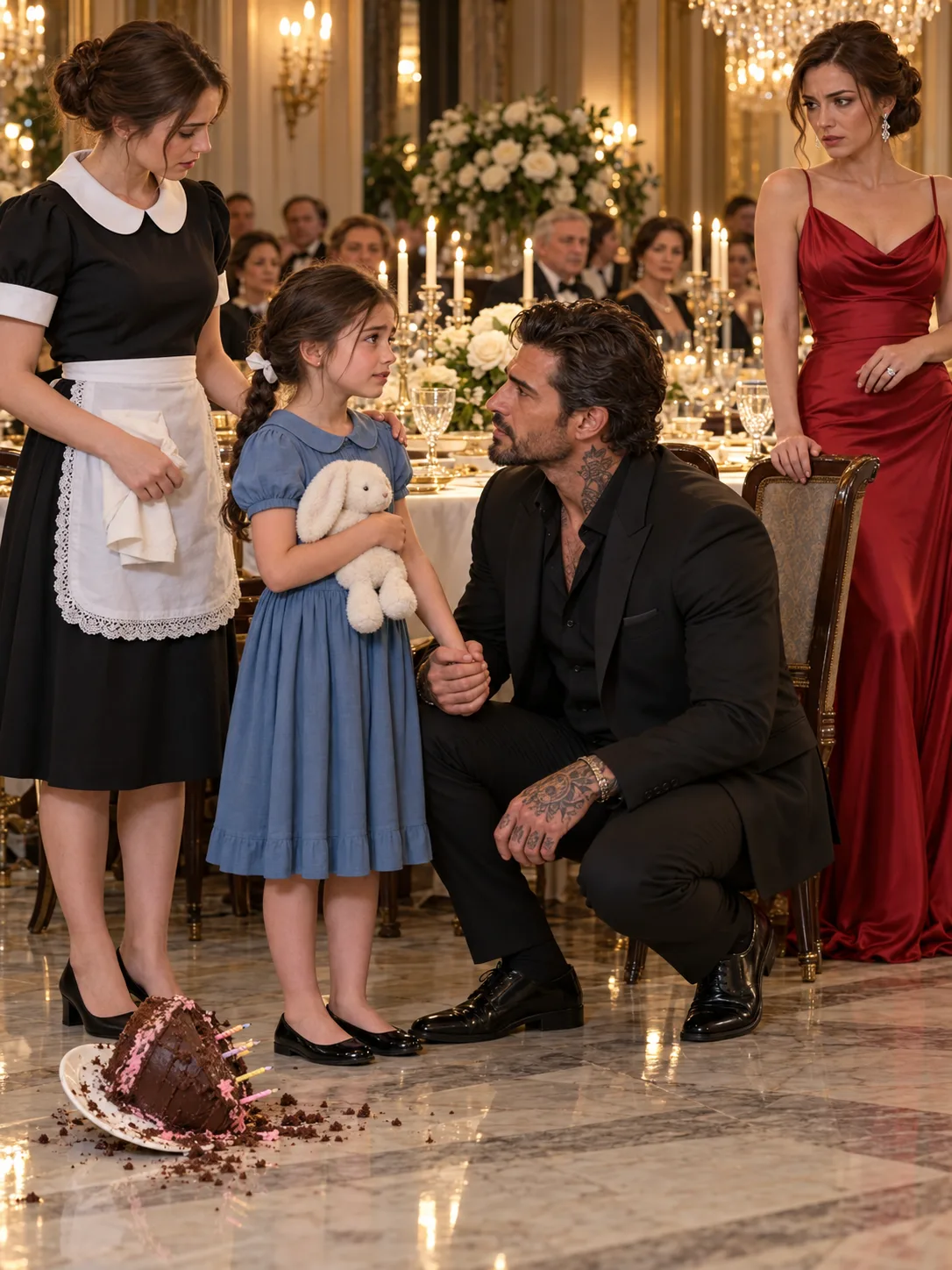
Chapter 1 – The Words He Never Chose
Adrian read the first printed card twice.
Then he looked at his son.
“Benjamin, did you write this?”
Ben shook his head.
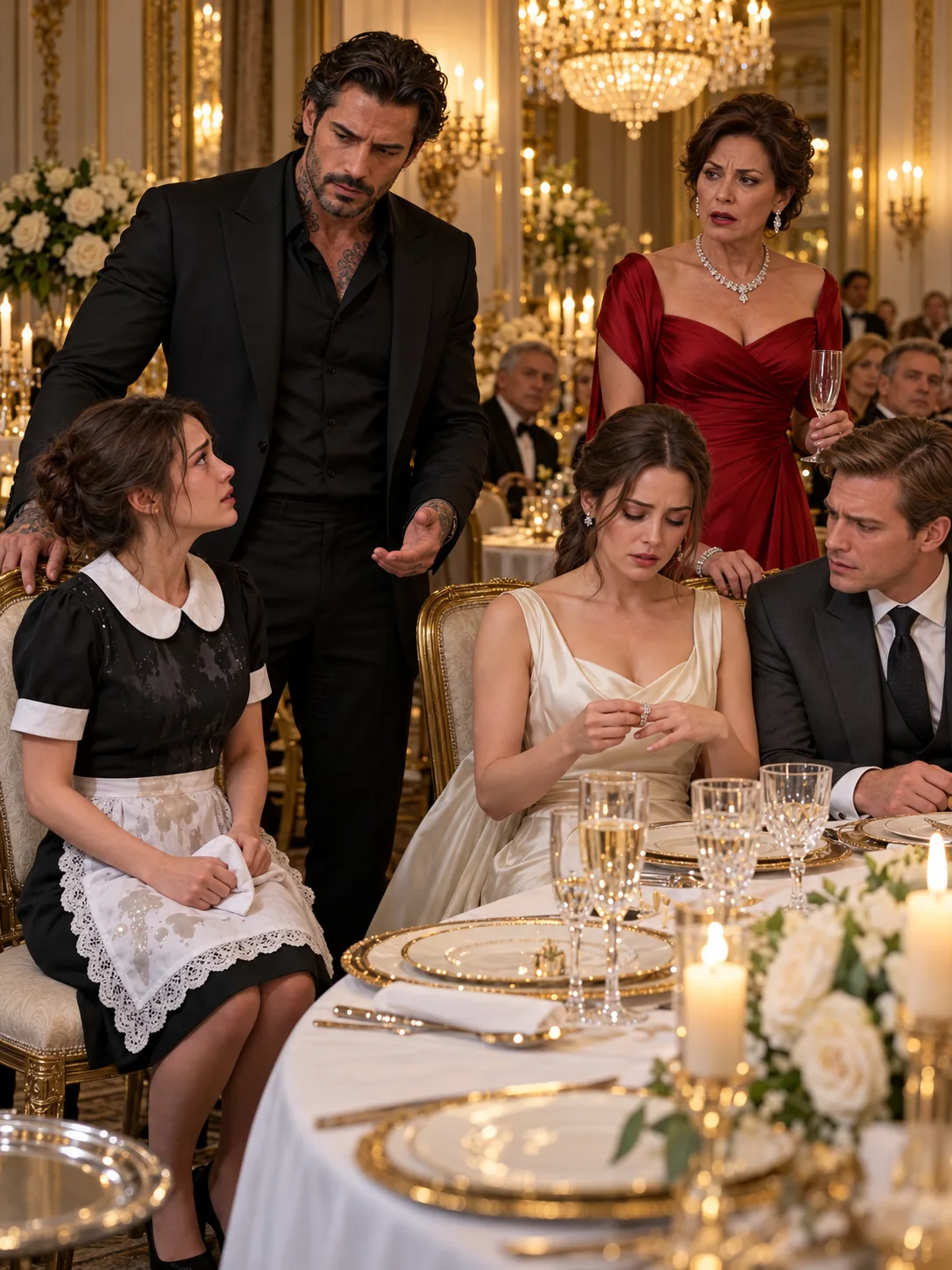
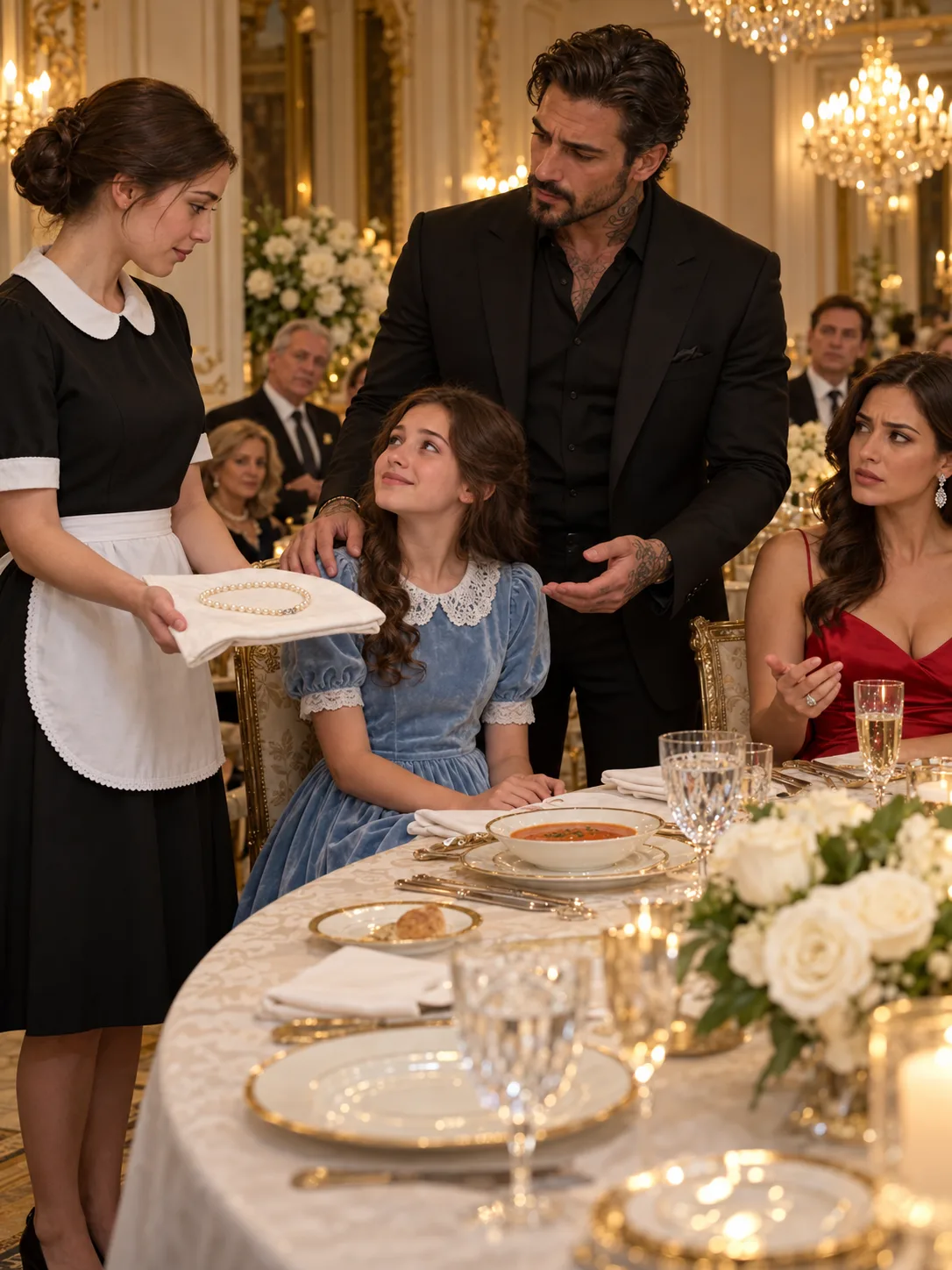
The dining room seemed unusually quiet. Beyond the tall windows, rain had begun tapping against the glass. The chandeliers were lit, the table was set for thirty guests, and somewhere beyond the double doors, the catering staff were making their final preparations.
But Adrian wasn’t looking at any of it.
He was looking at a sentence his thirteen-year-old son had supposedly written.
I have decided that attending Ashford Academy will be the best thing for my future. My father and Sabrina have generously supported my decision to become more independent.
Adrian placed the card on the table.
“Who wrote these words?”
“Sabrina did,” Benjamin whispered.
Sabrina stepped forward.
“I helped him express himself properly. There’s nothing unusual about that.”
“Then why does it say he asked to leave home?”
“Because that’s how we agreed to present it.”
Adrian’s eyes narrowed.
“We?”
Sabrina hesitated.
“Benjamin and I.”
Ben began rubbing his thumb against the edge of his jacket.
I recognized the movement. He did it when a word refused to stay in the right place, or when someone was waiting impatiently for an answer.
Adrian noticed too.
“Buddy,” he said gently, “you don’t have to protect anybody right now.”
Benjamin swallowed.
“She said people would think you were a bad father if they knew I didn’t want to go.”
Sabrina closed her eyes briefly.
“That is not exactly what I said.”
“She said they’d blame you.”
Adrian turned another card over.
The back contained instructions typed in smaller letters.
Pause after mentioning your father. Smile when describing the academy. Do not discuss your reading difficulties.
He stared at the last sentence.
“Why isn’t he allowed to mention his dyslexia?”
Sabrina’s voice became controlled and careful.
“Because your business associates don’t need intimate information about your child’s educational challenges.”
“My son can decide what he wants people to know.”
“He’s thirteen, Adrian. He doesn’t understand how people use personal information.”
“Apparently, he understands more than you’ve given him credit for.”
I stood near the sideboard, my hands still folded over my apron.
Nobody had dismissed me.
I wished somebody would.
Not because I regretted protecting Benjamin, but because I understood I was witnessing something that could permanently change this household.
Adrian lifted the final printed card.
It was longer than the others.
I am grateful to Sabrina for teaching me that growing up sometimes means leaving the people we love. I hope my father and his future wife will enjoy their new life together without worrying about me.
Adrian’s face tightened.
He read that last sentence again.
Then he held it out to Sabrina.
“Do you hear what this sounds like?”
“A boy expressing gratitude.”
“No. It sounds like a boy giving us permission to be happy after we get rid of him.”
Benjamin looked down.
Sabrina’s composure cracked.
“That is an ugly interpretation of something I intended to be positive.”
“Then explain it.”
For several seconds, she said nothing.
Finally, she pulled out a chair.
“Six weeks ago, we discussed Ashford. You said Benjamin needed more support than his current school could provide.”
“I said we should investigate additional reading programs.”
“And Ashford has an excellent reputation.”
“I never agreed to residential enrollment.”
“You agreed to let me research it.”
Adrian said nothing.
That was the first moment I saw something besides anger in his expression.
Recognition.
He remembered giving Sabrina a responsibility he hadn’t followed up on.
She saw it too.
“You told me to handle the educational arrangements,” she continued. “You said you trusted my judgment.”
“I trusted you to help my son. Not remove him from his home.”
Sabrina leaned forward.
“Do you understand how difficult this has been? His teachers have concerns. He’s falling behind in subjects he understands perfectly well because he can’t finish written assignments. He comes home exhausted. He gets headaches before presentations.”
Benjamin’s eyes flickered toward her.
Those things were true.
I’d seen the headaches. I’d watched him abandon a model airplane because he couldn’t make sense of the instruction sheet.
But Sabrina had taken real difficulties and used them to justify something the boy feared.
That made her argument harder to dismiss.
Adrian turned toward Benjamin.
“Is school really that difficult right now?”
Ben nodded.
“Sometimes.”
“Why didn’t you tell me?”
“I did.”
The words were so quiet that Adrian almost missed them.
“When?”
“After the baseball game in September. I told you I couldn’t keep up with the reading.”
Adrian looked confused.
Then his expression changed.
He remembered.
I’d been working that evening. Adrian had returned from a meeting, still talking business with one of his associates.
Benjamin had waited nearly an hour outside his father’s study.
Adrian had listened for a few minutes, promised they’d discuss it later, and gone back to work.
Apparently, later never came.
Adrian sat down.
“I remember,” he said.
Benjamin shrugged.
“You were busy.”
It was a simple sentence.
Somehow, it hurt more than the accusations.
Adrian reached for him, but Ben stepped back.
Not angrily.
Almost apologetically.
“Dad, I didn’t mean you did anything wrong.”
“I know.”
“Please don’t fight because of me.”
Adrian took a moment before answering.
“Benjamin, adults are responsible for their own decisions. You’re not responsible for this argument.”
At the double doors, the dining-room manager appeared.
“Mr. Castellano? Your first guests have arrived.”
Adrian didn’t look away from his son.
“Please have everyone served drinks in the drawing room. Dinner will be delayed.”
The manager nodded and disappeared.
Sabrina stood abruptly.
“You cannot hold thirty people waiting because of this.”
“Watch me.”
Then Adrian turned back to the printed cards.
“Why tonight, Sabrina?”
She stared at him.
“What?”
“Why did you need Benjamin to make this announcement tonight, in front of people whose opinions matter to my businesses?”
“Because once people understood his reasons, the transition would be easier.”
“Transition?”
He repeated the word as though he had never heard anything so cold.
Benjamin reached into his jacket again.
This time, he removed a folded sheet of cream-colored paper.
“I was supposed to give you this after the speech.”
Adrian took it.
I watched his eyes move down the page.
There was an embossed school crest at the top.
Below it were Benjamin’s name, a room assignment, and an arrival date.
Monday.
Four days away.
Adrian looked at Sabrina.
“Why does this say his room is ready?”
She didn’t answer.
He turned the paper over.
A printed itinerary listed a private car, luggage collection, and a meeting with the residential director.
Everything had been arranged.
Except the father’s consent.
Adrian’s voice dropped.
“Were you planning to take my son there on Monday?”
Sabrina glanced toward Benjamin.
Then she said something that made the boy go completely still.
“Adrian, you already authorized his placement.”
Share