At my brother’s promotion party, he thought it’d be funny to introduce me like this: “This is my brother—no degree, no future, just freeloads off the family.” Everyone, including our parents, laughed. I didn’t flinch. I just smiled, lifted my glass, and said, “Cheers—this is the last time any of you will see me.” Then I walked. The room went completely silent.
At my brother’s promotion party, he thought it’d be funny to introduce me like this: “This is my brother—no degree, no future, just freeloads off the family.” Everyone, including our parents, laughed.
I didn’t flinch.
I just smiled, lifted my glass, and said, “Cheers—this is the last time any of you will see me.” Then I walked.
The room went completely silent.
At my brother Graham’s promotion party, standing in our parents’ crowded living room, surrounded by relatives and colleagues, he raised his champagne glass and announced loudly, “This is my brother James.
No degree, no future, just freeloads off the family.”
Everyone laughed.
My parents beamed at him proudly.
My aunt Vivien nodded knowingly.
My cousin Chloe smirked.
I felt every eye on me, waiting for me to crumble.
Instead, I smiled, lifted my own glass, and said clearly, “Cheers! This is the last time any of you will see me.”
Then I walked out.
The room went completely silent.
The evening had started so differently.
I’d arrived at my parents’ house in the Northwood suburb of New Jersey, carrying a gourmet chocolate layer cake I’d spent hours perfecting.
The recipe was complicated, requiring constant attention, but I wanted to bring something special.
I wore my best suit, a charcoal gray number I’d bought on sale specifically for tonight.
I was excited, genuinely hopeful, because I thought this evening would finally be my chance to share some good news of my own.
The house was already full when I arrived.
Graham’s colleagues from his consulting firm mingled with our extended family.
Everyone dressed in business casual, drinks in hand, laughter filling every corner.
My mother took the cake from me with barely a glance, setting it on the kitchen counter among the catered appetizers without comment.
My father was already deep in conversation with Graham’s boss, gesturing animatedly about something.
Nobody asked how I was doing.
Nobody asked about my week.
I was used to it by now, but it still stung a little.
What they didn’t know, what nobody in that room understood, was the history that had brought me to this moment.
Years ago, when I was 22, I’d been halfway through my junior year at the State University of Meridian, studying digital arts.
I’d loved it.
Every project, every class, every late night in the computer lab felt like I was building towards something real.
But then my father had a heart attack.
It happened suddenly, violently, on a Tuesday morning at his small manufacturing business.
Triple bypass surgery.
Months of recovery.
And during those months, the business nearly collapsed.
Orders were missed.
Clients left.
Bills piled up.
My mother was overwhelmed trying to manage his care while also attempting to handle a business she’d never been involved in running.
Graham was finishing his MBA at the Westlake School of Business.
He had one semester left, crucial internship interviews lined up, his whole future stretched out before him, golden and certain.
My parents sat me down in the hospital waiting room and asked if I could take a semester off to help.
Just one semester, they promised.
Just until Dad was back on his feet and they could hire proper management for the company.
I said yes.
Of course I said yes.
He was my father.
One semester became two.
Then I couldn’t afford to go back because every dollar I earned from my three jobs went to medical bills and keeping the business afloat.
I worked as a morning barista, an afternoon retail clerk, and a night-shift waiter at a diner off the highway.
I slept four hours a night.
I watched Graham graduate with honors while I served coffee to truckers at in the morning.
My parents promised they’d help me return to school once things stabilized.
They promised they hadn’t forgotten about me.
But Graham got his corporate job, moved into a fancy apartment in Fairfield, and started climbing the ladder at breakneck speed.
The family’s attention shifted entirely to his achievements, and somehow, gradually, my sacrifice was forgotten.
It became reframed as my failure.
For the past two years, I’d been working as a freelance digital artist from my small apartment, building my portfolio, taking on clients wherever I could find them.
I worked constantly, taught myself new software, pushed myself to get better, but my family dismissed it.
My mother called it playing on the computer.
My father asked when I was going to get a real job.
Graham barely acknowledged what I did at all.
Tonight, before his cruel announcement, I’d been standing near the kitchen trying to stay out of the way when I overheard my mother talking to a group of Graham’s colleagues’ wives.
“We’re so blessed,” she was saying, her voice bright with pride. “Graham has done incredibly well for himself.
We have one successful child.
At least Graham made something of himself.”
One of the women glanced at me, clearly uncomfortable.
My mother didn’t notice or didn’t care.
My father, joining the conversation, added with a shake of his head, “James just never had the drive.
You know, some kids are self-starters and some need more pushing.
We tried, but you can only do so much.”
The words felt like a physical blow.
I gripped my glass tighter, my knuckles white, but I stayed quiet.
I told myself I’d stay for Graham’s sake, be supportive, be the bigger person.
Then came the moment.
Graham called for everyone’s attention.
The room quieted.
He stood in the center of the living room, handsome in his expensive suit.
Every inch the golden child.
He talked about his promotion to senior consultant, about the challenges ahead, about his gratitude for family support.
Then his eyes landed on me.
“And I should introduce my brother for those who don’t know him,” he said, his tone suddenly shifting to something almost mocking.
“This is my brother James.
No degree, no future, just freeloads off the family.”
The room erupted in laughter.
Not polite chuckles, but real laughter, like he told a genuinely funny joke.
My parents were laughing.
My aunt Vivien was laughing.
My cousins were laughing.
Graham’s boss was laughing.
I felt every eye on me, watching to see how I’d react, waiting for me to shrink or cry or apologize for existing.
My hands shook, my throat tightened, but something in me hardened instead of breaking.
I smiled.
I lifted my glass and I spoke clearly, calmly, so everyone could hear.
“Cheers.
This is the last time any of you will see me.”
Then I turned and walked toward the door.
The laughter died instantly.
The silence that replaced it was thick and shocked.
I heard my mother gasp.
I heard someone whisper, “Oh my God.”
I didn’t look back.
I walked through the front door, across the driveway, to my well-maintained eight-year-old sedan.
My hands were shaking so badly, I could barely get the key in the ignition.
The moment I pulled out of the driveway, my phone started buzzing violently.
Text from Mom: “How dare you embarrass us like that? Get back here right now.”
Text from Mom: “This is completely unacceptable behavior.”
Text from Graham: “It was just a joke, Eth.
Stop being so sensitive.
You’re ruining my night.”
Text from Dad: “Your mother is very upset.
You owe us all an apology.”
I drove 20 minutes to my apartment, vision blurred with tears, phone buzzing continuously in the passenger seat.
When I finally parked, I sat in the car and cried harder than I had in years.
Not just because of what Graham said, but because of what it revealed.
They genuinely saw me as worthless.
After everything I’d sacrificed for this family, they saw me as a burden and a failure.
I went inside, climbed the stairs to my second-floor studio, and collapsed on my bed.
I blocked all their numbers, every single one.
Then I cried until I had no tears left, grieving the family I thought I had, mourning the people I wished they could be.
Around midnight, emotionally exhausted, I noticed my phone ringing from an unknown number.
I almost didn’t answer.
I was done with my family, done with their demands.
But something made me pick up.
“Hello?”
“Hi.
Is this James Hayes?”
The voice was male, professional, unfamiliar.
“Yes, this is he.”
“This is Victor Sterling.
I’m the senior creative director at Pinnacle Creative Agency in Metropolitan Harbor City.
I’ve been trying to reach you for the past three days.”
I sat up, confused and suddenly alert.
“I’m sorry, what?”
“I saw your portfolio online,” he continued, his voice warm and enthusiastic. “Your work is exceptional, fresh, bold, exactly what we’re looking for.”
“I’d like to offer you a position as junior art director at our agency.
The salary is $75,000 a year, and we offer full benefits and relocation assistance.”
I couldn’t breathe.
I couldn’t process what I was hearing.
“I sent you several emails and left voicemails,” Victor continued. “The position has a 48-hour acceptance deadline because we need someone to start immediately.”
“I know this is sudden, but I really hope you’ll consider it.”
My laptop was across the room.
I stumbled to it, opened my email with shaking hands.
There they were.
Three emails from Pinnacle Creative Agency, a formal offer letter, benefits package, everything official and real.
“I… I…” I started, my voice cracking. “I need to think about it.”
“Of course,” Victor said kindly. “But I do need to know by Friday at five.
I really hope you’ll say yes, James.
I think you’d be an incredible fit here.”
We said goodbye.
I hung up.
Then I pulled up the voicemails I’d been ignoring for days because I’d been too busy preparing for Graham’s party.
There were three from Victor, each one more eager than the last.
This was real.
This was happening.
A major Metropolitan Harbor City advertising agency wanted me.
They’d found my portfolio from the open call I’d submitted months ago, a submission I’d spent three weeks perfecting while my family mocked me for wasting time.
I looked around my small apartment at the life I’d built here despite everything.
And I realized something profound.
I had nothing keeping me in New Jersey.
No friends nearby anymore because I’d been too busy working to maintain relationships.
No family who valued me.
Nothing but fear of the unknown, and I was done being afraid.
I didn’t sleep that night.
I sat at my laptop reading and rereading the offer letter from Pinnacle Creative Agency, trying to convince myself it was real.
$75,000 a year.
In New Jersey, working my freelance jobs and scraping by, I’d made maybe $35,000 last year.
This was more than double.
This was a life.
By dawn, I’d made my decision.
I opened my email and typed a response to Victor Sterling.
“Dear Victor,
I’m honored and thrilled to accept your offer.
Thank you for believing in my work.
I’m ready to start as soon as possible.
Best, James.”
I hit send before I could second-guess myself.
Within an hour, while I was making coffee with shaking hands, Victor responded.
He was clearly delighted.
He sent onboarding paperwork, a start date two weeks away, and contact information for a relocation specialist who could help me find an apartment in Metropolitan Harbor City.
The next two weeks passed in a blur of logistics and determination.
I gave notice on my apartment.
My landlord, surprisingly understanding.
I packed everything I owned into boxes, which wasn’t much.
Clothes, books, my computer equipment, kitchen basics.
My whole life fit into my small car with room to spare.
Not once did my family call.
They were clearly waiting for me to apologize, to come crawling back, admitting I’d overreacted.
I didn’t reach out either.
Every day that passed in silence made me more certain I was making the right choice.
Moving day arrived on a gray Saturday morning.
I loaded the last box into my car, took one final look at the apartment where I’d spent two years building myself back up from nothing, and drove away.
I didn’t feel sad.
I felt free.
Metropolitan Harbor City was overwhelming in the best possible way.
The relocation specialist had helped me find a tiny studio apartment in the Bay View district, affordable on my new salary.
A 40-minute subway commute to the agency’s Midtown office.
It was smaller than my New Jersey place, but the windows faced east and morning light flooded in.
And somehow that felt like a metaphor for everything.
My first day at Pinnacle Creative Agency, I was terrified.
The office occupied three floors of a glass tower near the financial district.
Everything was sleek, modern, buzzing with creative energy.
People my age and older moved through the space with purpose and coffee cups, talking about campaigns and clients and deadlines.
Victor met me in the lobby, warm and welcoming, exactly as he’d sounded on the phone.
He was maybe 45, with graying hair and kind eyes, dressed in what I’d learned was the agency uniform: dark jeans and a blazer.
“James, welcome.
We’re so glad you’re here.”
He showed me around, introducing me to what felt like a hundred people whose names I immediately forgot.
But three names stuck.
Leo, funny and encouraging, a copywriter with a sharp wit and an easy laugh.
Allar Kim, an associate creative director, sharp and honest, who looked me in the eye when we shook hands and said, “Victor doesn’t hire people he doesn’t believe in.
You must be good.”
And Cameron, another art director, competitive but fair, who sized me up with a nod and said, “Looking forward to seeing your work.”
My desk was in an open workspace with the rest of the creative team.
Victor gave me my first assignment, a social media campaign for an organic skincare line.
Nothing huge, but a real project with a real client and a real deadline.
I worked harder than I’d ever worked in my life.
I stayed late, came in early, pushed every design through multiple revisions.
Leo started joining me for lunch, making me laugh with stories about disastrous pitches and client meetings gone wrong.
Allar stopped by my desk regularly, offering feedback that was tough but always made my work stronger.
Even Cameron, initially distant, began nodding approvingly at my concepts.
The first three months flew by in a haze of learning and growth.
I was exhausted but exhilarated.
Every day I proved to myself that I belonged here, that I was good at this, that Victor had been right to hire me.
I didn’t think about my family much.
When I did, it was with a dull ache that I pushed away.
I’d made my choice.
They’d made theirs.
I was moving forward.
Then, four months into my new job, I got a LinkedIn message from someone named Sasha.
The message was brief.
“Hi James, I work with your brother Graham.
I have something important you need to know.
Can we meet for coffee?”
I stared at the message for a long time.
Part of me wanted to ignore it, to keep Graham and everything connected to him in the past where it belonged, but curiosity won out.
We met on a Saturday afternoon at a coffee shop in the Heights, halfway between our apartments.
Sasha was around 30, dressed casually with short dark hair and a serious expression.
She got straight to the point.
“I’m going to be blunt,” she said, stirring her latte. “Graham has been taking credit for your work.”
My stomach dropped.
“What?”
“About eight months ago, Graham asked you to design some presentation materials for him, right? As a favor?”
I remembered.
He’d called me out of the blue, unusually friendly, saying he had an important client pitch and needed some graphics.
Could I help?
It would take me just a few hours, he’d said.
It was a chance to do something nice for my brother, to maybe rebuild our relationship.
So I’d done it.
I designed an entire slide deck, professional and polished.
“He told our boss and the partners that he designed those materials himself,” Sasha continued. “He got a commendation for creative initiative.”
“It was part of his promotion package, part of why he got bumped up to senior consultant.”
I felt sick.
“How do you know?”
“I saw your portfolio online a few weeks ago,” she said. “I was looking for a designer for a personal project and someone recommended your site.
I recognized the presentation designs immediately.”
“Same style, same elements.
I checked the metadata on the files Graham submitted.”
“They were created months before he claimed to have made them, and the original author properties had been stripped.”
She pulled out her phone and showed me screenshots, emails, file properties, timestamps, everything proving that Graham had taken my work and claimed it as his own.
“Why are you telling me this?” I asked, my voice barely above a whisper.
Sasha’s expression hardened.
“Because Graham is arrogant and takes credit for other people’s work regularly.
I’m tired of it.
And because what he did to you was theft.
You deserve to know.”
We met twice more over the next two weeks.
Sasha provided me with copies of everything, detailed evidence.
She encouraged me to use it however I wanted, whether that meant confronting Graham, reporting him to his company, or just keeping it for my own peace of mind.
I struggled with what to do.
I was angry, furious even.
But I also felt conflicted about exposing family, about causing problems.
Sasha reminded me that Graham had caused the problems, not me.
Meanwhile, my career continued to flourish.
I completed my first major project at the agency, a complete rebranding campaign for a sustainable fashion startup.
Victor praised my work in front of the entire creative team during our weekly meeting.
“This is exactly the kind of bold, thoughtful work that defines what we do here,” he said, pulling my designs up on the conference room screen.
“James, you’ve exceeded every expectation.
Well done.”
I got assigned to bigger clients.
My confidence grew.
I made real friends.
Leo invited me to team dinners and weekend brunches.
Ara became a mentor, teaching me how to present to clients, how to defend my creative choices, how to navigate agency politics.
For the first time in my adult life, I felt like I belonged somewhere.
The holidays approached.
Thanksgiving, then Christmas.
I half expected my family to reach out, maybe softened by time and tradition.
Nothing came.
Complete silence.
I spent Thanksgiving with Leo and his boyfriend, a warm, loud dinner in their apartment filled with chosen family and laughter.
It was lonely in some ways, but also freeing.
I didn’t have to perform or shrink myself or accept cruelty disguised as jokes.
I realized I’d been waiting for an apology that would never come.
My family didn’t think they’d done anything wrong.
To them, I was the one who’d overreacted, who’d been too sensitive, who’d abandoned them over nothing.
Two days before Christmas, my phone rang from a number I didn’t recognize.
I’d learned my lesson about ignoring unknown calls, so I answered.
“James.”
My mother’s voice.
My heart clenched.
“Mom.”
“Oh, thank goodness.
I’ve been trying to reach you.
You blocked our numbers.”
Her tone was accusatory, not apologetic.
“I needed space,” I said carefully.
“Well, I’m calling because Graham’s wife, Melissa, is pregnant.
We’re throwing a celebration in January, and we need everyone to contribute financially.
It’s going to be a big party, and we’re asking all family members to pitch in $400 each.”
I couldn’t believe what I was hearing.
No “How are you?”
No “We miss you.”
No acknowledgment of what had happened.
Just a request for money.
“We know you left in a huff,” my mother continued. “But family is family, and we need everyone to help out.
This is important.”
Something inside me turned to ice.
“I’m not sending money.”
“Excuse me?”
I said, “No, I’m not contributing to a party for a family that treated me the way you all did.”
“James, don’t be ridiculous.
That was months ago.
Graham barely even remembers what he said.
You’re holding a grudge over a silly joke.”
“It wasn’t a joke, Mom.
And I’m done pretending it was.”
I hung up.
My hands were shaking, but I felt powerful.
I’d stood my ground.
That evening, still processing the conversation, I received an unexpected email.
It was from a company called Axiom Technologies, a major tech firm based in Providence.
They were requesting proposals from several agencies for a complete brand overhaul.
The project was worth millions.
Victor called an emergency team meeting.
“This is huge,” he said, his excitement barely contained. “Axiom is one of the biggest names in cloud computing.
If we land this, it changes everything for our agency.”
He looked directly at me.
“James, I want you to lead this pitch.
The client specifically requested someone with your design style.
They found your work in their industry research and asked for you by name.”
My jaw dropped.
“They asked for me?”
Victor confirmed, smiling.
“This is your moment.
I believe in you.”
The pitch presentation was scheduled for mid-January.
I looked at the date Victor circled on the calendar and my stomach twisted.
It was the same day as Graham’s baby shower, the exact same day, and the presentation was in Providence, just 90 minutes from my family’s home in New Jersey.
I’d be in their region, closer than I’d been in months, and they’d have no idea I was there.
They’d never know about my success, my opportunity, my life.
Something about that felt exactly right.
I threw myself into preparing the Axiom pitch with an intensity that surprised even me.
This wasn’t just about landing a client.
This was about proving once and for all that I was exactly who I’d always known I could be.
The team worked around the clock.
Leo and I brainstormed concepts late into the night, fueled by coffee and takeout.
Ara pushed me to think bigger, bolder, to take creative risks that terrified and excited me.
Even Cameron, usually focused on his own projects, stayed late to offer feedback on my design mock-ups.
Axiom Technologies was known for their cutting-edge technology, but outdated branding.
They needed a complete visual overhaul, something that would position them as innovative and trustworthy without alienating their existing corporate clients.
I designed something revolutionary, combining clean, minimalist aesthetics with interactive digital elements.
The concept was modern but not trendy, sophisticated but not stiff.
Victor reviewed my work and actually stood up from his chair.
“This is it,” he said quietly. “This is exactly what they need.
James, you’re going to blow them away.”
One week before the pitch, my phone rang.
Different number again.
I’d stopped blocking them, figuring if my family wanted to reach me badly enough, they’d find a way.
This time it was my father.
His voice was stern, cold.
“Your mother told me you refused to contribute to the baby shower.”
No greeting.
No “How are you?”
Just straight to accusation.
“That’s right,” I said calmly.
“This is extremely selfish, James.
After everything we’ve done for you, this is how you repay us, by abandoning your family when we need you?”
The irony was so thick I almost laughed.
“After everything you’ve done for me, Dad? I dropped out of college to save your business.
I worked three jobs to pay your medical bills.
I gave up my education so Graham could finish his.
What exactly have you done for me lately?”
Silence on the other end.
He wasn’t used to me pushing back.
“That was your choice,” he finally said, his voice hard. “Nobody forced you to do any of that.”
“And leaving was my choice, too,” I replied.
My voice was steady, strong.
“Goodbye, Dad.”
I hung up before he could respond.
My hands were shaking, but I felt proud.
I’d stood up for myself.
I’d told the truth.
Over the next few days, Graham started texting from a new number.
“Mom and Dad are really hurt.
You need to apologize.”
Then, “You’re tearing this family apart.”
And, “Melissa is stressed because of you, and stress isn’t good for the baby.”
I didn’t respond to any of them.
Each message made me more certain I was doing the right thing.
Finally, Graham sent, “Fine, don’t come to the shower, but don’t ever expect to be part of this family again.”
I blocked that number, too.
If that was their idea of family, I wanted no part of it.
The day of the Axiom pitch arrived.
I woke up at in the morning in my Bay View apartment, too nervous to sleep.
I put on my best suit, a charcoal gray ensemble I’d bought specifically for this presentation.
I looked at myself in the mirror and saw someone I barely recognized.
Confident.
Professional.
Successful.
Victor and I drove to Providence together with Leo and Aara.
The entire drive, they hyped me up, reminding me how good my work was, how prepared I was.
Victor kept saying, “Just be yourself.
Show them what I already know, that you’re brilliant.”
Axiom’s headquarters was a sleek glass building in downtown Providence.
All modern lines and impressive views.
We were ushered into a conference room on the 20th floor.
Six executives sat across from us, including their CMO and their CEO.
I presented for 90 minutes.
I walked them through the entire rebranding concept, explained my design philosophy, showed mock-ups of how their new brand would look across every platform.
I answered their questions thoughtfully, confidently.
I felt like I was exactly where I was supposed to be.
When I finished, the CMO leaned back in her chair and smiled.
“That was exceptional.
Truly innovative work.”
The CEO nodded.
“We’ll be in touch by end of week, but I’ll tell you now, this is exactly the direction we’ve been hoping someone would take us.”
We shook hands.
Victor was beaming.
Leo squeezed my shoulder.
Ara whispered, “You crushed it.”
We left the building riding high on adrenaline and hope.
I felt invincible.
Then, in the lobby, I literally bumped into someone.
“Oh, I’m so sorry,” I said automatically, stepping back.
The person looked up.
Our eyes met.
It was my cousin Chloe.
Her face went completely white.
“James.”
She was dressed in an interview suit, clutching a portfolio folder, clearly there for a job interview.
She looked between me and my colleagues, taking in our professional attire, our confident postures.
“What are you doing here?” Chloe stammered.
Before I could answer, one of the Axiom executives who’d been in our pitch meeting walked past.
She recognized me and stopped.
“Brilliant work today, James,” she said warmly. “We’ll have a decision for you by Friday, but I want you to know your agency is our top choice.
That presentation was exactly what we needed.”
She smiled and walked away.
Chloe’s jaw actually dropped.
She stared at me, then at the executive’s retreating figure, then back at me.
I felt a surge of satisfaction I couldn’t quite suppress.
“Good luck with your interview, Chloe,” I said pleasantly.
Then I walked out, leaving her stunned in the lobby.
The drive back to Metropolitan Harbor City was euphoric.
My team couldn’t stop celebrating, already talking about how we’d execute the campaign when, not if, we won the contract.
Victor kept glancing at me with this proud, almost paternal expression.
“You know this changes everything for you, right?” he said. “Win or lose, you just proved you can handle major clients.
You’re ready for the next level.”
Friday came.
Victor got the call at in the afternoon.
The entire office seemed to hold its breath as he took the meeting in his glass-walled office.
We could see him nodding, smiling, then actually pumping his fist in the air.
He came out and announced, “We got it.
Axiom chose us.”
The office erupted.
People cheered, hugged, high-fived.
Leo picked me up and spun me around.
Allar pulled me aside and said, “You did this.
This was all you.”
That evening, Victor called me into his office.
“Sit down, James.”
My heart raced.
Was something wrong?
“I’m promoting you to art director,” he said simply. “Effective immediately.
Your salary is now $95,000.
You’re the youngest person to hold that title in this agency’s history.
You’ve earned it.”
I couldn’t speak.
I just sat there, overwhelmed, as he explained the new responsibilities and opportunities.
At 28 years old, I’d gone from freelancing in my apartment to art director at a major agency in less than a year.
That night, I called Sasha to thank her for the evidence about Graham.
“I’ve been holding on to it,” I told her, “but I haven’t decided what to do with it.”
“You don’t need revenge,” Sasha said wisely. “You’re already winning.
You’re building something real.
That’s better than any confrontation.”
She was right.
I felt like I’d moved beyond needing to prove anything to my family.
My life was full and successful without them.
Two weeks later, I was working late at the office, refining concepts for the Axiom rollout.
My phone rang.
Unknown number.
I answered absently, focused on my screen.
“James.”
A woman’s voice, cold and sharp.
“Yes?”
“This is Melissa, Graham’s wife.”
I stopped what I was doing.
“Okay.”
“I don’t know what you think you’re doing,” she said, her tone dripping with disdain. “But Chloe told the whole family she saw you in Providence pretending to be some big-shot professional, claiming you led some important presentation.”
My stomach tightened.
“I wasn’t pretending.
I did lead a presentation.”
“Graham looked into it.
There’s no record of you working at any legitimate company.
We know you’re lying about having a fancy job to make yourself look good.
It’s pathetic, James.”
“You clearly need professional help.
Making up stories for attention is a sign of serious issues.”
I realized what had happened.
Graham had probably searched for my name at the wrong agency or done a sloppy internet search.
He’d found nothing and assumed I was lying rather than considering he’d looked in the wrong place.
I could correct her right now.
I could tell her the name of my agency, prove everything.
But suddenly, I saw a different opportunity.
I let them believe I was lying.
“Think whatever you want, Melissa,” I said calmly. “I really don’t care.”
I hung up.
Over the next month, I watched from a distance as my family spread rumors about me.
Chloe posted vague social media updates about family members who fabricate entire lives for attention and the importance of getting help for people who’ve lost touch with reality.
My mother apparently told relatives at church that I was going through something difficult and they were very worried about me.
My co-workers noticed I seemed distracted.
Leo asked if I was okay.
I explained the situation briefly, not wanting to dump all my family drama on them.
They were outraged on my behalf.
“When are you going to tell them the truth?” Leo demanded.
Allar, more measured, asked, “What are you waiting for?”
I thought about it.
“The right moment, when it will hurt the most.”
Three months passed.
Winter turned to spring.
My work on the Axiom campaign was exceeding everyone’s expectations.
The rebrand launched publicly in April to industry-wide acclaim.
Billboards went up in major cities.
Online campaigns went viral.
Tech publications wrote glowing articles about Axiom’s bold new direction.
And my name was on everything.
James Hayes, lead designer, art director at Pinnacle Creative Agency.
The campaign won a National Creative Council, NCC, award.
In May, I stood on stage at the ceremony in a hotel ballroom in Metropolitan Harbor City, accepting the trophy alongside Victor and the team.
Trade publications ran photos.
Marketing blogs wrote features.
One magazine, a major industry publication, reached out to interview me for their Rising Stars in Advertising issue.
The article went live online on a Wednesday morning.
It included my full name, my photo, my whole story about starting as a freelancer and working my way up, and quotes from Victor about my talent and work ethic.
That morning, I was in the office kitchen making coffee when my phone rang.
My mother’s number, a new one I hadn’t blocked yet.
I answered.
“Hello?”
“James.”
Her voice was strange, tight.
“I need you to explain something to me.”
“What?”
“Someone at your father’s business just showed him an article about you, about some advertising award and some job in Metropolitan Harbor City.”
I said nothing.
“Is this real?” she demanded. “Do you actually work at this agency? Is this whole story true?”
“Yes, Mom.
It’s all true.
It’s been true for over a year.”
Silence.
Then, quietly, “Why didn’t you tell us?”
I almost laughed.
“When would I have told you? When you called to ask for money? When Graham texted to call me selfish? When Dad said I had no drive? When would have been the right time?”
“People are asking questions,” she said, her voice breaking slightly. “They want to know why you’re not in our lives.
They’re asking if we had a falling out.
It’s embarrassing.”
“Please, we’re having a birthday party for Graham’s son, Caleb, next month.
Just come.
We can put all this behind us.”
There it was.
Not an apology, not acknowledgment of what they’d done, just concern about appearances and a desire to sweep everything under the rug.
“People are asking questions,” I repeated slowly. “You’re embarrassed.
That’s what you’re worried about.”
“James, please.”
“I’ll think about it,” I said, and hung up.
But I’d already made my decision.
I was going to that party, but not to make peace.
I was going to make sure they finally understood exactly what they’d lost.
Over the next two weeks, I received messages from various family members, each one more surreal than the last.
My father texted, “We’re proud of what you’ve accomplished.
Come celebrate with us.”
As if he hadn’t told me I lacked drive just months ago.
Graham texted, “Hey, bro.
Saw your article.
That’s really cool.
Let’s catch up soon.”
Casual and friendly, like he hadn’t mocked me in front of 50 people and stolen my work.
My aunt Vivien called and left a voicemail.
“Sweetheart, we always knew you’d do well eventually.
Can’t wait to see you at little Caleb’s party.
It’ll be just like old times.”
Every single message rewrote history.
Erased the cruelty.
Pretended the humiliation had never happened.
They wanted access to my success now.
Wanted to bask in reflected glory.
Wanted to tell their friends about their son, brother, nephew who worked in advertising in Metropolitan Harbor City.
I showed the messages to Ara during lunch one day.
She read them with increasing fury, her normally composed expression darkening.
“They want to use you,” she said bluntly. “They didn’t value you when they thought you were worthless.
Now they want to claim you because you’re successful.
Don’t let them.”
“I’m going to the party,” I said.
She looked surprised.
“Why?”
“Because they need to hear the truth.
They need to understand what they did.
And they need to hear it in front of everyone, the same way they humiliated me.”
Ara studied me for a long moment, then nodded slowly.
“Okay, but be careful.
Make sure you’re doing this for the right reasons.”
I thought about her warning.
Was this revenge?
Maybe partly, but it was also closure.
It was drawing a line.
It was refusing to let them rewrite our history.
I RSVP’d yes to the party.
My mother called immediately, her voice flooded with relief.
“Oh, James, thank you.
Everyone will be so happy to see you.
This means so much to the family.”
“I’ll be there,” I said simply.
The party was scheduled for a Saturday afternoon in late May.
I took the day off work.
I drove from Metropolitan Harbor City to New Jersey, a route I’d driven a thousand times before, but which now felt strange and distant.
I wore an elegant navy suit, subtle accessories, carried myself with the confidence I’d earned over the past year.
I arrived exactly on time.
My parents’ house looked the same, familiar and foreign all at once.
Cars lined the street.
I could hear music and voices from the backyard.
I walked up to the front door and rang the bell.
My mother answered, and for a moment we just looked at each other.
She’d aged.
I noticed more gray in her hair, deeper lines around her eyes.
“James,” she said, pulling me into a tight hug.
I didn’t return it.
“Thank you for coming.
Please, let’s not mention any unpleasantness today.
It’s Caleb’s day.”
I nodded noncommittally and walked inside.
The house was full of people: extended family, Graham’s colleagues, neighbors, friends of my parents.
Everyone turned when I entered, recognition and curiosity on their faces.
Word had clearly spread about my career.
I was no longer the family disappointment.
I was the family curiosity.
My father approached, hand extended for a formal handshake.
“Good to see you, sweetheart.”
Graham came over with Melissa, who was holding one-year-old Caleb.
“James, glad you could make it.
This is our son.”
He acted like nothing had ever happened, like his cruel introduction at his promotion party was ancient history, forgotten, irrelevant.
People approached me throughout the afternoon.
“We heard about your big campaign.”
“You must be so successful.”
“Graham was just telling us how proud the family is.”
Each comment made my jaw tighter.
I smiled politely, gave vague answers, watched my family construct a new narrative in real time.
Graham kept steering conversations, inserting himself into stories about my career, hinting at how supportive he’d always been.
Chloe avoided eye contact, staying on the opposite side of the yard whenever I was near.
After about an hour, Graham stood up on the back deck and called for everyone’s attention.
The yard quieted.
He had Caleb in his arms, the picture of successful fatherhood.
“I just want to thank everyone for coming to celebrate Caleb’s first birthday,” he said, his voice carrying across the lawn.
“This past year has been incredible, becoming a father, watching my family grow, having everyone we love around us.”
He looked directly at me.
“I’m especially glad my brother could be here today.
We’ve always been close, and family means everything to me.”
The lie was too blatant, too much.
I felt something inside me snap.
I stood up.
“Actually,” I said, my voice clear and steady, “I’d like to say a few words.”
My mother’s face went pale.
My father looked alarmed, but everyone else nodded encouragingly, assuming I was going to give some sweet, brotherly toast.
I walked to the center of the yard, standing where everyone could see me.
“Eighteen months ago,” I began, “I came to a party at this house, Graham’s promotion party.
And in front of everyone gathered here, Graham introduced me like this.”
I paused, looking at each family member.
“He said, ‘This is my brother James.
No degree, no future, just freeloads off the family.’”
“And everyone laughed.
My parents laughed.
My aunt laughed.
My cousins laughed.
Graham’s colleagues laughed.”
The yard had gone completely silent.
People looked uncomfortable, shifting in their seats.
Graham’s face was turning red.
“I walked out that night,” I continued. “I said it was the last time any of you would see me, and I meant it.”
“For 18 months, none of you called to apologize.
None of you checked if I was okay.
None of you acknowledged what happened.”
My mother started to speak.
I held up my hand.
“Let me finish.”
“What you don’t know is that I dropped out of college to save this family.”
“When Dad had his heart attack, when the business was failing, I left school.
I worked three jobs to pay medical bills.
I gave up my education so Graham could finish his MBA.”
“I sacrificed my future for this family.”
I pulled out my phone, opened the files Sasha had given me.
“And then Graham asked me to design presentation materials for him.
I did it as a favor.”
“He told his boss he designed them himself.
He got a commendation for it.
It was part of why he got his promotion.
The promotion we were celebrating that night.”
“I have the proof right here.
Emails, files, timestamps, everything.”
I held up my phone, started passing it around.
People looked at the evidence, then at Graham.
His face was bright red now.
Melissa stared at him in shock.
“I rebuilt my life without any of you,” I said. “I moved to Metropolitan Harbor City.
I got hired by a major advertising agency.
I led the campaign that won a major industry award.”
“I’m an art director now, making $95,000 a year.
I did all of that alone, with no help from this family.”
I looked at each of them.
My mother, my father, Graham, Chloe, everyone.
“I came here today to give you one last chance to apologize, to acknowledge what happened, to show me you understood how much you hurt me.”
My voice was steady, but tears were streaming down my face now.
“But all you’ve done is pretend.
You’re not proud of me.
You’re embarrassed that you were wrong about me.”
“You don’t want a relationship.
You want the appearance of one.”
The silence was absolute.
My mother had tears running down her face.
My father looked stricken.
Graham couldn’t meet my eyes.
“I forgive you,” I said quietly. “Because holding on to anger only hurts me.”
“But I’m done.
I’m done pretending we’re a family.
You made your choice at Graham’s party 18 months ago.
I’m making mine now.”
“I hope you all have a wonderful life.”
I turned and walked toward the gate.
Behind me, chaos erupted.
My mother was calling my name.
People were talking all at once.
I heard Melissa’s voice raised at Graham, demanding explanations.
My mother caught up with me at my car.
“James, please don’t go.
We can fix this.”
I turned to face her.
“Mom, I love you, but I deserve better than this.
I always deserved better.”
“We’re sorry,” she said, crying openly now. “We’re so sorry.
Please don’t leave.”
I shook my head gently.
“I already left 18 months ago.
You just didn’t notice.”
I got in my car and drove away.
This time, I wasn’t running away hurt.
I was walking away healed.
The drive back to Metropolitan Harbor City felt different than any drive I’d ever taken.
My hands were steady on the wheel.
My heart, though heavy, felt lighter somehow.
I’d said what needed to be said.
I’d drawn the boundary that needed to be drawn.
My phone buzzed constantly in the passenger seat, but I didn’t look at it until I was safely parked outside my Bay View apartment two hours later.
Seventeen missed calls.
Thirty-two text messages.
I scrolled through them briefly.
From Mom: “Please call me.
We need to talk.”
From Dad: “You embarrassed this family today.
What you did was unacceptable.”
From Graham: “You had no right to bring up that design stuff.
You’re making me look bad at work.”
Even in crisis, even after being exposed, he was only worried about himself.
There was one message that surprised me, though, from Melissa.
“I didn’t know about the designs.
I didn’t know about a lot of things.
I’m sorry for what I said to you on the phone.
You didn’t deserve that.”
I didn’t respond to any of them.
I went inside, changed into comfortable clothes, and ordered takeout.
Then I called Aara.
“How did it go?” she asked immediately.
“I told them everything in front of everyone, and I left.
I said what I needed to say, and I left.”
There was a pause.
“How do you feel?”
I thought about it.
“Free.”
The next few weeks were quiet.
My family stopped calling after the first few days.
I wondered if they’d finally accepted my decision or if they were simply regrouping.
Either way, the silence was a relief.
Work became my focus and my sanctuary.
The Axiom campaign was performing beyond projections, and we’d started getting inquiries from other major tech companies who’d seen our work.
Victor kept assigning me bigger projects, trusting me with more responsibility.
In June, I met Olivia at a photography exhibition in the city.
She was a freelance photographer showing a series on urban landscapes.
We started talking about composition and negative space, and three hours later we realized the gallery was closing.
She asked for my number.
I gave it to her.
Our first date was coffee that turned into dinner that turned into walking around the city until midnight, talking about everything and nothing.
She was kind, thoughtful, genuinely interested in my work.
When I told her carefully about my family situation, she didn’t try to fix it or minimize it.
She just listened.
“That took courage,” she said simply. “Standing up for yourself like that.”
It was exactly what I needed to hear.
Summer passed in a blur of good things.
My relationship with Olivia deepened.
My friendships at work grew stronger.
Leo and I started a tradition of Sunday brunch.
Ara became more than a mentor.
She became a real friend.
Someone I could call at midnight when I was anxious about a pitch.
Someone who’d tell me the truth even when it was hard to hear.
In August, Victor called me into his office.
“Sit down, James.”
My heart jumped.
I’d learned these conversations could go either way.
He smiled.
“I’m promoting you again.
Senior art director.
Your salary is now $110,000.
You’ve earned it ten times over.”
I was 29 years old and making more money than I’d ever imagined possible.
More than Graham, I realized with a small private satisfaction.
One evening in early September, I came home to find a thick envelope in my mailbox.
The return address was my parents’ house in New Jersey.
My first instinct was to throw it away unopened, but something made me bring it inside.
I sat on my couch for ten minutes just looking at the envelope.
Finally, I opened it.
Inside was a letter eight pages long, handwritten on my mother’s stationery.
“Dear James,” it began.
“I don’t know if you’ll read this.
I don’t know if I have the right to ask you to, but I need to try to explain.
And more importantly, I need to apologize.”
I kept reading.
She wrote about how she’d been thinking constantly since Caleb’s party, about my speech, about my accusations, about everything I’d said.
She wrote that she’d gone back through old photos and calendars, reconstructing those years when I’d dropped out of school, and she’d been horrified to realize how much I’d sacrificed and how little they’d acknowledged it.
“You were 22 years old,” she wrote. “You should have been studying, going to parties, figuring out your life.
Instead, you were working three jobs to save our family, and we let you.”
“We took your sacrifice for granted, and then we punished you for the consequences of that sacrifice.”
She wrote about Graham’s promotion party, about hearing my words and laughing along with everyone else without thinking about what she was doing.
“I was so proud of Graham that night.
He’d worked hard for his promotion.
But you’d worked hard, too, in ways we’d never recognized.”
“And instead of celebrating you both, I participated in humiliating you.
I laughed at my own son.
I will regret that for the rest of my life.”
She wrote about the months of silence, about how they’d convinced themselves I was overreacting, being dramatic, throwing a tantrum.
“We told ourselves you’d come back when you calmed down.
We told ourselves it wasn’t that serious.”
“We were wrong.
It was serious.”
“What Graham said was cruel.
What we did by laughing was cruer.
And what we’ve done since, trying to pretend it never happened, was worst of all.”
She wrote about reading the article about my award, about realizing I’d built an entire successful career they knew nothing about.
“I was proud when I read it, but then I was ashamed because I realized I had no right to be proud.”
“I hadn’t supported you.
I hadn’t believed in you.
I hadn’t earned the privilege of celebrating your success.”
She apologized for calling to ask for money, for trying to make me come to the baby shower as if everything was fine, for spreading rumors that I was mentally unwell.
“We couldn’t accept that you’d actually succeeded without us.
It was easier to believe you were lying than to face the fact that we’d been completely wrong about you.”
The letter continued for eight pages.
A real apology taking responsibility.
No excuses, no deflection, just truth.
“I don’t expect you to forgive us,” she concluded. “I don’t expect you to have a relationship with us again.
You’ve built a good life, and you deserve to protect it from people who hurt you.”
“Even if those people are your family.
But I needed you to know that I see now what we did.
I understand now what we lost.
And I am deeply, truly sorry.”
“I’m proud of you, James.
Not because of your job or your success, but because you had the courage to walk away from people who didn’t treat you with the respect you deserved.”
“That takes strength.
I’m not sure I have.”
“I hope you’re happy.
I hope you’re surrounded by people who value you the way you deserve.
And I hope someday you can think of us without pain, with love and regret.”
“Mom.”
I sat on my couch and cried.
Not sad tears, exactly.
Something more complicated.
Grief for what could have been.
Relief that she finally understood.
Gratitude that she’d written the letter.
And still, beneath it all, anger that it had taken this long.
I didn’t respond right away.
I needed time to process, but I kept the letter.
A week later, another envelope arrived.
This one from Graham.
Shorter, only two pages, but similar in tone.
“James, I’ve been doing a lot of thinking since Caleb’s party.
Actually, since long before that, but I wasn’t honest with myself.”
“Sasha came to me after you exposed the design theft.
She resigned and told our partners the whole story.”
“There was an investigation.
I was formally reprimanded.
I came very close to being fired.
I’m on probation now, and I deserved all of it.”
“I stole your work.
I took credit for your talent.
And worse, I mocked you publicly for not having the success I’d literally stolen from you.”
“I was jealous.”
“I’ve always been jealous of you, actually.
You’re naturally creative in ways I’ve never been.
You make things beautiful.
I just make spreadsheets.”
“When you dropped out to help Dad, part of me was relieved because it meant I’d always be the successful one by default.”
“That’s a terrible thing to admit, but it’s true.
I built my career partly on your sacrifice and partly on your stolen work.”
“And then I had the audacity to call you a freeloader.”
“I’m ashamed.
I’m sorry.
I know that’s not enough.
And I know you don’t owe me forgiveness, but I needed you to know that I understand what I did now.”
“I’m trying to be better for Caleb.
If nothing else, I want him to grow up seeing his father take responsibility, treat people with respect, value the people who matter.”
“I failed at all of that with you.”
“I’m sorry, Graham.”
I read his letter twice.
It felt genuine, but I still wasn’t ready to respond.
I showed both letters to Olivia one evening over dinner at my apartment.
She read them carefully, then looked at me.
“What do you want to do?”
“I don’t know,” I admitted. “Part of me wants to believe they’ve changed.
Part of me thinks it’s too late.”
“Maybe it’s both,” Olivia said gently. “Maybe they have changed.
And maybe it is too late for things to go back to how they were.
But that doesn’t mean there’s no path forward at all, just a different one.”
I thought about her words for days.
Finally, I wrote back to my mother.
Not a long letter, just one page.
“Mom, thank you for your letter.
Thank you for finally being honest about what happened.
I appreciate that more than you know.”
“I’m not ready for a relationship yet.
I might not be ready for a long time, maybe years, but I appreciate your apology, and I’m open to the possibility of rebuilding something new eventually.”
“It can’t be what it was before.
It has to be different.
Built on honesty and respect.”
“I need time.
I need space.
But I’m not closing the door completely.”
“I hope you understand.”
“James.”
I sent it.
Then I tried to move forward with my life.
Fall came.
Then winter.
My mother sent occasional emails.
Never pushy, just small updates about her life.
Dad had started therapy.
Graham was working on himself.
Caleb was walking now.
She missed me but respected my boundaries.
I didn’t respond to most of them, but I read every one.
Graham’s letter I left unanswered.
I wasn’t ready for that yet.
Work continued to flourish.
In November, I was sitting in my office reviewing concepts for a new campaign when Victor knocked on my door.
“Got a minute?”
“Always.”
He sat down, looking almost nervous.
“The partners want to see you.
Conference room, now.”
My stomach dropped.
“Is something wrong?”
“Just go,” he said, but he was smiling.
I walked to the conference room on shaky legs.
The three partners who owned the agency were sitting at the table.
They stood when I entered.
“James,” the senior partner, a woman named Ms.
Roth, said warmly. “Please sit down.”
I sat.
“We’ve been watching your work very closely,” she continued.
“Your campaigns have brought in five major clients in the past year.
You’ve mentored junior designers brilliantly.”
“You’ve represented this agency at industry events with professionalism and insight.
Simply put, you’ve become invaluable to us.”
She slid a folder across the table.
“We’d like to offer you the position of creative director.
It comes with a salary of $145,000, profit sharing, and a seat in our creative leadership meetings.”
“You’d be the youngest creative director in our agency’s 30-year history.”
I couldn’t breathe.
Creative director at 29 years old.
“We need an answer by end of week,” Ms.
Roth said. “But I hope you’ll say yes.”
I found my voice.
“Yes, I absolutely say yes.”
They smiled, stood, shook my hand.
“Welcome to leadership, James.”
That night, I celebrated with my chosen family, Olivia, Leo, Arara, Cameron, and Victor.
We went to a restaurant, drank too much wine, laughed until we cried.
These people who’d seen me at my worst and helped me become my best, who’d believed in me when my own family couldn’t.
This was my family now, and that was okay.
One year after walking out of Caleb’s birthday party, I was a completely different person living a completely different life.
Not different in the ways that showed on the surface, though there were plenty of those.
Different in the ways that mattered.
I’d learned to value myself.
I’d learned that love without respect isn’t really love at all.
I’d learned that walking away from toxicity isn’t giving up.
It’s choosing yourself.
My apartment in the Bay View district had transformed into an actual home.
Olivia had moved in months earlier, and suddenly the space that had always felt temporary became permanent.
Her photographs hung on the walls next to my design work.
Our books mixed on the shelves.
We had routines, inside jokes, a life together that felt solid and real.
Work was extraordinary.
As creative director, I led a team of 12 designers and art directors, overseeing campaigns for some of the biggest brands in the country.
The Axiom rebrand had opened doors I’d never imagined possible.
Tech companies, fashion brands, nonprofits.
Everyone wanted Pinnacle Creative Agency, and specifically, they wanted me.
I’d been featured in three major industry publications.
I’d spoken at conferences.
I’d mentored young designers who reminded me of myself, hungry and talented and just needing someone to believe in them.
One Thursday in late May, I was at my desk reviewing a pitch deck when my phone buzzed with a text from an unknown number.
I almost ignored it, but something made me look.
“Hi, James.
This is Melissa, Graham’s wife.
I know we haven’t spoken since Caleb’s party last year.”
“I’m reaching out because Graham’s birthday is next month, and I’m planning a small dinner, just family.
I wanted to personally invite you.”
“No pressure, no expectations.
I understand if you’re not ready, but the invitation is genuine.”
I stared at the message for a long time.
Then I showed it to Lara, who’d stopped by my office for a creative review.
She read it and looked at me.
“What’s your gut telling you?”
“I don’t know,” I admitted. “Part of me wants to go.
Part of me thinks it’s too soon.”
“What would going accomplish?” she asked.
I thought about it.
“Maybe closure.
Maybe seeing if anything has actually changed.
And if nothing has changed, then I leave again.”
“But at least I’ll know for sure.”
I texted Melissa back.
“Thank you for the invitation.
I’ll think about it and let you know.”
Over the next week, I thought about little else.
I talked to Olivia, who supported whatever I decided.
I talked to Leo, who was skeptical but understanding.
I even called my therapist, a woman named Dr.
Lynn I’d started seeing months earlier.
“What are you afraid of?” Dr.
Lynn asked during our session.
“That they haven’t really changed.
That it’ll be the same dynamic, just with better words.
That I’ll get hurt again.”
“And what are you hoping for?”
“Honestly, I’m hoping they’ve actually done the work, that they’ve reflected and grown, that maybe we can build something new, even if it’s not what we had before.”
“Those seem like reasonable hopes.
Can you protect yourself if they’re not met?”
“Yes,” I said, and I meant it. “I can leave.
I know how to leave now.”
I texted Melissa.
“I’ll come to the dinner.
Thank you for inviting me.”
The dinner was scheduled for a Saturday evening in mid-June at Graham and Melissa’s house in Fairfield.
I drove from the city with Olivia, who I’d asked to come with me for support.
She held my hand the whole drive.
“If you want to leave at any point,” she said, “we leave.
No questions asked.”
Graham and Melissa’s house was beautiful, a restored colonial in a nice neighborhood.
Kids’ toys dotted the front yard.
Wind chimes hung from the porch.
Melissa answered the door.
She looked nervous.
“James, thank you for coming.
And you must be Olivia.”
She led us inside.
The house was warm, lived in, filled with photos of Caleb at various stages of his short life.
I felt a pang realizing I’d missed all of those moments.
My parents were already there, sitting in the living room.
They stood when I entered.
My mother’s eyes filled with tears immediately.
“James,” she said, her voice breaking.
“Mom, Dad.”
I hugged them both briefly, stiffly.
Graham came out from the kitchen wearing an apron, looking uncertain.
“Hey, Eth, glad you came.”
We sat down to dinner around a table in their dining room.
It was awkward at first.
Everyone too careful with their words.
Nobody quite sure what to say.
Caleb, now two years old, provided welcome distraction, chattering and throwing food and making everyone laugh.
Halfway through the meal, my father cleared his throat.
“James, I want to say something.”
Everyone went quiet.
“I’ve been in therapy for eight months,” he said, his voice rough, “working through a lot of things, and one thing I’ve come to understand is how badly I failed you after my heart attack.”
“I asked you to sacrifice your future to save mine, and then I never acknowledged that sacrifice.”
“I let you give up your education, and then I judged you for not having a degree.
That’s unforgivable.
I’m deeply sorry.”
My mother spoke next.
“I wrote you a letter last year.
I meant every word, but I need to say it out loud, too.”
“I failed you as a mother.
I prioritized appearances and comfort over your well-being.”
“When Graham humiliated you at his party, I should have stood up for you immediately.
Instead, I laughed.”
“I will carry that shame for the rest of my life.
I’m sorry, sweetheart.
I’m so, so sorry.”
Graham put down his fork.
“I’ve been working with a therapist, too, and I’ve had to face some hard truths about myself.”
“I was jealous of you, Ethways.”
“You’re talented in ways I’m not, creative and brave and genuine.
I built my success partly on your work, and then I mocked you for not having success.”
“Sasha’s resignation forced an investigation at my firm.
I was nearly fired.
I’m still on probation, and I deserved all of it.”
“I stole from you.
I betrayed you.
I’m ashamed of who I was.”
“I’m trying to be better, but I know that doesn’t undo the damage.
I’m sorry.”
Melissa spoke last.
“I didn’t know you before last year.
I only knew what Graham told me, which was a biased version designed to make him look good.”
“When you exposed the truth at Caleb’s party, I was furious with Graham.
We almost separated.”
“We’ve been in couple’s counseling for a year.
He’s doing the work now.
Really doing it.”
“But I wanted you to know that I see you.
I see what they did to you.”
“And I’m sorry I was part of continuing that harm by calling you and accusing you of lying.
You didn’t deserve that.”
I sat there taking it all in.
These apologies were different from the letter.
They were public, witnessed, harder to take back, and they felt genuine.
But words were easy.
I needed to know if anything had fundamentally changed.
“I appreciate all of that,” I said carefully. “I do, but I need to be honest.”
“I’m not sure I can trust you yet.
Trust is earned, and you destroyed mine.”
“These apologies are a start, but they’re just words.
I need to see consistent change over time before I can consider having a real relationship with any of you again.”
My father nodded slowly.
“That’s fair.
That’s more than fair.”
“I need boundaries,” I continued. “I need to know that if I say no to something, it’ll be respected.”
“I need to know that my career and my choices won’t be dismissed or mocked.”
“I need to know that I won’t be asked to sacrifice myself for this family again.”
“Understood,” my mother said quietly.
“And I need you all to understand something else,” I said, looking at each of them.
“I built a good life without you.
I have people who love and support me.
I have a career I’m proud of.
I have a partner who treats me with respect.”
“I don’t need this family anymore.
I’m choosing to give you a chance because I want to, not because I need to.”
“That’s an important distinction.”
Graham’s eyes were red.
“We understand, and we’re grateful you’re even willing to try.”
The conversation moved to lighter topics after that.
They asked about my work, and I told them about recent campaigns.
They asked about Olivia, and she charmed them with stories about her photography projects.
My mother asked if I was happy, and I said yes, genuinely.
We left around .
My parents hugged me goodbye longer this time.
Graham shook Olivia’s hand and thanked her for coming.
Melissa walked us to the car.
“Thank you for giving us a chance,” she said. “I know we don’t deserve it.”
“We’ll see,” I said honestly. “This is just a first step.”
In the car, Olivia asked, “How do you feel?”
“Cautiously hopeful,” I said. “They seem genuine, but I’ve been burned before.”
“Take it slow,” she said. “You don’t owe them anything.”
Over the next six months, my family proved they were serious about change.
My mother sent occasional texts, always respectful of my boundaries, never demanding more than I was willing to give.
My father sent a check for $50,000, the amount he calculated I’d spent on his medical bills and the family business.
I almost sent it back, but Olivia convinced me to keep it.
“You earned that money,” she said. “You sacrificed for them.
Let them make at least a partial financial amends.”
I deposited the check and used it as a down payment on a condo in the Heights, an investment in my future.
Graham reached out monthly, never pushy, sending updates about Caleb and his own progress in therapy.
He’d started volunteering with a youth mentorship program, working with kids interested in business careers.
He sent me a photo of himself with a group of teenagers at a career fair, looking genuinely happy.
“Trying to be the kind of mentor I wish I’d been to you,” his text read.
Slowly, carefully, I began to let them back in.
Not all the way.
Not to the center of my life where they could hurt me again, but to the periphery where we could build something new.
Christmas that year, I agreed to spend one day in New Jersey with the family, just one day with Olivia as my buffer.
It was strange, but not terrible.
We exchanged gifts.
Caleb, now two and a half, was fascinated by the art supplies I’d brought him.
My mother cried when I gave her a framed photo of me accepting my creative director promotion, a visual reminder of the success I’d built without them.
“I’m putting this in the living room,” she said. “I want everyone who visits to see it.
I want them to know how proud I am of you.”
I didn’t correct her use of proud.
I was learning to accept the complicated reality that people could be genuinely proud of you now, even if they’d failed you terribly in the past.
In March, nearly two years after walking out of Caleb’s birthday party, I received an unexpected invitation.
The National Creative Council, NCC, was hosting their annual awards ceremony in San Francisco.
My Axiom campaign had been nominated for campaign of the year.
Victor called me into his office to tell me.
“We’re sending you to represent the agency.
All expenses paid.”
“And James, you’re going to win.
I know you are.”
“You can’t know that,” I said, but I was smiling.
“I know talent when I see it.
You’re going to win.”
The ceremony was on a Saturday night in April.
Pinnacle Creative Agency sent a whole team: Victor, Allara, Leo, Cameron, and me.
Olivia came as my date.
We flew to San Francisco, stayed in a nice hotel, spent the day before the ceremony exploring the city.
The awards ceremony was held in a massive ballroom, hundreds of industry professionals in formal attire.
When they announced the nominees for campaign of the year, my heart was pounding so hard I thought everyone could hear it.
“And the winner is… Axiom Technologies brand overhaul, Pinnacle Creative Agency, lead designer James Hayes.”
The room erupted in applause.
I stood, legs shaking, and walked to the stage.
The trophy was heavy in my hands, real and solid.
I looked out at the audience and saw my team cheering.
Olivia filming on her phone, strangers applauding my work.
At the microphone, I said, “Thank you.”
“This campaign represents everything I believe about design.
That good work comes from authenticity, from taking risks, from surrounding yourself with people who believe in you.”
“Thank you to Victor Sterling for taking a chance on me.
Thank you to my team at Pinnacle for pushing me to be better.”
“And thank you to everyone who supported me on this journey.
This means everything.”
I walked off stage and was immediately surrounded by congratulations, people wanting to shake my hand, photographers taking pictures.
It was overwhelming and wonderful.
Later that night, back at the hotel, I posted a photo of myself with the trophy on social media.
I rarely used Instagram, but this felt worth sharing.
Within an hour, messages started pouring in: industry colleagues, college acquaintances I hadn’t spoken to in years, former clients, and then a text from my mother.
“I saw your post.
Sweetheart, I’m so incredibly proud of you.
You did this all on your own.
You earned this.
Congratulations.”
For the first time, her pride didn’t feel like an attempt to rewrite history or claim credit.
It felt like genuine happiness for my success.
I texted back, “Thank you, Mom.
That means a lot.”
It was a small moment, but it mattered.
We were building something new.
Slowly, carefully, but genuinely.
Months after winning campaign of the year, I was sitting in my office at Pinnacle Creative Agency on a Thursday afternoon when Ms.
Roth, the senior partner, knocked on my door.
“Do you have a minute?”
“Of course.”
She sat down.
Her expression serious but not unkind.
“James, I’m going to be direct because I think you appreciate directness.”
“We want to make you a junior partner.
We’re offering you an equity stake in the agency, a seat at the executive table, and a salary of $190,000.”
“You’ve earned this ten times over.
What do you say?”
I couldn’t speak.
At 30 years old, I was being offered a partnership at a major advertising agency.
Six years after my family had called me worthless.
Three years after I’d walked out of Graham’s promotion party with nothing but my dignity, I was succeeding beyond anything I’d imagined possible.
“Yes,” I finally managed. “Absolutely.
Yes.”
Ms.
Roth smiled.
“Good.
Welcome to partnership, James.
You’ve earned it.”
That evening, Olivia and I celebrated with dinner at our favorite restaurant.
We’d moved into our new condo in the Heights months earlier.
A beautiful two-bedroom with exposed brick and huge windows overlooking a tree-lined street.
It felt like home in a way nowhere else ever had.
“I’m proud of you,” Olivia said, raising her wineglass. “Not just for the partnership, though.
That’s incredible.”
“I’m proud of how you’ve rebuilt your life.
How you’ve forgiven without forgetting, how you’ve let your family back in without letting them hurt you again.”
“I couldn’t have done it without you,” I said honestly.
“You could have,” she corrected gently. “But I’m glad you didn’t have to.”
The relationship with my family had continued to evolve.
We weren’t close, not the way some families were, but we’d found a rhythm that worked.
Monthly dinners, occasional phone calls, boundaries that everyone respected.
My mother had stopped trying to rewrite history.
My father had stopped offering unsolicited advice.
Graham had stopped taking credit for things that weren’t his.
They’d done the work slowly, imperfectly, but genuinely, and I’d done my own work, too.
Learning to hold space for both the hurt they’d caused and the effort they were making.
Now, one Saturday in October, I drove to New Jersey for Caleb’s third birthday party.
This time, I went alone.
Olivia was traveling for work, but I felt okay going by myself.
That felt significant, evidence of real healing.
The party was in Graham and Melissa’s backyard, decorated with superhero-themed balloons and streamers.
Caleb had grown into a sweet, energetic kid who called me Uncle Eth and showed me every toy he owned.
During the party, I found myself standing next to Graham at the grill.
We watched Caleb play with his cousins in comfortable silence for a moment.
“Can I tell you something?” Graham said quietly.
“Sure.”
“I’m grateful you walked out of my promotion party that night.”
I looked at him, surprised.
“I mean it,” he continued. “What I said to you was one of the worst things I’ve ever done.”
“And if you hadn’t left, if you just accepted it and stayed, I never would have had to face what kind of person I’d become.”
“Your leaving forced me to look at myself.
It forced all of us to look at ourselves.”
“I hate that I hurt you that badly, but I’m grateful that your response was strong enough to make us change.”
I didn’t know what to say.
“You saved yourself,” Graham said. “But in a weird way, you saved me, too.”
“You showed me what it looks like to have boundaries, to demand respect, to choose yourself.”
“That’s a lesson I’m trying to teach Caleb now.
That he never has to stay in situations where he’s not valued.”
“I’m glad you learned from it,” I said finally. “I really am.”
“Me, too.”
That evening, driving back to the Heights, I thought about everything that had happened over the past three years.
The humiliation, the pain, the decision to leave, the rebuilding, the success, the careful reconciliation.
All of it had led me here to a life I genuinely loved.
I thought about the boy I’d been at 22, dropping out of school to save her family, believing that sacrifice equaled love.
I thought about the man I’d been at 27, crying in his car after being mocked by the people who should have protected him.
And I thought about who I was now at 30.
Successful.
Loved.
Healed.
Whole.
The journey had taught me things I couldn’t have learned any other way.
I’d learned that real family isn’t about blood or obligation.
It’s about respect, support, showing up consistently, and choosing each other every day.
My chosen family, Olivia and Leo and Allara and Victor and Dr.
Lynn, had taught me what healthy relationships looked like.
I’d learned that my worth was never determined by my family’s opinion of me.
For years, I’d believed the narrative they’d created, that I was less than, that I’d failed, that I was a disappointment.
Walking away had been the first step toward understanding that their perception wasn’t reality.
My value existed independent of their recognition.
I’d learned that the hardest part of healing wasn’t confronting the people who’d hurt me.
It was forgiving myself for accepting their treatment for so long.
For believing I deserved their cruelty.
For staying silent when I should have spoken up.
Self-forgiveness was harder than forgiving them had been.
I’d learned that walking away from toxic situations wasn’t giving up on family.
It was choosing myself, valuing my own well-being, refusing to accept crumbs when I deserved a feast.
And sometimes that choice was the bravest and most necessary thing you could do.
I’d learned that success wasn’t about proving people wrong.
It was about building something so genuine and fulfilling that their opinions stopped mattering.
I didn’t win by destroying my family or making them suffer.
I won by creating a better life, one built on my own terms with people who valued me from the start.
And I’d learned that healing wasn’t linear.
Some days I was angry all over again.
Some days I mourned the family relationships that could never be fully restored.
Some days I was at peace.
All of those feelings could be true simultaneously.
The life I had now, the career, the relationship, the friendships, the slowly rebuilding family connections, none of it would have been possible if I hadn’t found the courage to walk out of that promotion party three years ago.
If I hadn’t said, “This is the last time any of you will see me.”
And meant it.
That decision made in a moment of pain and fury had saved my life.
I pulled into my parking spot, sat in my car for a moment, and pulled out my phone.
I scrolled to my mother’s contact and sent her a text with a photo from earlier that day.
It was a picture of me and Caleb, both of us covered in birthday cake frosting, laughing at something silly he’d said.
Just a moment of pure joy.
No explanation, no caption needed, just proof that I could be happy in their presence now, that healing was possible, that we’d found a way forward, even if it looked nothing like the past.
She responded immediately with a heart emoji.
“This is beautiful.
Thank you for being there today.
I love you.”
“Love you too, Mom,” I typed back.
And I meant it.
The love was complicated now, bounded by caution and self-protection, but it was real.
I went inside, where Olivia had gotten home early and was making dinner.
She looked up when I walked in, smiled, and said, “How was it?”
“It was good,” I said, and realized I meant that, too.
“It was really good.”
That night, lying in bed next to Olivia in our home that we’d built together, I felt something I hadn’t felt in years.
Peace.
Not the absence of pain, but the presence of genuine contentment.
I’d built a life I was proud of.
I’d built it from nothing with no help from the people who should have supported me from the start, and that made it all the more valuable.
If you’re reading this, if you’re listening to this story and you see yourself in my experience, I want you to know something.
You deserve better.
If your family treats you with disrespect, dismisses your worth, mocks your struggles, you deserve better.
It’s not your responsibility to fix people who don’t want to be fixed.
It’s not your job to accept cruelty in the name of family loyalty.
Walking away is hard.
It might be the hardest thing you ever do, but staying in situations that diminish you is harder in the long run.
It costs you your self-respect, your confidence, your sense of possibility.
You are allowed to choose yourself.
You are allowed to demand respect.
You are allowed to build boundaries.
And you are allowed to walk away from people who cannot or will not value you, even if those people are family.
Success isn’t about revenge.
It’s not about making them sorry or proving them wrong.
Success is building a life that makes you happy.
A life surrounded by people who see your value from day one.
A life where you don’t have to shrink yourself to fit someone else’s narrative.
And if the people who hurt you eventually do the work, eventually apologize, eventually change, you get to decide whether to let them back in.
But that decision should come from a place of strength and healing, not from obligation or guilt.
Three years ago, I walked out of a party where my family humiliated me.
Today, I’m a partner at a major advertising agency.
I have a beautiful home with someone I love.
I have genuine friendships.
I have a family I’ve built by choice.
And I have peace.
That peace was worth every difficult moment of the journey to get here.
You deserve peace, too.
You deserve respect.
You deserve love that doesn’t require you to diminish yourself.
And you deserve the courage to walk away from anything less.
Your worth is not up for debate.
It never was.
Now, I want to hear from you.
Have you ever had to walk away from family or close relationships to protect yourself?
How did you find the courage to choose yourself?
Share your story in the comments below.
Your experience might be exactly what someone else needs to hear today.
If this story resonated with you, please hit the like button.
It helps more people find these stories when they need them most.
And if you want to hear more real stories about overcoming family challenges, betrayal, and finding your own strength, subscribe to this channel and turn on notifications so you never miss a new story.
Share this video with someone who needs to hear that it’s okay to choose themselves, that walking away isn’t giving up, and that the best revenge is building a life you’re genuinely proud of.
Thank you for listening to my story.
Thank you for being part of this community where we support each other through the hardest moments.
I hope my experience gave you something valuable.
Whether that’s validation, hope, courage, or just the knowledge that you’re not alone, take care of yourselves.
You deserve good things.
View moreMy parents kicked me out in 11th grade for getting my girlfriend pregnant. 22 years later, they showed up: “Let us see the child.” When I opened the door, what they heard shocked them… “What child?… What are you talking about?”19/10/2026I walked into my brother’s engagement party.
The bride whispered with a sneer: “The stinky country boy is here!” She didn’t know I owned the hotel — or that the bride’s family was about to learn it the bloody way.19/10/2026At my dad’s retirement dinner, he raised his glass and said, “Only the children who made me proud are truly mine.” Everyone clapped and cheered.
Then he looked at me and said, “You can leave.” I stood up slowly.
But then my wife stood too.
What she did next… left everyone shocked.19/10/2026
If you came here from Facebook because this story touched you, please return to the original Facebook post, give it a like, and comment exactly “Respect”.
That small gesture means more than you might realize.
Your support encourages me to keep writing and sharing meaningful stories about family, self-worth, and finding the courage to build a better life.
Recommended Stories

“Why Were You With Him?” — The Mafia Boss Saw Her Laughing With Another Man and Stopped Protecting Her
Part 1 Vincent had ordered men killed for less than what he witnessed outside a bakery on a rain-soaked November...
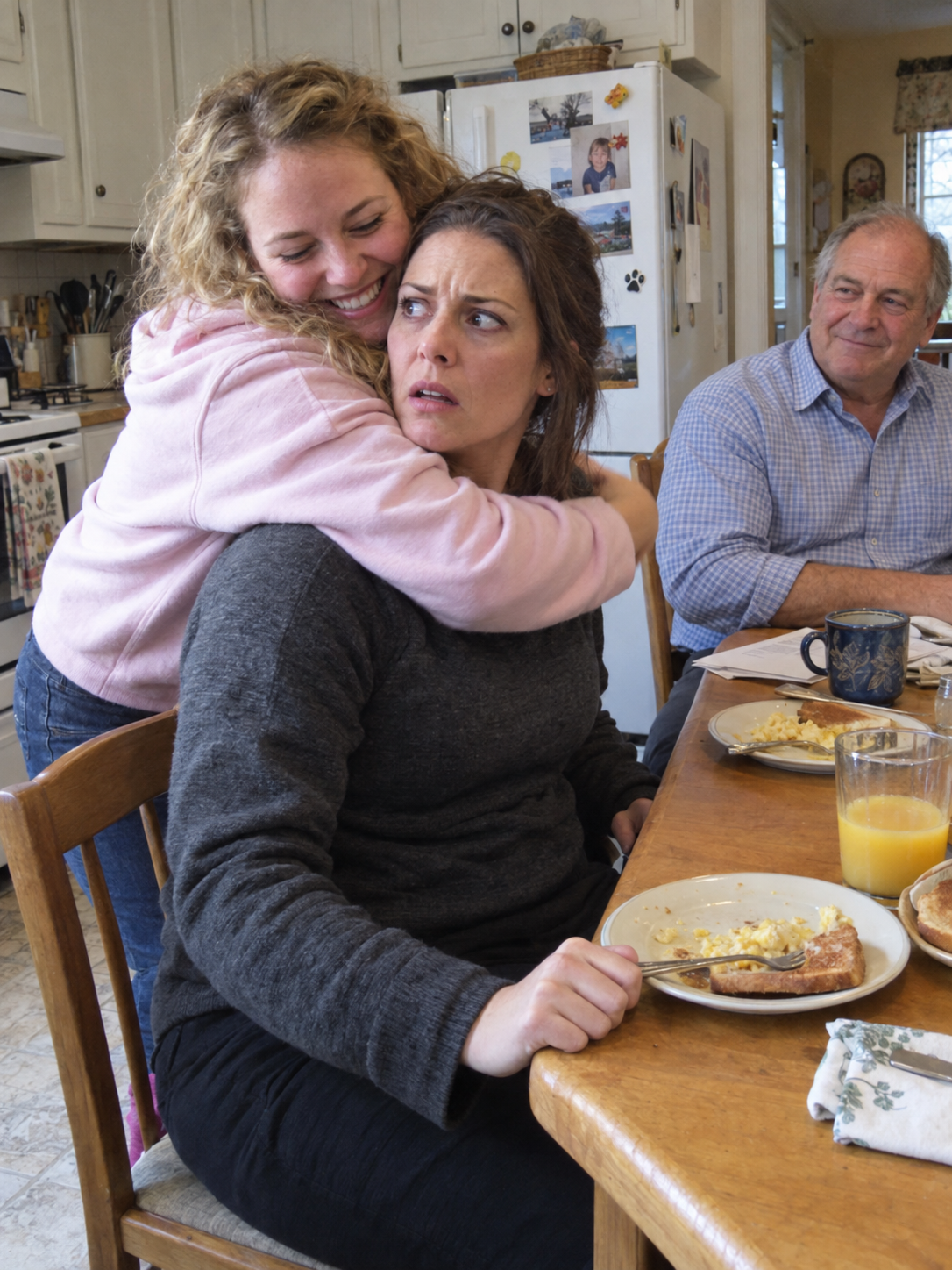
LOVE-My sister hugged me over breakfast and thanked me for buying her a $585,000 house, even though I’d never agreed to give her a dime. Dad had already signed the purchase agreement and placed a gift letter beside my grandfather’s blue mug, expecting me to sign away part of the inheritance he’d controlled since I was fourteen. Then I mentioned a phone call I made at 11:58 the night before, and his smile disappeared…
My sister hugged me over breakfast and thanked me for buying her a $585,000 house, even though I’d never agreed...

My Fiancée Cheated At Her Bachelorette Party In Austin. I Canceled the Wedding…
My Wife Said Her Bachelorette Weekend Ended With “Just a Kiss”—Then I Found the Name She Saved as “M” My...