MY BILLIONAIRE EX-HUSBAND STORMED INTO MY HOUSE DEMANDING THE TRUTH—THEN HE SAW THE NEWBORN IN MY ARMS AND REALIZED WHAT HIS LAST WORDS HAD COST US – Life Story
Silas Lockwood arrived at his ex-wife’s door furious enough to demand eight months of answers before she could even say hello.
Then he saw the newborn against Carolina’s chest—and recognized his own eyes staring back at him.
But the secret she had kept was only half the truth; the other half was buried in the last cruel thing Silas had said before their marriage ended.
THE DOOR HE CAME TO BREAK DOWN
The knock came hard enough to wake the baby.
Carolina Hayes had just lowered her fifteen-day-old son into the bassinet when three sharp blows rattled the brass knocker on her Brooklyn Heights door.
Gabriel startled, his tiny mouth opening before the cry arrived, and every muscle in Carolina’s body tightened with the exhausted reflex of a new mother who had slept in pieces for two weeks.
Then a man’s voice came through the wood.
“Carolina.
Open the door.”
Silas.
She closed her eyes.
For eight months, she had rehearsed a dozen versions of this moment.
None of them included him sounding furious.
Gabriel began to cry.
Carolina gathered him against her chest, pulled the blue blanket around his shoulders, and walked toward the door barefoot.
Her oversized gray sweater smelled faintly of formula, lavender detergent, and the coffee she had reheated three times without finishing.
When she opened the door, Silas Lockwood stood under the brownstone awning with rain darkening the shoulders of a charcoal suit that probably cost more than her first camera.
At thirty-eight, he still had the controlled, intimidating presence that made investors stop talking when he entered a room.
Six-foot-three.
Dark hair damp at the temples.
Steel-gray eyes that had once made Carolina feel completely seen.
Tonight, those eyes were full of accusation.
“Tell me it isn’t true.”
She shifted Gabriel higher.
Silas had not looked down yet.
“Hello to you too.”
“David Chen told me you had a baby.”
Carolina said nothing.
“He said the baby was born two weeks ago.”
“Fifteen days.”
The correction escaped before she could stop it.
Silas stared at her.
Rain whispered against the steps behind him.
“Fifteen days,” he repeated. “And you didn’t think I should know?”
Carolina’s pulse thudded in her throat.
“You filed for divorce eight months ago.”
“That is not an answer.”
“It’s part of one.”
His jaw flexed.
“Is he mine?”
The question hurt even though she had expected it.
Carolina stepped backward.
“You came here angry.
You can leave angry too.”
His expression changed. “Carolina—”
“No.
You don’t get to stand on my doorstep and interrogate me like I hid a quarterly report.”
“I’m asking whether that child is my son.”
“And I’m holding a newborn who was asleep until you started pounding on the door.”
That stopped him.
Not completely.
Enough.
Gabriel’s cry rose between them, thin and indignant.
Carolina turned instinctively, pressing her cheek to his soft dark hair and swaying the way the postpartum nurse had shown her.
Silas finally looked down.
The anger left his face so quickly it frightened her.
His eyes fixed on the baby.
On the dark hair curling damply near one tiny ear.
On the shape of the brow.
On the small hand that had escaped the blanket and was flexing against Carolina’s sweater.
Silas stepped inside without seeming to realize he had moved.
Carolina should have stopped him.
Instead she stood frozen as he stared at the child.
“He’s fifteen days old?” he asked again.
“Yes.”
“When did you know?”
“Two weeks after you asked for the divorce.”
His head lifted sharply.
“The papers weren’t final.”
“No.”
“You knew during the divorce.”
“Yes.”
The word landed between them with eight months of weight.
Silas looked almost physically struck.
“You let me sign those papers without telling me I was going to be a father.”
Carolina’s exhaustion hardened into anger.
“You told me children didn’t fit into the life you wanted.”
“I was angry.”
“You were certain.”
“I had a right to know.”
“And he had a right not to be treated like a mistake.”
Silas opened his mouth.
Nothing came out.
From the bassinet corner came the soft ticking of the old wall clock.
Somewhere upstairs, a neighbor dragged a chair across hardwood.
The ordinary sounds made the moment feel even more impossible.
Gabriel’s crying slowed.
Carolina looked down at him.
His eyelids fluttered.
Then Gabriel opened his eyes, and Silas stopped breathing.
They were gray.
Not baby-blue or vaguely dark, but the same smoke-gray that ran through the Lockwood family.
Silas had seen that color in photographs of his grandfather, in the mirror every morning, and now in a face small enough to fit against Carolina’s forearm.
He sat without being invited.
The navy armchair caught him.
“What’s his name?”
“Gabriel.”
Silas repeated it as though testing whether he was allowed.
“Gabriel.”
“Gabriel Hayes.”
His eyes lifted.
“Hayes?”
“My name.”
“Of course.”
The hurt in his voice almost made Carolina soften.
Almost.
He looked around the living room.
A stack of burp cloths on the sofa.
Two bottles drying beside the sink.
A white noise machine on the bookshelf where his biographies of famous founders had once stood.
They had lived in this brownstone before the Manhattan penthouse, back when Lockwood Energy was only beginning to attract serious money and Carolina still photographed weddings on weekends to pay for equipment.
She had returned here after the divorce because it was the only home she had ever chosen without Silas calculating resale value.
“Why didn’t you call me?” he asked.
Carolina lowered herself onto the couch.
“Because I knew exactly what you would do.”
“You have no idea.”
“I had five years of experience.”
His face tightened.
“That’s cheap.”
“No.
Cheap would have been sending you an ultrasound and asking whether fatherhood could fit between Tokyo and Zurich.”
He stood.
“I deserved the choice.”
“And I deserved a husband who didn’t make me afraid to tell him I wanted children.”
The words hit.
She saw it.
Silas walked toward the window, then back.
“What do you want from me now?”
“That’s the wrong question.”
“What’s the right one?”
“What do you want from him?”
Silas looked at Gabriel.
The baby had begun making small rooting movements against Carolina’s sweater.
She checked the clock.
Feeding time.
“I don’t know,” he admitted.
Carolina appreciated the honesty more than she wanted to.
“Then don’t promise anything tonight.”
His expression hardened again.
“I’m not disappearing.”
“You don’t know that.”
“Yes, I do.”
“No, Silas.
You know you’re shocked.”
She stood carefully.
“You found out less than an hour ago.
Right now Gabriel is a revelation.
Tomorrow he’ll still be a newborn who wakes every ninety minutes and doesn’t care whether the Nikkei opens down.”
“I can learn.”
“Good.”
She moved toward the kitchen.
“Learn before you announce who you’ve become.”
Silas watched her prepare a bottle with the efficient exhaustion of repetition.
“Can I hold him?”
The question was quieter this time.
Carolina looked at him.
It would have been easier to say no.
Anger could build very clean boundaries.
But Gabriel was not evidence in their divorce.
He was a person.
And if Silas intended to become his father, Carolina would not use access as punishment.
“Wash your hands.”
Silas obeyed.
When she placed Gabriel into his arms, the transformation was almost funny.
Silas Lockwood, who had negotiated eight-figure acquisitions without glancing at notes, looked terrified.
“Support his head.”
“I am.”
“You’re holding him like unstable equipment.”
“He weighs less than a laptop.”
“Please never compare our son to office hardware.”
“Our son.”
The words escaped him.
Carolina froze.
So did he.
Gabriel moved.
His hand closed around Silas’s index finger.
Silas stared.
Carolina saw his throat move.
For several seconds, neither of them spoke.
Then Silas whispered, “Hello, Gabriel.”
Something inside Carolina hurt.
Not because it was wrong.
Because it sounded right.
FIFTEEN DAYS
Silas stayed forty-seven minutes.
Carolina knew because new motherhood had turned every hour into an accounting system: feeding, burping, diaper, sleep, repeat.
He memorized things.
How Gabriel liked to be held upright after eating.
How the smallest wrinkle in his blanket could make him fuss.
How Carolina kept spare pacifiers in a ceramic bowl that once held car keys.
Before leaving, Silas asked for her current phone number.
She had changed it after the divorce.
His expression when he realized that was almost as wounded as when she said Gabriel carried her last name.
“I’ll call tomorrow.”
Carolina leaned against the open door.
“Call before you come.”
“I will.”
“And Silas?”
He stopped beneath the porch light.
“If you’re doing this because you feel guilty, figure that out before Gabriel knows who you are.”
His face went still.
“I’m not.”
“You don’t know yet.”
She closed the door gently.
At that morning, Carolina’s phone rang.
Gabriel had been crying for twenty minutes.
She nearly rejected the call when she saw SILAS LOCKWOOD glowing on the screen.
Then she remembered saying he needed to learn.
She answered.
“What?”
Silas sounded instantly alert.
“Is that him?”
“No, it’s the neighbor’s motorcycle.”
He ignored the sarcasm.
“What’s wrong?”
“He’s a newborn.”
“What does that mean?”
“It means sometimes he screams because existence is disappointing.”
Silas was quiet.
“What have you tried?”
“Feeding.
Diaper.
Burping.
Walking.”
“Does he have a fever?”
“No.”
“Then maybe he just wants someone there.”
Carolina laughed tiredly.
“That is literally the only thing I’ve been doing for fifteen days.”
Gabriel screamed louder.
Silas said, “Can you put me on speaker?”
“Why?”
“I don’t know.”
She did.
For a few seconds, only Gabriel’s crying filled the room.
Then Silas spoke.
“Hey, buddy.”
Carolina stopped walking.
His voice had changed.
No CEO cadence.
No certainty.
Just a man talking to a baby who could not understand him.
“You’re making a strong argument,” Silas said. “I don’t know what the argument is, but your conviction is impressive.”
Despite herself, Carolina smiled.
Gabriel’s cries softened to broken hiccups.
Silas heard it.
“That worked?”
“Coincidence.”
“I’m taking credit.”
“Of course you are.”
For the next hour they talked quietly.
Not about the divorce.
About Gabriel.
Carolina told him the pediatrician’s name, his birth weight, the way he always sneezed twice after waking.
Silas asked questions and did not interrupt.
At one point Carolina hummed a Portuguese lullaby.
Silence came through the phone.
“You remember that?”
“You used to hum it when you worked.”
“My grandmother sang it.”
“I looked up the words.”
“Why?”
Carolina looked at the dark window.
“Because I wanted him to have something from you that didn’t require you being there.”
Silas did not answer for a long time.
When he finally did, his voice had gone rough.
“I’m sorry.”
Carolina closed her eyes.
“That doesn’t fix anything.”
“I know.”
It was the first apology from him that did not arrive carrying an argument behind it.
At seven the next morning, he appeared with coffee and bagels.
He had called first.
Carolina noticed.
So did the note on his phone reminding him of her order.
Oat milk.
Extra shot.
No sugar.
“You saved it?”
“I forgot once in 2019.”
“You brought whole milk.”
“You reacted like I had poisoned you.”
“I was dramatic.”
“You were terrifying.”
He smiled.
It almost felt like their old kitchen.
That frightened her.
So she gave him a diaper.
“Your turn.”
Silas looked at Gabriel.
Gabriel looked back with solemn suspicion.
“This feels punitive.”
“This is fatherhood.”
He struggled with the onesie snaps for six minutes.
Carolina refused to help.
“You built a company.”
“Companies have manuals.”
“So do babies.
You just refuse to read them.”
“I read the discharge booklet last night.”
Her head turned.
“All forty-three pages.”
“You read my discharge booklet?”
“You sent me a picture of the cover when I asked about feeding.”
Carolina stared.
The Silas she remembered skimmed anything that was not a term sheet.
Gabriel kicked one foot free.
Silas sighed.
“Your son is sabotaging me.”
“Our son when he grabs your finger.
My son when he kicks you.”
“That feels unfair.”
“Parenthood is full of injustice.”
Silas laughed.
It was the first time Carolina had heard the sound in almost a year.
It stirred something dangerous.
Memory.
She shut it down.
After breakfast, she handed him a folder.
Inside were copies of Gabriel’s birth record, pediatric paperwork, and the contact information for a family-law attorney.
Silas frowned.
“What is this?”
“A boundary.”
He looked up.
“If you’re going to be his father, you don’t get to audition as my boyfriend first.”
His expression changed.
“I’m not asking—”
“You are thinking it.”
Silas said nothing.
Carolina sat opposite him.
“We establish everything about Gabriel separately from whatever happens between you and me.
Legal paternity.
Support.
Parenting time.
Medical decisions.”
“You want lawyers involved.”
“I want clarity.”
“You think I’m going to take him from you?”
“No.”
She held his gaze.
“I think we both know what happens when two hurt people rely on assumptions.”
Silas looked at the folder again.
Then nodded.
“All right.”
That was the first decision that made Carolina believe he might actually stay.
Not the coffee.
Not the tears when Gabriel grabbed his finger.
Paperwork.
Structure.
The willingness to become responsible without being rewarded with romance.
Their lawyers worked out a temporary parenting plan while the legal details were formalized.
Silas did not contest support.
He did not demand equal overnight time with a two-week-old child simply because fifty-fifty sounded fair on paper.
He asked what pediatric experts recommended.
He began with mornings.
Then evenings.
Then one overnight at Carolina’s apartment while she slept in the bedroom and he took the living-room shift between feedings.
He was terrible at swaddling.
Gabriel escaped every blanket Silas wrapped around him.
Carolina came out at four in the morning to find Silas watching an instructional video with the intensity of a military briefing.
“Again,” he whispered at the screen.
Carolina covered her mouth to stop herself from laughing.
Silas looked up.
“Not one word.”
“You’ve negotiated with heads of state.”
“None of them had this arm strength.”
For a moment she laughed so hard she had to sit down.
Silas watched her.
Not possessively.
Not hopefully.
Just quietly.
When Carolina noticed, the laughter faded.
“What?”
“I missed that.”
She looked away.
“That isn’t permission.”
“I know.”
Again.
No argument.
THE LIFE SHE BUILT WITHOUT HIM
The first real conflict came from Vivien.
Carolina’s older sister arrived from Los Angeles on a Saturday morning with two suitcases, a tailored black coat, and the expression of a trial attorney arriving for cross-examination.
She opened the apartment door with the spare key Carolina had given her.
Then stopped.
Silas sat on the sofa with Gabriel sleeping on his chest.
“Well,” Vivien said. “Either I’m hallucinating from the red-eye, or capitalism has developed paternal instincts.”
Silas rose carefully.
“Good morning, Viv.”
“Don’t call me Viv.”
“Good to see you too.”
Vivien placed her bag down.
Carolina emerged from the bedroom with wet hair.
“You’re early.”
“I caught an earlier flight.”
Her eyes moved back to Silas.
“Apparently I missed several chapters.”
Carolina explained.
Not everything.
Enough.
Vivien listened without interruption.
That worried Silas more than anger would have.
When Carolina finished, Vivien looked directly at him.
“So you know now.”
“Yes.”
“And your first response was to storm over here angry that she kept Gabriel from you.”
“Yes.”
“At least you’re consistent.”
“Vivien.”
“No, Carolina.”
Her voice softened only when she looked at her sister.
“I love you.
You know that.”
Then back to Silas.
“But I watched you disappear inside this man’s calendar for five years.”
Silas did not defend himself.
Vivien noticed.
She continued.
“You stopped taking photography assignments because they conflicted with his investor dinners.
You gave up the Iceland documentary because he had that conference in Geneva.
You spent half your marriage apologizing for wanting him home.”
Carolina’s mouth tightened.
“That isn’t all on him.”
“No.
It isn’t.”
Vivien looked at her.
“You let yourself disappear too.”
Silas felt something shift.
Vivien was not there to create a villain.
She was there to prevent nostalgia from rewriting history.
She turned to him.
“What happens when fatherhood stops being new?”
Silas looked down at Gabriel.
“I don’t know.”
Vivien’s eyebrows rose.
“Good answer.”
“I want to stay.”
“That wasn’t my question.”
“I know.”
She crossed her arms.
“What happens when you have a forty-million-dollar contract in Tokyo and Gabriel has a fever?”
Silas nearly smiled.
“That’s oddly specific.”
“It’s called an example.”
“It sounded rehearsed.”
“I had six hours on a plane.”
Carolina laughed.
Vivien refused.
“I’m serious.”
“So am I.”
Silas looked toward Carolina.
“I don’t know what happens.
That’s the truth.”
He paused.
“But I know I’ve spent fifteen years building a company that supposedly depends on my ability to solve problems.
If the only solution to every crisis is me getting on a plane, I didn’t build a company.
I built a dependency.”
Vivien’s expression changed.
Barely.
Respect, perhaps.
Not forgiveness.
“Better answer.”
Later, over Thai food, Vivien watched Silas change Gabriel’s diaper, warm a bottle, and hand the baby back to Carolina without expecting praise.
By dessert, she still disliked him.
But she no longer dismissed him.
That mattered.
Three days after Vivien returned to Los Angeles, Silas’s phone rang at a.m.
Carolina was at the kitchen table eating toast while Gabriel fussed against Silas’s shoulder.
“Lockwood.”
Robert Kline’s voice came through loud enough that Carolina could hear urgency without hearing words.
Silas stepped into the hall.
Ten minutes later, he returned.
His face had become the one Carolina remembered from their marriage.
Focused.
Remote.
Already somewhere else.
“What happened?”
“The Yamamoto partnership is collapsing.”
“The Tokyo project?”
“Yes.”
“What do they need?”
“Me.”
Carolina laughed without humor.
“Of course.”
Silas looked at her.
“They want in-person renegotiation.”
“How long?”
“Ten days.
Maybe twelve.”
Gabriel began to cry.
Perfect timing.
Carolina stood.
“Go.”
Silas frowned.
“That sounded like an accusation.”
“It wasn’t.”
“Yes, it was.”
She took Gabriel.
“Silas, your company employs nine hundred people.”
“One thousand forty.”
“Wonderful.
A thousand people whose mortgages do not care about our emotional breakthrough.”
“I can send Robert.”
“They specifically want you.”
“How do you know?”
“Because I was married to you.”
Silas looked away.
The old argument was waiting for them.
They could both feel it.
Business versus family.
Ambition versus intimacy.
The fight that had ended their marriage wearing a new face.
“I’m not going,” he said.
Carolina froze.
“No.”
“What?”
“You don’t get to prove you changed by turning yourself into a martyr.”
“I’m choosing my son.”
“You’re choosing a dramatic gesture.”
Silas’s eyes hardened.
“You wanted me to prioritize family.”
“I wanted you to have priorities, plural.”
She lowered her voice.
“If you destroy something you spent fifteen years building because you’re afraid I’ll stop trusting you, eventually you’ll resent me.”
“I won’t.”
“You don’t know that.”
The phrase echoed the night he found Gabriel.
Silas heard it too.
Carolina handed the baby back.
“Go to Tokyo.”
He stared at her.
“Handle the crisis.
Come home when you said you would.
That will tell me more than canceling the flight.”
“What if you need me?”
“I will need you.”
Her voice cracked slightly.
“That’s the point.”
Silas left for Tokyo Sunday.
On the sixth night, Carolina called him at a.m.
New York time because Gabriel had refused to sleep for nearly three hours.
Silas answered on the first ring.
“Is he okay?”
“He’s furious with civilization.”
“Reasonable.”
Carolina sat in the rocking chair.
“I miss you.”
The words escaped.
Silas was silent.
She closed her eyes.
“Forget I said that.”
“No.”
His voice softened.
“Say it again.”
“Absolutely not.”
“I miss you too.”
Carolina pressed her lips together.
They had not kissed.
Had not discussed getting back together.
Had barely touched except when transferring Gabriel between them.
Still, distance revealed how much space Silas had begun occupying again.
That scared her more than anger ever had.
“How are negotiations?”
“Bad.”
“How bad?”
“Robert used the phrase ‘cultural train wreck’ in front of opposing counsel.”
“He always had a gift for diplomacy.”
“You remember.”
“I remember everything, Silas.
That’s the problem.”
Silence.
Then Silas said, “I don’t expect you to forget.”
For the next twenty minutes they talked while Carolina rocked Gabriel and Silas watched dawn break over Tokyo through a hotel window.
He told her the hotel coffee was terrible.
She told him Gabriel had discovered his own ears and seemed betrayed by them.
Nothing romantic happened.
It felt more intimate than romance.
On day eight, Gabriel screamed for two hours.
Carolina had eaten half a piece of toast since morning.
She was exhausted enough that every cry felt like evidence she was failing.
Her sister was in court in Los Angeles.
Mrs.
Chen upstairs had the flu.
Silas called from Tokyo during the worst of it.
Carolina answered angrily.
“I can’t do this through a phone.”
He went silent.
“I know.”
“No, you don’t.”
Gabriel cried against her chest.
“You’re in a hotel talking about a forty-million-dollar deal while I’m trying to remember the last time I showered.”
“Carolina—”
“I knew this would happen.”
That was unfair.
She knew it even while saying it.
Silas heard only the fear underneath.
“I’m coming home.”
“No.”
“Yes.”
“You said twelve days.”
“I don’t care.”
“I do.”
She was crying now.
“Finish what you went there to do.”
“I’m not staying if you’re drowning.”
“And I’m not letting you use me as permission to abandon responsibility.”
Gabriel wailed.
Carolina closed her eyes.
“I have to go.”
She ended the call.
The next morning, a postpartum doula named Margaret Riley stood at her door.
Carolina nearly closed it.
“Mr.
Lockwood hired me,” Margaret explained.
“Of course he did.”
“He said you’d hate that.”
Carolina blinked.
“He also said I should leave immediately if you tell me to.”
That changed things.
“He said that?”
“He was very specific.”
Carolina looked at Margaret’s credentials, references, and overnight bag.
Then at Gabriel, who had begun crying again.
“Four hours.”
Margaret smiled.
“Sleep?”
“Yes.”
“Deal.”
Carolina woke five hours later.
Gabriel was asleep.
Soup waited on the stove.
Her phone held one message from Silas.
I wanted to help without deciding for you.
If Margaret feels intrusive, send her home and I’ll pay her anyway.
Carolina read it twice.
That was the first moment she realized Silas was not simply learning to be present.
He was learning something harder.
How not to control the people he loved.
THE TEST THAT CAME FROM TOKYO
Silas came home on day ten.
Not because Carolina had demanded it.
Not because the deal collapsed.
He had spent two nights restructuring the negotiating team, transferred final authority to Robert, and forced Lockwood Energy’s Tokyo partners to deal with executives other than the founder.
Robert hated the decision.
Then closed the agreement two days later on better terms.
Silas arrived at Carolina’s brownstone at in the morning with three days of stubble and a carry-on bag.
He knocked softly.
Carolina opened the door holding Gabriel.
For a moment, nobody spoke.
Silas looked terrible.
Carolina almost smiled.
“You look like international business defeated you.”
“It cheated.”
Gabriel stirred.
Silas immediately reached toward him, then stopped.
“May I?”
That small hesitation mattered.
Carolina handed him their son.
Silas closed his eyes for half a second as Gabriel settled against his chest.
“I missed you, buddy.”
Carolina went to make coffee.
No dramatic reunion.
No kiss.
That would have been easier.
Instead they spent the morning discussing feeding changes, the Tokyo outcome, Margaret, and the fact that Silas had finally learned how to delegate a transaction he once believed required his presence.
Robert called at nine.
The Yamamoto deal had closed.
Forty-three million dollars in the first phase.
Additional subsidiary agreements likely worth fifteen more.
Silas congratulated him.
Then ended the call.
Carolina watched.
“That’s it?”
“What?”
“No champagne? No victory lap?”
“I’m tired.”
“You once opened a five-thousand-dollar bottle because a contract came in seven percent above projections.”
“That was obnoxious.”
“It was extremely obnoxious.”
He looked at Gabriel.
“I’m happy the deal closed.”
“But?”
“But I spent ten days thinking about his face.”
Carolina turned away.
Silas continued.
“And yours.”
She stiffened.
“Don’t.”
“I’m not asking for anything.”
“Good.”
“I just want you to know.”
Carolina faced him.
“You still don’t understand.”
“Then tell me.”
She placed her mug down.
“The reason I didn’t tell you about the pregnancy wasn’t only because you said children didn’t fit your schedule.”
Silas went very still.
Carolina had known this conversation would come.
She had avoided it because the memory still made her feel twenty pounds lighter and completely hollow.
“The night you asked for the divorce, we fought after you called your attorney.”
“I remember.”
“Do you remember what you said when I asked whether five years meant anything?”
Silas frowned.
“Not exactly.”
“I do.”
Her voice remained controlled.
“You said maybe ending it was the best decision we’d ever made.”
Silas looked down.
“That sounds like me.”
“It gets worse.”
He raised his eyes.
“You said we’d dodged a bullet because at least we hadn’t made the mistake of having children.”
His face changed.
Carolina kept going because stopping would make it impossible to start again.
“You said you couldn’t imagine anything worse than being tied forever to someone because of a child.”
Silas sat down.
“I said that?”
“Yes.”
“I don’t remember.”
“I do.”
Her voice finally cracked.
“I found out I was pregnant thirteen days later.”
The kitchen disappeared into silence.
Silas looked at Gabriel.
Then at Carolina.
“You already were—”
“Four weeks, probably.”
His face drained.
“I didn’t know when you said it.”
“I know.”
“Carolina.”
“I took four tests.”
She wrapped both hands around her mug.
“Then I sat on the bathroom floor for an hour hearing your voice tell me our child would be the worst thing that could happen to you.”
Silas stood.
Then sat again.
“I’m sorry.”
“I know.”
“No.”
He looked sick.
“I’m sorry is pathetic.”
“Yes.”
He covered his face.
Carolina felt no satisfaction.
This was not punishment.
It was history.
“I thought about telling you,” she said.
Silas lowered his hands.
“When?”
“Every day.”
“Why didn’t you?”
“Because I knew you would show up.”
He frowned.
“You say that like it’s bad.”
“At the time? It was.”
Carolina looked toward the window.
“You would have paid every bill.
You would have hired the best doctors.
You would have put money into a trust before the first ultrasound.”
Silas knew she was right.
“And then?”
“You would have become responsible.”
“That’s what fathers are supposed to be.”
“Responsible isn’t the same as present.”
Silas did not answer.
Carolina continued.
“I was afraid Gabriel would grow up feeling like the obligation you nobly managed.”
The words broke something open in his face.
“I would never—”
“You don’t know.”
He stopped.
Again.
The phrase had become a discipline between them.
You don’t know.
It required them to separate intention from evidence.
Silas looked at their son.
“You were wrong not to tell me.”
“Yes.”
The immediate answer surprised him.
Carolina’s eyes filled.
“I know that.”
She sat across from him.
“I took away your right to know him before he was born.
I told myself I was protecting Gabriel, but part of me was protecting myself from being rejected again.”
Silas listened.
“I also wanted control.”
That was harder to admit.
“You had ended our marriage without giving me much room to fight for it.
Keeping the pregnancy felt like the one decision you couldn’t dominate.”
Silas flinched.
“That’s ugly.”
“Yes.”
“But honest.”
“Yes.”
They sat with two truths.
Silas had made fatherhood sound like a trap.
Carolina had responded by taking the choice away from him entirely.
Neither action disappeared because the other person had been wrong first.
Gabriel woke and made a small, offended sound.
Carolina smiled through tears.
“Your timing is terrible.”
Silas lifted him.
For the first time, he did not ask Carolina to forgive him.
He asked something more useful.
“What would earning trust actually look like?”
She thought.
Then answered.
“Consistency when nobody is impressed.”
WHAT HE LEFT BEHIND
Consistency turned out to be boring.
That was why it mattered.
Silas did not move into Carolina’s apartment.
He rented a furnished place six blocks away.
He did not buy a nursery worth fifty thousand dollars.
He bought a crib after Carolina sent him three consumer-safety links.
He learned Gabriel’s pediatric schedule.
He attended appointments when invited.
When he could not, he did not send flowers.
He apologized and rescheduled his work.
He stopped treating fatherhood like a heroic transformation story.
Three months later, Carolina received an email from a magazine editor she had worked with before the marriage ended.
A documentary photographer had dropped out of a four-day assignment in coastal Maine.
The editor wanted Carolina.
She read the email six times.
Silas was on the floor with Gabriel trying to convince him that tummy time was not oppression.
“What happened?”
Carolina handed him the phone.
He read it.
“This is huge.”
“It’s four days.”
“Yes.”
“I can’t go.”
Silas looked at her.
“Why?”
She laughed.
“Did you miss the infant?”
“I can take care of him.”
“For four days?”
He looked offended.
“I have survived multiple diaper incidents unsupervised.”
“This is different.”
“Why?”
Because trusting him for breakfast was not the same as trusting him with their son for four nights.
Because Carolina had built her entire postpartum identity around being indispensable.
Because leaving Gabriel made her chest tighten.
Because the woman she used to be had taken assignments without asking anybody whether the timing was convenient.
Silas saw the answer arrive on her face.
“You want to go.”
“Yes.”
“Then go.”
She stared at him.
“That simple?”
“No.”
He smiled.
“I’m terrified.”
That helped.
“You?”
“I still check whether he’s breathing when he naps.”
“So do I.”
“See? Highly qualified.”
Carolina went to Maine.
The first night, she called four times.
By the second, twice.
By the third, Silas sent a picture of Gabriel asleep on his chest with the message:
WE HAVE FORMED A UNION.
MANAGEMENT HAS LOST CONTROL.
Carolina laughed alone in her hotel room.
She photographed fishermen at dawn, a family rebuilding a pier damaged by a storm, and an eighty-two-year-old woman who had spent forty years maintaining a lighthouse.
For four days, Carolina was not primarily someone’s mother or someone’s ex-wife.
She was a photographer again.
When she returned, Silas had not reorganized her apartment.
He had not bought expensive equipment.
He had not tried to turn her career into a project.
He handed her Gabriel.
“How was it?”
“Good.”
“Only good?”
She smiled.
“Really good.”
He looked pleased.
Not threatened.
Not inconvenienced.
That night, after Gabriel slept, they sat on the floor eating pizza from the box.
Their knees touched.
Neither moved away.
Carolina told him about the lighthouse keeper.
Silas told her Gabriel had discovered pureed carrots and reacted as though betrayed by civilization.
She laughed.
Silas looked at her.
This time she did not shut the moment down.
“What?” she asked.
“I love you.”
The room went quiet.
Carolina’s heart accelerated.
Silas immediately added, “You don’t have to say anything.”
“That wasn’t fair.”
“I know.”
“You said you weren’t asking.”
“I’m not.”
“You just dropped a grenade between the pepperoni.”
“That was poorly timed.”
She looked at him for a long moment.
“I love you too.”
Silas did not move.
Carolina’s eyes filled.
“That doesn’t mean I trust you enough to marry you again.”
His expression softened.
“I know.”
“It doesn’t even mean I’m ready to date you.”
“Okay.”
“And if you say okay one more time like you’re passing an audit, I may throw this pizza at you.”
Silas laughed.
Carolina laughed too.
Their first kiss came two weeks later.
Not after a grand speech.
After Gabriel spit formula down both of them at in the morning.
Carolina was standing beside the sink in one of Silas’s old college shirts.
Silas had formula on his shoulder.
They looked ridiculous.
Carolina began laughing.
Silas wiped a drop from her cheek.
His hand stayed there.
She kissed him.
Brief.
Careful.
Then stepped back.
Silas looked stunned.
“Don’t make it weird.”
“I’m physically incapable of that.”
“Goodnight.”
She walked away smiling.
For five months, they dated.
Slowly.
Dinner after Gabriel slept.
Walks through Brooklyn with the stroller.
A museum afternoon where they spent most of the time debating whether a massive white canvas was brilliant or fraudulent.
They fought too.
Carolina hated the way Silas still solved problems before asking whether anyone wanted them solved.
Silas hated the way Carolina sometimes withheld concerns until they became verdicts.
Dr.
Patel, the couples therapist they eventually chose, called both habits “control wearing different outfits.”
Neither enjoyed that phrase.
Both remembered it.
Then Meridian Global called.
THE OFFER OF A LIFETIME
Richard Steinberg’s offer arrived on a cold December morning.
Silas was on Carolina’s couch with Gabriel asleep across his chest when his phone vibrated.
Meridian had tried to acquire Lockwood Energy for three years.
This time the number was large enough that Silas initially assumed he had misheard.
Richard repeated it.
Then came the conditions.
Five years as division president.
Two years of integration.
Roughly sixty percent international travel.
Silas looked down at Gabriel.
The child was almost four months old now.
He had begun smiling deliberately.
He recognized Silas’s voice.
He liked being walked near windows.
Sixty percent.
“Friday,” Richard said. “Offer expires at five.”
After the call, Silas told Carolina everything.
She listened.
“It’s what you wanted.”
“Once.”
“That doesn’t make it wrong now.”
“It makes me wonder whether I spent fifteen years climbing a ladder I don’t want to keep climbing.”
Carolina’s expression tightened.
“Be careful.”
“With what?”
“Making us the reason.”
Silas frowned.
“You are the reason.”
“No.”
She stood.
“Gabriel can be part of what you want.
I can be part of what you want.
But if you reject the biggest offer of your career and then call that love, someday every difficult day in this house comes with a price tag.”
“I would never do that.”
“You don’t know.”
There it was again.
Silas hated how useful the phrase had become.
He stood.
“I know I don’t want to travel sixty percent.”
“Then reject that job.”
“The acquisition requires it.”
“Then negotiate.”
“They said non-negotiable.”
“People say that before negotiations.”
Silas almost smiled.
“You’ve been around me too long.”
“Five years married to you was basically an unwanted MBA.”
He reached for her.
Carolina stepped back.
“Don’t.”
“What?”
“Make the decision here.”
He lowered his hand.
She continued.
“Go to your office.
Talk to Robert.
Talk to the board.
Figure out what you want as a businessman, not what you think proves you’re a good father.”
Silas went.
Robert Kline did not take the news calmly.
“You’re considering rejecting Meridian?”
“Yes.”
“Because of travel?”
“Yes.”
Robert stared across the conference table.
“Nine hundred employees have equity tied to this company.”
“One thousand forty-two.”
“Do not correct my approximate outrage.”
Silas almost smiled.
Robert did not.
“Some of those people have been waiting ten years for liquidity.
This acquisition changes their lives.”
“I know.”
“Then family cannot be your entire analysis.”
Silas leaned back.
“Agreed.”
Robert paused.
That answer interrupted his planned speech.
Silas continued.
“The company also cannot remain structured around me personally closing every major relationship.”
“Clients expect founder involvement.”
“Because I trained them to.”
“So what?”
“So I made myself indispensable and called it leadership.”
Robert stared.
Silas slid a folder across the table.
A plan.
Promote Robert to chief executive.
Silas would become executive chair.
Create an internal succession framework.
Expand regional authority.
Establish a secondary share-sale program so long-term employees could liquidate a portion of vested equity even without a Meridian sale.
Robert opened the file.
“You prepared this when?”
“After Tokyo.”
“You were planning to replace yourself?”
“I was planning to make the company survive me.”
Robert read silently.
Then looked up.
“This would reduce your control.”
“Yes.”
“You hate reducing control.”
“I’m developing hobbies.”
Robert almost laughed.
Almost.
“And Meridian?”
“I counter.”
Silas proposed an acquisition without the five-year operating requirement.
He would provide strategic transition support for eighteen months.
Maximum twenty travel days annually.
Existing management retained.
Meridian rejected it within three hours.
Richard called personally.
“You are walking away from generational money.”
“I already have generational money.”
“That has never stopped anyone.”
“It should occasionally.”
“This is emotional.”
Silas looked around the office he had built his life inside.
“No.”
His answer surprised even him.
“It’s the first business decision I’ve made in years that accounts for what my time actually costs.”
Richard exhaled.
“You’ll regret this.”
“Possibly.”
That night, Silas went to Carolina’s apartment.
She knew from his face.
“You rejected it.”
“They rejected my counter.”
“And?”
“I’m not taking the job.”
Carolina closed her eyes.
“Silas.”
“I also promoted Robert to CEO.”
Her eyes opened.
“What?”
He explained the plan.
Employee liquidity.
Executive-chair role.
Reduced travel.
Real delegation.
No heroic retirement.
No dramatic abandonment.
A different structure.
Carolina stared at him.
“You did all that in four days?”
“I’ve been thinking about it for months.”
Something in her expression shifted.
Then he ruined it.
“I’m moving out of Manhattan.”
“What?”
“My penthouse.”
“Why?”
“I don’t need it.”
“Where are you moving?”
Silas hesitated.
Carolina’s eyes narrowed.
“No.”
“I was going to ask if—”
“No.”
He blinked.
“We’re dating.”
“Yes.”
“We have a child.”
“Yes.”
“I spend half my nights here.”
“Yes.”
“So—”
“So you don’t move back in because you made one mature corporate decision.”
Silas sat down.
“That’s fair.”
“I want us to choose living together because we’re ready, not because the symbolism is irresistible.”
He smiled faintly.
“You know me disturbingly well.”
“I survived the first marriage.”
Silas nodded.
“Then I’ll renew my lease.”
Carolina looked surprised.
“You’re not arguing?”
“Consistency when nobody is impressed.”
She stared.
He remembered.
That night, Carolina kissed him first.
TRUST IS A SCHEDULE
The second time Carolina and Silas built a life together, they did it with calendars.
Not romantic calendars.
Boring ones.
Gabriel’s pediatric appointments.
Carolina’s shoots.
Silas’s board days.
Overnight parenting.
Therapy.
Family dinners.
Time alone.
No one pretended love made logistics unnecessary.
It had been logistics, after all, that Silas once used to justify absence.
Now logistics became a way to make presence visible.
Six months after Gabriel’s birth, Carolina photographed her first magazine cover.
Silas took Gabriel to music class.
Nine months after his birth, Silas missed a board dinner because Gabriel had an ear infection.
Robert handled it.
The company survived.
Ten months after birth, Carolina accepted a weeklong project in Nova Scotia.
Silas encouraged her to go.
Then panicked privately when Gabriel developed a stomach bug on day two.
He called the pediatrician.
He did not call Carolina until after the appointment.
When he finally told her, she was furious.
“You hid it from me.”
“He was fine.”
“That isn’t the point.”
Silas closed his eyes.
Same mistake.
Different costume.
He had tried to protect her concentration by controlling information.
“I’m sorry.”
“You should be.”
“I thought—”
“I know what you thought.”
Carolina’s voice softened.
“That’s why it scares me.”
Silas sat on the kitchen floor beside Gabriel, who was playing with a measuring cup.
“What should I have done?”
“Tell me.”
“Even if it ruined the shoot?”
“Let me decide what information ruins my shoot.”
He nodded.
“You’re right.”
Trust grew that way.
Not linearly.
Not beautifully.
Through corrections.
At Gabriel’s first birthday, Vivien watched Silas wipe frosting from his son’s hair.
“You’re less awful,” she said.
Silas looked at her.
“That may be the nicest thing you’ve ever said to me.”
“Don’t get used to it.”
Carolina overheard and laughed.
Later, after everyone left, Gabriel fell asleep in Carolina’s arms.
Silas carried half the decorations to the kitchen.
When he returned, Carolina was staring at their son.
“What?”
“He’s one.”
“I noticed the cake.”
“A year ago I thought I’d raise him alone.”
Silas sat beside her.
“A year ago I didn’t know he existed.”
She looked at him.
“Do you hate me for that?”
Silas thought carefully.
“I hated the choice.”
Carolina’s eyes dropped.
“Sometimes I still do.”
She nodded.
“But I understand the woman who made it more than I used to.”
Her eyes filled.
“I’m sorry.”
“I know.”
“No excuses.”
“I know.”
Silas looked at Gabriel.
“I wish I had those months.”
“I know.”
“But wishing doesn’t give them back.”
Carolina’s shoulders lowered.
That was forgiveness in the only form that mattered.
Not forgetting.
Not pretending the injury had been harmless.
Accepting that no one could rewrite it.
Three months later, Silas proposed.
Not at a restaurant.
Not with photographers.
Not during an investor event disguised as romance, as he had done the first time.
He knelt in Gabriel’s nursery while Carolina tried to assemble a bookshelf.
She stared at him.
“You cannot be serious.”
“I am.”
“You’re holding an Allen wrench.”
He dropped it.
“Better?”
“No.”
Gabriel sat inside an empty cardboard box watching them.
Silas took out a small ring.
Not the enormous diamond Carolina had worn during their first marriage.
A simple oval stone in a thin gold setting.
“I’m not asking you to restore what we had.”
Carolina’s eyes filled.
“I don’t want that marriage back.”
“Good.”
He smiled slightly.
“Neither do I.”
He looked toward Gabriel.
“I’m asking whether you want to keep building this one.”
Carolina did not answer immediately.
That was important.
Silas waited.
No persuasion.
No negotiation.
No fear disguised as certainty.
Finally Carolina said, “One condition.”
“Name it.”
“If this fails, we do not make Gabriel responsible for keeping us together.”
Silas nodded.
“Agreed.”
“And another.”
“You said one.”
“I changed the terms.”
“Of course.”
“My work matters.”
“Yes.”
“Not as a hobby.
Not because you’re being generous.”
“Yes.”
“My work matters because it’s mine.”
Silas’s eyes softened.
“I know.”
Carolina smiled.
“Then yes.”
Gabriel clapped because his parents were smiling.
He had no idea what he was celebrating.
That somehow made the moment perfect.
THE DOOR THAT OPENED TWICE
Their second wedding was small.
Twenty-eight people.
No business press.
No corporate partners.
Vivien walked Carolina down the aisle.
Robert held Gabriel during the vows and spent half the ceremony preventing him from eating the boutonnière.
Carolina wore a simple ivory dress.
Silas wore a navy suit.
Neither promised that love would always be easy.
They promised to tell the truth before resentment made it expensive.
They promised not to use work, fear, or Gabriel as leverage.
They promised that neither person would become smaller to preserve the relationship.
Two years later, their house in Park Slope sounded nothing like Silas’s old penthouse.
There were toys under furniture.
A plastic dinosaur lived in the kitchen utensil drawer because Gabriel had decided it was a “cooking dinosaur.”
Carolina’s framed photographs covered the hall.
Silas had converted one back room into an office with a door Gabriel ignored completely.
Lockwood Energy grew.
Slower than Meridian had projected under an acquisition.
More steadily than Robert had feared.
Robert turned out to be a better CEO than Silas had expected and reminded him of this frequently.
Silas traveled.
Just not endlessly.
He had missed three bedtime stories in twenty-four months.
He remembered every one.
Carolina worked three days a week and traveled when the assignment mattered.
She specialized in documentary family portraiture—less interested in perfect smiles than in the unguarded moments between them.
She photographed fathers tying shoes.
Mothers sleeping beside hospital bassinets.
Grandparents teaching children to cook.
Ordinary acts people never thought to document until they were gone.
One Saturday afternoon, Gabriel chased soap bubbles across the yard while Silas knelt in the grass blowing them.
“More.”
“What’s the word?”
“More please.”
“Acceptable.”
Carolina lowered her camera.
Silas looked over.
“You got it?”
“I got thirty versions of the same picture.”
“So yes.”
Gabriel charged through another cloud of bubbles.
Carolina watched her husband.
Not the man who had appeared at her door demanding answers.
Not the executive who believed love could be fitted around work.
A different man.
Not magically different.
Practiced different.
That mattered more.
At lunch, Silas told her The New York Times wanted to profile CEOs who had redesigned their companies around family priorities.
“They want us both.”
Carolina raised an eyebrow.
“Why me?”
“Because apparently my personal growth requires corroborating witnesses.”
“Smart journalist.”
“I told them I’d ask.”
Carolina considered it.
“No staged photos.”
“Agreed.”
“No pictures that show Gabriel’s face clearly.”
“Agreed.”
“I approve anything about the divorce for accuracy.”
“They won’t give full editorial approval.”
She pointed at him.
“See? This is why I need representation.”
Silas laughed.
“Fine.
We negotiate access.”
“Now you’re speaking my language.”
Gabriel folded a napkin and announced it was a boat.
Silas admired it seriously.
Then Carolina reached into her jeans pocket.
Her hand shook.
“There’s something else.”
Silas looked up.
She placed a pregnancy test on the counter where Gabriel could not see it.
Silas froze.
Carolina watched several emotions cross his face.
Shock.
Hope.
Fear.
Joy.
Exactly in that order.
“Eight weeks,” she said.
Silas looked at her.
“Are you okay?”
The question came before celebration.
Carolina’s eyes filled.
“Yes.”
“Do you want this?”
“Yes.”
Only then did Silas smile.
A huge, unguarded smile that made him look twenty-five again.
He stood and kissed her.
Gabriel immediately objected.
“Stop kissing.”
They laughed.
Silas lifted him.
“How would you feel about being a big brother?”
Gabriel considered the question with extreme seriousness.
“Can the baby play dinosaurs?”
“Eventually.”
“Okay.”
Approval granted.
That evening, after Gabriel had been read two stories despite negotiating for four, Silas and Carolina sat on the back porch.
Autumn air moved through the maple tree.
Carolina rested her head against his shoulder.
“Do you ever regret Meridian?”
Silas did not answer immediately.
Sometimes, she thought, his silences were the clearest proof he had changed.
The old Silas would have known the correct response before she finished asking.
“I wonder,” he said.
“That’s not the same thing.”
“No.”
He looked toward the warm kitchen windows.
“I wonder what that life would have been.”
“And?”
“And then Gabriel calls me at work because he wants to tell me his sock has a dinosaur on it.”
Carolina smiled.
“Major intelligence.”
“Critical.”
Silas placed a hand gently over her still-flat stomach.
“I didn’t give up a life.”
He looked at her.
“I chose one.”
Carolina was quiet.
Then she said, “There’s one thing I’m still sorry about.”
“I know.”
“You don’t even know what I was going to say.”
“The pregnancy.”
“Yes.”
Silas nodded.
“I’ll probably always wish you’d told me.”
“I know.”
“And you’ll probably always remember why you didn’t.”
“Yes.”
They sat with that.
Some wounds healed by disappearing.
Others healed by becoming safe to touch.
Inside, Gabriel’s voice came through the monitor.
“Mama?”
Carolina stood.
Silas stood too.
Gabriel called again.
“Daddy?”
“I’ve got him.”
Silas went inside.
Carolina remained on the porch for another moment.
She thought about the rainy night almost three years earlier when Silas had stood outside her Brooklyn door furious that she had made a life-changing decision without him.
She had thought the story was about whether he deserved to come inside.
It wasn’t.
It had been about whether either of them could learn to stop making decisions for the other person.
Silas could not demand his way back into a family.
Carolina could not protect a child by permanently deciding what kind of father he would become.
They had both been wrong.
They had both changed.
Not because a baby magically repaired them.
Gabriel had done something less romantic and more useful.
He had forced them to choose who they would be when love stopped being easy.
A minute later, Silas reappeared at the porch door.
“He wants both of us.”
Carolina smiled.
“Of course he does.”
Silas held the door open.
He did not pull her through.
He simply waited.
Carolina crossed the porch and took his hand.
The first time Silas Lockwood came to her door, he had arrived demanding to be let into a life he had not known existed.
This time, he waited for her to choose him.
And she did.
Recommended Stories
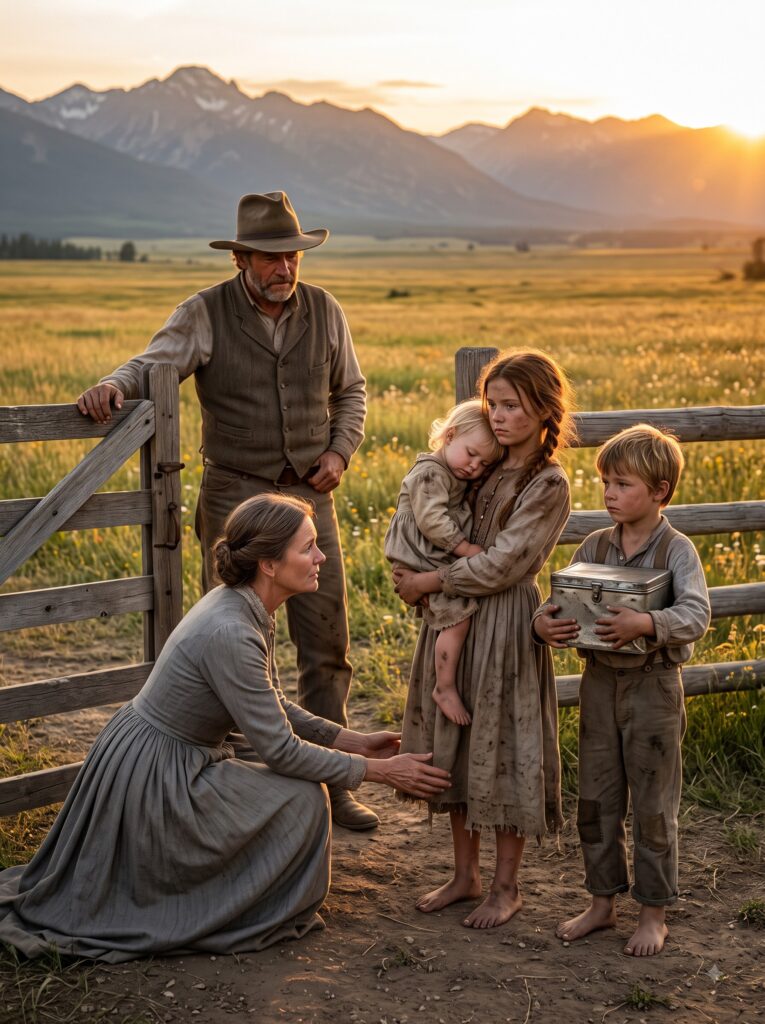
After Eighteen Years of Heartbreak, a Montana Rancher’s Wife Had Locked Her Nursery Forever—Until Three Barefoot Orphans Walked Forty Miles to Her Gate, Begging to Work for Their Supper, and the Oldest Girl Hid a Letter That Could Save Them From Being Torn Apart
Molly dropped to her knees and snatched at the letter before Eleanor could read the writing on its outer fold....

A SIX-YEAR-OLD GIRL TOLD A STRANDED MILLIONAIRE HER MOM COULD FIX HIS CAR—HE LAUGHED UNTIL THE MECHANIC FOUND A SECRET HIS OWN COMPANY BURIED – Life Story
His $280,000 car died on an empty Illinois road, and the six-year-old beside it told him her mother could fix...

I Caught My Husband Kissing His Coworker, But When I Called My Sister In Tears, Her Cold Reaction Proved She Already Knew. Then I Uncovered Her Sickening Scheme: She Stole Our Savings, Protected His Sordid Affair, And Convinced His Mistress We Were Divorced!
The rain pelted against the windshield of my SUV as I sat in the parking lot behind The Brass Rail...