They Locked Her in the Freezer as Punishment… Until the Mafia Boss Opened the Door
They Locked a Waitress in a Freezer to Teach Her a Lesson—Then the Man Who Opened the Door Made Them Answer for Every Minute
They told Lena she needed to toughen up.
Then they locked her in the restaurant freezer and went home.
They never imagined who would hear her last attempt to knock.
Part 1: The Girl Who Always Said Okay
Rick made Lena apologize three times for the steak before he bothered looking at the order ticket.
She stood beside table fourteen with the plate balanced in her hands while the customer stared at his water glass, embarrassed by a punishment he had never requested.
Around them, conversations thinned into the particular silence people use when they want to listen without accepting responsibility for what they hear. “I asked for medium,” the man said again, more quietly now.
Lena nodded, although medium was exactly what she had written down.
“Then maybe you should start listening,” Rick told her, loud enough for the next table to hear.
Lena felt the heat from the plate through the folded service cloth and concentrated on keeping her hands steady.
She could have explained that she had repeated the order, entered it correctly, and picked up the dish Jason had placed beneath the warming lamp.
Instead, she said, “I’ll have it corrected right away.” Rick gave her the small, satisfied smile he used whenever she accepted blame that belonged to someone else.
Until that night, she had believed there was a limit to what people would do in a room full of witnesses.
A manager might humiliate you; a cook might laugh; a customer might look away because dinner was getting awkward.
Somewhere underneath all of it, she assumed, there remained a line no one would cross.
She was twenty-seven, tired enough to feel older, and still capable of mistaking familiarity for safety.
In less than an hour, she would learn how dangerous that mistake could be.
Customers usually remembered Lena for the little things she noticed before they had to ask.
She brought extra lemon to the woman who always ordered hot water, divided the check for the construction crew without making anyone uncomfortable, and set a clean spoon beside a child’s dropped one before the crying started.
She remembered faces, allergies, and which elderly regular needed the chair closest to the wall.
People called her thoughtful, efficient, one of the good ones.
Then she walked through the swinging kitchen doors, and the woman they had just complimented became someone everyone could interrupt.
The restaurant sat on a busy Chicago block between a pharmacy and a dry cleaner, its windows glowing amber against the October evenings.
From the sidewalk, it looked dependable: white plates, dark booths, a handwritten specials board, the smell of butter reaching the front entrance whenever the doors opened.
Lena had taken the job eight months earlier because the bus stopped nearby and Rick had promised steady hours.
At the interview, he had called his staff a family.
She had needed the work badly enough to let that word reassure her.
Her apartment was a third-floor walk-up with a radiator that clicked before producing heat and a kitchen table steadied by folded cardboard.
Every Thursday, she spread her envelopes across that table and tried to persuade the numbers to become something kinder.
Rent went on the left, utilities in the middle, and the medical bill from her emergency appendectomy stayed underneath everything else.
She sent a little money to her mother whenever she could, although her mother always told her to keep it.
The envelopes never argued, never shouted, and somehow still made it impossible to say no.
When Rick asked her to cover a closing shift, she said okay.
When someone called out and he needed her back the next morning, she said okay again, already calculating how many hours of sleep remained between buses.
Sometimes she ate dinner standing beside the dish station because sitting down meant losing ten minutes she could use to reset her tables.
By the time she reached home, the soles of her feet seemed to retain the restaurant’s tile pattern.
She lowered herself onto the mattress fully dressed and told herself that another week would make things easier.
At first, Rick rewarded her reliability with the sort of praise that sounded like affection if you did not examine it. “At least I can count on you,” he would say while handing her another shift someone else had refused.
Soon he stopped asking and began adding her name to the schedule before checking whether she was available.
If she hesitated, he mentioned the applications in his office drawer and the people who would appreciate her hours.
Lena understood exactly how the conversation worked, and understanding it did not make her rent cheaper.
Marissa noticed the pattern before Lena admitted it aloud.
One afternoon, while they rolled silverware at the back table, she asked, “Why does he get to talk to you like that?” Lena folded a napkin carefully around a fork and knife, making the corners meet because it was easier than meeting her friend’s eyes. “He’s under pressure,” she answered, borrowing an explanation she had heard so often it nearly sounded like her own opinion.
Marissa stopped rolling and said, “So are you, and I’ve never heard you take it out on anyone.”
Lena smiled because smiling allowed a difficult conversation to end without disappointing anybody.
She had become skilled at that long before she started waiting tables, skilled at making her needs small enough to fit around everyone else’s.
Her mother called it being considerate when Lena was little, then worried about it once she grew old enough to disappear inside the habit. “Being easy to get along with shouldn’t mean you’re easy to hurt,” she had said during their last phone call.
Lena had answered that things were fine and changed the subject to the weather.
The kitchen had rules nobody printed in the employee handbook.
You moved quickly, stayed out of the cooks’ way, and learned which insults were supposedly jokes before making the mistake of taking one seriously.
Jason worked the grill with an expression of permanent irritation; Mark handled prep and liked to repeat whatever Jason said a little louder.
Rick decided who could push back and who had to laugh along.
Within a month, they had worked out that Lena would apologize before most people finished accusing her.
It began with small things that were difficult to describe without sounding oversensitive.
A clean towel disappeared when she needed one, a plate was set beyond her reach, and somebody repeated her soft “okay” in a high voice after she left the pass.
Rick corrected her publicly for delays caused by orders that had not yet been cooked.
If she pointed toward the ticket rail, he told her to stop making excuses.
Eventually, she learned that explaining herself cost more energy than taking the blame, and energy was another thing she could not spare.
The others adapted around the cruelty with an efficiency Lena found harder to understand than the cruelty itself.
A dishwasher stared into the sink when Rick raised his voice, and servers suddenly remembered urgent tasks near the dining room.
Sometimes someone offered her a sympathetic look afterward, once the danger of being associated with her had passed.
Marissa was the only one who ever said, “That wasn’t your fault,” where someone might hear.
Even she had begun lowering her voice, because Rick had reduced her hours the week after an argument.
Lena saw all of it and kept searching for an adjustment she could make.
She arrived fifteen minutes early, checked every ticket twice, and learned to carry an extra water pitcher so no table would wait.
On the bus, she rehearsed the pleasant tone that made annoyed customers soften and wondered why it never worked on the men in the kitchen.
She was not foolish enough to think they liked her.
She simply believed that if she became useful enough, they would run out of reasons to hurt her.
Friday arrived with rain, a broken bus shelter, and a message from Rick asking whether she could come in two hours early.
Lena was standing beside her stove, waiting for coffee to drip through a filter she had almost forgotten to replace.
Her mother had left a voicemail that morning, cheerful until the last few seconds, when she said there was always a bed at home if Lena needed one.
Lena listened twice, then put the phone down before calling back.
She texted Rick one word, and the coffee went cold before she drank it.
By dinner service, the dining room was full and the kitchen seemed to be operating one angry breath away from an argument.
Rainwater darkened the entry mat, the receipt printer chattered without stopping, and Rick had begun snapping his fingers instead of using people’s names.
Lena tied her apron tighter and moved through her section, remembering who needed another drink and who had somewhere to be afterward.
A little girl at table six showed her a drawing of a yellow dog.
For a few seconds, Lena crouched beside the booth and let herself smile without calculating the cost.
“You running a restaurant or a daycare?” Rick asked when she came through the kitchen doors.
She opened her mouth to explain that she had been taking the family’s dessert order, then saw Jason watching from the grill. “Chocolate cake, two forks,” she said instead, placing the ticket where it belonged.
Rick looked at it without moving and told her table twelve was waiting.
Their food had not reached the pass yet, but she picked up a water pitcher and went to give them something she could actually provide.
The steak at table fourteen came back a few minutes later.
Lena had entered “MEDIUM” in the system, and the same word appeared on the ticket clipped above Jason’s station.
The customer cut through the center, frowned, and asked for another minute on the grill, a request so ordinary she had already started saying of course.
Rick stepped in before she could carry the plate away.
By the time his performance ended, the man’s wife was studying the menu as though it contained something newly fascinating.
In the kitchen, Jason glanced at the returned steak and said, “Medium means medium, Lena.” Mark laughed without looking up from his cutting board, and something inside her tightened so suddenly that she almost set the plate down too hard.
This time, she pointed to the ticket above the grill. “That’s what I entered,” she said, still speaking softly, still giving everyone a chance to let the matter go.
Rick turned from the office doorway, and the expression on his face told her she had just made a much larger mistake than bringing out the wrong steak.
“Are we doing this now?” he asked, as if she had interrupted service to make a speech.
Lena lowered her hand and said she was only trying to get the order corrected.
Rick moved closer, his voice dropping into the falsely patient register he reserved for people he wanted to embarrass. “Then correct it instead of looking for somebody else to blame.” She could feel the kitchen waiting for her familiar answer, and when she finally said okay, Jason grinned at the grill.
For the next half hour, every instruction came edged with the same accusation.
If she waited for a plate, she was slow; if she reached for one, she was in the way; if she asked whether a dish was ready, she was distracting the line.
Her hands trembled when she counted change, and she pressed them briefly against the cool counter before returning to the dining room.
Marissa caught her near the coffee station and asked whether she wanted to switch sections.
Lena shook her head because accepting help felt too much like admitting Rick was right about her.
At nine thirty, the dinner rush began to loosen, although the kitchen was still loud enough to swallow a conversation.
Rick checked the wall clock, then looked toward the passage leading to the walk-in freezer. “Lena, come here a minute,” he said, using a voice so calm that she initially thought the trouble had passed.
She followed him with an empty tray tucked beneath her arm, expecting another correction about the steak.
Jason and Mark were already waiting near the freezer door, and neither of them was holding anything he needed to put away.
The service corridor narrowed between stacked flour bins and a rack of spare trays.
Over Rick’s shoulder, Lena could see a faded maintenance sticker on the freezer and the metal bar that fitted across its outside brackets.
She had never liked that bar, or the way the old door sometimes needed a hard pull to open from inside.
Once, she had heard a delivery driver tell Rick it ought to be removed.
Rick had answered that running the restaurant was expensive enough without people inventing problems.
“You’re struggling tonight,” he said now, leaning against the wall as though this were a private coaching session.
Lena shifted the tray against her hip and told him she would keep up.
Jason made a little sound through his nose, and Mark looked at the freezer door before looking back at her. “That’s what you always say,” Rick answered.
For the first time that evening, Lena stopped trying to find the words that would make him pleased with her and started looking for a path back to the dining room.
She stepped toward the opening beside Mark, but he did not move. “I have tables,” she said, hearing how carefully she was still trying to make the sentence sound reasonable.
Rick answered that somebody else could handle them for a minute.
Jason reached for the freezer handle, and when the seal broke, cold air rolled across her ankles.
Lena looked from the open doorway to the three men and finally understood that whatever they had planned was already underway.
“No,” she said, surprising herself with how clearly the word came out.
Rick’s expression changed, just a little, and she saw that her refusal had become part of the entertainment. “Nobody’s hurting you,” he told her, placing one hand against her shoulder while Jason stood beside the open door.
She tried to turn sideways, but Mark closed the space behind her.
Her tray struck the flour bin with a sharp metallic clatter that sounded absurdly small beneath the kitchen noise.
The push sent her across the threshold before she could catch the doorframe.
Her shoe slipped on the floor, her hand struck a shelf, and the sudden cold took her breath before fear had time to name what was happening. “Wait,” she said, already turning back toward the rectangle of kitchen light.
Jason smiled through the narrowing gap while Rick said something she would remember with terrible clarity afterward. “Maybe a little time in there will toughen you up.”
The door closed, and a second sound followed it: metal sliding into metal on the other side.
Lena lunged for the inside release and pressed until the round handle hurt the heel of her palm.
The latch moved, but the door did not, held shut by something the release could not lift. “Open it,” she called, then louder, “Rick, open the door.” Through the insulation, she heard Mark laugh and Jason tell her they would get her in a minute.
She waited because a minute was something she could understand.
A minute could still belong to the world she knew, the world where people went too far and then stopped before anything truly terrible happened.
She pressed her ear against the door, listening to the kitchen carry on with its plates and shouted orders.
When nobody returned, she struck the metal with her palm and said, “Okay, I get it.” The word came out automatically, the same word that had followed her through eight months of losing a little more ground.
On the other side, Rick picked up the tray she had dropped and placed it neatly on the rack.
A server asked where Lena had gone, and he answered, “Taking a break,” without looking toward the corridor.
Inside the freezer, she heard footsteps draw close enough to make her lift her head. “I’m still in here,” she called, relief breaking through before she could stop it.
The footsteps paused—and then walked away.
Part 2: When the Knocking Almost Stopped
For several minutes, Lena kept believing there had been a misunderstanding.
Perhaps Rick thought Jason was coming back, or Jason thought Mark had already opened the door, or somebody had called them away before they finished their ugly little joke.
Her mind built explanations with the frantic generosity of a person whose survival depended on other people becoming decent again.
She knocked, waited, and knocked harder, trying each name as though one of them might finally produce an answer.
Outside, an order was called, and the restaurant continued serving dinner.
Her phone was in her bag on the office hook, where Rick required employees to leave anything that might distract them.
She remembered putting it there, sliding the zipper closed while a message from her mother lit the screen.
The memory was so ordinary that she almost laughed, then found she could not draw enough breath to make the sound.
She patted her apron anyway, searching the same empty pockets twice.
A pen, a receipt, and a few coins were everything she had brought into a place no one expected her to need rescuing from.
She pressed the release again and felt the mechanism move beneath her hand.
The door gave just enough to convince her that a harder push might work, then stopped against the bar outside.
She put her shoulder against it, pushed until pain spread down her arm, and tried again from another angle.
Each failed attempt made the arrangement clearer: there was nothing wrong with her strength that another few pounds of effort could fix.
Someone had made a decision on the other side of the door, and her body could not undo it.
The first real shiver surprised her because she was still warm from the kitchen.
She had been sweating beneath her black work shirt, and now the damp fabric clung to her back with a cold that seemed to sharpen whenever she moved.
Around her, shelves held sealed bags, cartons, and trays labeled in Mark’s blocky handwriting.
Everything had a place, a date, a purpose, while she stood among the supplies trying to make three grown men remember she was a person.
She began calling for Marissa instead.
Out near the coffee station, Marissa was clearing a check when Rick reassigned two of Lena’s tables. “Where is she?” she asked, glancing toward the kitchen doors.
Rick said Lena had felt sick and gone home, then handed her a stack of receipts that needed closing out.
When Marissa asked whether someone had walked her to the bus, he looked up slowly and said, “Do you want to help me finish or have a meeting about it?” Marissa took the receipts, and the question she should have asked remained between them.
Inside the freezer, Lena tried to count time by the kitchen sounds.
A burst of plates meant another order going out, the rolling cart meant dishes returning, and the heavy scrape near the wall probably meant someone moving the flour bins.
She shouted whenever footsteps seemed close, putting everything she had into words that sounded impossibly thin once they left her mouth.
Between attempts, she listened so fiercely that her own breathing became an irritation.
Every ordinary sound outside promised somebody was near enough to help, then proved nothing at all.
Her palms began to hurt, and she switched to the side of her fist.
She remembered reading somewhere that making a rhythm might help people recognize a sound as deliberate, so she struck the door three times, paused, and struck it again.
After a while, she could no longer tell whether she was making more noise or simply hearing less.
She tried the pen against the metal, then a coin held between fingers that had started to feel clumsy.
The coin slipped, rang against the floor, and disappeared beneath a shelf she could not reach.
The small loss undid her more completely than the pain in her hands.
She stared at the space beneath the shelf and thought about how many times that week she had bent to pick up other people’s dropped things.
Napkins, silverware, a child’s crayon, a credit card a man had flicked toward the edge of the table without looking.
She had always moved quickly enough to spare them the effort of asking.
Now she was shouting for something she should never have needed to request, and nobody was coming.
She found a flattened carton and pulled it beneath her feet because the floor felt colder each time she shifted.
Her knees shook so badly that standing still took concentration, but she was afraid to sit down and become harder to find. “I’m here,” she said, testing whether she could still hear herself clearly.
It was a ridiculous announcement in a space that contained nobody else.
She said it again anyway, because the alternative was listening to the hum of a machine that had no reason to stop.
Her mother’s kitchen came back to her with painful precision.
There was a yellow lamp over the table, a chipped blue bowl for keys, and a window that rattled whenever trucks passed the house.
Her mother would be washing a mug now, perhaps checking the weather before bed, unaware that the daughter who always said she was fine had finally run out of ways to make that sentence true.
Lena tried to remember the voicemail word for word.
She could recall the offer of a bed, but what hurt most was the ordinary certainty that somebody still expected her to come home.
She had not stayed in the city because she stopped loving that house.
She had stayed because she wanted to prove that moving away had meant something, that she could pay her own bills and build a life without becoming another worry her mother carried.
Going home had seemed like surrender whenever the envelopes covered her table.
Now she wanted the clicking radiator, the uneven chair, the unpaid bill, all the imperfect things waiting beyond this room.
She would have given anything to sit down tomorrow and discover that her numbers still did not work.
The dinner sounds grew farther apart.
Lena noticed the change the way a swimmer notices the shore receding, slowly at first, then all at once.
There were fewer voices, longer silences between dishes, and no new burst from the printer.
She pressed her ear against the door and heard the drag of something heavy, followed by water rushing into a bucket.
They were cleaning, and the understanding emptied her of every explanation she had been protecting.
“Please,” she called, striking the door with both hands now. “Don’t close.
I’m still here.” She did not care whether customers heard or whether Rick cut her hours or whether anybody thought she was making a scene.
She would have walked into the dining room and told every table what had happened if only somebody gave her the chance.
For the first time all evening, she understood that being afraid of losing the job had kept her from being afraid of the people who controlled it.
Near the office, Marissa took her coat from the hook and saw Lena’s bag hanging beneath it.
She reached toward the strap, then stopped when Rick came around the corner carrying the cash drawer. “She left that?” Marissa asked, and he answered that Lena would collect it tomorrow.
His impatience was familiar enough to make the explanation feel familiar too, and she hated herself later for how easily those two things became confused.
She left with the thought that she should call Lena when she got home.
Lena heard the restaurant empty in fragments.
A door opened, a voice called good night, and somewhere near the front someone laughed at something unrelated to her.
She waited for another exchange, another pan, another reason to believe a person remained within reach.
Instead, the radio stopped, leaving the refrigeration motor brutally clear.
Her first thought was that she had become very quiet; her second was that the rest of the building had become quieter.
She kept moving because stopping felt like permission for something she could not bear to imagine.
A few steps along the shelving, a turn, a push against the door, then the same short journey again.
The work required more thought each time, as if her feet needed instructions they had once understood automatically.
She tried to rehearse what she would tell the first person who opened it, but every sentence became an apology before she reached the end.
At last, she said, “I didn’t do anything,” and started crying because there was nobody there to argue.
Eventually, she lowered herself onto the carton with her knees drawn close.
The shaking made her teeth strike together, and she tucked her hands beneath her arms, furious at herself for being unable to keep them steady.
Her mother had asked once who took care of her when she spent all day taking care of everybody else.
Lena had made a joke about staff meals and changed the subject before the answer could become embarrassing.
She wished now that she had let the conversation continue.
The memories lost their order after that.
She saw the little girl’s yellow dog, the steam rising from a coffee mug, and the neat word MEDIUM printed above Jason’s grill.
She thought about the rent check in her drawer, already signed, and wondered who would find it if she did not return.
Then she became frightened by how calmly the thought had arrived.
She pushed herself toward the door again, though her legs seemed to belong to someone walking a little behind her.
When she stumbled, the floor did not hurt as much as she expected.
That frightened the part of her still capable of recognizing danger, but the warning reached her slowly.
She rolled onto her side and tried to lift one arm toward the door, finding the distance between intention and movement suddenly enormous.
Her fingers brushed the metal at the bottom, and she managed a small, uneven tapping with the heel of her hand.
It sounded nothing like the noise she had made at first, but it was something the room had not created by itself.
At eleven ten, a black car stopped across the street.
The man in the back seat checked the restaurant’s darkened windows, then the time on his watch, and frowned at a message from the owner saying he was running late.
Their meeting had been arranged for after service, and the front door was supposed to remain open until he arrived.
The driver offered to telephone, but the man was already reaching for his coat.
He disliked making judgments before he understood a situation, and something about the empty dining room deserved a closer look.
He had eaten there often enough to recognize the staff without knowing their names.
Once, a waitress had quietly moved an elderly customer’s untouched soup away from the edge of a table before helping him put on his coat.
Another evening, the same woman had brought the man fresh coffee while he waited for an associate who never arrived.
She had never asked who he was or performed the nervous friendliness he encountered whenever somebody recognized his name.
He remembered that, along with the way her smile vanished as she stepped into the kitchen.
The unlocked front door opened beneath his hand, and its bell rang into a room that should still have contained somebody finishing the night.
Chairs were stacked, the register was dark, and a half-full water glass stood abandoned near a booth.
He called once, waited, and started toward the kitchen when no one answered.
The sound reached him as he passed the service station, faint enough that he almost mistook it for a pipe settling inside the wall.
Then it came again, with a pause in the middle that made him stop.
He pushed through the swinging doors and listened.
An overhead safety light showed him the clean counters, the hanging towels, and the narrow passage beyond the dish station.
The tapping came from there, from below the handle of the freezer.
He reached the door, saw the steel bar seated across its brackets, and pulled it free without pausing to decide why somebody had put it there.
When he opened the door, the first thing he saw was a black work shoe on its side.
Lena lay close enough to the threshold that her hand nearly touched his foot.
He crouched, spoke to her, and saw the slight movement of her chest beneath the thin uniform shirt.
For an instant, the sight emptied the kitchen of every ordinary detail he had noticed coming in. “Call an ambulance,” he said to the driver behind him, already taking off his coat.
Then he bent close enough for Lena to hear and told her, “Someone’s here.
You’re not alone.”
She heard the voice before she understood the words.
It belonged to a world with other people in it, a world she had begun to believe had forgotten the room existed.
She tried to explain that she was supposed to be working, that her tables needed clearing, that she had not meant to be any trouble.
What came out was a broken sound followed by the word cold.
The man covered her with his coat and answered, “I know,” as though what she said deserved to be believed immediately.
The driver stayed on the emergency call while the man followed the dispatcher’s directions.
There were no angry questions, no demand that she pull herself together, no impatient reminder that she should have been more careful.
He remained beside her, watching her face, repeating the words whenever her eyes drifted shut. “Stay with me, Lena,” he said after reading her name badge.
She could not remember the last time somebody had used her name without wanting something from her.
The ambulance arrived while the front door was still standing open.
Paramedics took over the small space around her, bringing equipment, blankets, and the practiced concentration of people who knew there was no time for explanations that could wait.
The man stepped back when they needed room and gave the times he knew as accurately as he could.
When a paramedic asked whether he knew how long she had been inside, he looked toward the bar lying on the kitchen floor. “No,” he said, and the word held more anger than a shout would have.
By the time the stretcher reached the sidewalk, another man had arrived in a dark coat with a phone pressed to his ear.
Sullivan worked for the stranger and was accustomed to late calls, but the expression waiting for him outside the restaurant made him end this one immediately.
The stranger told him to contact the owner, preserve the security recordings, and make sure the officers coming to the scene received everything. “Find out who closed that door,” he added.
Sullivan looked through the glass at the strip of light leading toward the kitchen and said he would.
Before midnight, the owner had arrived, pale and breathless, and authorized access to the camera system.
An officer watched as Sullivan brought up the kitchen recording and stopped at the moment three men guided Lena toward the corridor.
They saw her try to turn away, saw the freezer open, and saw Mark lower the outside bar after the door closed.
The stranger watched without speaking, his hands flat on the office desk.
Then Sullivan advanced the recording, and the officer beside him said, “Wait.
Go back.”
Twenty-six minutes after they put her inside, Rick had returned alone.
He stood in front of the freezer long enough to place one hand against the door, his head turned slightly toward whatever sound the camera could not record.
On the screen, his shoulders moved with a breath, and for one hopeful instant the man watching thought he was reaching for the bar.
Instead, Rick withdrew his hand, turned off the corridor light, and walked away.
They had not forgotten Lena was there; Rick had come back, heard her, and chosen to leave her there anyway.
Part 3: The Woman Who Finally Said No
The officer asked Sullivan to replay the sequence, then recorded the times without offering an opinion about what they had seen.
The stranger stepped away from the desk because he had begun imagining how often Lena must have mistaken approaching footsteps for rescue.
On the monitor, the kitchen remained spotless, every pan put away, every surface wiped down with care.
Three men had made sure nothing was left unfinished except the woman behind the door.
When the owner began saying he had never imagined anything like this, the stranger asked when he had last spoken privately to his employees.
There was no useful answer, only explanations about long hours, unreliable staffing, and the trust an owner had to place in his manager.
The officer interrupted to ask for employee contact information and maintenance records, and the conversation became concrete again.
Rick received a call before dawn; Jason and Mark received visits before they could compare their accounts properly.
Each described a joke that somebody else had allowed to go too far.
Their separate versions agreed on one thing: none of them had considered opening the door important enough to do himself.
By morning, the restaurant had suspended service, and investigators had secured the area where Lena was found.
The owner handed over access codes, schedules, messages, and the record of a maintenance complaint about the freezer’s outside bar.
Inspectors came to examine the equipment and the conditions employees had been working under.
Nobody needed to invent a violation or persuade an official to overlook procedure.
The room, the locking bar, and the security recording provided more than enough reason for the doors to remain closed.
Rick arrived carrying the same coffee he brought every morning and stopped in front of the notice on the glass.
He read it twice, tried his key, and called the owner with a hand that would not stay steady.
Across the street, somebody taking an early bus watched him argue into his phone without knowing the woman who should have been standing at that stop. “This is a misunderstanding,” Rick kept saying.
Then an officer asked him to come answer questions, and his coffee remained untouched on the window ledge.
Lena knew nothing of that when she first woke clearly enough to understand the hospital room.
There was sunlight on the blanket, a plastic pitcher beside the bed, and a monitor making a sound so regular she began waiting for it before each breath.
For a moment, she thought she had overslept and reached automatically toward the place her phone should have been.
A nurse leaned into view and told her she was in the hospital.
Lena looked at the open door and asked whether somebody could leave it that way.
Her mother arrived while she was struggling to lift a cup without spilling water onto the blanket.
She wore her good coat over clothes chosen in a hurry and carried an overnight bag with one side hanging open.
When Lena saw her, the explanation she had prepared disappeared, leaving only the shameful feeling that she had made everything worse by needing help. “I’m sorry,” she whispered before her mother reached the chair.
Her mother put the bag down, took the cup from her hands, and said, “You don’t have to make this easier for me.”
That was when Lena cried in a way she had not allowed herself to cry for years.
She cried because her mother was there, because she could feel a warm hand holding hers, and because she had spent so long pretending that being able to endure something meant it was acceptable.
Her mother listened while the story came out in pieces, never asking why she had stayed or why she had not called sooner.
When Lena finally mentioned the steak, she could hear how absurd the connection sounded.
Her mother waited until she looked up and said, “Nobody gets to do that to you over anything.”
A detective came later, introduced herself, and asked whether Lena felt able to speak.
She told her they could stop whenever she needed and moved her chair so the doorway remained visible.
Lena described the corridor, the hands against her shoulder, and the sound that followed the closing door.
Several times, she corrected herself because she wanted to be fair to people who had never worried about being fair to her.
The detective wrote down what she said and reminded her that remembering something imperfectly did not make it untrue.
When the questions reached the minutes before the freezer, Lena said she had probably made things worse by pointing at the ticket.
The detective lowered her pen and asked what she meant by worse.
Lena tried to explain Rick’s expression, the kitchen waiting for her to apologize, and the feeling that she should have known when to stop talking.
Saying it to someone outside the restaurant made the rules sound as strange as they should always have sounded.
She looked down at her bandaged hand and realized she was still trying to solve the argument that had never justified what followed.
The woman from the legal office introduced herself as Nadia and made clear that she represented Lena’s interests.
She explained the assistance available to her and the separate decisions she would have to make once she felt stronger.
Somebody had arranged support for the immediate expenses, but accepting it did not require a photograph, an interview, or a promise to forgive anyone.
Lena asked what she was supposed to say to the man who found her.
Nadia answered, “Whatever you choose, if you ever want to say anything at all.”
The man came to the hospital once, several days after the rescue.
Through the doorway, he saw Lena asleep while her mother sat beside her reading a paperback with a finger marking the page.
He asked the nurse whether her condition was improving and waited until the answer finished before nodding.
He left without entering, without placing flowers where they would need an explanation, and without making the visit something the family had to acknowledge.
The coat he had wrapped around her remained with her belongings, its owner still unnamed.
Marissa arrived carrying Lena’s bag and a grocery sack filled with things her mother could eat without leaving the room.
She stood near the doorway until Lena told her to come in, then sat down with both hands clenched between her knees. “I saw your bag,” she said, her voice breaking before the rest followed. “He told me you’d gone home, and I let that be enough.” Lena looked at the familiar zipper and understood how close another version of the night had come to existing.
For a while, neither woman tried to fill the silence.
Lena was relieved to see her friend and angry that she had needed rescuing by a stranger, and the two feelings would not politely take turns.
Marissa did not ask to be reassured or explain that she had been afraid of losing her hours.
She said she had given a statement about the kitchen, the schedule changes, and every incident she could remember.
When she asked whether she could come again, Lena answered, “Yes, but I can’t tell you it’s okay yet.”
Recovery did not arrive as a single grateful morning.
Her strength returned unevenly, and ordinary tasks exhausted her before she wanted to admit it.
Once, a cart struck the door outside her room, and the sound sent her hands flying toward the blanket before she knew where she was.
The nurse waited while she caught her breath, then asked what would help.
Lena almost said nothing out of habit, but instead asked the nurse to tell her before closing the door, and the nurse simply agreed.
Two weeks after the rescue, she left the hospital beside her mother.
The air outside was cold enough to show their breath, and Lena stopped beneath the entrance canopy until she was sure the feeling in her chest belonged to memory.
Her mother waited without pulling her forward or telling her there was nothing to fear.
When Lena was ready, they walked to the car together.
She had imagined freedom would feel dramatic; instead, it felt like deciding when to take the next step and having someone respect the decision.
She could finally picture going home without first having to rehearse an explanation for how she felt.
Her apartment looked almost offensively unchanged.
The envelopes waited on the table, a clean mug stood upside down beside the sink, and the sweater she had meant to wash still hung over a chair.
Lena stood in the doorway while her mother switched on the lamp, overwhelmed by the sight of a life that had continued waiting for her.
Later, they sat with the bills and worked through the assistance Nadia had helped arrange.
The numbers remained difficult, but for once Lena was allowed to say so before they became a crisis.
Her mother stayed until Lena could manage alone, then longer because Lena finally admitted she wanted the company.
They ate simple dinners, watched television with the volume low, and sometimes spoke about nothing important at all.
One evening, Lena said she still felt foolish for needing somebody to open a door she should have been able to open herself.
Her mother set down her tea and asked whether she blamed a person for being trapped when someone else held the key.
Lena did not answer immediately, but she stopped apologizing for the question.
The legal process moved at a pace that disappointed people who wanted a quick, satisfying ending.
Interviews had to be completed, records reviewed, and hearings scheduled around calendars that seemed indifferent to how long a frightened person could wait.
Lena chose not to watch the recording, although Nadia explained what it showed and answered every question she asked.
Knowing that Rick had returned to the door made her feel sick for several days.
Then the knowledge settled into something steadier: he could no longer persuade her that she had misunderstood him.
Months later, she entered a courtroom carrying no tray, no apron, and no obligation to keep anyone comfortable.
Rick sat beside his attorney, smaller somehow in a suit that could not give him back the kitchen.
Jason stared toward the floor, and Mark kept moving his hands as though searching for a task that might make the room less real.
They had all been charged, and the admissions and findings that followed were recorded where their old explanations could not replace them.
When Lena spoke about the freezer, nobody interrupted to tell her to get to the point.
She had prepared sentences about fear and injury, but the words that mattered came more simply. “I called for you,” she said, looking toward the men who had once made eye contact feel like an act of defiance. “You knew my name, and you knew I was there.” She paused because her throat had tightened, then continued without apologizing for the pause. “You don’t get to call what happened to me a joke anymore.”
The consequences did not restore the hours she had spent inside the freezer.
They did, however, make the men answer in a place where Rick could not choose the questions or punish the people who asked them.
Their conduct became part of the public record, and their jobs at the restaurant ended along with the business they had helped destroy.
The owner faced his own questions about safety, supervision, and the complaints he had failed to address.
A notice remained on the restaurant’s glass long after the men stopped calling what happened a misunderstanding.
Outside the courthouse, Lena’s mother asked whether she wanted to go straight home.
Lena looked at the traffic, the people crossing with coffee, and the ordinary afternoon continuing around a day she had feared for months.
She said she wanted lunch somewhere they had never been before.
Her mother smiled and let her choose the place.
For once, a decision did not begin with figuring out what somebody else could tolerate.
The new job came later, at a smaller café where the manager interviewed her seated at a table instead of standing above her.
Lena explained the gap in her work history in the fewest words she could manage.
The manager listened, asked about her experience, and showed her a schedule that included actual breaks.
Lena studied it longer than she meant to, waiting for the catch.
When she asked whether the posted hours were guaranteed unless they discussed changes first, the manager said yes and wrote it down.
Her first mistake there was an order entered with the wrong side dish.
She caught it at the pass and felt her stomach drop with such force that she had to grip the counter. “I entered that wrong,” she said, bracing herself for the rest.
The manager checked the ticket, asked the cook for a correction, and told her to let the customer know it would take another few minutes.
Lena stood still until the manager looked up and asked, kindly, whether she needed anything else.
It took time to trust those ordinary exchanges.
She still apologized too quickly, checked faces before making requests, and sometimes rehearsed a question until the moment for asking had passed.
But she began taking her breaks, keeping her phone where she could reach it, and answering honestly when somebody asked whether she could stay late.
One afternoon, she told her manager she could not cover an extra shift because she had plans with her mother.
Nothing happened except that somebody else’s name went on the schedule.
Weeks later, she walked down the block where the old restaurant stood.
The windows were partly covered, the familiar sign had been removed, and people passed without slowing, unaware of the room behind the empty dining area.
Lena felt the memory arrive and waited for it to tell her what she had to do.
Then the light changed at the corner, and she kept walking.
There were groceries to buy, a shift tomorrow, and a mother expecting a call that would no longer begin with a lie about being fine.
Across the street, the man in the black car watched her reach the corner.
He recognized the waitress who had once made herself smaller whenever the kitchen doors swung open, but she was walking differently now, carrying her bag without clutching it against her body.
Sullivan asked whether he wanted to speak to her, and he shook his head.
Lena still did not know his name, and he had no intention of making her recovery depend on learning it.
He waited until she crossed safely, then turned away from the window.
On the seat beside Sullivan lay a folder containing the workplace complaints they had requested from the other properties in the man’s business portfolio.
The restaurant had taught him how little a clean report could reveal when frightened employees never got to speak privately.
Lena disappeared into the afternoon, unaware that the door opened for her had started a review reaching far beyond that kitchen.
Sullivan rested his hand on the folder and asked whether they should leave the rest for Monday.
The man opened it to the first unanswered complaint and said, “Who’s still waiting for someone to listen?”
Recommended Stories

MY WIFE SAID SHE NEEDED SPACE BEFORE VISITING HER SISTER, BUT HER CAR WAS AT MY BEST FRIEND’S HOUSE—AND THEY HAD BEEN LYING TO ME FOR WEEKS – Life Story
The headlights swept across my best friend’s driveway, and my wife’s silver Honda was parked beside his garage. Sophie had...

Five years ago, the love of my life left me at the altar. I never knew why. Today, I was the paramedic who pulled her from a car wreck—and I finally learned the heartbreaking truth.
Five years ago, the love of my life left me at the altar. I never knew why. Today, I was...
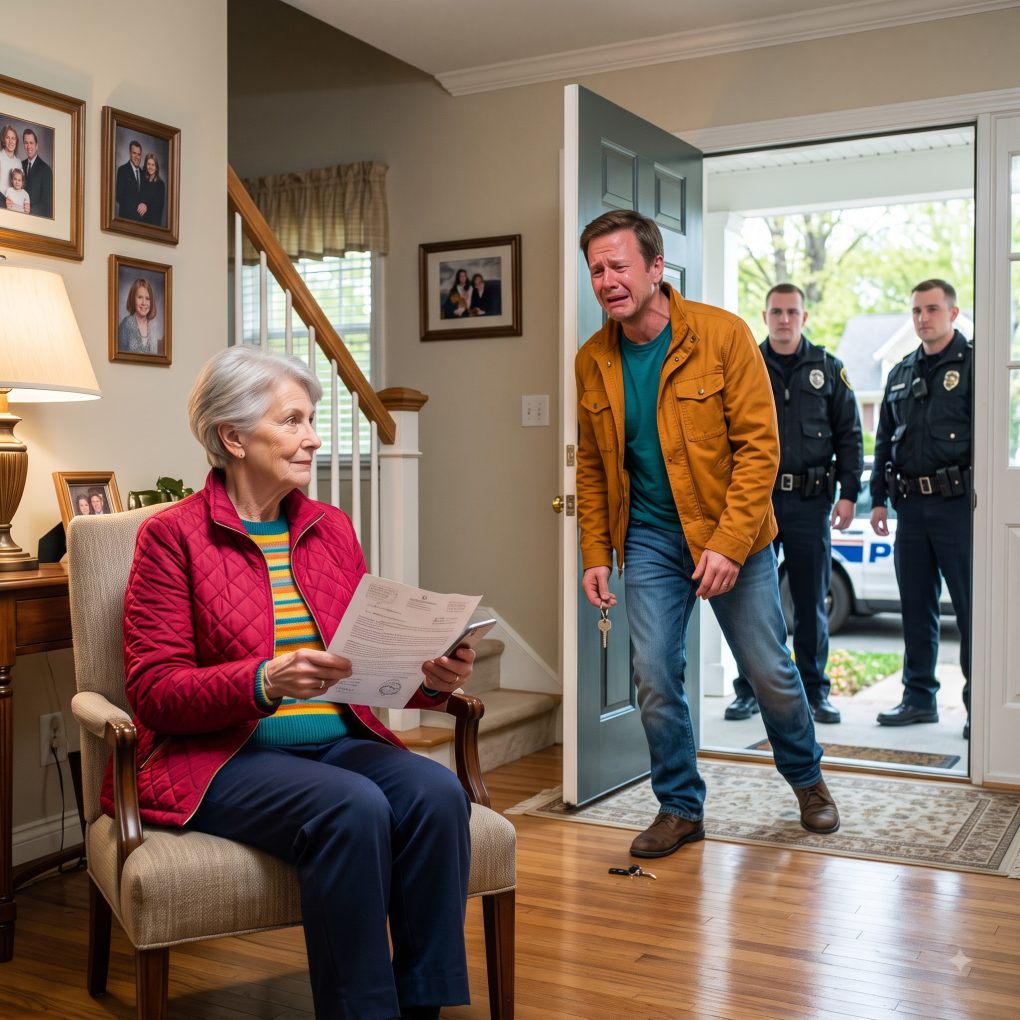
My son abandoned me at a foreign airport without my passport or money so he could steal my home. When he slid his key into my front lock three days later, I was waiting on the other side.
My son abandoned me at a foreign airport without my passport or money so he could steal my home. When...