The Mafia Boss Visited His Assistant Unannounced — What He Saw Made Him Cancel His Wedding
Two Days Before His Wedding, a Mafia Boss Went Looking for His Missing Assistant—and Discovered Who Had Really Been Keeping Him Alive
He went to her apartment prepared to punish a traitor.
He found her bleeding on a bathroom floor, still protecting the secrets that could save his life.
Before he carried her out, Gabriel Romano canceled the wedding everyone in the city was afraid to stop.
Part 1: The Woman Who Was Never Supposed to Matter
Two days before his wedding, Gabriel Romano decided that if his missing assistant had betrayed him, he would have to kill her.
He made the decision standing on a velvet platform while a tailor knelt at his feet, pinning trousers that cost more than most people earned in a month.
Behind him, his fiancée was discussing flowers.
Neither of them had mentioned love all morning.
“Please stop shifting, Mr.
Romano,” the tailor said, holding a pin between his fingers. “The break over the shoe needs to be exact.” Gabriel stared into the gilded mirror and saw a man who had spent years learning to make dangerous things look respectable.
The charcoal suit concealed his shoulder holster beautifully, which was apparently the highest compliment anyone could offer it.
From the leather sofa, Sloan Kensington lifted her eyes from her phone. “My mother thinks the hydrangeas look too informal,” she said. “I told her we’re joining two families, not decorating a country club luncheon.” Her engagement ring flashed beneath the boutique’s recessed lighting as she swiped to another photograph.
Gabriel had paid for the diamond, but her father had chosen the setting.
“Whatever you want,” he said, and Sloan returned to her screen without noticing his tone.
That had been the attraction of their arrangement: neither of them required anything the other could not purchase or negotiate.
Her family controlled distribution routes throughout New England; his controlled the waterfront and the businesses that made those routes profitable.
Saturday’s wedding would turn a fragile agreement into a public declaration that neither side intended to walk away.
Everything had been accounted for except the empty space beside the changing screen.
Norah usually stood there during appointments, holding his phone, collecting invoices, and reminding people that the rest of his day still existed.
She never looked impressed by the marble floors or the discreet champagne service.
Once, when a salesman called a jacket an investment, she had asked whether it paid dividends.
He had almost smiled that day.
He remembered because smiling had become something other people did around him, usually when they wanted something.
Norah wanted accurate schedules, readable signatures, and for him to stop leaving documents in the back of his car.
In four years, she had never asked for a favor.
She had also never disappeared.
Gabriel stepped off the platform before the tailor finished. “We’re done,” he said, reaching for his shirt.
The older man protested about the jacket, but Gabriel was already taking it off.
On the sofa, Sloan finally set down her phone with the deliberate care of someone determined to make irritation look like patience.
“The final photographs are tomorrow,” she said. “My father lands tonight, and we still have the rehearsal dinner.” Gabriel buttoned his shirt and looked at the unanswered messages on his phone.
There were eleven to Norah, beginning with a question about a shipping invoice and ending with two words he had never needed to send her before: Call me.
“My assistant hasn’t checked in for two days,” he said.
Sloan glanced at the screen as though the problem might be contagious. “Then fire her.
You cannot let one unreliable employee hijack this week.” She crossed her legs and picked up her phone again, already finished with a conversation Gabriel had only just begun.
“She has access to information that could destroy this merger,” he said.
Norah maintained the financial records no outside accountant was permitted to see, including a physical ledger that had gone missing with her.
If she had been bought, someone else now possessed a map of his vulnerabilities.
If she had been taken, his silence had given her captors nearly two days.
“Send Liam,” Sloan said. “That’s what you employ people for.” Gabriel fastened his cuff and watched her reflection in the mirror, trying to remember the last time she had asked a question that wasn’t about something she expected him to provide. “I’m going myself,” he said.
The little bell above the boutique door sounded absurdly cheerful when he left.
Outside, rain was beginning to darken the pavement.
Liam stood beside the waiting SUV, holding an umbrella he opened too late to be useful. “Garrison Street,” Gabriel told him, sliding into the back seat.
His driver paused for half a second before shutting the door, which was enough to tell Gabriel that the address had surprised him too.
“That’s Kensington territory,” Liam said once they were moving. “Until Saturday, technically, we’re supposed to—” Gabriel met his eyes in the rearview mirror, and the rest of the sentence disappeared.
Liam turned toward the south side while Gabriel looked again at the address his security chief had sent.
Fourth floor, apartment 4B, in a building with no working entry system and no secure parking.
He paid Norah enough to live somewhere better.
The thought had been irritating him since he first saw the address, and he kept returning to it because the alternatives were less comfortable.
He knew the names of the men she called when a shipment was delayed.
He knew which files she could locate without looking at a label.
He did not know whether she had anyone waiting for her at home.
The city changed beyond the windows, polished towers giving way to warehouses, discount stores, and brick buildings with plywood where glass should have been.
Gabriel remembered Tuesday evening, the last time he had seen her.
She had been standing near the shredder with her sleeves buttoned at the wrists, even though the office heating had been stuck too high.
There had been a bruise near her jaw.
He had asked about it without really stopping. “Cabinet door,” she had said, touching the mark with two fingers.
Then she had handed him the revised guest list, and he had accepted both the paper and the explanation.
Now he remembered how carefully she had kept her face angled away from the light.
“Did she ever ask you for a ride home?” Gabriel asked.
Liam shook his head. “Offered a few times when she worked late.
She always said the bus was easier.” He hesitated, then added, “She used to bring breakfast for the overnight security guys on Fridays.
Nothing expensive.
Just sandwiches.”
Gabriel looked out the window.
He knew what a shipment cost to move across three borders, what a judge’s discretion could be purchased for, and which of his associates was frightened enough to become useful.
Somehow, he had failed to notice that the woman outside his office was taking the bus through Kensington territory after midnight.
The realization made him angry, and for once there was no useful person at whom to direct it.
Garrison Street ended at a chain-link fence overlooking a disused rail yard.
Liam parked outside a four-story building whose upper windows seemed to lean toward the street. “I’ll come up,” he said, but Gabriel was already opening the door. “Stay here.
If I call, answer immediately.”
The entrance had been patched with warped plywood, and the hall smelled of bleach, old cooking, and damp plaster.
Somewhere upstairs, a television audience applauded while a baby cried behind another door.
Gabriel climbed past peeling paint and mail left on the steps, his shoes making heavy sounds on the worn boards.
On the fourth-floor landing, he saw fresh damage around the lock of apartment 4B.
He stopped before touching the handle.
The strike plate hung crookedly from splintered wood, and the door stood open a fraction of an inch.
He drew his weapon and pushed it inward, expecting another man to be waiting behind it.
Instead, he found a room so empty that his own breathing seemed intrusive.
There was no couch, no television, no coat hanging over a chair.
A folding table stood against the far wall beneath a lamp, crowded with folders and external drives arranged in Norah’s precise, familiar order.
Beside the table sat one upright chair with a cracked vinyl seat.
Gabriel lowered the gun slightly and looked around for evidence that someone actually lived there.
“Norah?” he called, receiving only the rattle of rain against a loose window.
The little kitchen was empty too, its refrigerator unplugged, a single mug drying beside the sink.
A folded blanket lay near a narrow mattress in the bedroom.
He had spent more on the watch beneath his cuff than she appeared to have spent on everything she owned.
Then he saw the marks in the hallway.
They ran unevenly toward the bathroom, darker where someone had stopped and tried to move again.
His irritation vanished so completely that afterward he could not remember what it had felt like. “Norah,” he said again, louder this time, and pushed the bathroom door open.
She was sitting between the tub and the toilet with a towel pressed against her thigh.
An oversized gray T-shirt hung from her shoulders, and the bruise he remembered from Tuesday had spread across one side of her face.
In her other hand, she held a needle threaded with black nylon.
Her fingers were shaking too badly to do anything with it.
For several seconds, Gabriel could not move.
He had entered rooms after terrible things happened and walked out able to discuss dinner.
Yet the sight of Norah trying to repair herself beneath a bare bathroom bulb left him with no immediate understanding of what his hands were supposed to do.
She looked up, blinked slowly, and struggled to bring him into focus.
“You’re tracking mud,” she whispered.
Gabriel secured his weapon and knelt beside her, taking the needle from her before she could try again. “What happened?” he asked, hearing the harshness in his own voice.
Norah closed her eyes and rested her head against the tub. “If you’re going to yell, please do it somewhere else.”
He called Liam first, then ordered him to contact Victor Hale, a physician his father had once trusted and who now worked outside the family’s usual arrangements.
Norah stirred at the name, her hand closing weakly around his wrist. “Not Carlo’s doctor,” she said. “Promise me you didn’t call Carlo’s doctor.”
Something cold moved through Gabriel’s chest. “I called Victor,” he told her. “He hasn’t answered to my uncle in years.” She nodded once, relief passing across her face before exhaustion swallowed it.
When Gabriel asked who had hurt her, she stared at him as though deciding how much truth he could absorb before he became dangerous.
“The courier,” she said finally. “Kensington’s man.
I got what he was carrying.” Gabriel looked toward the room with the folding table and felt the pieces beginning to arrange themselves.
Norah had not taken his ledger to sell it.
She had brought it somewhere she believed she could examine it without being watched.
“What did you find?” he asked.
She swallowed, grimacing as she shifted against the porcelain. “Your uncle paid someone connected to the rehearsal dinner.
The payment went through three accounts, but the authorization came from him.” Her eyes sharpened with an effort that seemed to hurt. “They aren’t marrying into your business, Gabriel.
They’re taking it.”
He thought of Carlo’s hand on his shoulder at his father’s funeral, of Sloan choosing white flowers beneath soft boutique lighting.
Norah watched him understand and seemed almost sorry for him. “Tonight,” she said. “Something happens to you at dinner, and everyone spends the next week asking which rival family did it.”
“Why didn’t you tell me Tuesday?” he demanded.
Her expression changed, and he knew before she answered that the truth would be worse than the accusation he had carried up the stairs. “I tried,” she said. “You told me anything about the Kensington accounts could wait until after the wedding.
Then you asked me to find Sloan a different florist.”
He remembered the conversation.
Worse, he remembered being impatient with her for standing in the doorway while he was on another call.
Norah looked down at her hand on the towel and continued before he could defend himself. “I needed proof you couldn’t dismiss as a bookkeeping problem.
I didn’t know the courier would recognize me.”
Gabriel stared at the empty medicine cabinet, the cracked tile, the towel she had been using because there was nothing better. “Why are you living here?” he asked, his voice quieter now.
She gave a small, exhausted laugh that broke into a cough. “My mother’s care costs eight thousand dollars a month, and that’s before the things the insurance company decides aren’t their problem.”
He knew she had a mother.
Somewhere in an employment file, he had read the words emergency contact and memory care, then moved on to the next page.
Norah looked embarrassed now, as though the apartment were a failure of manners she should have prevented him from seeing. “The place is good,” she said. “They have gardens.
She still likes the gardens.”
Before he could answer, his phone began to ring.
Sloan’s name filled the screen while Norah’s eyes drifted toward it with bleak recognition. “Almost noon,” she murmured. “She’ll want you to decide between the mushroom risotto and the truffle one.”
Gabriel answered without taking his eyes off the woman on the floor. “Where are you?” Sloan demanded. “Your uncle says you’ve stopped answering him, and the caterer needs a final decision.” Behind her, someone laughed, the sound bright and ordinary enough to make the little bathroom seem even colder.
“There will be no rehearsal dinner,” Gabriel said.
Sloan went silent, then spoke with the careful disbelief of someone certain she had misheard. “You cannot make a decision like that without discussing it with me.” Gabriel watched Norah struggle to stay awake and finally understood how much of his life had depended on her doing the same.
“The wedding is canceled,” he said.
Sloan’s breath caught before anger rushed in to fill the space. “My father will want an explanation.” Gabriel looked at the folders through the open bathroom door and answered with a calm that frightened even him. “Tell him Norah Quinn found his courier—and she kept the receipt.”
Part 2: What She Had Been Carrying Alone
The first thing Norah said when Gabriel lifted her was an apology about his shirt.
He looked down at her, at the split in her lip and the effort it took to keep her eyes open, and could not understand how she had room left for embarrassment. “The shirt can be replaced,” he told her.
She tried to answer, but her head settled against his shoulder before the words arrived.
Liam met them halfway up the stairs, saw Norah’s face, and stopped asking questions.
He took Gabriel’s keys, opened doors, and cleared a path through the narrow entrance while the rain struck the pavement outside.
For once, nobody on Garrison Street paid much attention to the expensive vehicle at the curb.
A woman at a second-floor window watched Gabriel carry Norah out, then slowly drew her curtain closed.
In the back seat, he kept speaking because silence made him look too closely at her breathing. “Victor’s waiting,” he said. “You’re going somewhere warm.” Norah moved faintly against him and whispered, “The drives.” He told Liam to arrange their collection, then repeated the promise until her fingers loosened from his sleeve.
The estate gates opened before the SUV reached them.
Gabriel carried her through a foyer designed to impress men who pretended not to be impressed by anything, leaving water and dirt across the marble.
He passed flowers delivered for the wedding and wanted them gone so badly that the feeling bordered on nausea.
Only that morning, those flowers had seemed like proof that his future was under control.
Victor was waiting in the east-wing medical suite with a nurse Gabriel had never seen before.
The physician took one look at Norah and began giving instructions in a tone that made room for no argument.
Gabriel tried to explain what he had found, but the nurse moved between him and the bed. “You can help,” she said, “by giving us space.”
He stepped back because Norah needed him to, and found that obeying was harder than issuing threats.
Victor examined her while the nurse cut away the ruined clothing and covered her with clean blankets.
Their questions were brisk, their attention complete.
For the first time since entering the apartment, Gabriel was in a room where someone knew exactly what to do.
“She needs close monitoring,” Victor told him later, after the most urgent work was underway. “I’ve arranged everything we need for now, and a hospital transfer if her condition requires it.” Gabriel asked whether she would recover, hating the simplicity of the question.
The physician looked at him for a long moment before answering. “She has a good chance.
You did not arrive early.”
Gabriel stood beside the window and watched rain gather on the stone ledge outside.
In the reflection, he could see Norah’s hand lying motionless on the blanket.
He knew that hand better holding a pen, pointing to a figure he had overlooked, or setting coffee beside a document she wanted signed.
Without something to carry, it looked startlingly small.
“Who is treating her mother?” Victor asked while making notes.
Gabriel turned, surprised that the question could matter in the middle of everything else. “I don’t know,” he admitted.
Victor’s expression did not change, but Gabriel felt the admission settle between them with the weight of every other thing he had never bothered to ask.
Liam appeared at the door with the folders sealed in a plastic crate. “Nothing was disturbed,” he said. “Her laptop was still open on the table.” He hesitated before adding that the refrigerator had been empty and there was no food in the cupboards.
Gabriel looked away from the crate because he could already picture the office lunches Norah had ordered for everyone else.
That was when Carlo called again.
Gabriel let the phone vibrate while Victor checked the monitor.
The familiar name on the screen carried thirty years of memories: summer afternoons, family funerals, advice given over drinks after meetings that had gone badly.
Carlo had taught him that loyalty was the only currency a man could never afford to counterfeit.
Gabriel wondered when his uncle had stopped believing his own words.
He answered in the corridor, closing the door softly behind him. “You’ve caused quite a disturbance,” Carlo said, sounding irritated rather than alarmed. “Richard has barely landed, Sloan is furious, and people are asking questions.” Gabriel leaned against the wall and listened to a man who believed the greatest problem in the room was a canceled dinner.
“Norah’s been found,” he said.
There was a pause so slight he might once have missed it. “Good,” Carlo replied. “Where was she?” Gabriel looked through the narrow opening in the door at the bed inside. “Somewhere she should never have had to be.”
His uncle offered to come over immediately, which was what Gabriel had expected him to do.
For a moment, he considered letting him walk into the house and settling everything before sunset.
Then he thought of the drives he could not read and the woman who had nearly died collecting them. “I’ll call you when I’m ready,” he said, and ended the conversation before anger could make him careless.
Sloan called from another number an hour later.
Her first question was whether Norah had told him something, and Gabriel closed his eyes as the last uncertain piece settled into place.
An innocent woman might have asked whether Norah was safe.
Sloan asked whether she had spoken.
“Your father should leave tonight,” he told her.
Sloan’s voice lowered, changing from outrage to the confidential tone she used when discussing things too expensive to say aloud. “You’re exhausted, Gabriel.
Whatever this woman has put in your head, you should hear the other side before you ruin both our families.” He looked down at the dark stain beneath his cuff and understood that she still thought this was a negotiation.
“Did you know?” he asked.
Sloan did not pretend to misunderstand, which was an answer in itself. “I knew our families needed certainty,” she said. “My father handles the details.” Gabriel ended the call with her still speaking, then stood in the corridor until he could trust himself to reenter Norah’s room.
By evening, the wedding flowers had been removed from the house.
Staff carried arrangements through the service entrance while the nurse changed Norah’s dressing and Victor spoke quietly on the phone.
Gabriel ordered food for everyone working in the east wing, then stared at the covered plate that arrived for him.
He had no appetite, but he ate because Norah would have been furious to learn he had made guilt an excuse for another stupid decision.
She woke properly just after nine.
He was sitting near the window with an untouched cup of coffee when she shifted and tried to sit up. “Don’t,” he said, standing so quickly that the chair scraped backward.
Norah looked at him, then at the room, then at the bandage on her arm. “That sounded more expensive than my entire apartment.”
He almost laughed, and the unexpected pressure of it hurt. “Victor says you need to rest,” he told her.
Norah’s eyes moved toward the door. “Did Liam get everything?” Gabriel said yes, then watched her attention sharpen at once.
Even now, the records seemed more urgent to her than the bed beneath her.
“We’ll deal with them later,” he said.
She studied his face and saw what other people rarely noticed: he was frightened, and frightened men in his position often disguised it as a schedule everyone else had to obey. “Have you spoken to Carlo?” she asked.
Gabriel nodded. “Then later needs a time.”
Victor returned before the argument could develop.
He checked her condition, asked questions she answered with decreasing patience, and reminded both of them that improvement did not mean recovery.
Gabriel stayed silent while she was examined, but Norah watched him whenever the physician turned away.
She had spent four years learning the difference between his anger and his restraint, and tonight the restraint looked painful.
After Victor left, she asked for water and held the glass with both hands.
Gabriel waited until she had finished before asking the question that had been circling him all afternoon. “Why didn’t you tell me about your mother?” Norah looked into the empty glass as though an answer might be easier to find there. “Because she was my responsibility.”
“I could have helped,” he said.
Her mouth tightened, not quite into a smile. “You could have,” she agreed, “but I would have had to ask.” He started to answer, then stopped when she finally looked at him. “You don’t work for the sort of man people enjoy owing, Gabriel.”
There was no accusation in her voice, which made it harder to hear.
He had built a world in which help created leverage, kindness was examined for a hidden price, and admitting need gave someone else a handle to pull.
Norah understood that world because she maintained its records.
He could not reasonably be shocked that she had tried to keep her mother outside it.
“She used to be a teacher,” Norah said after a while. “Second grade.
She could remember every child who ever passed through her classroom.” Her thumb moved over the rim of the glass. “Now sometimes she thinks I’m her sister, and sometimes she asks whether the buses have come yet.”
Gabriel sat down because standing over her suddenly felt unbearable.
Norah told him about the gardens, the music on Sunday afternoons, and a nurse who understood that her mother hated having her hair brushed from behind.
These were the things she had been buying with the furniture she did not own and the meals she had skipped.
When she finished, Gabriel knew more about the care facility than he knew about the woman he had planned to marry.
“I’m sorry,” he said, and Norah looked up sharply.
He had apologized before for rescheduled meetings and delayed signatures, phrases that made inconvenience sound acknowledged without changing anything.
This time he offered no explanation after the words.
She held his gaze for several seconds, then looked away before either of them could decide what the apology meant.
Near midnight, Victor insisted that she sleep.
Gabriel moved to the study with the drives and tried the few access methods available to him, accomplishing nothing except confirming that Norah took security seriously.
Outside, the rain eased, and the house settled into small unfamiliar sounds.
He had lived there for six years and could not remember the last time he had listened to it without planning something.
At three in the morning, he heard wheels in the corridor.
He opened the study door and found Norah using the IV stand for balance, her injured leg supported by a brace.
She had an oversized black shirt over her hospital clothes and the expression she wore when someone had scheduled two meetings in the same room. “Before you start,” she said, “I know I’m supposed to be in bed.”
Gabriel reached her before she could take another step. “Then why are you here?” he asked, catching her when her balance shifted.
She gripped his forearm and waited for a wave of dizziness to pass. “Because you’ve moved three vehicles out of the motor court, and Liam has changed his radio frequency twice.”
He stared at her, caught between admiration and the urge to carry her back without discussion.
Norah read the second impulse immediately and tightened her grip. “Please don’t make being helpless harder than it already is,” she said.
The quietness of the request stopped him more effectively than defiance would have.
He brought the study chair into the corridor instead.
She sat while he moved the footrest into place, and he wheeled her to the desk with an awkward care that neither of them mentioned.
When he set a blanket around her shoulders, she caught the edge before it slipped. “Twenty minutes,” he said, and she nodded as though they both believed him.
Her fingers shook as she entered the access information, but the screen opened.
Gabriel stood beside her rather than behind her, watching columns resolve into transactions, attachments, and dates.
Norah showed him the payments first, then the document linking Carlo’s authorization to the rehearsal dinner.
One attached message referred to Gabriel’s arrival and the first formal toast, and Sloan’s reply confirmed the seating arrangement.
He read it twice.
Sloan had placed him beside her father, at the end of the table nearest the private service entrance.
He remembered approving the arrangement because she said it would photograph well.
Beside him, Norah said nothing, giving him the dignity of understanding it without an audience.
Then she opened another folder, and the wedding stopped being the most urgent threat on the screen.
There were warehouse records, personnel information, and copies of documents that should never have left Carlo’s office.
Norah moved carefully, conserving her strength as she explained what had been sold.
Gabriel listened until she brought up a message scheduled for that morning.
“The weapons shipment at Pier Four,” she said. “They’re taking it before sunrise.” Gabriel looked at the clock, then at the confirmation beneath Carlo’s name.
His uncle had not merely promised access; he had personally guaranteed that the warehouse would be available.
Liam entered when Gabriel called, took one look at the screen, and stopped in the doorway.
Norah explained the threat without embellishment, while Gabriel watched the younger man absorb the fact that someone inside their own family had put them all in danger.
There would be no wedding to distract everyone now.
Carlo and Richard were moving ahead before Gabriel could close what they believed they had already purchased.
“You’re not coming,” Gabriel told Norah when Liam left.
She looked down at the brace and gave him a tired, incredulous glance. “I wasn’t planning to sprint across the waterfront.” Then the humor faded, and she caught his wrist before he could step away. “Don’t go there just to prove you aren’t afraid.”
He knelt beside the chair, bringing their faces level.
For four years, the desk had stood between them even when no furniture was present.
Now her hand rested over his pulse, and he could see how much effort she was spending to keep it steady. “I’m going because they don’t get another chance at you,” he said.
Norah closed her eyes briefly, then opened them with a fear he could no longer pretend was professional concern. “Don’t make me plan your funeral,” she whispered.
Gabriel covered her hand with his and stayed there a moment longer than he needed to. “I canceled one impossible event today,” he said. “I’m not giving you another.”
He left her with Victor’s nurse and a guard outside the study, refusing to make her responsible for defending herself.
At the front door, Liam handed him his coat and held out a phone displaying the latest image from the waterfront.
The warehouse entrance stood open beneath the security lights.
Carlo Romano was inside, and the first Kensington truck had just crossed the gate.
Part 3: The Price of Calling Her “Just the Secretary”
Gabriel recognized his uncle’s coat before he saw his face.
It was dark wool, expensive, and badly suited to the waterfront weather, a gift Gabriel had ordered the previous Christmas because Carlo complained about the cold.
In the photograph on Liam’s screen, the older man stood beneath a warehouse lamp with his hands in its pockets.
He looked like someone waiting for a delivery he had every right to receive.
The drive to the docks took seventeen minutes.
Gabriel remembered every turn because the city had become painfully distinct: a closed bakery, a bus waiting at a light, a man lifting chairs onto tables inside an all-night diner.
Ordinary people were approaching the end of a difficult shift or the beginning of another one.
He wondered how many invisible disasters he had passed without looking up from his phone.
Liam drove without asking whether he was sure.
He had known Carlo long enough to understand what the night meant, but his silence carried no pleasure.
As they neared the waterfront, he glanced once toward Gabriel. “Your people are accounted for,” he said. “The regular warehouse crew was sent home.”
That mattered more than Gabriel expected it to.
He had spent years speaking of men as personnel, coverage, and operating costs, habits Norah had adopted because they made reports readable.
Now he pictured the security guards eating sandwiches she had bought on Friday mornings.
He told Liam again that nobody was to be treated as disposable, and the younger man nodded without making him explain why he needed to say it twice.
At Pier Four, the air smelled of diesel and wet rope.
The rain had thinned into a cold mist that clung to the lamps and softened the edges of the stacked containers.
Gabriel stood beside the SUV for a moment before moving toward the warehouse.
Through the open entrance, he could hear Carlo talking.
“Quickly,” his uncle was saying. “He’s occupied at the house.” Another voice asked whether Gabriel knew about the missing woman, and Carlo made a small, dismissive sound. “He found his secretary.
Apparently that’s become an emergency.”
Gabriel stepped into the light before he had decided what his first words would be.
Carlo saw him and stopped speaking so abruptly that the man beside him turned to look.
For one suspended second, everyone seemed to believe the situation could still be explained.
Then one of the Kensington men reached for his weapon, and the night broke apart.
The exchange was brief, deafening, and ugly.
Gabriel took cover as shots struck the warehouse entrance, while Liam and the men outside responded.
Somewhere, glass shattered and an engine revved without moving.
When the noise finally stopped, the surviving Kensington men had surrendered, and Carlo was pressed against the inside wall with both hands raised.
Gabriel moved toward him through the wreckage, seeing details he knew he would remember whether he wanted to or not.
A dropped flashlight continued shining across the concrete, illuminating nobody’s face.
One of his own men sat against a crate while Liam checked his shoulder.
Whatever satisfaction revenge was supposed to provide had failed to arrive.
“Gabriel,” Carlo said, his voice catching on the second syllable. “Listen to me before you do something you can’t take back.” His nephew stopped several feet away and waited.
Carlo looked older than he had in the photograph, his face loose with the effort of finding the right lie.
“They threatened the family,” he said. “Richard gave me no choice.” Gabriel studied the man who had once taught him to ride a bicycle in an empty church parking lot.
He remembered Carlo running behind him, holding the seat, promising he would not let go until Gabriel was ready.
For years, that memory had seemed like proof of something permanent.
“You sent him the seating plan,” Gabriel said.
Carlo shook his head, then seemed to realize denial had become too small a place to hide. “I was trying to keep control of the situation.” Gabriel thought of Norah sitting in a freezing bathroom because every door she might have knocked on belonged to someone his uncle knew.
“You were keeping yourself out of debt,” he said.
Carlo’s eyes changed, and Gabriel knew Norah’s records had been accurate.
There had been large gambling losses, increasingly desperate requests for money, and a private agreement with Richard Kensington that covered them.
His uncle had sold the waterfront because he no longer had anything else valuable enough to sell.
“I helped build this,” Carlo said, anger beginning to replace panic. “Your father and I carried everything before you were old enough to understand what it cost.” Gabriel let him speak, hearing the familiar family history arranged into a claim of ownership.
Carlo had been preparing that argument for years, perhaps without knowing which betrayal he would eventually need it to excuse.
“So you decided I belonged to you too,” Gabriel said.
His uncle looked away, then back again with a hardening expression. “You were going to hand half the business to the Kensingtons anyway.” He gestured toward the warehouse as though a planned marriage and a planned murder were merely two versions of the same transaction.
Gabriel thought of Sloan saying her father handled the details.
He thought of himself saying whatever you want because it was easier than admitting how little he wanted the life being arranged for him.
There were consequences to allowing everyone around him to believe he could be reduced to a signature.
Norah had nearly paid the largest one.
“She warned me,” he said, and Carlo’s mouth twisted. “Of course she did.
Four years outside your office, and the little martyr finally found a way inside.” Gabriel felt anger rise so sharply that for a moment the warehouse seemed to narrow around his uncle’s face.
“You don’t get to talk about her,” he said.
Carlo laughed once, a desperate, unpleasant sound. “You’re throwing away your own blood over a secretary.” The word hung between them, carrying all the confidence of a man who had never needed to notice the people keeping his life intact.
“She was the only person who tried to keep me alive without asking what she would get for it,” Gabriel said.
His uncle’s gaze flicked toward the fallen weapon near his shoe, and Gabriel saw the calculation before the movement.
He warned him to stop.
Carlo moved anyway.
The shot echoed through the warehouse long after the decision was over.
Gabriel stood motionless while Liam approached, said his name, and waited for an answer that did not come immediately.
His uncle lay still beneath the lights.
Nothing about the sight restored the man who had once held the back of his bicycle.
“Gabriel,” Liam said again, more quietly.
This time he looked up and asked about their injured man.
The wound was survivable, help was already on the way, and the warehouse was secure.
These were facts he could use, and he held on to them while the rest of the night moved around him.
The trucks that Richard had sent to collect his stolen shipment were returned to the private airfield before dawn.
They carried the consequences of his agreement with Carlo and a message that required no decoration.
Gabriel did not go to watch Richard receive it.
He had spent enough of the night among men who believed fear was the only language worth learning.
On the drive home, he took off the coat Carlo had helped him choose the previous winter and left it on the seat beside him.
Dawn was beginning to gray the edges of the city.
Liam asked whether he wanted to stop anywhere before returning to the estate.
Gabriel looked at the empty space on his wrist where Norah’s hand had rested and said no.
The house was quiet when he entered.
Someone had cleaned the foyer, and the wedding flowers were gone so completely that the table near the stairs looked unfamiliar.
Victor met him outside the study, checked his face for an injury, then stepped aside. “She’s been asking whether you called,” he said.
Norah was awake in the chair, the blanket pulled around her shoulders and a cup of cold tea beside her.
At the sound of the door, she turned too quickly and winced.
Gabriel crossed the room, but she held up a hand before he could ask about the pain. “You came back,” she said.
He stopped beside her because there was more in the words than relief.
Four years of late nights, unreturned calls, emergencies handled without thanks, and one terrible decision to follow a courier had brought them to this room. “I said I would,” he answered.
Norah studied him for a moment, then nodded as though she had decided to believe him.
“What happened?” she asked.
Gabriel pulled another chair close and sat where she would not have to strain to see him.
He told her the warehouse was secure, the shipment had not been taken, and their injured man would recover.
When she asked about Carlo, he answered without softening the truth.
Norah looked down at her hands.
She did not congratulate him or tell him he had done what was necessary, and he was grateful for that.
After a while, she said, “I’m sorry he made you find out who he was this way.” Gabriel leaned forward, his elbows on his knees, and felt something in his chest loosen painfully.
Nobody had offered him sympathy without permission in years.
People reassured him, agreed with him, or waited for him to tell them what the acceptable feeling was.
Norah looked exhausted and bruised and entirely unwilling to pretend the night had been a victory worth celebrating.
He sat beside her until the quiet began to feel like something other than punishment.
When she finally tried to stand, her good leg trembled.
Gabriel asked before lifting her this time, and the small change brought her eyes to his face. “Yes,” she said after a moment.
He carried her back to the medical suite while she rested against him, no longer wasting her strength on an apology.
Victor examined her again, adjusted the plan for the day, and informed Gabriel that keeping her awake through another crisis would undo whatever progress they had made.
Norah started to argue that the accounts still needed attention.
The physician looked from her to Gabriel with open disbelief. “Find another person who can read,” he said, and closed his bag.
After he left, Norah laughed softly, then pressed her lips together when it hurt.
Gabriel sat near the bed and watched her settle against clean pillows.
Her room on Garrison Street had contained a mattress and a folded blanket.
He wondered how many nights she had lain awake there while he complained about a delayed report.
“I’m arranging your mother’s care,” he said.
Norah’s expression closed before he had finished speaking. “Gabriel—” He stopped himself from giving the order he had been preparing and tried again. “I want to help.
I want it arranged so you don’t have to depend on whether I’m pleased with you.”
She looked at him carefully, searching for the hidden clause.
He told her someone independent could handle it, with Norah choosing the terms and keeping control of every decision about her mother.
It would not come out of her salary, and it would not disappear if she left his employment.
Saying the last part hurt more than he expected, which was how he knew it mattered.
“I don’t want to buy your forgiveness,” he said.
Norah’s fingers moved across the blanket, smoothing a crease that did not need smoothing. “Then don’t ask me to thank you before I know what I’m agreeing to.” Gabriel nodded, and for the first time since he had carried her out of the apartment, she looked less afraid of what being helped might cost.
Richard called shortly after eight.
Gabriel took the phone into the adjoining room, where he could still see Norah through the open door.
The older man began with accusations, then promises, then warnings about the money Gabriel would lose without him.
His voice rose each time Gabriel refused to interrupt.
When Richard finally stopped, Gabriel told him the wedding was finished, the partnership was finished, and any existing business would be unwound through intermediaries.
He offered no opening for another private meeting.
Richard called him reckless, sentimental, and too young to understand how much protection the Kensington name provided.
Gabriel looked toward the bed and remembered whose name had appeared on the documents meant to kill him.
“You mistook access for ownership,” he said.
Richard drew a breath to answer, but Gabriel continued. “That mistake ends here.” He disconnected the call, set the phone down, and waited until his hands were steady before returning to the bedroom.
Norah was watching the doorway. “How much?” she asked, her voice rough with fatigue.
Gabriel knew she meant the financial damage, and almost smiled at the familiar stubbornness of the question. “Enough that you’ll spend a month telling me what I should have negotiated.”
“Two months,” she said.
He sat beside her and reached for the water glass, holding it while she drank.
When she had finished, she looked past him at the morning light on the curtains. “You understand this doesn’t turn you into a good man.”
Gabriel placed the glass on the table with more care than it required. “I know,” he said.
She watched him as though that answer mattered more than any promise he might have offered. “And you understand I didn’t do it because I wanted you to owe me.”
“I’m beginning to,” he replied.
Norah’s eyes filled unexpectedly, and she turned her face toward the window before he could mistake it for an invitation to fix something.
He stayed still beside her.
After a while, she let her hand rest near his on the blanket, and he waited until her fingers touched his before closing his own around them.
Recovery proved less dramatic than the night that had made it necessary.
There were appointments, interrupted sleep, antibiotics, meals she could not finish, and afternoons when the smallest effort left her furious with exhaustion.
Gabriel discovered that he could not intimidate a body into healing faster.
Norah discovered that someone could remain in a room with her even when she had nothing useful to provide.
He brought breakfast on the third morning and chose everything wrong.
She looked at the covered tray, then at him, with an expression he had seen directed at inaccurate expense reports. “You asked the chef what people recovering from an illness eat,” she said.
Gabriel admitted that he had, and Norah pointed to the toast. “Next time, ask me.”
He did.
It was such a small adjustment that nobody else would have noticed, but their days began to fill with similar ones.
He asked before changing her appointments, knocked before entering when the nurse was helping her, and stopped discussing her future as though it were another problem he could solve with a sufficiently firm instruction.
Sometimes she still flinched at kindness, and sometimes he still confused fear with authority.
Neither change happened quickly enough to become a fairy tale.
He remained a dangerous man with dangerous responsibilities, and she knew more about them than anyone who might have tried to romanticize him.
But when he made a decision she thought was wrong, he began listening long enough to hear why.
That was new, and Norah trusted it more than the expensive promises he could have made without effort.
A week later, she visited her mother with a driver who waited outside and Gabriel beside her only because she had asked him to come.
The gardens were damp from overnight rain, and a staff member had put a cardigan around her mother’s shoulders.
For a few minutes, the older woman knew exactly who Norah was.
She touched her daughter’s cheek with trembling fingers and asked whether she was eating enough.
Norah laughed and cried in the same breath.
Gabriel moved a chair closer so she could sit without standing too long, then left them together while he walked toward the far end of the path.
When he returned, her mother was telling a story about a classroom hamster that had escaped in 1987.
He listened as though there were nowhere more important he needed to be.
On the way home, Norah watched the streets through the window. “I thought if I kept everything separate, nobody could use her against me,” she said.
Gabriel did not insult her by pretending the fear had been unreasonable. “We’ll keep her safe,” he answered, and when she looked at him, he added, “The way you decide.”
The Garrison Street apartment was emptied without destroying anything that mattered to her.
Liam brought back a small collection of books, a chipped mug, two framed photographs wrapped in towels, and the blanket from the mattress.
Gabriel stared at the boxes and thought about ordering every trace of that place removed from her life.
Norah noticed the look and took the mug out herself.
“My mother bought this,” she said, turning it so he could see a faded painted sunflower.
He looked at the chipped handle, then at the photographs, and understood how easily his idea of rescue could become another kind of erasure. “Tell me where you want it,” he said.
She carried it to the table beside her chair.
Her return to the office happened gradually, over Victor’s objections and under terms Norah wrote herself.
At first, she came for an hour, then an afternoon, discovering that familiar work felt different when she was not using it to prove she deserved to stay.
Gabriel hired help she had been requesting for months.
He did not pretend the idea had suddenly become his.
The desk outside his office remained in place, but Norah did not return to it.
A new room waited beside his, with enough light for the plants she had never owned and a door she could close.
The title on the draft agreement was partner, and she read every page before discussing whether she would accept it.
Gabriel sat across from her and endured the unfamiliar experience of being made to wait.
“This cannot be a reward for getting hurt,” she said.
He looked at the brace beside her chair and felt the old shame return. “It isn’t,” he answered. “It’s recognition that you were doing half this job already, and I let everyone call it assisting.”
She turned another page and found a compensation figure that made her stop.
Gabriel opened his mouth to explain, then closed it when she raised an eyebrow.
She checked the responsibilities, the authority attached to them, and the provisions protecting her ability to leave.
The silence lasted long enough that he finally understood how she must have felt standing outside his office with something important he would not read.
When she finished, she set the agreement down between them. “I’m not promising you my whole life,” she said.
Gabriel looked at her hand resting on the folder and thought of the bathroom floor, the garden path, the chipped sunflower mug. “I’m asking for the chance to be part of it.”
Norah’s composure faltered then, just enough for him to see the woman who had spent years being useful because usefulness felt safer than wanting anything. “You haven’t even asked me to dinner,” she said.
Gabriel let out a surprised laugh, the kind that arrived before he could decide whether to allow it. “Norah Quinn,” he said, “will you have dinner with me?”
She glanced toward the appointment book on his desk. “You have a meeting at seven.” He reached for it, ready to cancel, but she caught his hand and shook her head. “Tomorrow,” she said. “You can survive wanting something for twenty-four hours.”
He turned his hand beneath hers and held it openly across the desk.
There was no audience, no family agreement, and no photographer waiting to preserve the right expression.
When he asked whether he could kiss her, Norah’s smile came slowly, without the defensive edge he had mistaken for her entire personality. “You can,” she said, and moved toward him of her own accord.
Outside, the city continued doing business with the version of Gabriel Romano it thought it knew.
Messages arrived, contracts waited, and men who had dismissed Norah Quinn as someone who took notes were preparing for meetings they assumed he would control.
Inside the office, she drew the partnership agreement toward her again and uncapped her pen.
Gabriel watched her find the page she had marked.
“There’s one condition we haven’t discussed,” she said.
He leaned back, still holding the warmth of her hand in his, and asked which one.
Norah looked up at the man who had canceled a wedding, faced his own family, and finally learned to ask before deciding her future. “Starting Monday,” she said, “I’m going to need you to get used to hearing no.”
Recommended Stories

At Los Angeles International Airport (LAX), I slipped on my husband’s jacket because I was freezing. Suddenly, a woman slapped me and screamed, “How dare you touch my husband’s jacket? Take it off right now!” – Family
“Ma’am, the airline’s station manager has been trying to reach you. There’s an urgent matter concerning the passenger authorization agreement.”The...

I CAME HOME TO TELL MY WIFE I WAS DYING—BUT HER LOVER’S CAR WAS IN OUR DRIVEWAY, AND MY FINAL CHRISTMAS WOULD REVEAL EVERYTHING – Life Story
At p.m., I pulled into my driveway carrying a terminal cancer diagnosis and found another man’s sports car parked outside...
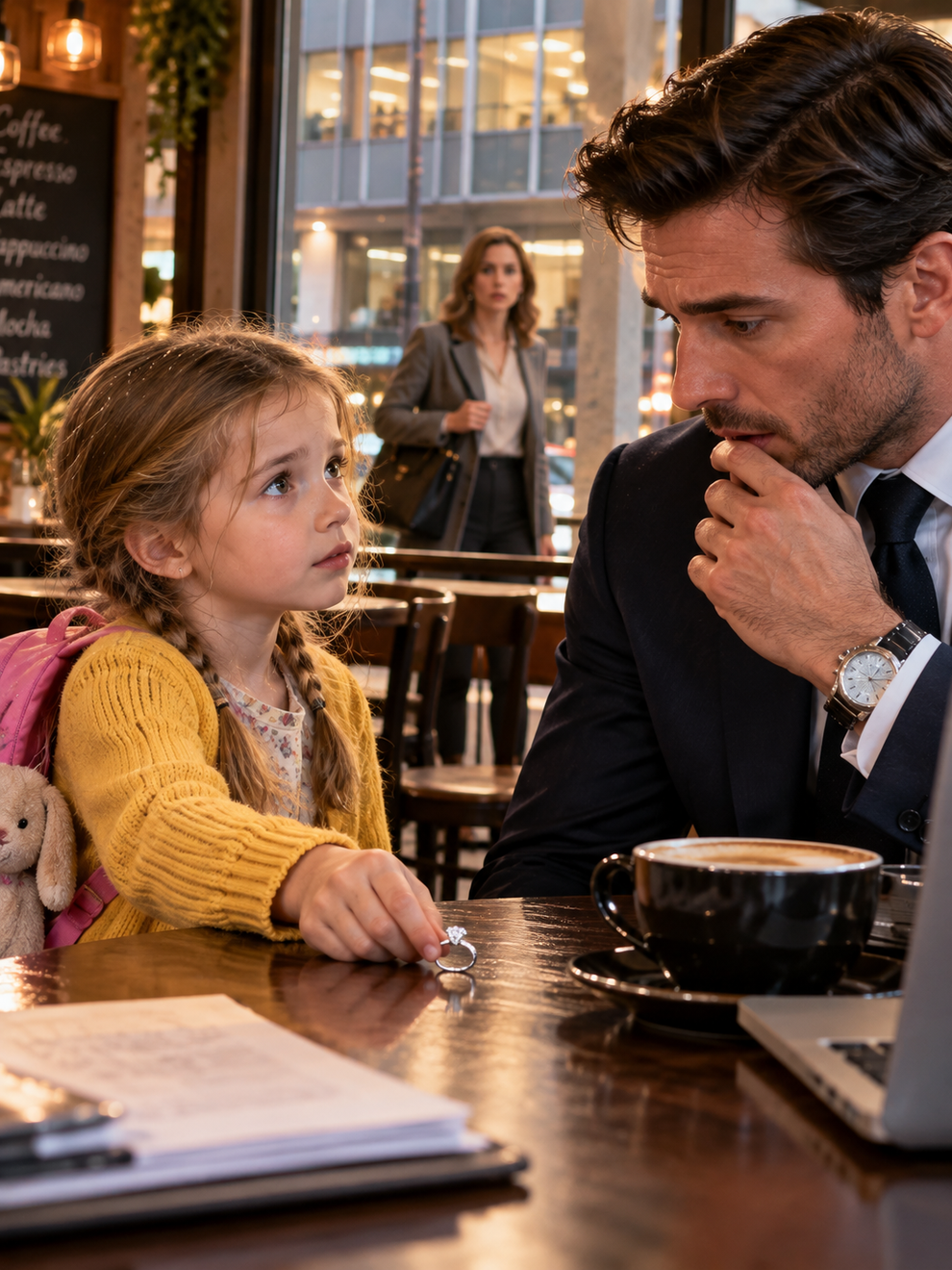
A SIX-YEAR-OLD GIRL OFFERED A BILLIONAIRE HER LATE FATHER’S ENGAGEMENT RING AND ASKED HIM TO MARRY HER MOTHER—UNAWARE OF THE PROMISES BOTH ADULTS WERE STILL GRIEVING – Life Story
The little girl laid a silver engagement ring beside a billionaire’s coffee and asked him to marry her mother. Her...