The CEO Fired a Single Dad for Fixing the Engine – Not Knowing He Built Every Race Car There…
THE CEO FIRED A SINGLE DAD FOR FIXING THE ENGINE—NOT KNOWING HE BUILT EVERY RACE CAR IN HER $2 BILLION EMPIRE
PART 1 — THE MAN WHO WASN’T SUPPOSED TO TOUCH THE ENGINE
Three of America’s best racing engineers had spent eleven days trying to repair a dying engine.
A single father with a maintenance badge fixed it overnight using tools worth less than $200.
By noon, the billionaire CEO had fired him—and the man standing beside her knew a secret that could destroy her entire company.
At on Friday morning, the engine of Vortex Motorsport’s GT7 roared back to life.
For a moment, nobody moved.
The sound rolled through the enormous workshop, vibrating against steel beams and glass observation windows.
A technician carrying coffee stopped in the doorway.
Two engineers looked up from their computers, their faces caught between disbelief and suspicion.
The engine had been dead for eleven days.
In seventy-two hours, it was supposed to power Vortex’s most expensive racing machine into the company’s most important championship event in nearly a decade.
And the person standing beside it wasn’t even an engineer.
His name was Mason Cole.
He was thirty-three years old, wore faded work pants, and had grease embedded beneath the nails of his left hand.
His employee identification described him as a general maintenance mechanic.
His weekly paycheck barely covered rent, groceries, and the childcare expenses of his six-year-old daughter.
And according to company regulations, he wasn’t authorized to touch a single component inside the GT7.
Mason watched the pressure gauge for another thirty seconds.
The needle held steady.
He listened to the rhythm of the engine, his head tilted slightly toward the sound.
Then he whispered, “There you are.”
He shut the engine down, wiped his hands, and carefully placed a damaged rubber seal inside a folded paper towel.
No celebration.
No photographs.
No request for recognition.
He simply closed his toolbox and returned to the basement workshop before his regular shift began.
What Mason didn’t know was that someone had been watching him.
On the fifth floor, Chief Operating Officer Cameron Price sat alone in a darkened conference room.
Security footage played across his laptop.
The screen showed Mason entering the restricted engineering bay at 10:43 the previous night.
Then it showed him opening the GT7’s fuel-pressure assembly without hesitation.
Cameron paused the recording.
He enlarged the image.
For several seconds, he stared at Mason’s hands.
Not because they were doing something wrong.
Because Cameron recognized exactly how they moved.
“Of course,” he murmured.
He reached for his phone and opened a contact he hadn’t used in years.
Then he stopped.
Instead, he downloaded the security footage, removed the final segment showing the successful engine test, and began preparing a disciplinary report.
By a.m., it was sitting on the CEO’s desk.
Evelyn Vance was twenty-nine years old and had spent the previous eighteen months discovering that inheriting a two-billion-dollar company was nothing like running one.
Her father, Richard Vance, had built Vortex Motorsport from a cramped Ohio workshop into a world-renowned American racing manufacturer.
When he died, he left Evelyn everything.
The factories.
The patents.
The racing program.
Four hundred and twelve employees.
And executives who still spoke to her as though she were a temporary visitor in her father’s office.
Cameron had been her father’s most trusted operations executive.
He knew the company.
He knew the investors.
More importantly, he knew exactly where Evelyn felt least confident.
“This is a serious security violation,” he told her, placing a tablet on her desk.
Evelyn studied the footage.
“Who is he?”
“Mason Cole.
Basement maintenance.
Three months with the company.”
“Why was he in the restricted bay?”
“Unauthorized mechanical intervention.”
She looked at the report.
“Did he damage anything?”
Cameron clasped his hands.
“That isn’t the issue.”
“It was a question.”
“An employee without proper engineering clearance entered a restricted work area and interfered with our most valuable vehicle.
We’re still operating under heightened safety scrutiny after the Harmon incident.
If this becomes public, we have substantial liability exposure.”
Evelyn leaned backward.
Outside her windows, the morning sun reflected from hundreds of glass panels surrounding the Vortex headquarters.
“Has the engineering department examined the car?”
“They’re reviewing the situation.”
“Is it running?”
Cameron hesitated.
“It appears operational.”
Evelyn lowered the tablet.
“Operational?”
“The engine starts.
That doesn’t mean the intervention was safe.”
He was right about one thing.
An unauthorized repair to a competition vehicle could be dangerous, even if the machine appeared functional.
Evelyn knew she couldn’t establish safety standards and then excuse a violation simply because the result was convenient.
But Cameron hadn’t told her the full story.
And he intended to keep it that way.
“Bring him upstairs,” she said.
Twenty minutes later, Mason stood outside her office.
His gray work shirt was clean except for a dark stain near his wrist.
He had been awake for almost twenty-eight hours.
His shoulders ached.
Inside his pocket was a note reminding him to buy milk and the cereal Luna liked.
He had promised his daughter they would finish building her cardboard rocket ship that evening.
He was thinking about whether the grocery store would still have the blue paint she wanted when the receptionist opened the door.
“Mr.
Cole?
Ms.
Vance will see you.”
Mason stepped inside.
The room was enormous.
Behind the desk hung a photograph of Richard Vance standing beside Vortex’s first championship-winning GT-series car.
Confetti filled the air around him.
The photograph had been taken in 2015.
Mason looked at it for a fraction of a second longer than necessary.
Then he faced Evelyn.
“Mr.
Cole,” she began, “do you understand why you’re here?”
“Because of the GT7.”
“You entered a restricted engineering area without authorization.”
“Yes.”
“You dismantled part of the fuel delivery system.”
“Yes.”
“Why?”
“Because it was broken.”
Cameron shifted his weight.
Evelyn’s expression tightened.
“That doesn’t explain why you believed you had the authority to repair it.”
Mason looked directly at her.
“Three engineering teams had been working from incomplete drawings.
The tertiary pressure valve wasn’t the problem.
The secondary seal beneath it had hardened.
The diagnostic system couldn’t identify it because the seal isn’t listed in the current maintenance documents.”
Evelyn glanced at Cameron.
“Is that accurate?”
“We don’t know yet,” Cameron said quickly.
Mason reached into his pocket.
“I kept the failed part.”
He placed a folded paper towel on Evelyn’s desk.
Inside lay a tiny black ring, split along one edge.
It looked too insignificant to justify the tension filling the room.
“This?” Evelyn asked.
“That’s what stopped the engine.”
Cameron gave a quiet, humorless laugh.
“You’re telling us you corrected a problem that three senior engineers and two international consultants couldn’t diagnose?”
“I’m telling you what I replaced.”
“And what exactly qualified you?”
Mason’s jaw moved slightly.
For the first time, something changed in his expression.
Not anger.
Something older.
“I know the engine.”
“You have no degree in automotive engineering.”
“No.”
“No design certification.”
“No.”
“Then you had no business touching it.”
Mason turned toward Evelyn.
“Ma’am, that seal was not supposed to last nine racing seasons.
The original replacement schedule was never transferred into the newer documentation.
If your team keeps servicing the GT7 according to the current files, the same failure will eventually happen again.”
Evelyn sat very still.
“And you’re certain?”
“Yes.”
“How?”
Mason looked at the photograph behind her.
Then back at her face.
“Because I remember why it was installed.”
The room became quiet.
Cameron stepped forward.
“Ms.
Vance, we’re not debating this employee’s personal theories.
The violation is documented.
We have a race to prepare for and a board that expects consistent enforcement.”
Evelyn looked down at the disciplinary report.
For several seconds, her pen remained suspended over the page.
Then she signed.
“Mr.
Cole, your actions violated company safety protocols.
Your employment with Vortex Motorsport is terminated, effective immediately.”
Mason didn’t move.
He looked at the signature.
Then at her.
“You’re firing me for fixing the car?”
“I’m terminating you for entering a restricted area and performing unauthorized work.”
“I understand.”
His voice was so quiet that Evelyn almost wished he had shouted.
Mason picked up the broken seal and wrapped it again.
He had learned years earlier that arguing with people who had already made their decisions rarely changed anything.
But before he reached the door, he stopped.
“Ms.
Vance?”
She looked up.
“Before Xavier drives the GT7 this weekend, make sure your engineers read the original drawings.”
“We have the engineering records.”
“Not those records.”
His hand tightened around the paper towel.
“The original drawings.
The handwritten ones.
Ask your father’s archive department where they are.”
Cameron’s face lost its color.
Mason opened the door.
Then, without looking back, he added, “And tell Xavier the engine is safe now.
I wouldn’t have started it if it wasn’t.”
He left.
Evelyn stared at the closed door.
Something about his final words troubled her.
Not their meaning.
Their certainty.
She turned toward Cameron.
“Why would a maintenance mechanic know about handwritten engineering documents?”
Cameron closed his folder.
“Employees hear things.
Especially people who work around engineers.”
Evelyn glanced at the tiny oil mark Mason had left on the polished desk.
“I want Isaac to verify that repair before the car moves.”
“Of course.”
Cameron left quickly.
Evelyn was still looking at the doorway when someone knocked.
Dominic Hayes, the fifty-eight-year-old workshop supervisor, stood outside.
He had worked for Richard Vance since the company occupied a single garage.
His eyes were fixed on the termination notice lying on Evelyn’s desk.
“Tell me you didn’t sign that,” he said.
Evelyn frowned.
“Dominic, if this concerns Mr.
Cole—”
“You fired him?”
“He violated—”
“Answer me.”
“Yes.”
Dominic removed his safety glasses.
His hands were shaking.
For the first time since she’d known him, the veteran supervisor looked genuinely frightened.
“Dear God, Evelyn.”
“What?”
Dominic looked toward the photograph of her father.
Then he said something that made the room seem to tilt beneath her.
“That man didn’t just repair your race car.
Mason Cole designed the engine inside it.
And your father trusted him with every championship car this company ever built.”
Evelyn stared at him.
Dominic stepped closer.
“And if Cameron was the one who convinced you to fire him, there’s something much worse you need to know.”
END OF PART 1
PART 2 — THE NAME THEY ERASED
The mechanic Evelyn had dismissed wasn’t hiding a criminal record.
He was hiding a career that had helped create her father’s fortune.
And the executive who arranged his dismissal had spent years making sure nobody remembered it.
Six hours after losing his job, Mason Cole was standing in a grocery store deciding whether he could afford strawberries.
Luna loved strawberries.
She also needed new school shoes.
The shoes won.
He returned the strawberries to their shelf, bought milk, pasta, bread, and a small box of colored pencils, then drove to the apartment building where his neighbor watched Luna after school.
Mrs.
Rivera opened the door before he knocked.
“You’re early.”
“So everybody keeps telling me.”
She studied his face.
“What happened?”
“Lost my job.”
Her expression changed immediately.
“Mason—”
“I’ll find something.”
“You always say that.”
“Usually because it’s true.”
Mrs.
Rivera stepped aside.
Luna was sitting at the kitchen table, drawing a purple car with enormous yellow wheels.
When she saw her father, she jumped down and ran toward him.
“Daddy!”
He caught her with one arm.
“Hey, Moonbeam.”
“You’re early!
Did you finish fixing the big car?”
Mason looked at Mrs.
Rivera.
She knew better than to ask how Luna had learned about his work.
“Yeah,” he said. “I fixed it.”
“Did everybody clap?”
He swallowed.
“No, sweetheart.”
“Why not?”
He glanced toward the window.
“Sometimes people don’t know something’s fixed until much later.”
Luna considered this.
Then she placed one small hand against his cheek.
“Well, I’m proud of you.”
Mason closed his eyes.
For a moment, the grocery bags hanging from his wrist felt impossibly heavy.
He hugged her a little tighter.
“That’s the one that matters.”
That evening, after Luna went to sleep, Mason opened the bottom drawer of his kitchen cabinet.
Beneath spare batteries and instruction manuals lay a laminated company card.
The photograph showed a younger man with longer hair and a nervous smile.
Beneath it were four words.
Vortex Motorsport — Chief Design Engineer.
Mason Cole.
He held the card for a long time.
Then he turned it over.
On the back was a handwritten note.
You hear what the machines are trying to tell us.
Never lose that.
Richard Vance.
Mason ran his thumb over the fading ink.
He remembered the first time he’d met Richard.
It had been 2014, in a diner outside Columbus, Ohio.
Mason was twenty-one, halfway through a university engineering program he could no longer afford, repairing lawnmowers and delivery vans to pay his bills.
He had posted a hand-drawn load-distribution diagram on an obscure motorsport engineering forum.
Richard had contacted him three days later.
At their first meeting, the millionaire founder arrived wearing a faded racing jacket and ordered black coffee.
Mason arrived with a backpack containing seventeen pages of calculations.
Richard barely touched his breakfast.
He studied the drawings instead.
“Who taught you this?”
“Nobody.”
“That’s not an answer.”
Mason shrugged.
“I broke enough engines to learn what made them fail.”
Richard laughed.
Then he held up a diagram.
“This pressure distribution is better than what my entire design department submitted last month.”
Mason looked embarrassed.
“I didn’t mean to criticize your engineers.”
“You weren’t criticizing them.
You were solving their problem.”
Richard put the drawings down.
“Come work for me.”
Mason blinked.
“I don’t have a degree.”
“Neither does the engine.”
Richard leaned forward.
“It doesn’t care what certificate hangs on your wall.
It cares whether you understand what happens inside it.”
That afternoon changed Mason’s life.
Richard brought him into a small experimental engineering team and allowed him to challenge assumptions that more experienced designers rarely questioned.
Mason worked sixteen-hour days because he loved the work.
He argued with engineers twice his age.
He slept beside prototype engines during endurance tests.
And when Vortex won its first major GT championship in 2015, Richard pulled him into the victory photograph even though Mason had tried to remain behind the cameras.
By 2017, Mason had helped design seven major GT engine variants.
The GT7 was his favorite.
Not because it was the fastest.
Because it was the first engine he’d designed with a particular person in mind.
Anna.
She was a nurse at a community hospital outside Columbus.
She had met Mason when he brought an injured coworker to the emergency department and spent forty minutes explaining why the hospital’s coffee machine made a clicking sound.
Anna had listened patiently.
Then she’d said, “You know, most men ask for my number before describing a broken appliance.”
Mason had turned bright red.
She’d laughed and written her number on the back of his parking receipt.
They married two years later.
Anna understood his quietness.
She knew when he needed company and when he needed silence.
Sometimes she brought dinner to the workshop and sat beside him while he drew.
One night, watching him work on the GT7, she asked why he kept changing a component the engineering team had already approved.
“Because it works in a laboratory,” he replied.
“And?”
“The racetrack isn’t a laboratory.”
Anna touched the back of his neck.
“Then make it safe enough to bring everybody home.”
Mason smiled.
“That’s the plan.”
It was Anna who persuaded him to add a small secondary seal to stabilize pressure during prolonged thermal cycling.
She didn’t understand the calculations.
She understood her husband’s face whenever he saw an unresolved risk.
The tiny seal became one of several modifications Mason incorporated during early GT7 development.
It should have appeared in the final service records.
It didn’t.
By the time the documentation problem became apparent, everything else in Mason’s life had changed.
In 2020, six months after their daughter was born, Anna died in a collision caused by a driver who crossed the center line on a wet road.
The police officer who came to Mason’s door spoke gently.
Mason remembered almost none of his words.
He remembered the water dripping from the officer’s jacket onto their kitchen floor.
He remembered Luna crying in the bedroom.
And he remembered Anna’s unfinished cup of tea sitting beside the sink.
He returned to work twice after the funeral.
On the second day, an engineer asked him to approve an updated engine specification.
Mason stared at the document.
All he could see was Anna’s handwriting on a grocery list tucked beneath his notebook.
He set the pen down.
Then he walked out.
For months, Richard called.
Sometimes Mason answered.
Often he couldn’t.
Eventually the calls stopped, and the company began reorganizing its engineering division.
Cameron Price oversaw the administrative transition.
The original design records were consolidated.
The board presentations began describing the GT-series architecture as a collaborative achievement of Vortex’s engineering department.
Mason’s name gradually disappeared.
At first, he didn’t notice.
He was learning how to make formula at three in the morning.
He was washing baby clothes.
He was trying to understand how a tiny person could need him so completely when he barely understood how to survive another day himself.
By the time he discovered that his designs were being credited elsewhere, years had passed.
He could have sued.
He considered it.
But each time he began searching for an attorney, Luna needed something.
A doctor.
A school.
Someone to hold her during thunderstorms.
And Mason couldn’t bear the thought of spending her childhood fighting a company that reminded him of the life he’d lost.
He took independent mechanical jobs.
He moved into a smaller apartment.
He learned to live without awards, professional recognition, or the sound of an engine roaring through a test chamber.
Then, three months before his return to Vortex, he heard that the GT7 was struggling with a recurring pressure anomaly.
He recognized the symptoms immediately.
He applied for a maintenance position.
Cameron approved the application personally.
Mason had believed that meant the past no longer mattered.
He was wrong.
Across the city, Evelyn Vance sat in the lower workshop while Dominic placed an old photograph in front of her.
It showed Richard beside a young engineer with dark hair and a shy smile.
The young man was holding a hand-drawn engine diagram.
Evelyn knew his face.
She had seen it that morning, standing in her office, accepting a termination notice without raising his voice.
“Why didn’t my father tell me?” she whispered.
Dominic looked at the photograph.
“He tried to tell you plenty of things, Evelyn.
Near the end, he was running out of time.”
“Why didn’t you tell me?”
“Because Mason asked me not to.
He wanted to fix the car, not become another argument in this building.”
Evelyn pressed her fingers against her forehead.
“Does Cameron know?”
Dominic didn’t answer immediately.
Then he said, “Cameron signed the paperwork when Mason left the engineering division.
Cameron approved his application when he came back.”
Evelyn looked up.
“Both?”
“Both.”
Her phone vibrated.
An automated notification had arrived from Corporate Records.
GT7 historical engineering files scheduled for archival consolidation.
Requested by: Cameron Price.
Scheduled execution: 11:00 p.m.
Evelyn stared at the message.
She checked the time.
10:36 p.m.
Twenty-four minutes.
She stood so quickly her chair struck the wall.
“Where are the originals?”
Dominic’s expression darkened.
“The public engineering archive?
Cameron controls that.”
“And my father’s?”
Dominic looked toward the ceiling.
“Third floor.
Private records.
If he kept anything, it’ll be there.”
Evelyn grabbed her keys.
As she reached the doorway, Dominic called after her.
“Evelyn.”
She turned.
“If you find what I think you’re going to find, don’t confront Cameron alone.”
“Why?”
Dominic looked down at the photograph.
“Because he didn’t just steal a man’s name.”
“He built his entire career on making sure that man never got it back.”
END OF PART 2
PART 3 — THE VICTORY THAT FELT LIKE A LIE
At 10:58 p.m., Evelyn found a drawing that could change the ownership of Vortex Motorsport’s most valuable technology.
Two minutes later, someone tried to remove its history from the company system.
The private archive smelled of old paper, cardboard, and furniture polish.
Evelyn hadn’t entered the room since her father’s funeral.
He had kept everything.
Prototype photographs.
Failed engine designs.
Handwritten letters from drivers.
Even the coffee-stained notebook he carried to Vortex’s first investor meeting.
The room made her feel unexpectedly small.
For eighteen months, she’d been sitting in his office, trying to make decisions he would have respected.
Now she was searching through his private belongings because she’d fired a man he apparently trusted more than anyone had told her.
She opened the flat filing cabinet marked GT Development, 2014–2018.
Inside were dozens of technical drawings.
Some contained unfamiliar names.
Others were signed by Richard.
Then she found a thick folder secured with a faded blue band.
GT7 — Original Architecture.
On the first page, near the lower right corner, were two initials.
M.C.
The handwriting was identical to the technical notes visible in the old photograph Dominic had shown her.
She turned the page.
Another drawing.
The same initials.
Another.
And another.
Every major assembly carried Mason Cole’s handwriting.
Fuel management.
Thermal regulation.
Load distribution.
Pressure stabilization.
The very components that current executives repeatedly described as Vortex’s proprietary technological advantage.
Evelyn slowly lowered herself into her father’s old leather chair.
The drawings weren’t generic sketches.
They contained design decisions, calculations, testing annotations, and revision histories that linked the finished engines to Mason’s original work.
Then she found the secondary pressure seal.
A tiny handwritten arrow pointed toward a component buried inside the tertiary valve housing.
Beside it, Mason had written:
Replace after prescribed thermal-cycle interval.
Never omit during rebuild.
Evelyn remembered the broken ring he’d placed on her desk.
It had looked like garbage.
Now she understood that it represented an undocumented maintenance requirement on a vehicle capable of traveling at nearly two hundred miles per hour.
Her phone vibrated.
10:59 p.m.
She called the head of information technology.
“Stop the archive consolidation.”
“Ms.
Vance?”
“Immediately.
Preserve every historical GT-series engineering record, every revision and every access log.
Nothing is to be deleted.”
“The instruction came from executive operations.”
“I’m the chief executive.”
A pause.
“Understood.”
Evelyn placed the original drawings into a secure document case.
At 11:02, an email confirmed the archival job had been suspended.
She exhaled.
Then noticed another envelope beneath the folder.
Her father’s handwriting appeared across the front.
Mason Cole — personal.
It was unsealed.
Inside was a handwritten draft, dated shortly before Richard’s death.
She began to read.
Mason,
I should have answered your letter when it arrived.
There are things I allowed other people to handle because I was tired, sick, and foolish enough to believe that everyone here valued the same things I did.
You deserved more from me.
Evelyn stopped.
A sound escaped her throat, small and involuntary.
She read the sentence again.
Then she folded the letter carefully.
For the first time, she began to wonder whether her father had died knowing that the company he’d built had betrayed someone he loved.
Sunday afternoon arrived with the smell of heated rubber and the thunder of racing engines.
The GT7 sat in its pit bay under white stadium lights.
Xavier Brooks, Vortex’s twenty-four-year-old driver, was fastening his gloves when he noticed Evelyn standing near the car.
“You look terrible,” he said.
She almost smiled.
“Good afternoon to you, too.”
“Didn’t sleep?”
“Not much.”
He glanced toward the engine compartment.
“They finally fixed her.”
“They did.”
“Isaac says the pressure readings are the best we’ve ever had.”
Evelyn looked at the car.
“Good.”
Xavier hesitated.
“Who figured it out?”
She didn’t answer immediately.
“Someone from maintenance.”
“Seriously?”
“Yes.”
Xavier laughed in surprise.
“Tell him I owe him dinner.”
Evelyn looked away.
“He’s not with the company anymore.”
The driver’s smile faded.
“Why?”
She swallowed.
“Because I fired him.”
Xavier stared at her.
Then he pulled off one glove.
“Did he sabotage something?”
“No.”
“Was the repair bad?”
“Independent checks say it’s safe.”
“Then why?”
“Because he violated our safety procedures.”
Xavier looked at the GT7.
Then at Evelyn.
“With respect, Ms.
Vance, I’m the one who climbs into that car.”
“I know.”
“If he found something the rest of us missed, I’d like to speak to him before I put my life inside his work.”
Evelyn felt the words settle in her chest.
She hadn’t expected a twenty-four-year-old driver to ask the question she’d failed to ask herself.
“I’ll arrange it,” she said.
The race began an hour later.
Forty thousand spectators rose as the starting lights went out.
Cars surged forward.
Engines screamed across the circuit.
For the first twenty laps, the GT7 ran beautifully.
Its acceleration remained smooth through corners that had previously exposed inconsistencies in fuel delivery.
Isaac watched the telemetry so intently that he barely blinked.
By the final stint, Xavier had climbed into second place.
The leading car was five seconds ahead.
Three laps later, the gap had narrowed to three.
Evelyn stood beside the pit wall, watching the pressure readings on a portable monitor.
Every indicator remained stable.
“Come on,” Isaac whispered.
Xavier pushed harder.
The GT7 came within two seconds of the leader before crossing the finish line in second place.
Vortex’s strongest championship result in nine years.
The pit crew erupted.
Engineers embraced.
Someone sprayed champagne.
Cameron appeared beside Evelyn, smiling for the cameras.
“This is exactly what we needed,” he said.
She looked at him.
“Yes.”
“Our partners are already calling.
The performance data changes everything.”
“Does it?”
Cameron’s smile stiffened.
“Of course.”
Evelyn looked toward Xavier climbing out of the car.
He raised both arms as the crowd applauded.
All she could think about was a man in a small apartment, probably helping his daughter with dinner, who had made that celebration possible.
Cameron leaned closer.
“I told you decisive leadership would protect this company.”
Evelyn turned toward him.
“And I suppose you’re pleased with the engineering team’s work?”
“Absolutely.”
“All of it?”
His expression remained pleasant.
“Evelyn, this isn’t the time.”
She held his gaze.
“No,” she said quietly. “I suppose it isn’t.”
On Monday morning, Evelyn returned to the basement workshop.
Dominic was eating a sandwich beside an old tool cabinet.
When he saw her, he set it down.
“Found the drawings?”
“Yes.”
“Then you know.”
“I know Mason designed the GT7.”
Dominic shook his head.
“You’re still thinking too small.”
He led her toward a storage rack containing retired engine components.
Each assembly had a stamped identification plate.
GT2.
GT3.
GT4.
GT5.
GT6.
GT7.
Dominic pointed to the first.
“Mason redesigned the pressure architecture after our 2015 championship car kept losing efficiency under heat.”
He pointed to the next.
“He changed how we distributed load through the crank assembly.”
Then the others.
“Cooling.
Fuel recovery.
Thermal balance.
Reliability.
Different teams contributed to the completed vehicles, but Mason’s core engineering architecture shaped every GT-series race car we built after Richard brought him here.”
Evelyn touched a metal housing.
“Why wasn’t he credited?”
Dominic looked at her.
“At first, he was.”
“What changed?”
“After Anna died, Cameron reorganized engineering.
He took over the documentation transfer.
Mason’s name disappeared from the revised drawings.”
“Did my father know?”
“Not everything.
Cameron told him the updated credits reflected team ownership.
Richard was already ill when the licensing arrangements became complicated.”
Evelyn folded her arms.
“What licensing arrangements?”
Dominic looked toward the workshop windows.
“The German partnership.
The one Cameron negotiated last year.”
“That’s a manufacturing agreement.”
“It’s also an intellectual-property license.”
Evelyn felt a cold sensation move through her.
She had personally signed the final commercial agreement based on assurances from Cameron and legal staff that Vortex owned everything it licensed.
“Are you telling me we don’t own our own engines?”
“I’m telling you nobody ever asked Mason to sign over the original designs he developed before his employment documents were finalized.”
Evelyn stared at him.
“Why would that matter?”
“Because Richard first hired him through an experimental consulting arrangement.
The central GT architecture was already on that paper napkin.
The later employment contract doesn’t clearly address the earlier work.”
He paused.
“Ownership isn’t something I can decide.
But whoever negotiated those licenses should have disclosed the problem.”
Evelyn remembered Cameron’s confidence.
His insistence on disciplinary precedent.
His carefully edited security presentation.
And the midnight attempt to consolidate records.
She thanked Dominic, returned upstairs, and contacted outside legal counsel.
By four that afternoon, attorney Rachel Mercer had reviewed the original design records and portions of the German licensing agreement.
Rachel’s initial assessment was cautious.
“There’s enough uncertainty here to create serious exposure.
We need the full employment history, the early consulting agreement, and every assignment document.”
“And if the assignment doesn’t exist?”
“Then Cameron’s representations to the licensing partner may be materially inaccurate.
That could trigger contractual remedies and a dispute over ownership.”
Evelyn sat silently.
Rachel turned another page.
“There’s something else.”
“What?”
“The GT design credits were changed in 2020.
The archive shows who submitted the replacement documentation.”
Evelyn already knew.
“Cameron.”
“Yes.
But that’s not the worst part.”
Rachel rotated her laptop.
An email from Cameron appeared on the screen, dated eleven days after Mason’s departure.
Original engineering files should not accompany the transfer package.
Use consolidated department-level attribution for all external disclosures.
Evelyn felt her pulse quicken.
Rachel opened the attached revision record.
The maintenance drawing containing Mason’s secondary seal had been removed from the official set.
Not lost.
Not accidentally omitted.
Removed.
And beneath the approval box was Cameron’s electronic signature.
Evelyn looked at the document and realized that the same man who had demanded Mason’s dismissal for violating safety procedures had authorized the disappearance of the safety instruction that caused the engine failure.
END OF PART 3
PART 4 — THE EXECUTIVE WHO SOLD SOMEONE ELSE’S GENIUS
Cameron Price had made millions protecting Vortex Motorsport’s reputation.
Now the CEO had discovered that protecting the reputation was often just another way of protecting Cameron.
Evelyn summoned Cameron to her office at the following morning.
She didn’t ask his assistant to arrange it.
She didn’t give him an agenda.
She sent a single message.
My office.
Eight sharp.
Bring your copies of the GT7 design-transfer agreements.
He arrived carrying a leather folder.
His silver watch caught the morning light.
“You’re looking better,” he said.
Evelyn stood beside the window.
“Close the door.”
He obeyed.
Three items lay on her desk.
Mason’s original engineering drawing.
Cameron’s 2020 revision authorization.
And the German partnership contract.
Cameron looked at them.
For the first time in eighteen months, Evelyn saw uncertainty pass across his face.
“Where did you get those?”
“My father’s archive.”
“Those are historical documents.
Some of them may not reflect current contractual arrangements.”
“Sit down.”
Cameron remained standing.
Evelyn turned toward him.
“Did you know Mason Cole designed the original GT architecture?”
“Many people contributed to that program.”
“Did you know he designed the GT7’s pressure system?”
“Mason contributed certain concepts.”
“Did you know his original drawings contained a maintenance instruction that your department removed?”
Cameron adjusted his cuffs.
“That revision was part of a larger technical consolidation.”
“The omitted component nearly cost us a championship entry.
Our engineers couldn’t find it because the document no longer existed in their service files.”
“No driver was injured.”
“Because Mason repaired it.”
Cameron’s jaw tightened.
“Without permission.”
Evelyn stepped closer.
“Stop hiding behind that sentence.”
Silence.
“Did you know who Mason was when he applied for the maintenance job?”
“Of course I recognized his name.”
“Then why didn’t you tell me?”
“He abandoned his position years ago.
We had no obligation to reinstate him in engineering.”
“That wasn’t my question.”
Cameron finally sat down.
He looked tired for the first time.
“Because Richard was sentimental about him,” he said. “And you are already under enough pressure to establish yourself as CEO without reopening a decade-old dispute.”
Evelyn stared at him.
“You thought I couldn’t handle the truth?”
“I thought the company couldn’t afford unnecessary drama.”
“And the licensing agreement?”
Cameron said nothing.
Evelyn picked up the document.
“You represented to our German partners that Vortex possessed an unbroken chain of ownership for all the licensed technology.”
“We do.”
“Show me Mason’s assignment.”
He leaned backward.
“The company developed those designs.”
“Show me the assignment.”
“The development was paid for by Vortex.”
“Then it should be easy.”
Cameron’s face hardened.
“Do you understand what you’re doing?
We have employees in six countries depending on those contracts.”
Evelyn held his gaze.
“I understand that employees could lose their jobs if we allow a false statement to remain uncorrected.”
He tapped the arm of his chair.
“Mason walked away.
He left the project.
He disappeared for years.
We built the business around what he abandoned.”
“His wife died.”
“I know what happened to his wife.”
“Then don’t speak about him as if he went on vacation.”
Cameron looked at the drawings again.
“Your father knew Mason had left.
He approved the reorganization.”
“Not the removal of an undocumented safety component.”
“You can’t prove what Richard understood.”
“No,” Evelyn replied. “But I can prove which changes you authorized.”
She opened a second folder.
“Effective immediately, you’re relieved of operational authority pending an independent investigation.
Your access to engineering records is suspended.
Legal counsel will handle the German licensing dispute, and the existing agreement will be placed into formal termination proceedings under its provenance provisions.”
Cameron stared at her.
“You can’t make that decision without the board.”
“I’ve already notified the board chair.
Counsel has identified the relevant contractual grounds.
We’ll follow the required process.”
He stood.
“You are making a catastrophic mistake.”
“Maybe.”
Her voice remained steady.
“But this time I intend to know what I’m deciding before I sign.”
Cameron moved toward the door.
Then he stopped.
“You think Mason Cole is some kind of hero?”
Evelyn said nothing.
“He left us when the company needed him.
The rest of us stayed.
We negotiated, manufactured, solved problems, and kept four hundred people employed.”
“Then you should have been proud enough of your own work not to steal his.”
Cameron’s expression changed.
For a moment, the polished executive disappeared.
What remained was a man who’d spent years watching somebody else’s brilliance cast a shadow over his achievements.
“He got everything from Richard,” Cameron said quietly.
“Trust.
Attention.
Freedom.
Richard forgave mistakes from Mason that would’ve ended anyone else’s career.”
Evelyn looked at him.
“So you erased him?”
“I made the company less dependent on one man.”
“And when that man came back to save a car?”
Cameron picked up his folder.
“I protected the company from another liability.”
He left without waiting for her reply.
By noon, the board had demanded an emergency briefing.
The German licensing partner wanted an explanation.
Two investors had called Evelyn’s personal phone.
The company’s general counsel advised against making public statements until the documentation review was complete.
Evelyn agreed to all of it.
But when Isaac entered her office carrying a new technical report, she knew the problem had grown.
“I reviewed Mason’s original drawings,” he said.
His eyes were bloodshot.
He had apparently worked through the night.
“And?”
“I owe that man an apology.”
Evelyn gestured toward the chair.
Isaac remained standing.
“We’ve been treating the tertiary valve as a conventional pressure-regulation assembly.
It isn’t.
Mason designed it around a secondary mechanical compensation system.”
“The seal.”
“Partly.
The seal is one piece of a larger thermal-control strategy.”
He spread several diagrams across her desk.
“Mason’s original service documentation specifies inspection intervals, sensor calibration procedures, and a physical seal replacement.
The revised documents removed several of those details.”
“How dangerous?”
Isaac hesitated.
“On the GT7 we repaired?
Our inspections say the system is stable.
But the original omission creates a long-term failure risk if future rebuilds follow the incomplete instructions.”
Evelyn nodded.
“Can you correct the manuals?”
“Yes.
But there’s another issue.”
He opened a newer file.
It displayed an engine labeled Vortex GT-X Experimental Platform.
Evelyn recognized it.
The GT-X was the company’s next-generation program, developed partly through the German technology partnership.
Its first demonstration was scheduled for Thursday at a private proving facility in Michigan.
“What about it?”
“The engineering team adapted portions of the GT7 pressure architecture.”
“Is that unusual?”
“Not normally.
But they adapted it from the revised drawings.”
Evelyn stared at the screen.
“Without the original compensation system?”
“We don’t know yet.”
“Has the prototype been tested?”
“Low-load bench tests, yes.
The full endurance demonstration is supposed to happen Thursday.”
“Then cancel it.”
Isaac looked uncomfortable.
“The demonstration is being administered through the licensing partner.
It isn’t entirely under our direct operational control.”
“Call them.”
“We did.
Their program director says the equipment passed preliminary checks and they’re proceeding unless we present a documented technical reason to stop.”
Evelyn took the report.
“Then give me one.”
Isaac lowered his eyes.
“That’s the problem.
I can identify the missing detail.
But I can’t fully reconstruct why Mason made that design choice, or how it affects the derivative architecture.”
Evelyn looked toward the championship photograph behind her desk.
For years, every executive meeting had celebrated the brilliant engineering hidden beneath Vortex’s sleek carbon-fiber bodies.
Now a company worth billions couldn’t explain one of the systems powering its own machines.
Evelyn picked up her phone.
She scrolled to Mason’s number.
Then stopped.
She remembered his face when she told him he was fired.
The way he hadn’t begged.
The way he’d folded the broken seal as carefully as though it were something valuable.
She set the phone down.
“I need to speak to him in person.”
Isaac nodded.
“There’s one more thing.”
“What?”
He placed a printed test schedule on her desk.
“The Michigan team moved the demonstration forward.”
Evelyn looked at the time.
Thursday had been crossed out.
Beside it was a new entry.
Wednesday, a.m. — Full-load endurance validation.
Tomorrow morning.
Isaac swallowed.
“They want to complete the test before the licensing dispute can interrupt the program.”
Evelyn looked at him.
“Who’s driving?”
“No one.
It’s a remotely operated powertrain test.”
She exhaled, relieved for half a second.
Then Isaac continued.
“But the dyno cell shares a coolant service corridor with the technicians’ monitoring area.
If the pressure assembly fails under full load, the containment systems would be tested beyond anything we’ve validated.”
Evelyn looked down at the schedule.
Twenty hours.
The company had twenty hours to prevent another disaster caused by drawings it had spent years pretending were complete.
And the only man who understood the original engineering had been fired by her own hand.
END OF PART 4
PART 5 — THE SIX-YEAR-OLD WHO KNEW WHAT MATTERED
The billionaire CEO arrived at Mason Cole’s apartment expecting anger.
Instead, she found a little girl repairing a toy car—and a father who had already learned how to survive losing everything.
At 12:40 that afternoon, Evelyn parked her black sedan outside a three-story apartment building on the east side of Columbus.
The building had faded brick walls.
One of the front steps was cracked.
A child’s bicycle leaned against the railing, its front tire nearly flat.
Evelyn remained inside her car for a full minute.
She had negotiated contracts worth hundreds of millions of dollars.
She’d dismissed executives twice her age.
She’d stood before investors who expected her to fail and refused to let them see her hands shaking.
But she had no idea how to ask a man she’d humiliated to save the company that had humiliated him.
She finally stepped outside.
Apartment 3B.
She knocked.
A small voice answered.
“Who is it?”
“My name is Evelyn.”
The door opened a few inches.
A little girl with dark curls stared at her.
She wore pajamas covered in colorful gears and held a battered brown teddy bear.
“Are you selling something?”
Evelyn blinked.
“No.”
“Because Daddy says we’re not buying anything from people who knock on doors.”
“That’s very sensible.”
The girl studied her shoes.
“They’re shiny.”
“Thank you.”
“Do they hurt?”
Evelyn looked down at her expensive heels.
“Sometimes.”
“Then why do you wear them?”
Before Evelyn could answer, Mason appeared behind the girl.
His face changed when he saw her.
Not dramatically.
But the warmth he’d been showing his daughter disappeared.
“Luna, sweetheart, go finish your drawing.”
Luna looked between them.
“Is she your friend?”
Mason paused.
“She used to be my boss.”
Luna considered this.
Then looked at Evelyn.
“Did you make Daddy sad?”
The question landed harder than any boardroom accusation Evelyn had ever faced.
Mason touched Luna’s shoulder.
“Go on, Moonbeam.”
Luna carried her bear toward the living room.
But before she disappeared, she turned around.
“My daddy fixes things really good.”
Evelyn swallowed.
“I know.”
Mason moved aside.
The apartment was small but carefully maintained.
Two mugs sat beside the sink.
A stack of engineering manuals occupied one bookshelf.
On the refrigerator, a child’s drawing depicted three figures holding hands.
One figure wore a yellow dress and had wings.
Evelyn looked away before Mason noticed.
He gestured toward the kitchen table.
“You can sit.”
She did.
He remained standing.
“Why are you here?”
Evelyn placed a folder on the table.
“I found the original GT7 drawings.”
He showed no surprise.
“I thought you might.”
“And I found the letters.”
That changed his expression.
“What letters?”
She opened the folder.
The first was Mason’s handwritten note to Richard, mailed three months before the founder’s death.
Mister Vance,
I heard you haven’t been well.
I don’t expect anything from you.
But if Evelyn ever needs someone who knows the GT system from the foundation up, I still remember every measurement.
I’m not asking for recognition.
I just want to know the cars are safe.
Whoever drives them deserves that much.
Mason.
Mason looked at the letter without touching it.
“I never heard back.”
“I know.”
Evelyn placed the second letter beside it.
Richard’s unfinished response.
Mason recognized the handwriting immediately.
His hand stopped moving.
“He wrote back?”
“He started to.”
For a long moment, Mason didn’t speak.
Then he turned away.
Evelyn watched him brace one hand against the kitchen counter.
The silence stretched.
She wanted to say something comforting.
Nothing felt appropriate.
Eventually Mason turned around.
“What do you need, Ms.
Vance?”
“Evelyn.”
He waited.
She took a breath.
“I need your help.”
A faint, tired smile appeared at the corner of his mouth.
“That’s usually when people remember my name.”
Evelyn accepted the blow.
“You’re right.”
She opened Isaac’s technical report.
“The company adapted part of your pressure architecture into a new experimental platform.
Our engineering team may have inherited the same documentation problem.”
Mason read the report.
His expression grew more serious with each page.
“When is the test?”
“Tomorrow morning.”
“Where?”
“Michigan.”
He reached for a pencil.
“Have they changed the return-channel dimensions?”
“Isaac isn’t certain.”
“What about the thermal compensation assembly?”
“They think it’s unnecessary in the newer configuration.”
Mason stopped writing.
“Who told them that?”
“The revised files.”
He looked at the ceiling.
For several seconds, he said nothing.
Then he placed the pencil down.
“Of course they do.”
Evelyn leaned forward.
“How serious is it?”
“That depends on whether they’ve changed the components that absorb pressure variation during prolonged operation.”
“Could somebody get hurt?”
“Yes, if they run it beyond the safe validation envelope without confirming the assembly.”
Evelyn looked at her hands.
“I’ve asked them to stop.
They want technical proof.”
Mason closed the folder.
“Then you need to give them proof.”
“Isaac can’t reconstruct the original logic completely.”
“He’s a good engineer.”
“He says he needs you.”
Mason looked toward Luna’s bedroom.
“Two days ago, you told me I wasn’t qualified to touch your cars.”
“I was wrong about your qualifications.”
“And the safety rules?”
“You violated them.
That part remains true.”
He looked at her.
Evelyn continued.
“But I made the decision without examining the repair, without asking why you understood the system, and without recognizing that the information presented to me was incomplete.
I let Cameron frame the decision for me.”
Mason folded his hands.
“You’re the CEO.”
“I know.”
“Then it was your decision.”
She nodded.
“Yes.
And I take responsibility for it.”
For the first time, Mason seemed to look at her rather than through her.
Evelyn slid another document across the table.
“I’d like you to return to Vortex.
Not as a maintenance worker.
As Chief Design Engineer, with a formal agreement recognizing your contributions and giving you authority over technical safety reviews.”
Mason didn’t open it.
“You think this is about a title?”
“No.”
“Then why is there a contract?”
“Because an apology isn’t enough to correct what happened.”
That answer made him pause.
Evelyn continued.
“Independent counsel is reviewing your original intellectual-property rights.
The company will correct the historical credits, subject to the records review, and compensate you appropriately.
We won’t make any public announcement about your personal history without your consent.”
Mason looked at the paperwork.
For years, he’d imagined hearing some version of those words.
He’d once thought they would make him feel victorious.
Instead, he felt exhausted.
“I have a daughter,” he said.
“I know.”
“She has already buried one parent.
She doesn’t need a father who disappears into a workshop every night because somebody else’s deadline suddenly becomes an emergency.”
Evelyn lowered her eyes.
“You’re right.”
“And I won’t be used as a convenient signature on a document saying everything is safe.”
“I wouldn’t ask you to.”
“You already asked me to trust your company once.”
The sentence remained between them.
From the living room came Luna’s voice.
“Daddy?
Cog’s wheel fell off again!”
Mason closed his eyes briefly.
“I’ll be there in a minute.”
He turned back to Evelyn.
“I’ll help Isaac evaluate the design.
As an independent technical adviser.
We do it properly, under written authorization, and we halt the test if we don’t have enough evidence.”
“Agreed.”
“But I’m not accepting a permanent position today.”
Evelyn nodded.
“That’s fair.”
Mason stood.
“And I want to speak to Xavier.”
“He’s already asked to speak to you.”
That surprised him.
“The driver?”
“Yes.”
Mason looked at the drawing on the refrigerator.
Then picked up the technical report.
“Call Isaac.”
Evelyn reached for her phone.
Before she could dial, it rang.
Rachel Mercer.
She answered immediately.
“Rachel?”
The attorney spoke quickly.
“Evelyn, we have another problem.
The Michigan partner has rejected our initial stop request.
Cameron’s team gave them written assurance last week that all derivative systems had been technically validated.”
Evelyn stared at Mason.
“That’s impossible.
We’re still reviewing the drawings.”
“I know.
We’re seeking an emergency preservation order and an injunction if necessary.
But their operators are preparing the test cell now.”
Evelyn looked at the clock.
“How long?”
“Less than nineteen hours.”
Mason held out his hand for the phone.
Evelyn gave it to him.
He listened to Rachel explain the situation.
Then asked one question.
“Does their latest test package include the revised GT7 thermal-pressure calibration?”
Rachel checked.
“Yes.”
Mason closed his eyes.
When he spoke again, his voice had changed.
It was no longer quiet with uncertainty.
It was quiet with absolute understanding.
“Then tell them not to start that engine.”
Rachel paused.
“Why?”
Mason looked toward Luna playing with her broken toy car.
“Because they removed the one thing that was designed to keep the pressure inside it.”
END OF PART 5
PART 6 — THE TEST THAT COULD DESTROY EVERYTHING
The engineers thought they were preparing to demonstrate a breakthrough.
Mason knew they were preparing to test a mistake.
At that evening, Mason entered Vortex Motorsport through the main security entrance.
He wasn’t wearing his old maintenance badge.
Rachel had arranged temporary access as an independent technical consultant, including the necessary safety authorization.
He signed the site briefing, reviewed the restricted-area rules, and accepted a visitor card.
For a moment, he simply stared at it.
Three days earlier, he’d been dismissed for entering a place where he supposedly didn’t belong.
Now executives were standing near reception, hoping he would walk quickly enough to rescue their project.
Dominic waited by the workshop entrance.
He carried two coffees.
One black.
One with milk.
He handed Mason the black one.
“About time,” he said.
Mason took it.
“Still terrible coffee.”
“Some things never change.”
They exchanged a brief smile.
Then Dominic’s expression softened.
“I’m glad you’re here.”
Mason looked toward the GT7.
“Only until we get this sorted.”
Dominic nodded.
He didn’t push.
Isaac was waiting in the engineering conference room.
Seventeen pages of calculations lay spread across the table.
Three younger engineers stood behind him.
Xavier Brooks sat beside the window, still wearing his Vortex team jacket.
When Mason entered, Isaac stood.
For a moment, the senior engineer seemed unable to find words.
Then he said, “I owe you an apology.”
Mason set his coffee down.
“For what?”
“For assuming I understood the system better than someone who actually designed it.”
“You understood the system you were given.”
“That doesn’t excuse the arrogance.”
Mason considered this.
“Fair enough.”
Isaac almost smiled.
Xavier stepped forward.
“You’re Mason?”
“Yes.”
He offered his hand.
“I’m Xavier.
I drove your car on Sunday.”
Mason shook it.
“How did she feel?”
Xavier’s face changed immediately.
“Balanced.
Responsive.
Almost like she knew what I was asking before I asked.”
Mason nodded.
“Good.”
“I wanted to thank you.”
“You brought her home.”
“Because you fixed her.”
Mason looked away briefly.
“That’s what we were all trying to do.”
Evelyn entered carrying the latest test documentation.
“We need to begin.”
Isaac connected the Michigan test feed to the conference screen.
A diagram of the GT-X engine appeared.
Mason examined it.
Then asked for the original pressure-control model.
Isaac opened the file.
Mason placed the two versions side by side.
“Here,” he said.
He pointed toward the return channel.
“In the GT7, the fuel-pressure system and thermal compensation assembly were calibrated together.
They look like separate subsystems, but they aren’t.”
One of the younger engineers frowned.
“The newer system uses electronic compensation.”
“At what sampling and response limits?”
The engineer answered.
Mason nodded.
“And what happens when the mechanical pressure oscillation outruns the controller’s correction?”
The room went quiet.
Isaac leaned forward.
“You’re suggesting a resonance condition.”
“I’m saying the original system was designed to prevent one.
The revision removed the mechanical protection without showing a validated replacement.”
Isaac opened the simulation results.
Mason studied the graph.
“These are short-duration tests.”
“Yes.”
“Show me the longest continuous run.”
Isaac clicked through the data.
Forty-two minutes.
Mason pointed at a small fluctuation in the final segment.
“That’s the beginning.”
Isaac enlarged the graph.
The fluctuation was tiny.
Almost invisible.
The lead software engineer stepped closer.
“That could be sensor noise.”
“It could,” Mason said. “But you need to prove that before full-load validation.”
He took a pencil.
On the back of an unused printout, he drew a simple sequence of pressure changes.
He explained how repeated heating and cooling altered the behavior of the return channel.
Then how the missing compensation mechanism could allow oscillations to build during sustained operation.
His voice never rose.
But by the time he finished, every engineer was standing around the drawing.
Isaac studied it for several seconds.
Then whispered, “We’ve been filtering out the warning.”
Mason looked at him.
“What?”
“The software classifies that fluctuation as measurement noise.
We set the threshold using the revised model.”
Mason drew a circle around the waveform.
“Then the software isn’t broken.
It’s doing exactly what it was told.”
Evelyn looked toward the screen.
“Can we prove the risk without running a dangerous test?”
“Yes,” Isaac said. “We can use the archived baseline data, inspect the prototype’s physical assembly records, and run a conservative model comparison.”
Mason nodded.
“That’s where we start.”
Two hours later, the room was filled with tired engineers and cold coffee cups.
The results were no longer ambiguous.
The documented GT-X assembly lacked mechanical pressure compensation equivalent to the original design.
Its electronic system had never been validated across the full operating range planned for the endurance demonstration.
That did not guarantee a failure.
It meant the team had no defensible basis for claiming the test was safe.
Rachel joined the meeting by video.
Beside her sat an independent motorsport safety specialist.
Mason presented the findings without exaggeration.
He identified what the team knew.
What they didn’t know.
And which conditions remained untested.
When he finished, the safety specialist nodded.
“I would not authorize the proposed demonstration on this evidence.”
Rachel looked at Evelyn.
“That’s enough for a formal safety notice.
We also have grounds to seek an emergency injunction if the partner refuses.”
Evelyn turned to Mason.
“Are you certain?”
He met her gaze.
“I’m certain we haven’t established safety.
That’s not the same as claiming I know exactly how or when it would fail.”
Evelyn nodded slowly.
It was the first time she’d understood why her father had trusted him.
Mason didn’t confuse confidence with certainty.
He simply refused to pretend an unanswered question had disappeared.
At 11:18 p.m., the Michigan facility acknowledged receipt of the safety notice.
The planned test was suspended pending independent review.
No machine was started.
No technician entered the test corridor.
No one was injured.
Evelyn should have felt relieved.
Instead, she sat alone in the conference room, staring at the report.
Mason was collecting his drawings when she spoke.
“How many people here knew something was wrong?”
He paused.
“Isaac knew the data looked strange.
The software team knew the model didn’t fully explain it.
Everyone saw a different piece.”
“And nobody asked why?”
“They were working under a deadline.
They trusted the documentation.”
Evelyn looked down.
“Just like I trusted Cameron.”
Mason closed his folder.
“Trust isn’t the mistake.”
She looked at him.
“Not checking what happens when trust is wrong—that’s where people get hurt.”
Before she could answer, the conference-room door opened.
Rachel entered carrying her phone.
Her expression was grim.
“Someone sent a complaint to the board.”
Evelyn stood.
“What kind of complaint?”
Rachel showed her the screen.
It contained security footage of Mason entering the GT7 bay on the night he repaired the engine.
A statement beneath the video described an unauthorized mechanic who had accessed sensitive company technology and might have compromised the racing program.
The complaint also accused Evelyn of concealing the incident and rehiring the same employee to undermine a major commercial agreement.
A message from the board chair appeared beneath it.
Emergency governance hearing — a.m.
Motion to consider suspension of Chief Executive Officer Evelyn Vance pending investigation.
Mason looked at the message.
Then at Evelyn.
She didn’t speak.
For the first time, she understood that correcting her mistake might cost her the company her father had left her.
And Mason understood something just as clearly.
He could walk away now.
Nobody could reasonably blame him.
But if he did, Cameron might succeed in turning the truth into another reason to erase him.
Mason reached across the table.
He picked up the original GT7 drawing.
Then he said, “What time did you say the hearing starts?”
END OF PART 6
PART 7 — THE TRUTH NO ONE COULD FIRE
At eight the next morning, Evelyn Vance walked into a boardroom where twelve people were preparing to decide whether she deserved to remain CEO.
Behind her walked a mechanic who had every reason to let her lose.
Instead, he carried the evidence that could save her—or destroy the company’s most valuable contracts.
The Vortex executive boardroom occupied the entire east corner of the fifteenth floor.
A polished walnut table stood beneath recessed ceiling lights.
Twelve directors sat around it.
Several had known Richard Vance for decades.
Others represented investment groups that cared considerably more about quarterly returns than the people who built the machines generating them.
Evelyn entered first.
Mason followed with Isaac, Rachel Mercer, and Dominic.
Cameron was already seated beside his attorney.
When he saw Mason, his expression tightened.
The board chair, Margaret Ellis, looked at Evelyn.
“We’ve received a serious allegation involving unauthorized access, undisclosed technical intervention, and possible misrepresentation to commercial partners.”
“I know,” Evelyn said.
“Then perhaps you’d like to explain why a previously terminated maintenance employee is accompanying you.”
Evelyn pulled out her chair.
“Because he isn’t simply a maintenance employee.”
Cameron leaned forward.
“With respect, the man’s employment classification is not a matter of opinion.”
“No,” Evelyn replied. “It isn’t.”
She placed Mason’s original engineering drawings on the table.
“But neither is his identity.”
For nearly forty minutes, the board listened while Rachel presented the documentation.
The 2014 consulting arrangement.
The original handwritten designs.
The 2017 GT7 development records.
The 2020 revision history.
The incomplete intellectual-property assignments.
And the formal safety warning that had stopped the GT-X endurance demonstration.
Cameron’s attorney interrupted several times.
He questioned whether the drawings established legal ownership.
He argued that Mason’s unauthorized repair presented a genuine compliance violation.
He challenged the suggestion that Cameron had deliberately concealed technical risks.
Rachel answered carefully.
“The intellectual-property position requires further legal determination.
We are not asking this board to resolve ownership today.
We are presenting evidence that prior disclosures were incomplete and that the current maintenance documents omitted relevant safety information.”
Margaret turned toward Isaac.
“Dr.
Bennett, did Mr.
Cole’s repair create a hazard?”
Isaac adjusted his glasses.
“The repair itself has passed independent examination.
It corrected an existing defect.
The method of access violated procedure, but we have found no evidence that the work damaged the vehicle.”
“And your engineering staff couldn’t diagnose the problem?”
“We couldn’t diagnose it using the documentation available to us.”
“Why?”
Isaac glanced toward Cameron.
“Because part of the original design logic had been removed.”
The room became still.
Margaret turned toward Mason.
“Mr.
Cole, please stand.”
He rose.
“You entered a restricted engineering facility without authorization.”
“Yes.”
“You understood that this violated company policy?”
“Yes.”
“Why did you do it?”
Mason looked at the directors.
“Because the GT7 was scheduled to race, and the people responsible for maintaining it didn’t have the information they needed.”
“Why didn’t you report your concern?”
“I tried to raise questions about the pressure assembly through my supervisor.
I didn’t provide the whole design history because I didn’t want to reopen my previous employment dispute.”
Margaret studied him.
“So you made your own decision.”
“Yes.”
“Do you regret it?”
Mason considered the question.
“I regret that I left the team without the documentation they needed years earlier.
I regret entering the bay without authorization.
I don’t regret preventing a known mechanical problem from reaching a racetrack.”
Cameron shook his head.
“That is exactly the attitude that makes him dangerous.
He believes his personal judgment supersedes our procedures.”
Mason looked at him.
“No.
I believe procedures are supposed to protect people.
When the procedures are incomplete, somebody has to correct them.”
Cameron opened his mouth.
Mason continued.
“I should have reported my findings and obtained authorization.
But your revised files omitted critical servicing information.
You approved the document changes, and you knew I had worked on the original design.”
For several seconds, Cameron said nothing.
Then he leaned toward the microphone.
“This company is not responsible for a former employee’s personal grief or his refusal to participate in proper administrative processes.”
Mason’s hands closed slowly.
Dominic looked at him.
But Mason’s voice remained steady.
“My wife died in 2020.
I left because I couldn’t do my job and take care of my daughter at the same time.”
He paused.
“When I left, I assumed the people here would continue doing their work.
I didn’t ask anyone to stop building cars.
I didn’t ask them to stop using what we’d made together.”
He looked directly at Cameron.
“I only assumed they would tell the truth about who made it.”
Nobody moved.
Mason reached into his folder.
He removed the small paper napkin Richard had kept from their first meeting.
Its creased surface carried the original pressure-distribution sketch.
“This is where it started,” he said.
“Not in a boardroom.
Not in a contract.
In a diner with a man who believed I knew something worth listening to.”
He laid it beside the modern engineering documents.
“Your engineers improved these machines over the years.
They deserve credit for their work.
But pretending the original architecture came from nowhere didn’t make it safer.”
Margaret studied the napkin.
Then she looked toward Evelyn.
“Why did you fire him?”
Evelyn stood.
“Because I accepted a disciplinary recommendation without obtaining the technical findings or understanding the employee’s history.”
“Was the policy violated?”
“Yes.”
“Then why should the board consider the dismissal improper?”
“Because I made a decision affecting a person’s livelihood based on a selective presentation.
I failed to separate the valid safety concern from the information Cameron withheld.”
She looked at Mason.
“And I didn’t ask enough questions.”
Cameron leaned backward.
“You are admitting executive negligence.”
“I’m admitting my mistake.”
“Which is grounds for removal.”
“Then the board can evaluate it.”
Evelyn faced the directors.
“But I won’t allow this company to claim that recognizing an error is more dangerous than concealing one.”
Margaret folded her hands.
“And what do you propose?”
“A full independent engineering audit.
Corrected attribution.
Proper review of Mr.
Cole’s contractual rights.
A new escalation procedure for technical concerns, including a confidential route directly to the safety committee.”
She paused.
“Also, Cameron’s suspension should continue until the investigation is complete.
The German licensing agreement should be terminated under the provisions counsel identified, followed by a transparent negotiation over any technology we are legally entitled to license.”
A director at the far end of the table frowned.
“That could cost millions.”
“Yes.”
“And affect our valuation.”
“Possibly.”
“And perhaps your position.”
Evelyn looked at him.
“Then it affects my position.”
The director leaned forward.
“What makes you think the shareholders will reward you for voluntarily exposing our own weaknesses?”
Evelyn thought about her father.
About the garage he’d started in.
About the young engineer he’d trusted.
And about the six-year-old girl who had asked whether Evelyn made her daddy sad.
“They may not,” she replied. “But if we hide an engineering risk because admitting it is expensive, we aren’t protecting Vortex.
We’re gambling with its future.”
Margaret closed the folder.
The directors requested a private discussion.
Everyone except the board members was asked to leave.
In the hallway, Cameron passed Mason.
He stopped beside him.
“You could have come back years ago,” Cameron said.
Mason looked at him.
“I did come back.”
“As a janitor with a toolbox.”
“Maintenance mechanic.”
Cameron gave a bitter smile.
“You still don’t understand how business works.”
Mason glanced through the glass wall toward the boardroom.
“Maybe not.”
Then he looked back.
“But I understand what happens when a machine keeps running on a damaged part.”
Cameron’s smile disappeared.
Mason continued quietly.
“Eventually somebody has to replace it.”
Cameron walked away.
Evelyn emerged from a side office several minutes later.
She found Mason sitting alone beside the elevator.
“You could’ve let them remove me,” she said.
“Yes.”
“Why didn’t you?”
Mason thought about the question.
“Because you were willing to correct what happened.
And because taking down another person wouldn’t fix the cars.”
She sat beside him.
“You really don’t care whether they keep me as CEO?”
“I care whether the next person sitting in that office listens when somebody on the workshop floor says something’s wrong.”
Evelyn looked at her hands.
“My father used to say almost the same thing.”
Mason smiled faintly.
“He said a lot of things worth remembering.”
The boardroom door opened.
Margaret stood in the doorway.
“Ms.
Vance.
Mr.
Cole.
We’d like you both inside.”
Evelyn rose.
Her heart was pounding.
Mason gathered his folder.
As they approached the doorway, Margaret stepped aside and said, “Before we announce the board’s decision, there’s one document we need you to see.”
She placed a sealed envelope on the table.
It bore Richard Vance’s personal signature.
Inside was an unsigned compensation proposal, a copy of Mason’s original consulting agreement, and a handwritten instruction addressed to his legal department.
Resolve Mason Cole’s design ownership and grant him the recognition and compensation he earned.
Do not let my illness become an excuse for leaving this unfinished.
The instruction was dated five months before Richard died.
Evelyn stared at it.
Margaret looked at her.
“Your father understood there was a problem.
He never completed the solution.”
Mason picked up the letter.
His lips pressed together.
For six years, he had believed Richard had simply allowed him to disappear.
Now he knew the old man had tried, too late, to make things right.
Margaret folded her hands.
“The board has reached a decision about Cameron, about your future as CEO, and about what this company owes the man standing beside you.”
END OF PART 7
PART 8 — THE NAME THAT FINALLY CAME HOME
The board had spent years celebrating cars Mason Cole designed without acknowledging him.
Now his name was back in the room—and nobody was allowed to pretend they didn’t know it.
The board’s decision was not unanimous.
It was, however, decisive.
Evelyn would remain chief executive under enhanced independent oversight until the completion of the engineering and governance investigations.
Cameron would remain suspended without access to company systems.
External counsel would investigate the altered technical records and inaccurate licensing representations.
The German agreement would proceed through the contractual termination process, with affected partners receiving the documented safety findings.
And Vortex would open formal negotiations with Mason Cole to determine appropriate recognition, compensation, and ownership arrangements for his original engineering contributions.
There was no applause.
No triumphant speech.
No sudden collapse of the company’s problems.
There were lawyers to contact.
Investors to brief.
Engineers to retrain.
Documents to correct.
And years of decisions that would require careful examination.
But for the first time, the truth wasn’t being treated as an inconvenience.
Mason stood at the end of the table, listening.
Margaret looked at him.
“Mr.
Cole, we would like to offer you the opportunity to return as Chief Design Engineer.”
He glanced toward Evelyn.
She said nothing.
The decision belonged to him.
“I appreciate that,” he replied.
“But I have conditions.”
Margaret nodded.
“Go ahead.”
“Every significant technical modification needs an auditable record and a clear review process.
Engineers and mechanics need a way to report safety concerns without fearing retaliation.”
He paused.
“And if I come back, I need a working schedule that allows me to raise my daughter.”
One director opened his mouth.
Margaret lifted a hand before he could speak.
“Those are reasonable conditions.
We’ll negotiate the details.”
Mason nodded.
“Then we can talk.”
Three days later, Rachel called Evelyn with the first results of the external review.
The investigators had reconstructed the documentation changes.
Cameron had directed the removal of individual engineering attribution from external licensing files and approved technical simplifications that had never received the required complete engineering sign-off.
Emails and revision histories supported those findings.
His attorney disputed the interpretation and denied intentional wrongdoing.
The company continued its investigation rather than rushing to announce criminal accusations it couldn’t substantiate.
The German partner agreed to halt use of the disputed design package and terminate the existing licensing arrangement under negotiated terms.
Its representatives were angry about the commercial disruption.
But the independent safety analysis changed the conversation.
The partner’s engineering director said one thing Evelyn would remember.
“A delayed test is expensive.
An unsafe test can cost far more.”
Formal negotiations over future technology licensing could begin only after authorship, ownership, and safety documentation were resolved.
Evelyn accepted that.
For once, she didn’t try to solve everything by the end of the week.
On Friday afternoon, she visited Mason’s apartment again.
This time, Luna opened the door and smiled.
“Oh.
It’s the lady with the uncomfortable shoes.”
Evelyn laughed.
“That’s me.”
“Are you still wearing them?”
“No.”
She lifted one foot to show a simple pair of flats.
Luna approved.
“Much better.”
Mason appeared behind her.
“Come in.”
The kitchen smelled of fresh biscuits.
A small blue rocket ship made from cardboard stood on the windowsill.
Evelyn noticed tiny silver stars glued along its sides.
“Luna made that?”
“Mostly,” Mason said.
“Daddy did the wings,” Luna announced. “But I painted them.”
“It’s beautiful.”
Luna beamed.
Mason gestured toward the table.
“The paperwork?”
Evelyn placed a folder in front of him.
It contained a new employment agreement, reviewed by independent counsel.
The title was Chief Design Engineer.
His authority included independent technical-safety escalation and oversight of the original GT-series architecture.
His working schedule was defined.
His contributions would be restored in Vortex’s engineering history and the corresponding technical records, with the necessary attribution corrections handled through the formal process.
A separate agreement addressed compensation and disputed intellectual-property rights, including independent representation for Mason.
The company would also compensate him for the wrongful aspects of his dismissal and correct his personnel record.
Mason read every page.
He checked the technical authority provisions.
The confidentiality language.
The schedule.
The limits of responsibility.
He asked questions.
Evelyn answered them.
When he reached the final page, he looked at her.
“There’s something I want to be clear about.”
“Of course.”
“I don’t want anybody in the workshop treating me like a miracle worker.”
Evelyn almost smiled.
“That might be difficult.”
“I’m serious.”
“So am I.”
He set the contract down.
“Isaac is a better materials engineer than I am.
Dominic understands fabrication in ways I never will.
Your younger software engineers know things I haven’t had time to learn.”
He looked toward Luna, who was trying to balance her teddy bear on the cardboard rocket.
“I don’t want to be the man everybody waits for when something breaks.”
“What do you want?”
“A team that knows how to keep things from breaking.”
Evelyn considered that.
Then nodded.
“That’s the department I want you to build.”
Mason picked up the pen.
His hand paused above the signature line.
He looked at the old technical drawing pinned beside the kitchen cabinet.
The one he’d carried from apartment to apartment for years.
Then he signed.
Mason Cole.
Chief Design Engineer.
He placed the pen on the table.
For several seconds, neither spoke.
Then Luna appeared beside him.
“Daddy?”
“Yeah?”
“Did you get your job back?”
He looked down at her.
“Something like that.”
“Are you still going to take me to the park tomorrow?”
“Absolutely.”
She narrowed her eyes.
“Promise?”
Mason held out his little finger.
“Promise.”
She hooked hers around it.
Then she turned toward Evelyn.
“Don’t make him work tomorrow.”
Evelyn nodded solemnly.
“I won’t.”
Luna seemed satisfied.
“Okay.
Do you want a biscuit?”
Evelyn stayed for lunch.
The following Monday, Mason arrived at Vortex Motorsport at a.m.
He entered through the main doors.
The receptionist looked up.
“Good morning, Mr.
Cole.”
“Morning.”
She handed him a new identification badge.
He examined it.
Chief Design Engineer.
The letters looked strangely unfamiliar.
For a brief moment, he remembered his old maintenance card.
The basement workshop.
The crate where he drank coffee.
The night he’d crossed the restricted-bay threshold knowing he might lose his job.
He clipped the badge to his shirt.
Then walked toward the workshop.
Dominic was waiting with two cups of coffee.
Mason took one.
“You still making the terrible stuff?”
“Until retirement.”
“Then we’re in trouble.”
Dominic smiled.
They walked inside together.
Isaac approached almost immediately, carrying a thick binder.
“I’ve been through the original GT7 drawings,” he said.
Mason raised an eyebrow.
“All of them?”
“Twice.”
“And?”
“I have seventeen questions.”
Mason took a sip of coffee.
“Only seventeen?”
Isaac looked offended.
“For now.”
Mason smiled.
“I’ve got all day.”
They sat at a workbench beside the GT7.
Within minutes, three younger engineers had joined them.
Dominic brought over a retired valve assembly.
Isaac opened the drawings.
And Mason began explaining not simply how the engine worked, but why he’d made the original decisions.
For the first time in years, he wasn’t defending his competence.
He was sharing what he knew.
At eleven, Xavier arrived for his promised technical briefing.
Mason had prepared diagrams showing the GT7’s original operating principles, maintenance requirements, pressure limits, and emergency procedures.
Xavier listened carefully.
He asked how to recognize unusual engine behavior.
What telemetry warnings mattered.
And when to bring the car into the pits rather than continue racing.
Mason answered each question.
At the end, Xavier studied the original drawing.
“You really built this?”
“Parts of it.
A lot of people made it into the car you drive.”
Xavier ran a finger along the edge of the paper.
“Why didn’t you ever tell anybody?”
Mason considered the question.
“I think I forgot what it felt like to be proud of it.”
Xavier looked at him.
“And now?”
Mason glanced at the GT7.
“Now I’m remembering.”
Six weeks later, Vortex returned to the track.
The GT7 had undergone a full engineering inspection.
Its service records had been corrected.
The team had completed additional reliability testing under the revised safety process.
Every technician involved knew which components required inspection and why.
Xavier started the next championship race in third position.
Mason watched from the pit wall.
Not from an executive suite.
Not beside the sponsors.
He stood among the engineers, wearing a headset, his eyes moving between the track and the telemetry screen.
Evelyn stood beside him.
For the first thirty laps, the race unfolded without incident.
On lap thirty-one, Xavier moved into second place.
On lap thirty-seven, he closed the gap to the leader.
Then, on the final lap, he made a clean pass through the last major corner.
The GT7 crossed the finish line first.
The pit crew erupted.
Isaac threw both arms into the air.
Dominic shouted something that disappeared beneath the noise.
Evelyn turned toward Mason.
He wasn’t cheering.
He was staring at the telemetry monitor.
Every pressure reading was normal.
Every temperature remained within its validated range.
Only when the car slowed safely on the cooldown lap did he finally remove his headset.
Evelyn laughed through tears.
“We won.”
Mason looked toward the track.
Then nodded.
“Yeah.”
She wiped her cheeks.
“Aren’t you excited?”
He watched Xavier lift a fist through the open window.
“I’m excited he’s coming home.”
Evelyn fell silent.
She remembered the words from Mason’s original letter to her father.
I just want to know the cars are safe.
Now she understood.
That evening, Mason arrived home at .
Luna heard his key in the lock and came running.
“Daddy!”
He caught her.
“Hey, Moonbeam.”
“Did your car win?”
“It did.”
“Did you get a trophy?”
“Xavier did.”
She frowned.
“But you helped.”
“So did a lot of people.”
Luna thought about this.
Then reached into her pocket.
“I made you one.”
She handed him a medal cut from yellow construction paper.
A blue ribbon had been tied through a crooked hole at the top.
In the center, she’d drawn a race car.
Beneath it, in uneven handwriting, were four words.
BEST DADDY AND FIXER.
Mason stared at the paper.
His throat tightened.
He knelt so they were eye to eye.
“Did you make this all by yourself?”
She nodded.
“Mrs.
Rivera helped with the letters.”
He looked at the medal again.
Then carefully slipped the ribbon over his head.
“It’s perfect.”
Luna touched his cheek.
“Are you happy now?”
The question was simple.
It was also one Mason had avoided asking himself for six years.
He thought about Anna.
The quiet evenings after the funeral.
The engineering career he believed had disappeared.
The anger he’d swallowed because his daughter needed more of him than any argument ever could.
And the strange way life had brought him back to the place where so much had begun.
He looked into Luna’s eyes.
“Yeah, sweetheart.”
He pulled her close.
“I think I am.”
Later, after Luna had fallen asleep, Mason sat at the kitchen table.
Richard’s unfinished letter lay beside his old company identification card.
He had finally read every word.
The letter didn’t undo the years that had passed.
It didn’t excuse the mistakes that had been made.
And it couldn’t bring Richard or Anna back.
But it gave Mason something he hadn’t known he needed.
Proof that his work had mattered to someone who understood it.
Proof that being forgotten by a company didn’t mean the things he’d built had no value.
He opened a small wooden box beneath the table.
Inside were Anna’s wedding ring, the parking receipt with her phone number, and a photograph of the two of them standing beside the unfinished GT7.
Anna was laughing.
Mason was looking at her instead of the camera.
He placed his new identification card beside the photograph.
Then he unfolded a fresh sheet of paper.
For a moment, he considered drawing another engine.
Instead, he sketched a small wooden go-kart.
Simple steering.
Low center of gravity.
A sturdy frame.
Enough room for a six-year-old girl with star-print socks and a teddy bear named Cog.
He smiled.
In the corner, where he’d once placed his initials on designs worth millions, he wrote something different.
For Luna.
Built together.
He set the pencil down.
Outside, traffic moved through the quiet Ohio neighborhood.
Inside, the apartment was warm.
There were two mugs beside the sink.
A cardboard rocket ship stood on the windowsill.
And on the refrigerator was a little paper medal worth absolutely nothing to the rest of the world.
Mason looked at it for a long time.
Then he turned off the kitchen light.
For years, he’d believed the greatest thing he’d ever built was an engine capable of winning championships.
But now, walking quietly toward his daughter’s bedroom, he understood something he’d once been too brokenhearted to see.
The cars had carried his name through victory lanes while the people around him forgot who he was.
His daughter had never needed his name on a drawing.
She had needed him to come home.
And after all those years, all those silent mornings, all those unfinished promises and hidden regrets, Mason Cole finally had both.
His name was back where it belonged.
And so was his heart.
THE END
Recommended Stories
When my granddaughter was caught cheating and her husband left, I took her in out of love. What was supposed to be a temporary one-month stay turned into eight months of taking advantage of me. Then she texted: “I’m quitting my job. You’ll take care of me while I figure things out?” My heart broke at her entitlement, pushing me to finally do what I should have done long ago…
When my granddaughter was caught cheating and her husband left, I took her in out of love. What was supposed...
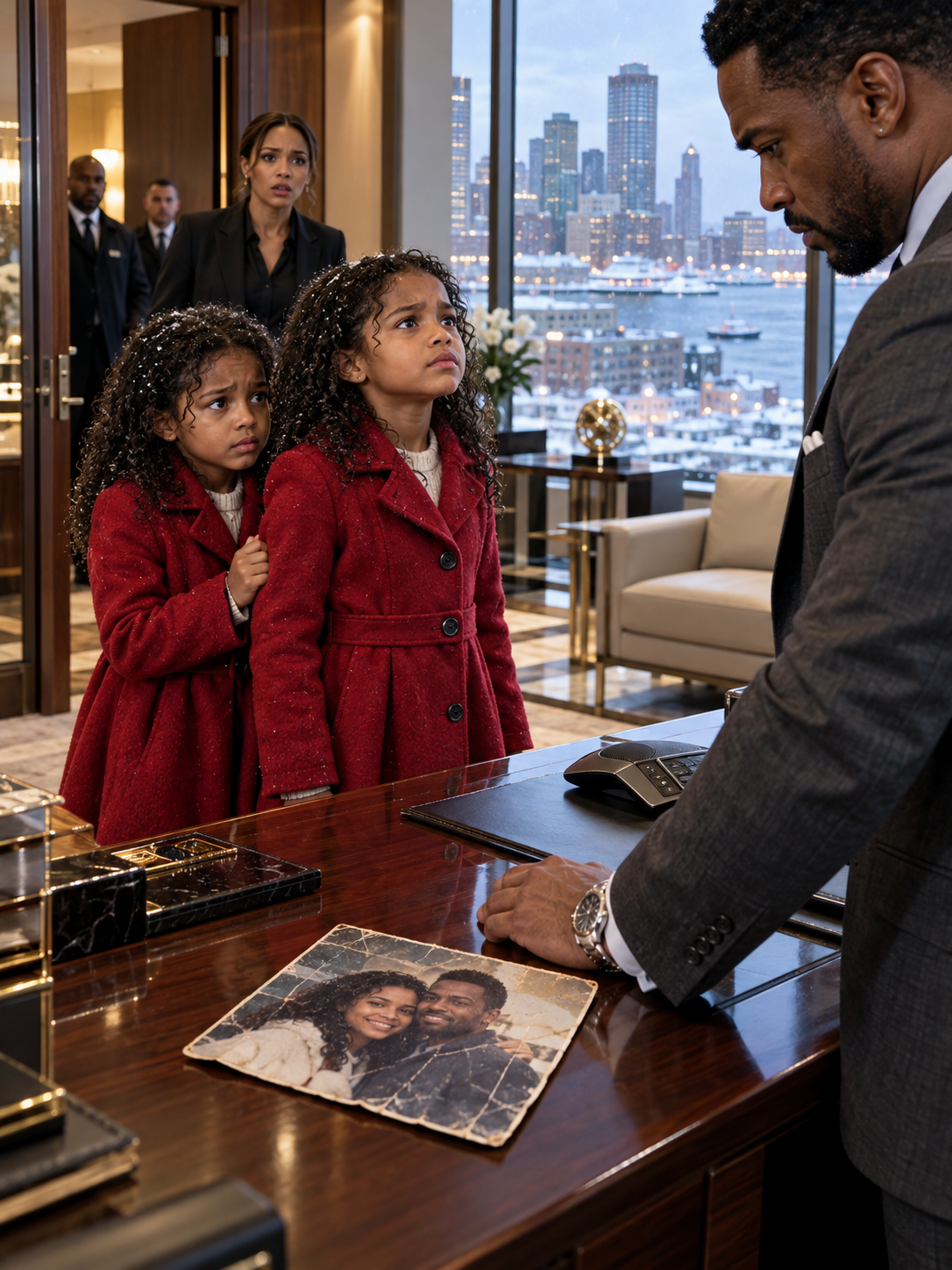
HE SENT TWO LITTLE GIRLS IN RED COATS BACK INTO A BOSTON SNOWSTORM—THEN A WORN PHOTOGRAPH ON HIS DESK EXPOSED THE FAMILY SECRET HE HAD NEVER BEEN TOLD – Life Story
He looked at the twin girls in red coats and told security to take them downstairs before they could explain...

A SINGLE MOTHER HID HER SON FROM THE BILLIONAIRE SHE ONCE LOVED FOR FIVE YEARS—THEN A DINER ENCOUNTER REOPENED THE SECRET THAT HAD TORN THEM APART – Life Story
A five-year-old boy asked his mother why his father had never come to see him, and she nearly dropped the...