I Joked His Size Was XS Compared to My Ex — Now He’s Sleeping With My Coworker Just to Humiliate Me
I Thought My Ex Brought His New Girlfriend To My Office Party To Humiliate Me—Then I Discovered Why He Was Finally Smiling
My ex looked me straight in the eye and introduced the woman beside him as his girlfriend.
She worked in my office, and everyone was watching.
But the moment that truly broke me came days later, when I tried to warn her about him—and she told me what he had never said to me.
Part 1: The Things I Called Honesty
Jake was smiling when I saw him beside the bar, and somehow that offended me more than the woman touching his chest.
It wasn’t the careful smile he had worn during the last months of our relationship, the one that disappeared whenever I started talking.
This smile reached his eyes.
Sarah said something I couldn’t hear over the music, and he leaned closer because he wanted to catch every word.
I stood near a table of untouched desserts, holding a glass of white wine I suddenly couldn’t swallow.
Across the room, Linda from human resources raised a hand to greet them, then noticed me and lowered it.
That tiny movement made everything worse.
People knew Jake had been my boyfriend, and now they would have to decide where to look.
I had spent almost an hour getting ready for that party.
My red dress fit perfectly, my hair fell exactly the way I wanted, and before leaving my apartment, I had taken three photographs because I couldn’t decide which one made me look most effortlessly happy.
Yet there he was, making happiness look effortless without me.
I remember thinking he had no right to bring that expression into my workplace.
At the time, I believed our breakup could be traced back to one difficult conversation.
I had made a comment, he had taken it badly, and neither of us had managed to recover.
That was the version I told my friends because it sounded unfortunate rather than ugly.
To understand what happened beside that bar, though, you have to know what I kept leaving out.
My name is Jessica, and I was twenty-nine when Jake left me.
I had worked in marketing at a technology company for three years, lived alone in an apartment I decorated beyond what my salary comfortably allowed, and believed I understood people.
My job involved knowing what would attract attention and what would make someone want more.
I had begun applying the same instincts to my personal life without noticing.
Jake was thirty-one, a graphic designer at a small software startup downtown.
We matched on Bumble on a rainy evening in May, when I was sitting on my couch deleting conversations that had already become disappointing.
His profile had a photograph of him beside a badly assembled bookshelf and a joke about accepting responsibility for only half the crooked shelves.
It made me laugh before I checked where he worked.
Our first date was at a coffee shop on Fifth Street with narrow windows and mismatched wooden chairs.
I arrived seven minutes late, expecting the usual awkward negotiation over whether we were attracted to each other.
Instead, he stood when I approached and moved his jacket from the chair across from him. “You said you’d be coming from work,” he told me. “I figured you might want somewhere to put your bag.”
It was such a small consideration that I almost missed it.
We talked for two hours about movies, travel, and the strange personalities every office seemed to collect.
When I mentioned a campaign presentation I was nervous about, he asked questions instead of immediately telling me how he would handle it.
Later, walking toward my car, he remembered the client’s name.
He kissed my cheek after asking if he could see me again, and I drove home smiling at stoplights.
My previous boyfriend, Mark, had always made an impression when he entered a room, but Jake had made me feel comfortable occupying one.
I told Maya about the date the next morning. “He seems really nice,” I said, using a word I had somehow started treating as a preliminary qualification rather than something worth celebrating.
Our second date was dinner at Romano’s, an Italian restaurant I loved because the tables were close enough to make the whole place feel alive.
Jake ordered chicken Parmesan, and I immediately mentioned that Mark used to order the same thing.
He nodded and asked whether the sauce was as good as everyone claimed.
I took his easy response as evidence that talking about my ex would never bother him.
Mark became a frequent guest in conversations he wasn’t present to hear.
If Jake mentioned a beach, I remembered a vacation Mark had planned; if a certain song played, I explained why Mark hated it.
Most of those references were harmless on their own.
Together, they meant Jake was learning about the man before him almost as quickly as he was learning about me.
I had dated Mark for nearly two years, and he had given me a polished version of the life I imagined wanting.
He ran a consulting business, wore expensive watches, and knew how to make a restaurant host suddenly become attentive.
He could also disappear emotionally for days while standing right beside me.
When that relationship ended, I kept talking about the impressive parts because the lonely parts made me feel foolish.
Jake did things Mark rarely thought to do.
He brought soup when I caught a cold, replaced the batteries in my smoke detector after hearing it chirp, and remembered that my mother’s birthday made me anxious because we always ended up arguing.
Once, he left a note beside my laptop before an early presentation.
It simply said, *You know this better than anyone in that room.*
I kept that note for months, although I didn’t tell him how much it meant.
Instead, I showed my friends photographs from our dinners and waited for their assessments.
They said he was cute, seemed stable, and had a nice smile.
I remember adding that his company was still small, as though I needed to explain why his career wasn’t more impressive.
For the first several weeks, being with him felt easy.
We bought groceries together on Sundays and argued playfully over which terrible movie deserved our attention.
He learned that I liked the corner of the couch closest to the lamp and started leaving it open without making a show of it.
Those were the moments when I was happiest, before I began asking whether happiness looked impressive enough from the outside.
About six weeks into the relationship, we became physically intimate.
Nothing frightening or dramatic happened, but I noticed differences between Jake and what I remembered with Mark.
I let those differences occupy more space in my thoughts than the tenderness of the evening.
Then, instead of examining why I was comparing two people so closely, I decided the comparison itself was information Jake needed.
A few nights later, we were lying in bed with the television murmuring from the living room.
Jake brushed my shoulder and asked whether something was wrong because I seemed far away.
There was concern in his voice, and an invitation to be honest with him.
I answered that invitation as though he had requested an evaluation.
“I care about you, and I want this to work,” I began, which made what followed feel reasonable to me.
I told him he was physically different from what I was used to and said Mark had been more confident.
Jake went still beside me. “What do you mean by confident?” he asked, and I heard the change in his voice without letting it change my approach.
I should have stopped and considered what I was actually trying to communicate.
Instead, I explained that women had preferences, that different bodies created different experiences, and that pretending otherwise wouldn’t help us.
I kept speaking in the calm voice I used when presenting difficult information at work.
The calmer I sounded, the more certain I became that I was being mature.
“Are you comparing my body to your ex’s?” Jake asked.
I said I wasn’t comparing him, only explaining my experience, even though comparison was exactly what I had done.
When he sat up, I interpreted the movement as defensiveness.
It never occurred to me that he might simply need distance from someone who had just made a vulnerable moment feel unsafe.
I tried to repair the conversation by offering solutions he hadn’t asked for.
There were things couples could try, I told him, ways to work around differences, and he shouldn’t let insecurity get in the way.
He looked at me for a long moment before reaching for his clothes. “I need some air,” he said, and I remained in bed wondering why reassurance had made him look even more hurt.
He didn’t call for three days.
I checked my phone constantly and grew more irritated each time there was nothing from him.
By the second evening, I had convinced myself he was punishing me for speaking openly.
When his message finally arrived—*Can we talk?*—I felt relieved, but also prepared to explain why disappearing had been unfair.
We met at the coffee shop where we’d had our first date, although neither of us stayed long enough to finish a drink.
Jake told me he couldn’t stop thinking about what I had said. “I trusted you,” he explained, looking down at his hands. “Now I don’t know how to be close to you without wondering what you’re comparing.”
I apologized immediately, but the apology came attached to an argument.
I said I was sorry he had been hurt, that hurting him hadn’t been my intention, and that adults needed to communicate about compatibility.
He listened while the milk steamer hissed behind the counter.
Finally, he asked whether I could understand why bringing Mark into that conversation had been painful.
I said I understood, and part of me meant it.
Another part still believed he would eventually appreciate that I was willing to discuss difficult subjects instead of pretending everything was perfect.
We left together, and when he took my hand at the corner, I thought the problem had been resolved.
I mistook his willingness to try again for proof that my explanation had been enough.
For a while, our routines returned.
We cooked dinner, watched movies, and exchanged messages during workdays, but a hesitation had entered the room whenever we were alone.
Jake asked whether I was comfortable, whether I was enjoying myself, whether everything was okay.
Instead of recognizing those questions as something I had helped create, I began resenting how often he needed reassurance.
Sometimes I caught him looking at me after I laughed at something on my phone.
He would ask what was funny, and I would answer more sharply than necessary because I felt monitored.
I never considered that he might be wondering whether the joke was about him.
In my mind, his uncertainty had become a personality flaw rather than a response to something that had happened between us.
A month later, we went out with my friends to a downtown bar with exposed brick walls and drinks priced as though the ice had been imported.
Maya was there with her boyfriend, and several people from work joined us.
I liked having Jake beside me in that setting because he was friendly without trying too hard.
He remembered names, asked questions, and helped our server collect empty glasses from the crowded table.
The conversation turned to relationships after Maya complained about how much time her boyfriend spent gaming.
People laughed, and someone joked that every boyfriend came with an operating defect.
I had been drinking wine and enjoying the attention that moved around the table.
When my turn came, I wanted a line that would make everyone react.
“At least yours is probably good in bed,” I said to Maya, then nudged Jake with my elbow. “Jake’s sweet, though, and good things come in small packages, right?” There was a burst of laughter, followed by a strange thinning of the noise.
Jake’s face changed before he lowered his eyes, and for one second I understood exactly what I had done.
Then I protected myself from that understanding.
He excused himself to the restroom, and Maya leaned toward me with her eyebrows raised. “Jess, that was brutal,” she said, quietly enough that I could pretend she was teasing too.
I rolled my eyes and told her he knew I was joking, even though he hadn’t smiled.
He returned and stayed polite for the rest of the evening.
He laughed when other people spoke, thanked the server, and helped me find my coat, but his hand never returned to my back.
In the car, he waited until we were out of the crowded parking lot before speaking. “I can’t believe you said that in front of your friends,” he told me.
I listed examples of other people making jokes about their partners.
Maya complained about gaming, Linda complained about dishes, and surely he didn’t think every relationship had to be humorless.
Jake kept his eyes on the road as I spoke. “Those aren’t the same thing,” he said, and I responded by asking why he had to make everything so serious.
He tried again, more carefully this time.
A joke about a habit was different from sharing something intimate that he couldn’t take back once other people heard it.
He had already told me that this subject hurt him, and I had used it to make a table laugh.
I answered that perhaps he needed to work on his confidence instead of expecting me to manage every possible reaction.
After that night, he stopped initiating physical affection as often.
Sometimes he kissed my forehead and rolled over to sleep; sometimes he said work had exhausted him.
I lay beside him feeling rejected and increasingly certain he was withholding closeness to teach me a lesson.
It was easier to be angry about what I wasn’t receiving than curious about why he had stopped feeling safe giving it.
At Linda’s apartment a few weeks later, the conversation drifted toward relationships over wine and takeout containers.
Linda worked in human resources at my company, but outside the office she was part of the group I relied on for agreement.
Her boyfriend, Mike, was in the kitchen finishing some work while we talked.
I knew he knew Jake socially, but that detail didn’t seem important until much later.
I told the women that Jake had become withdrawn after I tried to discuss physical compatibility. “All I did was mention that Mark was bigger,” I said, making months of comments sound like a single awkward sentence.
Kate asked how different they were, and I answered with specific measurements.
I remember reaching for another piece of bread afterward, as casually as if we had been discussing furniture dimensions.
Linda said she understood why I might feel frustrated, and I relaxed into the comfort of being agreed with.
Nobody asked whether Jake had consented to having his body discussed around her dining table.
Nobody needed to, because I had already framed the conversation as a woman seeking support.
By the time I left, I felt more justified than when I had arrived.
Jake called the next afternoon and asked exactly what I had told them.
Mike had heard enough from the kitchen to recognize that the conversation involved his friend, and afterward he had spoken to Jake.
I focused immediately on Mike repeating a private conversation.
Jake was quiet for several seconds before saying, “You’re upset that someone repeated your private conversation about my private life?”
Even then, I defended myself.
Women talked to their friends, I said, and having a support system shouldn’t require his permission.
He told me that seeking advice was different from inviting people to discuss his body, especially after he had asked me to stop. “I don’t tell my friends details about your body,” he said, “and I don’t compare you to women I dated before you.”
His company’s holiday party arrived in December, after weeks of conversations that kept ending in the same place.
I wore a new dress and told myself the evening would help us feel normal again.
Jake had been working hard on a design presentation, and his boss greeted him warmly near the entrance.
For a little while, watching him speak with people who respected his work, I almost forgot to evaluate him.
That was where I first met Sarah, who worked in accounting at his startup then.
She had a simple dress, an easy manner, and the kind of face I dismissed because it didn’t immediately demand attention.
Jake introduced us, and she asked about my work with genuine interest.
I answered politely while noticing that she seemed familiar with a project he had barely mentioned to me.
Later, his boss began talking about entrepreneurs and how difficult it was to grow a company.
I brought up Mark’s consulting business, then mentioned how successful he had been before thirty. “Some men just have that big energy,” I said, glancing at Jake with a little smile.
His boss paused, Sarah looked between us, and Jake asked whether we could step into the hallway.
Under the brighter hallway lights, he asked why I had done it again.
I insisted I had been talking about business, and that he was the one turning a harmless comment into something embarrassing. “You know what you were doing,” he said, with a tiredness that frightened me more than anger would have.
I folded my arms because admitting anything then felt like letting him win.
At home, he told me the problem wasn’t one comment or one party.
It was the repeated experience of being compared, exposed, and then informed that his pain was the real problem.
I started explaining that I wanted him to become the best version of himself.
He opened the bedroom closet while I was still talking, and for the first time, I noticed he was listening without trying to be persuaded.
When he pulled a bag from the shelf, I asked whether he was seriously leaving over one conversation.
He placed two shirts inside before answering, “It isn’t one conversation, Jessica—it’s months of feeling like I’m never enough.” I waited for him to put the bag down, apologize for overreacting, and come back to bed.
Instead, he zipped it closed, and the sound was the first answer I couldn’t talk over.
Part 2: The Woman I Thought He Was Settling For
The apartment felt different the instant the door shut behind him.
His mug was still beside the sink, and the blanket he always folded was lying across the couch where I had left it that morning.
Nothing looked dramatic enough to match what had happened.
I stood in the kitchen staring at the mug, feeling certain that a man who left something so ordinary behind intended to return for more than dishes.
He had said he would stay with his friend Ryan for a while.
I translated that into a temporary argument, the sort couples survived before becoming stronger and telling the story differently later.
That first night, I sent him a message asking whether he had arrived safely.
When he answered yes, I took the reply as a small opening and immediately pushed against it.
I wrote that we shouldn’t let one bad evening erase everything good between us.
Then I reminded him that I had apologized before and that relationships required effort from both people.
He didn’t respond to those messages, which made me increasingly desperate to send a better one.
By midnight, I had written so much that his brief request for space had disappeared above a wall of my explanations.
The next morning, I checked whether he had read them before I checked the weather.
On my way to work, I imagined him showing Ryan our conversation and being told he was overreacting.
I built entire reconciliations around that imagined advice.
In each version, Jake came back after finally understanding what I had meant, and I never had to fully understand what I had done.
Days passed, and the smallest reminders became irritating.
His phone charger was behind the nightstand, a jar of his preferred coffee sat in the cabinet, and a grocery list on the refrigerator included the tea he bought when my throat hurt.
I began putting things away so I wouldn’t have to look at them.
Then I would take one back out because an empty shelf felt more permanent than I was ready to accept.
He called once to say he needed more time.
I heard the carefulness in his voice and tried to make mine sound warm, as though the correct tone could lead us back to familiar ground. “I miss you,” I said, and he told me he knew.
What unsettled me was that he didn’t immediately answer with the same words.
After two weeks, he agreed to meet for coffee.
I arrived early, chose the table from our first date, and ordered before he got there because I wanted something ordinary waiting between us.
He thanked me for the drink but kept his coat on.
I noticed that detail immediately and spent the first several minutes pretending I hadn’t.
I told him I loved what we had and believed we could work through the difficult parts.
He watched me without interrupting, which encouraged me to keep going.
I talked about communication, patience, and how easy it was for words to land differently than intended.
When I finally stopped, he asked, “Do you think what happened was mostly a misunderstanding?”
The question annoyed me because it seemed designed to make my answer wrong.
I said I thought we had both made mistakes, and that I had never wanted him to feel inadequate.
Jake stirred his untouched coffee slowly before setting the spoon down. “But when I told you I felt that way, you kept doing the same things,” he said.
I reminded him that I was still choosing to be with him.
Surely that should have mattered more than comparisons to someone from my past. “Why can’t you focus on the fact that I want you?” I asked, and for a moment I thought I had reached the heart of the issue.
His expression changed in a way I wouldn’t understand until much later.
“Because wanting someone doesn’t give you permission to hurt them,” he said.
He explained that he had begun rehearsing what to say before seeing my friends, worrying that any ordinary subject could become another joke.
Even being alone with me had started to feel like waiting for feedback.
I listened, but part of me was already preparing a response about how much pressure that placed on me.
He told me he couldn’t keep trying to earn peace in a relationship that made him dread being vulnerable.
I said every couple faced challenges, and leaving meant giving up before we had truly tried.
He looked toward the window, where a woman was helping a child zip a winter coat. “I have been trying,” he said, and his voice was so quiet I almost missed it.
Then he told me it was over.
There was no raised voice, no accusation delivered for the benefit of the room, and no list of qualities he thought I lacked.
He said he didn’t want to continue the relationship and needed me to respect that decision.
I stared at him because I had prepared for an argument, and he was giving me an ending.
I asked whether there was someone else.
He answered no without hesitating, and I believed him, although believing him left me without an explanation I preferred.
If another woman had taken him, I could have blamed her or blamed temptation.
Sitting across from a man who had simply decided he was happier leaving me was harder to organize into a story where I remained blameless.
Before he stood, I asked whether he really wanted to throw away eight months.
He looked pained, but he didn’t sit back down. “I’m trying not to spend another eight months feeling like this,” he said.
I watched him leave and thought he would regret how final he had sounded once the loneliness reached him.
For the next several days, I waited for that regret to arrive as a message.
I checked my phone during meetings, meals, and conversations with people I barely heard.
Eventually, he wrote about collecting his belongings, and I read the practical wording three times looking for something hidden underneath.
There was no affectionate nickname, no invitation to talk, and no question about whether I missed him.
He came on a Saturday morning and packed what remained while I hovered in the doorway.
I offered coffee, then suggested we could order breakfast, as though familiar food might make the situation less final.
He thanked me and said he had plans with Ryan.
When he carried the last box downstairs, I was furious that he had somewhere else to go.
Winter loosened slowly after that, and I began telling people the relationship had ended because we weren’t compatible.
It was a technically true description that let me avoid the details that made it true.
If someone asked whether I was okay, I said I was better off with someone more secure.
People usually nodded because they didn’t know what else they had been asked to agree with.
Sarah joined my company’s accounting department in February.
She had accepted the position after a restructuring at Jake’s startup, a move that had been in progress before I ever knew she was applying.
When I first saw her near the break room, I recognized her from the holiday party but couldn’t remember her name.
She remembered mine and greeted me with an ease that later began to feel unbearable.
I learned they were dating through Instagram in March.
A coworker’s tagged photograph led me to Sarah’s profile, where I found a picture of her and Jake at a restaurant with their heads tilted together.
Her caption called him an amazing man and the evening her favorite date night yet.
I stared at his hand resting comfortably on the back of her chair until my screen dimmed.
The photograph had been taken weeks after our breakup, but I still searched for evidence that something had happened earlier.
I compared dates, remembered the company party, and reconsidered every interaction I could recall.
Nothing supported the story I wanted to find.
Jake had left before they started dating, which meant their happiness wasn’t proof of betrayal, only proof that his life had continued.
I began describing Sarah as ordinary.
She posted pictures from farmers markets, volunteered with an animal rescue, and seemed delighted by things I would have considered unremarkable.
I told Maya I didn’t understand what he saw in her, then waited for her to agree.
When she only said Sarah seemed nice, I felt abandoned by a conversation that hadn’t even become an argument.
Part of what bothered me was that Sarah didn’t appear interested in competing.
She wore comfortable shoes, brought leftovers for lunch, and spoke about her weekend without checking whether anyone found it impressive.
At work, she was organized and helpful without performing helpfulness for an audience.
I noticed all those things and somehow used them as evidence that Jake had chosen a smaller life.
I heard through mutual friends that he was doing well.
His design team had finished a difficult project, he had started going out more, and he seemed lighter when people saw him.
Nobody mentioned him discussing my body or turning our arguments into entertainment.
I should have recognized the restraint in that silence, but at first it only frustrated me because I couldn’t tell what version of me he was sharing.
Our company’s annual appreciation party was scheduled for late March at the same hotel where his startup had held its December celebration.
Sarah mentioned bringing her boyfriend during a conversation near the copy machine, and I knew immediately who she meant.
I acted as though the information barely registered.
Then I spent my lunch break looking at dresses on my phone.
I chose red because I wanted to enter the room looking impossible to overlook.
While getting ready, I told myself the effort was for me, and perhaps some of it was.
But I also imagined Jake seeing me across the ballroom and briefly forgetting the woman beside him.
I wanted regret to appear on his face before I had to decide what to say.
Instead, he entered in a navy suit, holding Sarah’s hand.
She wore a simple dark dress, and when he paused to speak to someone at the entrance, she stayed beside him without clinging or checking where his attention had gone.
He introduced her with an expression I recognized only from the beginning of our relationship.
There was affection in it, but there was also ease.
That ease was what held my attention.
He wasn’t scanning the room to see who might have heard a joke, and he wasn’t watching Sarah’s face for an evaluation of what he had said.
When she laughed, he laughed too instead of searching for the reason.
I told myself they were still in the honeymoon stage because that explanation made the scene less threatening.
They stopped at the bar near me while Sarah talked about the animal rescue where she volunteered.
The shelter needed help with its website and fundraising materials, and she said Jake would be wonderful at it.
He asked practical questions about what they needed, already sounding interested. “We could go together this weekend,” he said, and her face lit up in a way I couldn’t dismiss as performance.
“Really?” she asked, touching his chest lightly. “They’d be thrilled, and I’d love for you to meet everyone.” Jake smiled and said he liked being involved in things that mattered to her.
Then he kissed her forehead, such a brief, natural gesture that it hurt more than a dramatic display would have.
I remembered the note beside my laptop and the tea in my cabinet, but only for a moment.
Mostly, I thought that he had never looked so interested in my life, which wasn’t true.
He had asked about my campaigns, listened to my complaints, and offered help when I was overwhelmed.
The difference was that Sarah seemed happy to receive what he offered without immediately checking whether someone else could offer more.
I walked over before I had decided whether I wanted a conversation or a reaction. “Jake,” I said, using the brightest voice I could manage.
He turned, and the smile on his face became careful.
Sarah looked at me pleasantly while he said, “Hi, Jessica—Sarah’s my girlfriend,” making the relationship clear without offering me an apology for it.
Of course I already knew her, and of course I knew they were together.
Still, hearing him say it in my workplace felt like a public rearrangement of a story I hadn’t finished telling.
I smiled and said they looked cozy.
Sarah asked how marketing was going, giving me an ordinary question when I had arrived prepared for something sharper.
I told her I had just been promoted to senior coordinator.
The lie came out so easily that I barely noticed choosing it, and then I became intensely aware that Linda was standing close enough to hear.
Sarah congratulated me without suspicion.
Jake said congratulations too, and his sincerity made me feel worse than disbelief would have.
I asked whether they were still enjoying the honeymoon phase.
Sarah glanced at Jake and said they were happy, which somehow felt like an answer she had given to a different question.
I told him he looked more confident.
He thanked me, and I resented the way he accepted the observation without asking whether I approved.
Then I brought up Mark.
I said being with the right person could bring out someone’s potential, and Mark had always appreciated how I pushed him to be more ambitious. “Some people need that challenge,” I added, looking at Jake as though we shared an understanding.
His expression closed before Sarah’s did, and I knew he had heard everything I wanted him to hear.
Jake said they should get back to their table.
I stepped aside with an exaggerated little laugh and told Sarah she was lucky because he had a lot of potential.
She paused with her hand still in his. “I think he’s pretty amazing as he is,” she said, without raising her voice or making the sentence sound like a victory.
They walked away, and I heard her ask him something I couldn’t quite make out.
His reply reached me clearly enough: “She’s just being Jessica.” For a moment, I felt satisfied that I had unsettled them.
Then the words began repeating in my head, because being reduced to my own name had somehow revealed more than an insult would have.
I spent the rest of the evening moving between conversations and checking where they were.
Whenever I looked, they seemed absorbed in ordinary things: a story at their table, a plate of food, a coworker showing photographs on her phone.
Nobody appeared to be recovering from my intervention.
I had wanted to become the most important person in their evening, and they kept returning their attention to each other.
Near the coat check, I saw Sarah tilt her face toward Jake as he said something that made her laugh.
She kissed him, and when they separated, he brushed a strand of hair away from her cheek. “I love you,” he said, quietly but close enough for me to hear.
Sarah answered, “I love you too,” with no hesitation and no sense that she was reassuring someone difficult.
I stood behind a pillar holding my coat against my chest.
Until then, I had assumed she was accepting limitations I had been brave enough to acknowledge, settling for a man I had tried to improve.
Watching them, a different possibility entered my mind and refused to leave.
Perhaps she wasn’t overlooking what I had seen; perhaps I had overlooked what she saw so clearly.
Three days later, I stepped into the office elevator and found Sarah inside, holding a coffee and a folder against her ribs.
We exchanged polite smiles, and I decided this was my opportunity to ask what I had been wondering since the party. “Can I ask you something, woman to woman?” I said, and when she agreed, I asked whether she was truly happy with Jake.
Her expression changed as I began explaining his “limitations,” and then she said the sentence that stopped me cold: “Jessica, he told me what happened between you.”
Part 3: What She Saw That I Never Did
For a second, all I could hear was the elevator moving.
I looked at the changing floor numbers because Sarah’s face had become difficult to read in a way I couldn’t control.
She wasn’t embarrassed, triumphant, or eager to hear more.
She looked as though I had handed her something unpleasant that she had already decided not to carry.
“I’m sure you heard his version,” I said.
It was an automatic defense, familiar enough that I didn’t notice how quickly I had reached for it.
Sarah shifted the folder in her arms and asked what I meant by limitations.
I repeated that Jake was a good man, but there were issues involving ambition and physical compatibility that might matter once the excitement wore off.
She let me finish, which made the silence afterward feel worse.
Then she said Jake had told her about the repeated comparisons to Mark, the jokes in front of my friends, and the private information I had shared.
He had explained why certain comments still made him uncomfortable and why trust had taken time.
I felt heat rising into my face as I realized she hadn’t learned about our relationship through gossip.
“He’s making it sound cruel,” I said, trying to recover the distinction I had relied on for months.
Sarah looked directly at me and answered, “It sounds cruel because of what happened, Jessica.” There was no satisfaction in her voice.
Somehow, that made it harder to dismiss her as a jealous new girlfriend protecting her territory.
I told her I had been trying to communicate about a real concern.
She said people could discuss their needs without humiliating someone or inviting an audience into their intimate life. “He told you it hurt,” she reminded me, “and you kept doing it.” I wanted to explain my intention again, but she had already answered that explanation before I offered it.
Then I asked the question I am most ashamed to remember.
I asked whether she honestly didn’t have the same concern about his body.
The words came out quietly, almost confidentially, as though I were offering us a chance to become allies.
Sarah’s expression changed so completely that I finally understood I had crossed another boundary while claiming to discuss the first one.
“I’m not discussing his body with you,” she said. “And I’m not comparing him to anyone.” I opened my mouth, but she continued before I could turn the exchange into another debate about openness. “You’re asking me to repeat something he trusted me with so you can decide whether I’m right to love him.”
I said that wasn’t what I meant, though I couldn’t explain what else I had expected.
Sarah took a breath and glanced toward the elevator doors. “Jake is thoughtful, funny, generous, and interested in my life,” she said. “He listens when I speak, supports what matters to me, and makes me feel comfortable being myself.”
She told me he celebrated her successes without making them about him.
When she was tired, he noticed; when she had a difficult day, he asked whether she wanted advice or company.
Their relationship wasn’t perfect, and they didn’t need it to be.
What mattered was that neither of them had to become smaller so the other could feel important.
I stared at her because I knew the man she was describing.
I had received the soup, the practical help, the patient questions, and the quiet encouragement.
None of those things had been unavailable to me.
I had simply treated them as the pleasant background of a relationship whose value would be determined somewhere else.
The doors opened on her floor, but she didn’t step out immediately. “I’m happy with him,” she said, answering my original question at last. “Please stop trying to convince me I shouldn’t be.” Then she left, and I remained inside until the doors closed again, holding a conversation I could no longer reshape into concern.
At my desk, I opened a campaign document and read the same sentence six times.
Around me, people answered calls, discussed lunch orders, and argued about whether a meeting needed to happen in person.
The ordinary office noise felt almost offensive because something enormous had happened inside me without interrupting anyone else’s morning.
I kept hearing Sarah say that I knew he had been hurt and had continued anyway.
For months, I had organized the story around misunderstanding.
Jake misunderstood my honesty, my friends misunderstood my jokes, and Sarah would eventually understand the problems I had identified.
It was a remarkably convenient system because every uncomfortable reaction became evidence of someone else’s failure.
Sitting there, I began to see how much work that system had required other people to do.
I thought about the first conversation in bed and how quickly I had moved from his expression to my explanation.
He had looked wounded, and I had treated that wound as a challenge to my right to speak.
At the bar, I had seen his face change and kept laughing.
Those memories were difficult because they contained moments when I had understood enough to stop.
That afternoon, I searched my old messages with Mark.
I expected to find something that justified the importance I had given him, some evidence that our relationship had been extraordinary in ways Jake’s hadn’t.
Instead, I found cancellations, apologies for forgetting plans, and long stretches where I had tried to sound casual about feeling ignored.
The expensive dinners were there too, sitting between messages I had worked hard not to remember.
Mark had been successful, attractive, and confident.
He had also once forgotten that I was waiting for him outside a restaurant while he stayed late at a client event, then told me I should have called a car instead of being dramatic.
I had spent the following day worrying that I had embarrassed him by being upset.
I remembered that version of myself with an uncomfortable mixture of pity and recognition.
I had carried the impressive parts of him into my next relationship like proof of what I deserved.
The pain had stayed out of the story, while the status remained available for comparison.
Jake had been competing against an edited person whose weaknesses I had removed.
Even if he had become everything I claimed to want, I might have found another difference to hold over him.
That evening, Maya met me for dinner at a neighborhood place where neither of us needed to dress up.
I told her what Sarah had said, initially hoping she would object to the tone or the setting.
She listened while turning a water glass slowly between her hands.
When I finished, she asked, “Do you want me to make you feel better, or do you want me to answer honestly?”
The question stung because I had used that word so often myself.
I said I wanted her real opinion, then braced for a softened version of agreement.
Instead, she reminded me that she had called the joke at the bar brutal. “You laughed it off,” she said, “and I let you, because I didn’t want dinner to become a fight.”
I asked why nobody had told me more clearly.
Maya looked tired before she answered, and I recognized that expression from Jake’s face too late. “He told you clearly,” she said. “The rest of us shouldn’t have had to convince you that your boyfriend was allowed to be hurt.”
We sat quietly while a server cleared the table beside ours.
I wanted to explain that Linda and Kate had agreed with me, that their reactions had made everything seem reasonable.
Maya said people sometimes gave the answer a friend was asking for instead of the answer she needed.
It wasn’t a flattering thing for either of us to admit, which was one reason I finally believed it.
The following weekend, I went to the Fifth Street coffee shop because it was still a place I liked, although I would be lying if I said I never wondered whether Jake might be there.
He was at a table near the window with his laptop open and a half-finished drink beside him.
Seeing him alone brought an immediate, dangerous little feeling of possibility.
Then I remembered Sarah in the elevator and stopped treating his solitude as an invitation.
I ordered first and waited until he looked up before approaching. “Hi, Jake,” I said, suddenly aware of how many times we had sat in that room trying to understand each other.
He greeted me politely but didn’t move the bag from the empty chair.
I asked whether he had a few minutes, and told him I would leave if he didn’t want to talk.
He considered the request before nodding.
That small delay mattered because I had spent much of our relationship assuming access to his time, patience, and attention.
I sat without pretending the conversation was casual.
My hands were shaking slightly around the paper sleeve of my cup, and for once I let discomfort exist without trying to turn it into someone else’s responsibility.
“I wanted to apologize,” I began. “I’ve been thinking about our relationship, and I realize I made mistakes while trying to help you become the best version of yourself.” The instant I finished, I heard what I had done.
Even inside an apology, I had placed myself in charge of deciding who he ought to be.
Jake leaned back in his chair. “The best version according to who?” he asked. “You, or Mark?” I started to answer automatically, then stopped because there was no explanation that would make the sentence kinder.
Across from me, he waited without rescuing me from the silence.
“That was the wrong way to say it,” I admitted. “I compared you to someone else, made private things public, and kept defending myself after you told me it hurt.” Saying it without an explanation felt strangely exposed.
I couldn’t hide inside my intentions once I named the actions plainly.
He looked down at his coffee, then told me what those months had felt like from his side.
He had begun wondering whether every affectionate moment would eventually become material for another conversation with my friends.
When I mentioned Mark casually, he couldn’t know whether the reference would stay casual.
He had started anticipating humiliation in situations that used to feel easy.
“I didn’t know what you were going to do with anything I trusted you with,” he said.
I remembered thinking he had become distant for no reason and felt shame move through me with a clarity I couldn’t argue away.
He had not withdrawn from closeness because he wanted to punish me.
He had withdrawn because closeness had stopped feeling safe.
I told him I hadn’t understood how far it had gone.
His expression tightened slightly, and he reminded me that he had tried to explain.
At first, I wanted to say he could have used different words or chosen a better moment.
Then I recognized that impulse as another attempt to make his pain acceptable only after he presented it perfectly.
“You did tell me,” I said.
The sentence was so simple that I almost wanted to add something, soften it, or explain why hearing him had been difficult.
Instead, I left it alone.
Jake looked at me for a moment, and some of the tension around his mouth eased without becoming warmth.
He said there were ways to discuss compatibility that didn’t turn a partner into a disappointing comparison.
If I hadn’t been happy with him, I could have said so and left.
What had hurt was my insistence on staying while repeatedly telling him what he lacked. “I kept thinking that if you wanted to be with me, eventually you’d start liking who I actually was,” he said.
I remembered how often I had used choosing him as evidence of my generosity.
I had expected him to feel secure because I remained, while making the conditions of remaining increasingly painful.
He wasn’t supposed to question why I wanted him; he was simply supposed to be grateful that I did.
Looking back, I could see how lonely that arrangement must have been.
“Every conversation became about someone who wasn’t even there,” he continued.
Mark was more successful, Mark was more confident, Mark had done this or known that, until Jake felt as though he was competing with a version of a man who could never disappoint me.
I wanted to tell him Mark had disappointed me deeply.
Then I understood that Jake had never been given the whole person to compete against.
“I was competing with a ghost,” he said, and I looked toward the window because my eyes had begun to sting.
Outside, a man stopped to let a woman with a stroller move through the narrow space between parked cars.
Life kept offering ordinary examples of consideration while I sat mourning how long I had failed to value it.
Jake waited for me to look back without reaching across the table.
I apologized again, this time without describing the woman I wanted him to believe I was.
I told him he hadn’t deserved the comments, the jokes, or the conversations with my friends.
I also told him I was sorry for approaching Sarah with suggestions that she should be dissatisfied.
His eyes sharpened at her name, and I knew immediately that this mattered more than whether he accepted my apology.
“Please leave her out of this,” he said. “She hasn’t done anything to you.” I nodded and promised I would keep their relationship separate from whatever I needed to understand about myself.
It was the first promise in that conversation that required no response from him, and I tried to remember what that felt like.
A selfish part of me still wanted to know whether this new understanding changed anything.
I could feel the question waiting behind my teeth: if I finally saw the problem, could he come back and let me prove it?
Jake seemed to recognize it before I spoke. “I’m with Sarah,” he said gently, “and I’m happy.”
He told me he didn’t have to argue his way into being valued with her.
That didn’t mean they agreed about everything or never disappointed each other.
It meant that disagreement didn’t become an opportunity to question his worth.
When he made a mistake, she addressed the mistake, and when she was hurt, he could hear her without being told he had failed some comparison neither of them had chosen.
I asked whether he loved her, although I already knew the answer.
He said yes with a steadiness that made the question feel unnecessary.
There was no glance around the room to see how the admission landed and no attempt to make it easier for me.
For the first time, I understood that his happiness didn’t need to be delivered in a form I could tolerate.
Then I nearly ruined the conversation.
As he closed his laptop, I asked whether he ever wondered if Sarah was settling.
The question sounded uglier outside my head, and I saw his face change before I could take it back.
Even after everything we had discussed, some part of me still wanted agreement that loving him required accepting less.
He held the laptop against the table and looked at me with an expression I had once mistaken for weakness. “Sarah isn’t settling for me,” he said. “She chooses me, and I choose her.” He paused, then added, “That’s partnership, Jessica—I’m not an apology she makes for what she couldn’t get.”
I felt tears rise, but I didn’t ask him to comfort me.
He had spent enough time managing the consequences of things I had said.
I told him he was right and apologized for the question without asking whether he believed me.
Then I moved my chair slightly so he could stand without having to squeeze past me.
At the door, he turned back just long enough to wish me well.
There was kindness in it, but no invitation, and I had to let the difference be real.
I watched him step into the afternoon and take out his phone, smiling when he saw whatever waited on the screen.
This time, I didn’t need to know what it said.
Afterward, I spoke to Linda and Kate separately.
I didn’t give them a report of the coffee-shop conversation or repeat anything Jake had shared about Sarah.
I said I had been wrong to discuss his body and wanted those conversations to stop, including any jokes that might continue without me.
Linda looked uncomfortable, but she nodded, and for once I didn’t treat discomfort as proof that the conversation had gone badly.
I also stopped checking Sarah’s social media.
At work, we remained polite, and I didn’t ask her to become part of my effort to feel forgiven.
Sometimes I saw her smiling at a message during lunch, and the old sting returned before I could prevent it.
Learning something about myself did not instantly make me generous, and I had begun to understand that recognizing an impulse mattered only if I changed what followed.
I was still single, still lonely on some evenings, and still capable of noticing status before substance.
My friends suggested lowering my standards, but that wasn’t quite what needed to happen.
I needed to notice which standards protected a relationship and which ones merely helped me win imaginary comparisons.
Kindness, honesty, attraction, and compatibility all mattered, but none of them required making another person ashamed to be known.
The hardest thing to accept was that Jake had been better off leaving, even though I finally wished I had behaved differently.
His new relationship wasn’t a lesson arranged for my benefit, and Sarah hadn’t appeared in his life to prove a point to me.
They were two people building something that belonged to them.
I could learn from what I had lost without pretending their happiness was secretly still about me.
A few nights later, my phone lit up with a new match while I sat alone on the couch.
My eyes went first to his job title, exactly as they always had, and my mind began assembling questions that sounded harmless until I recognized what I was measuring.
This time, I put the phone down before replying.
Whether I had learned anything would be decided by what I did next.
Recommended Stories

My Wife Told Our Friends I Couldn’t Get Hard… So I Changed Tables…
My Wife Told Our Friends I Couldn’t Get Hard… So I Changed Tables, and the Secret Behind Her Joke Ended...

THE WAITRESS WARNED A POWERFUL NEW YORK IMPORTER IN SICILIAN BEFORE HE SIGNED AN $80 MILLION DEAL—THEN SOMEONE LEAKED HER NAME TO THE MEN WHO WANTED HIM DEAD – Life Story
The men at the table thought she was just another waitress who didn’t understand their language. One whispered that a...
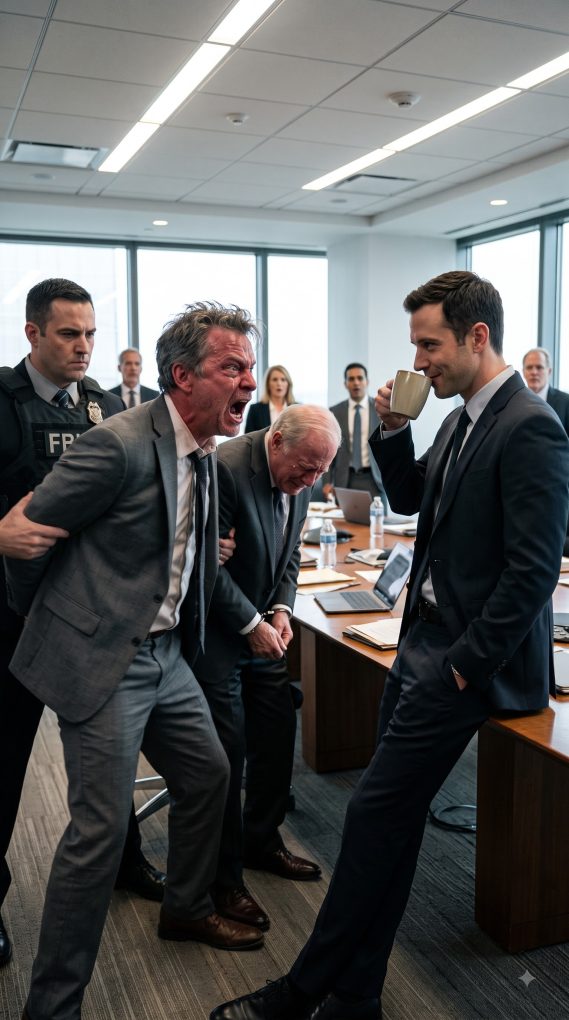
“You’re fired, and we’re keeping your laptop,” the VP smirked. I handed it over, but told him to check the bottom sticker first. “Property of U.S. Gov – Classified.” His face went pale as two federal agents walked in.
“You’re fired, and we’re keeping your laptop,” standard line, spoken with the standard smirk by Brad, our Senior Vice President...