The CEO Pretended to Sleep to Test Her Janitor — But What He Did Saved Her Collapsing Company
She Pretended to Sleep Hours Before Losing Her Company—Then the Night Janitor Made a Phone Call That Exposed the Man She Trusted Most
At a.m., Miranda Chen closed her eyes so the night janitor would think she was asleep.
Seven hours later, she was supposed to sign the papers that would put three thousand jobs in jeopardy.
Then he picked up her desk phone and whispered, “Daniel, it’s Dad.
I think I know who’s destroying her.”
Part 1: The Call She Was Never Supposed to Hear
The bankruptcy packet arrived with a sticky note asking Miranda Chen to sign beside the blue tabs.
Someone had chosen a cheerful shade of blue, the kind used on birthday invitations and school permission slips.
There were eleven tabs altogether, each one marking a place where twenty-three years of her life would become an attachment to a legal filing.
She had spent an hour looking at the first one without picking up her pen.
Beyond the glass walls of her office, downtown Los Angeles glittered beneath a thin October rain.
Most of the windows in the neighboring towers were dark, but the Techvision sign still glowed against the building across the street.
Miranda could see its reflection between two streaks of water.
By the following evening, she wasn’t sure the company would have enough money to keep those lights on.
She was forty-seven, although the woman reflected in the window looked considerably older.
Her jacket hung over a chair, her blouse was wrinkled at the waist, and a headache had settled behind her right eye sometime around dinner.
Dinner itself remained untouched in a paper bag beside the printer.
She had forgotten ordering it.
Twenty-three years earlier, Techvision had been two secondhand computers in a garage and a scheduling program Miranda wrote for a medical supply warehouse.
She remembered taking customer calls beside a washing machine because the garage was the only room where the baby next door couldn’t be heard through the wall.
Now hospitals, manufacturers, and distribution companies depended on her software.
Three thousand people depended on the business that had grown around it.
Their faces had become more difficult to keep out of her thoughts than the financial numbers.
Clara in accounting had recently returned from maternity leave.
An engineer named Ben had spent Tuesday showing everyone photographs of his first house.
Earlier that afternoon, Miranda had passed two interns arguing cheerfully over who would get assigned to a project that would probably never begin.
The collapse had taken six months, which seemed impossible for something that felt so sudden.
First, a major client left for Nexus Strategic Solutions after receiving an offer Techvision couldn’t match.
Then another client repeated language from a confidential proposal Miranda hadn’t yet presented.
By August, Nexus seemed to know Techvision’s next move before her own sales team did.
Her chief operating officer, Mark Breslin, had called it aggressive competition.
He had stood beside the conference room screen with his sleeves rolled up, explaining how difficult markets exposed weaknesses that good leaders preferred to ignore.
Miranda had believed him because Mark was usually the person who made frightening things sound manageable.
She had trusted that voice for eight years.
He had joined when Techvision was growing faster than its systems could support.
He remembered birthdays, calmed angry investors, and stayed late when releases went wrong.
After Miranda’s mother died, he had handled the business while she spent a week clearing out an apartment full of prescription bottles and carefully folded shopping bags.
There were people she loved who knew less about her life than Mark did.
When their lead engineer accepted a position at Nexus, Mark personally helped review the access restrictions.
When their lender demanded additional assurances, he organized the documents.
When the board began discussing a sale of the remaining business, he sat next to Miranda and told her they would get through it together.
Looking back later, she would remember how often his hand had rested reassuringly on a folder.
At nine that morning, the board expected her to authorize the next stage of the bankruptcy process and an emergency transaction involving the remaining assets.
The paperwork didn’t guarantee every employee would lose a job immediately, but the projections left little room for comforting language.
Without financing or a credible alternative, entire divisions would close.
At noon, she was supposed to tell the staff what that meant.
At eleven thirty the previous night, she had sent the last attorney home.
At midnight, she had told her assistant to stop answering messages.
By one, she had stopped pretending to read the same paragraph about creditor priorities.
Now the building’s ventilation system hummed above her, and somewhere beyond the office door, a small wheel began to squeak.
Miranda recognized the sound before she saw the cleaning cart.
The night janitor moved through the executive floor around this time, replacing liners, wiping fingerprints from glass, and steering around chairs that important people never pushed back beneath their desks.
She had seen him for months.
She knew the sound of his cart, the color of his uniform, and almost nothing else.
Tonight, the thought of exchanging even a few polite words felt unbearable.
If he asked whether she was all right, she might answer honestly, and she couldn’t bear the embarrassment of that either.
She leaned back, closed her eyes, and let her breathing slow.
It was a small, foolish act of avoidance, but it was the only decision she had made all night that didn’t require a lawyer.
The cart stopped outside her door.
After a light knock went unanswered, the door opened with its familiar soft click.
She heard the careful movements of someone accustomed to working around sleeping executives and late conference calls.
A wastebasket shifted, a liner rustled, and the smell of diluted cleaning solution reached her chair.
Then everything stopped.
For several seconds, there was no sound at all except the rain against the glass.
Miranda assumed he had noticed the bankruptcy packet.
She had left it open beside a printed incident summary from her attorneys, too exhausted to put either document away.
“No,” he whispered.
The word was quiet enough that she almost mistook it for an exhale.
Then he said it again, followed by something in Korean that she recognized only in fragments.
She had studied the language briefly in college, long enough to understand that he was troubled, not long enough to follow every word.
Paper moved on the desk.
Miranda’s shoulders tightened, but she kept her eyes closed.
She should have sat up immediately and explained that the documents were private.
Instead, shame and fatigue held her still while an ugly thought crossed her mind: even now, with almost nothing left, she might have to protect herself from someone taking advantage.
The desk phone lifted from its cradle.
She heard him hesitate, set it down, and then pick it up again with the determination of someone crossing a line he understood.
A few buttons clicked.
When he spoke, his voice had changed from a whisper to something low and urgent.
“Daniel, it’s Dad.
I’m sorry to wake you.” He paused, listening. “No, I’m all right.
I’m at work.
Do you remember the woman I told you about, the one whose foundation helped the center?”
Miranda felt her heartbeat against the collar of her blouse.
Three years earlier, she had approved a two-hundred-thousand-dollar donation to a community center in Koreatown after a fire damaged its kitchen and classrooms.
The money had gone through her foundation without a public announcement.
She had never visited the building and had almost forgotten the amount.
“She’s the CEO here,” the janitor continued. “Yes, that woman.
There are papers on her desk.
They’re closing things, selling things.
Daniel, the company in these papers is Nexus.”
There was a longer pause this time.
Miranda could hear the faint electrical hiss of the phone but nothing from the person on the other end.
The janitor moved a page carefully, as if afraid its edge might make too much noise.
His breathing had become uneven.
“The same Nexus that wanted to hire you,” he said. “And the file names are the ones I saw on those printouts last month.
The ones Mr.
Breslin told me to take to confidential disposal.”
Miranda opened her eyes a fraction.
He stood at the corner of her desk with his back partly turned, one hand resting beside the incident summary.
His uniform sleeve had been repaired at the cuff with thread slightly darker than the fabric.
He wasn’t smiling, photographing her possessions, or searching through a drawer; he looked frightened.
“No, I didn’t keep them,” he told his son. “I put them where he said.
But I remember the names because one was the hospital project you explained to me.
The strange name, the bird.”
Kestrel.
Miranda knew the project before he said it.
Kestrel was the internal name for a hospital logistics platform that Techvision had not publicly announced.
Nexus had demonstrated a remarkably similar product at a private client event two weeks earlier, complete with an error in a sample screen that Techvision’s engineers recognized.
Her attorneys had spent days assembling the similarities.
Their summary lay open on her desk because she had been rereading it, looking for something strong enough to stop the transaction.
Beside it was a preliminary access report her technology team had delivered too late to investigate properly.
Mark had suggested it was probably routine executive activity.
“I’m not saying I understand all of it,” the janitor said. “I’m saying somebody should look before she signs.” Another pause followed, and then his voice softened. “Your friend Jennifer.
The one who works with computer crimes.
Can you ask her where this should go?”
Miranda knew then that this was no practiced scheme.
He was reaching for the only connection he had, aware that it might be inadequate and unwilling to do nothing.
On the other end, his son was apparently cautioning him, because he nodded several times. “All right.
I won’t touch the computer.”
He took two photographs of the pages already lying in front of him.
Miranda heard the small camera sounds, followed by a muttered apology in Korean.
He had used his own phone, its protective case peeling at one corner.
Then he set the papers back into alignment with a care that hurt her more than recklessness would have.
“Daniel, listen to me,” he said. “That center stayed open the winter I lost the warehouse job.
Your mother could still go to her appointments because they helped with transportation.
Your sister studied there when we couldn’t keep the internet.”
He stopped talking for a moment.
Miranda watched his free hand close slowly around the edge of the desk.
When he continued, his voice was steadier. “She doesn’t know any of that.
She helped us without knowing our names.
We can make one phone call.”
Something warm slid from Miranda’s closed eyes toward her temples.
She had sat through eleven hours of meetings without crying.
She had listened to people discuss the sale of her work, the failure of her leadership, and the value of the desks outside her office.
It was the phrase “without knowing our names” that finally broke through.
The janitor listened again, then said, “I love you too.
Please call her now.” He returned the receiver to its cradle and stood still for a few seconds.
Before moving toward the door, he spoke softly in Korean, apparently to himself or to the woman he believed was sleeping.
Miranda understood enough of the last sentence: You shouldn’t have to face this alone.
“Wait,” she said.
The word came out rough and startled them both.
He turned so quickly that his elbow caught the corner of the wastebasket.
For a moment, they stared at each other across the desk while the liner settled with a slow plastic sigh.
“Ms.
Chen.” His face drained of color. “I’m sorry.
I should not have used your telephone.
I should have asked before looking at anything.”
Miranda sat forward and wiped her face with the heel of her hand. “You should have,” she said, because pretending otherwise would insult them both. “But I need you to tell me exactly what you saw, and what you remember.
Start with your name.”
That question seemed to trouble him more than anything else.
He looked down at the small embroidered patch above his pocket, where repeated washing had faded the stitching. “Jun-seok Kim,” he said. “Most people call me Mr.
Kim.”
She repeated it carefully.
He was sixty-six, he told her, and had worked in the building for nineteen months.
Before that, he had spent years in a warehouse, where he trained new workers and checked outgoing orders.
When the warehouse changed contractors, his position disappeared with two weeks’ notice.
He remembered the Kestrel printouts because Daniel worked in cybersecurity and often explained unfamiliar technology while they ate dinner.
Mr.
Kim had also noticed Nexus’s name on a visitor badge left in an executive conference room.
Neither observation proved anything on its own.
Together with the documents on Miranda’s desk, they had frightened him enough to wake his son.
“Why didn’t you tell someone earlier?” Miranda asked.
As soon as she said it, she wished she had chosen her words more carefully.
Mr.
Kim didn’t look offended, which somehow made it worse.
He simply folded his hands in front of him and considered how to answer.
“Last month, I reported a leaking pipe behind the seventh-floor kitchenette,” he said. “The first person told me to put in a ticket.
The second person said the ticket belonged to building management.
By the time somebody came, the cabinet had to be replaced.”
He glanced toward the documents. “I didn’t know how to report something like this.
I wasn’t even sure it was something.” Miranda looked at the phone, then at the glass walls she had once admired for making the office feel open.
From his side of the building, she began to understand, those walls had not felt open at all.
At a.m., her mobile rang.
The caller introduced herself as Jennifer Park, an FBI agent and a friend of Daniel’s.
She was careful from the beginning: a personal call did not establish a case, photographs did not establish guilt, and she could not promise an arrest or an immediate solution.
She could help connect Miranda with the appropriate people and explain the urgency.
For the first time all night, Miranda had a useful question to answer. “What do I need to preserve?” she asked.
Jennifer told her to contact counsel, avoid altering the systems, and keep a precise record of what had been discovered.
Miranda wrote the instructions on the back of an envelope because every clean sheet on her desk seemed to belong to the end of the company.
Her general counsel, Renee Alvarez, answered on the fifth ring.
Miranda expected irritation and heard a bedroom door closing instead.
Within twenty minutes, Renee was on a secure call with an independent forensic specialist the company had previously retained.
Mr.
Kim sat in a visitor’s chair, holding a cup of water he hadn’t touched.
The specialist began with the access report.
Some entries were ordinary, some required explanation, and a cluster of transfers deserved immediate preservation.
Mark’s credentials appeared repeatedly beside confidential project materials, customer pricing, and documents from Miranda’s own mailbox.
The transfers had occurred on nights when he had told her he was working on financing.
At , Renee asked Miranda to open a separate transaction folder.
Inside was an authorization for the release of additional materials to a supposed outside adviser.
The adviser’s contact details matched an entity connected to Nexus.
At the bottom of the page was Miranda’s signature, clear and familiar, beneath a date when she had been in Denver.
She stared at it until Renee said her name twice.
Mr.
Kim watched her from the chair, his concern deepening as she turned the laptop toward herself.
The signature was hers, copied from somewhere, but the authorization was not.
The man who had been dismantling her company had prepared a paper trail suggesting she had helped him do it.
Part 2: The Man Who Brought Her Coffee
By five in the morning, Miranda understood that losing Techvision might not have been the worst thing waiting for her at nine.
A document bearing her signature could turn a betrayal into a dispute over what she had knowingly approved.
Mark had access to years of signed agreements, internal records, and people accustomed to accepting his explanations.
He had also spent months making her look like a founder too emotional to understand her own failing business.
Renee spoke slowly, separating what they knew from what they feared.
The signature’s appearance did not prove who had placed it there, and the access records needed context.
Their job was to preserve evidence, protect the company, and stop further damage.
Miranda listened with a pen pressed so hard against her notepad that the tip tore through the page.
Then another preserved email emerged.
It referred to a final transfer of customer migration materials after the morning approvals.
There was no theatrical confession, no message announcing a crime.
There were businesslike sentences about deliverables, timing, and compensation, which made the whole thing feel colder.
Miranda thought about the employees whose salaries had become a recurring argument in board meetings.
She had spent weeks wondering whether she should sell her house to fund another payroll, although the numbers had never come close to working.
Somewhere inside the same company, someone appeared to have been negotiating payment for information that would finish them.
She put down the pen before it broke in her hand.
Across the desk, Mr.
Kim checked the time and rose abruptly.
His shift wasn’t over, and he still had two conference rooms to finish.
The simple fact of that nearly undid her: she was surrounded by lawyers, agents, and financial disaster, and he was worrying about leaving his coworkers with extra work.
Miranda asked him to stay long enough to complete a statement.
“I can call my supervisor,” he said.
She offered to make the call herself, but he shook his head. “Please let me tell her first.
Otherwise she will think something bad happened.”
He spoke quietly from the hallway, apologizing twice for the disruption.
Miranda heard him say that the executive office needed his assistance and that the remaining rooms might have to wait.
There was no excitement in his voice, no suggestion that his life might have changed.
He sounded like a tired man trying to make sure another tired person wouldn’t get blamed.
Daniel arrived shortly before six, carrying a backpack and wearing the expression of an adult child who had driven too fast while imagining every possible consequence.
He looked first at his father, then at Miranda, then at the papers on the desk. “Are you in trouble?” he asked Mr.
Kim.
His father answered with a small, uncertain smile.
“That depends on whether I still have a job,” Mr.
Kim said.
Miranda stood before Daniel could respond. “He has a job,” she told them. “And I owe him an apology for letting him sit here wondering.”
Daniel pulled a chair close to his father’s.
He had been recruited by Nexus the previous year and had declined after an interview left him uncomfortable about the questions they asked regarding his current employer.
That experience was not proof of anything, and he didn’t present it as proof.
It did explain why his father had remembered the name.
Jennifer’s involvement remained limited once the referral reached the appropriate investigators.
Other agents would conduct the formal interviews, and Daniel would give his own account separately.
Miranda appreciated the care even while every minute felt expensive.
For months, people had asked her to trust them; now the people helping her were explaining how their work could be checked.
At six fifteen, Daniel’s phone buzzed with a message from his sister, Hannah.
Their father usually texted when he arrived home, and she had noticed the silence.
Mr.
Kim borrowed the phone and typed with one finger while Daniel watched over his shoulder.
Miranda looked away, giving them privacy she should have thought to offer sooner.
A little later, Mr.
Kim placed a packet of crackers beside her laptop. “You keep reaching for the coffee,” he said. “You haven’t eaten anything.” She almost told him she wasn’t hungry, then recognized the stubborn kindness in his face and opened the packet.
He had brought the crackers from his own bag.
Beside them was a small container of oatmeal, carefully wrapped in a dish towel to keep it warm.
His daughter prepared extra when he worked overnight because he sometimes skipped breakfast to sleep.
Miranda took two bites while Renee reviewed the plan for the morning.
The board’s independent chair, Dana Whitcomb, joined them by phone.
Dana had been skeptical of Miranda’s objections to the proposed transaction, but she became quiet when Renee described the evidence. “Then we stop treating this as a disagreement about valuation,” she said. “We have a preservation and governance problem, and we handle it accordingly.”
Stopping the transaction would still require cooperation from people who cared about deadlines and collateral.
A criminal investigation did not put cash in the operating account.
Dana began arranging an emergency board session while Renee contacted the lender’s counsel.
Miranda wrote three words at the top of a fresh page: Payroll.
Evidence.
People.
She wanted to call Mark and ask how long he had been lying.
The desire was so physical that she placed her phone in a drawer to keep herself from doing it.
Instead, she washed her face in the private restroom and buttoned her jacket.
In the mirror, she practiced saying good morning until the words sounded ordinary.
Mark arrived at carrying two lattes in a cardboard tray.
He wore the navy suit he saved for difficult meetings and the sympathetic expression Miranda had once found reassuring. “Big day,” he said, setting her coffee in its usual place. “Did you get any sleep?”
“Not much.” She watched him slide the bankruptcy packet closer to her elbow.
He did it casually, moving the coffee away from the pages so nothing would spill.
Before that morning, she would have seen consideration in the gesture.
“We should keep the board discussion tight,” he said. “If we reopen every question, we risk losing the only workable option.” Miranda nodded and asked whether he had spoken with the lender.
He answered smoothly, but his eyes moved once toward the laptop on her desk.
She noticed his pen when he took it from his jacket.
She had given it to him after a major contract five years earlier, along with a handwritten note thanking him for being the person she could count on.
The memory arrived with humiliating precision: the stationery she had used, the restaurant where they celebrated, the relief she had felt.
He clicked that pen open beside the document carrying her copied signature.
At , Renee appeared in the doorway with two federal agents.
They introduced themselves and asked to speak with Mark about the handling of proprietary company information.
No one raised a voice.
The room became so still that Miranda could hear a drop of rain strike the metal ledge outside.
Mark’s first reaction was annoyance, carefully disguised as confusion. “Of course,” he said. “Although I’m not sure this morning is the best time.” He looked at Miranda, expecting her to confirm the inconvenience and return the room to his control.
“We’ll make the time,” she said.
It was the first sentence she had spoken to him all morning that did not require acting.
His gaze settled on her face, and something changed behind his eyes.
He understood that she knew enough to stop helping him.
The agents explained the purpose of their visit and the process underway.
Renee informed Mark that the board was placing him on administrative leave and suspending his access while the company investigated.
He began to object, then stopped when she asked him to hand over his company devices.
His fingers tightened around the phone.
“Miranda, we need to talk privately,” he said. “There are things you’re not understanding.” She had heard that sentence in a dozen forms over the previous six months.
This time, she let the silence remain.
Movement in the hallway caught his attention.
Mr.
Kim stood near the service door with Daniel beside him, waiting to be told whether they could leave.
Mark looked from the janitor to the papers on Miranda’s desk.
His expression sharpened in a way that made her stomach turn.
“He’s been in this office?” Mark asked. “You’re allowing cleaning staff around confidential materials while accusing me of mishandling information?” Mr.
Kim lowered his eyes, an old reflex that Miranda saw clearly now.
She felt ashamed that Mark had known exactly which tone might make him disappear.
“Mr.
Kim is here because we asked him to stay,” Renee said.
Her voice remained level.
Miranda stepped away from the desk and stood beside the doorway. “And you can address your questions to counsel.”
For the first time, Mark lost the practiced softness in his voice.
He told Miranda she was making an enormous mistake and reminded her of everything he had done for the company.
Some of what he listed was true, which made listening harder.
Betrayal had not erased eight years of work; it had made every memory of that work uncertain.
“You could have asked for more money,” Miranda said. “You could have argued with me.
You could have left.” Mark glanced at the agents and said nothing.
She looked at the pen in his hand and added, “You had choices.”
He left the executive floor with the investigators and Renee, his briefcase remaining behind for the company’s review.
His departure was not the end of the investigation, and no one pretended it was.
More records would have to be examined, warrants obtained where required, and explanations tested against evidence.
Still, the elevator doors closing behind him gave Miranda the first full breath she had taken since midnight.
At eight, the emergency board meeting began.
Miranda expected questions about her judgment and received them.
Dana also made it clear that a company facing apparent theft could not responsibly proceed as though nothing had changed.
The board authorized a pause, an independent investigation, and urgent negotiations for a short financing extension.
The lender agreed to forty-eight hours under strict conditions.
It was not generosity, and the interest and reporting requirements reflected that.
A credible claim involving stolen assets changed the lender’s assessment of its own position.
Miranda signed the temporary arrangement with a hand that still trembled.
By noon, the bankruptcy authorization had been postponed.
The sentence sounded miraculous until she looked at the next payroll date.
They had bought time, not safety, and three thousand employees were waiting to hear whether they should empty their desks.
She asked for an all-hands meeting and told the communications team to remove the phrase “an exciting new chapter” from the draft.
She stood in the auditorium while employees joined remotely from other offices.
Some people looked angry before she began, and she did not blame them. “We are in serious financial trouble,” she said. “We have also uncovered evidence of conduct that may have caused substantial harm to this company, and we have referred it for investigation.”
She told them what could be shared and admitted what remained unknown.
There was no promise that every difficult decision had vanished.
There was a promise that employees would receive regular updates, that leadership compensation would be reviewed first, and that the company would fight for a viable future.
When someone asked whether their health insurance was safe, she answered that question before taking another.
Afterward, an engineer waited beside the stage with his arms folded.
He had worked through three weekends on a product Nexus had apparently copied, and he wanted to know why leadership hadn’t listened sooner.
Miranda could have offered a complicated answer about fragmented reports and uncertain evidence.
Instead, she said, “We should have connected the information sooner.
I should have asked better questions.”
Upstairs, Mr.
Kim watched the last few minutes on a monitor in the security office.
He recognized several faces in the audience: people who thanked him, people who walked around him, a woman who always apologized for leaving crumbs in the conference room.
He had not pictured them all when he picked up the phone.
Now he understood the size of the room into which that small decision had carried him.
The next two days passed in calls, preserved records, revised forecasts, and food eaten from containers.
One client agreed to suspend its departure while reviewing the new information.
Another refused, citing deadlines it could not change.
A third offered an early payment in exchange for a realistic delivery plan, and Miranda accepted without pretending it was charity.
On Thursday evening, she found Mr.
Kim cleaning a third-floor conference room.
He was on his knees beside a chair, working at a dried coffee stain someone had ground into the carpet.
For a moment, she stood outside the glass and watched him check the result from two angles.
Then she knocked, the same light knock he had used at her door.
He stood quickly and reached for the cart. “I can come back,” he said.
Miranda shook her head and asked whether they could sit down.
He glanced at his gloves before removing them, folding them together so the damp surfaces touched.
“You saved my company,” she said.
He looked uncomfortable with the sentence and turned one hand palm upward. “I called my son,” he answered. “Other people knew what to do.”
“They knew because you made the call.” She waited until he looked at her. “You saw something wrong, and you decided it mattered, even though it might have cost you your job.” He rubbed a small mark on the table with his thumb, still looking for a way to make her gratitude easier to carry.
“You helped us first,” he said.
Then he told her about his wife, Eun-hee, who had suffered a stroke during the winter the center nearly closed.
The center’s volunteers helped coordinate rides and meals while he searched for work.
His wife had since died, but those months had given them time together at home that he still spoke about carefully.
Miranda listened without interrupting.
She remembered the foundation meeting where she approved the grant, a meeting she had left early for a sales presentation.
The donation had been one line in a quarterly report.
Across the table sat a man who could tell her what that line had meant on a Tuesday afternoon when his wife needed a ride.
She placed an envelope between them.
Inside was a proposal for a new role overseeing employee listening programs and community partnerships, with training, defined responsibilities, and a salary of $120,000.
The position would begin only after the emergency financing plan received final approval.
She had worked with human resources to make it a real job, with a budget and accountability, rather than a ceremonial reward.
Mr.
Kim read the first page twice. “Ms.
Chen, I finished high school,” he said. “I’ve never worked in an office like this.” She told him the company had people who could teach reporting systems and budgets, but it needed someone willing to tell her what she was missing.
He looked at the salary again, and she watched the number become rent, medical bills, and the possibility of helping his children without calculating what he could skip that month.
Then he closed the envelope.
His hands were shaking, but when he looked up, his voice was clear.
“Before I can say yes,” he told her, “there’s one promise I need from you.” Miranda waited, expecting a question about security or benefits.
Instead, he pushed the envelope gently back across the table. “And if you can’t make it, I need to stay where I am.”
Part 3: The People Behind the Glass
“Please don’t make me the only person you notice,” Mr.
Kim said.
Miranda looked down at the envelope and then back at him.
He seemed almost embarrassed by how plainly he had spoken, but he did not take the words back.
Outside the room, someone rolled a stack of empty chairs toward the service elevator.
He explained that people had already started treating him differently.
A manager who had never learned his name had called him “sir” that afternoon.
Someone else had asked whether he would be moving out of cleaning, as though the work itself were something shameful he had finally escaped.
He was grateful for the opportunity, but he did not want the people beside his cart to become less visible because he had stepped away from it.
“My wife used to say there was nothing wrong with honest work,” he said. “She meant mine, too.
I need to know you understand that.” Miranda felt the sting of recognizing how easily a generous offer could contain an insult she had never intended.
She took time before answering. “Your work deserved respect before Tuesday morning,” she said. “I should have shown it then.” He nodded once, watching her carefully, and she continued. “I can promise we’ll build something that gives other people a way to be heard.
I’ll need you to tell me when I’m failing at it.”
“That is part of the job?” he asked.
For the first time that week, she smiled without effort. “A fairly large part.” He pulled the envelope back toward himself and opened it again.
They did not announce his appointment the next morning.
Human resources met with him, explained the responsibilities, and asked what support he would need to succeed.
They discussed confidentiality, employee complaints, reporting lines, and the limits of a role that could otherwise become whatever everyone wanted it to be.
Mr.
Kim took notes in a spiral notebook he had brought from home.
He also asked whether he could finish the month with his cleaning team while the contractor arranged a replacement.
Miranda agreed, provided he wasn’t expected to perform both jobs at once.
His supervisor, who had spent twenty years handling staffing shortages, looked relieved when she heard that condition.
Mr.
Kim noticed the relief and wrote something else in his notebook.
His first recommendation concerned meeting times.
The company’s employee forums had always taken place at ten in the morning, when the overnight workers were home asleep or on buses.
Recordings existed, but questions were collected through a system many contract workers could not access.
Techvision had been congratulating itself on open communication with a door that required the wrong badge.
They held the next session at six in the evening and repeated it before the early shift.
Miranda attended both.
The questions were practical and sometimes uncomfortable: broken equipment, unpredictable schedules, confusing benefits notices, supervisors who changed assignments without warning.
Nobody began by delivering the inspirational speech she might once have expected.
A cleaner named Rosa asked for a cart with wheels that didn’t pull sharply to the left.
She had requested a replacement twice and had been told the equipment was technically still usable.
Miranda looked at Mr.
Kim’s notebook and remembered the squeak outside her office.
What she had thought of as an atmospheric detail had been someone’s nightly struggle with a broken tool.
The cart was replaced that week.
The larger issue took longer because contractor purchasing, building management, and Techvision each believed someone else owned the problem.
Mr.
Kim followed the request through every handoff and wrote down where it stalled.
He wasn’t interested in a photograph of the new cart; he wanted the next worker to get an answer without finding a CEO.
Other changes were similarly unglamorous.
Shift notices went out earlier, essential information became available in the languages employees actually read, and workers received a clear route for escalating unresolved safety concerns.
Some changes cost money, and others required managers to relinquish habits they defended as flexibility.
Mr.
Kim learned that a polite meeting could contain a great deal of resistance.
He learned how to respond without apologizing for being in the room.
When someone said a problem affected only a small number of people, he asked how many people would make it matter.
When a department reported that no complaints had been submitted, he asked how a worker on that shift could submit one.
He did not accuse people of cruelty when carelessness explained enough, but he expected the problem to be corrected.
Miranda began seeing similar gaps among engineers and managers.
A talented developer had nearly resigned because his mother’s dialysis schedule conflicted with a supervisor’s rigid expectations.
A new analyst was afraid to request time off for a court appointment involving her younger brother.
They did not need Miranda to become their counselor; they needed rules that could accommodate a human life without requiring a personal rescue.
Meanwhile, the investigation continued at a pace that felt both urgent and painfully slow.
The first week brought additional records and searches, followed by charges against individuals associated with Nexus as investigators developed the case.
Public statements were careful, and the attorneys warned everyone against turning incomplete information into company gossip.
Miranda repeated that warning even when anger made speculation tempting.
The evidence eventually described a pattern rather than a single dramatic theft.
Confidential pricing had helped Nexus undercut offers by narrow margins.
Product materials had shortened development time.
Customer migration plans had made departures smoother while Techvision struggled to understand why trusted relationships were disappearing.
The lead engineer who had left for Nexus became an important witness.
She had believed she was joining a legitimate competitor and had raised concerns when unfamiliar internal Techvision material appeared in a product meeting.
Her departure had hurt Miranda, and at first Miranda had wanted to place her inside the same story as Mark.
Learning the facts required her to let go of that easy conclusion.
Several clients returned, but others had already signed contracts or reorganized their operations.
An investigation could establish wrongdoing without undoing every consequence.
Techvision had to rebuild product schedules, restore confidence, and prove that its systems could protect the information entrusted to it.
Miranda spent as much time discussing delivery dates as she did discussing betrayal.
The financing agreement that finally gave them room to operate was demanding.
Leadership accepted compensation reductions, expansion plans were canceled, and open positions remained unfilled while the company stabilized.
People worked hard, but Miranda stopped treating exhaustion as evidence of devotion.
She had seen what happened when a company relied on tired people to notice everything.
She also had to face questions about the authority she had given Mark.
He had been able to approve exceptions, manage sensitive relationships, and explain away patterns because too many controls depended on personal trust.
The independent review did not accuse Miranda of knowing what he was doing.
It did describe decisions she was responsible for changing.
She read the report alone before discussing it with the board.
There were sentences she wanted to argue with because she remembered how necessary each shortcut had once seemed.
Then she pictured the forged authorization and the employee asking whether his health insurance was safe.
She marked the recommendations she understood and asked for explanations of the ones she didn’t.
New controls followed, including clearer separation of authority and independent review of unusual access.
The process irritated executives who had grown accustomed to moving quickly.
Miranda submitted her own actions to the same requirements and resisted the temptation to create an exception when a deadline became inconvenient.
It was easier to announce accountability than to wait for approval she once could have bypassed.
Months later, Mark sent a letter through counsel.
Much of it described feeling overlooked, believing he had built value for which Miranda received the credit, and resenting decisions he had been unable to control.
There were things in the letter she recognized and things she disputed.
None explained why he had chosen to endanger people who had trusted him.
She read it twice and placed it in a drawer.
For years, she had assumed understanding someone’s motives would make their behavior feel less bewildering.
Instead, the letter made him seem ordinary in a way that hurt more: capable of grievance, capable of rationalizing harm, and offered opportunities to stop.
She did not answer him personally.
Mr.
Kim never asked to hear the private details.
He asked whether the employees had received the update they had been promised and whether the next payroll was secure.
When Miranda became absorbed in the investigation, he reminded her of the company still operating outside her office.
He did it without pretending that the betrayal should be easy to set aside.
His children adjusted to the new job in different ways.
Daniel bought him a better laptop and spent an entire Sunday teaching him shortcuts while his father insisted on writing them down.
Hannah took him shopping for office clothes and cried unexpectedly in the parking lot afterward.
He thought she was worried about the cost until she told him she had never seen him try on a jacket without checking the price first.
He still checked it.
Some habits did not disappear because a number on a contract changed.
But he bought the jacket, along with a pair of shoes that did not pinch, and let his daughter choose the tie.
The following Monday, he arrived early enough to help a new receptionist find the supply room.
Daniel later applied for a position on Techvision’s security team.
Miranda insisted on an independent hiring process, and Daniel insisted on it even more strongly.
He completed the interviews, received an offer from the team leader, and accepted only after reviewing the role with his father.
At the first company lunch they attended together, Mr.
Kim introduced him as “Daniel from security” before remembering to add that he was his son.
Hannah enrolled in evening business courses while keeping her job.
She told her father she wanted to understand how decisions made in quiet rooms could reach all the way into someone else’s kitchen.
He warned her that school would be tiring.
She reminded him that he had once worked overnight and attended parent conferences without changing his shoes.
The community center remained part of their lives.
Miranda visited on a Saturday without a photographer and found a building that smelled of soup, floor cleaner, and children’s crayons.
A volunteer recognized Mr.
Kim and handed him a box to carry before anyone introduced the CEO.
He took it automatically and smiled when Miranda reached for the other side.
In a classroom upstairs, an older woman was learning to send an email with an attachment.
Downstairs, two teenagers were arguing over a math problem while a little boy slept against his grandmother’s shoulder.
The director showed Miranda the rebuilt kitchen and the repaired classrooms.
Then she showed her the waiting list for programs they could not yet afford.
Miranda did not announce a five-million-dollar commitment that afternoon.
The company was recovering, and she had learned the cost of promises made faster than the systems supporting them.
She asked for budgets, spoke with the foundation board, and worked toward a sustainable annual increase tied to the recovery plan.
When the expanded commitment was approved, community representatives helped decide where it would go.
Mr.
Kim chaired the selection committee, but he was not allowed to make decisions alone.
He wanted published criteria and members who understood different neighborhoods, including people who might disagree with him.
At their first meeting, he rejected a proposal to place his photograph on every announcement.
The money, he said, would still work without it.
Six months after the night in Miranda’s office, Techvision reported its first genuinely encouraging quarter.
The result was smaller than the numbers it had celebrated before the crisis, but the cash was real and the forecasts had survived scrutiny.
No one called it a miracle inside the finance meeting.
Clara brought cupcakes anyway, and Miranda ate one at the table instead of taking it back to her desk.
The company did not become a place without conflict.
A manager ignored a scheduling agreement and had to be corrected.
A community project missed its targets, and Mr.
Kim delivered the disappointing report himself.
Employees still worried about promotions, deadlines, and whether leadership meant what it said, which gave Miranda something concrete to keep earning.
Her own life changed in quieter ways.
She began leaving the office before the last train more often and stopped sending routine messages after midnight.
She attended her niece’s school concert without checking sales figures between songs.
At first, the absence of constant work felt like neglect; gradually, she recognized how much better she listened after sleeping.
On the anniversary of that October night, the company gathered in the same auditorium where she had delivered the emergency update.
There was no glossy film about overcoming adversity.
The screen showed a simple account of the year: financial recovery, security changes, employee initiatives, and commitments still unfinished.
Miranda wanted the room to see both progress and the work remaining.
Mr.
Kim sat in the front row beside Daniel and Hannah.
Several members of the cleaning crew sat nearby, their shifts adjusted so attendance would not cost them pay.
Miranda looked at them before she began speaking.
A year earlier, she could have identified almost none of them by name.
“I’ve been asked when I knew this company might survive,” she said. “There are several answers in the financial reports.
But the answer I remember is a man standing beside my desk, trying to decide whether helping a stranger was worth risking his job.” She paused and looked toward Mr.
Kim. “He shouldn’t have had to make that calculation.”
She described the phone call without turning it into a story about a man who had secretly been important all along.
He had been important while replacing wastebasket liners and taking buses home before sunrise.
The failure had been in what she noticed and what the company rewarded.
She could hear the steadiness in her own voice now, and it surprised her.
“I trusted someone because I knew his résumé, his judgment in meetings, and the story we told about our partnership,” she continued. “I walked past another person because I thought I already knew what his uniform meant.” Around the room, people had become very still.
Mr.
Kim lowered his head, and Hannah reached for his hand.
“There is one thing I haven’t told most of you,” Miranda said. “When he came into my office, I wasn’t asleep.
I was pretending because I didn’t want to speak to anyone.” She let the admission stand before adding, “He thought I was asleep that night, but I was actually waking up.”
The applause began near the back and spread until people were standing.
Mr.
Kim looked overwhelmed, then rose awkwardly when Hannah nudged him.
He gave a small bow, the same polite gesture he had used when someone held an elevator door.
Miranda stepped away from the microphone and let the room belong to him.
Afterward, people stayed to talk.
An engineer asked Mr.
Kim about the next employee forum, and a cafeteria worker introduced her son, who had just been accepted into a training program.
Daniel collected abandoned cups from a row of chairs without thinking.
His father watched him for a moment, then picked up the cups from the next row.
That evening, Miranda returned to her office for her coat.
The cleaning crew had begun its rounds, and she stopped beside Maria’s cart to ask about her daughter’s soccer tournament.
Across the hallway, Mr.
Chen showed her a photograph of his new grandson sleeping beneath a yellow blanket.
Amara, who was taking nursing prerequisites, told her she had passed the exam she had worried about all week.
The conversations took eleven minutes.
Miranda knew because she checked the time afterward and remembered how often she had claimed she could not spare even five.
These people had always carried full lives through her building.
Knowing a few details did not complete her responsibility, but it made looking away a decision she could no longer call accidental.
Mr.
Kim was waiting near her office with his coat over one arm.
On her desk lay a plain envelope containing a request for ten minutes of her time.
The writer had worked nights in the building for six years and had an idea related to a problem Techvision’s customers kept reporting.
There was no résumé attached, only a note asking whether the invitation to speak up included contract workers.
Miranda read the note again. “It does,” she said, looking at Mr.
Kim.
He nodded toward the hallway, where a woman in a faded cleaning uniform stood holding a battered notebook against her chest.
Miranda recognized her face and felt the familiar, uncomfortable knowledge of all the questions she had never asked.
She opened the door herself and invited the woman to sit.
The woman placed the notebook on the desk, smoothing its bent cover with both hands. “You said you wanted to know what you’d been missing,” she said.
Then she opened it to the first page—and Miranda leaned forward.
Recommended Stories
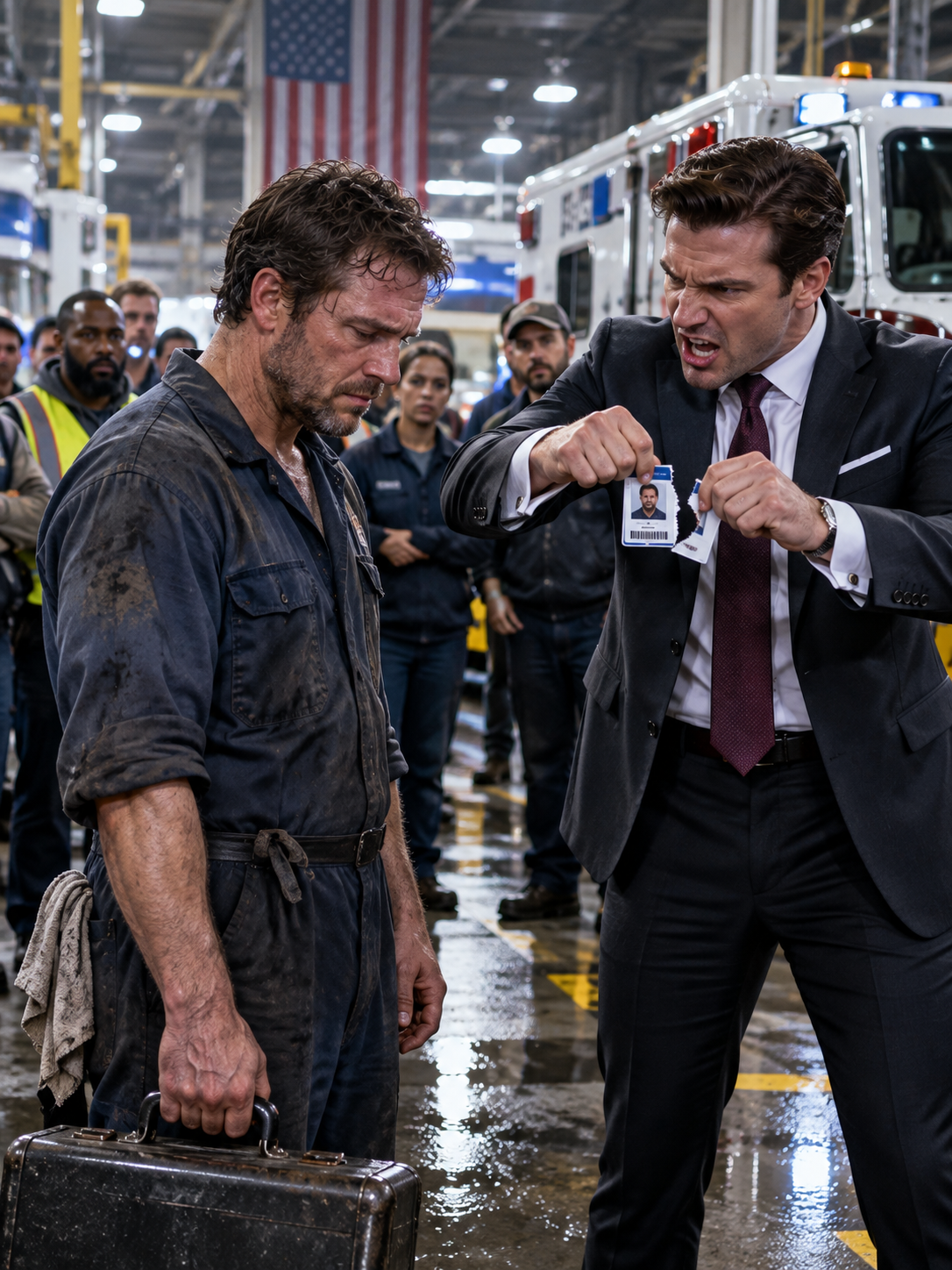
The Plant Director Tore Up the Mechanic’s Badge in Front of Everyone—Then Mason Made One Call Before the Rescue Truck Left the Gate – Life Story
Lucas Ryan tore Mason Carter’s employee badge in half in front of nearly three hundred workers and dropped both pieces...

GHUB. My ex-husband walked into the hospital where I worked carrying a baby in a blue blanket and announced, loudly enough for strangers to hear, that divorcing me was his best decisi
FULL STORY CONTINUATION IF FACEBOOK BROUGHT YOU HERE, HERE’S THE CONTINUATION YOU’VE BEEN WAITING FOR. ENJOY! 👇 CHAPTER 2 I...

At Green Valley Vineyards’ 20th anniversary dinner, my sister insisted on pouring my wine
At Green Valley Vineyards’ 20th anniversary dinner, my sister insisted on pouring my wine while my mother watched every sip....