THE RANCHER MARRIED THE BRIDE NO ONE ELSE WANTED—THEN SHE WALKED INTO HIS BARN TO FACE THE WILD HORSE THAT HAD DEFEATED THREE SEASONED COWBOYS – Life Story
The black horse struck the stall gate hard enough to split the latch.
Three men had already failed to handle him, and the cattle buyer waiting outside meant to take him away before sundown.
Then Caleb Thorne’s unwanted bride noticed something beneath the horse’s jaw that none of the men had bothered to see.
The broken latch fell into the dirt with a small, ordinary sound.
The noise shook dust from the rafters, yet the iron landed almost politely at Nora Thorne’s feet.
“Get her out,” Ward Pike said.
He was standing beside the tack-room door with a coil of rope in his hands.
Two days earlier, Ward had told everyone in Willow Creek that Caleb had ridden forty miles to marry a woman no respectable rancher would look at twice.
Now his face had gone gray beneath his sunburn, and he was edging toward the open doors.
Nora did not look at him.
She watched the black horse shift its weight onto its hindquarters.
It was nearly sixteen hands high, all hard muscle and winter-thick coat, with one white hairline mark between its eyes.
A large animal in a narrow stall had very little room to be frightened, and frightened was what it was, no matter what the men called it.
“Move away from the gate,” she said.
Ward gave a short laugh. “Lady, I know this horse.”
“You know where he kicks.
That isn’t the same thing.”
At the far end of the aisle, Caleb remained beside a support post, hat in one hand, his other palm open at his side.
His dark work shirt was wet across the shoulders from fixing the north trough.
He had been her husband for six days, and they were still learning the different meanings of one another’s silences.
“Nora,” he said, “you can come out.
Nobody will think less of you.”
She almost smiled.
The men who had watched her step down from the stagecoach had found a hundred ways to think less of her before she had said a word.
She was thirty-two, broad-shouldered from work, with a small scar near her eyebrow and a wedding dress remade from a blue Sunday gown.
She had no trousseau, no dowry, and no talent for pretending those things did not matter to other people.
The horse struck the gate again.
Wood snapped.
Nora stepped sideways, keeping the heavy post between her and the animal’s front feet.
She could feel the vibration through the soles of her boots.
“Don’t open the door,” she said.
Outside, a wagon wheel creaked.
Amos Baird, the livestock dealer who had brought the horse to the ranch, had arrived with two hired hands and a flatbed.
His agreement with Caleb expired that evening.
If the horse could not be safely handled, Amos would take it back, keep the deposit, and tell every buyer along the valley that the Thorne outfit could not manage its own stock.
That last consequence worried Caleb more than the money.
Nora knew because she had seen him fold the agreement twice before sliding it into his desk, his thumb lingering over the signature as though he might rub a different future into the paper.
Ward stepped toward the rope peg.
The horse’s ears flattened at the soft rasp of hemp against wood.
“Leave it,” Nora said.
“I’m not letting you get somebody killed.”
“Then stop reaching for the thing that scares him.”
Her voice was calm, but her fingers were not.
They had begun to tremble, and she slipped her hand into the pocket of her skirt before anyone could notice.
Caleb noticed anyway.
He shifted one step closer, then stopped when she glanced at him.
There was no romance in the distance between them.
There was only the risky business of deciding whether to trust a person you hardly knew.
A gust pressed through the open barn doors.
The loose latch tapped the floor.
The horse jerked back so abruptly that a dark strand of mane lifted from its neck, exposing a pale line beneath the jaw.
Nora stared.
It was not the mark of a wild horse fighting a fence.
And somebody in that barn knew exactly what had made it.
THE WOMAN AT THE STAGE STOP
Six days earlier, when Nora Bell arrived in Willow Creek, Montana Territory, the first thing she noticed was that the town had a fine church, a crooked boardwalk, and more opinions than people.
A man outside the general store stopped sweeping when she climbed down from the stagecoach.
Two women carrying parcels glanced at her worn boots and then at the single trunk the driver lowered into the street.
A boy sitting on a hitching rail watched with the open curiosity of someone too young to understand that staring could be unkind.
Nora stood beside her trunk and waited.
She had learned years ago that strangers decided what kind of woman she was long before she had a chance to introduce herself.
The trick was not to spend all her strength trying to correct them.
Still, she wished her gloves had lasted another month.
The right one had worn through at the thumb, and her bare skin showed against the faded leather.
“Miss Bell?”
The voice came from behind her.
She turned and saw a tall man wearing a dark coat that had been brushed carefully but mended at one cuff.
He held his hat respectfully against his chest.
His face was weathered, his hair brown and beginning to gray at the temples, and his expression suggested a man who had rehearsed a greeting and forgotten half of it.
“I’m Caleb Thorne.”
“I thought you might be.”
His eyes moved to her trunk, then returned to her face.
“Long journey?”
“Long enough.”
He nodded.
There was a small silence.
“I brought the wagon,” he said.
“I can see that.”
Another silence followed, and Nora wondered whether the arrangement had already begun to unravel.
Three months earlier, Caleb had placed an in a newspaper circulated through Helena and the surrounding settlements.
It was not particularly romantic.
A rancher, thirty-eight years old, respectable, widowed, seeking marriage with a practical woman willing to live and work on an established cattle property.
Comfortable home, honest intentions, references available.
Nora had read it twice before answering.
She had no illusions about what a man meant when he described a wife as practical.
He wanted someone who could keep a household, work through difficult seasons, and ask for little in return.
But the phrase honest intentions had interested her.
The last employer who had promised her honesty had waited until payday to explain that the ranch could not afford what it owed her.
She had written Caleb a plain letter.
She was thirty-two.
She had worked with livestock most of her life.
She could cook adequately, manage accounts, mend harness, and recognize illness in a horse before it became obvious to a careless owner.
She had no dowry, no living parents, and no wish to spend her remaining years dependent on the generosity of distant relatives.
She did not describe herself as pretty.
Neither did she apologize for it.
Caleb’s reply had arrived eleven days later.
He had written that he did not require beauty, fortune, or elaborate accomplishments.
He wanted steadiness.
In exchange, he offered a home, his name, and an equal voice in matters concerning the household.
Nora had kept that letter.
Now, standing in the street with the man who had written it, she wondered whether he understood what an equal voice sounded like when it disagreed with him.
“Before we go any farther,” she said, “I should tell you something.”
Caleb’s expression tightened.
“All right.”
“I won’t be grateful every day merely because you agreed to marry me.”
He looked genuinely surprised.
“I wasn’t expecting you to be.”
“People sometimes say one thing in a letter and another once they believe a person has nowhere else to go.”
Caleb considered that.
“Then you ought to know I don’t take kindly to being thanked for keeping my word.”
For the first time that morning, Nora smiled.
It was small, but he saw it.
He lifted her trunk into the wagon without asking whether it contained anything valuable.
As he secured it beneath a canvas sheet, a woman emerged from the general store and called his name.
“Caleb, you’re back.”
The woman was Mrs.
Hester Larkin, the storekeeper’s wife, though Nora did not know that yet.
She was neatly dressed, with silver spectacles and a gaze sharp enough to count buttons from across the street.
Her eyes settled on Nora.
“Oh.”
It was an astonishing amount of judgment to fit into one syllable.
Caleb straightened.
“Hester, this is Miss Nora Bell.”
Mrs.
Larkin examined her in a way that made Nora feel she had been placed on a counter beside the produce.
“Well,” the woman said, “I suppose you must be pleased to have reached the end of your journey.”
“Very pleased,” Nora replied. “The stage driver talks in his sleep.”
Mrs.
Larkin blinked.
Caleb coughed into his hand.
“We’re going to see Reverend Ellis,” he said.
“So soon?”
“We made arrangements.”
“Of course.
I only thought perhaps you’d want time to become acquainted.”
Nora saw the meaning beneath the suggestion.
The woman wanted Caleb to reconsider while reconsideration was still possible.
Caleb looked toward Nora.
“We can wait if you’d prefer.”
She appreciated that he had asked her rather than the woman standing in front of them.
“No,” Nora said. “I’ve crossed three hundred miles to keep an agreement.
I don’t intend to spend another week being inspected.”
Mrs.
Larkin’s mouth tightened.
Caleb helped Nora into the wagon, climbed beside her, and took up the reins.
They had gone half a block before he spoke.
“You’ll find Hester means well.”
“Does she?”
“Sometimes.”
“That must keep everyone guessing.”
His laugh surprised them both.
It was brief and rusty, as though he had not used it much lately.
The church stood near the edge of town beneath two cottonwood trees.
Reverend Ellis had been expecting them, and a neighboring couple had agreed to serve as witnesses.
There were no flowers beyond a little arrangement of dried prairie grass on the windowsill.
Nora wore the blue dress she had repaired three times during the journey.
Caleb wore his dark coat.
When the minister asked whether either party entered the marriage under compulsion, Nora answered firmly enough to make one witness lift his eyebrows.
The vows were simple.
The ring was a narrow gold band that had belonged to Caleb’s grandmother.
He had told her about it in his last letter and asked whether she would object to wearing something with a history.
She had said she would not, provided he understood she intended to make her own history while wearing it.
Now he slid the ring onto her finger.
His hands were rough.
His touch was careful.
Nora had expected many things from marriage to a stranger: inconvenience, embarrassment, loneliness, perhaps eventual companionship.
She had not expected to be moved by the way he waited until her hand was steady before releasing it.
When the ceremony ended, Reverend Ellis offered a modest blessing.
The witnesses congratulated them, and the church bell rang once as a boy outside tugged the rope.
By late afternoon, they were traveling west through country that opened into broad grassland and low wooded hills.
The road was deeply rutted, and the wagon rocked beneath them.
A cold wind carried the smell of distant rain.
Caleb pointed out the grazing fields, the creek that marked his southern boundary, and the far ridge beyond which his nearest neighbor kept several hundred cattle.
Nora listened carefully.
Eventually, he indicated a cluster of buildings tucked against a stand of cottonwoods.
“That’s home.”
The house was smaller than she had imagined, with a deep porch and a stone chimney.
The barn stood beyond it, larger and more recently repaired.
Fences divided the nearby land into irregular fields, and a windmill turned slowly beside the stock tank.
Nothing was grand.
Nothing was falling apart.
Nora felt herself relax a little.
Then she heard a crash from the barn.
A horse screamed.
Three men shouted at once.
Caleb stiffened beside her.
“What was that?” Nora asked.
He pulled the wagon toward the yard.
“The reason,” he said quietly, “we may have some trouble before supper.”
THE TROUBLE IN THE NORTH BARN
The black horse was standing inside a reinforced stall when Nora first saw him.
He was larger than the ranch’s other horses, nearly coal-dark except for a narrow white mark on his forehead.
His mane was thick and uneven, and his eyes followed every movement along the aisle.
One of Caleb’s hands, a young man named Tom Avery, stood near the entrance nursing his elbow.
Another man was gathering scattered feed from the floor.
Ward Pike, the foreman, held a long rope and looked thoroughly annoyed.
“The devil’s got into him again,” Ward said when Caleb entered.
Nora remained near the doorway.
“What happened?” Caleb asked.
“He went after Tom.”
“I went near his feed bucket,” Tom protested.
“He went after you,” Ward repeated.
Tom lowered his eyes.
Nora noticed the frightened way the young man glanced toward the stall.
She also noticed that the horse was standing close to the back wall, not crowding the gate as an animal eager to attack might do.
Caleb removed his hat.
“Anybody hurt?”
“Nothing serious,” Tom said.
Ward gave a disgusted shake of his head.
“Not yet.
That’s the trouble.”
Caleb turned toward Nora.
“I had hoped to show you the house before introducing you to ranch problems.”
“You have introduced me to one,” she replied. “I haven’t decided whether the horse is another.”
Ward looked at her more closely.
This was a heavyset man with a red face, a neatly trimmed mustache, and the posture of someone who expected people to make room when he entered a building.
“You the new Mrs.
Thorne?”
“I am.”
“Ward Pike.
I run the stock.”
“Then I expect we’ll have occasion to speak.”
The faintest edge entered his smile.
“Most likely.”
Caleb explained that he had taken the horse on a seven-day purchase agreement from Amos Baird, a livestock dealer who bought surplus animals from ranches, freight outfits, and the occasional cavalry contractor.
The animal had arrived three days earlier.
Baird described him as strong, healthy, and difficult but manageable.
Caleb had paid a deposit and agreed to pay the balance if he chose to keep the horse at the end of the trial.
The agreement permitted Baird to retain the deposit if the animal was returned after being injured through improper handling.
Caleb had hoped to use the black horse as the foundation of a stronger working team.
His older gelding, Jasper, was developing trouble in one hind leg.
The ranch needed reliable horses to haul hay, fencing materials, and provisions through the winter.
The black horse was young enough to work for years.
If he could be handled.
“He threw Dan before I got him into the stall,” Ward said. “Nearly broke his neck.”
“What were you doing with him?” Nora asked.
Ward stared.
“Trying to put a saddle on him.”
“Had he accepted a blanket?”
“He’d had a blanket on him before.”
“That wasn’t my question.”
Caleb shifted slightly.
Ward’s expression sharpened.
“Mrs.
Thorne, with respect, I don’t expect a woman fresh off a stagecoach to tell me how to handle ranch stock.”
Nora looked toward the black horse.
“You may be right,” she said. “But I’m not seeing much evidence that your way is working.”
Tom glanced down quickly to hide a smile.
Ward’s face darkened.
Caleb intervened before the exchange could become an argument.
“We’ll leave the horse for tonight.”
“That’s just teaching him he can win,” Ward objected.
“Then he’ll have won one evening,” Caleb said. “I can live with that.”
Nora noticed that the black horse flinched when Ward let his rope fall onto a wooden peg.
The sound was not especially loud.
The reaction was.
She kept the observation to herself.
Inside the house, Caleb showed her a clean sitting room, a small dining area, and a kitchen with a cast-iron stove.
Upstairs were three bedrooms, two of them unused.
A framed photograph stood on the mantel.
It showed a young woman wearing a high-necked white dress, with her hair arranged carefully beneath a dark hat.
Caleb saw Nora looking at it.
“My first wife.
Margaret.”
Nora nodded.
He waited a moment before continuing.
“She died five years ago.
Fever after a bad winter.
We didn’t have children.”
“I am sorry.”
“Thank you.”
He did not explain further, and she did not ask him to.
There are griefs a stranger has no right to examine merely because a wedding ceremony has made them family.
Upstairs, Caleb opened the door to a room overlooking the creek.
“I thought you might like this one.”
The room contained a bed, a washstand, a small wardrobe, and a narrow writing desk positioned near the window.
Fresh curtains hung from the rod.
The bedcover was clean but slightly crooked, as though somebody unaccustomed to arranging household linens had worked hard at it.
Nora placed her carpetbag on the floor.
“You made up the room yourself.”
Caleb looked faintly embarrassed.
“Did I do it wrong?”
“No.”
She touched the edge of the coverlet.
“You did it carefully.”
He stood with his hand on the doorknob.
“I wasn’t sure how much space you’d want.
I thought we might take some time getting acquainted.
There’s no hurry about changing arrangements.”
Nora turned toward him.
She had agreed to marriage, not an immediate intimacy with a man whose habits, moods, and character she had yet to understand.
His consideration was a relief she did not know how to acknowledge.
“Thank you,” she said.
Caleb nodded.
“I’ll be downstairs if you need anything.”
When he left, Nora crossed to the window.
From there she could see the barn, the fenced yard, and the last orange light stretching across the hills.
The black horse stood with his head above the stall gate.
Even at that distance, he looked restless.
Nora knew better than to draw conclusions from a single glance.
A frightened horse could resemble an angry one, and an animal in pain could seem stubborn to people who had never learned to recognize the difference.
But she had handled enough difficult horses to know that certain stories repeated themselves.
There were animals that had never learned to trust.
Others had learned not to.
The distinction mattered.
Downstairs, a door opened.
Caleb called to someone in the yard, and Ward answered with a laugh Nora could not quite hear.
She put her wedding ring on the washstand while she unpacked her clothes.
Then she looked at the barn again.
Something about that black horse made her think the men had begun telling the wrong story long before she arrived.
At supper, Caleb served beef stew, potatoes, and biscuits that were brown on the bottom.
He watched her taste one.
“Bad?”
“Firm.”
“That bad?”
“Good for building fences.”
He laughed, this time without trying to hide it.
They ate at opposite sides of the table while rain tapped lightly against the kitchen window.
Caleb told her about the ranch.
He had inherited the land from his father, bought the adjoining pasture with savings earned hauling timber, and spent much of the previous year replacing fences after spring flooding.
It was respectable land, but respectable land could still be expensive.
He had three regular workers, several seasonal hands, and more bills than he enjoyed discussing.
Nora listened.
Then she asked to see the household accounts.
Caleb stopped eating.
“Tonight?”
“Not necessarily tonight.
But soon.”
He studied her.
“You weren’t exaggerating in your letters.”
“About what?”
“Wanting to know how things work.”
“I’ve lived in places where nobody told me a problem existed until it was too late to help solve it.”
Caleb put down his fork.
“Fair enough.
They’re in the desk in the sitting room.”
A moment later, he added, “You should know the horse purchase wasn’t entirely my idea.”
“Whose was it?”
“Ward knew Baird.
Said the animal was too strong to let pass.”
Nora looked toward the dark window.
“And did you see the horse work before you paid the deposit?”
Caleb shook his head.
“Not properly.”
She did not criticize him.
But the silence that followed made him look at her more carefully.
“You think I made a mistake.”
“I think you bought a promise,” she said. “We haven’t found out yet what came with it.”
That night, long after Caleb had banked the stove and gone upstairs, Nora heard the black horse striking the boards of his stall.
The sound traveled through the cold darkness at irregular intervals.
Sometimes there were three quick blows.
Sometimes only one.
She lay awake listening until the clock downstairs passed midnight.
She had heard that rhythm before, years earlier, in a freight stable outside Carson City.
It belonged to an animal that had learned to fear what happened after a door closed.
And Nora wondered who had taught this horse the lesson.
A LANGUAGE NO ONE TAUGHT THE MEN
By seven the next morning, Nora had already brought in kindling, swept the kitchen, and discovered that Caleb kept his coffee so strong it might have removed paint.
She was washing breakfast dishes when she heard Ward outside giving Tom instructions.
“Keep your shoulder against the gate.
He tries to come through, put your weight into it.”
Nora set down the plate.
Through the kitchen window, she could see Tom standing near the north barn.
His left arm was still stiff from the previous day’s encounter.
Caleb was in the far pasture examining a damaged section of fence.
Nora dried her hands and went outside.
The morning had turned bright and cold.
A thin layer of frost clung to the shaded ground, and steam rose from the horses’ nostrils as the sun reached the corrals.
Tom saw her approaching.
“Morning, Mrs.
Thorne.”
“Morning.
How’s your elbow?”
“Better.”
“That’s not what your face says.”
He gave a reluctant smile.
“Hurts when I lift anything.”
“Then you probably shouldn’t be lifting anything.”
Ward appeared from the barn carrying a bridle.
“We’ve got work to do, ma’am.”
“So I see.”
She looked at the equipment in his hand.
“Why that bridle?”
“Because it’s what we’ve got.”
“The bit is too narrow.”
Ward glanced down as though she had accused him of carrying a kitchen spoon into battle.
“It’s a standard bit.”
“For a smaller mouth.”
“He’ll adjust.”
Nora had heard that answer before.
It usually meant the animal was expected to endure something until the person responsible no longer had to think about it.
She stepped nearer the stall, keeping beyond the horse’s reach.
“What’s his name?”
Ward shrugged.
“Baird called him Devil.”
“And before that?”
“Before what?”
“Before Baird got him.”
“Don’t know.
Don’t care.”
Nora studied the horse.
The animal’s head was raised.
His ears moved between her and Ward, following the men more closely than he followed her.
“Has anyone tried feeding him without carrying a rope?”
Ward stared.
“You planning to ask him politely if he’d like breakfast?”
“No.
I was planning to find out whether he’s afraid of men or afraid of what men bring.”
Tom looked from one to the other.
Ward let out a dry laugh.
“You can watch all you like.
Just don’t get in the way.”
He moved toward the gate.
The horse immediately retreated.
Nora watched Ward’s shoulders rise, saw his right hand tighten around the bridle, and heard the leather creak beneath his fingers.
“Stop,” she said.
Ward ignored her.
The horse stamped.
“Ward.”
“What?”
“Take three steps back.”
Ward turned.
“Are you giving orders in my barn?”
Nora felt heat rise in her face.
She could have reminded him whose name now appeared beside Caleb’s on the marriage register.
She could have answered insult with insult, and perhaps enjoyed the brief satisfaction of seeing him reprimanded.
Instead, she looked at Tom.
“Would you fetch Mr.
Thorne?”
Ward’s mouth flattened.
“You need your husband to settle this?”
“No,” Nora said. “I need the person who owns the horse to decide whether he wants it frightened into a fence before breakfast.”
Tom left.
Ward stood rigidly in the aisle.
The horse’s breathing remained fast.
Nora said nothing more until Caleb arrived.
When he did, Ward presented his complaint first.
“Your wife thinks she can train this animal by staring at it.”
Caleb looked toward Nora.
“What happened?”
“Nothing yet,” she answered. “I’d like to keep it that way.”
She explained the narrow bit, the horse’s reaction to rope, and the danger of trying to force equipment onto an animal already showing signs of panic.
Caleb examined the bridle.
“She’s right about the size.”
Ward looked offended.
“Caleb, you know I can handle horses.”
“I know you’ve worked them for years.”
“Then what’s the argument?”
“The argument,” Caleb replied, “is that this one isn’t improving.”
He handed the bridle back.
“Leave him alone this morning.”
Ward’s gaze moved from Caleb to Nora.
“Fine.
But when Baird comes for his animal, don’t blame me.”
He walked away, his boots striking the boards hard enough to make the horse flinch again.
Tom watched him go.
Then, in a voice meant only for Nora, he said, “That’s the quietest I’ve ever seen Ward lose an argument.”
Nora gave him a look.
“He didn’t lose anything.”
Tom’s amusement faded.
“What do you mean?”
“He’s waiting for me to be wrong.”
That afternoon, Nora asked Caleb whether she could work with the horse.
He did not agree immediately.
They stood by the fence while the black animal paced inside his stall.
“I won’t have you hurt,” Caleb said.
“Neither will I.”
“He’s dangerous.”
“Yes.”
“You say that as if it doesn’t bother you.”
“It bothers me a great deal.”
Caleb folded his arms.
“Then why do you want to go near him?”
“Because everyone keeps telling me what he is, and nobody can tell me what happened to him.”
For several moments, Caleb watched the horse.
Then he asked, “What do you need?”
Nora was ready with an answer.
A quieter pen, separated from the other horses.
A sound gate that could be operated without entering the enclosure.
Feed placed consistently.
No one carrying a rope unnecessarily.
No sudden attempts to saddle or bridle the animal.
And time.
“How much time?”
“I don’t know.”
Caleb looked at her.
“That’s an expensive answer.”
“It’s the only honest one I have.”
He sighed, then nodded.
“Tom can help you move the feed and repair the pen.
I’ll speak to Ward.”
Nora appreciated the permission, but something about it troubled her.
She had married Caleb under an agreement that promised an equal voice.
Yet here she stood, asking to be allowed to use the skills that had supported her since childhood.
Perhaps he sensed it.
“Nora,” he said as she turned away.
She stopped.
“I don’t mean to treat you like a hired hand.”
“Then don’t.”
He accepted that without argument.
For the first time, she began to believe his letters might have meant what they said.
Over the next two days, Nora worked with Tom to change the area around the black horse.
They replaced the damaged gate with a solid one, checked the hinges, moved the feed trough away from the entrance, and cleared the aisle of loose equipment.
The horse continued to react sharply whenever someone approached with rope.
But when Nora entered the adjoining pen and sat quietly on an overturned bucket, he eventually stopped pacing.
She did not try to touch him.
She read while he ate.
Sometimes she spoke a few words, not because she believed the horse understood their meaning, but because a familiar voice could become one more predictable thing in a world that had been anything but predictable.
Tom watched from the fence.
“You’re not doing anything.”
“That’s the idea.”
“Seems a strange way to train a horse.”
“Depends what he needs to learn.”
Tom considered this.
“You think he’ll ever let somebody ride him?”
“I don’t know.
We haven’t even agreed that he can stand near me.”
Tom looked at the horse again.
“That sounds like a very long road.”
“It may be.”
He was silent for a moment.
Then he said, “My father used to say there wasn’t a horse alive that couldn’t be made to obey.”
Nora closed her book.
“And was your father a patient man?”
“No, ma’am.”
“Then perhaps he wasn’t speaking for the horses.”
Tom laughed.
Later that afternoon, the black horse approached the shared fence while Nora stood on the opposite side.
He stopped several feet away.
His head remained high.
Nora turned slightly sideways and waited, giving him room to retreat.
For nearly a minute, nothing happened.
Then the animal lowered his head toward a small pile of hay she had placed nearby.
It was not submission.
It was not affection.
But it was the first time she had seen him choose to remain close to a person when he had room to move away.
Tom leaned forward excitedly.
Nora lifted one finger without turning.
He stayed still.
The horse ate.
Across the yard, Caleb watched from beside the woodpile.
Nora did not know he was there until she returned to the house near sunset.
“You saw?” she asked.
“A little.”
“What did you think?”
“I think you spent most of the afternoon convincing a horse to eat grass he could’ve eaten without you.”
She raised an eyebrow.
“Hay.”
“Hay, then.”
“And?”
Caleb smiled.
“And I think I’ve been paying men to make simple things considerably harder than they need to be.”
Nora laughed before she could stop herself.
The sound startled her.
Caleb looked pleased, but he did not make a show of it.
He opened the door for her, and they went inside.
That evening, while Nora prepared supper, Caleb brought the household ledger into the kitchen.
He set it beside her on the table.
“I said you’d have an equal voice,” he told her. “It occurs to me you ought to know what we’re dealing with.”
The ledger contained careful entries for feed, seed, cattle sales, repairs, wages, and outstanding accounts.
Nora studied the figures.
The ranch was not failing.
But its reserve was thinner than Caleb had implied.
A series of bad seasons had consumed much of his savings.
The roof would need repairing before winter.
Two fencing bills remained unpaid.
The oldest workhorse would probably have to be retired before another spring.
And the deposit on the black horse represented money Caleb could not easily afford to lose.
Nora looked up.
“Why didn’t you tell me?”
Caleb rubbed the back of his neck.
“Because I didn’t want you getting off the stagecoach and thinking you’d married into trouble.”
She considered the dark figures in the ledger.
“Caleb, I married a rancher in Montana.
I assumed trouble came with the address.”
His mouth moved into a reluctant smile.
Then she asked something that changed his expression.
“Did Ward know you couldn’t afford another mistake?”
“Yes.”
“And did he tell you where Baird got the horse?”
Caleb frowned.
“He said Baird picked him up from a freight outfit near the railroad.”
Nora stopped turning the page.
“A freight outfit?”
“That’s what he said.”
She looked toward the barn window.
The black horse had never behaved like an animal that knew nothing of human work.
He reacted too precisely to certain movements, too predictably to certain sounds.
The first real reversal in the story the men had told her arrived quietly, in a kitchen with a cold stove and an open ledger.
The horse might not have been wild at all.
He might have been trained, frightened, and then taught to fear the very people who were supposed to care for him.
Nora closed the ledger.
“Tomorrow,” she said, “I’d like to see every piece of tack that came with him.”
Caleb studied her.
“Why?”
“Because a horse doesn’t forget everything it learns,” she answered. “And this one seems to remember something none of us have been told.”
THE KINDNESS OF SMALL THINGS
The next morning, Nora found a cracked leather halter hanging behind the tack-room door.
It had arrived with the black horse, according to Tom, but Ward had dismissed it as useless because one buckle was missing.
Nora laid it across the workbench.
The leather was old and dark with oil.
One side had been repaired with a different-colored strap.
The stitching was crooked but strong, the work of someone accustomed to making equipment last rather than purchasing something new.
Nothing remarkable.
Then she turned it over.
Near the throat fastening, the leather had been rubbed smooth in a narrow, uneven patch.
She ran her thumb along it.
A horse that had never been handled would not ordinarily have worn a halter long enough to produce that kind of wear.
Yet Ward insisted the animal had come practically untouched from a rough holding pasture.
Nora examined the buckle holes.
Several were stretched.
Others remained sharp-edged and nearly new.
Somebody had used this equipment often.
Somebody had also adjusted it repeatedly under strain.
She heard the tack-room door open.
Ward stood behind her.
“What are you doing with that?”
“Looking at it.”
“It doesn’t fit him.”
“Not now.”
He stepped closer.
“Baird sent it along because it was worthless.”
“Then he won’t mind my keeping it.”
Ward reached for the halter.
Nora moved it aside.
Their eyes met.
For a moment, the only sound came from rain dripping off the barn roof.
“Mrs.
Thorne,” Ward said, “you seem determined to find fault with everything I’ve done.”
“Not everything.”
“Just most of it?”
“Only the things that don’t make sense.”
He gave a short, humorless laugh.
“You’ve been here three days.
I’ve worked for Caleb seven years.”
“I know.”
“Then perhaps you should consider that there are things about this ranch you don’t understand.”
“There are,” Nora agreed. “That’s why I keep asking questions.”
He held her gaze a moment longer.
Then he walked out.
Nora watched him cross the yard.
It was tempting to decide that his resentment made him guilty of something.
She knew better than that.
Pride could turn ordinary disagreement into hostility without concealing any larger wrongdoing.
But the halter still had a history.
And histories could be checked.
At dinner, she asked Caleb whether Baird had supplied a written description of the horse.
Caleb went to the sitting room and returned with the purchase agreement.
The animal was listed as a six-year-old black gelding, sound in limb and wind, with no documented disease or lasting injury.
Baird had noted that he was difficult to handle and sold subject to the agreed trial.
There was no mention of prior work.
Nora looked at the signature.
“Did you ask him what the horse did before he came here?”
“I asked whether he was sound.”
“That’s not the same question.”
Caleb leaned against the counter.
“You’ve been saying that a great deal lately.”
“Only because it keeps being true.”
He accepted the point.
Then he asked, “You think Ward lied?”
“I think Ward told you what he believed would persuade you to buy the horse.”
“That isn’t necessarily a lie.”
“No,” Nora said. “But sometimes it’s the first step toward one.”
Caleb took back the agreement.
“Ward’s been with me through bad winters and worse summers.
He helped bury Margaret.
He stayed when I couldn’t pay him on time.”
His voice was not defensive so much as tired.
Nora looked at him carefully.
“Then I understand why you trust him.”
“Do you?”
“Yes.
But being loyal to someone doesn’t mean they can never be wrong.”
Caleb folded the paper.
“And being suspicious doesn’t make you right.”
The words struck harder than he intended.
Nora set down her fork.
“No,” she said quietly. “It doesn’t.”
She rose and carried her plate to the sink.
Caleb remained seated.
He knew he had hurt her, though he could not yet have explained why the remark had reached such a tender place.
That evening, Nora walked out behind the house and sat on the low stone wall overlooking the creek.
The water moved slowly beneath cottonwoods whose leaves had begun turning yellow.
She heard Caleb approach before she saw him.
He carried two mugs of coffee.
“I made it weaker,” he said.
“That must have required restraint.”
He handed her a mug and sat a few feet away.
For some time, they watched the water.
Then he said, “I shouldn’t have spoken to you that way.”
Nora kept her eyes on the creek.
“You were defending a man who helped you through difficult years.”
“I was.”
“I understand that.”
“Doesn’t excuse it.”
She turned the mug between her hands.
“My father worked horses for a freight company when I was little,” she said after a while. “Not the fine saddle animals people admire at fairs.
Workhorses.
Mules.
Anything strong enough to pull a load.”
Caleb listened.
“We moved where the work was.
Nevada, Utah, parts of Idaho.
My mother taught me numbers and reading by lantern light.
My father taught me to recognize a loose shoe, a strained tendon, and a bad driver.”
She smiled faintly.
“He wasn’t particularly patient with people.
But he had patience with animals.”
“Sounds like somebody I know.”
Nora gave him a sideways look.
“You’ve known me four days.”
“Long enough to recognize a resemblance.”
She looked back toward the water.
“When my father died, I was nineteen.
My mother followed him two winters later.
After that, I worked wherever I could.
Sometimes the wages were fair.
Sometimes they weren’t.”
“Why didn’t you settle somewhere?”
“I tried.”
The creek murmured below them.
“Once, near Carson City, I spent almost three years working for a stable owner named Morrow.
He kept freight teams and saddle horses.
I could handle most of the animals nobody else wanted to bother with.”
Caleb waited.
“There was one gray mare,” she continued, “that frightened easily when people crowded her.
She had been caught in a wagon overturning.
She wasn’t vicious.
She just remembered the noise.”
“What happened?”
“Morrow decided she needed stronger handling.
He told me to make her stand still while he put a new harness on her.”
Nora’s fingers tightened around the mug.
“I knew she wasn’t ready.
But I wanted him to see I could do the job as well as any man.
So I held her when I should have let her move away.”
Caleb said nothing.
“She panicked.
The harness broke.
A wheelwright standing nearby was knocked down and fractured his wrist.”
“Was he all right?”
“Eventually.”
“And the mare?”
“She was sold before I could work with her again.”
Nora stared at the dark water.
“Morrow blamed me in front of everyone.
Then he told me privately that I’d been following his orders.
Neither fact made the man with the injured wrist any better.”
“You weren’t the only one responsible.”
“No.
But I knew better, and I didn’t act on what I knew.”
Caleb let that settle.
He wanted to tell her she had done her best.
He suspected she had heard that comfort before and found it wanting.
Instead, he said, “What would you have done differently?”
Nora looked at him.
“I would have stopped trying to prove I belonged.”
The answer surprised him.
Not because it sounded wise, but because he heard the regret beneath it.
She had spent years being measured against men who could afford mistakes she could not.
One bad decision had confirmed every opinion they already held about her.
Now, on his ranch, she faced another frightened horse and another room full of doubting men.
Caleb began to understand why she had been unable to leave the problem alone.
He rested his elbows on his knees.
“You don’t have to earn your place here by doing something dangerous.”
Nora studied the distant trees.
“I know you mean that.”
“But?”
“But tomorrow morning, Ward will still be the man whose judgment everybody accepts.
And I will still be the woman who arrived with one trunk and a ring.”
Caleb looked down at his hands.
He could not argue with the truth of it.
Finally, he said, “Then I suppose I have work to do as well.”
She turned toward him.
“What work?”
“Learning to recognize when I let a man’s history count for more than a woman’s ability.”
They sat together until the light faded.
The next day, Nora discovered that Caleb had repaired the loose step beneath the kitchen door.
She had mentioned it once, casually, after nearly catching her heel in the gap.
He made no announcement about fixing it.
She noticed because the board no longer shifted when she stepped outside.
Later, when she passed the barn, she saw him standing beside Tom, listening while the younger man explained what Nora had observed about the black horse’s reactions.
Caleb did not interrupt.
He asked questions.
Nora stayed out of sight until they finished.
That night, she found a folded piece of clean cloth on the kitchen table, cut to fit beneath the rough edge of her work glove.
Beside it lay a small tin of leather dressing.
There was no note.
She knew who had left them.
The gesture cost almost nothing.
It carried no grand declaration, no promise he might later regret.
But it told her that Caleb had noticed her worn gloves, remembered how she worked, and understood she would rather repair what she owned than have someone replace it without asking.
For the first time, the house felt less like a place she had been permitted to occupy and more like a place where her presence had begun to matter.
The following morning, Tom came running from the barn.
“Mrs.
Thorne!”
Nora turned from the water pump.
“What’s happened?”
“The black horse.
He’s doing something different.”
She hurried after him.
Inside the north barn, the gelding stood beside the fence with his head lowered.
Tom pointed.
“He came over when I called him.
Didn’t even try to run.”
Nora approached carefully.
“Was Ward here?”
“No, ma’am.”
“Did you have a rope?”
“No.”
“Did you call him the same way I do?”
Tom nodded.
“Just said, ‘Easy, boy.’”
Nora studied the horse.
When Tom moved a hand toward the feed bucket, the animal remained quiet.
But when the young man reached for the hanging bridle, the gelding flinched sharply.
Nora felt the pieces beginning to arrange themselves.
The horse did not fear every person.
He did not even fear every kind of equipment.
His fear seemed attached to particular combinations of objects, sounds, and movements.
She asked Tom to put down the bridle.
Then she looked at the old halter on the workbench.
“Tell me something,” she said. “Has anybody tried putting him in harness?”
Tom shook his head.
“Ward said he’d never pull a wagon.”
“Why?”
“Because he couldn’t even stand for a saddle.”
Nora turned back toward the horse.
There was a difference between refusing a saddle and never having worked.
A considerable difference.
And for the first time since she arrived, Nora suspected the men had not merely misunderstood the black horse.
Someone had deliberately left out part of his past.
THE MARK BENEATH THE MANE
Nora went to Willow Creek the following afternoon with Caleb’s permission and a list of supplies tucked into her pocket.
She told him she wanted thread, lamp oil, and a new pair of hinges for the stable gate.
That was true.
It was not the whole truth.
She also wanted to speak with Amos Baird before he came to collect his final payment.
The town looked different from the first day she had arrived.
She knew which storefront sold good coffee, which hitching rail had a loose board, and which section of the street remained muddy long after a rain.
She also knew people were talking about her.
A pair of women outside the general store lowered their voices as she passed.
One glanced at her hands, still stained from repairing tack that morning.
Nora continued walking.
She found Amos Baird behind the livestock office beside the freight depot, examining a sorrel mare for a farmer from the next settlement.
Amos was a broad man in his fifties, with an expensive hat and a pleasant expression that seemed to grow more pleasant whenever money was involved.
He recognized her immediately.
“Mrs.
Thorne.
Well, now.
Caleb’s new bride.”
“Nora Thorne.”
“Of course.”
He tipped his hat.
“What can I do for you?”
“I’d like to know where you bought the black gelding.”
Amos’s smile remained, but something in his eyes shifted.
“Why?”
“Because he’s a difficult horse.”
“He certainly is.
I was clear about that.”
“You said he was difficult to handle.
Caleb understood that.”
“Then there’s no disagreement.”
“Not about that.”
Nora waited.
The farmer beside the mare pretended not to listen.
Amos sighed.
“I picked him up from a freight outfit near the railroad.
They had more stock than they needed.”
“Was he used for hauling?”
“I can’t say for certain.”
“Did you ask?”
Amos removed his hat and rubbed his forehead.
“Mrs.
Thorne, I buy and sell animals.
Sometimes a seller tells me a great deal.
Sometimes he tells me very little.”
“What did this seller tell you?”
He hesitated.
Nora noticed.
“You remember.”
“I remember the horse was sound, strong, and priced below what an animal of that quality would usually bring.”
“Why?”
“Because he was hard to manage.”
“Had he always been?”
Amos looked toward the farmer.
“Excuse us a moment, Henry.”
The other man led his mare away.
When they were alone, Amos lowered his voice.
“Look, Mrs.
Thorne, I didn’t promise Caleb a gentle family horse.
I told him there were risks.”
“Then we agree.”
“Do we?”
“Yes.
I’m not asking whether you warned him.
I’m asking what you knew.”
He looked at her for a long moment.
“Ward said you’d been stirring things up at the ranch.”
“Ward and I have different opinions about horses.”
“That’s putting it mildly, according to him.”
“Did Ward help you find the gelding?”
Amos went still.
It lasted only a second.
But Nora saw it.
“Why would you ask that?”
“Because Caleb says Ward recommended the purchase.
Because Ward insists the animal was never properly handled.
And because there’s a worn halter in the tack room that tells a different story.”
Amos stared at the dirt.
The freight bell rang in the distance.
Finally, he said, “Ward knew the animal was available.
He sent word that Caleb might be interested.”
“Where had Ward seen him?”
“At a freight yard outside Helena, when he went through there buying supplies.”
Nora kept her face composed.
“What was the horse doing there?”
“Standing in a holding pen.”
“After doing what?”
Amos looked up.
“You don’t let a question go, do you?”
“Not when the answer keeps changing.”
He exhaled.
“Come inside.”
His office smelled of leather, tobacco, and ink.
Several ledgers stood on a shelf behind the desk.
Amos unlocked a drawer and pulled out a bundle of purchase receipts.
Nora waited while he searched.
At last he found a folded bill of sale.
It described a black gelding with a white forehead marking, approximately six years old, transferred from the Blackwell Freight Company to Amos Baird.
Across the bottom, in smaller handwriting, someone had added a note.
Formerly worked in harness.
Uneven temper after yard incident.
Sold without warranty as to future usefulness.
Nora read it twice.
There it was.
The first written confirmation that the horse’s history had been concealed through omission, speculation, and men’s pride.
He was not an untrained wild animal that had never accepted a human command.
He had worked.
Something had happened while he was working.
And afterward, he had been passed from one set of hands to another until the story became easier to tell if everyone simply called him dangerous.
“What’s the yard incident?” Nora asked.
Amos spread his hands.
“I wasn’t told the particulars.”
“Did you ask?”
“Yes.”
“And?”
“They said he’d been involved in an accident with a wagon.
Nobody was seriously injured, as I understood it.
Afterward, he became difficult to harness.”
Nora studied the handwriting.
“Why didn’t you tell Caleb?”
“Because I told him the animal was difficult.”
“That isn’t the same thing.”
“I can see you favor that expression.”
“Because people keep trying to make it mean something else.”
Amos sat down heavily.
“Mrs.
Thorne, I have a business to run.
I bought the horse believing I could find a buyer willing to take a chance on him.
Caleb was willing.
That’s the nature of a trial purchase.”
Nora understood his argument.
He had not promised a gentle horse.
His agreement did not guarantee that the animal would prove useful.
But the missing history mattered because it explained where the danger might come from.
She pointed to the note.
“May I have a copy of that?”
Amos looked uncomfortable.
“Why?”
“Because Caleb is deciding whether to keep the horse.”
“He already has a contract.”
“Yes.
And I imagine you’d prefer he make the decision with enough information to feel he was treated fairly.”
Amos leaned back.
“You’re asking me to acknowledge I didn’t tell him everything I knew.”
“I’m asking you to let him see what you bought.”
A long silence followed.
Then Amos reached for a clean sheet of paper and copied the description and note in his own hand, adding his initials to confirm it came from his purchase record.
He gave it to her.
“I’m not admitting fraud.”
“I haven’t accused you of it.”
“Not yet.”
Nora folded the paper carefully.
“Thank you.”
She turned toward the door.
Amos called after her.
“Mrs.
Thorne.”
She stopped.
“That horse has cost me money and time.
If Caleb decides not to keep him, I’ll take him back according to the agreement.
But I won’t pay another man to get hurt trying to make the animal useful.”
Nora studied his face.
For the first time, she saw something beneath the dealer’s practiced confidence.
He was not eager to see the horse suffer.
He was afraid of being left responsible for an expensive problem.
“Then we both have reason to find out what the horse can do without being frightened,” she said.
Outside, the afternoon wind rattled the depot windows.
Nora stood beside the wagon and unfolded the copied note once more.
Uneven temper after yard incident.
She had heard similar language used for people.
Difficult.
Unmanageable.
Too sensitive.
Poorly suited.
Words that described the inconvenience someone caused without ever explaining what had happened to them.
She thought of the gray mare in Carson City.
Then she thought of the way Ward had reached for his rope before asking a single question.
On the journey home, Nora made a decision.
She would speak with Ward directly.
Not because she expected kindness from him.
Because he knew more than he had said.
And if she was going to place herself anywhere near that animal, she intended to know what kind of danger she was facing.
When she arrived at the ranch, Caleb was repairing a section of harness on the porch.
He looked up as she climbed down from the wagon.
“Find your hinges?”
“Yes.”
“Anything else?”
She handed him the copied bill of sale.
He read it slowly.
The muscles in his jaw tightened.
“Ward knew about this?”
“He knew the horse came from a freight yard.
Whether he knew the details of the accident, I haven’t established.”
Caleb read the note again.
“Baird should have told me.”
“He should have.”
“And Ward should have made certain I understood what we were buying.”
“Yes.”
Caleb looked toward the barn.
“I’ll speak with him.”
Nora put a hand on his arm.
“Please let me do it.”
“He works for me.”
“And he’s been speaking as though I don’t belong here.
I’d rather settle that myself.”
Caleb’s expression softened, but he looked uneasy.
“Ward doesn’t take correction well.”
“Neither did the schoolmaster who taught me arithmetic.”
“This isn’t school.”
“No,” Nora said. “It’s considerably more expensive.”
Caleb almost smiled.
Then he nodded.
“All right.
But I’m not going to pretend this is only your problem.”
She appreciated that distinction.
That evening, she found Ward behind the barn checking the buckles on a saddle.
He looked up when she approached.
“Back from town?”
“Yes.”
“Buy yourself something pretty?”
“A pair of hinges.”
He laughed.
“Well, that’s practical.”
“I also spoke with Amos Baird.”
The laugh disappeared.
Nora held out the copied bill of sale.
“Would you like to explain why you told Caleb the gelding had never been properly worked?”
Ward read the paper.
His face changed only slightly.
“I never said he’d never seen work.”
“You told Tom he’d never pull a wagon.”
“Because he won’t.”
“How do you know?”
“Because I’ve seen him try.”
Nora stood very still.
“When?”
Ward looked toward the yard.
“At the freight outfit.”
“So you watched them harness him.”
“Yes.”
“What happened?”
Ward set down the saddle.
“He got frightened.
Wouldn’t stand.
Tried to break away.”
“Before or after they put the harness on him?”
Ward hesitated.
“After.”
“Did something frighten him?”
“Any number of things could frighten a horse.”
“Ward.”
He met her gaze.
“A wagon came in behind him too fast.
Somebody dropped a chain.
He jumped sideways and twisted the harness.”
Nora felt a small chill.
“What happened next?”
“They got him under control.”
“How?”
Ward looked away.
“Same way you settle any horse that won’t listen.”
“That isn’t an answer.”
His face flushed.
“They restrained him.
He wasn’t hurt badly.”
Nora looked at the worn halter hanging just inside the tack-room doorway.
The stretched holes.
The rubbed throat strap.
The uneven patch beneath the jaw.
“Did you help?”
Ward was silent.
“Ward, did you help hold him?”
“Yes.”
“Did you use a rope beneath his jaw?”
His eyes narrowed.
“Where are you getting this?”
“From the marks the equipment left.”
Ward’s expression hardened.
“He was trying to get loose.
There were wagons moving, men working, animals everywhere.
Somebody had to stop him.”
Nora did not doubt the danger he described.
A panicked horse among loaded wagons could injure people, damage equipment, and frighten other animals.
But she also knew that an emergency restraint could become a lasting source of fear if the horse associated it with pain and panic.
“You could have told Caleb.”
“Would he have bought the animal if I had?”
Nora looked at him.
There was the answer.
Ward continued, his voice rising.
“Caleb needed a good horse.
Baird had one going cheap.
I thought we could work the bad habits out of him.”
“And when that didn’t happen?”
“I tried harder.”
“You made the thing he feared part of every lesson.”
Ward stepped toward her.
“You think you’re so clever because you can sit beside a fence and wait for a horse to eat? I’ve kept this outfit running for years.
You don’t know what it takes.”
Nora felt the old pressure rising in her chest.
The need to prove him wrong.
The need to make him understand.
The temptation to answer his anger with a demonstration that would leave no room for doubt.
Instead, she stepped back.
“I know what it takes to keep a frightened animal safe,” she said. “And I know it doesn’t become easier when someone lies about what frightened him.”
Ward’s face turned dark red.
“You call me a liar again, and we’ll have a different conversation.”
Nora did not raise her voice.
“You’ve already given me the conversation I needed.”
She turned away.
Behind her, Ward struck the saddle against the rack.
The sharp sound traveled across the yard.
From inside the barn came the unmistakable crash of a horse throwing itself against wood.
Nora stopped.
She had been wrong about one thing.
Ward did not merely have a temper that made him unpleasant to work with.
His temper was now part of the danger.
WHAT PRIDE COULD COST
Caleb dismissed Ward from horse-handling duties the next morning.
He did not fire him.
Not yet.
They stood together in the yard while Tom carried feed into the barn and Nora checked the rebuilt gate.
Caleb told Ward that the black gelding would be handled only under Nora’s direction until the trial ended.
Ward received the instruction in silence.
Then he said, “You’d put a woman you’ve known less than a week over a man who’s worked for you seven years?”
Caleb’s expression grew tired.
“I’m putting the person who’s made progress in charge of the work.”
Ward laughed bitterly.
“Progress? She hasn’t even put a saddle on him.”
“She hasn’t sent anybody to the doctor, either.”
Ward’s mouth tightened.
Nora stood close enough to hear every word, though neither man had noticed her yet.
Caleb continued, “You should have told me where the horse came from and what happened at the freight yard.”
“I told you he was difficult.”
“You also said he’d never been worked.”
Ward looked away.
Caleb waited.
When no answer came, he said, “You’ll finish the south fence with Tom.
After the sale is settled, we’ll discuss the rest.”
Ward stared at him.
“You’re making a mistake.”
“Maybe,” Caleb answered. “But this one will be mine to make.”
He walked away.
Nora remained near the gate until Ward’s boots had stopped scraping the ground.
Then she turned toward the horse.
She wished the conversation had made her feel victorious.
It had not.
The gelding was still frightened.
The purchase agreement still expired the following evening.
Caleb still needed a dependable animal, and the ranch still had little money to spare.
Winning an argument had solved none of those problems.
That afternoon, Nora asked Tom to help move the gelding into the adjoining pen through a wide connecting gate.
They prepared carefully.
The yard was cleared.
The other horses were moved out of sight.
Loose equipment was taken away, and a second gate was checked to ensure the animal could not reach the main yard if frightened.
Nora waited outside the enclosure while Tom opened the connecting gate from the protected side.
The black horse approached it, hesitated, and then backed away.
Nora did not rush.
She stood by the fence, speaking quietly.
“Easy, boy.
Nothing’s chasing you.”
The gelding stretched his neck toward the opening.
A gust of wind moved through the barn.
He stopped.
Nora waited.
At last he walked through.
Tom let out a breath.
“Well, would you look at that.”
Nora smiled.
“That’s a good beginning.”
They left him alone to examine the pen.
He walked its perimeter, sniffed the water trough, and paused beside the fence closest to the house.
When Caleb appeared an hour later, the horse was eating calmly.
For the first time, the animal stood in a place large enough to move freely without striking a wall.
Caleb leaned on the fence beside Nora.
“I wouldn’t have believed it.”
“That’s all right.”
“You knew he’d do it?”
“No.
I thought he might if we stopped turning every doorway into a contest.”
Caleb watched the horse.
“Ward says you’re letting him have his own way.”
Nora nodded.
“Sometimes I am.”
“That doesn’t concern you?”
“Not every choice he makes is a mistake.”
Caleb looked at her.
She smiled faintly.
“I suspect married life will teach us the same lesson.”
He laughed.
Then he grew serious.
“Baird will be here tomorrow.”
“I know.”
“If we can’t make a decision about the gelding, I’ll have to return him.”
Nora looked toward the animal.
“Returning him may be the right decision.”
Caleb seemed surprised.
“I thought you wanted to keep him.”
“I want him handled properly.
Those aren’t necessarily the same thing.”
He considered her answer.
“What would you do if the decision were yours?”
She took her time.
“I’d ask whether we can afford the work he still needs.
I’d consider whether he’s physically sound, whether we have a safe place to keep him, and whether his temperament improves when we stop forcing him.”
“And if the answers aren’t good?”
“I’d return him.”
Caleb nodded slowly.
That was when he understood something Ward had failed to see.
Nora was not trying to win a competition.
She was trying to make a judgment.
The following morning, the gelding allowed Nora to approach close enough to rest her hand briefly on his shoulder through the fence.
She did not hold him.
She did not try to trap him.
She touched him, stepped back, and let him move away.
A few minutes later, he returned on his own.
Tom’s eyes widened.
“He came back.”
Nora kept her voice low.
“Yes.”
“Can I touch him?”
“Not today.”
Tom looked disappointed.
“Why not?”
“Because he’s only just decided one person isn’t going to surprise him.
Let’s not give him another puzzle before breakfast.”
Tom nodded.
When he had gone to fetch water, Nora remained beside the fence.
The gelding watched her.
She could see the white mark between his eyes more clearly now.
It was thin and slightly crooked, like a brushstroke someone had made with a shaking hand.
“Someone gave you a name before they called you Devil,” she murmured.
The horse flicked an ear.
“I wonder what it was.”
She had begun thinking of him as simply the black, but the thought troubled her.
Names could become another kind of judgment.
She had been called stubborn, plain, difficult, and unsuitable often enough to know how easily a word could replace a person in somebody else’s mind.
She did not want to give the horse a new name merely to prove that she saw him differently.
She wanted to learn enough about him that a name might finally belong.
Near noon, Tom arrived from the south fence carrying a message.
“Ward says the lower gate needs another brace.
Caleb wants me to bring nails.”
Nora looked toward the black horse.
“Go ahead.”
“You’ll be all right here?”
“I’m outside the fence, Tom.”
He grinned and hurried away.
Nora stayed several more minutes.
Then she heard the sound of boots on gravel.
Ward approached from behind the barn.
He was carrying a coil of rope.
Nora straightened.
“Caleb told you to leave this horse alone.”
Ward stopped.
“I’m collecting equipment.”
“From this pen?”
“From the tack room.”
“Then the tack room is behind you.”
He looked toward the horse.
The gelding had raised his head.
Ward gave a humorless smile.
“You really think he likes you.”
“I think he’s becoming less afraid.”
“Same thing to some people.”
“No,” Nora said. “It isn’t.”
Ward’s eyes narrowed.
“You’re making me look like a fool.”
Nora took a careful breath.
“I didn’t ask you to hide what happened at the freight yard.”
“Neither did I ask you to come here and take over.”
The words surprised her less than the bitterness behind them.
For seven years, Ward had been Caleb’s most trusted man.
He had been relied upon through difficult seasons, praised for keeping the ranch operating, and consulted whenever an animal or piece of machinery caused trouble.
Then Nora had arrived with no reputation in town, no family name to recommend her, and no property of her own.
In less than a week, she had challenged his judgment in front of the very men he supervised.
His anger was not only about the horse.
It was about the place he believed he occupied.
Nora understood that fear.
She had lived with versions of it all her life.
But understanding it did not make it harmless.
“You don’t have to lose your place here,” she told him.
Ward laughed sharply.
“You expect me to thank you for that?”
“No.
I expect you to stop making the horse pay for being frightened.”
His face tightened.
He took a step closer to the fence.
The gelding retreated.
Nora lifted her hand.
“Ward.
Don’t.”
He looked directly at her.
Then, almost as if he needed to prove she had no authority over him, he tossed the coil of rope onto the nearby rail.
It struck the wood with a dry snap.
The black horse jumped sideways.
His hindquarters swung toward the fence.
Nora immediately moved back, giving him room and keeping herself clear of the posts.
“Leave,” she said.
Ward stared.
“It’s just a rope.”
“Leave now.”
The horse began pacing.
Nora’s heart beat hard against her ribs.
Ward looked from her to the animal.
For a moment, shame flickered across his face.
Then anger covered it again.
He picked up the rope and walked away.
Nora remained outside the pen until the horse stopped moving.
She was furious.
Not because Ward had insulted her.
Because he had frightened an animal already struggling to trust, and he had done so in order to prove a point about himself.
She went to find Caleb.
But when she reached the yard, she learned that Ward had already left for town.
Tom had seen him ride out half an hour earlier.
Nora looked toward the road.
For the first time, she was afraid that Ward would not stop at a bitter remark or an angry gesture.
He might decide that proving her wrong mattered more than what happened to the horse.
And the trial ended tomorrow.
THE LONGEST NIGHT
Ward returned after dark, smelling faintly of whiskey and cold air.
He was not drunk, but his eyes were bright, and he carried himself with the brittle certainty of a man who had spent several hours hearing his own version of events repeated back to him.
Caleb met him beside the porch.
Nora was inside preparing supper when the voices rose.
“You went to Baird?” Caleb demanded.
“Somebody had to tell him what was happening.”
“What did you tell him?”
“That you’re letting a woman who hasn’t been here a week make a fool of the whole outfit.”
Nora stopped cutting potatoes.
She listened as Caleb’s voice lowered.
“You don’t speak about my wife that way.”
Ward gave a bitter laugh.
“That’s the trouble.
She’s your wife.
If she were any other woman, you’d see what she’s doing.”
“And what is she doing?”
“Making promises she can’t keep.”
Nora set down the knife and went outside.
The porch boards creaked beneath her boots.
Both men turned.
“Ward,” she said, “what did you tell Baird about the horse?”
Ward looked at Caleb.
“There.
She’s at it again.”
Nora remained still.
“Did you tell him the animal was improving?”
“I told him it still hadn’t been saddled.”
“Did you tell him it walked quietly into the new pen?”
“I told him it wasn’t ready for work.”
“That part is true,” Nora said. “Why not say the rest?”
Ward’s expression hardened.
“Because I don’t intend to watch you play games with a dangerous horse until somebody gets hurt.”
Caleb stepped between them.
“That’s enough.”
Ward stared at him.
For a moment, Nora thought he might argue.
Instead, he looked at the house, the barn, and the land beyond it.
“I gave seven years to this place,” he said quietly. “You remember that when you decide who matters.”
Then he walked toward the bunkhouse.
Caleb remained on the porch.
Nora could see the strain in his face.
“You should have fired him,” she said.
“I might.”
“After somebody gets hurt?”
He turned sharply.
“You think I don’t understand the danger?”
“I think you’re hoping the man you trusted will come back and behave like the man you remember.”
Caleb looked away.
The words had struck a place neither of them expected.
He knew Ward’s faults.
He also remembered finding the man knee-deep in floodwater, trying to save their cattle during a terrible spring.
He remembered the winter Margaret died, when Ward had taken over work without being asked and refused to accept wages Caleb could not afford.
People were rarely one thing.
But Caleb was beginning to understand that years of loyalty did not give a man permission to become careless with the safety of others.
“I’ll settle it in the morning,” he said.
Nora wanted to ask why morning had to come first.
Instead, she went back inside.
The supper was quiet.
Caleb ate little.
Nora barely touched her plate.
Outside, the wind began rising against the walls.
By ten o’clock, rain was striking the roof hard enough to drown out the kitchen clock.
Caleb had gone to inspect the barn doors when Tom came running to the house.
“Mrs.
Thorne!”
Nora opened the door.
The young man’s hair was plastered to his forehead.
“The black’s loose in the pen.
The outer rail gave way.”
She grabbed her coat.
“Where’s Caleb?”
“Trying to keep the south gate closed.”
Nora followed Tom through the rain.
The yard had become a patchwork of mud and standing water.
Lantern light swung wildly near the barn, throwing long shadows across the fence.
The black gelding moved along the broken section of railing, frightened by the storm and the shifting boards.
Caleb stood beyond the fence beside the gate, keeping clear of the horse while trying to prevent him from reaching the open yard.
Tom had already moved the other horses into a separate enclosure.
Nora was grateful for that.
She stopped far enough away to assess the situation.
A rail had been torn loose where the posts joined the side fence.
The horse was not trying to attack anyone.
He was searching for a way out of a place that had become loud and unfamiliar.
“Don’t crowd him!” she called.
Caleb looked toward her.
“Can you get him back to the barn?”
“Not by chasing him.”
They waited for a brief lull in the wind.
Nora directed Tom to open the connecting gate while Caleb moved to a protected position beside the barn.
The gelding circled the pen.
Rain ran down his coat.
Nora spoke quietly, though she knew the wind might carry her voice away.
“Easy.
There’s room.
Easy now.”
For a moment, the horse slowed.
Then a shutter on the barn slammed against its frame.
The gelding spun.
His shoulder struck the weakened fence.
The top rail cracked.
Caleb stepped backward to avoid the broken wood, lost his footing in the mud, and landed hard against the water trough.
Nora felt her stomach tighten.
“Caleb!”
“I’m all right!”
But when he rose, he held his left arm close to his body.
The horse backed away from the broken fence, trembling.
Tom stood frozen near the gate.
Nora forced herself to think.
Running toward Caleb would leave Tom alone with an unsecured horse.
Running toward the horse might create another panic.
They needed space, not more movement.
“Tom, stay behind the gate,” she called. “Caleb, keep clear.
I’ll guide him toward the barn opening.”
The next several minutes felt much longer.
They did not force the gelding through the damaged fence.
They opened a wide, clear route back toward the barn and waited where they could stay protected.
The horse moved along the fence, stopped, turned, and finally entered the sheltered passage.
Tom secured the outside gate behind him.
Only then did Nora go to Caleb.
He was standing under the eaves, pale and shivering.
She examined his arm carefully.
His shoulder hurt, but he could move his fingers and wrist.
There was no obvious deformity.
She helped him inside, wrapped him in a dry blanket, and told him that if his pain or movement worsened, they would need the doctor.
Caleb sat beside the stove while Nora brought hot water.
He watched her work.
“You should’ve stayed in the house.”
“Tom came for me.”
“You could’ve been hurt.”
“So could Tom.”
Caleb closed his eyes.
“I know.”
Nora knelt beside him with a clean cloth.
For a moment, she wanted to argue.
The words were waiting in her throat, sharp and justified.
But she saw how exhausted he was.
She saw the strain of too many responsibilities carried without enough help.
And she understood that his fear had little to do with whether she was capable.
He had already buried one wife.
He did not want to lose another.
Nora laid the cloth across his shoulder.
“I’m here,” she said.
Caleb opened his eyes.
“I know.”
“No.
I mean I’m here because I chose to be.”
He looked at her.
“I didn’t marry you to watch you stand in danger just to prove a point.”
Nora lowered her eyes.
“That isn’t what I want.”
“Then what do you want?”
She took a slow breath.
“I want one thing in this place to be judged for what it actually is.”
Caleb was silent.
After a while, he said, “Including you.”
Nora looked up.
“Yes.”
The answer came more quietly than she intended.
Caleb reached for her hand.
He did not pull her closer.
He simply held it, his thumb resting against the worn place near her glove seam.
She could have pulled away.
She did not.
Outside, the rain continued through midnight.
By morning, the damaged pen was unsafe, and the black gelding had been returned to his original barn stall until repairs could be completed.
The storm had also loosened the main barn door.
Its iron catch rattled whenever the wind pressed against the boards.
Nora noticed the sound immediately.
So did the horse.
He lifted his head sharply each time it struck.
She asked Tom to wedge the door securely open while they repaired the catch.
Ward appeared while the work was being done.
He stood near the entrance, his eyes moving from the damaged fence to Caleb’s stiff shoulder.
“What happened?”
“Storm damage,” Caleb answered.
Ward shook his head.
“Horse would’ve been easier to manage if you’d let me handle him.”
Nobody answered.
Ward looked at Nora.
“This is where all that patience has brought us.”
Nora felt the words land.
For one painful moment, she wondered whether he was right.
Not about the horse.
About her.
She had wanted to demonstrate her ability.
She had wanted Caleb to trust her judgment.
She had wanted Ward to stop seeing her as an unwanted woman who had somehow found her way into a respectable man’s house.
And during those days, while she worked to understand the gelding, she had sometimes forgotten to ask herself the hardest question.
Was she still acting for the horse?
Or was part of her trying to repair the humiliation she had carried from every place she’d ever been told she didn’t belong?
The answer was not comfortable.
That afternoon, with Amos Baird expected the following day after sending word that his trip had been delayed, Nora went alone to the barn.
She stood outside the stall and watched the gelding.
He was tired.
His coat still showed traces of mud from the storm.
His ears turned toward her voice, but he remained close to the back wall.
She did not try to approach.
Instead, she sat on the overturned bucket Tom had left nearby.
For a long time, she said nothing.
Then she spoke so quietly the words were almost lost beneath the sound of the wind.
“I did it again.”
The horse flicked one ear.
“I wanted them to see I knew what I was doing.
And maybe I was so busy wanting that I forgot you’re the one who has to live with what happens.”
She looked at her hands.
“I can’t promise you won’t be afraid tomorrow.
And I can’t promise they’ll let you stay.”
The gelding shifted his weight.
Nora swallowed.
“But I can promise I won’t make you suffer to protect my pride.”
She sat until the afternoon light faded.
When Caleb found her, she was standing near the barn door.
He had come to tell her that Amos had sent confirmation of his arrival before sundown the following day.
Nora nodded.
“I think we should be prepared to return the horse,” she said.
Caleb studied her.
“I thought you believed he could improve.”
“I do.”
“Then why return him?”
“Because belief doesn’t repair fences, pay bills, or make a frightened animal safe overnight.”
Caleb was silent.
Nora continued, “If we keep him, it has to be because we can afford the time and proper handling he needs.
Not because I want to prove Ward wrong.
Not because you want the deposit to mean something.”
Caleb looked toward the gelding.
“You’re asking me to decide?”
“No,” she said. “I’m asking us to decide honestly.”
He stood beside her for a while.
Then he said, “Tomorrow, we’ll see what the horse can actually manage.
Nothing more.
If it isn’t enough, we’ll return him.”
Nora nodded.
She had expected the prospect to feel like defeat.
Instead, she felt something loosen inside her.
She no longer had to win.
She only had to choose what was right.
They left the barn together.
Behind them, the gelding lowered his head and began eating.
Neither of them saw Ward standing beside the bunkhouse, watching.
He had heard enough to believe Nora was finally giving up.
And in his mind, that meant the old order might yet be restored.
But the next morning would bring him into the barn with the one thing Nora had asked everyone to leave outside.
A rope.
THE CHOICE TO STAY
The morning began with a pale sky and a wind that smelled of wet grass.
Nora woke before sunrise.
For several minutes, she lay still, listening to the house.
Caleb was already downstairs.
She could hear him moving quietly through the kitchen, putting wood into the stove and setting the coffeepot over the fire.
When she entered, he looked up.
“How’s your shoulder?” she asked.
“Better.”
She watched the way he reached for a cup.
“Not much better.”
He gave a faint smile.
“Enough.”
They ate breakfast together.
Neither mentioned Ward.
Neither mentioned the horse.
At last Caleb set down his cup.
“Baird will be here by three.”
Nora nodded.
“I know.”
“I’ll respect your judgment today.”
She looked at him.
“You have to make your own judgment, Caleb.”
“I will.
But I’ll listen to yours.”
He paused.
“I should’ve been doing that from the beginning.”
Nora did not rush to absolve him.
Trust was not built by pretending mistakes had never happened.
It was built by recognizing them and making different choices afterward.
“I’d like you there,” she said.
“I will be.”
“And if the horse becomes frightened, I need everyone to follow instructions.
Including you.”
Caleb gave a small nod.
“Especially me.”
By late morning, Tom had cleared the barn aisle, secured the loose outer door, and removed unnecessary tack from the working area.
The repaired connecting gate stood open toward the enclosed pen.
Nora had a simple plan.
She did not intend to saddle the gelding.
She did not intend to prove he could be ridden, driven, or made ready for work in a single afternoon.
She wanted to show that, under calm conditions, he could respond to familiar handling, leave the stall without being forced, and stand near a person without panicking.
It was a modest goal.
For this horse, it would mean a great deal.
Tom stood beside her as she inspected the gate.
“You think he’ll do it?”
“I think he might.”
“And if he won’t?”
“We stop.”
Tom looked doubtful.
“That’s all?”
“That’s all.”
He considered this.
“Ward says stopping is the same as losing.”
Nora looked at the young man.
“Ward’s mistaken.”
The words came without anger.
Tom nodded.
Then he held up a small board.
“Found something while I was fixing the rail.”
It was not evidence of a conspiracy or some miraculous answer to every question.
It was simply a piece of damaged wood from the lower fence, split along a knot.
Tom had examined the break and found that an old fastening had weakened the joint.
“I should’ve caught it before the storm,” he said.
Nora inspected the wood.
“Maybe.
But we both checked that fence.
Sometimes a weakness doesn’t show itself until there’s pressure.”
Tom looked relieved.
Then he frowned.
“You mean the fence?”
Nora smiled.
“That too.”
Near three o’clock, a wagon appeared along the road.
Amos Baird climbed down wearing his good hat and a long brown coat.
Two hired men remained near the team.
Ward emerged from the bunkhouse and walked toward him before Caleb could reach the yard.
Nora saw them speaking.
Ward pointed toward the barn.
Amos listened, his face unreadable.
Caleb approached.
“Afternoon, Amos.”
“Caleb.”
Amos looked toward Nora.
“Mrs.
Thorne.”
She nodded.
The dealer removed his gloves.
“I understand there’s been some improvement.”
“There has,” Nora said.
“And some trouble.”
“Yes.”
He looked toward the damaged fence.
“Fair amount of it, from what I hear.”
Caleb spoke before Nora could answer.
“Storm damage.
We’ve repaired the unsafe section.”
Amos nodded.
“Good.
I don’t want to leave anybody with an animal they can’t manage.
But I need a decision today.”
“You’ll have one,” Caleb said.
Ward shifted beside them.
“You ought to see what happens when somebody actually tries to handle the beast.”
Nora looked at him.
“We’ve agreed on how today’s work will be done.”
Ward gave a thin smile.
“Surely Amos deserves to see the horse properly controlled before he sells him.”
“Amos deserves an accurate demonstration,” Nora replied.
She moved toward the barn.
Caleb followed.
Amos came behind them.
Ward entered last, carrying a rope Nora had not seen him pick up.
The black gelding stood near the back of his stall.
The barn was quiet except for the wind brushing along its walls.
Nora approached the gate slowly.
“Easy, boy.”
The gelding raised his head.
His ears turned toward her voice.
She stood sideways, giving him space and watching his breathing.
For a brief moment, everything remained calm.
Then Ward moved toward the tack-room door.
The coil of rope brushed against a wooden peg.
The gelding lifted his head sharply.
Nora turned.
“Ward.
Put it down.”
He looked irritated.
“We can’t handle him without a rope.”
“We aren’t putting one on him.”
Amos glanced between them.
“What’s the disagreement?”
Before Nora could answer, Ward stepped forward.
“I’m tired of everybody acting like this horse is something special.
He’s dangerous.
Watch what happens when a man tries to get near him.”
He lifted the rope.
The black horse slammed into the gate.
The latch split.
The iron fell at Nora’s feet.
The sound carried through the barn like a warning bell.
Ward stumbled backward.
Tom stopped beside the tack-room door.
Caleb moved toward Nora.
And for one suspended moment, the entire scene seemed to narrow to the frightened animal, the broken gate, and the woman everyone had underestimated.
Nora saw the pale line beneath the gelding’s jaw.
She had noticed it before.
Now, with Ward holding the rope and the horse recoiling from the sound, she understood the full shape of the mistake that had followed him from one owner to another.
People had repeatedly responded to his fear with the very methods that frightened him.
And each time he resisted, they had called the resistance proof that they were right.
“Put the rope down,” she said.
Ward’s face burned.
“I’m trying to keep him under control.”
“No.
You’re trying to prove you should be in control.”
The words fell into the silence between them.
Caleb stepped forward.
“Ward, leave the barn.”
Ward turned.
“Caleb—”
“Now.”
Something in Caleb’s voice ended the argument.
Ward lowered the rope.
For a moment, he looked at Nora with an expression she could not quite name.
Then he walked out.
Amos watched him go.
“I’d say we’ve learned something,” he murmured.
Nora barely heard him.
The black gelding had begun pacing inside the stall.
His breathing was fast.
His tail moved sharply.
One more sudden noise could send him against the broken gate.
Tom took a cautious step forward.
Nora raised her hand.
“Stay back.”
He stopped.
“Caleb, keep the aisle clear.
Amos, please ask your men to stay outside.”
Caleb moved immediately.
Amos hesitated only a moment before doing as she asked.
The barn grew quieter.
Nora remained beyond the horse’s reach, with a solid post between them.
She did not reach toward his head.
She did not step into the stall.
She watched.
The gelding stood near the back wall, nostrils flaring.
Nora spoke in the same low voice she had used during the previous days.
“Easy, boy.
Nobody’s coming after you.”
His ears moved.
One pointed toward her.
The other flicked toward the open door.
She waited.
A minute passed.
Then another.
Behind her, Caleb stood beside the support post.
He wanted to ask whether she was all right.
He wanted to help.
He wanted to do something that would make the moment safer.
But he remembered what she had asked of him.
Listen.
So he listened.
Nora watched the gelding’s breathing begin to slow.
His head remained high, but he no longer moved along the wall.
She glanced toward the connecting gate.
Tom had secured the route into the enclosed pen.
The gate was open wide enough for the horse to pass without brushing the sides.
There was no reason to hurry him.
Nora stepped back a little farther.
The black horse turned toward the opening.
He stopped.
His ears flicked back.
She waited.
He took one step forward.
Then he retreated.
Amos shifted his weight beside Caleb.
Nobody spoke.
The horse looked toward the open passage again.
Nora kept her hands low.
“That’s all right,” she murmured. “You can take your time.”
For nearly a minute, he remained still.
Then, slowly, he walked toward the gate.
One step.
Another.
His shoulder passed the broken latch.
He stopped with his head beyond the opening, breathing hard.
Tom held completely still behind the protected side of the gate.
The gelding looked around.
No rope tightened.
No hand grabbed his jaw.
No shout told him he had done something wrong.
He took another step.
Then another.
And suddenly, the enormous black horse was standing in the adjoining pen with room to turn, room to breathe, and room to leave the humans at the fence if he chose.
Nora remained where she was.
Her hands trembled.
She let them.
Amos removed his hat.
“Well,” he said softly.
Caleb did not answer.
He was watching his wife.
Not the woman the town had laughed at.
Not a desperate stranger who had accepted his name because nobody else would offer her a home.
He was watching a person who had examined a problem everyone else considered hopeless, admitted what she did not know, and done the difficult work of learning.
The horse moved toward the far fence.
He stopped.
Turned.
Then walked back several steps toward Nora.
She smiled faintly.
“Hello, boy.”
He lowered his head near the rail.
Nora waited until he was settled before extending her hand from the safe side.
He sniffed her fingers.
Then, after another pause, he allowed her to rest her palm briefly against his neck.
The touch lasted only a few seconds.
She withdrew before he became uneasy.
He remained standing.
It was not a miracle.
It was not a complete cure.
He was still a frightened horse with a great deal to learn.
But he had made a choice of his own.
He had approached a person and stayed.
Tom let out a breath so loud that Caleb almost laughed.
“I don’t believe it,” the young man whispered.
Nora turned toward him.
“Believe what you saw.
Nothing more.”
Amos stepped closer to Caleb.
“That’s the best I’ve seen him behave since I bought him.”
Caleb nodded slowly.
“He’s not ready for a working team.”
“No,” Nora said.
Amos looked at her.
“Then what are you suggesting?”
She took a breath.
“I think he may be useful again, given time, consistent handling, and a safe place to work.
But I won’t pretend he’s ready for harness.”
Amos studied her.
“That’s a considerable investment.”
“It is.”
Caleb looked toward the animal.
He could see the costs clearly.
Repairing the fence.
Feeding a horse that could not yet earn his keep.
Finding time during the busiest part of the season to continue work that might still fail.
He could also see the alternative.
Returning the gelding to a dealer who would have to find another buyer willing to take on the same risks, perhaps without understanding what had made the animal so difficult.
Nora had shown that progress was possible.
She had not promised more.
Caleb turned to Amos.
“I want to keep him.”
Nora looked at her husband.
“Caleb—”
“I know what I’m deciding.”
He met her eyes.
“Not because I expect him ready by next week.
Because we have the room and can make a plan for the work.
We’ll take it out of the money set aside for the shed repairs and do those in stages.”
He turned back to the dealer.
“But I’d like to discuss the payment.”
Amos crossed his arms.
“The agreement says the balance is due today.”
“It does,” Nora said. “And the purchase history you gave me wasn’t complete.”
Amos grimaced.
“I had a feeling we’d come back to that.”
“I’m not asking you to give him away,” she continued. “I’m asking whether you’d rather take back a difficult horse and spend more money transporting and keeping him, or accept a reasonable schedule for the balance and close the sale.”
Amos looked toward the pen.
The gelding was standing quietly near the trough.
The dealer removed his hat and rubbed his forehead.
“You drive a hard bargain, Mrs.
Thorne.”
“Only when the bargain requires it.”
After a long discussion, Amos agreed to a short written extension for the remaining payment, with a small additional charge to cover the delay.
It was not charity.
He had already received the deposit, and taking the animal back would mean another costly journey and uncertain prospects.
Caleb would still have to pay.
The ranch would still have to work.
But the decision rested on a clearer understanding of what they were buying.
Tom fetched paper and ink.
Amos wrote the terms.
Caleb signed.
Nora read them before adding her own name as a witness to the agreement they had discussed.
When the dealer left, the barn seemed suddenly larger.
The afternoon sun had shifted toward the western windows.
Dust floated through the light, turning gold as it settled over the empty aisle.
Ward stood outside beside his horse.
Caleb went to speak with him.
Nora stayed near the pen.
She did not want to watch a man lose his job.
But she knew the conversation had to happen.
Caleb returned some time later.
Ward was gone.
“He’ll collect his things tomorrow,” Caleb said.
Nora looked at him.
“You let him go?”
“Yes.”
“Was he angry?”
“Very.”
She nodded.
Caleb rested a hand on the fence.
“I told him we’d pay everything he was owed.
And I told him why he couldn’t stay.”
Nora looked toward the road.
“I’m sorry it ended this way.”
“So am I.”
Caleb took a breath.
“Ward helped me through some terrible years.
I won’t pretend he didn’t.
But I let what he’d done for me become an excuse for what he was doing now.”
He looked at Nora.
“That was my mistake.”
She did not reply immediately.
Then she said, “You can’t always know when somebody’s changed.”
“No.
But once you know, you have to decide what to do.”
The horse moved toward the water trough.
They watched him drink.
After a while, Caleb said, “You never told me what you’d call him.”
Nora smiled.
“I’ve been thinking about that.”
“Anything in mind?”
“Maybe we’ll let the name wait until I know him better.”
Caleb nodded.
“Seems fair.”
They stood together for a long moment.
Then he looked at her.
“You sure you’re staying?”
The question startled her.
She had been so occupied with the horse, the ranch, and the marriage that she had forgotten how uncertain her arrival had seemed to everyone else.
“Do you want me to?”
Caleb looked embarrassed.
“I wouldn’t have asked if I didn’t.”
Nora studied him.
The man standing beside her was not wealthy.
He was not particularly eloquent.
He had made mistakes, trusted the wrong judgment, and sometimes allowed fear to sound too much like authority.
But he had listened when listening was difficult.
He had admitted when he was wrong.
And when the time came to choose between an old habit and a new understanding, he had made the choice himself.
Nora rested her hand against the fence.
“I didn’t come here because I thought marriage would save me,” she said.
“I know.”
“I came because I wanted a place where what I could do mattered more than what people thought I looked like.”
Caleb nodded.
“And?”
She looked toward the horse.
“I think I’ve found a place where that might be possible.”
His smile was quiet.
“I hope so.”
Nora turned back to him.
“But I didn’t come here just to work, Caleb.”
He waited.
“I came because I wanted a life.”
The words settled between them.
Caleb reached for her hand.
This time, there was no uncertainty about whether she would let him take it.
She slipped her fingers into his.
“I’d like to help you make one,” he said.
Nora looked at him for a moment.
Then she nodded.
“I’d like that.”
They did not kiss beside the fence.
Not then.
There would be time for such things, and neither wanted affection to become another promise made too quickly.
Instead, Caleb walked beside her toward the house, carrying the broken latch in his good hand.
The next morning, Ward left the ranch.
There was no dramatic confrontation.
Tom helped load his trunk.
Caleb paid his wages in full and provided a written reference describing the years he had worked reliably, without concealing the reason his employment had ended.
Ward accepted the envelope stiffly.
He did not apologize to Nora.
She did not ask him to.
Some people needed more time than others to understand the cost of their pride, and some never understood it at all.
The ranch did not stop running because he was gone.
Caleb took over the work Ward had managed until he could find another experienced hand.
Tom assumed more responsibility for feeding and maintaining the stock.
Nora continued working with the black gelding at a pace the animal could tolerate.
Some days were better than others.
There were mornings when he approached her readily and afternoons when a sudden noise sent him retreating.
She never treated the setbacks as betrayal.
Progress was not a straight road.
Weeks passed.
The gelding grew accustomed to the new pen.
He began accepting grooming in short, quiet sessions.
Eventually, he stood calmly while a properly fitted halter was introduced without force.
The first day he allowed Tom to touch his neck, the young man smiled so broadly that Nora laughed.
“Don’t look so astonished,” she told him.
“I just never thought he’d let me.”
“You gave him time.”
Tom looked toward the horse.
“Maybe that’s what he needed from the beginning.”
“Part of it,” Nora said. “And he may need a good deal more.”
The ranch’s finances remained tight.
Caleb postponed purchasing a new wagon until the following season.
Nora repaired the old kitchen curtains instead of ordering cloth from town.
The roof needed another patch before winter, and there were evenings when both of them sat with the ledger long after supper, making difficult decisions about what could wait.
Their marriage grew in those ordinary hours.
They learned when the other needed conversation and when silence was kinder.
Nora discovered that Caleb became cheerful after completing a difficult task but quiet when he worried about money.
Caleb learned that she preferred being asked for help to having a problem taken from her hands.
Sometimes they disagreed.
Sometimes they said something unkind and had to return to it later.
But when a decision concerned the ranch, Caleb brought it to her.
And when Nora needed assistance, she began asking without feeling that the request diminished her.
One cool evening near the end of autumn, they stood inside the north barn while the black gelding ate hay.
Caleb looked toward the repaired gate.
“You know, the first time I saw you beside this horse, I was certain you were going to get yourself hurt.”
“I was concerned about that myself.”
“You didn’t look it.”
“That’s because I was trying not to frighten everybody else.”
He laughed softly.
Then he asked, “Do you ever regret coming here?”
Nora considered the question.
She thought of the stagecoach, the single trunk, and the women who had measured her worth by the clothes she wore.
She thought of the first evening in this house, when she had stood upstairs looking toward a barn full of angry men and a frightened horse.
She thought of Ward’s accusations, Caleb’s mistakes, and the long nights when she had wondered whether she would ever be valued for anything more than the work she could perform.
Then she looked at the man beside her.
“No,” she said. “Not anymore.”
Caleb slipped an arm gently around her shoulders.
She leaned against him.
Outside, the last sunlight stretched across the pasture.
The black gelding lifted his head, looked toward them, and went back to eating.
He was not yet a finished working horse.
He might never become the animal Caleb had imagined when he paid the deposit.
But he was safe, cared for, and no longer expected to surrender his fear simply because people found it inconvenient.
And Nora, who had arrived carrying everything she owned in one trunk, had something she had spent years searching for.
Not a perfect marriage.
Not an easy life.
Something better.
A life in which she could make choices and be heard.
The following morning, the wind moved gently across the yard as Nora stepped into the barn.
The horse stood quietly near the fence.
She rested her palm against his neck.
He did not move away.
Beyond the open doors, Caleb was repairing a section of fence while Tom carried fresh hay toward the stalls.
Nobody stopped working to stare at her.
Nobody whispered that she did not belong.
And nobody needed a grand demonstration to understand what she had accomplished.
The dust still floated through the morning light, just as it had on the day the broken latch fell at her feet.
But now the horse was calm.
The barn was quiet.
And the woman nobody wanted was home.
This time, the door stayed open.
Recommended Stories
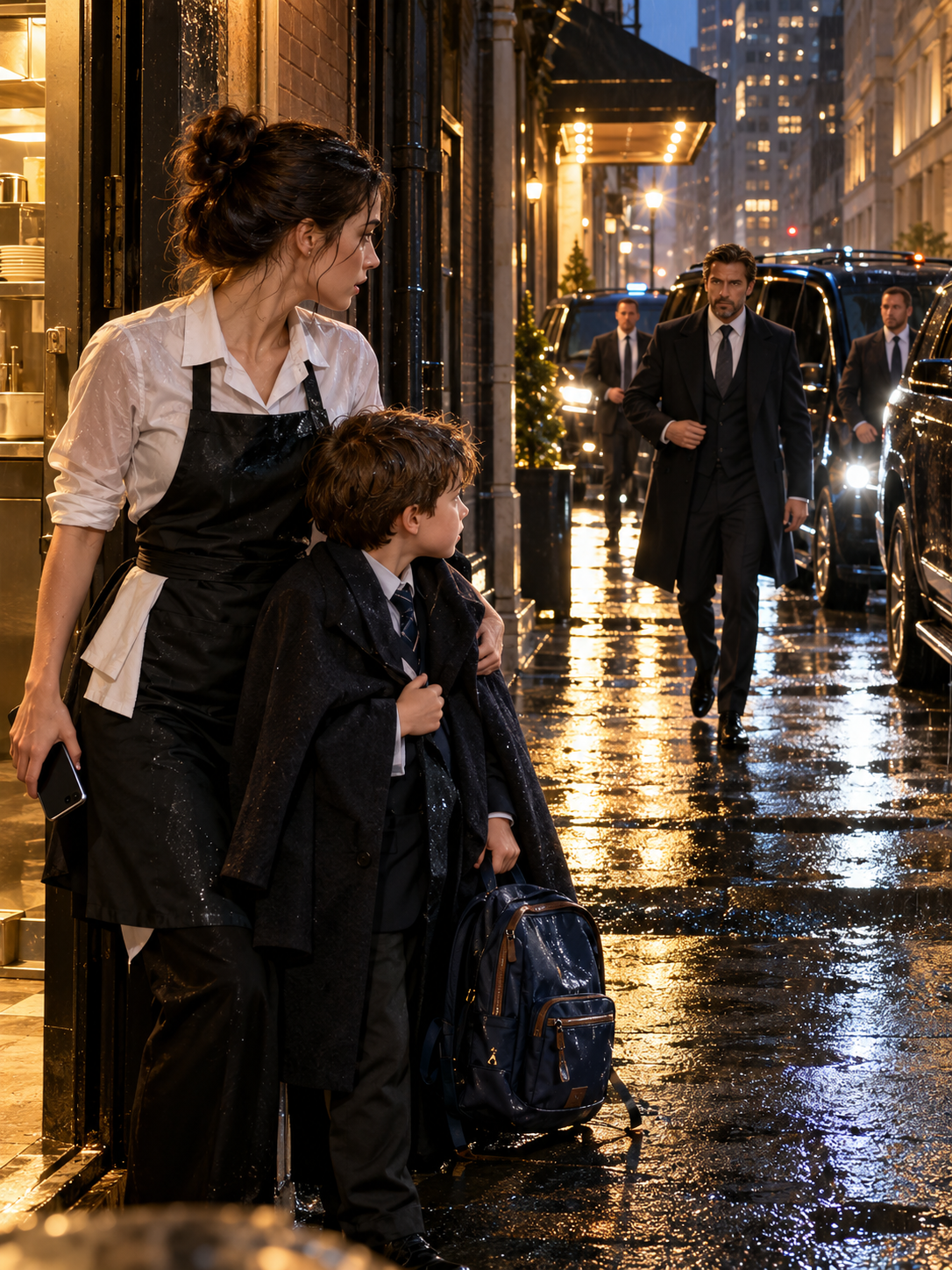
THE BROKE WAITRESS SAVED A MAFIA BOSS’S SON IN A RAINY NEW YORK ALLEY—THEN HIS TERRIFYING FATHER OFFERED HER A JOB THAT EXPOSED THE SECRET BEHIND HIS WIFE’S DEATH – Life Story
Three teenagers were laughing while a little boy cried on the pavement. Minutes later, black SUVs surrounded the waitress who...

I Was Nine Weeks Pregnant With Chicago’s Most Dangerous Mafia Boss’s Baby, And I Had No Intention Of Telling Him. But Minutes After My Doctor’s Appointment, Dominic Bellano Sent Me One Message: “Come Upstairs. Alone.” – Family
“She’s brought the original records.”Vincent’s five words seemed to steal every bit of warmth from the room.Dominic didn’t move for...
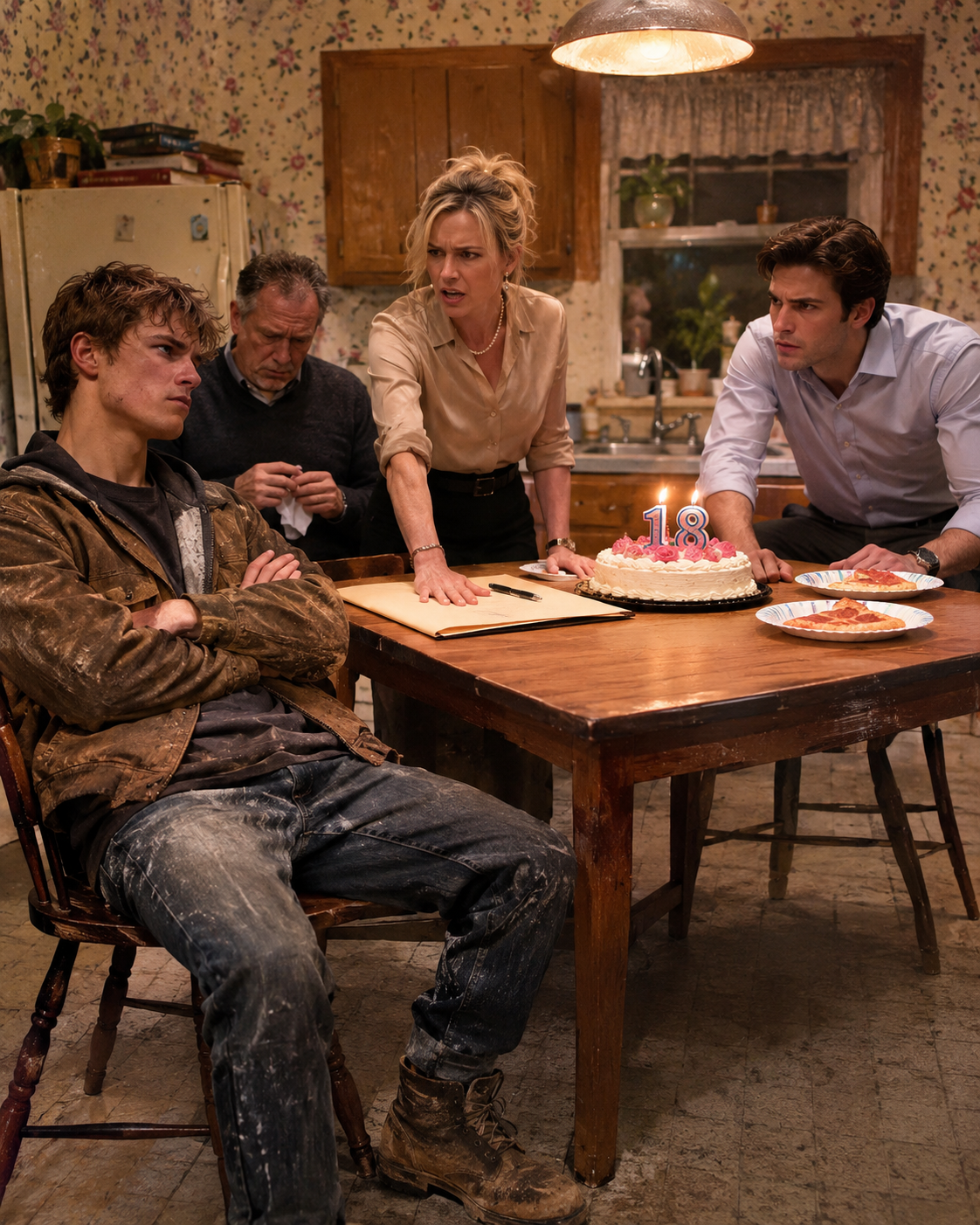
My family demanded Grandma’s estate on my 18th birthday—then one message exposed why they needed it tonight.
Part 1: “Sign over the estate deeds today so we can pay off the family debts.” On my 18th birthday,...