“Melanie’s the unemployed one who lives off the family,” my sister announced at my son’s wedding
“Melanie’s the unemployed one who lives off the family,” my sister announced at my son’s wedding, with her arm around my shoulders.
I was 45, divorced, and eight months out of work, staying in her guest house while searching for a job.
I could barely look at the guests until my son’s silver-haired boss reached for my hand and mentioned a proposal I had written back in 2019…
My sister introduced me to a group of strangers at my son’s wedding by telling them I was unemployed and living off her family.
She said it with her arm around my shoulders, smiling as though she were sharing a funny little family secret.
“Bless her heart,” Diane added. “She’s been staying in our guest house since her divorce.
We just try to keep her busy.”
Two women laughed awkwardly.
I stared down at the untouched champagne in my hand, wishing I had never walked over to the dessert table.
But the silver-haired man standing beside my sister didn’t laugh.
Instead, he looked directly at me and asked a question about something I’d done years earlier, something even my own family had never considered important.
To understand why I could barely answer him, you need to understand what those previous eight months had been like.
I’m Melanie Sinclair.
I was 45 years old, divorced, unemployed, and trying very hard not to let any of those things become my entire identity.
For eleven years, I’d worked at an accounting firm.
I had been good at my job.
I understood complicated financial problems, knew how to find solutions when businesses were struggling, and took pride in doing work that actually mattered.
Then the firm’s parent company collapsed.
Just like that, the career I’d spent more than a decade building disappeared.
I sent out applications.
I rewrote my résumé.
I checked my email every morning, hoping someone might finally give me an opportunity to explain what I could do.
Mostly, I received automated rejections.
Sometimes I received nothing at all.
My divorce had finalized the previous spring, and without a steady paycheck, finding another place to live wasn’t realistic.
That’s when Diane offered me the guest house behind her property.
I was grateful.
I truly was.
I paid whatever rent I could afford.
I bought groceries, ran errands, and watched her children on weekends when she and her husband wanted time together.
I tried to make sure my presence never became an inconvenience.
Diane, however, had a way of reminding me that I was an inconvenience anyway.
She ran a successful boutique event planning company.
She dressed beautifully, knew people with impressive titles, and had a talent for turning any conversation toward her latest accomplishment.
I admired what she’d built.
What hurt was how often she seemed to need my circumstances to make her accomplishments look even better.
At family dinners, she’d casually mention that I was still looking for work.
Sometimes she’d describe me as someone she was “helping get back on her feet.”
Other times, she’d ask whether I’d heard from any employers, using a sympathetic voice that somehow made me feel worse than if she’d simply criticized me.
I usually changed the subject.
Not because I agreed with her.
.
Because I needed somewhere to live, and I didn’t want every family gathering to become another argument about my situation.
My son Nathaniel was one of the few people who understood how much the whole thing bothered me.
He knew I’d worked hard.
He knew losing my job hadn’t been some personal failure.
And he knew how badly I wanted to regain my independence.
That’s why his wedding meant so much to me.
For one evening, I wanted to forget applications, rent, and the uncomfortable feeling of being financially dependent on my younger sister.
I wanted to watch my son marry the woman he loved.
And for a little while, I got exactly that.
The reception was beautiful.
String lights stretched across the tent, the band played softly, and Nathaniel danced with his new wife, occasionally looking toward me with a smile.
I stood near the edge of the reception holding champagne I hadn’t touched, feeling prouder than I had in months.
Then I saw Diane entertaining a small group near the dessert table.
She was laughing with several people I didn’t recognize, including a tall, distinguished-looking man with silver hair.
I walked over to say hello.
That was when she made her announcement about my unemployment.
I felt the familiar heat rising into my face.
.
Part of me wanted to correct her, to explain that I’d had a career, that I was paying what I could, that being temporarily unemployed didn’t make me a burden.
But I couldn’t seem to get the words out.
Then the man beside her extended his hand.
“Melanie Sinclair?” he asked.
I nodded.
He studied my face for a moment.
“You wrote the restructuring proposal for Whitlow Manufacturing back in 2019.”
I nearly dropped my glass.
I hadn’t heard anyone mention Whitlow in years.
“Yes,” I answered cautiously. “I did.”
He nodded as though he’d finally confirmed something important.
“I still reference that proposal in training materials.”
Diane’s smile began to disappear.
The man continued.
“That work helped save a company that was about to collapse.
Two hundred jobs were on the line.”
I looked at him, struggling to understand how he knew any of this.
Then he said something that made the entire conversation feel different.
“My name is Gerald Ashworth.
I run the operations division at Caldwell Bishop Group.”
He paused.
“I’m also your son’s boss.”
Diane lowered her wine glass.
Gerald glanced at her, then looked back at me.
“I’ve been trying to find you for two years, Melanie.”
For eight months, employers hadn’t returned my calls.
Now a man I’d never met was standing at my son’s wedding telling me he’d spent two years searching for me because of a piece of work I’d almost convinced myself nobody remembered.
I couldn’t imagine what he wanted.
And when Gerald asked whether we could speak privately, I realized he knew something about my old career that I didn’t.
IF FACEBOOK BROUGHT YOU HERE, HERE’S THE CONTINUATION YOU’VE BEEN WAITING FOR.
ENJOY!
I looked over at Diane before answering Gerald.
She was still standing beside the dessert table, holding her wine glass, watching us with an expression I couldn’t quite read.
For once, my sister wasn’t trying to control the conversation.
“Of course,” I told him. “We can talk.”
Gerald led me toward the quieter edge of the reception tent, where the music was softer and there were fewer people standing around.
He didn’t rush into his explanation.
Instead, he asked whether I remembered the Whitlow Manufacturing project.
“Very well,” I said.
That was putting it mildly.
I’d spent weeks working on that proposal.
Whitlow had been in serious financial trouble.
The numbers didn’t work, the company’s operating costs had become unsustainable, and approximately two hundred employees were facing the possibility of losing their jobs.
My assignment had been to examine the financial situation and find a workable way forward.
I remembered sitting with spreadsheets late into the night, checking assumptions, testing different approaches, and trying to find a solution that wouldn’t simply postpone the company’s problems.
Eventually, I’d developed a restructuring proposal.
It wasn’t glamorous work.
There were no public celebrations when it was finished.
But the company survived.
And knowing that people had kept their jobs because the proposal worked had been enough for me.
Or at least I’d told myself it was enough.
“Melanie,” Gerald said, “I’ve been working in this field for fifteen years.
I’ve seen hundreds of restructuring plans.”
He looked at me carefully.
“Yours was one of the smartest I’ve ever read.”
I tried to thank him, but my throat tightened.
It had been so long since anyone spoke about my work as though it had value.
Gerald continued.
“When I was brought in as a consultant, I studied that proposal closely.
I wanted to know who had developed it.”
He paused.
“The problem was that your name wasn’t the one people were giving me.”
I knew immediately what he meant.
There had been a director involved with the Whitlow project, a man whose name had become associated with the final proposal.
I’d done the detailed financial analysis and built the strategy.
He’d received most of the recognition.
At the time, I’d told myself that was simply how corporate life worked.
People higher up presented the work.
People farther down prepared it.
But I’d never forgotten watching that same director advance into a vice president position while my own career became increasingly uncertain.
Eventually, when the accounting firm I’d worked for collapsed, all those years of experience hadn’t protected my job.
My desk had been emptied into a cardboard box.
I’d been escorted out of the building.
And no one had seemed particularly interested in what I’d contributed over eleven years.
Standing there at my son’s wedding, I suddenly felt the old hurt returning.
Not because I was angry about a job title.
Because I’d spent years believing that doing good work would eventually speak for itself.
Gerald seemed to understand.
“I kept asking questions,” he told me. “Eventually, I found an internal document that still had your name attached to the work.”
He smiled slightly.
“That’s how I found out who really developed the proposal.”
I stared at him.
For years, I’d assumed that particular achievement had disappeared into somebody else’s professional history.
But somewhere, in a document I’d never seen, my contribution had remained.
Gerald went on to explain that he’d been developing a strategic advisory division at Caldwell Bishop Group.
He needed someone who understood complicated business operations, someone capable of seeing the problems beneath the numbers rather than merely reporting them.
Someone with experience finding solutions when the stakes were high.
“I’ve been trying to track you down for two years,” he said. “And here you are, at Nathaniel’s wedding.”
I managed a small laugh.
The coincidence was almost impossible to absorb.
All those applications I’d submitted.
All those mornings staring at my inbox.
All the times Diane had made me feel as though my professional life was already over.
And now this man was telling me that one of the most difficult projects I’d ever completed had stayed with him for years.
Then Gerald said something I will never forget.
“I don’t have a business card with me, but I’d like you to come to my office Monday morning.”
I nodded, still trying to understand.
“For an interview?”
He shook his head.
“Not an interview, Melanie.
A job offer.”
I looked at him.
He continued.
“Director of strategic operations.
I’ll have my assistant call you tomorrow so we can work through the details.”
For several seconds, I couldn’t answer.
I thought about the guest house.
The rent I struggled to pay.
The grocery trips, the weekends watching Diane’s children, and the way I’d learned to keep my opinions to myself because I didn’t want to upset the person providing my roof.
I thought about my old office and the cardboard box I’d carried out after losing my job.
Most of all, I thought about the version of myself I’d been before those eight months of rejection had convinced me that perhaps I wasn’t as capable as I’d believed.
“Are you serious?” I finally asked.
“Completely,” Gerald said.
I looked down at the champagne glass still in my hand.
I’d been holding it so tightly that my fingers had started to ache.
“Thank you,” I said quietly.
Gerald shook his head.
“Your work earned this conversation.”
Then he glanced back toward the dessert table.
Diane was watching us.
A few other guests were standing nearby, exchanging looks and speaking softly among themselves.
Gerald turned toward her.
He didn’t raise his voice or make a scene.
But he made sure she could hear him.
“I’d choose your words more carefully next time,” he told her, “especially about people you don’t actually know.”
Diane opened her mouth.
For a moment, it looked as though she might defend herself.
Then she closed it again.
I had spent months listening to her explain my circumstances to other people.
Now, with an opportunity to respond, she couldn’t seem to find anything to say.
Gerald turned back to me, his expression friendly again.
We finished our conversation, and I thanked him once more.
As he walked away, I stayed near the edge of the tent, trying to collect myself.
I didn’t feel triumphant.
I felt overwhelmed.
Getting a job offer didn’t erase the months I’d been unemployed.
It didn’t undo the embarrassment I’d felt living in someone else’s guest house at forty-five.
But it gave me something I hadn’t had in a long time.
A reason to believe my working life wasn’t finished.
A few minutes later, Nathaniel found me.
He came toward me quickly, still wearing his wedding suit, his expression full of questions.
“Mom,” he said, taking both my hands, “is it true?”
I looked at him.
“Is what true?”
“Gerald offered you a position?”
I nodded.
“He did.”
Nathaniel stared at me for a moment.
Then he pulled me into the tightest hug he’d given me in years.
I held onto him, feeling the tears I’d been fighting all evening finally reach my eyes.
My son had never treated me like a failure.
He’d seen how hard I’d been trying.
And now he was standing there on his wedding day, genuinely happy that something good had happened to his mother.
That meant more than I can explain.
When he stepped back, he was smiling.
“I’m so proud of you, Mom.”
I laughed through my tears.
“You’re supposed to be enjoying your wedding.”
“I am,” he said.
And I knew he meant it.
Over Nathaniel’s shoulder, I could see Diane standing across the tent.
Her expression was tight, and she was no longer laughing with the guests.
I didn’t walk over to her.
I didn’t demand an apology.
For the first time in months, I didn’t feel the need to explain myself to my sister.
Gerald’s offer had nothing to do with her opinion of me.
It came from work I’d done years before she ever had a reason to describe me as someone who needed keeping busy.
Diane didn’t apologize that evening.
In fact, she didn’t apologize for weeks.
By then, the story had traveled through our extended family, and people had heard how she’d introduced me at the wedding and how Nathaniel’s boss had responded.
I can’t say exactly what finally made her apologize.
Perhaps she regretted embarrassing me.
Perhaps she disliked knowing that other people had witnessed it.
Whatever the reason, her apology came much later than the hurt.
And by then, I’d already begun rebuilding my life.
I started at Caldwell Bishop three weeks after the wedding.
It was a demanding position, and I had a great deal to learn about the organization and my new responsibilities.
But for the first time in eight months, I was working again.
I was discussing financial strategy, studying operations, and using the skills I’d spent so many years developing.
The same skills I’d started questioning every time another rejection appeared in my inbox.
By the end of that month, I’d moved out of Diane’s guest house.
I was grateful she’d given me somewhere to stay when I needed it.
That part was real, and I never wanted to pretend otherwise.
But I also understood that gratitude didn’t require accepting humiliation.
I could appreciate her help without agreeing with the way she’d described me.
And I could love my sister without depending on her approval.
I think about that wedding more often than I expected.
Not because Gerald embarrassed Diane.
Not because I received an impressive job title.
What stays with me is the moment he mentioned Whitlow Manufacturing.
For years, I’d believed the work I did quietly, without attention or recognition, might never matter to anyone outside the companies I’d helped.
Then a stranger remembered.
He remembered the proposal.
He remembered what it accomplished.
And he’d taken the trouble to discover who had actually written it.
Nathaniel’s wedding was already one of the happiest days of my life.
Seeing my son so joyful would have been enough.
But that evening gave me something else, too.
When I think back to standing beneath those string lights, holding a glass of champagne I’d never touched, I no longer picture myself as the unemployed sister everyone felt sorry for.
I remember my son looking for me across the dance floor.
I remember a handshake and a familiar name from 2019.
And I remember realizing that the work I’d done still had value, even during the months when nobody seemed interested in hiring me.
Diane’s words hurt me that evening.
They truly did.
But they weren’t the last words that mattered.
THE END.
I’ve shared the complete story, and I truly hope it touched your heart.
If this story moved you, please , like, and share the post.
Thank you for reading! ❤️
Recommended Stories
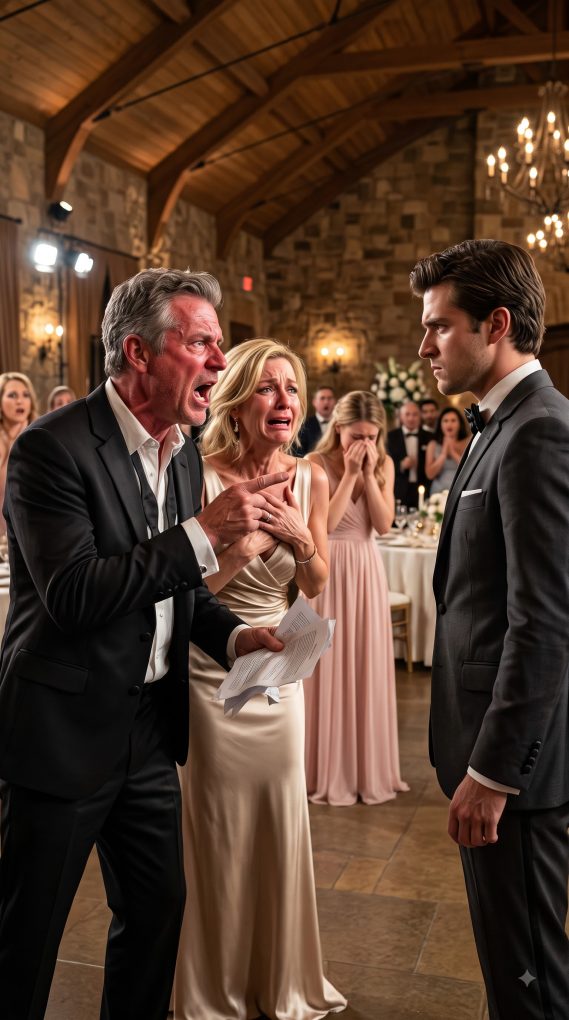
My parents skipped my MIT graduation for my sister’s recital, unaware that was the day I cut them off. Five years later, a family wedding forced us into the same room to finally face what they had lost.
My phone buzzed with a photo of my parents holding flowers at my younger sister Chloe’s ballet recital five hundred...

MY WIFE SAID SHE NEEDED SPACE BEFORE VISITING HER SISTER, BUT HER CAR WAS AT MY BEST FRIEND’S HOUSE—AND THEY HAD BEEN LYING TO ME FOR WEEKS – Life Story
The headlights swept across my best friend’s driveway, and my wife’s silver Honda was parked beside his garage. Sophie had...

At Thanksgiving, my sister laughed about my job at a “tiny investment firm,” and Dad offered to make me a vice president at Harrison Global if I would stop embarrassing the family.
At Thanksgiving, my sister laughed about my job at a “tiny investment firm,” and Dad offered to make me a...