My mother told me, “If you keep that baby, never come home again,” and my father sat beside her without saying a word.
My mother told me, “If you keep that baby, never come home again,” and my father sat beside her without saying a word.
I was 21, three months pregnant, and my boyfriend had already left me.
Three days after I signed the papers my parents put in front of me, an ultrasound revealed three heartbeats.
Then a stranger named Walter offered me a place to stay, but I had no idea what was waiting inside his house…
My mother didn’t shout when she told me I was no longer welcome in her house.
That might have made it easier.
She sat on the living room sofa, straightened the sleeve of her sweater, and said, “If you keep that baby, never come back here.”
My father was sitting in his usual chair.
He looked toward the window rather than at me.
I waited for him to say that she was upset, that we could talk about it in the morning, or at least that I was still his daughter.
He said nothing.
I was twenty-one years old, a college student, and three months pregnant.
The man I’d imagined raising a child with had packed his things and walked out of my apartment the evening before.
I had gone to my parents because I thought, however angry they might be, they would help me figure out what came next.
Instead, Mom was talking about what our neighbors would think.
“My friends will ask questions, Bridget,” she said. “Your father’s colleagues know you’re in school.
What are we supposed to tell people?”
“The truth,” I said. “I’m pregnant, and he left.
I didn’t plan for any of this.”
She shook her head as though I’d deliberately misunderstood her. “You don’t seem to grasp what this will do to our family.”
It was such a strange sentence.
I was the one carrying the baby.
I was the one who had watched my boyfriend shut the apartment door behind him.
And somehow, in my mother’s telling, the people most at risk of being hurt were the ones who might have to explain me at a dinner party.
My boyfriend hadn’t offered a complicated excuse.
He had looked at me in our little apartment, said he wanted nothing to do with the child, and started packing.
I asked whether we could talk when he’d calmed down.
He told me there was nothing left to discuss.
Mom heard something different.
She heard that I intended to keep the pregnancy, and she decided that made me an embarrassment.
“You’re choosing this,” she said that night in the living room. “You cannot choose it and expect us to stand behind you.”
I looked at Dad. “Steven, please.
I don’t have anywhere to go.” I almost never called him by his first name, but “Dad” was becoming difficult to say while he wouldn’t meet my eyes.
He rubbed his hands together. “Your mother and I have talked about it.”
That was the only answer he offered.
Not concern about my health, not a question about whether I’d eaten.
They had talked, and apparently I was hearing the decision.
There were papers on the coffee table.
My parents wanted our financial arrangements and their decision about support put in writing.
I read what I could through tears, signed where they indicated, and left the house feeling less like someone who’d been in an argument than someone who’d been dismissed from a job.
My mother didn’t follow me to the door.
My father didn’t ask how I planned to get back to my apartment.
I remember my hands shaking as I searched for my car keys.
Three days after signing those papers, I went to my next ultrasound appointment.
I’d been nervous about the pregnancy already, but I was especially afraid of sitting in a medical office without anyone to call afterward.
The technician spread gel across my stomach and moved the probe slowly while I watched her expression.
She stopped, adjusted the image, and took another measurement.
The room went quiet.
She called a doctor, who studied the screen and summoned another specialist.
“Is something wrong?” I asked.
The first doctor turned the monitor toward me.
There were small shapes on the screen, arranged in a way I couldn’t understand until he pointed them out.
“Bridget,” he said, “you’re carrying three babies.”
I counted anyway.
One, two, three.
Three separate heartbeats when I’d barely worked out how to care for one.
I gripped the edge of the examination table.
My parents had refused to help me raise a single child.
My boyfriend had left before he even knew the full story.
I couldn’t imagine calling either of them to say there would be three.
Then the doctor told me an older man named Walter had contacted the office about helping with the pregnancy and potentially taking legal responsibility for the children after birth.
Walter had experience caring for children who needed homes, he said, and was willing to provide housing and help arrange the medical care I would need.
I didn’t understand why someone I had never met would offer that much.
I also didn’t know whether I should be relieved or frightened.
I was twenty-one, newly abandoned, and looking at a screen that seemed to contain more responsibility than I could carry.
“He’s waiting outside,” the doctor said. “You can decide whether you’d like to speak with him.”
I agreed, but when Walter entered, I watched him carefully.
He was tall, with gray hair and the composed manner of a man who had learned not to promise more than he could do.
He didn’t ask me to tell my whole story.
He knew I was pregnant with triplets, that I had limited support, and that the doctors expected close monitoring.
.
“I’ve helped raise children who needed a home for many years,” he said. “I can offer you a place in the Cincinnati suburbs while you’re expecting.
There are people in the house who can help.
We would also need to discuss the legal arrangements for the children after they’re born.”
“What if I say no?” I asked.
“Then you go home and make your own decisions,” he said. “I won’t force you.”
It wasn’t the answer I wanted.
I wanted someone to tell me what was right so I could stop being afraid.
But he didn’t pretend the choice was simple.
The doctor explained that a triplet pregnancy could require frequent appointments and additional precautions.
I thought about the small apartment waiting for me, the classes I’d struggled to attend, and the work I’d already missed because of morning sickness.
My parents had made their position painfully clear.
“I’ll come,” I finally told Walter.
He nodded and discussed the arrangements for a ride.
I stared at the darkened ultrasound monitor after he left, trying to imagine what three cribs looked like, or three babies crying at once.
All I could picture was an empty apartment and three tiny heartbeats.
The move didn’t happen as smoothly as I’d pictured.
I packed one suitcase, took my prenatal vitamins, and left the apartment before sunrise.
I turned off my phone and removed the SIM card because I didn’t want my parents reaching me just to repeat what they’d already said.
For three days I stayed in a cheap motel, using the last of my cash and trying to sleep.
On the fourth morning, a black SUV pulled up.
The driver loaded my suitcase and drove toward Cincinnati.
I watched the streets change from busy blocks to quiet neighborhoods and wondered how many times I’d have to start my life over before I felt settled anywhere.
Walter’s house stood at the end of a long driveway.
It was a large two-story home with a wide porch, a fenced yard, and a vegetable garden behind it.
Walter met me at the door and showed me the kitchen, living room, and stairs before taking me down a hallway.
Then I saw the shoes.
Children’s shoes lined the wall in different sizes.
Down the hall, children were doing homework at a long table.
Others carried backpacks or baskets of laundry, and staff members moved calmly between the rooms.
I counted as quickly as I could.
There were nearly thirty children living there.
“I didn’t know there would be this many,” I admitted.
“I’ve been taking in children who needed homes for over twenty years,” Walter said. “They have routines, and the staff know what they’re doing.
You’ll have space to rest.”
He led me to an upstairs corner room with a bathroom and a desk below the window.
Nobody asked me why my boyfriend had left.
Nobody told me that my parents were probably right.
A staff member brought soup and bread that evening and let me eat in peace.
.
I sat on the bed listening to footsteps in the hallway.
For the first time in weeks, a room full of unfamiliar people felt less frightening than being alone with the people who were supposed to love me.
Two days later, Walter’s son returned from a business trip.
Reed was in his mid-thirties and carried a laptop bag into the kitchen where I was drinking tea.
Walter introduced us, and I waited for questions about the embarrassing circumstances that had brought me there.
Reed asked about my next medical appointment instead.
He began driving me to the clinic, keeping water in the cup holder and waiting without complaint when scans ran late.
After the third appointment, he parked outside the house and said, “You don’t have to do this by yourself anymore.”
“I’m not used to anyone staying,” I admitted.
He didn’t make a grand promise.
He said he’d be there for the next appointment, too.
Then he got out and opened my door.
Over the next weeks I learned his quiet habits.
He kept the appointment notes organized, checked whether I needed a break on the drive, and adjusted his meetings when the doctors needed another test.
Once, after a long scan, we stopped at a park.
I told him about the classes I’d dropped and the work I’d lost.
He listened without trying to turn my worries into a speech.
By the time three months had passed, I had started recognizing the sound of his car coming up the driveway.
I’d also begun letting myself believe I might be able to have these babies without feeling abandoned every day.
Then the front doorbell rang one afternoon as I was coming downstairs.
A staff member opened it.
My mother, Diane, and my father, Steven, were standing on the porch.
They’d found the address, and neither looked pleased to see me.
Diane’s eyes moved across the children’s shoes and the busy hallway.
She looked straight at me and said, “You’re no longer our daughter.”
Steven stepped forward.
Their lawyer had been informed, he said.
Every financial tie was finished.
They wanted no future claims or contact.
My mother added that I’d brought shame to the family name, and nothing I’d done since leaving had changed that.
I stood on the bottom stair, unable to think of an answer.
I’d heard the threat before, but this time they’d crossed the distance to deliver it in person.
They could see how visibly pregnant I was.
They still hadn’t asked whether I was well.
Reed came from the kitchen when he heard their voices.
He walked past me, stopped between my parents and the stairs, and spoke without raising his voice.
“Then leave,” he said. “She is not alone.”
CHAPTER 2
My mother opened her mouth to answer, but Reed didn’t move.
He told them they were on private property and weren’t welcome to continue speaking to me that way.
My father looked up at me once, as if he expected me to plead with them.
I couldn’t.
Diane turned first, and Steven followed her out.
The door closed with a firm click.
I sat down on the bottom stair because my knees no longer felt reliable.
Behind me, the ordinary life of the house continued: a child laughed, someone carried laundry down the hall, and dishes clinked in the kitchen.
I couldn’t understand how the world could keep moving while my parents had just declared me a stranger.
Reed returned with water and sat one step below me.
He didn’t say they would change their minds, or that everything would work out.
He only told me I could stay as long as I needed.
I drank slowly until I could trust myself to stand.
That evening he brought two mugs of tea onto the porch.
We watched the yard grow dark.
My parents had always insisted that family loyalty meant protecting their name.
Reed hadn’t even asked me to defend mine.
He’d simply kept people from hurting me in his home.
I thought that should have made me feel instantly safe.
Instead, I felt grief alongside the relief.
I could now picture the birthdays my parents might miss, the three little faces they might never know.
I didn’t want to go back to begging them.
I just wished they’d wanted to know their grandchildren more than they’d wanted to protect themselves from gossip.
A few weeks later, the medical appointments brought a different kind of fear.
During a routine scan, the technician spent longer than usual making measurements.
One baby was growing more slowly than the other two, and my blood pressure had risen.
The doctor instructed me to rest completely and explained why he wanted closer monitoring.
I nodded at the instructions, but my mind had already gone somewhere darker.
I’d spent months wondering how I would care for three babies.
Now I was frightened I might not carry all three safely to delivery.
Reed rearranged his schedule that afternoon.
He moved meetings online, collected prescriptions, and kept the clinic notes on the desk in my room.
The household staff continued caring for the other children, so I didn’t feel that the entire home had been brought to a halt because of me.
My days became small.
Pillows behind my back.
Water on the nightstand.
The view of the yard through the bedroom window.
Reed worked in the chair nearby, and when he took calls in the hallway he left the door open so I’d know he hadn’t gone far.
Eventually I told him what frightened me most. “I don’t know how to be a mother to three babies.
I don’t even know what being a good mother looks like anymore.”
He closed his laptop. “I’ve watched Dad raise children who weren’t born into our family.
He doesn’t do it by knowing everything on the first day.
He does it by showing up tomorrow, and then the day after that.”
For two weeks, my doctor checked my blood pressure frequently and monitored the babies’ growth.
The smaller baby made some progress; the other two remained steady.
When I was finally permitted limited movement, I walked slowly along the upstairs hallway.
Reed waited at the end without reaching for me until I offered my hand.
I wasn’t cured of worry.
I still had more appointments ahead and an uncertain delivery.
But I had learned to recognize the difference between someone who promised I would never need help and someone who made sure help was there when I did.
That difference mattered more than I’d ever expected.
CHAPTER 3
News of my parents’ rejection spread through their social circle.
I heard only pieces of it, mostly through messages passed to the house.
People who’d always cared about their standing in the community were starting to ask uncomfortable questions.
Some invitations stopped coming, and my parents were furious that the story was no longer theirs to control.
One afternoon Diane called the house.
A staff member passed along her message, and I listened just once.
She blamed me for the damage to their reputation.
There was no question about my blood pressure, no concern about the babies, not even a request to speak kindly after what had happened at the front door.
I deleted the message.
When Reed found me sitting on the bed, I asked him to come downstairs with me.
We sat in the quiet corner of the living room, away from the homework table and the evening routines.
“I don’t want them in the babies’ lives,” I said. “I don’t want them calling here to remind me that I’m an embarrassment.”
“Then we can stop passing along their messages,” he replied. “You get to decide who has access to you.”
We talked through the arrangements for the birth and the legal questions we’d been putting off.
When I first met Walter, I’d been too overwhelmed to imagine anything beyond shelter and a safe pregnancy.
His offer to assume responsibility for the children had seemed like the only way to keep them cared for.
Now I wanted to be part of their daily lives, and Reed was offering to build that life alongside me.
He’d prepared information about the steps that might be needed after delivery, including questions about the babies’ surname and future parental arrangements.
He said they could carry his name if I wanted and if the necessary legal steps were completed.
I was careful not to sign away decisions I still needed to consider.
For once, nobody tried to rush me.
That mattered because my last experience with family paperwork had been sitting across from my parents while they decided what kind of daughter I was allowed to be.
Here, the questions were difficult, but the answers were mine.
That night we sat together on the couch.
Reed took my hand, and I didn’t pull away.
We’d grown close in doctor’s offices and on quiet drives rather than through dramatic declarations.
I knew the house wasn’t a fairy tale.
There would be sleepless nights and complicated decisions.
But when I pictured tomorrow, he was there, not as someone who’d promised an easy life, but as someone who had stayed through difficult days already.
People connected to my parents tried to reach us through mutual acquaintances, but Reed made it clear that no more messages would be delivered.
Gradually the calls stopped.
My mother had always warned me that cutting ties would leave me isolated.
Yet when the house became quiet again, I found that I could finally sleep.
As the final month approached, Walter prepared three cribs upstairs.
Reed coordinated the clinic appointments, hospital plans, and extra monitoring the triplets would need.
We talked about names, feeding schedules, and which room would be easiest to use at night.
I signed the hospital forms listing Reed as my primary contact.
Early one morning, contractions woke me.
Reed was downstairs within minutes, and Walter met us at the door holding my packed hospital bag.
During the drive, I watched the pale light come up over the road and counted the minutes between contractions.
At the hospital, Reed stayed near me through the examinations.
When the doctors said it was time, he took my hand.
“I’m here,” he said.
This time, I believed the words without having to ask what they meant.
CHAPTER 4
The delivery lasted through the morning and into the early afternoon.
The babies arrived earlier than expected, but the medical team was ready for them.
I remember the rustle of blankets and the relief that each had come safely through the first checks.
When they placed the first baby in my arms, I stared at that tiny face as though I were seeing the world begin again.
Reed stood beside the bed, still holding my hand.
I held each child in turn, pausing longest over the smallest, whose growth had worried us through so many appointments.
“All three,” Reed said softly.
“All three,” I answered.
There were more weight checks and feeding attempts, and I slept whenever the nurses allowed it.
Reed stayed nearby, leaving the room only when the staff needed space.
Nothing about the first hours was effortless, but I no longer expected parenthood to be effortless.
I wanted the chance to learn it.
The next morning, a hospital social worker helped us review the paperwork concerning the babies, our support arrangements, and my wishes about family contact.
I made it clear that Diane and Steven weren’t to be given information about me or the children.
The longer-term legal questions would be handled through the appropriate process, not by a promise made in a frightened moment months earlier.
That afternoon the nursing desk told us my parents had called asking to reach my room.
I instructed the staff not to connect them.
They didn’t try again.
No apology had been passed along.
I couldn’t build my children’s security on what they might someday say.
On the third day, the medical team cleared us for discharge.
Reed drove us back to the house outside Cincinnati, where Walter waited at the door.
Staff helped with the car seats.
The other children gathered in the hallway, curious and excited, before Walter gently guided them back to their routines.
That night I sat in the nursery looking at three cribs lined along one wall.
Reed brought a chair and stayed while I fed the smallest baby.
Downstairs, someone closed a cupboard; farther away, a child asked for another bedtime story.
It sounded like an ordinary family evening.
Ordinary was wonderful.
Over the following months, I heard that my parents had lost several social and business connections.
People they’d depended on no longer invited them as readily, and some of my father’s partnerships changed.
Their choices were known, and others had drawn their own conclusions.
I didn’t need to be involved.
Reed and I married on a quiet Saturday morning at the house.
Walter stood with us, and the older children helped prepare everything.
After the short ceremony, the babies were brought from the nursery to join us.
There were no grand speeches.
I knew everyone who’d shown up for us.
Life with triplets was noisy, exhausting, and sometimes wonderfully funny.
Reed adjusted his work so he could help with the night feedings.
The staff made the household manageable without taking away our responsibility as parents.
Walter’s many children continued their routines, and our three grew up surrounded by people who understood that belonging wasn’t something you had to earn.
I still remember myself at twenty-one, sitting in my parents’ living room, waiting for my father to speak.
I wish he’d said I mattered more than the neighbors’ opinions.
But the life I have now isn’t built on waiting for words he never offered.
My babies know the people who come when they cry, who bring water when someone is frightened, and who stay for the next appointment.
I once thought family was the place I was born into.
I learned that family can also be the people who keep making room for you after everyone else has closed the door.
THE END.
I’ve shared the complete story, and I truly hope it touched your heart.
If this story moved you, please , like, and share the post.
Thank you for reading! ❤️
Recommended Stories

I bought my dream home in secret. A neighbor warned, “Strangers are inside.” I checked the cameras. It was my brother’s family celebrating. That’s when I dialed the police.
I bought my dream home in secret. A neighbor warned, “Strangers are inside.” I checked the cameras. It was my...
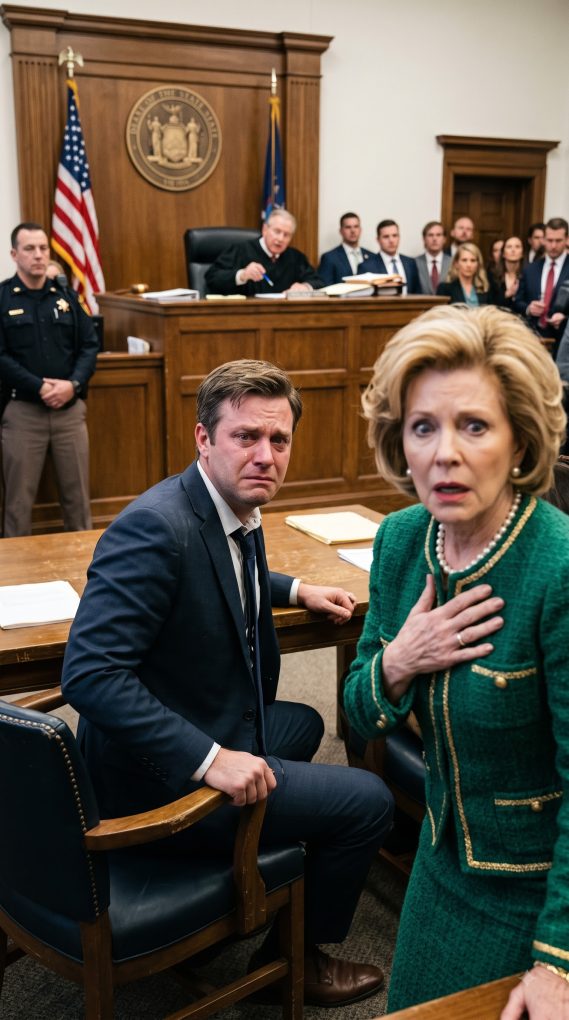
I sold my house and business just to fight for my son’s custody. My wife’s rich family laughed and the judge called me “Mr. Nobody.” But after reading my file, the judge froze, dropped his pen, and stood up. “Court is adjourned. Sir, in my chambers.” My mother-in-law stopped smiling.
I sold my house and business just to fight for my son’s custody. My wife’s rich family laughed and the...
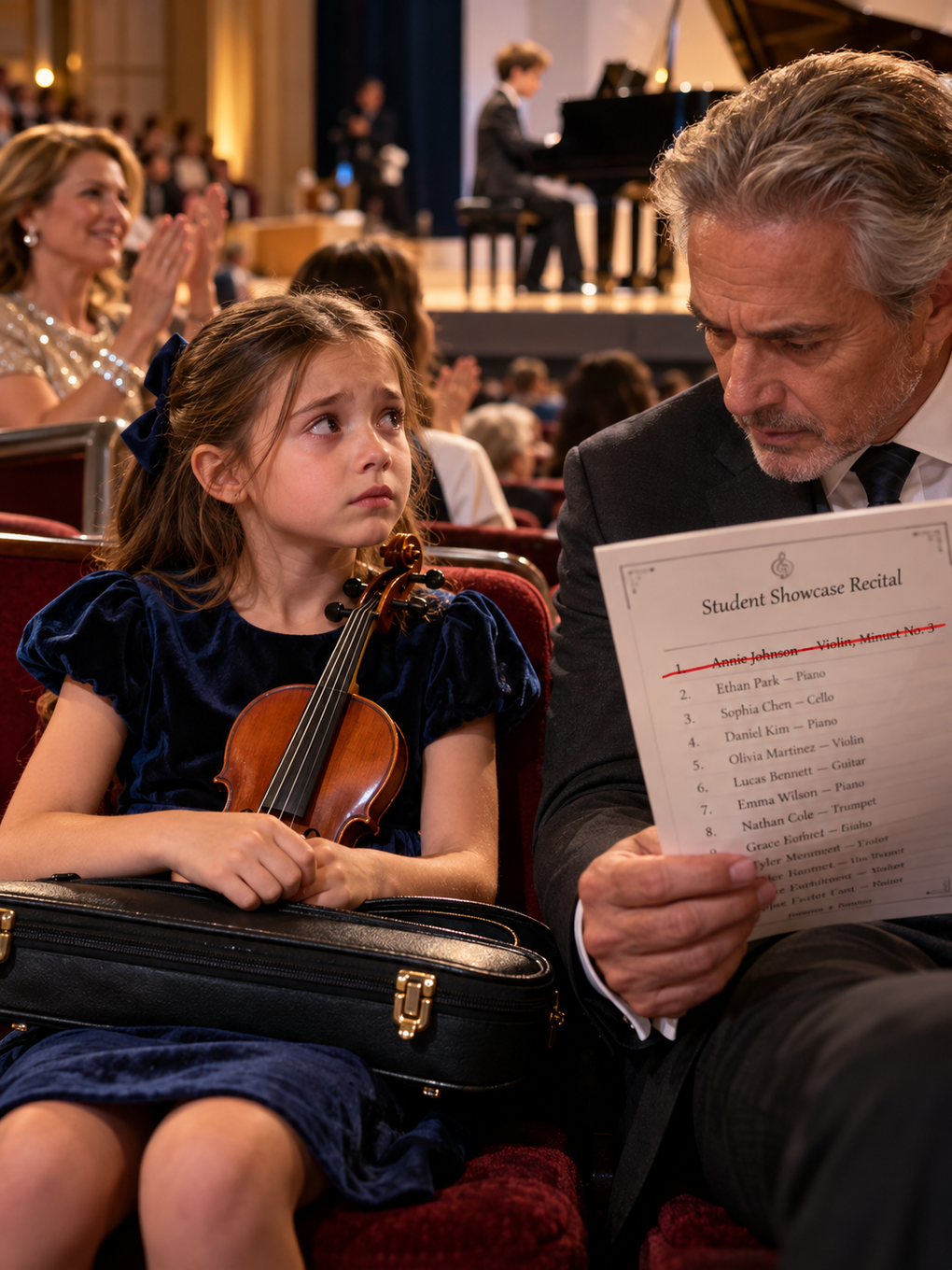
MY DAUGHTER SAT WITH HER VIOLIN AS EVERY OTHER NAME WAS CALLED—THEN THE MAN WHO FUNDED THE SHOWCASE NOTICED THE RED LINE ACROSS HERS – Life Story
The woman with the microphone announced fifteen names and left my daughter’s name untouched. With one performance left, Annie still...