My mother-in-law grabbed me by the hair when I came home at 1 a.m., and my husband struck my face instead of helping me.
My mother-in-law grabbed me by the hair when I came home at 1 a.m., and my husband struck my face instead of helping me.
They weren’t angry because I’d failed at work.
I’d just returned from saving a major client in Toronto.
They wanted me to sign my $5 million Westmount house into my husband’s name before morning.
What they didn’t know was what I’d already preserved…
The night I came home with a signed agreement that had saved hundreds of jobs, my mother-in-law dragged me down by my hair.
My husband watched me struggle on the foyer floor and told me to apologize to her.
When I refused, he struck me across the face.
Then they demanded that I sign over the house my grandmother’s inheritance had paid for.
It was just after one in the morning.
I’d spent the previous three days in Toronto, working through a difficult corporate restructuring.
I still had my travel bag on my shoulder and my coat half unbuttoned.
All I wanted was a glass of water and a bed.
Instead, I learned how quickly a family can turn the place you call home into somewhere you aren’t safe.
My name is Josephine, though the people who know me best call me Joe.
I was thirty-four that November, and for six years I’d been a senior partner at a corporate restructuring firm in Montreal.
We didn’t do glamorous work.
We entered rooms where companies were close to failing, where payroll and livelihoods depended on whether adults could reach an agreement before the money ran out.
I learned to read documents carefully and not mistake someone’s confident tone for proof.
I thought that habit made me wise.
Somehow I never applied it to my marriage until it was almost too late.
Three years earlier, I’d married Garrett Albright.
His family came from Calgary when his architecture business began expanding east.
Albright & Associates had a respectable name and an office he liked showing visitors, but it wasn’t healthy financially.
When I met him, he spoke about projects with the excitement of a man who could already see the buildings standing.
I believed in that vision.
I believed in him.
Before we married, I put $800,000 of my own capital into the struggling company to keep it operating and to protect its payroll.
I didn’t announce it at dinner parties.
Garrett remained the public face of the firm, and I was content to let him take pride in what he’d built.
I thought helping somebody succeed was a natural thing to do when you loved him.
At the time, I didn’t understand how easily help can turn into something the person receiving it assumes is his by right.
My mother-in-law, Sylvia, was gracious when an audience was present.
She wore expensive perfume and kissed both cheeks at parties.
She remembered the names of people whose opinions mattered to her.
Alone, she could turn cold in a single breath.
If I stayed late at the office, she called me selfish.
If I went away on business, she reminded me that a wife was supposed to be available to her husband.
If I mentioned my own work, she asked when I planned to have time for a proper family.
I kept trying to be patient.
Garrett usually called it a generation gap.
He’d sigh and say, “You know how Mom is.” I’d hear that phrase and tell myself there was no point fighting over another awkward remark.
I could manage a difficult client for ten hours without losing my temper.
Surely I could manage one difficult relative over dinner.
But Sylvia hadn’t moved into my life simply to make comments about my schedule.
She had moved into my house, and little by little she behaved as though the rooms belonged to her.
She rearranged things, complained about how often I traveled, and spoke about the property as an Albright family asset.
Garrett didn’t correct her.
Sometimes he added a comment that made the claim sound almost reasonable.
The house was in Westmount, with a limestone exterior and a garden backing toward the escarpment.
It was beautiful, but its meaning to me was personal.
I’d bought it with money my grandmother left me, before I married Garrett.
The title was in my name alone, and we had signed a marriage contract at a notary’s office on Saint-Denis Street.
My parents, retired civil servants in Kingston, had taught me that documentation didn’t mean you loved somebody less.
It meant everybody knew what had been agreed.
Garrett disliked the marriage contract.
He said it made our life together feel like a business arrangement.
I’d answered that marriage and ownership weren’t the same question.
We could share a home without pretending the inheritance had come from his family.
He signed.
I believed the matter was settled.
Sylvia was aware of the agreement, too.
Over the years, both of them began speaking as though a document signed before our wedding could eventually be talked out of existence.
I noticed the change in small moments.
Sylvia would refer to “our house” when talking to her friends, then look directly at me as though challenging me to correct her.
Garrett would say he wanted a stronger sense of partnership.
When I asked what that meant, he came back to putting his name on the deed.
It was never enough that we lived there together.
They wanted the paper to say something else, and they never accepted that I had a right to decline.
I had more than enough reasons to be exhausted that November.
Our client was a construction company whose Brampton project had gone badly wrong.
Negotiations had dragged on for weeks.
I’d traveled to Toronto knowing that if the parties didn’t reach acceptable terms, people would lose jobs and the company’s future would become uncertain.
I spent ten hours in a Bay Street boardroom that final day, working through figures and revisions while the lawyers across from us stalled.
At eleven that night, we finally had a signed, witnessed term sheet.
It was the kind of result that leaves you too tired to celebrate properly.
I thought about the people who’d still receive a paycheck and felt quietly proud.
Then I took a cab to Pearson airport and texted Garrett: “Coming home tonight.
Late flight.
Don’t wait up.” He read the message and didn’t answer.
I’d been in touch throughout the three-day trip, so I didn’t think his silence meant anything more than sleep.
My flight reached Montréal-Trudeau just after midnight.
The streets were nearly empty on the drive to Westmount.
November had stripped the last leaves from the trees, and the city looked bare under the streetlights.
I turned into our driveway, let myself through the front door, and was still adjusting my coat when Sylvia emerged from the living room.
Her housecoat was tied tightly around her waist.
Her hair was held up with the little clips she used when there was nobody to impress.
She asked whether I knew what time it was.
I told her I’d just come from Toronto, and I was tired.
She repeated the city’s name as though it were evidence of misconduct.
She said Garrett had been sitting in the kitchen since nine, wondering where his wife was.
I reminded her that my trip was for work and Garrett had my messages.
She accused me of disappearing for three days and treating the house like a hotel.
I tried to keep my voice level.
I couldn’t face another argument about whether my profession was an acceptable reason to travel. “I’m not doing this right now,” I said, turning toward the staircase.
She moved before I reached the first step.
Her hand caught my hair close to the crown of my head, and she pulled hard enough to wrench my neck sideways.
One knee hit the hardwood.
I grabbed the console table to keep from falling farther.
Pain shot across my scalp, and for a second I couldn’t understand why the woman who’d welcomed guests into my home was physically holding me down in it.
“You will stand there and listen to me,” she said.
I told her to let go.
She pulled again, accusing me of acting as though money gave me the right to do whatever I wanted.
Then she demanded that I put the house in Garrett’s name that very night.
If I refused, she said she’d make certain people in Montreal heard what kind of woman I was.
Garrett came from the kitchen wearing a gray hoodie I’d given him for his birthday.
He stopped at the hallway entrance.
I looked at his face, waiting for shock, for anger on my behalf, even for the simple instinct to separate us.
Instead, he told me to apologize because I knew how his mother got.
I was on one knee with her fingers tangled in my hair, and my husband wanted me to make her feel better.
I repeated the word “apologize,” hoping he’d hear how absurd it sounded.
Sylvia pulled again.
Then Garrett crossed the foyer and struck me with the back of his open hand.
The blow caught me near my right cheekbone.
There was a ringing in my ear and a copper taste in my mouth.
Sylvia released my hair, and I stayed on the floor just long enough to understand that neither of them was going to help.
Garrett accused me of hiding money and sending funds to my parents.
He said he was tired of being a silent partner in a marriage that seemed like a business arrangement.
I stood carefully, adjusted my blazer, and asked whether he was finished.
He told me he had property-transfer papers ready and wanted a notary called before morning. “No,” I said.
It was the shortest answer I’d given either of them in three years.
Sylvia stepped between me and the door and threatened to ruin my reputation.
They would tell colleagues I was unstable, claim I had an affair in Toronto, and make sure my parents heard every rumor.
I looked at the two people who had mistaken my patience for permission.
I picked up the bag that had fallen beside the entrance and told them not to touch me again.
Then I walked out before either could decide to stop me.
I sat in my car a block away with the heat running.
In the visor mirror, a bruise was forming beneath my eye.
Loose hairs were caught on my blazer.
I called my lawyer, Fran, and told her what had happened.
Her first question was whether I was somewhere safe.
I said I was going to the emergency room and wanted the incident documented.
She promised to prepare what she could by morning and urged me to preserve everything.
At Montreal General, the doctor examined my cheek and scalp and recorded the injuries.
She photographed the bruising and documented the hair-pulling.
Later, in the hospital parking lot, I opened my laptop.
Three weeks earlier, I’d installed a security system with cameras covering the foyer and common areas.
I had never expected to need footage like this.
Now I watched Sylvia grab me, heard Garrett tell me to apologize, and saw him strike me.
The recording had been preserved with its time and date.
My phone began ringing.
Garrett’s name lit the screen.
CHAPTER 2
I answered after setting my phone to preserve the conversation.
Garrett sounded almost gentle.
He said things had gotten out of hand and that Sylvia had been under pressure.
He wanted me to understand how frightened she’d been when I returned late.
I reminded him that she’d pulled me down by my hair and that he had struck my face.
He apologized, but within moments he was discussing the house again.
He proposed adding his name while leaving mine on the title, as if the night’s violence had merely been a poorly handled negotiation.
.
I ended the call.
Sylvia left a voicemail in a sorrowful voice, offering to make my favorite breakfast with cardamom.
She hoped I was safe, she said.
Then she returned to the same demand: Garrett’s name belonged on the house as a matter of respect.
I saved both records.
There was no apology that didn’t carry another condition.
I checked into a hotel on Sherbrooke Street and spent the next four days working with Fran.
Three years earlier, when Albright & Associates was near collapse after a failed Laval condominium project, I had acquired sixty-five percent of the company’s shares.
Garrett still called himself CEO and occupied the corner office.
I hadn’t needed to challenge that.
Now I asked to see what was happening behind the firm’s reassuring reports.
Fran brought in a forensic accountant named Mr.
Leclerc.
Within two days, he identified suspicious invoices passing through two companies associated with Garrett’s former university friends in Calgary.
Material costs had been inflated by roughly twenty-five to forty percent.
The difference moved into an account I hadn’t known existed.
The records required a serious investigation, but they were already enough to show that the problems were not ordinary accounting errors.
The account supported a condominium in Griffintown and a pattern of spending tied to a woman named Kristen, twenty-six, who worked for a tile supplier the architecture firm had used for years.
Public posts suggested she was five months pregnant.
An investigator then found photographs of Sylvia accompanying Kristen to appointments at a private obstetrics clinic in Notre-Dame-de-Grâce.
Sylvia had apparently been helping with maternity preparations while pressuring me to surrender my home.
I couldn’t establish whether Kristen’s child was Garrett’s.
I didn’t need to invent certainty where I lacked it.
The evidence did show hidden spending, a concealed relationship, and Sylvia’s involvement.
Suddenly the demand for my deed looked less like wounded pride and more like preparation for a future in which I would be pushed aside.
I told Fran to proceed with the assault complaint and the appropriate applications to protect the company’s accounts and records.
We also addressed the Brossard project, whose agreement allowed the majority shareholder to act when serious fiduciary breaches were established.
My priority was protecting the work and employees while removing Garrett’s control over funds he appeared to have misused.
I called my parents in Kingston.
My mother listened, then quietly said I knew what I needed to do.
My father spoke in the background, furious on my behalf.
I hadn’t realized how badly I needed to hear people respond to the violence without blaming my arrival time.
I also looked again at the marriage contract and the ownership records.
The documents had seemed overly formal to Garrett when we signed them, but I could finally see why my parents had encouraged that clarity.
They did not protect me from violence.
They gave me something truthful to bring to my lawyer afterward.
Garrett called repeatedly.
Sylvia’s next voicemail began sweetly and ended with threats to tell my firm’s partners that I was unstable and unfaithful.
I saved it with the others.
On the fifth morning, I returned to Westmount.
I wore simple clothes, concealed what I could of the fading bruise, and let Garrett think I had come home ready to compromise.
CHAPTER 3
Garrett met me in the kitchen, looking exhausted and apologetic.
He said what happened had been unacceptable.
Sylvia arrived wearing lipstick and a carefully arranged expression of concern.
She touched my arm, offered tea, and said we should discuss everything like adults.
I sat in the living room and listened.
I wanted to hear how they explained the papers they had tried to force on me.
Sylvia brought chamomile tea.
Beneath the familiar scent was something oddly sweet, and I remembered an investigator mentioning a conversation about helping me relax enough to sign.
I couldn’t know what was in the cup.
I set it down and asked for water, saying my stomach was unsettled.
I wasn’t taking chances with something I hadn’t prepared myself.
When Sylvia returned to the kitchen and Garrett went upstairs for documents, I went briefly into his home office.
I preserved relevant business files and correspondence, including invoices and payment records, for Fran and the accountant to assess.
I had been careful for days about documenting what could be verified rather than relying on accusations.
Now I had additional records showing how company money had moved.
For two hours, I let Garrett make his case.
He said a joint deed was the sensible next step for a mature marriage.
Sylvia talked about loyalty and family legacy.
I asked questions, listened to their answers, and told them I’d think about it overnight.
I didn’t sign anything.
They treated my willingness to stay as a victory.
We ate roast chicken at the dining table that evening.
The familiarity of the meal made the whole situation feel unreal.
I had spent years sharing ordinary dinners with these people, and now I understood how much they had concealed.
At ten, I locked my bedroom door and called Fran.
We confirmed the next morning’s legal steps, the company protections, and her plan to be at the house in person.
.
At seven-thirty, I was making coffee when Garrett’s phone rang.
I heard him demanding to know why the operating accounts were frozen and who had authorized the restrictions.
He appeared in the doorway, pale with anger.
The firm’s suppliers were calling, and people on the Brossard project couldn’t proceed as usual.
I told him the court filings and shareholder actions were being handled through counsel in response to the suspected breaches.
He accused me of destroying what he’d built.
I reminded him that the company had survived because I invested in it and that the accountant had traced money to a private account and another woman’s apartment.
Sylvia came downstairs and immediately demanded that I transfer the house.
I told her Fran was coming with officers and security personnel, and that the assault complaint and ownership documents would be addressed openly.
At , the doorbell rang.
Fran stood outside in a charcoal coat with two officers and security staff.
Garrett argued that it was his home and that I was acting irrationally.
Fran presented the deed, marriage contract, and the documents she had arranged for the removal.
The officers reviewed the papers.
Garrett’s confidence gave way to pleas for counseling and a chance to repair our marriage.
I had wanted him to help me when I was on the foyer floor.
He hadn’t.
Now I told him I was choosing not to continue living under the same roof.
His and Sylvia’s belongings were gathered under the supervised process.
Sylvia paused on the step and said I thought I’d won.
I answered that I thought I’d recovered something.
When the door closed, I stood in the quiet foyer and took a full breath without waiting for someone to tell me what I owed them.
CHAPTER 4
The criminal proceedings lasted eleven months.
Garrett’s defense challenged the meaning of the blow, the recordings, and my conduct that night.
The court admitted the security footage, medical findings, and voicemails.
The forensic records were also supplied to the Crown, and fraud charges were added to the investigation.
I was relieved that the evidence could be considered, but sitting through the process wasn’t the clean victory I’d once imagined.
Every hearing required me to look again at events I was trying to leave behind.
Garrett was convicted of assault and two fraud counts.
On the assault, he received a suspended sentence with eighteen months of supervision.
The financial resolution required repayment of $1.2 million in misappropriated funds, with other liabilities addressed personally through the settlement negotiated by counsel.
I didn’t take satisfaction in the sum.
I thought about the employees whose work had been threatened by money moving where it didn’t belong.
Albright & Associates ceased operating.
The Brossard project moved to the partner firm I designated, and the staff were retained.
The work continued.
I had spent much of my career helping companies survive without abandoning the people who depended on them, and I was grateful that those employees didn’t have to lose their livelihoods because of Garrett’s choices.
The divorce was finalized on a gray Tuesday in February.
I signed the last page in Fran’s office on Sainte-Catherine Street, shook her hand, and walked outside.
I expected to feel the loss of three years more sharply.
Instead, I noticed the cold air on my face and the simple freedom of having no reason to hurry home to an argument.
Sylvia returned to Calgary within the year.
I heard that Garrett no longer held a position at a firm carrying his name.
Kristen left him before the trial concluded, according to information the investigator received.
The question of her child’s parentage was never resolved in anything I saw.
I had no interest in turning uncertainty about another woman or a child into another weapon.
I’d already learned what careless certainty could do.
Months later, driving through downtown Montreal, I stopped at a light on Sherbrooke.
A woman stood on the corner wearing a thin coat.
From a distance she looked about Sylvia’s age.
I couldn’t tell whether it was her, and I didn’t try to find out.
The light changed, and I drove home.
For years, I’d lived as though every accusation required an answer.
That evening, I let the unanswered question remain one.
Westmount is still my home.
The garden grows each summer.
The limestone warms in the afternoon and cools when the sun goes down.
Sometimes I sit on the back steps and listen to the neighborhood settle into evening.
My grandmother’s inheritance gave me the walls, and I remain grateful for her foresight.
But the life inside them is something I’ve had to protect myself.
At thirty-four I thought success meant working hard enough that nobody could question my worth.
At thirty-five, I understood that love cannot require silence about harm, and patience isn’t permission to take what belongs to another person.
I still believe in helping people.
I still believe in marriage when two people honor the promises they make.
What I no longer believe is that I must surrender my safety, work, or home to prove I care.
I can be generous and still say no.
I can be hurt and still protect myself.
The house is quiet now, and that quiet belongs to me.
THE END.
I’ve shared the complete story, and I truly hope it touched your heart.
If this story moved you, please , like, and share the post.
Thank you for reading! ❤️
Recommended Stories

Single Dad Took a Drunk Stranger Home—Not Knowing She Was His New Boss’s Daughter…
Single Dad Took a Drunk Stranger Home—Not Knowing She Was His New Boss’s Daughter He brought a drunken stranger home...
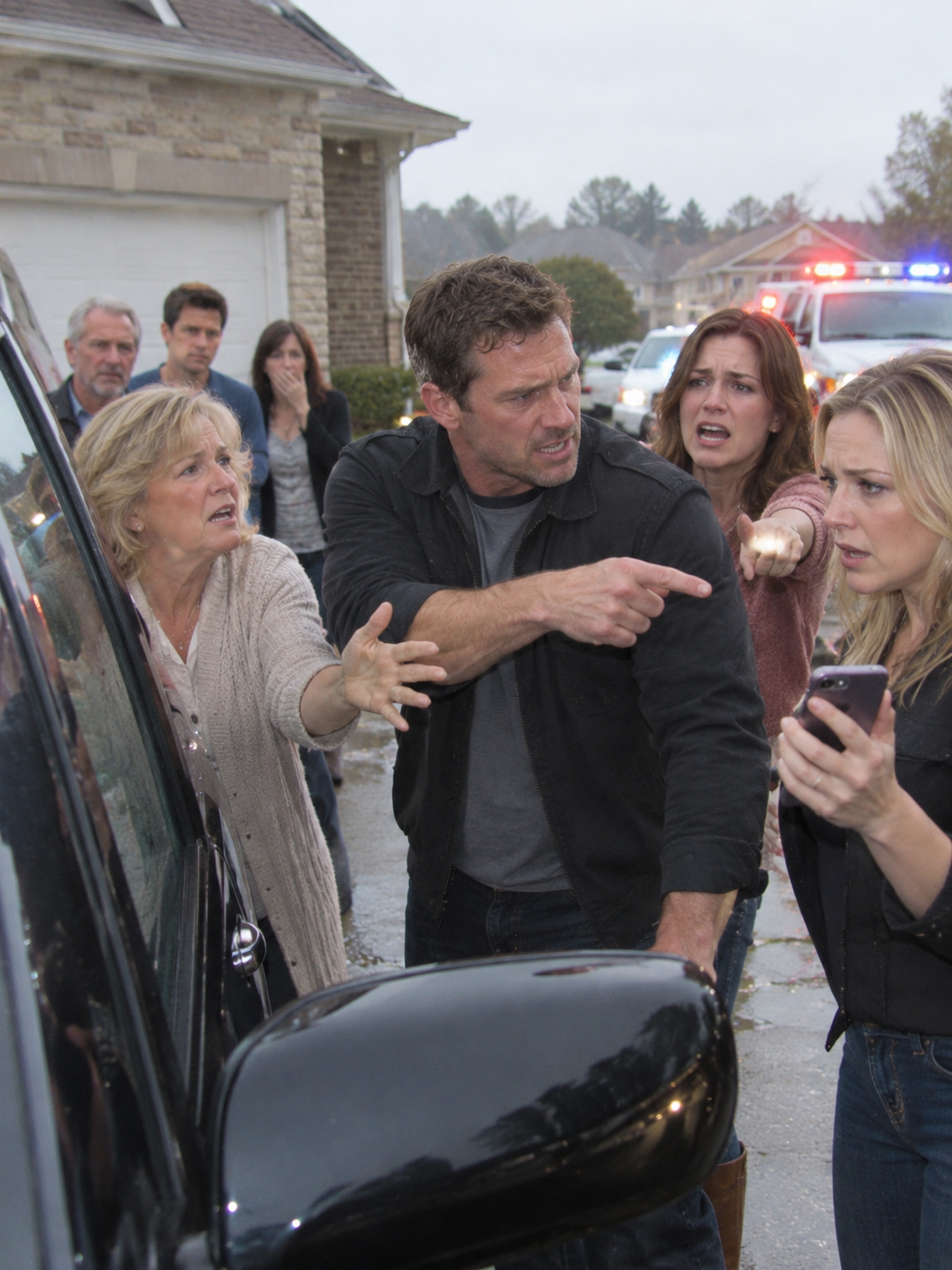
“You’re overreacting. It was an accident,” my ex’s sister said while my 6-year-old daughter cried from severe burns
“You’re overreacting. It was an accident,” my ex’s sister said while my 6-year-old daughter cried from severe burns. My ex,...

THE MAFIA BOSS ORDERED HIS FATHER’S NURSE INTO HIS CAR AFTER SHE WHISPERED AN OLD SICILIAN PRAYER, BUT SHE REFUSED TO BECOME ANOTHER SECRET HE COULD CONTROL – Life Story
THE LAST PRAYER Giovanni Santoro died at in the morning, and his son told the men at the door that...