The Untamed: 20 Native American Legends Who Defied Empires
They were not just warriors; they were the living embodiment of resistance, wisdom, and an unyielding spirit.
From the rolling plains of Lakota territory to the rugged mountains of Apache land, their names echoed through history—Crazy Horse, Tecumseh, Quanah Parker.
These were the leaders who stood against the tide of expansion, who fought not for glory but for the sacred land that held the bones of their ancestors.
Their stories, often buried beneath the dust of conquest, are now brought back to life with vivid clarity, thanks to advanced restoration and AI technology.
But this is not just a tale of battles lost and won; it is a testament to the enduring power of the human spirit.
As we delve into the lives of these twenty extraordinary figures, you will witness the fierce bravery of Buffalo Calf Road Woman, the only woman to strike a fatal blow against Custer at Little Bighorn.
You will feel the strategic brilliance of Red Cloud, the only Native leader to force the US government to sign a treaty and withdraw.
And you will hear the powerful oratory of Tecumseh, whose dream of unity among tribes still resonates today.
Their faces, once faded into the past, now emerge from the shadows, lifelike and compelling, inviting you to meet them eye to eye.
But their stories are not merely relics of a bygone era.
They are lessons in courage, in the fight for justice, and in the preservation of culture.
From the brilliant legal mind of Standing Bear, who declared “I am a man,” to the spiritual vision of Wovoka, whose Ghost Dance inspired hope across the West, each of these legends offers a glimpse into a world where honor and freedom were worth everything.
So sit back, relax, and prepare to journey through time.
These are the faces of Native American legends, brought back to life.
And as you watch, ask yourself: who among them would you want to meet?
Their stories are about to unfold, and you won’t want to miss a single moment.
Take, for instance, the story of Crazy Horse, the Lakota warrior who refused to be photographed, believing that capturing his image would steal a part of his spirit.
His defiance was not just against the camera but against the entire apparatus of conquest.
At the Battle of the Little Bighorn, his tactical genius turned the tide, leading to the stunning defeat of Custer’s Seventh Cavalry.
Yet, his legacy is not merely one of war; it is one of integrity.
Even in surrender, he remained unbowed, and his assassination while in custody only cemented his status as a martyr for freedom.
Then there is Buffalo Calf Road Woman, a Cheyenne warrior whose bravery at the Battle of the Rosebud saved her brother’s life, and whose blow felled Custer himself.
In a world where women were often relegated to the sidelines, she charged into the fray, her horse thundering across the plains, a rifle in one hand and a child in the other.
Her story challenges us to rethink the roles of women in resistance and reminds us that courage knows no gender.
And who can forget Red Cloud, the Oglala Lakota chief who achieved what no other Native leader could: forcing the US government to abandon its forts and sign a treaty.
Red Cloud’s War was a masterclass in guerrilla warfare and diplomacy.
He understood that true power lay not just in the strength of arms but in the wisdom to know when to fight and when to negotiate.
His later years were spent advocating for his people’s rights, a testament to his enduring commitment to their survival.
These are just a few of the twenty legends whose stories we will explore.
Each one offers a unique window into the Native American experience—a tapestry of triumph and tragedy, of resistance and resilience.
As we bring their faces back to life, we invite you to look into their eyes and see the unbroken spirit that still beats within the heart of every indigenous community today.
But the journey does not end with the famous warriors.
It extends to the prophets and peacemakers, the diplomats and dreamers.
Consider Tecumseh, the Shawnee leader who envisioned a united Native confederacy that could stand against the encroaching settlers.
His brilliant oratory and strategic vision made him a force to be reckoned with, and his death at the Battle of the Thames marked the end of an era.
Yet his dream of unity lives on, a beacon of hope for future generations.
Or Wovoka, the Paiute prophet whose Ghost Dance movement swept across the West, offering a vision of a world where the ancestors would return and the buffalo would roam free once more.
Though the movement ended in tragedy at Wounded Knee, Wovoka’s message of peace and renewal continues to inspire those who seek a better future.
And let us not forget Standing Bear, the Ponca chief whose simple declaration “I am a man” echoed through the halls of justice and helped establish the legal personhood of Native Americans.
His quiet dignity and unwavering resolve remind us that the fight for civil rights is not a recent phenomenon but a long and ongoing struggle.
As we delve deeper into these lives, we begin to understand that the story of Native American resistance is not just a chapter in history books; it is a living, breathing legacy that continues to shape the world today.
These leaders were not just warriors; they were visionaries who understood that the battle for survival was not only fought on the battlefield but also in the hearts and minds of their people.
Take the story of Lozen, the Apache prophet and warrior whose ability to sense the enemy’s approach was said to be supernatural.
She rode into battle beside Geronimo, her one arm cradling a child while the other held a rifle—a dual image of nurture and destruction that defied every expectation of womanhood.
When her people were forced to flee across the freezing Rio Grande, it was Lozen who led the women and children through the icy waters, her courage a shield against despair.
She was called the war goddess, but her power was rooted not in violence, but in an unbreakable love for her people.
Then there is Chief Joseph of the Nez Perce, whose strategic retreat across 1,170 miles of rugged terrain is still studied in military academies today.
With just a few hundred warriors, he outmaneuvered thousands of US soldiers, fighting a running battle through the mountains of Idaho, Wyoming, and Montana.
His surrender speech—”I will fight no more forever”—was not a confession of defeat but a declaration of humanity.
He had done everything possible to protect his people, and in the end, he chose their survival over his own pride.
And consider Quanah Parker, the last war chief of the Comanche, whose mother was a white captive named Cynthia Ann Parker.
He led the Red River War with ferocity, but when the buffalo were gone and resistance became impossible, he reinvented himself.
He became a cattleman, a judge, and a friend to presidents, all while preserving the spiritual traditions of his people.
He walked between two worlds without losing his soul, a lesson in adaptation that resonates in every indigenous community today.
These leaders were not saints, nor were they simple warriors.
They were complex human beings forced to make impossible choices.
Some fought to the death; others negotiated, adapted, and survived.
But all of them shared one thing: an unyielding commitment to their people’s future.
Now, as we bring these faces back to life through advanced restoration and AI, something remarkable happens.
We see the lines on their faces, the weariness in their eyes, the quiet strength in their jaws.
They are no longer distant historical figures but living, breathing individuals who stare back at us across the centuries.
Crazy Horse’s refusal to be photographed becomes a profound act of resistance—a statement that his spirit could not be captured by any machine.
Red Cloud’s piercing gaze seems to warn us that wisdom is not the same as surrender.
And Lozen’s calm expression speaks of a courage that transcends gender and time.
Each face tells a story.
The scars are not just marks of battle but of survival.
The wrinkles are not just signs of age but of wisdom earned through suffering.
And the eyes—those eyes—hold the memory of a world that was lost and a spirit that refuses to be forgotten.
As you watch these images flicker to life, ask yourself: what would they say to us now?
Would they demand justice for broken treaties and stolen lands?
Would they remind us that the fight for indigenous rights is far from over?
Or would they simply ask us to remember—to remember their names, their sacrifices, and the sacred land they loved more than life itself?
The answer, perhaps, lies in the faces themselves.
In the proud set of Crazy Horse’s jaw.
In the determined gleam of Buffalo Calf Road Woman’s eyes.
In the quiet dignity of Standing Bear.
They are not asking for pity.
They are asking for recognition.
They are asking us to see them not as relics of the past but as ancestors whose legacy lives on in every Native American community today.
And that is why this journey matters.
Not just because it brings history to life, but because it reminds us that the past is never truly past.
The battles they fought, the treaties they signed, the lands they lost—these are not just chapters in a history book.
They are the foundation upon which the present is built.
And as we look into their eyes, restored and vivid, we are reminded that the fight for justice, for dignity, and for the preservation of culture is a fight that continues to this day.
So as the final images fade and the music softens, we are left not with answers but with a quiet invitation.
The faces of Crazy Horse, Lozen, and Standing Bear linger in the mind, their stories no longer distant echoes but living flames.
They did not fight for monuments; they fought so their children could breathe the same air and walk the same earth.
Their courage, their wisdom, their sacrifices—these are the threads that weave the fabric of Native pride today.And now, the screen grows still.
The journey through time ends, but the conversation is just beginning.
Which of these legends stirred something in you?
Was it the fierce defiance of Crazy Horse, the quiet dignity of Standing Bear, or the prophetic vision of Wovoka?
Their stories are not meant to be merely watched—they are meant to be carried forward, shared, and remembered.So take a moment.
Look into their eyes one last time.
Then ask yourself: what will you do with the gift of their memory?
Will you let their courage inspire your own battles?
Will you honor their sacrifices by learning their names and teaching them to others?
The past is not a closed book; it is a living flame, and you hold the torch.Who among these twenty legends would you want to meet, and what would you ask them?
Share your thoughts in the comments below—let the conversation continue.
Recommended Stories
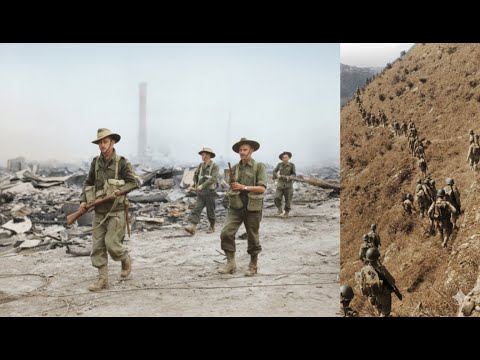
The Forgotten Hill: Australia’s Impossible Victory in Korea
In the mist-shrouded mountains of Korea, a battle unfolded that defied all military logic—and then was erased from memory. Outnumbered...
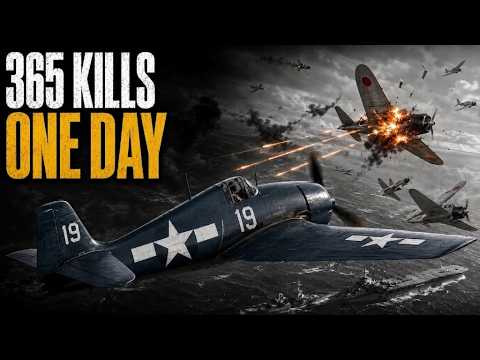
The Machine That Broke the Zero: How the Hellcat Rewrote the Rules of Air War
Somewhere over the central Pacific in the early months of 1942, an American Navy pilot watched a Japanese fighter close...
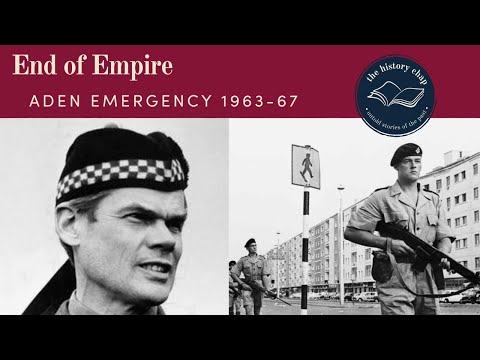
The Forgotten Battle of Crater: Britain’s Last Stand in Aden
In the sweltering heat of July 1967, the ancient city of Aden simmered with tension. The British Empire, once the...