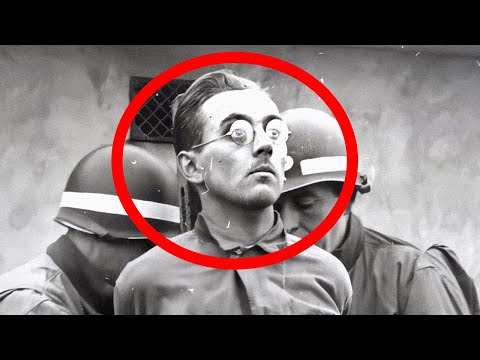
December 1944. The Ardennes Forest, Belgium. A massive German army of over a quarter-million men surged through snow-covered terrain in Hitler’s last desperate gamble. Their goal: split the Allied forces and seize the vital port of Antwerp. But amid the chaos of the surprise offensive, a seemingly ordinary American jeep navigated the rugged landscape, its tires kicking up mud and snow. Inside, three men in U.S. uniforms appeared to be just another drop in the vast ocean of soldiers. Yet, these were no ordinary GIs.
They were part of Operation Greif, a secret mission devised by Hitler’s most notorious commando leader, Otto Skorzeny. Their task was not just to spread confusion but to kidnap one of the most important Allied generals of the war. As the jeep approached a checkpoint near a small bridge in Ivela, Belgium, the men identified themselves as Charles W. Lawrence, Clarence Van der Wert, and George Sensenbach. Their hesitant English and failure to provide the day’s password raised immediate suspicion.
A meticulous search of their vehicle revealed their true intentions. Hidden under the seat were two British Sten submachine guns, a large roll of new $100 bills, and unmistakable German field grey beneath their American uniforms. Under intense interrogation, the most nervous of the three, Sensenbach, cracked. He was Bill Helm Schmidt, a corporal in the German Army. They were part of a mission that would send shockwaves through the Allied command.
The news hit like a bombshell. The enemy was not just at the gates; they were inside, wearing the same uniforms and speaking the same language. As the Battle of the Bulge raged, the Allies faced a new, insidious challenge: telling friend from foe and rooting out the impostors to secure a decisive victory in the war’s final chapters.
In the wake of Germany’s devastating defeat at Stalingrad, the relentless advance of the Red Army seemed unstoppable. By late 1944, with the Soviets rapidly approaching, Hitler faced a terrifying reality: Berlin would soon fall to the Soviets unless he could shift his exhausted forces from the Western Front to reinforce the East. Yet the situation in the West was no less dire. After their triumphant breakout from Normandy in June 1944, the Western Allies were closing in, standing cautiously at the threshold of German territory.
Hitler, however, saw a gap in the Allied armor: the bond between Britain and the United States. He believed this was a weak thread that, if pulled, might lead America to seek peace, leaving Germany free to focus entirely on the Soviets. Germany was gasping under the weight of dwindling resources, shrinking manpower, and failing equipment. Launching a surprise offensive would require every last ounce of strength from the exhausted German forces.
Hitler’s plan was inspired by the success of tactics used four years earlier: a blitzkrieg through the Ardennes led by his elite Sixth Panzer Army. The plan called for breaking through American lines, crossing the Meuse River, and seizing Antwerp to split the Allied front in two and inflict a catastrophe reminiscent of the Dunkirk evacuation in 1940. The stakes were enormous. Success could deliver a crushing blow to the Allies, shake their resolve, and force them to reconsider their war efforts. But failure threatened to drain what remained of the German army, leaving Germany vulnerable to an unstoppable Allied invasion.
Hitler was in no mood for defense. The Ardennes offensive hinged on the element of surprise. The Allies had to be deceived into believing the Germans were incapable of attack, a ruse achieved through the secret assembly of thousands of German soldiers. Under the cover of darkness, the Germans slipped through the forest, hidden in the embrace of local villages and towns. At dawn, hidden vehicles remained concealed in barns or camouflaged under foliage, maintaining the secrecy of their presence. From the sky, Allied planes saw only calm—a countryside untouched by the noise of secret war preparations.
For many German soldiers, the purpose of their secret movements remained a mystery. The operation was shrouded in utmost secrecy. Only regimental commanders were briefed hours before the impending battle. Knowledge was confined to the highest levels of German command—a group of senior officers who had warned Hitler against proceeding with his attack. Their pleas fell on deaf ears, as Hitler ignored their advice, stubbornly clinging to his strategy.
As the main attack force gathered in the shadows, a darker plot was being hatched, to be unleashed the moment the German offensive began. A special group of German agents, led by one of the Third Reich’s most famous commandos, launched Operation Greif. This unit of English-speaking German agents, disguised in American and British uniforms, infiltrated through American lines to sow chaos within the U.S. Army’s ranks. They aimed to sabotage, confuse, and destroy as much American defensive capability and communications as possible. But even more sinister was a rumor that later spread: that the German commandos were tasked with kidnapping General Dwight D. Eisenhower and his staff.
In October 1944, deep within Hitler’s Wolf’s Lair in East Prussia, SS Major Otto Skorzeny was summoned. Standing over six feet tall with a face scarred from his youthful duels, Skorzeny had become one of Hitler’s favorites, especially after his daring rescue of Mussolini in 1943 from a mountain prison thought to be impregnable. A year after the Mussolini raid, Skorzeny proved his strategic prowess again with the successful execution of Operation Panzerfaust, orchestrating the kidnapping of Admiral Miklós Horthy’s son, which ensured a pro-Nazi government remained in power in Hungary. This achievement cemented his reputation, leading Hitler to entrust him with a pivotal role in the upcoming Ardennes offensive.
Skorzeny’s new mission was to assemble 3,300 soldiers into Panzer Brigade 150. The brigade’s bold objective: seize as many bridges over the Meuse River as possible and destroy them before the Allies could secure them. To achieve this, they disguised themselves as American soldiers, using captured Allied tanks. Their tactics included manipulating road signs, giving false orders, removing minefield warnings, and cutting roads. This strategy, though ingenious, was a blatant violation of the Geneva Convention. Yet, for Hitler and Skorzeny, the potential rewards justified the risks. Thus, Operation Greif began with Skorzeny granted wide-ranging authority to ensure its success.
Time was critical. Skorzeny had roughly six weeks to prepare. On October 25, the German High Command issued a call for English-speaking soldiers. This request, meant to be secret, was intercepted by the Allies on November 30. However, they dismissed it as mere deception. The recruits, who thought they were preparing for a translation mission, underwent tests in English proficiency. Those who passed swore an oath of secrecy under penalty of death. These selected soldiers were isolated at Grafenwöhr Camp. Established in 1907 in Bavaria, the camp was transformed into a secret training ground where recruits learned to mimic American soldiers. One recruit, 21-year-old Fritz Christ, recalled: “We had to watch American films showing us how American soldiers saluted and even how they smoked cigarettes.” “We even received daily lessons in American slang.”
Despite their intensive training, the results were lackluster. Only 400 candidates could speak basic English, and just 10 were fluent. The rest were advised to play the role of the confused to avoid speaking. The best candidates were sent to American POW camps to refine their accents and behavior. But many American prisoners were wary and uncooperative. The elite group that emerged from this rigorous process was ready to infiltrate American ranks, spread chaos, and target strategic bridges.
The plan was ambitious. Skorzeny’s force, eventually numbering just over 2,500 men, would advance in jeeps and captured American tanks, seizing bridges disguised as the very enemy they sought to defeat. Their main objective was to capture one or more bridges over the Meuse River before they could be destroyed. As this complex operation began, the newly formed brigade faced a daunting task. They needed an arsenal of American military equipment: tanks, armored cars, self-propelled guns, jeeps, motorcycles, trucks, and uniforms for their training camp at Grafenwöhr in eastern Bavaria.
But reality fell short of expectations. Only two battered Sherman tanks arrived, along with a flood of Polish and Russian equipment from units unaware of the true purpose of the request. As if these obstacles weren’t enough, Skorzeny’s team lacked linguistic competence. Of his men, only 10 were fluent in English and understood American idioms, while most struggled with basic English.
Facing these adversities, Skorzeny had to adapt. He reduced Panzer Brigade 150 from three battalions to two, gathering the best English speakers into a special operations unit called “Einheit.” His ranks were bolstered by a company from SS Jagdverbände, two companies from SS Fallschirmjäger Battalion 600, and two Luftwaffe paratrooper battalions. Panzer regiments provided tank crews, and artillery units supplied gunners. Despite these reinforcements, the final count of 2,500 men at Grafenwöhr was 800 short of the initial target.
The equipment shortage was equally alarming. Only the commando unit could be fully equipped with American weapons. Only four American reconnaissance vehicles, 30 jeeps, and 15 trucks were provided, necessitating the use of German vehicles painted in American olive drab with Allied markings. Of the two available Sherman tanks, only one was operational, requiring Panther tanks to be converted into fake M10 tank destroyers using thin metal sheets for camouflage.
Above all, they had to solve the dilemma of being recognized by their own forces. As they raced through enemy lines in the Battle of the Bulge, the risk of engagement with German units was as great and deadly as with the Americans. The German brigade adopted a series of unique signals to be recognized by themselves and other specific German units as friendly forces: a small yellow triangle on the rear of their vehicles, tank guns pointed at nine o’clock, soldiers wearing pink or blue scarves or removing their helmets, or using blue or red flashlight flashes at night. These were the desperate measures for a desperate operation under the gray skies of Belgium.
Despite all efforts and deception, time was running out with astonishing speed, and the time invested in mastering English and American military hierarchy left little time to hone the combat and sabotage skills they would ultimately need to succeed.
At dawn on December 16, 1944, the silence of the Ardennes Forest was shattered by the thunderous roar of the German offensive. Unbeknownst to the Allies, Panzer Brigade 150 was merging into the advancing enemy ranks. At the Ivela bridge on December 18, American military police arrested a jeep carrying Manfred Pernass, Richard Gunther, and Gerrit Wilhelm Schmidt in disguise. A meticulous search of the vehicle revealed a chilling truth: hidden weapons, explosives, counterfeit money, and swastika badges. Under intense scrutiny, the men broke, revealing their identities as Nazi soldiers.
Schmidt, in particular, shared tales of his training and the broader mission to infiltrate and report on key Allied infrastructure. The captured soldiers, true to their training, continued their psychological warfare. Schmidt wove a complex story that fueled rumors that their mission was to kidnap General Eisenhower and other top commanders. The deception worked; Eisenhower was whisked into isolation, ridiculously limiting his ability to command. He spent Christmas away from his office, his frustration mounting into a reckless challenge against potential assassins. Finally abandoning his isolation in a fury, General Eisenhower immediately ordered “Wanted” posters for Skorzeny. The commander’s image was circulated throughout Europe, eventually leading to Skorzeny’s capture at the end of the war the following year.
But the sinister plan was not over yet. Even with the capture of their comrades, remaining elements of Panzer Brigade 150 continued their destructive campaign. The Allies, lulled into complacency, were struck blow after blow. Their supply lines were cut, communication facilities were destroyed, and traffic was rerouted, sowing seeds of chaos that spread rapidly through their ranks. One German unit even misled an entire regiment, adding to the disorganization.
Meanwhile, under the cover of darkness, Operation Stösser deployed another specialized unit, parachuted behind enemy lines to secure a vital crossroads near Malmedy. As the days passed, the Allies began to uncover more impostors in their ranks, igniting a firestorm of panic that sapped their morale. Soldiers who had been confident suddenly found themselves gripped by pervasive terror. Their comrades turned into potential saboteurs, each waiting for the perfect moment to strike a fatal blow from within.
Caught off guard by the secret Operation Greif, American intelligence, in a state of disarray, deployed a network of rigorous screening to stem the flood of disguised Germans infiltrating their ranks. It was a time of growing suspicion where any fellow soldier could be an enemy in disguise. Checkpoints sprang up across the country, where every soldier was questioned and tested for loyalty. To unmask their enemies, the Americans devised a brilliant set of security questions rooted deep in American culture. From baseball to obscure state capitals, it was a real test, a challenge that even the most trained Nazis might fail.
The atmosphere grew tense as American soldiers interrogated each other, and a deadly spirit of suspicion replaced comradeship. This climate of uncertainty spared no one, not even senior officers. Brigadier General Bruce Clarke was held at gunpoint after a mistake about a baseball fact, while a captain was detained for a week for wearing stolen German boots. Even General Omar Bradley found himself repeatedly questioned by eager guards.
But this heightened vigilance came at a steep price. The paranoia caused by Skorzeny led to numerous incidents of friendly fire and misidentification. From nervous military police shooting fellow soldiers to the tragic exchange of fire between the 6th Armored Division and the 35th Infantry Division. Even a simple typo on an ID card could lead to a harrowing interrogation. Despite its effectiveness against German infiltrators, this new line of defense put British and non-American soldiers at a disadvantage. Their ignorance of American pop culture suddenly became a potential death sentence.
Field Marshal Bernard Montgomery himself fell victim to this intense scrutiny. Upon learning of Eisenhower’s detention, Montgomery gathered a small security detail and set off for the heavily fortified location in Malmedy, hoping to boost morale. However, his journey was not without risk. A persistent rumor claimed that one of Skorzeny’s men had infiltrated Montgomery’s forces. When he stopped at an American checkpoint, the furious Field Marshal ordered his driver to proceed despite the implication. The terrified guards responded with a hail of bullets that punctured the tires and arrested the bewildered Allied officer for hours of grueling interrogation.
Despite the tightened security, 44 German soldiers, all wearing American uniforms, managed to penetrate American lines. Only eight were captured. But after December 19, the element of surprise was lost, and the Germans reverted to their official uniforms. The echoes of Operation Greif lingered long after, as any incident of German infiltration was attributed to Skorzeny’s men. German soldiers routinely salvaged and wore pieces of American uniforms, blurring the lines between friend and foe and planting the fear of the enemy deep in Allied hearts.
Skorzeny’s cunning had turned the Ardennes into a nightmare for American soldiers. Their minds were filled with his mysterious tricks. Sabotage, spreading terror, and the relentless German offensive turned every familiar thing into a minefield of doubt. Yet the operation was constrained by its own limits: the small number of commandos, the scarcity of American equipment, and the rudimentary English skills of the agents. All these factors undermined Operation Greif’s potential. Despite its initial success in sowing discord, it was merely a drop in the ocean of the Battle of the Bulge.
The sabotage, occasional friendly fire, and resulting chaos hampered Allied forces but did not paralyze them. The Allied war machine weathered the storm. Its step faltered but did not stop. The massive gap the Wehrmacht momentarily tore in the Western Front maps and the audacity of the German commandos could not reverse the tide of war. The German forces, exhausted and starving across a vast battlefield, were nearing the breaking point. Their supply lines faded, their ranks depleted, and their ability to wage war dwindled day by day.
The failure to capture Bastogne in Belgium, even after a desperate siege, was the final nail in the coffin of the German offensive. With the dawn of 1945, the fury of Allied aircraft tore through the stretched German army. German forces, trapped and starving, were bound by Hitler’s stubborn decree: no retreat. By January 11, in the isolation and despair outside Bastogne, the trapped men began to disintegrate and collapse.
The Battle of the Bulge ended just as it began. By the end of January, the threatening German bulge had faded to nothing. The battle line snapped back like a taut wire to its pre-offensive positions. The Wehrmacht was left gasping, an exhausted force incapable of launching another offensive of that magnitude. Amid the turmoil, the Americans held their ground, repelling not only the largest German attack but also Skorzeny’s cunning schemes. The bridges remained intact, communication lines unbroken, and the German saboteurs in American uniforms were caught and held accountable for their actions. For violating the Geneva Convention, these German soldiers faced firing squads, and their deceptive maneuver ended.
As the ghosts of the Battle of the Bulge receded, the once-mighty Panzer Brigade 150 was withdrawn from the Ardennes offensive, leaving only a faint trace of its initial strength. It was merged into the I SS Panzer Corps as a conventional unit. At the Nuremberg Trials after the war, Skorzeny showed no remorse for violating the rules of civilized warfare. His men, accused of attacking American POWs while wearing their army’s uniform, branded him indelibly as a war criminal. Yet Skorzeny’s fate took an unexpected turn during the war crimes trials in 1947. Despite the charges against him, he was controversially acquitted due to insufficient evidence. His lawyers argued that British commandos used similar tactics by wearing enemy uniforms. The surprise testimony of a Royal Air Force officer, Wing Commander Forest Yeo-Thomas, known to the Germans as the “White Rabbit,” played a pivotal role in Skorzeny’s acquittal. Yeo-Thomas recounted how he escaped German captivity by disguising himself and several fellow prisoners in enemy uniforms, confirming that this was no different from Skorzeny’s tactics.
After his acquittal, Skorzeny escaped with the help of former SS officers from an internment camp in 1948. He lived thereafter under aliases in various countries. His later years were marked by involvement in far-right politics and clandestine activities, including helping other Nazi war criminals escape. Finally, he found refuge in Spain, where he lived out his days until his death in 1975.
His brilliant tactical strike, Operation Greif, sent shockwaves through the Allied forces and stirred a hornet’s nest. Through sabotage and spreading terror, Skorzeny and his men succeeded in turning brother against brother, planting seeds of doubt in the Allied ranks. And although Operation Greif momentarily distracted its targets, it was ultimately swallowed in the relentless Allied advance. Despite all of Skorzeny’s intricate plans and deception, Operation Greif could not save the Battle of the Bulge from its inevitable end. The German offensive, driven by desperation and dwindling resources, collapsed under the weight of the fierce Allied counterattack. The 150th Panzer Brigade, which had inspired so much fear, vanished.
The captured infiltrators faced swift justice. Pernass, Schmidt, and Gunther were executed by firing squad on December 23, 1944, their deception ending in a hail of bullets. Skorzeny’s grand scheme had failed to seize a single bridge.
In the decades after, the ghosts of Operation Greif lingered. Eisenhower’s isolation became a cautionary tale, and the security questions—baseball trivia, state capitals—entered military lore. Yet the operation’s true legacy was psychological: it proved that war could be fought in the mind, where trust was the first casualty.
Skorzeny died in Madrid, unrepentant. His men faded into history, but their audacity left a mark. The Battle of the Bulge was won by the Allies, but the fear sown by a few hundred impostors echoed far beyond the snowy forests of Ardennes.
What if Skorzeny had succeeded in kidnapping Eisenhower? Would the war have taken a different turn?






