In September 1999, the island of East Timor was burning. Militias had spent three weeks slaughtering civilians, torching villages, and driving a quarter of a million people into the mountains. They believed no one was coming. Then Australia sent in the SASR.
Within weeks, militia commanders issued a single, chilling instruction to every fighter: “Do not look them in the eye.” What those soldiers did in the hills to earn that order is a story of precision, fear, and a reputation that traveled faster than any bullet.
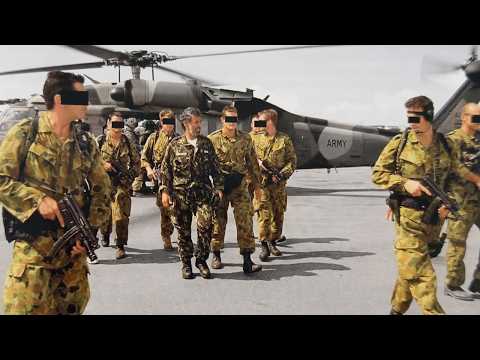
The violence began after 78.5% of East Timorese voted for independence on August 30. Pro-Indonesian militias, backed by elements of the Indonesian military (TNI), unleashed a campaign of destruction. Over 1,400 civilians were killed, and 70% of the country’s infrastructure was wrecked. The world watched, but for weeks, no one intervened.
On September 15, the UN authorized INTERFET, led by Australia. Major General Peter Cosgrove commanded a multinational force, but the tip of the spear was the Special Air Service Regiment (SASR). Their mission: push into the border regions and mountain strongholds before the militias could organize.
The militias knew Australian soldiers were coming. They did not yet understand what kind. They would learn quickly.
SASR patrols were small—four to six men—moving at night through terrain locals considered impassable. They carried full combat loads, night vision, and encrypted communications. But it wasn’t just their equipment that unsettled the militias. It was their bearing.
They moved with the calm deliberateness of men who had trained for this their entire careers. They didn’t cluster for reassurance. They didn’t appear uncertain. To militia fighters whose power depended on intimidating the frightened, this was disorienting.
Then came the confrontations. Militia groups that tried to ambush SASR patrols did not achieve their objectives. The regiment’s training, reaction speed, and support meant that engaging them carried a cost that attacking unarmed civilians never did. Word spread through the militia network: these Australians were different.
It was during this period that the instruction began circulating. “Avoid eye contact. Do not engage. Move away.” It wasn’t a written order—it was a piece of tactical understanding passed from commander to fighter. In that environment, holding eye contact with an SASR operator communicated hostility. And hostility had a price.
The SASR also worked alongside Falintil, the East Timorese resistance, whose local knowledge proved invaluable. Together, they extended Australian reach deep into the border regions. By mid-October, the security situation had shifted decisively. Militia formations were gone or in hiding. The population began coming down from the mountains.
Eurico Guterres, the notorious militia leader, fled to West Timor. Others followed. The armed groups that had burned towns and killed civilians six weeks earlier were dispersed, leaderless, and without TNI support. The organized campaign of violence inside East Timor had been broken.
But the border remained a concern. Militia elements sheltered in West Timor and staged occasional cross-border incidents. The mission was not over—and for the SASR, the lessons of East Timor were just beginning.
The men who wore the black kit did not talk about what they had done. They returned to Australia, to barracks in Swanbourne and to families who could not ask certain questions, and they carried the villages and the churches and the families in the hills with them. The regiment does not produce public accounts, and the operators who pushed into the border districts in late September 1999 are not named in any official history of the operation. What they achieved lives in the operational record and in the memories of the people who were there on both sides of it.
For the East Timorese, the accounting was never abstract. They had counted their dead while the world debated, and they had waited in the mountains for the sound of gunfire to stop. When INTERFET’s mission formally ended on February 28, 2000, and authority passed to UNTAET, the territory had been made secure, the displaced were returning, and the conditions for rebuilding had been created. No Australian soldier was killed in action during INTERFET. The cost in East Timorese lives in the weeks before the Australians arrived was measured in something else entirely.
For the SASR, East Timor was significant beyond its immediate outcome. The regiment had proven, in a real operational environment, that it could function in the complex, politically sensitive, low-footprint role it had been designed for. Dispersed patrols, local partners, difficult terrain, an enemy that relied on intimidating people with no means to resist—the lessons fed directly into what came next.
Two years later, in October 2001, the SASR deployed to Afghanistan as part of Operation Enduring Freedom. They were among the first coalition forces on the ground, working alongside Northern Alliance fighters against Taliban and Al-Qaeda positions. The parallels with East Timor were not coincidental. The reputation they carried into those mountains had been built, in part, on what they had done in the hills of a small island half a world away.
The broader impact on Australian defense thinking was substantial. East Timor demonstrated the value of special operations capability in a way that years of peacetime training could not. Investment in the SASR and in Australian special operations generally increased in the years that followed. The operation also reinforced Australia’s credibility as a security actor in the Southwest Pacific—a capacity to project force rapidly and command a complex multinational mission effectively.
On May 20, 2002, East Timor formally became the Democratic Republic of Timor-Leste, the first new sovereign state of the 21st century. Xanana Gusmão, who had led the resistance from prison and from the mountains, became its first president. The celebrations in Dili drew international attention, and for many Australians who had served, a sense of completion.
The country still faced enormous challenges. Infrastructure had to be rebuilt from almost nothing. Institutions had to be created. Poverty was severe. Australian troops returned in 2006 during a period of internal instability and remained for years in a support role. The relationship endured, shaped by what had happened in 1999 and by everything that followed.
Veterans of INTERFET have returned to the country in the years since—some as private citizens, some in official capacities—and found a population that has not forgotten who came when it mattered. There are no SASR memorials in Dili. That is consistent with how the regiment operates and how it understands itself.
The instruction passed among the militias is, in its way, a more honest measure of the SASR’s impact than any formal commendation. It was not issued by people who respected the Australians. It was issued by men who had spent weeks killing unarmed civilians and who recognized, when they encountered something different, that the arithmetic had changed. They were not afraid of authority. They were not afraid of uniforms. They were afraid of a specific capability applied with precision by men who had trained their whole careers for exactly that environment.
What the SASR represented in East Timor was not the capacity for violence alone. It was credibility. The kind that does not need to announce itself. The kind that travels ahead of the patrol through the militia network and arrives in the form of a whispered instruction.
Avoid eye contact. Move away.
But the story of what the SASR did in East Timor does not end with the militias’ retreat. There is a quieter, harder chapter that rarely makes the documentaries—the weeks spent in villages where the killing had already happened, where the Australians arrived not to fight but to bear witness.
Patrols moving through the districts of Liquiçá and Ermera found burned churches with bullet holes in the walls and bodies in the courtyards. They found mass graves that locals pointed to without speaking. They documented everything—coordinates, photographs, testimony—because someone had to. That documentation would later feed the serious crimes investigations that followed, the slow machinery of international justice that would eventually reach some of the men who had ordered the killing.
The operators were not trained for that part. They were trained to find armed men and neutralize threats, not to walk through the aftermath of a massacre and keep their composure while a village elder described what had happened to his family. But they did it anyway, patrol after patrol, and they did not look away.
There was another dimension to the SASR’s presence that the militias never fully understood. The Australians were not just physically present in the hills—they were everywhere at once, or so it seemed. A patrol would be sighted near the border in the morning and another would appear forty kilometers away by nightfall. Militia commanders began to believe the Australians had more men than they actually did, that the hills were saturated with them.
That was the illusion the regiment cultivated deliberately. Small patrols, moving fast, appearing in places no one expected, creating the impression of a force far larger than the reality. It was psychological warfare conducted with boots and silence rather than leaflets and loudspeakers. And it worked. Militia fighters who believed they were surrounded made mistakes. They abandoned positions they could have held. They fled when they might have fought—or, more accurately, when they might have tried to fight and failed.
The Falintil fighters watched all of this with something between admiration and grim recognition. They had spent years in these same hills, surviving on almost nothing, fighting an enemy with overwhelming firepower. They knew what it cost to hold ground against a stronger force. What they saw in the Australians was a different kind of strength—one that did not need to hold ground at all, only to make the enemy believe it could not be held.
By the time the main INTERFET body pushed into the outlying districts, the militias’ command structure had begun to fracture. Leaders who had coordinated attacks for months now argued about whether to stand or flee. Some crossed into West Timor and never returned. Others surrendered their weapons to INTERFET soldiers and disappeared into the population, hoping their faces would be forgotten.
Most of them would not be forgotten. The documentation the SASR patrols had gathered, the testimony they had recorded, the graves they had marked—all of it would matter in the years to come. Justice in East Timor was slow and incomplete, but it was not nothing. And the men who had walked through those villages in the weeks after the killing, who had written down what they saw so that it could not be denied, had played their part in that.
The SASR’s legacy in East Timor is not a monument or a parade. It is a set of classified files, a handful of memoirs, and the memory of a population that remembers who came when the world was still debating. It is also, in ways that are harder to measure, a template—for how a small, precise force can change the calculus of an entire conflict without firing a shot.
That template would be tested again, sooner than anyone expected, in mountains far from the Timor Sea.
By late October, the hills had gone quiet. The militias had scattered, the TNI had pulled back, and the population was coming down from the mountains in numbers that grew by the day. The campaign of violence inside East Timor had been broken—not by overwhelming force, but by a small, precise presence that made the enemy believe resistance was pointless.
The men who wore the black kit did not stay to celebrate. They moved on, patrol by patrol, into the next district, the next ridge, the next village where the killing had already happened. They documented what they found, marked what they could, and kept moving. That was the work.
When INTERFET’s mission ended on February 28, 2000, East Timor was secure enough to begin the long, painful work of rebuilding. The SASR’s role was never publicly celebrated. There are no monuments in Dili, no parades in Swanbourne. Just a whispered instruction that traveled through the militia network faster than any official order: do not look them in the eye.
That, in the end, was the measure of what they had done.
But here is the question that lingers: if a small force can change the course of a conflict without firing a shot, why does the world so often wait until the burning has already begun? What do you think—did Australia act fast enough, or was the intervention already too late for the thousands who died before the first boot touched the ground?






