He was known to the world as Jihadi John—a name that would become synonymous with unspeakable brutality. But before the black robes and the chilling videos, he was simply Muhammad Emwazi, a shy London schoolboy who loved football and struggled to fit in. How did a quiet child from West London become the face of ISIS’s reign of terror? The answer is a story of radicalization, betrayal, and the darkest corners of the human soul.
Born in Kuwait in 1988, Emwazi moved to the UK at age six. Classmates remembered him as a popular, sporty kid who played striker at lunchtime and talked openly about his faith. But beneath the surface, something was brewing—a loneliness that would later be exploited by extremists.
By his teens, Emwazi’s life had taken a troubling turn. Bullying, isolation, and a desperate need to belong led him to a gang, then to drugs and violence. Teachers described him as “a lovely, lovely boy,” but his anger was simmering. “He attended anger management sessions,” one staff member recalled—a detail that now feels like a grim foreshadowing.
After graduating from the University of Westminster, Emwazi fell under the spell of radical preacher Hani al-Sibai, a man who had praised the 9/11 attacks. Under his influence, Emwazi’s path veered toward extremism. He traveled to Tanzania, attempted to join al-Shabaab, and was eventually monitored by MI5. But the surveillance only fueled his paranoia. “Sometimes I feel like I’m a dead man walking,” he wrote in an email, contemplating suicide.
In 2012, Emwazi slipped out of the UK and into Syria, where he joined ISIS. He told his family he was doing aid work. Instead, he became part of a British terrorist cell nicknamed “The Beatles” by their hostages—a group so brutal that even ISIS commanders were disgusted. “Whenever the Beatles showed up, there was some kind of physical beating or torture,” a survivor recounted. Waterboarding, mock crucifixions, electric shocks—the cruelty was relentless.
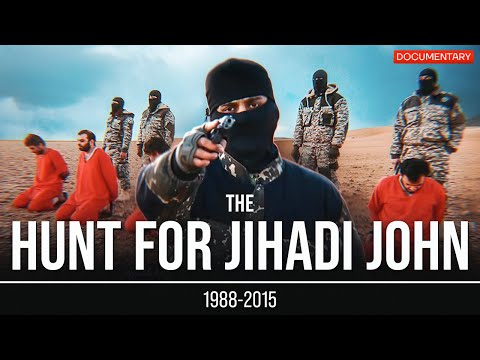
Then came the videos. In August 2014, the world watched in horror as a masked man in black stood over American journalist James Foley, brandishing a knife. “A message to America,” he declared, before carrying out the beheading. The man was Jihadi John—Muhammad Emwazi. More videos followed: Steven Sotloff, David Haines, Alan Henning, Peter Kassig. Each execution was filmed, distributed, and designed to terrify.
The hunt for Jihadi John became a global priority. Intelligence agencies pored over voice recordings, analyzed the desert backgrounds, and gathered human intelligence on the ground. “His British accent was the obvious starting point,” one analyst noted. But Emwazi was already known to MI5—they had tracked him for years. Yet somehow, he had slipped through their fingers.
As the net closed in, Emwazi’s family disowned him. His father called him “a dog, an animal, a terrorist.” But the damage was done. The shy boy from Queens Park had become the most wanted man in the world—and his reckoning was coming.
The final months of Emwazi’s life were spent in the shadows of Raqqa, the de facto capital of the so-called caliphate. But those shadows were shrinking. Kurdish and Arab forces, backed by coalition airstrikes, were tightening the noose around the city. ISIS was losing ground, and its leaders were fleeing or dying. Emwazi, once the face of the group’s propaganda, had become a liability—a high-value target whose presence drew fire from the skies.
Intelligence agencies were closing in. The CIA and MI5 had been piecing together fragments of information for months: intercepted communications, drone footage, and tips from defectors. “We knew where he was, but we needed the right moment,” a senior US official later admitted. That moment came on November 12, 2015. Two American drones and one British Reaper were circling above Raqqa, waiting. Emwazi had been tracked to a compound near the city center. When he emerged and walked toward a vehicle, the order was given.
The strike was swift and devastating. “We hit him with a Hellfire missile. He was evaporated,” a Pentagon spokesman said, with a bluntness that underscored the finality of the act. The explosion killed Emwazi and three other ISIS fighters instantly. There was no trial, no last words—just a flash of fire and then silence. The man who had beheaded five Western hostages in cold blood was gone.
But the story didn’t end with his death. Questions lingered. How had a known extremist, under MI5 surveillance, managed to leave the UK and join ISIS? Why had the intelligence services failed to stop him before he reached Syria? And what did his transformation say about the society that had raised him? “He was a dead man walking long before we killed him,” one former MI5 officer reflected. “The radicalization happened here, on our streets, in our schools. That’s the uncomfortable truth.”
For the families of the victims, the drone strike brought a measure of closure but not peace. Diane Foley, James Foley’s mother, said she felt no joy at Emwazi’s death. “I don’t think it solves anything,” she told reporters. “It’s just more violence. What we need is to understand why this happened—and to prevent it from happening again.” Her words echoed the sentiments of many who had lost loved ones to ISIS’s campaign of terror.
The hunt for Jihadi John had ended, but the broader war against extremism continued. The Beatles cell was dismantled—two members captured, one killed, one imprisoned. Yet the ideology that had radicalized Emwazi remained alive, spreading through social media and encrypted chat rooms, finding new recruits in the same neighborhoods where he had once played football. The shy boy from Queens Park had become a cautionary tale, a symbol of how quickly a life could be twisted into something monstrous.
In the years since his death, Emwazi’s story has been dissected by psychologists, intelligence analysts, and historians. Some see him as a product of alienation and identity crisis. Others view him as a cold-blooded killer who chose his path. “He wasn’t a victim,” insisted one survivor of the Beatles’ captivity. “He enjoyed what he did. I saw it in his eyes.” That duality—the shy schoolboy and the sadistic executioner—remains the most chilling aspect of his legacy.
Today, the site of his death is just another pile of rubble in a city still recovering from years of war. But the name Jihadi John still sends a shiver down the spine of those who remember the videos, the black robes, the knife. And for the families of James Foley, Steven Sotloff, David Haines, Alan Henning, and Peter Kassig, the wound remains open—a reminder that the war on terror is not just fought on battlefields, but in the hearts and minds of those who would turn a quiet boy into a monster.
Yet the missile that killed Emwazi did not kill the questions. In Whitehall, the aftermath of the strike triggered a quiet but bitter reckoning between Britain’s security services and its intelligence oversight bodies. Documents later declassified revealed that MI5 had opened no fewer than six separate investigations into Emwazi before he left the country—and closed each one for lack of evidence. “We had him on our radar for years,” one former counterterrorism official conceded. “But radar isn’t the same as handcuffs.”
The control order that had restricted his movements, his communications, his associations—it had been allowed to lapse. His name change by deed poll had slipped through bureaucratic cracks. And his departure from Heathrow, aboard a flight to Turkey, had raised no alarm. By the time MI5 realized he was gone, he was already in Raqqa.
Parliament demanded answers. In 2016, the Intelligence and Security Committee published a damning report concluding that the agencies had “underestimated the speed” of Emwazi’s radicalization and had failed to share information effectively between departments. “There were missed opportunities,” the report stated, with the kind of bloodless understatement that infuriated the victims’ families. “Had those opportunities been taken, it is possible—though not certain—that his trajectory could have been interrupted.”
For Diane Foley, the report was cold comfort. She had spent two years fighting for her son’s life, appealing to governments, negotiating through intermediaries, begging for a ransom that the American and British governments refused to pay. Now she sat before a congressional committee and delivered testimony that left the room in silence. “We were told that paying ransom would encourage more kidnappings,” she said, her voice steady. “But what message did we send by doing nothing? That some lives are worth less than others?”
Her question hung in the air, unanswered. The policy of no-concessions—a cornerstone of Western counterterrorism strategy—had saved countless hypothetical hostages while condemning real ones to death. James Foley, Steven Sotloff, Peter Kassig—all American. David Haines, Alan Henning—both British. Their governments had stood firm, and they had paid the price.
Meanwhile, the surviving members of the Beatles cell were being hunted down one by one. El Shafee Elsheikh and Alexanda Kotey had been captured by Kurdish forces in 2018, and their extradition to the United States became a legal and diplomatic battleground. Britain initially refused to cooperate, unwilling to send its citizens to a jurisdiction where the death penalty remained possible. “They are not British in any meaningful sense,” one MP declared. “They forfeited that privilege the moment they took up arms against us.”
But the families of the victims cared little for the legal niceties. They wanted justice—or at least accountability. When Elsheikh and Kotey finally appeared in a Virginia courtroom in 2021, Diane Foley was in the gallery. She watched as the men who had tortured her son, who had mocked him, who had sold him to Emwazi for execution, pleaded guilty to eight counts of hostage-taking and murder. “I felt nothing,” she later said. “No relief. No closure. Just an emptiness where James used to be.”
The trial revealed details that had never been made public. The Beatles had operated with a chilling efficiency, treating their hostages as commodities to be traded, ransomed, or killed. They had kept a spreadsheet of names and nationalities, calculating which prisoners might fetch the highest price. They had forced their captives to record farewell messages to their families, then used those messages as leverage. “They were businessmen of death,” the prosecutor said. “And business was good.”
But the trial also exposed the uncomfortable truth that Emwazi had not acted alone—and that the network that had produced him was still alive. Radical preachers still operated in London, their sermons circulating online. Recruitment networks still functioned, using encrypted apps and social media to lure vulnerable young men. The ideology that had turned a shy schoolboy into a killer had not been defeated; it had simply gone underground.
In 2019, the caliphate collapsed. Baghdadi was dead, killed in a US raid in Idlib. ISIS’s territory had shrunk to nothing. But the group’s reach had not. Cells sprang up in Afghanistan, in the Sahel, in Southeast Asia. Lone wolves carried out attacks in Europe and America, inspired by the propaganda that Emwazi and his kind had helped produce. “The war on terror is not a war you win,” one intelligence analyst observed. “It’s a war you manage.”
And manage it they did—with drones, with surveillance, with legislation that expanded the state’s powers while eroding civil liberties. The UK’s Investigatory Powers Act, passed in 2016, granted security services unprecedented access to communications data. Critics called it a surveillance state. Supporters called it necessary. Both were right.
For the residents of Queens Park, the neighborhood where Emwazi had grown up, the legacy was more personal. The local mosque had been forced to defend itself against accusations of extremism, even though its imams had publicly condemned ISIS. Young Muslim men spoke of being watched, profiled, suspected. “Every time something happens, we get the same questions,” one community leader said. “Are you with us or against us? It’s exhausting.”
The football pitch where Little Mo had played striker was still there, its goalposts rusting in the London drizzle. Kids still played there every lunchtime, dreaming of glory. None of them knew the name Muhammad Emwazi. To them, Jihadi John was just a ghost from a war they were too young to remember.
But ghosts have a way of returning. In 2022, a young man from the same Brent streets was arrested before boarding a flight to Turkey—his phone filled with the same sermons, the same videos. “It’s like nothing changed,” a local imam admitted. “The names change. The faces change. The hatred stays.”
And so the story of Jihadi John ends not with a missile, but with a question mark. His death closed a chapter, not the book. The shy boy from Queens Park is gone—but somewhere, another quiet child is being groomed in the shadows, taught to hate, taught to kill.
Will we ever learn to reach them before the extremists do—or will we keep waiting for the next masked man to appear on our screens?






