They arrived with no tanks, no artillery, no aircraft of their own, and no supply convoy trailing behind them. Just 150 men in unarmored desert vehicles, driving into a country the size of Texas—a land that had already helped break the Soviet Union. They moved in small teams, deep beyond any hope of rapid rescue, and stayed for days on end. When the first phase of that war ended, the United States government put its judgment of these men in an official document. The Australians who served in that force received a Presidential Unit Citation—one of the highest honors America can bestow on a combat unit, and one rarely given to foreign troops. It was not a courtesy between allies. It was a verdict on results.
How could a force so small, carrying so little, earn that? The answer takes us into the most consequential period in the history of Australian special forces. Between 2001 and 2013, a regiment whose entire role was smaller than a single American brigade went to war in one of the harshest places on earth. And it did so in a way that defied everything the world’s largest army believed about how wars should be fought.
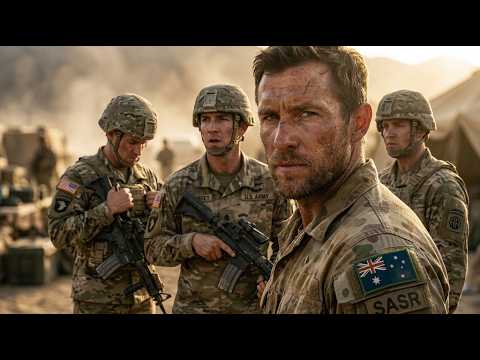
The Americans built bases the size of small towns. They flew in fuel, hot meals, air conditioners, fast food. They moved in armored convoys designed to withstand roadside bombs. By 2010, they had roughly 100,000 troops in the country. The Australians took a different path. They carried less, moved light, stayed in the field longer, and asked for almost nothing. By the time the Americans realized what they were seeing, Australian patrols were handling some of the hardest missions of the war. That wasn’t politeness. It was trust—and in a war like this, trust is built patrol by patrol.
To understand how men who arrived with almost nothing ended up redefining what their allies expected from a small unit, you have to understand what Afghanistan was like in the fall of 2001, and who these men were before their boots touched its soil.
On the morning of September 11, 2001, Australian Prime Minister John Howard was in Washington—and he was still there when the towers fell. Three days later, his government did something no Australian government had done in 50 years since the ANZUS treaty was signed. Australia declared that an attack on the United States was an attack on Australia. Within weeks, the first elements of what would become Operation Slipper were on their way to the Middle East.
The war that erupted on October 7 was nothing like the wars American planners had trained for. There were no armored assaults, no beach landings. There were CIA officers carrying bags of cash, U.S. special forces teams riding horses alongside Northern Alliance commanders, and bombers circling overhead. It worked with a speed that stunned almost everyone who watched. Kabul fell in mid-November. Kandahar, the Taliban’s spiritual heartland, fell in early December. By the end of 2001, the regime was gone—and the problem that would define the next twenty years was beginning to take shape. It was not a military problem.
Afghanistan stretches across nearly 650,000 square kilometers of mountains, deserts, and river valleys, with peaks in the Hindu Kush rising over 7,000 meters. The southern desert exceeds 50 degrees Celsius in summer, and the highland winter kills those who don’t prepare for it. More than 14,000 Soviet soldiers died there in the 1980s without securing it. Al-Qaeda’s leadership had slipped toward the Pakistani border. Taliban fighters were melting into villages across the south. The coalition needed eyes on the ground that no satellite could provide. It needed small teams that could go where large armies couldn’t reach, and stay long enough to understand what was actually happening.
That was the mission the Australians were built for. The men Australia sent belonged to the Special Air Service Regiment—the SASR—and the regiment carried a history far older than the war it entered. Founded in July 1957 as a single squadron in Swanbourne on the outskirts of Perth, it was modeled on the British SAS, whose idea was born in the deserts of North Africa in 1941: small teams moving by surprise and speed could achieve results far beyond their size. The Australians took that idea and applied it across every kind of terrain the region offered.
They fought in the jungles of Borneo in the mid-1960s, patrolling across the border into Indonesian territory. They served in Vietnam from 1966 to 1971, moving in five-man patrols across Phuoc Tuy province, watching trails and enemy camps for days on end, bringing back intelligence that the task force at Nui Dat could not have gathered any other way. They were among the first troops on the ground in East Timor in 1999, reading the terrain and assessing the situation before peacekeepers arrived. Every generation of the regiment fought a different kind of war, and every generation learned the same lesson.
The vehicle was just a detail. The radio was just a detail. The rifle was just a detail. A patrol of four or five men who trust each other completely and can survive without help—that is the true heart of the regiment.
That lesson mattered in Afghanistan for a reason that had nothing to do with tradition. In a country that size with so few roads, the army that can put a team anywhere and leave it there is the army that can see. There is a straight line from those Vietnam patrols to the deserts of southern Afghanistan. It explains the Australian approach more than any piece of equipment.
In the jungles of Phuoc Tuy, five men could disappear into the vegetation for most of two weeks, choose a hide, watch a trail for hours without moving, and come back with information at the same pace they returned from a firefight. That craft entered the regiment’s training and stayed there. The men who taught the next generation learned their trade from the warriors of that war, and passed on the same habits—patience, concealment, self-reliance—to new soldiers who would apply them in a completely different landscape.
By 2001, the regiment had spent more than three decades refining a single idea: that a handful of trained men, left alone in enemy territory with a radio and a plan, can see and do more than a battalion that announces its arrival. The terrain was different, the enemy was different, but the craft remained the same.
None of this came easily, and few achieved it. Selection is designed to break men, and most who begin it never finish. It starts with a course lasting roughly three weeks that strips a candidate down and reveals what he truly is. Long marches with heavy packs through the heat of Western Australia, navigation alone and in a state of exhaustion. Physical tests designed to be barely survivable, and instructors watching not for who is strongest, but for who can still think clearly when everything hurts.
Survivors do not become operators immediately. They begin a reinforcement cycle lasting about a year, covering everything a four-man patrol might need when no one is coming to help. Advanced navigation, medicine, explosives, communications, languages, close-quarters fighting, vehicle skills, and the discipline of staying in one place for days without being detected. Only then does a man earn the sandy beret and the winged dagger, and the motto that accompanies them: “Who Dares Wins.”
By the time an Australian SAS soldier reaches Afghanistan, he has usually spent years in the army before selection and years inside the regiment after it. He was not a young man on his first tour. He was a professional at the peak of a system that had been refining itself for more than four decades.
So when those patrols went out beyond the wire with less than the Americans thought war required, they were not being reckless. They were being deliberate. That lightness was a choice made by men who understood exactly what they were giving up.
The first Australians arrived in Afghanistan in the final months of 2001 as part of Task Force K-Bar, the special operations command for the south. It was led by an American, Captain Robert Harward of the Navy SEALs, and named after the combat knife he carried. It was a strange, improvised formation. SEALs and U.S. Army Special Forces worked alongside elements from half a dozen other nations—Australians, New Zealanders, Canadians, Germans, Danes, Norwegians. The entire task force was assembled within weeks.
The Americans brought the aircraft, the satellites, the signals intelligence, the money. The Australians brought something the Americans valued just as much. They brought patrol vehicles and a way of living in the field that depended on no one else.
Their teams moved across the deserts and hills of the south in light vehicles for days at a time, then hid the vehicles and advanced on foot to build observation posts. They dug into the dirt. They lay in the cold in the same position for hours on end. They watched roads and compounds and cave entrances, counted people, recorded patterns, and sent it all back over the radio. It was not glamorous work. Most days there were no firefights—only cold, boredom, and the slow accumulation of information.
But information was what the war lacked, and every hour a patrol spent in its hide made the next airstrike, the next raid, the next decision more precise than it would otherwise have been. They went in carrying nothing but themselves and what they could carry, and the coalition gradually came to depend on what they watched.
The desert was an enemy in its own right. Winter nights in the south dropped below freezing, while summer days exceeded 50 degrees Celsius. The ground was a mix of gravel plains, dry riverbeds, and low hills almost devoid of landmarks, and navigation was a matter of discipline, not instinct. Fine dust worked its way into weapons, radios, and engines, and any patrol that neglected maintenance for a single day might find itself stranded far too far from help.
The team carried what it needed for days, and everything it didn’t carry, it learned to live without. That last habit sounds like a slogan, but it was actually a set of hard decisions made before every patrol about water, ammunition, batteries, and the weight each man could carry over long distances. Every extra kilogram was another reason to be slow, to make noise, to be tired at the moment when focus was needed most. So patrols left almost everything behind—and the things they did carry, they knew by heart.
Imagine a patrol on its fourth night in the field. Four men lie in a shallow scrape on the side of a low hill under a camouflage net that makes them part of the hillside. Below them is a compound the size of a tennis court, a track leading to it, and a dry riverbed stretching away. Two of the men sleep in turns while the other two watch, and watching is not exciting. It is discipline—counting the people who come and go, noting the vehicles that arrive after dark in a notebook the size of a wallet.
No one speaks above a whisper. No one uses a light. When something worth reporting appears, it goes out over the radio in a burst of encrypted data that lasts a few seconds, and then the patrol becomes part of the ground again. This is not a scene from any one mission. It is a composite of what reconnaissance work looks like, and it repeated itself many times for hundreds of men over more than a decade. Almost no one ever saw any of it except the men who lay there. That is the essence of it. The work that changed the coalition’s understanding of the war was work that, by design, left no trace.
By the standards of the American war machine that gathered around them, the Australian way looked limited. The American system was exceptional, and no one who worked inside it ever forgot that. It could direct a bomb to specific coordinates within minutes of a request. It could pluck a team off a mountain in the dark. It could feed and arm 100,000 people and guarantee they could be reached by phone.
But that same system announced its presence. Every convoy could be heard kilometers away. Every helicopter was seen before it landed. Every large base was a landmark that a man with binoculars and a cell phone could report to whoever paid him. The Australians had a smaller footprint, less noise, and fewer people to protect—which meant they could sometimes do what larger units could not: reach a place without that place knowing they were coming.
None of that was a criticism of American forces. It was a difference in approach, and behind it was a simple logic. The Americans built their war around what they could bring. The Australians built theirs around what they could do without.
In March 2002, that quiet work collided with the war’s first major battle. Operation Anaconda aimed to trap al-Qaeda and Taliban fighters in the Shahi Kot valley, a high basin ringed by hills over 3,000 meters. Intelligence underestimated the enemy’s numbers and readiness. Afghan columns stalled under heavy fire, helicopters were hit by machine guns and rockets, and eight Americans died.
What the plan lacked was eyes on the ground before the big units arrived. Reconnaissance teams—including Australians and New Zealanders—were moved onto the ridges to watch the valley and report what was truly there. They found enemy positions, tracked movement along the ridgelines, and gave the air controllers a picture no aircraft overhead could provide. The most advanced force in the world had entered the valley nearly blind, and the men who could fix that were hiding among rocks with radios.
The Americans noticed. Then they paid attention. Then they started asking for more.
By 2005, the SASR returned as part of a special operations task force, sent to Uruzgan—a poor, deeply conservative mountain province in the center of the country. From 2007, a rotating special operations task group took responsibility, with SAS and commandos working side by side until 2013. The relationship was never one-way. American helicopters lifted Australian teams into battle. American aircraft covered them. American intelligence pointed them at targets. What the Australians gave back was patience, patrol craft, and the willingness to work at the pace of the people beside them.
On 2 September 2008, a combined patrol moved through the mountains of Uruzgan on a mission against Taliban targets. The ambush came from several directions at once. Rifle fire, rockets, and heavy machine guns rained down on the column, and within moments the patrol was pinned in a kill zone, outnumbered, with wounded on the ground and nothing to hide behind but rocks and the vehicles themselves.
Somewhere in that valley, a 29-year-old soldier named Mark Donaldson was about to test the regiment’s central assumption to its limit. What happened next is recorded in the citation for the Victoria Cross, written in precise, formal language that needs no embellishment. Donaldson repeatedly exposed himself to enemy fire to draw it away from the wounded and to return fire on enemy positions. When an Afghan interpreter was hit and lay wounded in the open, he went to him and carried him to safety under fire while the ground around them was being shelled. He kept doing it as the fight went on. The wounded were treated and evacuated. The ambush was broken and the patrol came out alive.
Donaldson received the Victoria Cross in January 2009—the first awarded to an Australian. But the thing to understand about that day is not the man alone. It is the system around him. Every man in that patrol had passed the same selection, the same training, the same exercises, the same culture that told him the team, not the equipment, decides whether he lives.
There is a temptation, telling a story like this, to reach for something mystical—to say the Australians were simply braver or tougher or more naturally gifted than the soldiers beside them. That is not what happened, and it is not why the Americans kept asking for them. The explanation is more ordinary and more useful. The regiment trained its patrols to be self-reliant to a degree larger, better-supported forces never needed. A four-man team was expected to plot its own route, plan its own approach, provide its own first aid, manage its own communications, and make its own decisions when the plan collapsed. Which it always does. There was no operations center to call for permission at the moment permission mattered. The men at the front made the call, and they were trained to make it well.
The regiment also debriefed relentlessly. Every patrol was dissected afterward, and the findings went back into training, which meant experience accumulated instead of evaporating. And the Australians were willing to accept risks that larger forces were designed entirely to avoid. They went out with lighter gear and smaller teams. They stayed out longer. They moved without the enormous signature that announces every large operation to every observer with a radio.
That cost them something. The price was real. A lighter footprint means less protection, less backup, and less margin when surprise goes wrong. They accepted the trade because they believed—correctly—that in this kind of war, being unseen and unpredictable protects you more than any amount of steel.
The scale of the entire effort deserves to be stated plainly. Across the war, nearly 39,000 Australians served in Afghanistan. Forty-one of them did not come home. Hundreds more were wounded. Special forces were a small fraction of that number and carried a large share of the hardest fights, the patrols, the raids, and the long nights in Uruzgan that never appeared on the evening news.
Compared with more than 2,400 Americans killed in the war, and tens of thousands of Afghans, Australian losses were small in number. But every one of them was a name, a family, a funeral. That is the part of the ledger that never appears in the honors roll.
The task group left Uruzgan in 2013. By the end of that year, the last Australian combat troops had departed Tarin Kot and handed the ground to Afghan forces. It was a quiet ending. There was no victory parade because there was no victory to celebrate—only a handover, a flight home, and a hope that what had been built would hold. It did not. In August 2021, as the last foreign forces left the country, the Taliban swept into Kabul within days. Tarin Kot, the provincial capital the Australians had worked from for years, fell days before Kabul. The men who had spent a decade of their lives on Uruzgan soil watched the news from their living rooms and tried to make sense of whether any of it had mattered.
The honest answer is that patrols did what patrols can do. They gathered information. They protected the men beside them. They took dangerous men off the battlefield. They could not build a nation, and they were never asked to. That task belonged to people and institutions that were not given the time or the will to do it.
Any story told honestly must include what came after. In November 2020, the Brereton Report—a four-year investigation led by Major General Paul Brereton, the Inspector-General of the Australian Defence Force—found credible information about 23 incidents in which 39 people were unlawfully killed by, or under the direction of, Australian special forces members. The dead were prisoners or non-combatants. The report described a culture within a small number of patrols where some soldiers came to see the laws of war as negotiable, where junior soldiers were pressured to participate, and where the standards the regiment prided itself on were allowed to erode in the field.
The report did not condemn the entire special forces. It did not say every patrol behaved that way. Most did not. But it changed the way the story of Australian special forces in Afghanistan can be told. Anyone who tells it without this chapter is telling something less than the truth. The self-reliance that made small teams so effective is the same thing that made them so hard to oversee. The same isolation that protected them from the enemy protected their worst behavior from scrutiny. It is one of the oldest problems in special operations, and Afghanistan gave it a modern face.
There is another kind of cost that sits quietly beneath all of this, and it does not appear in any casualty table. Men who spent years on patrol after patrol, in a place where the difference between an ordinary evening and the worst night of your life was a matter of seconds. They came home to a country that was not prepared to absorb what they carried inside them. Some found their balance again. Some did not. In the years after the withdrawal, the Australian government established a Royal Commission into veteran suicides. It delivered its report in 2024 on a toll among former service members that no one in uniform had expected to see.
The war ended for the government in 2021, when the last Australian troops left. But it ended for the men who fought it on a very different calendar, and for some, it has not ended yet.
And yet the core of what those first patrols showed in 2001 has not disappeared. The idea that a small, disciplined, self-reliant team can outperform a much larger force under the right conditions has been proven so thoroughly that Western armies now build doctrine around it. The working relationships formed on those patrols, the joint planning, the exchange of people and techniques, helped shape how allied special forces operate together today. Guests became partners, and partners became the standard.
But the deeper lesson is not about equipment or tactics at all. Wars are not decided by who has the most gear. They are decided, again and again, by the side that understands its environment more clearly than its opponent and adapts everything to it. The way it moves, what it carries, how long it stays, and what it asks of the people beside it.
That is what the Australians did in the winter of 2001, in a country the size of Texas, with a handful of men who entered with nothing and were smaller than many of the American units around them. Roughly 150 men. No armor worth mentioning, no aircraft of their own, no army of trucks behind them—and ahead of them, a country the size of Texas. The Americans recorded their judgment in writing, and the answer to how a force that small achieved it was never magic. It was not luck. It was not some kind of courage other nations lack. Forty-four years of accumulated craft, condensed into patrols of four or five men who knew exactly what they could do, what the enemy could not, and what they could leave behind.
They entered with nothing, and what they brought out was a picture of the war the coalition could not have seen any other way. But that picture had a price, and human beings paid it. There are men in their forties now, in kitchens and workshops and hospital corridors, who still wake at the hours when the patrols used to move. And there are families with an empty chair and a grave, where a man lies who entered with nothing and with everything war can take.
Some armies measure themselves by what they bring to the battlefield. The Australians measured themselves by what they could do without. And only in the silence after—in the distance between the last patrol and the first ordinary morning—does one realize the true cost of all of it.
So here is the question that remains: when a nation asks so much of so few, what does it owe them when the patrols finally stop—and are we paying it?
Report this article
Select a reason for reporting:






