For three decades, Johnny Carson ruled late night with an iron grip on his emotions, a master of the cool, unflappable persona that made him America’s most trusted host. But behind the desk, in the quiet moments between commercials, Carson kept a secret list—a handful of guests who could crack his legendary composure and reveal the man beneath the TV icon. “When they visited, Johnny wasn’t hosting anymore. He was simply enjoying himself,” a former producer revealed. Among the 22,000 guests who passed through Studio 6B, only nine earned that rare privilege. And the second name on that list? It left even Carson’s closest colleagues stunned.
It wasn’t a movie star or a politician. It was Bob Newhart—the dry-witted comedian who made Carson laugh harder than anyone else. “Johnny once called Bob the most effortlessly funny man I know,” a writer recalled. Coming from Carson, that was the highest praise. But what made Newhart’s place so shocking wasn’t his humor—it was the way he made the guarded host forget the cameras were even rolling.
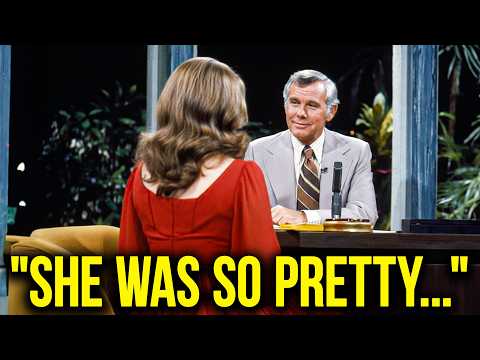
The list begins, fittingly, with the man who made Carson cry. Jimmy Stewart, the embodiment of decency in a town full of phonies, appeared on the Tonight Show year after year, each visit a masterclass in authenticity. But it was a 1981 appearance that sealed his legacy. Stewart read a poem about his beloved dog, Beau, and Carson—famous for his emotional restraint—visibly teared up on national television. “I’ve never seen Johnny react that way to anything,” a camera operator remembered. After that night, Stewart’s segments were untouchable. Carson would personally ask producers to extend them, even if it meant bumping commercials. “Move the commercial if you have to,” he’d say. It was practically unheard of.
Then came Newhart, the comic who matched Carson’s timing beat for beat. Unlike other comedians who arrived with rehearsed bits, Newhart engaged in genuine conversation, building stories with Carson like two jazz musicians improvising. “If Bob was on a roll, Johnny would just let him go,” a producer confirmed. He’d signal the control room to delay the commercial break—something he never did for anyone else. What truly set Newhart apart, though, was his humility. He remembered crew members’ names, thanked the makeup artists, and never arrived with an entourage. “Johnny couldn’t stand prima donnas. Bob was the opposite.” Their bond extended beyond the studio; they golfed together, a clear sign that Carson considered Newhart a true friend, not just a guest.
But the list didn’t stop there. Burt Reynolds brought something entirely different—spontaneity and mischief. Their legendary prank wars became must-see TV, with Reynolds once hitting Carson in the face with shaving cream during a serious interview. “Johnny loved that Bert came to play, not just to plug a movie,” a writer explained. Reynolds passed Carson’s ultimate test: he could take a joke as well as dish one out. “Could he tease them without them getting offended? Bert passed with flying colors.” The friendship was genuine, and Carson often cited Reynolds as the ideal guest for nervous newcomers: “Just relax and have fun with it. Like Bert does.”
And then there was Orson Welles—the genius who fascinated Carson on an intellectual level. When Welles was booked, Carson would actually read up on history, literature, and theater, something he never did for other guests. Their conversations veered into art, politics, and magic, revealing a side of Carson the public rarely saw. “Those interviews showed the Johnny that his friends knew but the public didn’t,” a writer noted. Welles even performed magic tricks on air, leaving Carson like a kid at a magic show. “Did you folks at home see that? That was real magic, not TV magic,” he told the audience during a break. For Carson, those moments were some of the most satisfying of his career—a chance to be himself rather than Johnny Carson.
The list continues with Jack Benny, the master who inspired Carson’s entire comedic philosophy. “He was the reason I do what I do,” Carson admitted. Benny’s influence was evident in Carson’s timing, his reactions, his ability to get laughs with just a look. When Benny appeared, Carson would even direct the cameras to focus on his guest’s reactions rather than his own—a gesture of respect that spoke volumes. “Johnny would tell the directors, ‘Make sure you get Jack’s reactions, not mine.’ That was unheard of.” Carson kept a framed photo of Benny in his office, the only celebrity picture he displayed in his private workspace.
Carol Burnett brought sunshine to the stage, and with her, Carson visibly relaxed. Their chemistry was effortless, their conversations flowing like old friends catching up. “With Carol, it felt like two equals just enjoying each other’s company,” a director recalled. Burnett was one of the few guests Carson allowed to go completely off-script, trusting her completely. “Johnny trusted Carol completely. He knew she would never embarrass him or the show.” When she was in the middle of a good story, Carson would wave off the producer’s signal to wrap up—a rare breach of his own rules.
James Garner embodied what a movie star should be—authentic, unpretentious, and grounded. “Johnny could spot a phony from a mile away. James was the opposite of phony,” a talent coordinator said. Garner talked about Hollywood the way most people talk about their office jobs, with humor and humility. He treated everyone on set with respect, from the pages to the producers. “Johnny valued that kind of behavior more than most people realized.” Their on-air comfort with each other was evident, with Carson occasionally referencing private conversations—a rare breach of the wall he usually maintained between his public and private lives.
George Burns represented living history, a connection to vaudeville and the golden age of comedy. Carson would get nervous before Burns’s appearances, not out of worry, but out of reverence. “It was like watching a concert pianist prepare to play for Mozart,” a producer said. Burns, who continued to evolve his act well into his 90s, embodied the professionalism and dedication to craft that Carson valued above all else. During commercial breaks, Carson would remain fully engaged, asking Burns questions about performers from the 1920s and 30s. “Johnny was getting a private master class in comedy history during those breaks, and he treasured every minute of it.”
Finally, Lucille Ball—television royalty who shared Carson’s pioneering spirit. “She’s royalty,” Carson told his audience during Ball’s appearance on his 10th anniversary special. Two pioneers who understood the pressures of carrying a show week after week, they shared a bond that was obvious whenever they were together. Carson would defer to Ball, giving her the best camera angles and laughing genuinely at her jokes. “Johnny treated Lucy like the queen of television, which in many ways she was,” a director recalled. One of the most touching moments came when Carson surprised Ball with footage from her earliest screen test—material she hadn’t seen in decades. “Johnny knew exactly what would touch her without being exploitative, and Lucy trusted him enough to show genuine emotion.”
These nine guests weren’t just favorites—they were the rare few who cracked the code to Johnny Carson, revealing the man behind the desk. And as the list draws to a close, one question remains: what did Carson himself say about these legends when the cameras were finally off? The answer, revealed in a private conversation years after his retirement, exposes a side of the late-night king that America never knew.
That private conversation took place in 1993, a year after Carson left the Tonight Show, during a quiet dinner with his closest friend, attorney Henry Bushkin. According to Bushkin, Carson reflected on his career with unusual candor, and when the subject of his favorite guests came up, he grew contemplative. “People think I kept a list because I was being strategic,” Carson said, swirling his scotch. “But the truth is simpler. Those nine people reminded me why I got into this business in the first place.”
He went on to explain that each of them represented a different facet of what he valued most: authenticity, humor, spontaneity, intellect, tradition, warmth, groundedness, longevity, and pioneering spirit. “Jimmy Stewart taught me that vulnerability isn’t weakness. Bob Newhart showed me that wit doesn’t have to be cruel. Burt made me remember that laughter is best when it’s shared,” Carson reportedly said. “Orson reminded me that curiosity is the fuel of a good conversation. Jack was the blueprint. Carol was the sunshine. James was the real deal. George was the history book. And Lucy… Lucy was the proof that you can be a star and a boss and still be loved.”
Bushkin, who had known Carson for decades, was struck by how emotional the usually reserved host became. “He actually teared up when he talked about Jimmy Stewart’s dog poem,” Bushkin later recalled. “He said, ‘I’ve watched a lot of guests come and go, but those nine—they were the ones who made me feel like I was part of something real, not just a TV show.'” Carson then made a confession that surprised even his longtime friend: “I never told them how much they meant to me. I hope they knew.”
That hope, it turns out, was not misplaced. When word of Carson’s private list eventually circulated among the Hollywood community years later, several of the named guests were deeply moved. Carol Burnett, upon hearing she was on it, reportedly said, “Johnny was the best audience I ever had. If I made him laugh, I knew I’d done my job.” Bob Newhart, ever the dry wit, quipped, “I’m honored. But I still think he only liked me because I never tried to upstage him.” And James Garner, in a rare interview before his death, admitted, “Johnny was a private guy. Knowing he felt that way means more than any award.”
But the most poignant reaction came from Lucille Ball’s daughter, Lucie Arnaz, who revealed that her mother had always spoken of Carson with immense affection. “She said he was the only host who treated her like a peer, not a relic,” Arnaz recalled. “When I told her about his list, she smiled and said, ‘Of course. We were the ones who made him forget he was working.'” That sentiment—that these nine guests made Carson forget the cameras—was echoed by everyone who knew him best. They weren’t just favorites. They were the reason he stayed in late night for thirty years.
Yet even as the list became legend, one name remained conspicuously absent: his brother, Dick Carson, who had directed the Tonight Show for years. When asked about this omission, Bushkin offered a cryptic explanation. “Johnny loved his brother, but the list wasn’t about family. It was about guests—people who came to his house, sat on his couch, and reminded him why he built that house in the first place.” Still, the question lingered: had Carson ever considered adding a tenth name? The answer, according to a producer who spoke to him shortly before his death, was a quiet, unexpected revelation.
“There was one more,” the producer said. “Someone who never appeared on the show, but who Johnny said was the greatest guest he ever imagined.” The name? Johnny Carson’s own father, Kit Carson, who died long before the Tonight Show began. “Johnny told me, ‘If my dad could have sat on that couch, I would have given him the whole hour. No commercials. Just us talking.'” It was a bittersweet confession from a man who had spent decades entertaining millions but still longed for the approval of one.
That revelation cast the entire list in a new light. The nine golden guests weren’t just favorites—they were surrogates for something Carson had lost. Jimmy Stewart’s decency reminded him of his father’s integrity. Jack Benny’s timing echoed the humor he’d learned at his father’s knee. And Carol Burnett’s warmth filled a void that fame could never touch. “Johnny once told me that the Tonight Show was his living room, and every guest was a chance to have the family dinner he never had,” Bushkin revealed. “He said, ‘I guess that’s why I always wanted the good ones to stay longer.'”
As the years pass and Carson’s legacy endures, the story of his nine favorite guests has become more than a piece of television trivia. It’s a window into the soul of a man who made America laugh but rarely let himself be seen. And for those nine—Stewart, Newhart, Reynolds, Welles, Benny, Burnett, Garner, Burns, and Ball—it’s a reminder that the greatest compliment isn’t an award or a rating. It’s being told, decades later, that you made the king of late night forget he was wearing a crown.
That final revelation—that the list was never really about television at all—landed with a quiet force. “He never wanted the good ones to leave,” Bushkin repeated, his voice trailing off. The king of late night, the man who filled thirty years of American living rooms with laughter, had been filling a void of his own.
When Carson died in 2005, the nine names resurfaced in obituaries and tributes, each one a thread in a larger tapestry of a man who gave everything on camera and held everything back off it. Bob Newhart, by then the last surviving name on the list, offered the final word: “Johnny gave us all a place to be ourselves. That’s the greatest gift a host can give.”
And so the list endures—not as a ranking, but as a love letter from a man who never quite learned how to say it out loud. Nine guests. One empty couch. And a father who never made it to the show.
Which of Carson’s nine favorites made you laugh, cry, or forget the cameras were rolling—and who would be on your own golden list?






