Sergeant Chuck Grant survived the brutal winter of Bastogne, the carnage of D-Day, and the triumphant march into Berchtesgaden. He was one of Easy Company’s most beloved figures—a blond, blue-eyed Californian who loved life, women, and beer, always wearing his hat tilted over one ear like a movie star. But the war that forged him would not be the one that broke him. That came after the guns had fallen silent, in a moment of senseless violence that would leave him permanently brain-damaged and rob him of the future he had earned.
On May 27, 1945, just weeks after V-E Day, Private Floyd W. Craver—a drunken replacement from I Company—went on a rampage in the Austrian countryside. He murdered a German officer for his pistol, then shot a British major who happened upon the scene. When Chuck Grant drove up in a truck, Craver opened fire on him too. The bullet struck Grant in the forehead, and he fell backward onto the road, unarmed and unaware that he was about to become the third victim of a man who would walk free just a few years later.
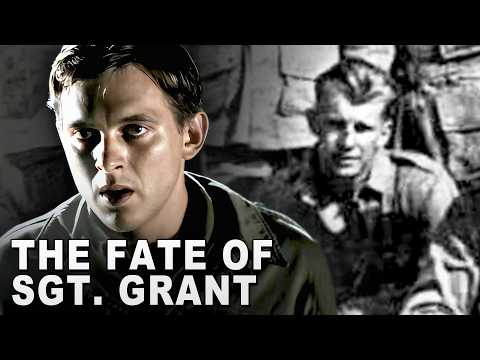
What happened next is a story of loyalty, rage, and a curious kind of justice. Captain Ronald Speirs refused to accept the doctor’s prognosis that Grant was beyond hope. He loaded Grant back onto a jeep and raced to Saalfelden, where a German brain surgeon from Berlin was found. In the series, Speirs holds the surgeon at gunpoint; in reality, it was Grant’s best friend, Private Herman Hack Hansen, who delivered the ultimatum: “Save him or I’ll kill you.” The surgeon operated, believing it was futile—yet Grant lived. He would later call Grant “the toughest man I have ever seen.”
Meanwhile, Craver was apprehended—not by a manhunt, but according to Stephen Ambrose, while trying to rape an Austrian girl in Zell am See. The men of Easy Company wanted him dead. They beat him unconscious before dragging him to the regimental guardhouse. In the series, Speirs points his pistol at Craver and trembles with rage before deciding to spare him. That scene is fiction. In truth, it was Hack Hansen who burst in, pointed his gun at Craver’s face, and screamed, “You son of a bitch, I’ve killed better men than you!” Four men had to restrain him. Speirs, for his part, told Ambrose he didn’t kill Craver because there was “some doubt in his mind that he was the right guy.”
Craver was tried on four charges: two murders, the shooting of Grant, and his subsequent escape from the stockade (he was recaptured by French police near Chablis). His defense argued insanity—partly blaming marijuana cigarettes he had smoked that morning. The insanity plea failed. On May 6, 1946, Floyd Craver was found guilty and sentenced to life in prison with hard labor at Lewisburg Penitentiary. But by the 1950s, for reasons that remain unknown, he was released. His military records were destroyed in the 1973 National Personnel Records Center fire. Perhaps the army wanted to avoid another trial that would expose the brutal beatings Craver had suffered at the hands of Easy Company. Perhaps it was overcrowding, good behavior, or a presidential pardon.
Whatever the reason, Floyd Craver went on to marry, have a family, and live another three decades—until a creamery truck ran a stop sign in Charlotte, North Carolina, and killed him in 1987. He was 65. Chuck Grant, meanwhile, endured six months in a German hospital, multiple infections, and a grueling recovery. He emerged with permanent brain damage, partial paralysis on his right side, and difficulty speaking. He was discharged with full disability in November 1945.
Yet Grant refused to surrender. He settled in San Francisco, opened a small cigar shop, married a woman named Norma, and raised a son. He attended Easy Company reunions, served as a representative for the 506th Parachute Infantry Regiment, and lived another 37 years after the bullet that nearly killed him. Babe Heffron said it best: “Chuck was one of the best guys and one of the best soldiers in the platoon. He was sharp as a tack. But that all changed after he got shot. Life was hard for him. It was tough to see him like that.”
Chuck Grant died on October 12, 1982, at age 60. He had survived the war, but the war—in the form of a drunken private with a pistol—had never really left him. And the man who shot him walked free, lived a full life, and died in a traffic accident, never having answered for the future he stole from a hero.
The story of Chuck Grant and Floyd Craver does not end with their deaths—it lingers in the spaces between what was recorded and what was lost. Craver’s release from Lewisburg in the 1950s remains one of the quiet mysteries of Easy Company’s history. No pardon paperwork surfaced. No appeal record survived. His military file was among the millions consumed by the 1973 fire at the National Personnel Records Center in St. Louis, leaving only fragments and speculation.
What we do know is that Craver returned to civilian life as if the war had never happened. He married, raised five children, and settled into the anonymity of postwar America. His son, Steve Wilkinson Craver, was born in 1959—the same decade his father walked out of prison. In 1995, Steve pleaded guilty to indecent liberties with a female child. He died in 2014 at age 54. The family legacy, like the records, offers more questions than answers.
For the men of Easy Company, the shooting of Chuck Grant never fully healed either. At reunions, Grant was welcomed with the same warmth that had always defined him, but his speech was slow, his right side weak, his gait unsteady. Some veterans quietly admitted they barely recognized the sharp, movie-star-handsome squad leader they had known in the Ardennes. Others refused to speak of Craver at all.
Babe Heffron visited Grant in San Francisco once, years after the war. The cigar shop was small but tidy, and Grant stood behind the counter with the same tilted hat and easy grin—though the grin came slower now, and the words caught in his throat. They talked about Bastogne, about Sobel, about the men who had not come home. Neither of them mentioned Austria. Neither of them mentioned Craver.
When Grant died in 1982, his wife Norma received letters from across the country. Men who had stormed Normandy with him. Men who had shivered beside him in foxholes. Men who had watched him fall backward onto that Austrian road and believed they had seen him die. One letter, from a veteran who signed only his nickname, read: ‘Chuck never lost his stripes. Not in England, not in the snow, not on that road. He wore them till the end.’
Floyd Craver’s obituary in 1987 was brief—a name, an age, a city. No mention of the war. No mention of the two men he murdered or the third he left for dead. He was buried in North Carolina, seventeen days after his wife. The creamery truck driver who ran the stop sign was never charged.
But history has a way of keeping its own ledger. In the decades since, historians and veterans’ families have pieced together the fragments of that May morning in 1945—the farmhouse, the gunshots, the surgeon who called Grant the toughest man he had ever seen. Easy Company’s story, told and retold, always returns to that road outside Saalfelden. It is the moment the war refused to end, when a hero fell not to German fire but to an American trigger, and when justice, however imperfect, chose to look the other way.
The questions surrounding Floyd Craver’s release have never been fully answered, but the silence itself speaks volumes. In the 1950s, the U.S. military was eager to move on from the war—to demobilize, to forget, to bury the messy aftermath of occupation. A retrial of Craver would have meant recalling witnesses from civilian life, reopening the record of his beating at the hands of Easy Company, and drawing public attention to a case that embarrassed the Army.
Some historians have speculated that Craver’s sentence was quietly commuted under a little-known provision that allowed for the release of prisoners whose wartime crimes were deemed ‘crimes of passion’ rather than premeditated. Others believe the beatings he suffered in custody—first at the regimental guardhouse, then again after his escape—may have been raised on appeal as a violation of his rights. No documentation survives to confirm any of this.
What is clear is that the men of Easy Company never received an explanation. When word reached them that Craver was free, reactions varied from disbelief to cold fury. Some men wrote letters to the War Department. None received a satisfactory reply. Others, like Hack Hansen, refused to speak of it at all. The man who had once held a gun to a surgeon’s head to save Chuck Grant’s life could not bring himself to discuss the man who had put Grant on that operating table in the first place.
Chuck Grant himself, according to his family, rarely mentioned Craver. He was not a man who carried grudges—or if he did, he kept them buried deep. What he carried instead was the daily reality of his injury: the words that came slowly, the right hand that would not obey, the fatigue that shadowed him even on good days. He built a life around those limitations, not in spite of them.
His son, growing up in San Francisco, knew his father as a quiet, gentle man who ran a cigar shop and never missed a veterans’ reunion. It was only years later, after Chuck’s death, that the son learned the full story of the shooting—from books, from documentaries, from strangers who wrote letters. The man who had been shot in the head and left for dead had never once told his own children the details.
At the Easy Company reunions, Grant was a living reminder of what the war had cost—not just the dead, but the living. Men who had seen him in his prime, sharp and quick and full of laughter, now saw a man who had to concentrate to form a sentence. Some found it hard to look at him. Others found it impossible to look away.
In the end, the ledger of history balances only in the stories we choose to keep. Chuck Grant’s son grew up knowing a quiet man behind a cigar counter, not the squad leader who once threatened to tear off his stripes rather than follow Sobel into battle. He learned the truth the way the rest of us did—from books, from documentaries, from the letters of strangers.
What remains is not a verdict but a question of memory. Craver’s grave in North Carolina bears no mention of Austria. Grant’s grave in San Francisco bears no mention of the bullet. Two men, one road, one morning in May—and only one of them remembered as a hero.
Perhaps that is the quiet justice of it. The man who pulled the trigger is a footnote. The man who survived became a symbol of everything Easy Company stood for: endurance, loyalty, and the stubborn refusal to let the war have the last word.
But the mystery of Craver’s release still hangs over the story like a shadow—unanswered, unexplained, and maybe unexplainable. Was it the beatings? The burned records? A quiet deal to spare the Army another embarrassing trial? We may never know.
What we do know is this: Chuck Grant lived thirty-seven more years than Floyd Craver intended. He married. He raised a son. He stood behind a counter with his hat tilted over one ear and greeted customers with a slow, hard-won smile. That is the ending the history books owe him.
So here is the question for you: if the records are gone and the men who knew the truth are gone with them, does the mystery of Floyd Craver’s freedom still matter—or is the only story worth telling the one about the man who refused to die?






