The city of Fallujah, a densely packed urban stronghold just 30 miles west of Baghdad, had become a haven for insurgents by late 2004. After the initial battle in the spring, extremists flooded in, turning the streets into a labyrinth of hidden dangers. The Iraqi interim government’s attempts to reclaim control had failed, and with the first general election looming in January 2005, the fear that insurgents would sabotage the vote grew palpable.
Coalition forces, led by the US Marine Corps, devised a plan to retake the city. Operation Phantom Fury—later renamed Operation Al-Fajr by the Iraqi prime minister—was to be a massive offensive involving over 15,000 US, UK, and Iraqi troops. Leaflets rained from the sky, warning civilians to flee. Those who remained would be considered enemies. By the start of the battle, only about 30,000 civilians were left, huddled in a city rigged with hundreds of IEDs, tunnels, and weapon caches.
Insurgents, expecting an attack from the south or southeast, concentrated their defenses there. Coalition forces, however, had learned from the first battle. They spent months gathering intelligence, conducting probing attacks to mislead the enemy, and even building a fake military base. On the evening of November 7th, Task Force Wolf Pack stormed into Fallujah from the west, securing a hospital and two bridges. The next day, a 12-hour air raid pounded the south and southeast, a diversion to make the insurgents believe the main assault was coming from that direction.
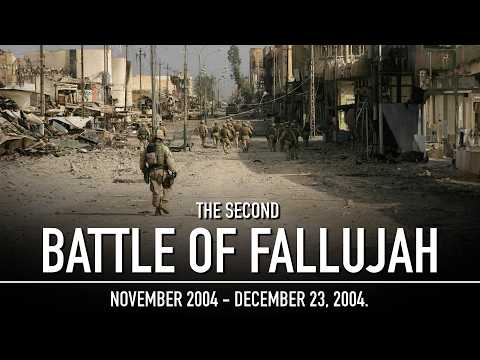
The real thrust came from the north, where defenses were lighter. Coalition forces advanced building by building, but the fight was far from easy. Some units, like Task Force 2-2, raced ahead with armor, while Marines without armor struggled, relying on artillery and air support that wasn’t always available. Insurgents exploited the gap, attacking the exposed Marines and forcing Task Force 2-2 to double back. The pace slowed, but by November 9th, several units had reached the city’s heart.
The urban combat was brutal. Insurgents fought in small groups, using IEDs, RPGs, and the maze of buildings to their advantage. Coalition troops responded with a relentless rhythm: air strikes, then artillery, then ground troops clearing one building at a time. The scale of resources was staggering—over 4,000 artillery rounds, 10,000 mortar rounds, and 318 bombs dropped. By November 15th, most of the city was recaptured, but the operation continued until December 23rd, with troops dismantling IEDs and clearing remaining pockets of resistance.
Yet victory came at a cost. Reports emerged that white phosphorus was used as a weapon, causing horrific burns. A Marine was filmed shooting a wounded insurgent, though an investigation cleared him of wrongdoing. And the use of depleted uranium shells raised concerns about long-term health effects. The battle left around 110 Coalition troops dead, 600 wounded, and between 1,200 and 2,000 insurgents killed. An estimated 800 civilians perished.
For many who survived, the psychological scars proved even deeper. One veteran recalled, “We have sadly lost more Marines who have taken their own lives than we have lost in combat.” Lance Corporal Chris Low, a bomb technician, was diagnosed with PTSD and a traumatic brain injury. Yet he chose to focus on the camaraderie and good memories. “The best I can do is live for those who cannot come back,” he said.
The Second Battle of Fallujah was the bloodiest fight of the Iraq War, a testament to the ferocity of urban combat and the enduring toll on those who fought it. But as the city lay in ruins, the insurgency would continue to evolve, and the battle’s aftermath would shape the conflict for years to come.
In the weeks that followed, the scale of the destruction became clear. Entire neighborhoods had been reduced to rubble, and the city’s infrastructure lay in ruins. Coalition forces set to work rebuilding, but the task was monumental. Emergency services were restored slowly, and electricity and sewage systems remained unreliable for months. For the residents who returned, life was a daily struggle.
The political fallout was equally significant. The battle had been framed as a success, but critics questioned whether the heavy-handed tactics had alienated more Iraqis than they had pacified. The images of devastated streets and reports of civilian casualties fueled anti-American sentiment, and insurgent groups used the destruction as a recruitment tool. In the months that followed, violence elsewhere in Iraq surged, and Fallujah itself remained a tense, volatile place.
Among the troops, the battle left deep impressions. Many spoke of the surreal nature of fighting in a city where every window could hide a sniper, every doorway a booby trap. One Marine described the eerie silence at night, when insurgents inexplicably halted their attacks, only to resume with renewed ferocity at dawn. The camaraderie forged in those streets was intense, but so was the trauma.
Back home, the stories of Fallujah filtered into public consciousness through embedded journalists and returning soldiers. The Washington Post’s report on white phosphorus had sparked outrage, and the documentary ‘Fallujah: The Hidden Massacre’ further inflamed the debate. The Pentagon maintained that the weapons were used legally for illumination and smoke, but the images of burned bodies told a different story to many.
Meanwhile, the investigation into the shooting of the wounded insurgent had concluded, but the video lingered in the public eye, a symbol of the war’s moral ambiguities. For Chris Low and others like him, the battle never truly ended. They carried it with them—in nightmares, in hypervigilance, in the quiet moments when memories surged unbidden.
As 2005 dawned, Iraq prepared for its first general election. The streets of Fallujah, though scarred, were quiet enough for voting to proceed, a small victory in a war that would drag on for years. The Second Battle of Fallujah had achieved its immediate objectives, but the broader struggle for Iraq’s future was far from over.
In the years that followed, Fallujah became a symbol—of both triumph and tragedy. Military analysts would study the battle as a case study in urban warfare, citing its innovations in combined arms and its lessons about the limits of firepower in densely populated areas. The tactic of using diversionary attacks and feints had worked brilliantly, but the grinding, block-by-block clearance had exposed the vulnerability of unarmored units and the difficulty of maintaining momentum when different task forces operated at different speeds.
For the insurgents, the battle was a defeat, but not a decisive one. Many fighters had slipped out of the city before the cordon tightened, and others simply melted into the civilian population. Within months, small cells began to reappear, and by 2006, Fallujah was again a contested city, though never again would it fall entirely under insurgent control.
The human cost, however, remained the most enduring legacy. Estimates of civilian deaths varied widely, but the images of destroyed homes and injured children haunted those who had witnessed them. Aid organizations struggled to deliver supplies, and the city’s hospital, already strained, became a focal point for treating the wounded—both fighters and noncombatants alike.
Among the Iraqi security forces who fought alongside the Americans, the battle was a source of pride and pain. Many had lost comrades, and some questioned whether their sacrifice would be honored in a country still torn by sectarian tensions. The Iraqi interim government praised the operation as a step toward stability, but the political landscape remained fragile.
Back in the United States, the battle’s memory faded from headlines as other conflicts and crises demanded attention. Yet for the families of the fallen, and for the veterans who returned with invisible wounds, Fallujah was never far from mind. Support groups sprang up, and some veterans found solace in sharing their stories with others who understood.
Chris Low, the bomb technician, became an advocate for mental health awareness. He spoke at schools and veterans’ events, urging others to seek help and to hold onto the good memories. “You can’t let the darkness define you,” he said in one interview. “You have to find a way to carry the weight and still move forward.”
The city itself slowly rebuilt, though scars remained—both physical and psychological. New buildings rose where old ones had crumbled, but the streets still held the echoes of that November. For those who lived through it, the Second Battle of Fallujah was a defining moment, a crucible that tested the limits of courage and endurance.
Years later, the name Fallujah still carries weight—a byword for the ferocity of modern urban combat. Historians would debate whether the battle was a strategic necessity or a costly diversion, but few disputed the courage of those who fought it. The city, once a stronghold of extremism, had been reclaimed, yet the insurgency it harbored would morph and spread, proving that military victories alone could not secure Iraq’s future.
For the men and women who served, the memories never fully faded. Some returned to Fallujah as civilians, walking its rebuilt streets and marveling at how ordinary life had resumed. Others could not bring themselves to go back, haunted by the ghosts of November 2004. The bonds forged in battle endured, though the ranks thinned with time—not only from age but from the quiet toll of suicide and substance abuse that plagued so many veterans.
Chris Low kept his promise to live for those who could not come back. He built a career, started a family, and found purpose in helping other wounded warriors. But on quiet nights, he still heard the echoes of explosions and the crack of gunfire. The battle, he realized, was not just a moment in history—it was a part of him, woven into the fabric of who he had become.
The Second Battle of Fallujah had changed the course of the Iraq War, but more importantly, it had changed everyone it touched. It was a testament to the courage of the human spirit and a cautionary tale about the true cost of war. The city rose from the ashes, but the scars—visible and invisible—remained, a silent reminder of those brutal weeks in November.
As the sun set over the Euphrates, casting long shadows across the rebuilt streets, one question lingered: When the guns fall silent and the headlines fade, how do we honor the sacrifices of those who fought—and ensure that their stories are never forgotten?






