In the glittering golden age of Hollywood, teen idols were manufactured dreams—their smiles sold magazines, their charm filled theaters, and their secrets could destroy empires. But behind the dazzling façade, some of the biggest stars lived in constant terror, their true selves buried beneath layers of studio-engineered lies. What happened when the cameras stopped rolling and the fan clubs went home? The answer is a gripping tale of survival, sacrifice, and the devastating cost of authenticity.
Consider Tab Hunter, the blonde California dream whose All-American looks made teenage girls scream in the 1950s. Warner Brothers marketed him as the ultimate bachelor, but in 1955, a scandal sheet called Confidential nearly exposed his secret relationship with figure skater Ronnie Robertson. Studio fixers worked overtime, feeding the magazine dirt on other stars to keep Hunter’s story buried. He went on staged dates with Natalie Wood and Debbie Reynolds—both of whom knew the truth and played along as friends. Hunter later described those years as “living in a cage made of gold, always one headline away from losing it all.” The fear was so consuming that he turned down roles he desperately wanted, terrified they might seem too revealing. When he finally came out in his 2005 memoir, he was 74 years old, having spent five decades hiding. His book became a bestseller, proving just how many people had been rooting for him all along.
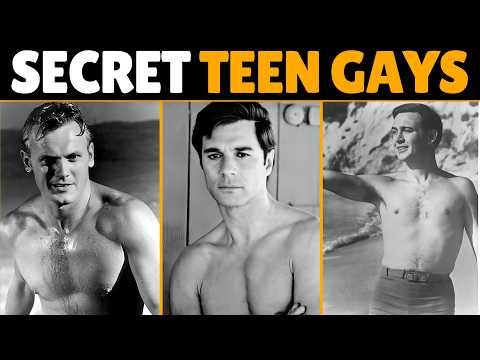
But Hunter’s story is just one of many. Tommy Kirk, Disney’s all-American icon from The Shaggy Dog and Old Yeller, saw his world collapse in 1963 when he was arrested in a public restroom during a police sting targeting gay men. Disney fired him immediately, blacklisting him from family films forever. Kirk tried pivoting to Beach Party movies, but the damage was done. He struggled with substance abuse and depression, watching his career evaporate while former co-stars stayed silent. By the 1970s, he’d left Hollywood entirely, working in carpet cleaning and upholstery to survive. “The industry treated me like a disease that needed quarantine,” he later said. When he died in 2021, tributes poured in, but they couldn’t undo the decades of isolation.
Anthony Perkins, the sensitive young leading man from Friendly Persuasion, was tormented by his attraction to men. He underwent conversion therapy multiple times in desperate attempts to change, dated women publicly while carrying on secret relationships with men. His marriage to photographer Berry Berenson in 1973 shocked many who knew him, though colleagues suspected it was another form of protection. Perkins never discussed his orientation publicly, living in constant fear that exposure would end his career. The terror intensified when he was diagnosed with HIV in the late 1980s—a death sentence that also threatened to reveal everything. He kept his illness hidden until his final days, dying in 1992 with a secret he’d guarded for decades. Friends like Gwen Verdon later spoke about his profound loneliness, describing a man who felt he could never truly be himself.
Sal Mineo exploded onto screens in Rebel Without a Cause, earning two Oscar nominations before age 20. But he couldn’t shake the whispers. He dated Jill Haworth publicly while quietly exploring relationships with men, including rumored affairs with several closeted male stars. Studios warned him constantly about being careful, knowing that any slip could destroy the teen idol image they’d manufactured. By the late 1960s, his film career had stalled, partly because Hollywood didn’t know what to do with him as he aged. Mineo turned to theater, directing and starring in productions that explored themes the mainstream still rejected. In 1976, he was stabbed to death during a robbery outside his West Hollywood apartment at just 37 years old. The tragedy sparked immediate speculation about whether his orientation had made him a target, though police maintained it was random violence.
Raymond Burr became America’s favorite attorney as Perry Mason, a role that made him a household name. To protect his image, Burr fabricated elaborate stories about a deceased wife and child—complete with details that biographers later proved were entirely false. The lies worked because fans desperately wanted to believe them, and the press never questioned too deeply. Behind the manufactured tragedy, Burr shared his life with actor Robert Benevides for 35 years, building a successful business together while maintaining absolute secrecy. They traveled the world, collected art, and created a genuine partnership that Burr could never acknowledge publicly. Colleagues on set knew the truth but stayed silent, understanding that exposure would end everything for both men. Burr continued the charade until his death in 1993, when Benevides finally received recognition as his partner.
These stories are just the beginning. The golden age of Hollywood was built on illusions, and for these stars, the illusion was survival. But what happened when the façade finally cracked? Some found happiness eventually, while others never escaped the prison of pretending. The question remains: if studios knew the truth and covered it up to protect their investments, what secrets are still being hidden today?
Nick Adams hustled his way into Hollywood, befriending James Dean and positioning himself as the next Rebel star. He scored a hit series with The Rebel and earned an Oscar nomination for Twilight of Honor. But his personal demons were spiraling. Adams married and had two children, yet rumors about encounters with men followed him throughout his career. He developed a reputation for being difficult and paranoid, fighting with directors and burning bridges at every turn.
By 1968, his career had collapsed and he was struggling with prescription drug addiction. Adams was found dead in his home at 36, officially ruled an accidental overdose, though many suspected it was intentional. Friends later revealed he’d been increasingly despondent about his stalled career and the secrets he carried. Some biographers have suggested his aggressive masculinity was overcompensation—a shield against speculation. Adams never got the chance to define his own story, dying young and leaving behind more questions than answers.
John Kerr seemed destined for major stardom after Tea and Sympathy, where he played a sensitive student accused of being different. The performance was brave for 1956, but it also typecast him in ways that became problematic. He followed it with South Pacific and The Pit and the Pendulum, showing range, but Hollywood couldn’t figure out how to market him. Kerr married twice and had children, but colleagues whispered about his discomfort with the heartthrob label.
He abruptly left acting in the 1970s, becoming a successful attorney instead. Kerr rarely discussed his Hollywood years, seemingly eager to leave that chapter behind. When he died in 2013, obituaries focused on his legal career more than his films. Some who worked with him suggested he’d never been comfortable with the fame or the scrutiny. Kerr’s retreat from the spotlight felt like an escape from a life that never quite fit.
Farley Granger became a Hitchcock favorite, starring in Rope and Strangers on a Train with performances that crackled with tension. His good looks made him a natural leading man, but Granger felt trapped by the studio system’s demands. He had relationships with both men and women, including long affairs with choreographer Arthur Laurents and screenwriter Robert Calhoun. Studios pushed him into publicity romances with actresses like Shelley Winters—relationships he later described as exhausting performances.
Granger grew frustrated with Hollywood’s limitations and eventually moved to Europe, where he found more freedom. He continued acting but never recaptured his early momentum, instead building a life on his own terms. In his 2007 memoir, Granger wrote openly about his relationships with men, finally telling the truth after decades. He described the relief of living authentically in his later years, no longer performing for anyone’s approval. Granger died in 2011, remembered fondly by those who knew him as warm and genuine.
Rory Calhoun rode his rugged looks into western stardom, becoming a fixture in cowboy films and television. The studios packaged him as a tough guy with a troubled past—though they carefully edited which parts of that past got shared. Before Hollywood, Calhoun had spent time in prison for robbery and car theft, a history the press found exciting. What they didn’t know was that he’d survived by doing whatever was necessary, including relationships with men for money and protection.
Agent Henry Willson discovered him and helped reinvent him as a leading man, securing him a contract with 20th Century Fox. Calhoun married actress Lita Baron and later Sue Rhodes, maintaining the appearance of heterosexual normalcy. Rumors circulated throughout his career, but his tough guy persona provided cover. He worked steadily until the 1980s, never addressing the speculation. Calhoun died in 1999, his early survival strategies remaining largely unknown until biographers started piecing together his pre-Hollywood years.
George Maharis became a sensation as Buzz Murdoch in Route 66, playing the dark, brooding traveler who drove across America seeking meaning. The show made him a heartthrob with fan mail pouring in from teenage girls who plastered his photos in their lockers. Then in 1967, Maharis was arrested in a public restroom, charged with lewd conduct with another man. The scandal destroyed his leading man status overnight—studios suddenly unavailable, projects evaporating. Another arrest in the 1970s sealed his fate, effectively ending any chance of a comeback.
Maharis never publicly came out, instead retreating from the spotlight and living quietly. He continued doing occasional television work, but the major roles never returned. The arrests became the defining moments of his career, overshadowing his genuine talent. Maharis died in 2023, remembered by fans of Route 66 who mourned what might have been. His story shows how quickly the industry could discard someone, no matter how bright their star had burned.
Ten careers, ten secrets, ten lives lived in fear of tomorrow’s headline. Some found happiness eventually—Tab Hunter’s memoir became a bestseller, Farley Granger found freedom in Europe—while others never escaped the prison of pretending. Raymond Burr took his secret to the grave, and Anthony Perkins died with his. The golden age of Hollywood was built on illusions, and for these stars, the illusion was survival. The cost was almost unbearable, yet they paid it because the alternative was oblivion.
But what happened when the façade finally cracked? For some, the truth set them free. For others, it came too late. The studios that manufactured these dreams knew the truth and covered it up to protect their investments. If they were willing to bury so much to keep the machine running, what secrets are still being hidden today?






