The mud was not just mud. It was a living, breathing enemy that swallowed men whole. On the Kokoda Track in 1942, a handful of barely trained Australian militia boys faced the might of the Japanese Imperial Army, and the world held its breath.
They were outnumbered, outgunned, and fighting an enemy who had conquered half of Asia. But in the suffocating heat and relentless rain of New Guinea, they would discover something the world had never seen: how to turn the jungle itself into a weapon.
By early 1942, the Japanese war machine had swept across the Pacific like a tidal wave. Hong Kong, the Philippines, and then Singapore—Britain’s supposedly impregnable fortress—had all fallen. The rising sun flag flew from Burma to the Solomon Islands, and Australia believed it was next.
When Japanese forces landed on the northern coast of New Guinea in July 1942, their objective was clear: cross the Owen Stanley Range via the Kokoda Track and seize Port Moresby. From there, bombers could strike Australian cities and sever supply lines to America. The strategic nuances didn’t matter to the men on the ground. The enemy was coming, and they had to be stopped.
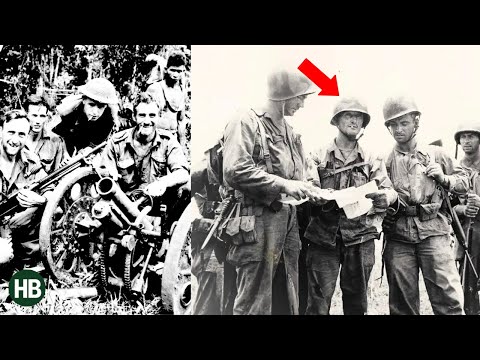
Standing in their way were the men of the 39th Battalion—boys, really, barely trained and sent to hold a mountain track against battle-hardened troops. The jungle was alive, wet, loud, and lethal. Temperatures swung from scorching heat to freezing mountain cold. Rain turned trails into rivers of mud. Leeches dropped from trees, and malaria and dysentery killed as many men as bullets.
The Japanese were experts, having fought in China, Malaya, and the Philippines. They knew how to move silently, set ambushes, and make the jungle their weapon. The Australians had no such experience, but they weren’t starting from nothing. Veterans from the North African campaign brought something invaluable: the knowledge that they could outthink elite enemy forces through aggression and innovation.
Those first weeks on the Kokoda Track were a nightmare. Men stumbled through waist-deep mud, carrying wounded comrades on stretchers for days through terrain where no vehicle could reach them. Supplies ran out. Communications failed. Units became separated in the thick undergrowth. And all the while, the Japanese pushed south, closer to Port Moresby, closer to Australia.
But something began to change. The Australians adapted fast. They realized that European tactics—advancing in lines, holding fixed positions—got you killed in the jungle. Instead, they drew on lessons from Tobruk: small aggressive patrols, stealth over frontal assault, using terrain as an ally.
They learned that noise discipline meant survival. That a single cough could give away your position to an enemy patrol 30 yards away, invisible in the undergrowth. They learned to set ambushes of their own, lying in wait for hours in complete silence until the enemy walked into their kill zone.
By September 1942, the tide had turned. Australian forces stopped the Japanese advance at Ioribaiwa Ridge, just 30 miles from Port Moresby. Then they began pushing back. The retreat became a pursuit, and the Australians, once the hunted, became the hunters.
But the lessons came at a terrible cost. Of the 625 men of the 39th Battalion who fought on Kokoda, 121 were killed and 232 wounded. The survivors, however, had learned something no other Allied force yet knew: how to fight and win in the jungle.
By late 1942, Australian commanders recognized they’d stumbled onto something crucial. The veterans returning from Kokoda, Milne Bay, and Buna weren’t just survivors. They were the architects of an entirely new way of war. In the closing months of 1942, the Australian Army established the Jungle Warfare Training Center in the mountains of southeast Queensland—the first Allied facility of its kind, purpose-built to turn soldiers into jungle fighters.
The doctrine that emerged wasn’t theoretical. It was written in blood on New Guinea’s mountain tracks. Small unit tactics became paramount. Forget company-strength advances. In the jungle, you fought in sections—eight to ten men who could move silently, communicate with hand signals, and react instantly to contact.
Fire discipline was everything. You didn’t spray bullets into the undergrowth hoping to hit something. You waited. You identified your target. You made that first shot count because the flash from your rifle gave away your position.
Forward artillery observers went everywhere the infantry went. Even in terrain where you could barely see 20 yards ahead, the Australians learned to call in artillery strikes with devastating precision, using pre-registered fire zones that turned jungle trails into kill boxes.
Patrolling became an art form. Australian patrols moved in single file with scouts rotating positions every 30 minutes to maintain alertness. They learned to read the jungle—to notice when birds stopped singing, when the insects went quiet because it meant someone else was there.
One veteran described it this way: “You didn’t see the Australians coming. You just heard the single shot and silence after.”
Perhaps most importantly, they learned to work with the Papuan carriers, men who became known to Australians as the Fuzzy Wuzzy Angels. These local men knew the terrain intimately. They could navigate trails in complete darkness. They carried wounded soldiers for days through mountains where no vehicle could reach. Without them, the Kokoda campaign would have been impossible.
The Australians also realized that endurance mattered more than firepower. Soldiers underwent brutal physical conditioning, marching for days with full packs, learning to operate on minimal rations, developing the mental toughness to keep fighting when exhausted, sick, and scared.
By early 1943, these lessons were codified into training programs and disseminated throughout Australian forces in the Southwest Pacific. But the Australians weren’t the only Allied troops in the theater. The Americans were arriving in force, and they were about to learn these lessons the hard way.
In late 1942, the US 32nd Infantry Division—a National Guard outfit from Michigan and Wisconsin—was thrown into the swamps around Buna and Gona on New Guinea’s northern coast. They were good men, motivated and well-equipped, but they had trained in temperate conditions. They had never seen jungle like this.
What followed was a catastrophe. The swamps were waist-deep, filled with leeches and crocodiles. Mangrove roots tripped them with every step. Japanese bunkers—log-and-earth constructions—were nearly invisible until you were right on top of them. The Americans attacked in the open, using tactics that might have worked in France in 1918, and they were cut to pieces.
Machine-gun fire erupted from positions they couldn’t see. Snipers tied into trees picked off officers. Equipment rotted, food spoiled, and disease tore through units faster than enemy action. General Douglas MacArthur was furious. He sent his chief of staff, General Richard Sutherland, to investigate. Sutherland reported back that the troops lacked aggressive spirit.
But that wasn’t it at all. They simply didn’t know how to fight here. The Australians, operating in the same terrain, were making progress. They moved methodically, using the tactics they’d learned at such cost on Kokoda. They coordinated fire and movement. They used stealth and patience. The Americans had numbers, firepower, and determination—but the Australians had something else. Experience.
MacArthur, to his credit, recognized this. In December 1942, he issued orders: American forces would train under Australian supervision. The official US Army history, Victory in Papua, later acknowledged this plainly—the Australians’ greater experience in jungle warfare proved decisive in the campaign’s success.
Officers from the 32nd Division were sent to observe Australian units in action. They watched how Australian sections moved, how they set ambushes, how they coordinated artillery support even in dense terrain. More importantly, they watched how Australian soldiers survived.
By January 1943, the fighting at Buna and Gona was over. The Allies had won, but it took two months longer than planned. American casualties were staggering—over 2,800 killed and wounded, many from disease and exhaustion. The lesson was clear: jungle warfare required specialized training, and the Australians had the only proven system for delivering it.
What happened next would shape the Pacific War. Beginning in early 1943, American officers were sent to the Jungle Warfare Training Center at Canungra—not as observers, but as students. They went through the same brutal program Australian soldiers endured: week-long marches through rainforest, night navigation exercises, live-fire ambush drills.
They learned the Australian way. Patience over aggression. Stealth over speed. Coordination over individual heroism. US Army reports from this period document the transfer in detail. American tactical directives began incorporating Australian methods—jungle patrolling techniques, moving in single file, maintaining noise discipline, rotating point men to prevent exhaustion.
Ambush doctrine was rewritten. Occupy positions before dawn. Maintain absolute silence. Coordinate simultaneous fire. Use fire lanes—pre-registered artillery coordinates along likely enemy approach routes—allowing instant fire support without time-consuming adjustment. Camouflage and movement discipline became gospel: use natural vegetation for concealment, move during rain to mask noise, avoid trails.
But the transfer wasn’t just happening in training camps. American units were paired with experienced Australian battalions in the field. The 41st US Infantry Division trained alongside the Australian 7th Division. Marine Raider battalions observed Australian commando techniques. By mid-1943, these lessons were being written into official US military doctrine. Training manuals were revised. New schools were established.
One American officer later wrote: “The Australians’ methods saved lives. Their tactics, born from necessity on Kokoda, became our playbook for the rest of the war.”
The jungle had gone from enemy to ally, and it was the Australians who had shown the way.
By late 1943, when American forces landed at Bougainville and New Georgia, they moved like veterans. Small-unit tactics, stealth patrols, coordinated fire support—these weren’t American innovations. They were Australian lessons, tested in blood, now deployed at scale.
From 1943 through 1944, the transformation was complete. Marine Raider battalions on Bougainville used Australian-style ambush techniques to devastating effect. Army infantry in the Philippines coordinated artillery and infantry movement with precision learned at the Queensland training center.
The integration went deeper than tactics. American forces adopted the Australian emphasis on intelligence gathering through long-range patrols, sending small reconnaissance teams deep into enemy territory for days before larger operations. They incorporated the Australian approach to night operations—not avoiding darkness, but using it.
By 1944, both American and Australian forces were operating as what one historian called “jungle armies”—units specifically trained, equipped, and doctrinally prepared for warfare in tropical terrain. MacArthur’s drive north through New Guinea and into the Philippines was built on this hybrid doctrine: Australian innovations, American scale.
The lessons that began with the 39th Battalion on the Kokoda Track, learned at terrible cost, now shaped operations involving hundreds of thousands of troops. From the Owen Stanleys to Guadalcanal, from Buna to Bougainville, the lessons spread like wildfire. What Australians learned in blood, the Americans turned into doctrine. And together they pushed the Japanese back, island by island, mile by mile, until the path to Tokyo lay open.
The Jungle Warfare Training Center at Canungra didn’t close when the war ended. It continued operating, training Australian soldiers for decades. During the Vietnam War, both Australian and American units trained there, maintaining a tradition that began in 1942. Australian SAS and US Marine units continue joint training today, tracing their lineage back to those first exchanges in New Guinea.
The Australian soldiers who developed these methods—many of them militia troops who’d never expected to see combat—probably never imagined their innovations would shape military training for generations. They were just trying to survive. But in learning to survive, they created something remarkable: a new way of war that turned the jungle from an enemy into an ally.
And when their American counterparts arrived, unprepared and suffering, the Australians didn’t hoard their knowledge. They shared it. They trained alongside American troops. They opened their schools. They embedded observers with US units. This wasn’t competition. It was cooperation, the kind that only emerges in the crucible of shared struggle.
The Pacific War was won by many factors—industrial production, naval power, code breaking, logistics. But on the ground, in the mud and heat and rain, it was won by soldiers who learned to master the jungle. And the first teachers were Australian. They didn’t just survive the jungle. They mastered it—and taught others how to do the same.
So here’s the question: If a handful of barely trained militia boys could rewrite the rules of war in the world’s most hostile terrain, what lessons are we still learning from the jungles of Kokoda today?






