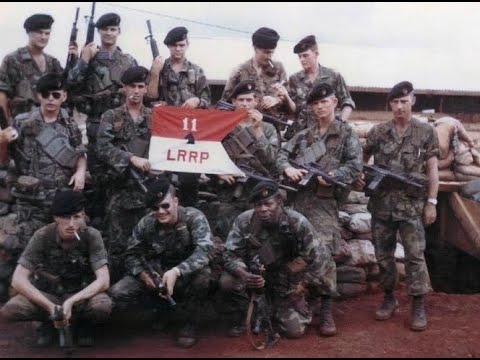
In the humid, triple-canopy jungles of Vietnam, 1967, American LRRP teams—some of the most lethal and disciplined soldiers the US military had to offer—found themselves outmatched. Not by superior firepower or technology, but by a handful of quiet men in faded uniforms who moved like smoke and struck like ghosts. The Australians didn’t just impress them; they shocked them.
These elite American recon specialists, trained for endurance and fire superiority, watched as Australian SAS patrols melted through the jungle with an eerie absence of sound. No excess gear, no casual chatter, no wasted movement. Where Americans swept through with layered comms and prepared contact drills, the Australians crawled, watched, waited, and then disappeared. It was a revelation that would challenge everything they thought they knew about warfare.
Before crossing paths with the Australian SAS, American LRRPs were already the eyes and ears of larger operations. Operating in four-to-six-man teams deep behind enemy lines, they carried M-16s, PRC-25 radios, Claymore mines, and enough ammo to fight their way out if compromised. Their doctrine emphasized mobility, maneuver, and firepower—move fast, cover ground, and if discovered, unleash hell.
But the jungle punished momentum. Contact rates were high, extractions under fire common, and patrols often compromised before completing their missions. Even when they succeeded, LRRPs noticed NVA and VC trackers adapting—ambushes tighter, reactions quicker, patrols vanishing. The enemy wasn’t running anymore; they were watching. And in some areas, American patrols walked into zones that felt prepared.
Then came 1967, when American recon units were paired with Australian SAS patrols. What they saw challenged everything. These men didn’t just sneak through the jungle—they barely moved. Sometimes an entire patrol would spend three days in a 200-meter stretch of forest, watching, sketching, listening. It was maddening to some Americans at first. “Why aren’t we doing something?” one LRRP reportedly asked his SAS patrol commander. The response was simple: “We are.”
The Australians weren’t after enemy casualties. They studied the rhythm of the jungle until it gave up its secrets—patrol times, supply drops, rest stops. And that was when the LRRPs realized: maybe speed wasn’t the advantage. Maybe the real power belonged to the man who waited, counted the footsteps, and didn’t fire at all.
The first joint patrol was a masterclass in silence. From the moment they stepped off the landing zone, the Australians communicated in hand signals and eye contact. No radios, no whispered plans—just motion and stillness, as if every step had been agreed upon days in advance. The American point man, used to regular status checks, found himself glancing over his shoulder, confused by the absence of chatter. The SAS men behind him hadn’t disappeared, but they might as well have. They moved like smoke. Even their gear made no noise—no clinking buckles, no loose straps, no metal on metal.
Their faces were painted in a camouflage pattern the Americans had never seen—subtle earth tones flecked with green and brown, matching the dappled jungle light almost perfectly. Their rifles were taped and dulled. Even their boots seemed to blend into the undergrowth. And they didn’t move fast; they moved right. What would have taken the LRRPs two hours took nearly five. But when the Australians finally signaled a halt, the patrol found itself just 30 meters from an NVA rest site, completely undetected.
The Americans were stunned. There had been no noise, no scent trail, no signs of approach—just methodical patience and terrain mastery. The SAS team leader whispered three words: “We’ll watch tonight.” No ambush, no engagement. Just observation. The Americans thought it a missed opportunity. The Australians saw it as a window into the enemy’s routine.
That night, the LRRPs learned something else. The SAS didn’t sleep in shifts; they all stayed awake, rotating micro-rests, sipping cold tea, listening to the sounds of the jungle like musicians hearing a familiar song. They tracked enemy movements by footfall patterns and cigarette glows. They noted how the guards changed, who limped, who laughed too loudly, who stayed silent. And all the while, they didn’t move—not even when a sentry passed within 10 meters.
The next day, the Australians drew a map by hand of the enemy’s habits—weapon placements, supply cache, latrine trail, exit routes—and proposed an airstrike, not a gunfight. The Americans, once skeptical, now sat in quiet awe. One LRRP later interviewed would say, “They didn’t fight like we did. They didn’t need to. They knew the enemy before they ever fired. It was like playing chess with a guy who already read your whole playbook.”
That joint patrol changed everything. The LRRPs began to ask questions—not just about tactics, but philosophy. Why the Australians carried less. Why they fired fewer rounds. Why they stayed still when everything inside you screamed to move. The answers didn’t come in lectures. They came in shadows. And the LRRPs were beginning to follow them.
The transformation didn’t happen overnight. It began with something simple, almost embarrassingly simple: weight. American LRRPs were used to carrying heavy loads—extra ammo, extra Claymores, extra water, extra everything. The mindset was straightforward: better to have it and not need it than need it and not have it. Except in the Vietnamese jungle, that logic could get you killed. Weight meant noise. Weight meant fatigue. Weight meant slower reaction times. And most importantly, weight meant leaving a bigger signature for NVA trackers who could read the earth like a book.
The Australian SAS demonstrated this within days of patrolling together. On one joint mission, an LRRP team noticed something odd: the SAS weren’t sweating as hard, weren’t breathing as heavily, and didn’t stop to rest as often. Their movements were smoother, quieter, far more deliberate. When the team paused near a stream to refill canteens, one American finally asked the question on everyone’s mind. “How much gear are you guys even carrying?” The SAS patrol commander grinned, shrugged, and tapped the side of his pack. “Enough.”
When pressed, he opened the pack to show what enough meant: a poncho, a small ration pack, a few bandages, a spare magazine or two, and a collapsible stove smaller than a man’s palm. No extra clothing, no spare boots, no entrenching tool, no toiletries, no luxury items—not even a full week of rations. They moved so light, they could go farther and last longer off the land. The Americans were stunned. Their own packs weighed nearly twice as much—some carried 60 pounds or more.
The SAS taught them a hard truth: the jungle punished anyone who brought their comfort with them. The lighter you were, the easier it was to move without breaking sticks, cross streams quietly, climb without panting, evade trackers, hide your trail, escape quickly if compromised. And if the worst happened, a lighter man ran farther, faster, quieter.
One LRRP soldier later wrote in his journal: “Patrolling with the Aussies was like patrolling with men who had already died once and didn’t want to do it again. They carried nothing they didn’t need—nothing. And they made us feel ridiculous for every ounce we brought.” Within weeks, LRRP teams began stripping down their gear. Entire checklists were rewritten. Items once considered mandatory were cut. Radios were paired down. Claymores carried only when the mission demanded. Even water discipline improved—Americans learned to refill from streams using SAS methods instead of hauling liters on their backs.
The difference was immediate. They moved quieter. They traveled farther. They left fewer traces. And most importantly, they began avoiding contact entirely, just like the SAS. Because if your mission was to stay alive behind enemy lines, speed didn’t matter. Silence did. This was the first shift. And once the LRRPs felt the jungle easing its grip, they realized weight wasn’t strength. Weight was vulnerability. The Australians had known that all along, and now the Americans were beginning to understand it, too.
The second change didn’t come from the rucksack. It came from the trigger finger. For most American LRRPs, the M-16 wasn’t just a rifle—it was a safety net. Lightweight, high capacity, capable of both semi and full auto fire, it was the backbone of any contact plan. Standard doctrine encouraged fire superiority: if you made contact, you hit hard, laid down suppressive fire, and maneuvered. Spray and move. Overwhelm and retreat.
But after patrolling with the Australian SAS, that logic began to fray. The Australians didn’t spray. They didn’t even burst. They fired single shots—deliberate, patient, almost surgical. Sometimes the first burst of contact from an SAS ambush was only two or three rounds. Then silence. No follow-up. No wild volume. Just one moment of precise violence, and then nothing.
At first, LRRPs were confused by it. Some even thought the Australians were under-reacting, hesitating. But they weren’t. They were choosing. Every round was counted. Every shot had intent. And the effect was profound. Enemy patrols that came under fire from SAS teams didn’t know what hit them. They heard three rounds, saw one or two men fall, then nothing. No noise. No movement. Just jungle silence swallowing the battlefield again. The confusion was more powerful than any machine gun.
NVA squads would freeze, retreat, or break entirely, unsure if they’d just encountered a full platoon or a ghost. The SAS understood what few did: noise equals information. And in the jungle, the enemy wasn’t just listening for where you were—they were listening for who you were. What kind of unit, what direction you were moving, how many men you had, how aggressive you were. Firing a hundred rounds might save you in one firefight, but it might get you killed in the next ten.
The LRRPs started to learn. They began switching their M-16s to semi-auto only. Fire discipline became stricter. Team leaders emphasized counted shots. The mission shifted from fire superiority to first-round lethality. Ambushes were redesigned—fewer guns, tighter fields of fire, faster disengagement. They practiced shooting from brace positions, just like the Australians. Learned how to fire from cover without exposing their silhouettes, how to take one breath, exhale half, and let the shot break calmly.
And most importantly, they stopped firing unless they had to. Because staying hidden was more powerful than hitting hard. One LRRP veteran summed it up years later: “We used to think success was about getting out of contact alive. The SAS taught us that success meant never being seen in the first place.” It wasn’t cowardice—it was control. Because in the jungle, firefights didn’t always end with victory. They ended with blood trails, noise, and NVA trackers sweeping through your last known position.
The Australians had figured it out early. A bullet not fired was often a life not lost. The LRRPs weren’t just copying tactics anymore. They were absorbing a new rhythm, a new mindset, and their fingers began to rest a little longer on the trigger—waiting not for the right shot, but the perfect one.
The third change crept in slowly, because it wasn’t about equipment—it was about mindset. American LRRPs had always used camouflage. They wore standard-issue jungle fatigues, blackened their faces, and covered their helmets with foliage. But after working alongside the Australian SAS, they realized that camouflage wasn’t just about what you wore. It was about how you thought.
The Australians didn’t just try to disappear. They expected to. Everything they did—from the color of their face paint to the way they held their rifles—was designed around a single objective: don’t get seen. But more than that, it was don’t get sensed. Not by sight, not by sound, not by smell.
The first thing the LRRPs noticed was the color. Americans often painted their faces black or dark green, assuming dark meant stealth. But in the Vietnamese jungle, filtered through thick canopies and green light, black stood out like ink on a page. The SAS painted their faces with blended tones of muted green, brown, and gray, carefully feathered to break up facial structure. Their necks, ears, even eyelids were shaded. Some darkened their teeth with charcoal. They didn’t look like soldiers. They looked like shadows.
Next came scent discipline. American troops were often issued soap, shaving cream, foot powder, even cologne in care packages from home. The SAS—none of it. No deodorant, no scented rations, no tobacco. Their gear was washed in streams or not at all. They wiped down with jungle water or muddy cloth. They didn’t smell like humans. And that was the point. NVA trackers were trained to sniff out men as much as find footprints. One Australian trooper recalled: “If you smell like a PX, you’ll die like one.” It wasn’t a joke. It was a rule.
The LRRPs started adjusting. They cut out soaps and chemicals. Wrapped their boots and weapons in cloth tape to muffle sounds and reduce shine. Removed unnecessary metal. Tied foliage to their gear—not randomly, but based on the actual plants in the AO. They studied how SAS operators moved through sunlight, never across open patches, always in the dappled zones. They even mimicked how they stood still—not straight, but slouched, hunched, breaking up the human outline.
The jungle wasn’t fooled by uniform. It could smell fear, hear arrogance, and see symmetry. The SAS had simply become students of the jungle’s attention span. And now the LRRPs were enrolling, too. Soon, American patrols began blending better, staying lower, talking less. A few even adopted the SAS habit of removing their boots while crawling to an observation point, walking barefoot the last hundred meters to eliminate sound.
Their enemies didn’t see it coming. Literally. One LRRP team leader wrote in a letter home: “I used to think camouflage was something you wore. Now I know it’s something you become.” Camouflage wasn’t about hiding from bullets. It was about never giving the enemy a reason to shoot in the first place. And the moment you believed you were visible—that’s when you already were.
By 1968, the evolution was undeniable. American LRRPs had changed—not because they were ordered to, but because they had witnessed something they couldn’t ignore. The SAS noticed, too. One Australian patrol leader later recalled: “We didn’t teach the LRRPs. They figured it out by watching, by surviving—and survive they did.”
Respect became two-way. Americans called the SAS ghosts, not just for their silence, but because they left no trace at all. In those suffocating nights beneath wet foliage, there were no Australians or Americans—just war fighters watching the trees together, rising as one when it was time to move.
By 1970, entire LRRP detachments had adopted what some commanders called the ghost doctrine: pack light, move slow, speak rarely, shoot once. Training programs at Nha Trang quietly brought in SAS veterans to consult. The exchange had come full circle.
As helicopters lifted the last patrols from Southeast Asia, one truth stood tallest: ghosts don’t fade—they pass their silence on.
So tell us—if you were crouched in that jungle darkness, which lesson would you have carried home?






