What if the golden age of Hollywood was not just about dazzling premieres and unforgettable performances, but also about hidden empires and fortunes that rivaled those of modern billionaires? Behind the sparkling diamonds and studio spotlights, some of the most iconic names in classic cinema were quietly building wealth that would last for generations.
Tonight, we pull back the curtain on the money behind the magic, revealing the stars who were not only legends on screen but also shrewd business minds off it. From verified billionaires to those whose fame fueled Hollywood’s richest machine, these are the stories of the classic stars who turned glamour into gold.
At the top of our list is Merv Griffin, a name that might not immediately conjure images of old Hollywood royalty, but whose fortune was built on a different kind of empire. Griffin began as a singer and actor, but his true genius lay in ownership. He created game shows like Jeopardy and Wheel of Fortune, which became daily rituals for millions and generated billions in revenue. He understood that fame fades, but intellectual property keeps earning while you sleep. His empire stretched into production, hotels, and business deals, making him the cleanest billionaire-level name on this list. Griffin proved that the biggest fortune in entertainment often comes from owning the machine behind the camera.
Elizabeth Taylor, on the other hand, turned glamour itself into currency. From her early days at MGM to her legendary status, Taylor mastered the art of selling her own mythology. She was one of the first actresses to command a million-dollar salary, but that was only the beginning. Perfumes, licensing, and jewelry deals turned her name into a brand that transcended the screen. Taylor’s ability to commodify her personal life—the marriages, the scandals, the violet eyes—made her a near-billionaire and a true icon of commercial power.
Bob Hope’s fortune was the stuff of Hollywood legend. For decades, whispers of his vast real estate holdings suggested he might be a billionaire, even if the numbers were sometimes exaggerated. Hope’s genius was endurance, surviving vaudeville, radio, film, and television to become a brand that outlasted eras. He was not just a comedian; he was a walking institution, and his wealth reflected the affection of generations.
Gene Autry, the singing cowboy, quietly built one of Hollywood’s smartest fortunes. He reinvested his earnings into radio stations, real estate, and even baseball ownership, creating income streams that lived outside the studio gates. Autry’s disciplined approach turned a simple cowboy image into a formidable empire, proving that patience and ownership are the keys to lasting wealth.
Sonja Henie turned ice into gold, and Hollywood never saw her coming. An Olympic champion before she became a movie star, Henie brought a unique spectacle to the screen. She commercialized wonder, building ice shows and touring productions that extended her brand far beyond film. By the time her screen career slowed, her fortune story was still growing, making her one of the wealthiest women of her era.
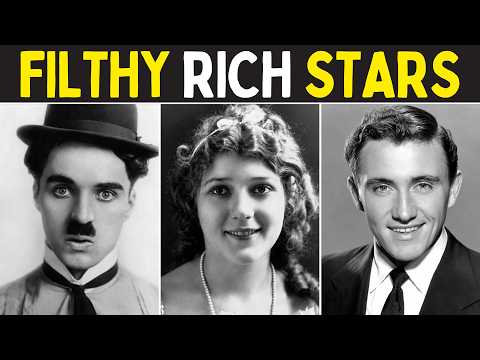
Charlie Chaplin looked like a little tramp, but behind the mustache stood one of cinema’s first true moguls. He co-founded United Artists to gain control over his creative destiny, turning himself into a global brand. Chaplin understood that the real money was in authorship and ownership, and he built a fortune that made him one of the most powerful figures in early Hollywood.
Mary Pickford was called America’s sweetheart, but that nickname hides how dangerous she was in a business room. She helped create United Artists, standing beside giants like Chaplin and Fairbanks to change the balance between stars and studios. Pickford’s intelligence and refusal to be treated like decoration made her a founder, a producer, and a symbol of ownership in an era built on control.
Shirley Temple was a child, but her smile moved more money than most grown stars ever touched. During the Great Depression, her image appeared on dolls, clothing, and merchandise, turning her into a national business engine. She was not a billionaire, but the commercial world around her had billionaire energy before celebrity branding became normal. Later, she built a second life in public service, adding dignity to a career defined by childhood fame.
Bing Crosby made relaxed confidence sound expensive. He was a complete entertainment system—radio, records, movies, and television—before the modern celebrity empire had a name. Crosby’s easy style and business instincts turned fame into infrastructure, bridging performance and commerce with unusual smoothness.
Clark Gable conquered Hollywood like a king collecting tribute. His name could sell romance, adventure, and scandal with effortless force. Gone with the Wind turned him into a permanent piece of movie mythology, and his earning power sat at the center of an industry built on fantasy. Gable’s fortune was not just money; it was command.
As we continue down this list of legendary stars, the stories only get more fascinating. From Joan Crawford’s self-manufactured glamour to Fred Astaire’s elegant brand, each star reveals a different path to wealth in the golden age. Stay tuned as we uncover the secrets of Hollywood’s richest icons and the empires they built.
Betty Grable’s legs were insured for a million dollars, but the real gold mine was the fantasy she sold. During the 1940s, she became one of the most bankable women in America, a bright musical star whose pinup image was not just a photograph—it was a national mood. Soldiers carried it, studios promoted it, and audiences turned her into a symbol of beauty, comfort, and glamour. At a time when the world badly needed escape, Grable’s power came from being both approachable and impossible to ignore.
Joan Crawford built herself from nothing, then made Hollywood pay attention every time she entered a room. Unlike stars who arrived protected by family money or studio favoritism, Crawford created her image through discipline, hunger, and almost frightening self-control. She came from hardship, danced her way into the movies, and then reshaped herself into one of MGM’s most glamorous symbols. But Crawford’s wealth story was never just about beauty—it was about survival. Silent star, sound star, fashion icon, dramatic actress, Oscar winner, comeback queen—each chapter added another layer to her power.
Fred Astaire made elegance look effortless, but behind every step was a brand that never stopped earning. His screen image was refined, light, controlled, and almost impossibly graceful. He did not dominate a room with brute force; he floated through it as if money, manners, and music had all agreed to follow him. With Ginger Rogers, he helped create some of the most beloved musical moments of the studio era—and those films sold more than tickets. They sold sophistication. Astaire’s wealth story goes beyond acting because he understood that his name represented a standard.
Ginger Rogers did everything Fred Astaire did, but she did it while Hollywood tried to underestimate her. That famous line about dancing backward in heels became popular because it captured something true. Rogers was more than a partner—she was a star with timing, intelligence, comedy, glamour, and dramatic weight. Her partnership with Astaire made her immortal, but her career did not depend only on him. She won an Academy Award for Kitty Foyle, proving she could carry a film with emotional force as well as musical charm.
Gary Cooper became rich by making silence feel more expensive than speeches. His screen power was not built on theatrical gestures or polished speeches—it came from stillness, honesty, and a kind of moral weight audiences trusted instantly. Cooper looked like the man who would say little, mean everything, and stand alone when everyone else folded. Studios valued him because his name suggested integrity, and integrity sold. He could be rugged, noble, romantic, wounded, or heroic without ever seeming false.
Spencer Tracy did not sell glamour. He sold authority, and Hollywood paid dearly for it. In a town obsessed with faces, Tracy built his power on credibility. He looked human, intelligent, and emotionally grounded, which made audiences believe him even when the story around him was large and dramatic. MGM understood his value because he brought weight to everything he touched. His back-to-back Academy Awards turned him into one of the most respected actors of his generation, but respect alone does not explain his long earning power. Tracy had something rarer: audience confidence.
James Cagney looked like trouble in motion, and Warner Brothers turned that electricity into money. He exploded onto the screen with a speed and intensity that made him unlike the smoother leading men around him. Cagney could dance, joke, threaten, charm, and dominate a scene before another actor had finished blinking. His gangster roles made him famous, but his talent was much wider than the tough guy image. He had rhythm, intelligence, and a working-class edge that audiences recognized immediately.
Bette Davis did not become rich by being easy. She became valuable by being impossible to replace. Her face could harden like steel, her voice could cut through a scene, and her eyes seemed to expose every lie around her. Warner Brothers did not always know what to do with that power, but audiences did. Davis made emotional conflict feel dangerous. She fought for stronger roles, sued her studio, lost the legal battle, and somehow came back with even more authority.
Greer Garson looked like nobility, and MGM turned that dignity into box office gold. She arrived in Hollywood with refinement, intelligence, and a voice that seemed built for prestige pictures. MGM quickly recognized that Garson could sell a very specific kind of fantasy: moral elegance. In an era shaped by war, sacrifice, and emotional uncertainty, she became the screen woman who could suffer beautifully, endure gracefully, and make virtue feel dramatic. Mrs. Miniver transformed her into more than a star—it made her a wartime symbol.
Tyrone Power looked like Hollywood had carved him from romance, danger, and perfect lighting. In the golden machinery of 20th Century Fox, he became the kind of leading man studios loved because his face could sell almost anything. Swashbucklers, war dramas, romances, historical adventures, and courtroom suspense—Power had the beauty of a matinee idol, but his best work revealed something darker beneath the polish. Audiences came for the charm, yet they stayed because there was always a shadow behind his smile that made him valuable.
Robert Taylor was called the man with the perfect profile, but the real story was how long Hollywood kept cashing in on that face. MGM discovered him, shaped him, polished him, and turned him into one of the studio’s most dependable romantic leading men. In the studio system, beauty was not just beauty—it was inventory. Taylor’s looks became a corporate asset, something MGM could place into dramas, adventures, romances, and prestige pictures whenever it needed reliable glamour. But his career was not only surface. Over time, Taylor pushed into darker roles, westerns, war films, and television, extending his usefulness far beyond the early pretty boy image critics tried to trap him inside.
Humphrey Bogart did not look like a billionaire fantasy. He looked like the man who knew where the bodies of Hollywood’s illusions were buried. That was his magic. In an era of smooth leading men and sculpted perfection, Bogart brought grit, intelligence, bitterness, romance, and danger in one unforgettable package. He spent years playing gangsters and hard men before The Maltese Falcon and Casablanca transformed him into something much more valuable: a myth. His wealth story is not built on mansions or billionaire claims—it is built on permanence.
Cary Grant smiled like a gentleman, negotiated like a businessman, and lived like he understood every dollar had a camera on it. He was one of the sharpest financial minds among classic Hollywood actors, protecting his independence through profit participation when most stars surrendered to long contracts.
John Wayne became more than a star—he was a brand, a political image, a western monument. His name could sell nostalgia, patriotism, and toughness all at once, making him one of the closest examples of a classic star becoming a long-term commercial machine.
Mae West charged admission before the rest of Hollywood understood the business. She wrote, performed, and shaped her own persona, turning controversy into profit and proving that one woman’s personality could become a studio’s financial lifeline.
Lucille Ball and Desi Arnaz built Desilu and changed television forever. Reruns became money; syndication became power. Ball later ran a major studio, and Arnaz pushed for ownership rights that turned a sitcom into a permanent money machine.
Walt Disney turned animation into an empire, Cecil B. DeMille made spectacle a guarantee, and Louis B. Mayer controlled the faces that made Hollywood rich. If the actors were diamonds, Mayer owned the jewelry box.
Douglas Fairbanks and Mary Pickford helped create United Artists, while Gloria Swanson made luxury itself part of the performance. Greta Garbo walked away and preserved her myth; Marlene Dietrich sharpened glamour until it looked dangerous.
Katharine Hepburn sold spine, Barbara Stanwyck sold competence, and Claudette Colbert made polish pay. Norma Shearer understood access, Marie Dressler proved humanity could be profitable, and Wallace Beery made roughness bankable.
Deanna Durbin sang and Universal counted the receipts. Alice Faye turned warmth into wealth, Don Ameche charmed his way to longevity, and Errol Flynn generated fortunes while spending his own.
Anne Sheridan sold image power, Dick Powell reinvented himself into ownership, and Van Johnson packaged familiarity in a smile. Margaret O’Brien’s tears carried box office weight, Randolph Scott quietly built real wealth, and Olivia de Havilland changed the rules forever.
Old Hollywood was never just beauty, romance, and applause. It was ownership, image, control, and money wearing a velvet mask.
Which of these legendary stars do you think built the most impressive empire—and whose story surprised you the most? Share your thoughts below.






