In the shadow of Hitler’s rise to power, a chilling secret was being woven into the fabric of Nazi Germany. It was a program designed to engineer a master race, a project so clandestine that its true horror would only be revealed decades later. This is the story of the Lebensborn—the Nazi breeding program that brought thousands of children into the world, only to leave them grappling with a legacy of shame, secrecy, and unanswered questions.
Helga Catharina was one of those children. Born on March 23, 1941, she was conceived nine months earlier on the day Germany celebrated victory over France. “My mother went to the island of Usedom, a meeting place for the Nazi elite. That’s where she met my father for the first time,” she recalls. Helga was an illegitimate child, born out of wedlock, and her mother did what was considered best at the time: she went to a Lebensborn house to give birth.
The Lebensborn program was the brainchild of Heinrich Himmler, the leader of the SS. In 1933, Hitler had introduced racist laws, forcibly sterilizing those with hereditary diseases and prohibiting marriages between Jews and German citizens. Himmler was tasked with putting the finishing touches on an unprecedented eugenics program. The mission was simple yet Machiavellian: recruit parents who would procreate and produce a generation of pure Aryans. Members of the Nazi Party were ordered to have at least four children with their wives—and, more secretly, to father as many children as possible out of wedlock.
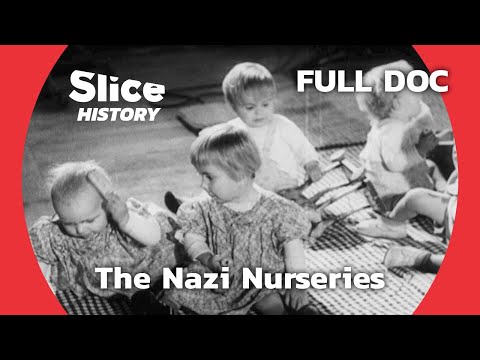
The first Lebensborn home opened in Steinhöring, a place where pregnant single women could give birth without judgment. In the early years, the regime kept the project top secret, with no propaganda or public announcements. Only amateur footage exists of these homes. From 1938 onwards, birth houses opened in annexed Austria, where the physical appearance of women matched the principles of the Ministry of Race. “All Aryans were welcome. But they had to prove their Aryan identity,” explains Brigitte Rambeck, who was born in a Lebensborn in Pernitz. Her father was a lawyer in the Nazi Party, and her parents were accepted without issue.
Himmler’s vision extended beyond Germany’s borders. After Norway surrendered in June 1940, he ordered the opening of ten birth houses there. Norway was a country of his dreams—its people were believed to be descendants of Vikings, with typically Aryan traits. “The intention was that the soldiers would come into contact with Norwegian women and procreate,” says Thoralf Blatt, who was born in a Lebensborn near Oslo. His mother, like many others, had no alternative. “They were judged by people and accused as being for the Germans. They were ostracized because they had made the mistake of sleeping with the enemy.”
Between 1942 and 1945, 10,000 children were born in Norway—the largest contingent of Lebensborn children. Most were sent to Germany. Birth houses also opened in Holland, Sweden, Denmark, and later in France and Belgium, where populations had previously been considered impure. In 1943, the black SS flag flew over Wégimont castle in Belgium, where Gisèle Niango was born. She has spent 70 years trying to understand why her mother gave birth there. “According to my French identity documents, I was born in Bar-le-Duc on October 11th, 1943. My mother was extremely poor. She had nothing.” Gisèle suspects her mother was forced to abandon her due to poverty, but she will never know for sure.
The Lebensborn homes were safe havens where nurses wore swastikas. Giselle Heidenreich’s mother was one of the program leaders. “They say it was the best time of their life. They had very good food, they were laughing and singing and dancing. It was like kind of little paradises.” But this paradise came at a price. Children born with disabilities were considered useless and dangerous—they were sent to hospitals and killed. “Children had to be perfect, of course. And if there was somebody who was not okay, they were sent to special treatment. Special treatment was killing,” Giselle explains.
For the “perfect” children, destiny had something else in store. A month after birth, they were baptized according to Nazi rites—a ceremony that initiated them into the National Socialist regime. “I was born in a Lebensborn in March and a month later, on April 20th, Adolf Hitler’s birthday, I was admitted into the SS community,” Helga recalls. “SS men in uniform touched the baby with a dagger—the SS dagger—not with a cross. So, now we accept you as a member of our society.” Godfathers were often high-ranking Nazis; some children had Göring or Goebbels as their godfathers.
When leaving the birth house, mothers faced a final, irrevocable choice: the authorities advised them to leave their children, promising to erase all traces of the biological parents and find a new family—an SS family, of course. At five months old, Helga was assigned to a foster family and spent her first four years in a complex near the Führer’s headquarters. “She brought me to her sister as a Norwegian foster child. She did not tell that I was her real child.”
In occupied countries, the program took a different turn. During the occupation, almost 50,000 children were born each year to relationships with German soldiers. In April 1942, Himmler ordered the Lebensborn to take immediate action to obtain “Germanizable” children. A few months later, the SS opened Westwald, a Lebensborn in a forest north of Paris. Erwin Grinski was born there but only discovered this in 2009 when his mother died. “My mother was a translator and worked as an interpreter for the German army. She was not aware that she’d given birth in a Lebensborn. She thought that it was a French maternity clinic.” His mother refused to leave him and fled to Germany, where she discovered his father was already married.
As the Allies closed in, the Lebensborn homes were evacuated. SS troops were ordered to repatriate newborns to Munich. Gisela’s mother participated in the closure of the French Lebensborn in Lamorlaye, bringing children to Wiesbaden and Steinhöring. In Belgium, the directors panicked as the US military approached. Walter Boser was not yet one year old when he and his mother were removed in September 1944. “We went by truck to Aix-la-Chapelle. I don’t know what happened to her after that. I don’t know why she wasn’t put in the same truck as me. The children and then the staff had been put in the truck. She ran behind the truck shouting that I was her child. They didn’t care.”
It took eight months for the German troops to repatriate Walter and the other residents to Bavaria. The Nazi regime had fallen, but SS officials wanted to keep the children at all costs. 300 of them were found in cramped conditions in the Bavarian headquarters. On May 3, 1945, the GIs took possession of Steinhöring. “The Americans arrived. And that’s when I realized that I considered the US as the enemy. The soldiers were very kind to the children in the home. They brought us gifts. But I felt as if it was wrong. I was suddenly supposed to like the American soldiers. I was a child and had spent the first four years of my life being educated in Nazi ideology. It was complicated.”
The fall of the last Lebensborn signaled the beginning of the end of the eugenics program. Germany was in ruins, and a question had to be answered: what should be done with these children? They were handed over to the Red Cross and the United Nations and placed in a convent alongside orphans from concentration camps. 15 of these children were French, including Walter and Giselle. “It was run by nuns. It was a former nunnery. They set up a home for the children who came from the surrounding camps. Some Jews came, some alone and by foot to this home. There were around a hundred small children. We were housed in a wing of the building. Older children came here to reconstruct themselves.”
It is somewhat paradoxical that teenagers released from concentration camps looked after Giselle and the other young children. But the journey of the Lebensborn residents didn’t end at the Indersdorf convent—it was just a beginning. The Nazis had destroyed almost all birth records, and the documents held by the French were fragmented. The children were sent to Allied countries with adoption policies, decided by language. “We spoke French, we spoke German, we spoke many different languages. Even the children that had been born in occupied countries like Poland spoke the native language. That’s how I ended up in France.”
In 1946, France took these children from the United Nations to rebuild the population. Many were ill upon arrival. Walter had an eye injury and was hospitalized for months. They were placed in orphanages and with wet nurses, and their birth records were erased. “The social aid services erased the birth records as was standard at that time for wards of the state. In doing so, France thought that they had erased their past as Lebensborn children. Children of shame.”
In Germany, things happened differently. Parents were identifiable, and many came to reclaim the children they had given to the Führer. This was when Gisela Heidenreich discovered that the family she lived with was not her real family. “One day they said, ‘Papa is coming home.’ There came a man and the boys ran to him and said, ‘Papa, papa.’ And of course I said also papa, papa. And this I remember this scene. This is the first shock in my whole life. I still see this man refusing me and saying, ‘What are you doing here?’ And to his wife, ‘Why did you bring this SS bastard in?’ So, this was a real shock. I was fallen out of my identity.”
Gisela then found her birth mother, and they had to learn to live together in a country in ruins. At the same time, children in Norway were discovering, rather cruelly, that they were not like other children. In a country traumatized by five years of occupation, the Lebensborn babies symbolized collaboration with the enemy. Thorleif had followed his mother to Germany during the war and returned to Norway after liberation. “When we returned to Oslo, I could only speak German. But when we traveled from the center of Oslo to my mother’s house, I wasn’t allowed to speak. We didn’t want anyone to discover that I was German. So, the first month that I was there, I was not allowed to speak.”
In 1954, when Thorleif was 12, the story behind his birth caught up with him again. His mother wanted to marry a Norwegian man, but Thorleif was a problem—an obstacle. “The man that she wanted to marry did not want me to be part of the marriage. His mother held a deep hatred for the Germans, and she said to him, ‘If you marry this woman, her little kraut must not be a part of the marriage.’ So, my existence caused a problem for my mother. She decided to put me in an orphanage.”
Many of the children suffered a fate worse than Thorleif. Some went through hell at the end of the war, just because they were born in a Lebensborn. Paul Hansen’s father was a German soldier, and his Norwegian mother followed him to Germany, leaving Paul in a Nazi children’s home. “My mother stayed there for a year, and she abandoned me in a Lebensborn. I didn’t know where she’d gone.” From 1945 onwards, the Oslo authorities supported Paul and thousands of other children. Some were placed in psychiatric hospitals. “When I arrived at the Emma Hjorth Psychiatric Hospital, I found myself living with some very ill people. They would scream out at night. I asked myself, ‘What am I going to do?’ We were officially declared mentally ill because we had been born in a Lebensborn. When we went for a walk in the city center, people would laugh at us. ‘Hey, it’s the freaks from the institute.’ They called us the Emma Hjorth freaks.”
50 years after the war, the Norwegian Lebensborn children took the state authorities to court for discrimination. The state granted them financial compensation but refused to admit liability. “I don’t know what happened to everyone. But during the time that I was president of the Association of Lebensborn Children of War, I heard many horror stories. It’s difficult to comprehend the extent of the abuse that took place in the orphanages and the foster homes. The Norwegian authorities considered the little Krauts as inferior and as a possible future fifth column.”
In France, no one feared a fifth column since the children didn’t know where they came from. A family in Nancy adopted Giselle Niango when she arrived in France. She was brought up in a loving family and grew up without ever suspecting her origins. But in 1954, 10 years after the war, she discovered her birth name by chance. “I started to feel different when I was 10 years old. Other children had started to call me names and they said that I’d been adopted. It was a difficult time for me. I asked my parents if I’d been adopted. They said yes and gave me my birth file. I found out that my birth name was Magoula. Then I forgot about it. I kept the file in a drawer.”
Other children were not able to bury the past. After returning from Germany, Erwin Grinsky lived with his mother in Avignon. His mother called him Hervé for 60 years, fearing that his Lebensborn birth would be unmasked if she called him by his real name. “I was 16 at the time. I was applying for my identity card. My mother kept all of her documentation in a small iron chest. She took a document out of it and gave it to me. It had the name Ervin Schmidt written on it. I started to question things. Was I called Grinsky or was I called Schmidt? My mother told me that it was a secret and that nobody could find out. She tore the document up and threw it into the fire.”
Little by little, she gave him snippets of information, but she always called him Hervé. She never called him Ervin. The post-war fate of the Lebensborn children varied, but they all have one thing in common: they have lived for decades in denial, in secret. Walter Boser is an exception. He fought for 30 years to access his social aid file. His quest began the day he met his future wife. He wanted to know who he was. He tracked down his mother, who was still alive in Belgium. “I was 54 years old when I met my mother for the first time. It was a joy and a disappointment. I was disappointed to find that she had become an old woman. I couldn’t remember what she looked like.”
After years of speculating, Walter learned that he came from the Belgian Lebensborn in Wégimont. He wanted to know whether he was conceived out of love or for the Reich. “I made her explain what had happened. She said that she was young at the time. She was only 18. She worked there as an assistant cook. She prepared the bottles for the babies. She said that she needed someone to look after me. So, she took me to work with her. Apparently, this was allowed.” According to Walter’s mother, he was taken by mistake with the Lebensborn children. Her explanations didn’t give him the answers he sought. “I asked her what had happened to my father. She handed me a picture of me in my father’s arms. He was crouching down and he had his legs around me to keep me upright. This old photograph is all that I have of my father.”
His father died in 1986, before Walter could find him. “If the French authorities had helped me when I was 21, I might have known my father. But because of stupid bureaucratic procedures and the cruelty of the people involved, I missed out.” The children of the Nazi birth houses had to wait until 2008 to get the answers they were looking for—the date the Red Cross opened their archives, 60 years after the war, a veritable lifetime. Erwin finally got the answers his mother had refused to give him. He was indeed born in the French Lebensborn in Lamorlaye. “All that I can say is that it was very difficult to deal with. I spent 65 years of my life in the dark. This might be why I’m the way I am. I’m a pretty close person. It certainly had an effect on me. I spent many years not knowing where I was from.”
Giselle Niango also lived in ignorance for over 60 years. When her adoptive mother died, her husband pushed her to seek her origins. She only had her birth name to go on, but she managed to discover her birthplace. She revealed all to her children. “It was very difficult to talk about it. It’s still very difficult even now. We’re not responsible. We are the victims. But since the war people have been prejudiced against the Lebensborn children. I was ashamed. It was difficult to learn that I was part of the project. It was difficult to accept.” She discovered she had a brother living in Belgium, and through him, she found out more about her biological parents. “I contacted my younger brother. He was very welcoming towards me. He told me about our biological mother. He found a photograph of a German military in one of his mother’s albums. But that’s it. There’s no name. Nothing else.”
Half a century after the war, the children, now adults, are left with more questions than answers. They still feel the pain and resentment. Who were these men—their fathers? Were they just soldiers, or were they part of the SS? Helga Carau discovered that her father was a high-ranking member of the SS who had been well aware of the purpose of the Lebensborn. “I love my parents, and I have never wanted to take them to trial. Is this the cross that I bear? Even today it is difficult. Children with the same background as me will carry the weight of the legacy of National Socialism forever.”
The residents of the Lebensborn were the orphans of history. They had never been recognized as victims of war. From October 1947 to March 1948, the four SS organizations that led the purification of the race program were investigated as part of the Nuremberg trials. The leaders of the Lebensborn program were in the dock: Colonel Max Sollmann, program director; his assistant Inga Vermetz; and Gregor Ebner, the organization’s medical officer. They were acquitted of charges of war crimes and crimes against humanity and were only charged with being members of the SS. Gisela Heidenreich’s mother spent 11 months in prison in Nuremberg. She was a key witness in the trial. “Nobody ever could prove their crimes and there were a lot of crimes. It was a criminal institution. Definitely, it was. But all the time, she always said, ‘I only did something very good. We only helped foster children and we only helped parents who couldn’t get own children and I would do this today again.’ This was the sentence I heard very often from her. And also the sentence, ‘Do you think that we would have come free in Nuremberg and the Americans themselves said this was a model of a very excellent social institution?’ She kept repeating the sentence.”
They were found not guilty in the eyes of history, and the 22,000 Lebensborn children have fallen into oblivion. All that remains is the shame that drives most of them to hide their past, even 70 years later. They are connected by their inner demons and their questions that remain unanswered. The Lebensborn children still carry this pain with them.
Yet in the silence, some chose to speak. Helga, Gisela, Walter, and Erwin broke decades of secrecy, not for vengeance, but for recognition. “We were never asked if we wanted to be born into this,” Walter said. Their testimonies became a quiet reckoning, forcing archives open and history to be rewritten.
Today, the last of them are elderly, carrying names that once marked them as shameful. But they are no longer invisible. “I am not a Nazi child. I am a child of war,” Helga insists. Their legacy is not the ideology that conceived them, but the resilience that outlived it.
Their stories end not with answers, but with a question that still echoes: when a state creates children for a monstrous purpose, who bears the responsibility—and who will remember them when the last voice falls silent?






