On the morning of July 4, 1918, a thousand American soldiers woke up in Australian trenches, ready to fight under a foreign flag. They were there because they had disobeyed a direct order from their own commander, General John J. Pershing, who had demanded their withdrawal days earlier. But as the first light crept over the Somme, they stood shoulder to shoulder with Australian diggers, waiting for a barrage that would change the course of the war.
The man behind this audacious plan was Lieutenant General John Monash, a 53-year-old civil engineer from Melbourne. Monash had meticulously designed an attack on the village of Le Hamel that would combine tanks, artillery, infantry, and aircraft in a way never before attempted on the Western Front. He needed every man he could get, including the Americans Pershing wanted back. When the order came, Monash fought it through the highest channels, and though Pershing refused to relent, events on the ground made withdrawal impossible. The Americans stayed.
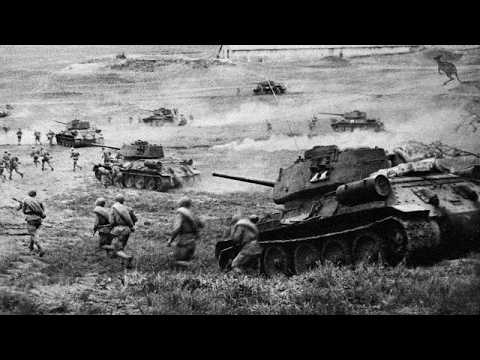
Monash’s plan was revolutionary. The infantry would not lead the assault; they would follow a creeping barrage that advanced at a precise rate, 100 yards every three minutes. Sixty Mark V tanks would crush the wire and silence machine guns, while aircraft would drop ammunition crates directly to the troops—a first in military history. Every phase was timed to the minute. Monash predicted the battle would take 90 minutes.
As the clock ticked toward 3:10 a.m., the tension was palpable. The Americans, many of whom had never seen combat, had been integrated into Australian platoons, learning the ropes from hardened veterans. They wore Australian uniforms, carried Australian weapons, and answered to Australian NCOs. “They were part of the team,” one Australian later recalled. “We didn’t treat them any different.”
At precisely 3:10, over 600 guns roared to life, and the wall of fire began its deadly crawl. The infantry stepped off behind it, the tanks grinding ahead. The noise was deafening, but the Americans kept pace, their training kicking in. Within minutes, German machine guns opened up, but the tanks dealt with most of them. The advance was relentless.
When the infantry reached the first German trench line, most defenders were already dead or stunned. Prisoners surrendered in droves. Overhead, RFC aircraft appeared on schedule, dropping crates of ammunition that parachuted down exactly where they were needed. The Americans fought well, keeping up with the Australians through the chaos. There were no reports of panic, no units that failed to reach their objectives.
By 4:43 a.m., every objective had been taken. The village of Le Hamel was in Australian hands, the ridge cleared, and the German garrison overwhelmed. The fighting had lasted 93 minutes—just three minutes over Monash’s prediction. The cost was high: over a thousand Australian casualties, but German losses exceeded 2,000, with 1,600 taken prisoner. The ratio told the story: the Germans had been completely overrun.
Monash’s combined arms approach had worked perfectly. The tanks, artillery, infantry, and aircraft had operated as a single system, each compensating for the others’ weaknesses. The aerial resupply, considered impossible by many, had been a resounding success. It was a proof of concept that would influence warfare for decades to come.
But the aftermath was bittersweet. Pershing, stung by the defiance, issued a directive within days: American troops would never again serve under foreign command. The four companies were withdrawn, their experience absorbed back into the American army. The partnership that had won at Hamel was not to be repeated. Monash never commanded American troops again.
Yet the legacy of Le Hamel was undeniable. The combined arms tactics tested that day became the blueprint for the Allied offensives that ended the war. Monash, the part-time soldier and civil engineer, had produced the tactical masterpiece that helped break the deadlock on the Western Front. And the two Americans who had donned Australian uniforms and walked into the barrage returned to their units, their names lost to history, but their contribution forever part of the story.
As the sun rose over the Somme on July 4, 1918, the world had witnessed a new kind of warfare—and the men who made it happen, both Australian and American, had proven that courage and innovation could overcome even the most stubborn of orders.
But the story did not end with the sun rising over a captured village. In the days that followed, as the wounded were carried back and the dead counted, a quieter battle began in the rear areas—one fought with paperwork, pride, and the bruised egos of men who had been proven wrong.
Pershing’s directive arrived at Australian Corps headquarters within seventy-two hours. It was terse, formal, and absolute: no American soldier would serve under foreign command again. The four companies of the 33rd Division were ordered back to their own lines. There was no mention of Hamel in the order. No commendation, no acknowledgment that the men had fought well. It was as if the battle had never happened.
Monash read the directive in his headquarters tent and, according to one aide, set it down without comment. He had expected nothing less. What he had not expected was the reaction of the Australians themselves.
In the trenches south of the Somme, diggers who had fought beside the Americans began to grumble. “They pulled their weight,” one sergeant wrote in his diary. “Better than some of ours, and they’d never been under fire before.” Another described the Americans as “keen as mustard, and not a coward among them.” These were not sentiments born of sentimentality. They were the blunt assessments of men who had watched the Americans walk into a barrage and keep walking.
The withdrawal itself was awkward. The Americans did not want to leave. Several reportedly asked their Australian NCOs if they could stay, offering to transfer officially, to resign their commissions, to do anything that would keep them in the line. “We came here to fight,” one lieutenant said. “We’re not going back to sit in a rear area and drill.”
But orders were orders, and the Americans packed their kit and marched back through the communication trenches. As they went, Australians lined the parapets and called out to them. Not cheers, exactly—something quieter and more meaningful. “Good luck, Yank.” “You did all right.” “Come back anytime.”
The Americans returned to the 33rd Division, where they were absorbed back into their units and promptly told not to discuss the operation. The official line was that they had been on a training exercise. Their experience at Hamel—the creeping barrage, the tank coordination, the aerial resupply—was classified as Australian methods, not American.
But word travels in armies. Within weeks, officers at Pershing’s headquarters were quietly requesting copies of Monash’s operational orders. They wanted to study the timetable, the barrage schedule, the integration of tanks and infantry. The same staff officers who had enforced the withdrawal were now studying the battle they had tried to prevent.
Monash, for his part, had already moved on. Hamel was a proof of concept, and he was now planning something far larger. The success of July 4 had convinced Rawlinson and Haig that Monash’s methods could work at scale. Throughout July, Monash worked on plans for a massive offensive east of Amiens—an operation that would involve the Australian Corps, the Canadian Corps, and French forces, all operating under a single coordinated timetable.
The 100 Days Offensive, as it came to be known, would begin on August 8, 1918. Monash’s blueprint—artillery, tanks, infantry, aircraft, all synchronized—would be applied across a front of more than twenty kilometers. The battle that ended the war had its roots in a ninety-three-minute fight that Pershing had tried to stop.
As for the two Americans who had buried their dog tags and borrowed Australian boots, their fate remains a mystery. They returned to their units, put their own uniforms back on, and disappeared into the vast machinery of the American Expeditionary Force. They may have fought in the Meuse-Argonne in the autumn of 1918. They may have gone home to Illinois and never spoken of Hamel again.
But the Australians remembered. In the years after the war, when veterans gathered and stories were told, the Americans who had stayed were always mentioned. “They didn’t have to be there,” one digger recalled decades later. “But they were. That counts for something.”
Monash returned to Australia and to civil engineering. He was knighted, honored, and eventually forgotten by most of the world—until historians rediscovered Hamel and recognized what he had done. The battle that took ninety-three minutes had taken him a lifetime to prepare for, and it changed the way wars were fought.
But on the morning of July 4, 1918, none of that mattered. What mattered was the barrage, the tanks, the walking infantry, and the thousand Americans who had chosen to fight beside men they had known for only a few weeks. They had defied their own commander, risked their careers, and walked into the unknown. And they had won.
The official histories closed the file on Hamel without ever naming the two Americans who had buried their dog tags in the mud. But the men who shared their trench never forgot. In the 1930s, an Australian veteran wrote to a Illinois newspaper, asking if anyone knew of two soldiers from the 131st Infantry who had worn slouch hats on the Fourth of July. The letter was never answered. No one came forward. The silence, it seemed, was part of the bargain.
What did survive was the method. Monash’s timetable—the creeping barrage, the tank lanes, the aerial drops—was copied, adapted, and improved by every Allied army in the final months of the war. By November 1918, the German army was in full retreat, and the men who had watched the Americans walk into the fire at Hamel understood what they had witnessed. “We saw the future that morning,” one Australian officer wrote. “It just took the rest of the world a while to catch up.”
Monash never spoke publicly of the Americans who had defied Pershing. But in his private papers, he kept a single note, written in his careful engineer’s hand: “They came when they did not have to. That is the whole of it.” The note was found after his death in 1931, tucked inside a folder marked simply “Hamel.”
The two soldiers from Illinois went home, hung up their uniforms, and lived the rest of their lives in obscurity. They never received medals for that morning. They never asked for any. But somewhere in the flatlands of the American Midwest, two old men may have sat on porches and remembered the roar of the guns, the weight of borrowed boots, and the Australians who called them “Yank” and meant it as a compliment.
The story of Le Hamel is usually told as Monash’s triumph—and it was. But it is also the story of a thousand Americans who chose the fight over the order, and of a general who let them. In the end, the barrage lasted ninety-three minutes. The lesson lasted a century.
So here is the question that remains: if you had been one of those two soldiers, standing in the trench on the night of July 3, 1918, with your own commander’s order in your pocket and a borrowed Australian uniform on your back—would you have stayed? Or would you have gone back?






