They made us laugh until our sides ached, night after night, in living rooms across the world. But behind the bright lights and canned laughter, many of television’s most beloved sitcom stars were fighting battles no audience ever saw. Valerie Harper was told she had only months to live—yet she went on living for six more years, cracking jokes and stealing scenes while quietly waging war against cancer. She was not alone.
From the scream of Gladys Kravitz to the deadpan of Captain Holt, the faces that defined decades of comedy carried secrets that would break your heart. Some hid their diagnoses for years, determined to keep the laughter alive. Others shared their struggles only when their bodies could no longer keep the secret. This is the story of the sitcom stars who gave us everything—even as their own lives slipped away.
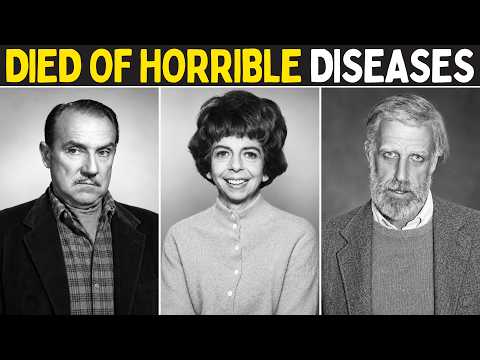
Alice Pearce was already dying when Bewitched first aired in 1964. She had been diagnosed with ovarian cancer before filming began, yet she threw herself into the role of nosy neighbor Gladys Kravitz with manic energy. Week after week, she peeked through curtains and screamed for her husband, Abner, while the disease silently spread inside her. She filmed her final episodes in early 1966. That March, she died at just 48. Months later, she was honored with an Emmy—a bittersweet recognition she never lived to accept.
On screen, Gladys was loud and frantic. Off screen, Pearce showed a quiet courage that few knew about until it was too late.
Then there was Fred Gwynne, the gentle giant who brought Herman Munster to life. Each day, he endured heavy makeup, a massive headpiece, and platform boots that made him tower over everyone. The costume was hot and exhausting, but Gwynne never complained. He made Herman lovable—a clumsy monster with a heart of gold. Decades later, he appeared in films like My Cousin Vinny and Pet Sematary, still working steadily. In 1993, pancreatic cancer took him at 66. The world mourned a big, kind monster, but behind the costume was a talented actor whose final chapter was painfully real.
Vivien Vance gave us Ethel Mertz, the loyal sidekick who made Lucy Ricardo’s schemes even funnier. Together with Lucille Ball, she created one of the greatest comedy partnerships in television history. Vance won an Emmy for the role and later reunited with Ball on The Lucy Show. But in her later years, she faced a long battle with cancer. Her health declined slowly, yet the cheerful image of Ethel lived on in reruns across the globe. She died in 1979, leaving behind a legacy as the model for every loyal sidekick who followed.
Desi Arnaz was more than Ricky Ricardo—he was a visionary. Alongside Lucille Ball, he built Desilu Productions and pushed for I Love Lucy to be filmed with three cameras in front of a live audience. That method became the standard for sitcoms for decades. Some say Arnaz helped invent the rerun by insisting on high-quality film that could be shown again and again. He died from lung cancer in 1986 at 69, but Ricky Ricardo still sings and shouts in homes around the world.
Gale Gordon was the perfect foil for Lucille Ball’s chaos. As the grumpy banker Mr. Mooney on The Lucy Show, his booming voice and red-faced anger made him the ideal target for Lucy’s schemes. Gordon’s career lasted more than 60 years, starting in radio and spanning generations of television. He died in 1995 after a long battle with cancer, leaving behind a legacy as one of comedy’s greatest straight men.
Roxie Roker made history on The Jeffersons as Helen Willis, one half of prime time’s first interracial married couple. In real life, Roker was also married to a white man, bringing authenticity to a role that broke barriers. She earned a Tony nomination for her Broadway work and is also remembered as the mother of musician Lenny Kravitz. In 1995, she died from breast cancer, having faced the disease privately while projecting confidence on screen.
Esther Rolle gave us Florida Evans, the strong matriarch of Good Times. The show tackled poverty and racism with humor and heart, and Rolle fought to keep it honest. She left the series when she felt the focus shifted too far from real issues, returning only for the final season. In 1998, she died from complications of diabetes. Florida Evans remains one of television’s most beloved mothers—a model for the strong sitcom parents who came after her.
These are just the first of many. The laughter they gave us echoes still, but the stories behind the smiles are only beginning to be told.
Richard Mulligan could make two different generations laugh in two completely different shows. In the late 1970s, he played Bert Campbell on Soap, a wild comedy full of crazy twists—nervous, silly, and always in trouble. He won an Emmy for it. Years later, he became Dr. Harry Weston on Empty Nest, a gentler family comedy about a widowed doctor and his grown daughters. He won another Emmy. That kind of double success was almost unheard of. In 2000, colon cancer ended his life, but Bert and Harry still make people laugh today.
Gordon Jump played Arthur Carlson, the kind boss who never quite knew what was going on at WKRP in Cincinnati. He delivered one of the most famous lines in sitcom history at the end of a Thanksgiving episode about live turkeys dropped from a helicopter. Later, millions knew him as the lonely Maytag repairman in television ads. In his final years, he suffered from pulmonary fibrosis, a disease where scar tissue slowly builds up in the lungs. He died in 2003 at 71, leaving behind a huge body of gentle, much-loved comedy.
Then came Don Knotts—nervous, jumpy, and always sure he was in charge. As Barney Fife on The Andy Griffith Show, he kept a single bullet in his shirt pocket and rarely got the chance to use it. Knotts won five Emmy awards for the role. Years later, he found a new audience as Ralph Furley, the landlord with loud suits on Three’s Company. He kept working well into his later years even as his health grew worse. In 2006, he died from complications of lung cancer at 81.
Peter Boyle was known for very different roles before he became a grumpy sitcom father. He played the monster in Young Frankenstein, the angry title character in Joe, and appeared in Taxi Driver. Then came Frank Barone on Everybody Loves Raymond—rude, loud, and hilarious, always fighting with his wife Marie and teasing his sons. Boyle made him impossible to hate. He was nominated for seven Emmys for the role. In 2006, he died after battling multiple myeloma, a cancer of the blood, along with heart disease. He was 71.
Mike Evans played Lionel Jefferson in two homes—first on All in the Family as the smart young neighbor who loved to tease Archie Bunker, then on The Jeffersons when the family moved on up. But Evans did more than act. Together with Eric Monte, he helped create Good Times, one of the most important Black family sitcoms of the 70s. Lionel was clever, calm, and confident—a young Black man shown with dignity on prime time. In 2006, Evans died from throat cancer at just 57.
You may not know the name Alan Melvin, but you have almost certainly seen his face. He played Corporal Henshaw on The Phil Silvers Show, appeared many times on The Andy Griffith Show, was Sam the Butcher on The Brady Bunch, and later played Barney Hefner on All in the Family. That is a lot of famous shows for one career. Melvin was the kind of actor who made every scene better without stealing it. In 2008, he died from cancer at 84.
Estelle Getty was small, sharp, and always had a story ready. As Sophia Petrillo on The Golden Girls, she would begin a tale about her early life in Sicily and the audience would laugh before the story even started. Here is a surprising detail—Getty was actually younger than Bea Arthur, who played her daughter. Makeup and wigs made her look much older. She won an Emmy and a Golden Globe. In her later years, she battled Lewy body dementia, slowly losing the sharp memory and endless stories that had defined Sophia. She died in 2008.
In the Yorkshire countryside, one woman stood at her door with her arms folded, ready to scold anyone who came too close. That was Nora Batty on Last of the Summer Wine, played by Kathy Staff with wrinkled stockings, curlers, and a sharp tongue. The show was one of the longest-running sitcoms in the world, and Staff appeared in more than 200 episodes over several decades. Her battle of wills with Compo, who adored her, was a highlight for millions. In the final year of her life, she was diagnosed with a brain tumor. She died in 2008.
Bea Arthur could get a laugh without saying a word—just that deep voice and famous long stare. She first became a television star as Maude Findlay, a bold, outspoken woman who argued about politics, marriage, and women’s rights. The show mixed comedy with serious subjects other sitcoms avoided. Then in the 80s, she found a second classic role as Dorothy Zbornak on The Golden Girls, the smart, dry substitute teacher who was the calm center of the group. Arthur won Emmys for both roles, and before television she had won a Tony for Mame. In public, Arthur was forceful and direct, but she kept her final illness private. In 2009, she died from cancer at 86.
Wendy Richard played Miss Brahms, the cheeky shop assistant with a strong London accent on Are You Being Served? Years later, she changed direction completely as Pauline Fowler on EastEnders, becoming one of British television’s most recognizable faces for more than 20 years. She faced cancer for many years, keeping working through much of it. In 2009, she died after a long struggle at 65.
George Murdoch was born to play the boss. His most famous sitcom role was Lieutenant Ben Scanlon on Barney Miller, a tough internal affairs officer the detectives dreaded seeing walk in. He played authority figures again and again across television, including Benson and Seinfeld. In 2012, he died from cancer at 81.
Yvette Wilson started out as a stand-up comedian before playing Andell Wilkerson on Moesha, the warm, funny owner of the local hangout. The character was so popular she took her to the spin-off The Parkers. She faced serious health problems in her later years, including kidney disease. In 2012, she died from cervical cancer at just 48—far too young.
Meshach Taylor played Anthony Bouvier on Designing Women, starting as a delivery man and growing into a partner in the business. He was funny, loyal, and often the voice of calm. He earned an Emmy nomination for the role and later appeared in Dave’s World. In 2014, he died from cancer at 67.
Sam Kelly had one of those faces that popped up everywhere in British comedy. He played Bunny Warren on Porridge and Captain Hans Geering on ‘Allo ‘Allo!, working alongside comedy greats like Ronnie Barker. He could make a small role unforgettable—never the loudest in the scene, but often the funniest. In 2014, he died from cancer at 70.
Barry Howard played Barry Stuart-Hargreaves, the snobbish ballroom dancer on Hi-de-Hi!, who believed he was far too good for a holiday camp. A raised eyebrow or a small sniff could get a big laugh. In 2016, he died from cancer.
Jay Thomas played Eddie LeBec, the hockey goalie who married Carla on Cheers, and later won two Emmys as Jerry Gold on Murphy Brown. He was also a beloved radio host, famous for telling the same Lone Ranger story on Letterman every holiday season. In 2017, he died after a battle with cancer at 69.
Robert Guillaume first played Benson DuBois on Soap, then got his own show where he rose from running the household to running for governor. He won two Emmys and became the first Black actor to play the Phantom in a major production of The Phantom of the Opera. Later, a new generation knew his voice as Rafiki in The Lion King. In 2017, he died from complications of prostate cancer at 89.
Charlotte Rae played Mrs. Garrett on Diff’rent Strokes, then got her own spin-off, The Facts of Life, where she became a housemother to a new generation of young actresses. She faced pancreatic cancer, was declared free of it, then later diagnosed with bone cancer. This time, she chose not to undergo heavy treatment again. She died in 2018 at 92, after a career lasting about 70 years.
Max Wright played Willie Tanner on ALF, acting opposite a puppet and making the family feel real even when the jokes were wild. Later, viewers spotted him on Friends as Terry, the owner of Central Perk. In 1995, he was diagnosed with lymphoma, which went into remission for many years. But decades later, the cancer returned. In 2019, he died at 75, having lived more than 20 years after his first diagnosis.
Valerie Harper gave us Rhoda Morgenstern, the funny, honest, slightly insecure best friend on The Mary Tyler Moore Show. She won four Emmys for playing Rhoda across two series, and the episode where Rhoda got married became one of the most-watched television events of the decade. Then in 2013, doctors found cancer had spread to the lining of her brain. She was told she might only have a few months to live. But Harper did not disappear. She spoke openly, gave interviews, and even competed on Dancing with the Stars. She died in 2019 at 80, six years after that frightening news.
Andrew Hall played Russell, one of the teenage sons on Butterflies, a British sitcom that mixed laughter with quiet sadness. For Hall, that role was only the beginning—he built a long career across theater, television, and musical productions. In 2019, he died from cancer at 65.
John Challis turned a small role into something much bigger. As Boycie on Only Fools and Horses, he was the smug secondhand car dealer viewers could not get enough of. The character was so popular he got his own spin-off, The Green Green Grass. In 2021, he died from cancer at 79.
James Michael Tyler rarely said much as Gunther on Friends, but he was always there behind the counter at Central Perk, quietly loving Rachel for years. At first just an extra chosen partly because he knew how to work a real coffee machine, he became one of the most loved background characters in sitcom history. In 2018, he was diagnosed with prostate cancer. In 2021, he spoke publicly to encourage other men to get checked early. That same year, he joined the Friends reunion remotely by video, not wanting his illness to take attention away from the happy event. He died in 2021 at 59.
Kirstie Alley faced one of television’s hardest jobs—replacing a star—when she joined Cheers as Rebecca Howe in 1987. She made the role her own and won an Emmy in 1991. She also became a big film star with the Look Who’s Talking movies. In 2022, she died from colon cancer, which had only recently been discovered. Most fans had no idea she was ill.
Suzanne Somers became a pop culture star overnight as Chrissy Snow on Three’s Company. After a dispute over pay, she was written out, but her career was far from over—she returned to sitcom success in Step by Step and built a whole new life as an author and businesswoman. In 2000, she was diagnosed with breast cancer and spoke openly about it for years. In 2023, she revealed the cancer had returned. She died that October.
Andre Braugher played Captain Raymond Holt on Brooklyn Nine-Nine—serious, flat-voiced, and somehow one of the funniest characters on television. Before comedy, he was already known as one of television’s finest dramatic actors, winning an Emmy for Homicide: Life on the Street. In 2023, he died from lung cancer at 61, having been diagnosed only a few months earlier. The public learned about his illness only after his death.
Danielle Spencer played Dee Thomas on What’s Happening!!, the sharp-tongued younger sister who could stop anyone with a single look. After child stardom, she left Hollywood behind and studied to become a veterinarian. She faced cancer in her later years. In 2025, she died at 60 after a long battle.
Penelope Keith played Margot Leadbetter on The Good Life, the proud, proper, and very snobbish neighbor who hated anything messy or common. She won a BAFTA for the role, then starred in her own sitcom, To the Manor Born, which drew a record-breaking audience of more than 20 million viewers. She was made a dame in 2014. In June 2026, her family announced she had died peacefully at her home in Surrey, where she had lived for more than 50 years while living with cancer. She was 86.
Bill Owen played Compo Simmonite on Last of the Summer Wine—cheeky, messy, and full of mischief, always chasing the neighbor he adored. He stayed with the role for more than 25 years. Even after he was diagnosed with cancer, he kept appearing in the show. In 1999, he died, and the writers chose to face it directly, writing Compo’s death into the story so the other characters could mourn their friend on screen. In a touching twist, Owen’s real son, Tom Owen, later joined the series as Compo’s son.
Paul Eddington played Jerry Leadbetter on The Good Life, then took on a very different part as Jim Hacker on Yes Minister, the politician always outsmarted by his clever civil servant. The show was so admired that even Margaret Thatcher said she was a fan. Behind the scenes, Eddington faced a long battle with a rare form of skin cancer, diagnosed when he was a young man. Yet he kept working for decades. In 1995, he died at 68.
Richard Briers played Tom Good on The Good Life, the man who quit his job to live off his own garden in the middle of the suburbs. Years later, he found another hit with Ever Decreasing Circles. He worked often on stage and became a regular in Kenneth Branagh’s Shakespeare films. In 2013, he died from chronic obstructive pulmonary disease at 79.
Roger Lloyd Pack played Trigger on Only Fools and Horses—the road sweeper with a slow voice and a blank face who proudly claimed he had used the same broom for 20 years. His long pauses and deadpan delivery made every line funnier. Later, he played Owen Newitt on The Vicar of Dibley and appeared in the Harry Potter films. In 2014, he died from pancreatic cancer at 69.
Gorden Kaye played René Artois on ‘Allo ‘Allo!, the cafe owner caught in the middle of everything during the Second World War. In 1990, he suffered a serious head injury when a piece of wood smashed through his car windscreen during a storm. He recovered and returned to work, but the injury affected him for the rest of his life. He died in 2017 at 75.
Barry Cryer made the jokes that the stars told. For more than 60 years, he wrote for Morecambe and Wise, Tommy Cooper, Kenny Everett, and David Frost. For many people, his warm voice was most familiar from radio, where he was a star of a long-running comedy panel show, famous for knowing thousands of jokes and for being kind to younger performers. In 2022, he died at 86, and a flood of tributes from comedians of every age showed how important he was.
Clive Swift played Richard Bucket on Keeping Up Appearances, the exhausted husband of Hyacinth, who insisted their name was pronounced Bouquet. His small reactions—a look, a pause, a quiet complaint—often got the biggest laughs. In 2019, he died after a short illness at 82.
Andrew Sachs played Manuel on Fawlty Towers, the confused waiter from Barcelona whose broken English led to endless mix-ups. The physical comedy was fast and fearless. Interestingly, Sachs was not Spanish—he was born in Berlin and came to Britain as a child, escaping the danger of Nazi Germany. In his final years, he faced dementia. In 2016, he died from complications linked to the illness at 86.
Peter Scolari played Michael Harris on Newhart, the energetic local television producer. He first gained major attention on Bosom Buddies alongside Tom Hanks, and decades later won an Emmy for his guest role on Girls. He was diagnosed with acute myeloid leukemia and continued working when possible. In 2021, he died from complications related to leukemia at 66.
Richard Lewis turned personal anxiety into comedy, becoming famous for his dark, nervous, highly personal style. Television audiences knew him from Seinfeld, where he played a fictionalized version of himself, and from Curb Your Enthusiasm, where his long friendship and rivalry with Larry David created some of the show’s most memorable comic situations. In his later years, he was diagnosed with Parkinson’s disease and eventually retired from stand-up. In 2024, he died at 76 from a heart attack.
Florence Henderson played Carol Brady on The Brady Bunch, the warm center of a very unusual household. The show was not an instant ratings sensation—its popularity grew through reruns, and younger generations discovered it long after its original run. Henderson had worked extensively on Broadway and became the first woman to host The Tonight Show. In 2016, she died from heart failure at 82, shortly after attending the Daytime Emmy Awards alongside several former Brady Bunch cast members.
Alan Thicke played Jason Seaver on Growing Pains, the psychiatrist and father who worked from home while his wife pursued her own career. The show became a major family sitcom of the 1980s and launched the careers of Kirk Cameron and a young Leonardo DiCaprio. In 2016, Thicke suffered a heart attack while playing hockey with his son. He was 69.
So many faces, so many stories. They gave us laughter while carrying burdens we never saw. Which of these sitcom stars do you remember most—and whose hidden battle moved you the deepest? Share your thoughts in the comments below, and let us know which story deserves to be remembered.






