By early 1945, the man who had once electrified crowds and commanded armies was a shrunken, trembling wreck, hidden deep beneath the shattered streets of Berlin. The Führer who had promised a thousand-year Reich now presided over a bunker of concrete and despair, his body ravaged by disease and his mind clouded by a daily cocktail of drugs. “I was looking into the eyes of death,” recalled SS Dr. Ernst-Günther Schenck, describing the 56-year-old dictator as a “living corpse.”
It was not supposed to end this way. In the early years of the war, Hitler had seemed invincible. The Blitzkrieg had crushed Europe, and his armies stood at the gates of Moscow. But the tide turned at Stalingrad, where an entire German army was swallowed by the Russian winter. From that moment, the Führer’s health and spirit began a steep descent. “After Stalingrad, things were really quite different,” recalled his secretary Traudl Junge. “The atmosphere in the Führer’s headquarters was very oppressive.” No one was allowed to mention the war in his presence.
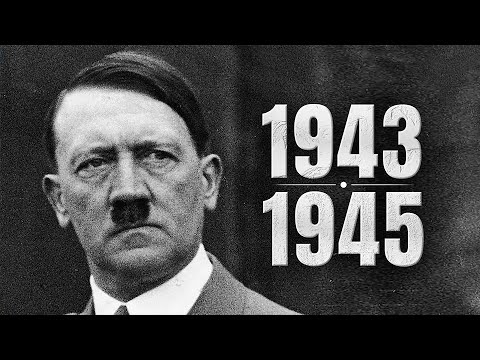
Hitler’s physical decline was shocking to those who had once worshipped him. His left hand trembled uncontrollably—a symptom, doctors later speculated, of Parkinson’s disease. He walked with a shuffling gait, his spine bent, his knees buckling. “His hand could tremble, but the grip of that trembling hand was still sudden and deadly,” noted historian Sebastian Haffner. Yet the man who had once commanded the loyalty of millions now struggled to lift a fork to his mouth or sign his own name.
Behind the trembling hands and hunched back was a pharmacological nightmare. His personal physician, Dr. Theodor Morell, injected him daily with a bewildering cocktail of vitamins, hormones, and narcotics—including methamphetamine, cocaine, and testosterone. “If I didn’t have my faithful Morell, I would be completely knocked down,” Hitler once said. But the drugs that kept him upright were also destroying him from within, fueling his rages and clouding his judgment.
As the Red Army closed in on Berlin, Hitler retreated further into denial. He ordered nonexistent armies to counterattack, screamed at generals who dared bring him bad news, and surrounded himself with sycophants who told him what he wanted to hear. The man who had once bent the world to his will now sat in a bunker, poring over maps of a city that was already lost.
On April 22nd, 1945, the illusion finally shattered. During a military conference, Hitler was informed that the counterattack he had ordered by General Felix Steiner’s army detachment had never been launched. The Soviets had already entered Berlin. For a moment, the room fell silent. Then the storm broke. Hitler ordered everyone out except his closest military aides and launched a tirade against the treason and incompetence of his generals. For the first time, he admitted the truth aloud: “The war is lost.”
What followed was a strange, almost theatrical calm. Hitler announced that he would remain in Berlin until the end and then take his own life. His aides tried to persuade him to flee to the Bavarian Alps, where a final stand might be made. He refused. “I will not wander around like a fugitive,” he declared. The dictator who had once dreamed of marching through Moscow now chose to die in the rubble of his own capital.
In the days that followed, the bunker became a tomb for the living. The concrete walls shook with Soviet artillery, and the air grew thick with dust and fear. Hitler’s health deteriorated further. His face was pale and puffy, his eyes sunken, and his uniform hung loosely on his shrunken frame. He walked with a pronounced stoop, dragging his left leg. “His knees were beginning to give way,” one aide recalled. He needed assistance to climb even a few steps.
Yet even as his body failed, his mind remained fixed on betrayal. On April 23rd, Hermann Göring sent a telegram from Bavaria, suggesting that since Hitler was isolated in Berlin, he should assume leadership of the Reich. Hitler exploded. He ordered Göring’s arrest and had him stripped of all titles. “Göring has betrayed me,” he raged. The man who had once been his designated successor was now a traitor in his eyes.
The next blow came from Heinrich Himmler. On April 28th, Hitler learned that his loyal SS chief had been attempting to negotiate a surrender with the Western Allies. The news hit him like a physical blow. “Himmler has betrayed me too,” he whispered. He ordered Himmler’s arrest and had his SS representative in the bunker, Hermann Fegelein, executed for desertion. Fegelein was, by coincidence, married to Eva Braun’s sister—a detail that did nothing to soften Hitler’s fury.
That same night, Hitler made a decision that surprised everyone around him. He would marry Eva Braun. The woman who had waited in the shadows for more than a decade would finally become his wife, if only for a few hours. A small ceremony was held in the bunker’s map room. “The time has come,” Hitler said as he stood up from his final meal. “It’s all over.”
After the wedding, Hitler retreated to a small conference room to dictate his final testaments. His secretary, Traudl Junge, sat at a typewriter, her hands trembling as she took down his words. The political testament was a rambling, defiant document in which Hitler blamed the Jews for the war and expelled Göring and Himmler from the party. The personal testament was shorter—a brief explanation of his marriage and a disposal of his property.
When Junge finished typing, Hitler made no corrections. He did not polish or revise the documents, as he had done with every birthday greeting and official letter for years. “Type for me immediately,” he ordered. “Three copies, and then bring them to me.” Junge noticed the urgency in his voice. There was no time left for perfection.
On the afternoon of April 29th, Hitler received news that Benito Mussolini, his old ally and friend, had been captured and executed by Italian partisans. The Duce’s body had been hung upside down in a public square in Milan. The news seemed to strengthen Hitler’s resolve. He would not allow himself to be captured alive. He would not be displayed like a trophy for the Soviets.
That evening, he distributed cyanide capsules to his closest aides. He tested one on his beloved German Shepherd, Blondie. The dog died instantly. Hitler seemed satisfied. “The capsules work,” he said quietly. He gave a second capsule to Eva Braun. She accepted it without a word.
As night fell, the bunker grew quiet. The artillery fire had stopped, but the silence was more terrifying than the bombardment. Everyone knew what was coming. Hitler retreated to his private quarters with Eva. “We will meet again in another world,” he told his aides. The door closed behind them.
The hours that followed were the longest the bunker had ever known. Those who remained—Junge, Bormann, Goebbels, and a handful of loyal officers—sat in the corridor outside Hitler’s quarters, speaking in whispers. No one dared knock. The silence from within was absolute. “We waited for the shot,” Junge later recalled. “And when it came, it was strangely quiet—a single crack that seemed to be swallowed by the concrete walls.”
When the door was opened, the scene inside confirmed what everyone had feared. Hitler lay slumped on a sofa, a pistol at his feet, blood pooling on the floor. Eva Braun was beside him, her lips stained with the bitter almond smell of cyanide. The two bodies were carried up the stairs and into the ruined garden of the Reich Chancellery, where they were placed in a shallow crater, doused with gasoline, and set alight. The flames burned for hours as Soviet shells continued to fall.
But the death of the Führer did not end the war. In the days that followed, Grand Admiral Karl Dönitz assumed the presidency of a Germany that no longer existed, while Goebbels took the title of chancellor for a single day. On the night of May 1st, Goebbels and his wife Magda poisoned their six children with cyanide, then took their own lives in the same garden where Hitler had burned. “We will not surrender,” Goebbels had declared. “We will go down with our Führer.”
Berlin surrendered on May 2nd. The Red Army found the city in ruins, its streets littered with bodies and its buildings reduced to hollow shells. Soviet soldiers wandered through the Chancellery, picking through the debris for souvenirs. They found Hitler’s globe, his furniture, and the charred remains of his uniform. But the bodies in the garden had been hastily buried, and the Soviets would spend years searching for proof of Hitler’s death.
It was not until 1956 that a German court finally issued a death certificate, based on the testimony of forty-two witnesses. “Hitler died on April 30th, 1945,” the document read. “By his own hand.” Yet the rumors never entirely died. Conspiracy theories flourished—that Hitler had escaped to Argentina, that he had been hidden by loyalists, that the body in the garden was a double. The Soviets, for their part, repeatedly exhumed and reburied the remains, moving them from one secret location to another before finally destroying them in 1970.
What remains, then, of the man who once commanded the world’s attention? The bunker beneath Berlin is now a parking lot, marked only by a small sign. The Chancellery is gone, replaced by apartment blocks and government offices. Yet the shadow of Hitler still lingers over Europe—in the treaties that bind the continent, in the memorials to the Holocaust, in the endless debates about how a civilized nation could follow a man into the abyss.
Historians continue to argue about the causes of his downfall. Some point to the mistakes of Operation Barbarossa, the decision to invade the Soviet Union while Britain remained undefeated. Others blame his drug-addled judgment, his refusal to listen to his generals, his obsession with impossible counterattacks. “He was a gambler who could not stop betting,” wrote Alan Bullock. “And in the end, he bet everything—and lost.”
But perhaps the most chilling assessment comes from Albert Speer, the architect who became Hitler’s armaments minister and later expressed remorse for his role in the regime. Speer wrote that Hitler’s greatest failure was not military but moral—the belief that destruction was preferable to surrender, that the German people deserved to perish if they could not win. “He wanted to drag us all into the grave with him,” Speer wrote. “And he very nearly succeeded.”
As the flames in the garden died down, the soldiers who had carried the bodies returned to the bunker. The corridors were empty now. The maps had been burned. The telephones were silent. One of the officers picked up a discarded cigarette and lit it. “It’s over,” he said. “Finally, it’s over.”
But it was not over—not really. The war would continue for another week, and the reckoning would take decades. The Nuremberg trials would expose the full horror of the Nazi regime, and the world would learn the names of Auschwitz, Treblinka, and Buchenwald. The Holocaust would become a warning, a scar on human history that would never fully heal. And the question that had haunted Europe since 1933 would remain unanswered: How could it have happened?
The question lingered as the smoke drifted over Berlin—how could a nation of poets and philosophers follow a failed artist into madness? The answer, historians suggest, lies not in one man’s evil but in a thousand small surrenders: the silenced dissent, the burned books, the neighbors who looked away. “The Nazis came for the Communists, and I did not speak out—because I was not a Communist,” wrote Pastor Martin Niemöller from his own prison cell, a confession that became the era’s most haunting epitaph.
By May 8th, 1945, the guns finally fell silent across Europe. The thousand-year Reich had lasted twelve years, four months, and eight days. Its architect was ash in a garden crater; its capital was a field of rubble; its ideology was a synonym for evil. “The world had been given a second chance,” Churchill later reflected, “and it must never forget the price.”
Today, a single plaque in a Berlin parking lot marks the spot where the bunker once stood. No flowers. No statues. Just a quiet reminder that monsters are not born—they are made by silence, by fear, and by the willingness of ordinary people to look the other way. What will you do the next time history asks you to look away?






