In the spring of 1941, the Kingdom of Yugoslavia stood at a crossroads between the rival blocks shaping Europe’s destiny. Its location at the meeting point of central and southeastern Europe gave it strategic significance bordering Axis-aligned states such as Italy, Hungary, and Bulgaria. But internal cohesion was fragile, with tensions between centralist policies favored by the Serb elite and demands for autonomy from other national groups.
As the Second World War expanded, Yugoslavia initially tried to maintain neutrality. However, its economy was increasingly tied to Germany through trade. Under Regent Prince Paul, Yugoslavia signed the Tripartite Pact in March 1941, hoping to secure its territorial integrity without committing troops to German operations. The decision sparked a swift and dramatic reaction in Belgrade. A military coup led by pro-British officers removed Prince Paul and placed the young King Peter II on the throne. The new government, although reluctant to openly break with Germany, signaled a shift toward the Allied camp, prompting an immediate response from Adolf Hitler.
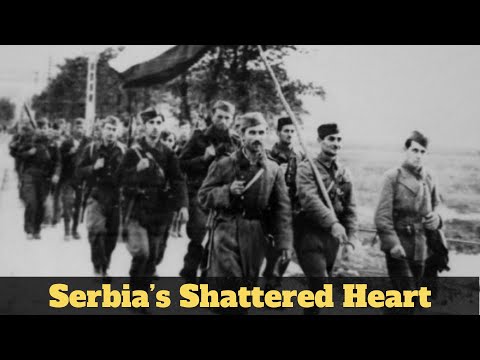
Hitler had already planned operations in the Balkans to secure Germany’s southern flank before the invasion of the Soviet Union. The coup accelerated these plans. Within days, Operation 25 was finalized—a coordinated assault on Yugoslavia involving Germany, Italy, Hungary, and Bulgaria. The German high command allocated over 68,000 troops, including armored divisions such as the 2nd and 11th Panzer Divisions, supported by the Luftwaffe’s air fleet. The Axis plan was not limited to military defeat. It aimed to dismantle Yugoslavia entirely, erasing it as a political entity and redistributing its territories among Axis allies.
On April 6, 1941, the invasion began. The Luftwaffe opened the campaign with Operation Retribution, a sustained bombing of Belgrade that destroyed much of the city’s infrastructure and caused significant civilian casualties. German armored units advanced rapidly from Austria, Romania, and Bulgaria, while Italian forces moved from Albania, and Hungarian troops prepared to enter from the north. Yugoslavia’s armed forces, numbering around 800,000 on paper, were hampered by outdated equipment, uneven training, and poor coordination between ethnically diverse units. Within 11 days, organized resistance collapsed. The government and royal family fled into exile, and on April 17, an unconditional surrender was signed.
The dismemberment of Yugoslavia followed immediately. Germany annexed northern Slovenia and placed central Serbia, including Belgrade, under direct military occupation. Italy took control of parts of Dalmatia, Montenegro, and Kosovo, while expanding influence in western Macedonia. Hungary occupied the Bačka region and parts of Baranja and Međimurje. Bulgaria received most of eastern Macedonia and southeastern Serbia extending to the Morava Valley. The remaining Serbian core was organized as the Territory of the Military Commander in Serbia—a German-administered zone with limited local authority. This division reshaped not only political borders but also economic systems, population movements, and the balance of power in the Balkans.
The new reality placed Serbia between two powers in more than just geography. On one side was the German military apparatus focused on extracting resources, maintaining security, and suppressing resistance. On the other was the growing influence of other Axis partners—Italy, Hungary, and Bulgaria—each pursuing its own strategic and ethnic objectives in annexed regions. For the population, the changes brought immediate uncertainty, disrupted trade, new administrative structures, and the imposition of occupation policies that varied sharply between zones.
This fragmentation set the stage for a complex and often contradictory wartime experience in which Serbia’s political fate, economic survival, and social stability would be shaped by competing external agendas and emerging internal divisions. The German military administration in central Serbia was formally established in late April 1941 under the command of General der Flieger Helmuth Förster, later replaced by General der Infanterie Franz Böhme. The occupation zone covered Belgrade, the main industrial and transport hubs along the Danube and Sava rivers, and strategic railway lines connecting central Europe with Greece. Germany’s primary objectives in this territory were to secure vital communication routes to the Aegean, extract raw materials such as copper from the Bor mines, and suppress any armed resistance before it could threaten the wider Balkan region.
Administration was exercised through a combination of direct military rule and the use of local collaborationist structures. Initially, the Germans relied on the Commissioner Government led by Milan Aćimović, composed of former Yugoslav officials willing to implement occupation policies. This body had no real autonomy and operated under strict German supervision. In August 1941, following the outbreak of a large-scale uprising, Berlin replaced the commissioners with a more centralized puppet regime headed by General Milan Nedić, a former Yugoslav army officer. Nedić’s Government of National Salvation was tasked with maintaining order, managing limited economic activity, and combating insurgent groups, but it remained entirely subordinate to the German military commander.
Italian-occupied territories to the south and west functioned under a different model. In Kosovo and parts of western Macedonia, Rome integrated the areas into its protectorate over Albania, promoting Albanian administration and expanding Italian police and Carabinieri presence. In Montenegro, the Italians initially proclaimed an independent state, but internal divisions, local resistance, and partisan activity forced them to retain direct military control. Italian forces were stretched thin, balancing suppression of uprisings with the logistical demands of garrisoning mountainous terrain.
Hungary’s annexation of Bačka and adjacent areas followed its own strategic and ethnic policies. The Hungarian government implemented land redistribution favoring ethnic Hungarians, encouraged settlement from other parts of Hungary, and introduced Magyarization measures in education, administration, and public life. Military units and gendarmerie maintained a strong presence both to secure the frontier and to prevent cross-border partisan incursions from the German zone or from unoccupied areas. Bulgaria’s annexation of southeastern Serbia, including the Pirot and Vranje districts, was part of its broader goal of restoring territories lost after the Balkan Wars and the First World War. Sofia extended Bulgarian civil administration, language, and schooling into the occupied regions. Conscription of local youth into labor units and the requisitioning of agricultural produce were common features of Bulgarian policy. The Bulgarian army maintained garrisons along key transport corridors and cooperated with German security forces against partisan formations in border areas.
This division of Serbian and former Yugoslav territory created a patchwork of occupation systems, each shaped by the political aims and strategic needs of the occupying power. Movement between zones was tightly restricted with border controls, identity documents, and travel permits enforced to limit the spread of resistance. Economically, the fragmentation disrupted pre-war trade patterns, causing shortages in essential goods and forcing reliance on black markets. Civilian populations had to adapt to differing legal codes, currencies, and administrative procedures depending on the occupier in control.
In the German zone, economic exploitation was systematic. The Bor copper mines, one of the largest in Europe, operated under German direction with much of the output sent to the Reich’s war industries. Agricultural production was requisitioned for the Wehrmacht, often leaving local communities with insufficient supplies. Labor drafts compelled thousands of Serbian men to work on infrastructure projects such as railways and fortifications or to be sent to Germany as forced laborers. Resistance to these measures was met with severe reprisals, including hostage-taking and executions. The early months of occupation thus established the structural realities that would define Serbia’s wartime position: direct German control in the central territory, competing Axis interests in annexed regions, and a civilian population subject to varying degrees of political, economic, and cultural transformation. This fragmentation not only reflected the balance of power among the Axis partners but also shaped the conditions under which both collaboration and resistance would emerge in the months that followed.
The strategic priorities of the Axis powers in occupied Serbia and its annexed territories evolved rapidly in the months following the April 1941 invasion. For Germany, the region was primarily a security and supply corridor. The direct military administration in central Serbia focused on keeping the Danube transport routes operational, ensuring uninterrupted railway connections between central Europe and occupied Greece, and safeguarding the flow of mineral resources—particularly copper from the Bor mines and antimony from the Zajača deposits. The Wehrmacht’s logistical planning for the Eastern Front depended on these lines, especially after the launch of Operation Barbarossa in June 1941.
The German occupation zone was divided into administrative districts, each overseen by a district command with its own military and police apparatus. The Ordnungspolizei, Gestapo, and Sicherheitsdienst coordinated intelligence gathering and counterinsurgency operations. German garrisons were stationed in Belgrade, Niš, and key railway junctions, with mobile units assigned to respond to uprisings or sabotage. Local Serbian police—initially under the Commissioner Government and later under Nedić’s administration—served as auxiliaries, but ultimate authority rested with German military command.
Italy’s strategic goals differed in emphasis. By incorporating Kosovo and parts of western Macedonia into its Greater Albania project, Rome sought to strengthen its influence in the Adriatic and consolidate a loyal Albanian administrative structure. Italian military planners considered these territories a buffer against both Serbian nationalism and the potential spread of communist-led insurgencies. Infrastructure projects such as road improvements and the repair of bridges destroyed during the invasion aimed to facilitate troop movement and resource extraction. In Montenegro, Italian control was less secure. Mountainous terrain and local traditions of armed resistance forced the garrison to commit significant manpower to patrols and punitive expeditions.
Hungary’s occupation policy in Bačka combined strategic security with long-term demographic engineering. Budapest’s goal was to secure its southern frontier and reassert cultural dominance over areas it had controlled before 1918. Hungarian authorities closed Serbian-language schools, dismissed Serbian officials, and introduced Hungarian as the primary language in administration and commerce. Land reform programs redistributed confiscated estates to Hungarian settlers, while restrictions on Serbian property ownership discouraged return migration. Gendarmerie units enforced curfews, monitored border crossings, and cooperated with German forces in suppressing resistance movements in adjacent areas.
Bulgaria’s annexation policy in southeastern Serbia was framed as the restoration of liberated territories. Bulgarian authorities integrated the occupied districts into the national administrative system, replacing Serbian institutions with Bulgarian equivalents. The introduction of Bulgarian-language instruction in schools and the replacement of Cyrillic orthography with Bulgarian standards reflected a broader cultural assimilation policy. Agricultural requisitions were channeled toward feeding the Bulgarian army and urban centers. Strategic road and rail links to Sofia were prioritized for military use, ensuring that Bulgarian garrisons could coordinate rapidly with German forces in case of uprisings across all occupation zones.
Propaganda served as both a control mechanism and a tool for legitimizing the new order. In the German zone, newspapers, radio broadcasts, and public notices emphasized the narrative of order and stability under Axis rule, warning against partisan banditry and highlighting the supposed benefits of cooperation. Italian propaganda in Kosovo and Montenegro promoted Albanian cultural revival and portrayed Italian authority as a guarantor of local autonomy against Serbian centralism. Hungarian and Bulgarian messaging similarly framed their occupations as acts of historical justice, correcting the territorial losses of the post-World War I settlement.
Logistically, maintaining control over such a fragmented and ethnically diverse region posed challenges. The Axis powers coordinated at the highest levels to prevent armed groups from exploiting jurisdictional boundaries. Joint patrols, intelligence sharing, and coordinated anti-partisan operations became more common from mid-1941 onward. However, differences in strategic priorities and occasional disputes over resource allocation sometimes strained these arrangements.
Economically, the occupation regimes extracted maximum benefit from Serbia’s agricultural and industrial base. Grain, livestock, and industrial output were requisitioned for the war effort with quotas imposed on villages and towns. Black market networks flourished as civilians sought to bypass official channels, often trading across occupation borders despite the risk of arrest. Currency fragmentation—German military marks in the central zone, Italian lira in Kosovo and Montenegro, Hungarian pengő in Bačka, and Bulgarian lev in the southeast—further complicated trade and contributed to inflation.
By late summer 1941, the combination of political repression, economic exploitation, and cultural assimilation policies had created a volatile environment. While the Axis powers initially appeared to have firm control, underground networks were forming across different zones. Some aligned with the royalist Chetniks, others with the communist-led Partisans. The coming months would see these networks move from clandestine organization to open rebellion, forcing the occupiers to adjust their strategies and commit more forces to the region than they had originally anticipated.
The first significant challenge to Axis control in Serbia emerged in the summer of 1941 as resistance movements began to operate openly. Two principal groups took shape: the Royalist Chetnik movement led by Colonel (later General) Draža Mihailović and the communist-led Partisan movement organized under the leadership of Josip Broz Tito. Though differing in ideology, objectives, and methods, both groups initially shared the goal of undermining Axis occupation through sabotage, attacks on supply lines, and the disruption of administrative functions.
Mihailović’s Chetniks, formally known as the Yugoslav Army in the Homeland, drew heavily from former officers and soldiers of the pre-war Yugoslav Army. Their early operations focused on securing remote mountainous areas as bases of operations, conducting selective sabotage, and preserving manpower for what they anticipated would be a later coordinated Allied offensive. The Chetniks maintained a cautious approach to direct confrontation with German forces, believing that premature large-scale engagements could lead to devastating reprisals against civilians. The Partisans adopted a more aggressive strategy from the outset. Organized in small mobile units, they targeted railway lines, bridges, and German garrisons. They sought to provoke a wider uprising that would tie down large Axis forces.
Partisan operations in western Serbia, particularly in the Užice region, rapidly expanded in scale, culminating in the formation of the so-called Užice Republic in September 1941. This liberated area, administered by the Partisans, included functioning local councils, production workshops, and propaganda centers. Its existence demonstrated the potential for sustained armed resistance, but also drew intense German attention. The uprising spread beyond the German zone with varying intensity in Italian, Hungarian, and Bulgarian sectors. In Kosovo and Montenegro, Italian forces faced local Albanian militias allied with Rome on one side and armed insurgents hostile to occupation on the other. In Bačka, Hungarian authorities acted swiftly to suppress any signs of rebellion, deploying additional gendarmerie units and carrying out mass arrests. In Bulgarian-administered southeastern Serbia, resistance was more fragmented but included both local Partisan units and cross-border support from central Serbia.
The German response was immediate and severe. Commanders in Belgrade viewed the uprising as a direct threat to vital supply lines for operations in Greece and the Eastern Front. Reinforcements were brought in from Greece and occupied France, including elements of the 342nd and 125th Infantry Divisions. German doctrine in the Balkans emphasized deterrence through reprisals. For every German soldier killed, 100 hostages were to be executed; for every wounded soldier, 50 hostages. These measures, codified in occupation policy, were carried out in numerous reprisal actions during the autumn of 1941.
One of the largest anti-Partisan operations was launched in October 1941 against the Partisan stronghold in western Serbia. The combined forces of the German army, supported by Nedić’s Serbian State Guard and collaborationist auxiliaries, pushed into the Užice Republic. The offensive involved coordinated infantry assaults, artillery bombardments, and the use of aircraft for reconnaissance and strafing runs. By late November, the Partisans were forced to retreat across the Drina River into Italian-occupied Bosnia, effectively ending the liberated territory’s existence.
The Chetniks’ position during this period became more complicated. Initial tactical cooperation with the Partisans gave way to ideological and strategic differences, particularly over the scale and timing of attacks on German forces. Tensions escalated into open conflict between the two movements by late 1941, fragmenting the resistance and providing the occupiers with opportunities to exploit divisions. The Chetniks sought accommodation with the Germans in some areas to focus on combating the Partisans while still maintaining contact with the Yugoslav government-in-exile and the British.
In other occupation zones, anti-Partisan measures reflected local priorities. Italian forces in Montenegro conducted large sweeps through rural areas, often burning villages suspected of aiding insurgents. Bulgarian units in southeastern Serbia coordinated with German commands to cut off Partisan supply routes, while Hungarian forces in Bačka combined police raids with population control measures, including curfews and forced relocations. By the end of 1941, the initial phase of the resistance had been contained, but at a high cost in manpower for the Axis and with severe consequences for civilians. Tens of thousands were displaced, hundreds of villages were destroyed, and reprisals claimed thousands of lives.
The uprisings revealed the vulnerability of Axis control in the Balkans and forced a shift in strategy toward more permanent garrisons, improved intelligence networks, and a greater reliance on local collaborationist forces to maintain order. This escalation also set the stage for a prolonged and complex conflict in which ideological rivalry within the resistance would be as decisive as the confrontation with the occupiers themselves.
By early 1942, the Axis occupation authorities in Serbia had adapted their approach to counter the renewed threat of insurgency. The German military command in Belgrade prioritized establishing a stable network of collaborationist forces capable of handling day-to-day security. The Serbian State Guard, expanded under Nedić’s administration, grew to approximately 20,000 men, organized into regional detachments with both policing and combat roles. Alongside it operated the Serbian Volunteer Corps under Dimitrije Ljotić, a paramilitary formation ideologically aligned with the German war effort.
The Germans also enhanced their intelligence apparatus. The Gestapo and Sicherheitsdienst expanded their informant networks, infiltrating resistance cells and monitoring suspected sympathizers. Special focus was placed on railway hubs, industrial sites, and communication lines, as these had been primary targets for sabotage. Checkpoints, curfews, and mandatory identity documentation became routine, further restricting civilian movement.
In Italian-occupied zones, the emphasis was on balancing military control with political influence. In Kosovo, Rome encouraged Albanian nationalist committees to administer local governance, believing this would secure loyalty and reduce the need for large Italian garrisons. However, this policy deepened ethnic tensions with Serbian communities facing property seizures, expulsions, and restrictions on religious and cultural life. In Montenegro, Italian forces undertook large-scale counterinsurgency operations in early 1942, deploying over 6,000 troops in combined sweeps against Partisan strongholds in mountainous areas. These operations achieved temporary disruption of resistance but failed to eliminate it entirely.
Hungary’s strategy in Bačka continued to center on demographic restructuring and strict security measures. Hungarian gendarmerie units, reinforced by regular army detachments, carried out raids against villages suspected of aiding resistance fighters. The January 1942 raid in the southern Bačka towns of Novi Sad and surrounding settlements resulted in mass civilian deaths. Officially presented as an anti-Partisan action but widely regarded as indiscriminate, this event had long-term consequences, hardening hostility toward Hungarian occupation among the local Serbian population.
Bulgaria maintained a heavy garrison presence in southeastern Serbia, using both military units and police to enforce requisitions and prevent the spread of armed groups from central Serbia. Bulgarian authorities emphasized cultural assimilation policies, expanding Bulgarian-language schools and replacing Serbian administrative personnel. At the same time, they coordinated with German commands for joint operations against Partisan units operating near the Vranje and Pirot districts, aiming to prevent the consolidation of cross-border resistance networks.
The German approach to counterinsurgency in 1942 shifted toward integrated operations, combining regular troops, collaborationist forces, and Axis allies. One notable example was Operation Trio in the spring, conducted primarily in eastern Bosnia but with repercussions in Serbian territory. German, Italian, and Croatian units sought to encircle and destroy Partisan and Chetnik forces. But the operation exposed the difficulties of coordinating multinational forces with differing priorities. While German commanders aimed for the physical elimination of armed groups, Italians were often more cautious, and local collaborationist units sometimes acted in their own political interest.
Economically, the occupiers sought to stabilize production while maintaining high levels of extraction for the war effort. The Bor copper mines increased output under German technical supervision, with production reaching levels sufficient to supply key industries in the Reich. Agricultural quotas were strictly enforced, with penalties for shortfalls ranging from fines to confiscation of property. In urban centers, shortages persisted and inflation worsened due to the circulation of multiple currencies and the black market’s dominance in consumer goods distribution.
Propaganda efforts intensified during this period, with each occupying power promoting narratives suited to its strategic aims. German broadcasts and newspapers portrayed Nedić’s regime as the protector of the Serbian people from Bolshevik chaos and Western betrayal. Italian propaganda in Kosovo highlighted economic development and public works projects while downplaying ethnic violence. Hungary framed its control of Bačka as a return to rightful sovereignty, and Bulgaria promoted its annexations as national reunification. These messages were disseminated through controlled press, radio, public ceremonies, and school curricula.
By the close of 1942, Axis control over Serbia and the annexed territories appeared more entrenched than in the chaotic first months of occupation. Yet, beneath the surface, resistance networks were reorganizing. The Partisans, benefiting from support from the Communist Party of Yugoslavia’s central leadership, established new operational zones in western and southern Serbia. The Chetniks expanded their influence in rural areas less accessible to Axis patrols, continuing to maintain contact with Allied representatives. The uneasy coexistence of occupation forces, collaborationist administrations, and rival insurgent movements ensured that the region remained a complex and volatile theater where political and military lines were constantly shifting and no power could claim absolute control.
The year 1943 marked a decisive shift in the balance of power within occupied Yugoslavia, and Serbia’s position reflected the broader transformation of the conflict. By this stage, the Axis forces faced mounting pressure on multiple fronts: defeats in North Africa, the growing Soviet advance on the Eastern Front, and intensifying Allied bombing campaigns in southern Europe. In the Balkans, the German command recognized that holding the region required not only military garrisons but also a more efficient integration of local resources into the war economy and a firmer suppression of increasingly coordinated resistance movements.
In central Serbia, the German occupation authorities strengthened their reliance on collaborationist structures. Nedić’s government of national salvation expanded administrative control in rural areas through the Serbian State Guard and the Volunteer Corps. These forces participated in large-scale joint operations with the Wehrmacht, such as the spring 1943 anti-Partisan campaigns in western and central Serbia. German doctrine emphasized rapid encirclement maneuvers supported by artillery and air reconnaissance, aiming to destroy Partisan detachments before they could disperse. However, the mobility of the insurgents, coupled with their ability to retreat into Italian or Bulgarian zones, frequently undermined these efforts.
The capitulation of Italy in September 1943 dramatically altered the occupation landscape. Italian-held territories, including Kosovo, parts of western Macedonia, and Montenegro, were taken over by German forces or transferred to local Axis allies. In Kosovo, German command worked closely with Albanian nationalist formations, particularly the Balli Kombëtar, to maintain control and continue the policies of demographic reorganization initiated under Italian rule. In Montenegro, the German 21st Mountain Corps assumed primary responsibility for counterinsurgency, inheriting both the strategic challenges and the volatile political climate left behind by the Italians.
Hungary’s occupation of Bačka remained focused on securing the frontier and maintaining internal order. By 1943, Hungarian authorities faced a more organized network of resistance, with Partisan cells operating along the Danube and in rural districts. Anti-Partisan operations were stepped up, often involving joint patrols with German units. However, the heavy-handed methods of the Hungarian gendarmerie—mass arrests, property seizures, and reprisals—fueled further hostility among the local population and pushed some communities toward active support for the Partisans.
In southeastern Serbia, Bulgaria reinforced its garrison strength in response to increased Partisan infiltration from central Serbia and Macedonia. Bulgarian units, supported by police forces, conducted frequent sweeps through rural districts, targeting supply caches and recruitment centers. Cultural assimilation policies continued, but their effectiveness diminished as the occupation became increasingly defined by security operations rather than administrative consolidation. Bulgarian coordination with German commands intensified after Italy’s surrender, particularly in securing key railway lines between Sofia, Niš, and Skopje.
A notable feature of 1943 was the escalation of large-scale Axis anti-Partisan offensives across Yugoslavia, many of which had direct operational impact in Serbian territory. Operations such as Weiss and Schwarz in neighboring Bosnia and Montenegro drew in Serbian collaborationist units and affected the deployment of German forces within Serbia. These offensives aimed to destroy the Partisan leadership and eliminate their main concentrations. But despite inflicting heavy casualties, they failed to achieve a decisive outcome. The Partisans adapted by dispersing into smaller units, intensifying sabotage in Serbia’s railway network, and targeting industrial facilities tied to the German war effort.
Economically, Serbia’s role as a resource supplier for the Reich became even more critical. The Bor mines increased production under tighter German control, with an expanded labor force that included prisoners of war and deported civilians. Agricultural requisitions were stepped up to meet the demands of the Eastern Front, leading to severe shortages in local markets. The black market remained a lifeline for urban populations, often supplied by goods smuggled from less strictly controlled areas or through corruption within occupation administrations.
The air war began to reach Serbia directly in 1943. Allied bombing raids targeted transport hubs and industrial sites, particularly in Belgrade and Niš. These attacks, while limited compared to the scale of bombing in Western Europe, disrupted German logistics and added to the civilian burden. Occupation authorities used the raids in propaganda to depict the Allies as indiscriminate aggressors, hoping to drive a wedge between the population and the resistance movements that were receiving Allied support.
By the end of 1943, the political and military situation in Serbia was defined by uncertainty. The Germans still controlled key urban and transport centers, but their capacity to project power into the countryside was weakening. The Chetniks, increasingly viewed by the Allies as unreliable due to their selective cooperation with Axis forces, saw their influence wane, while the Partisans, recognized by the Allies as the primary resistance force, expanded their networks and gained access to more substantial military aid. The fragmentation of the occupation map persisted, but with Italy’s withdrawal, Germany’s direct control over much of the former Italian zone created a more unified, though overstretched, Axis military presence in the Balkans. This set the stage for an even more intense and complex struggle in 1944 as both sides prepared for decisive campaigns that would determine the fate of Serbia and the broader region.
The opening months of 1944 brought a heightened sense of urgency to the German command in Serbia. With the Red Army advancing steadily through Ukraine and Romania and the Allies pushing northward from Italy, the Balkans were no longer a secure rear area but a potential front line. German military planners considered Serbia both a vital communications hub and a strategic barrier. Its railways and river routes connected central Europe to Greece and the Aegean, and its terrain offered defensive positions that could delay or disrupt an Allied thrust from the south or east.
To secure these objectives, the Wehrmacht reinforced its presence with additional divisions, including elements of the 1st Mountain Division and specialized police regiments. Anti-Partisan operations became more frequent and increasingly coordinated with Bulgarian and collaborationist Serbian forces. German commanders sought to establish pacified zones around major transport corridors using a combination of fortified garrisons, motorized patrols, and aerial reconnaissance to monitor insurgent activity. These operations often involved scorched-earth tactics in contested areas, destroying infrastructure that could be used by the Partisans and relocating civilian populations to deny them support bases.
The Chetnik movement, still active in many rural parts of Serbia, found itself under increasing pressure. Allied recognition of Tito’s Partisans as the official Yugoslav resistance in late 1943 had deprived Mihailović’s forces of vital supplies and political backing. Facing resource shortages, the Chetniks relied more heavily on local arrangements with Axis forces to preserve their strength and maintain territorial control against the Partisans. This policy deepened the rift between the two resistance factions, and in some regions, the conflict between Chetniks and Partisans became more intense than the struggle against the occupiers themselves.
The Partisans, meanwhile, expanded their operational capacity in Serbia, benefiting from improved coordination with their forces in Bosnia, Montenegro, and Macedonia. By spring 1944, they were conducting simultaneous attacks on railway lines, bridges, and garrisons, aiming to disrupt German logistics and force the diversion of troops from other fronts. The establishment of liberated zones in western Serbia, though often temporary, allowed the Partisans to reorganize, train recruits, and expand political structures such as the national liberation committees, which acted as proto-governments in areas outside Axis control.
The German response included several large-scale operations, one of the most notable being the April-May 1944 anti-Partisan offensive in western Serbia and eastern Bosnia. This involved German, Bulgarian, and collaborationist Serbian forces attempting to encircle Partisan formations. Despite inflicting casualties and capturing equipment, the offensive failed to destroy the core Partisan units, which managed to break through the encirclement and withdraw to prepared fallback positions. The fluidity of these engagements underscored the difficulty the Axis faced in bringing the guerrilla war to a decisive conclusion.
Bulgaria’s role in southeastern Serbia grew in importance during 1944. Bulgarian units were tasked with securing the Niš-Sofia corridor and preventing Partisan infiltration from Macedonia and Kosovo. As the Soviet advance approached the Balkans, Sofia’s political position began to shift. But until September 1944, Bulgarian forces remained formally allied with Germany and participated in joint operations. They also continued enforcing requisitions and assimilation policies in the occupied districts, though these measures were increasingly met with passive resistance and desertions.
In Bačka, Hungarian control persisted, but by mid-1944, the Hungarian army faced manpower shortages and growing unrest in its rear areas. Partisan activities in the Danube basin increased, and German liaison officers took a more direct role in coordinating security measures. Hungarian authorities struggled to maintain both the military occupation and the program of Magyarization as the war situation eroded administrative capacity and morale.
The broader strategic environment in the Balkans shifted sharply in the summer of 1944. The Allied landing in southern France, the Soviet advances into Romania, and the collapse of Axis positions in Greece created the prospect of Serbia becoming a battleground between retreating German forces and advancing Allied or Soviet troops. German high command began contingency planning for withdrawals through Serbia toward Hungary and Austria while still attempting to hold key lines as long as possible to delay the inevitable.
Civilian life in Serbia during this period was marked by heightened insecurity. German requisitioning of food and resources intensified, as did forced labor conscriptions for fortification projects. Allied air raids on Belgrade, Niš, and other strategic targets increased in frequency, aiming to disrupt transport and weaken German defensive preparations. These raids caused significant civilian casualties and destruction, further straining the population’s resilience. Propaganda from all sides sought to influence public opinion. German media emphasized the threat of Bolshevik occupation, the Partisans promoted liberation and social revolution, and the Chetniks appealed to royalist and nationalist sentiment.
By late summer 1944, it was clear to both occupiers and resistance forces that Serbia’s role in the war was entering its final phase. The question was no longer whether German control could be maintained, but how quickly and under what conditions it would collapse. The approaching convergence of Soviet, Partisan, and possibly other Allied forces created a volatile and unpredictable situation in which military, political, and strategic calculations would rapidly change in the months ahead.
September 1944 marked a turning point for Serbia as the strategic situation in the Balkans shifted decisively against the Axis. The Soviet Red Army’s advance through Romania and Bulgaria altered the balance almost overnight. On 8-9 September, Bulgaria formally switched sides, declaring war on Germany and ordering its troops to cease cooperation with German forces. This political reversal immediately undermined the German defensive network in southeastern Serbia, where Bulgarian units had been securing the Niš-Sofia corridor. Within days, Soviet and Bulgarian forces began coordinated operations aimed at cutting off German withdrawal routes through the Morava Valley.
The German high command recognized the danger of encirclement and issued orders for a phased withdrawal from southern Serbia, prioritizing the evacuation of heavy equipment, stockpiled resources, and administrative personnel. The Wehrmacht concentrated its remaining forces, including the 1st Mountain Division and the 7th SS Volunteer Mountain Division Prinz Eugen, to cover retreat routes toward Belgrade and the northern plains. These formations were tasked with delaying actions—blowing bridges, mining roads, and holding key towns long enough to allow the main body to escape toward Hungary.
For the Partisans, this moment offered an unprecedented opportunity. Tito’s Supreme Headquarters coordinated with the Soviet 3rd Ukrainian Front under Marshal Fyodor Tolbukhin to launch a joint offensive aimed at liberating Belgrade and central Serbia. By early October, Soviet armored and mechanized units had crossed into Serbian territory, supported by Partisan formations that provided local intelligence, guided assaults, and secured flanks. The combined force applied pressure along multiple axes: one advancing from the east through Niš, another from the south toward Kragujevac, and a northern thrust aimed directly at Belgrade.
In the north, Hungarian forces in Bačka faced the threat of Partisan incursions and Soviet advances from the direction of the Tisza River. German liaison officers urged Budapest to commit additional troops to defend the area, but the Hungarian army was overstretched and increasingly demoralized. Partisan detachments exploited the weakness by targeting garrisons and severing communications while preparing to link up with Soviet forces once they entered Vojvodina.
The liberation of Niš on 14 October by Bulgarian and Soviet troops with Partisan support was a significant milestone. The city’s capture disrupted German control of the main east-west transport corridor and forced a rapid reconfiguration of their defensive positions. Retreating German units attempted to regroup along the Morava and Sava rivers, but sustained pressure from multiple directions eroded their ability to mount effective resistance.
Belgrade became the focal point of the campaign. The city, still under German military administration, was defended by elements of the 1st Mountain Division, various police units, and collaborationist forces. The defenders prepared barricades, fortified public buildings, and mined bridges over the Sava and Danube. The Belgrade Offensive began on 14 October with Soviet mechanized corps and Partisan brigades attacking from the south and southeast, while uprisings within the city disrupted German communications. Fighting was intense in urban districts, involving street-to-street combat, artillery bombardments, and the clearing of fortified positions. After six days of combat, on 20 October 1944, Belgrade was declared liberated.
The German retreat from Serbia became a broader withdrawal from the Balkans. Columns of troops, vehicles, and horse-drawn supply trains moved northwest toward Bosnia and into Hungary under constant attack from Partisans and subjected to Allied air strikes. Losses in men and material during these movements were considerable, further weakening the German position in southeastern Europe.
For the collaborationist Nedić regime, the liberation of Belgrade marked the end of political existence. Nedić and his ministers fled with retreating German forces, some making their way to Austria or Germany, others being captured by the Partisans. In Kosovo and other areas still under German-aligned Albanian control, local militias attempted to maintain positions against Partisan advances, but with German support collapsing, these efforts quickly faltered.
The rapid shift in control also brought administrative challenges for the Partisans and their Soviet allies. Restoring basic services in liberated cities, securing food supplies, and reestablishing transport links had to be balanced with ongoing military operations to clear remaining German units from northern Serbia and Vojvodina. Political consolidation was also a priority. The Partisans moved quickly to establish national liberation committees as provisional governments, integrating them into the emerging federal structure of postwar Yugoslavia.
By late October, most of Serbia was under Partisan and Soviet control, though pockets of German resistance persisted in the north and along the western frontier. The liberation campaign had combined large-scale conventional operations with guerrilla tactics, demonstrating the adaptability of the Partisans when working alongside a modern mechanized army. The outcome not only removed Serbia from Axis control but also positioned it as a central staging ground for further Allied advances into Hungary and the final operations in the Balkans.
The final months of 1944 and the opening weeks of 1945 saw Serbia fully integrated into the broader Allied effort in southeastern Europe. With Belgrade liberated in October, the combined Soviet-Partisan forces turned their attention to the northern plains of Vojvodina and the approaches to the Danube and Tisza rivers, where German units were still attempting to delay the Allied advance toward Hungary. These areas, particularly Bačka, Banat, and Baranja, had been under Hungarian control since 1941, but by late 1944, the Hungarian army was in retreat, and the Wehrmacht had assumed direct responsibility for the defense.
The German strategy in northern Serbia was to hold as long as possible along natural defensive lines, using the rivers and marshes to slow mechanized forces. Units from Army Group E retreating from Greece and southern Yugoslavia moved through the region, joining elements of the German 2nd Panzer Army to form rear-guard positions. Defensive works included trench systems, fortified villages, and minefields along likely avenues of advance. However, the combined pressure of Soviet armored spearheads, Partisan infantry brigades, and continuous air strikes from the Red Air Force made these positions increasingly untenable.
In November 1944, the Battle of Batina on the Danube marked one of the key engagements of this phase. Soviet and Partisan forces sought to force a crossing into Baranja and open the route toward the Hungarian city of Pécs. The Germans, supported by remnants of Hungarian units, resisted fiercely, using the elevated terrain and fortified houses to mount counterattacks. After nearly three weeks of fighting, the Allies secured the area, forcing the Axis to withdraw further into Hungary. This battle demonstrated the transition in the Balkans from mobile guerrilla warfare to set-piece battles involving large formations and heavy weaponry.
In the Banat region, formerly under direct German administration, the retreat was more chaotic. Collaborationist forces that had served in German security units attempted to flee with the Wehrmacht, while others surrendered to the Partisans. The Partisan command, following the liberation, moved quickly to dismantle occupation-era structures, arrest suspected collaborators, and establish local organs of the new government. Land and property confiscations targeted those who had benefited from Axis rule, redistributing resources in line with Partisan political goals.
In Kosovo, the withdrawal of German troops in late 1944 left a volatile situation. Albanian nationalist formations that had cooperated with the Axis attempted to resist the incoming Partisan units, leading to localized clashes. The Partisan leadership prioritized securing key transport links from Kosovo into central Serbia and Macedonia, both to ensure internal communications and to support continued operations in the western Balkans. By early 1945, most organized armed resistance in Kosovo had been suppressed, though tensions over governance and ethnicity remained unresolved.
Logistically, liberated Serbia became a critical supply and staging area for further offensives into Hungary and Austria. The reconstruction of rail lines, bridges, and river ports proceeded under combined Soviet-Yugoslav direction. Repair crews worked alongside military engineers to reopen the Belgrade-Budapest railway and restore Danube shipping capacity. Airfields in Serbia hosted Soviet fighter and bomber units, which supported operations on the Hungarian plain and interdicted remaining Axis transport routes in the region.
The winter of 1944 was harsh, complicating military and civilian recovery efforts. Food shortages persisted despite the end of Axis requisitioning, as agricultural production had been disrupted by years of occupation and the recent fighting. Housing damage in Belgrade, Niš, and other urban centers left thousands displaced. The Partisan administration sought to address these needs through centralized distribution systems, though resources remained scarce and priorities were often dictated by military necessity.
Militarily, Serbian territory was now part of a forward operating zone for the 3rd Ukrainian Front. Soviet troops continued to operate in northern areas until the completion of the Budapest Offensive in February 1945. Partisan units were redeployed to assist in clearing German forces from Bosnia, Croatia, and Slovenia, as well as to secure the Adriatic coast. Serbia’s role in active combat diminished as the front moved away, but its strategic value as a logistics and manpower base increased.
By March 1945, the last German troops had been pushed out of all Serbian territory. The military liberation, however, was accompanied by a complete transformation of political authority. The Partisan movement, now recognized as the government of Yugoslavia, consolidated its hold through the establishment of people’s committees and the integration of Serbia into the federal framework envisaged by the Anti-Fascist Council for the National Liberation of Yugoslavia (AVNOJ). The end of occupation thus also marked the definitive end of the pre-war political order, with the monarchy in exile and Serbia positioned as one of the core republics in the emerging socialist federation.
By the time the war in Europe approached its conclusion in May 1945, Serbia had transitioned from a fragmented, multi-occupied territory to a unified part of a new state aligned with the Soviet sphere. Its wartime experience—defined by Axis invasion, division among multiple occupiers, armed resistance, reprisals, liberation, and political transformation—had reshaped its society, economy, and role in the Balkans for the decades to come.
The legacy of Serbia’s position in the Second World War was shaped by the complex interplay of military occupation, resistance, collaboration, and the geopolitical shifts that followed liberation. The dismantling of Yugoslavia in April 1941 had placed Serbia at the center of overlapping Axis ambitions, with Germany, Italy, Hungary, and Bulgaria each pursuing distinct strategic and political agendas. The result was a patchwork of occupation regimes that differed in administrative structure, economic policy, and cultural objectives, but which all contributed to the fragmentation of political authority and the disruption of pre-war economic and social systems.
For the German Reich, central Serbia had been a critical security and resource zone, ensuring control over Danube transport routes, strategic railways, and the Bor copper mines. Italian policy in Kosovo and Montenegro had combined military occupation with the encouragement of local nationalist movements, aiming to secure loyal allies in the region. Hungary’s annexation of Bačka was marked by demographic engineering and attempts at cultural assimilation, while Bulgaria’s incorporation of southeastern Serbia pursued territorial integration and language reform. Each occupation force justified its actions through propaganda, framing annexations and administrative changes as historic corrections or measures to maintain stability.
Even as economic extraction and political repression intensified, the experience of civilians was defined by scarcity, uncertainty, and the constant threat of violence. Economic requisitioning, forced labor, currency fragmentation, and restrictions on movement were common across all zones, though their intensity varied. The population also faced the dangers of armed conflict between occupiers and resistance groups, and increasingly between rival factions within the resistance itself. The reprisals of 1941, the deportations, and the destruction of villages during anti-Partisan operations left deep demographic and psychological scars.
The resistance movements—royalist Chetniks and communist-led Partisans—represented divergent visions of Serbia’s future. The Chetniks sought the restoration of the monarchy and prioritized preservation of national forces for a future decisive moment, while the Partisans advocated revolutionary change and pursued a strategy of continuous armed struggle. Their rivalry, escalating into open conflict, fragmented anti-Axis efforts and complicated Allied support. The eventual Allied decision to back the Partisans decisively shifted the balance of power, aligning Serbia’s liberation with the broader communist-led reconstitution of Yugoslavia.
The military liberation in late 1944, achieved through the joint operations of the Partisans and the Soviet Red Army, brought rapid political transformation. Pre-war political elites and collaborationist leaders fled or were arrested, and new administrative structures—national liberation committees—were established to integrate Serbia into the emerging federal Yugoslav state. The monarchy was formally abolished in November 1945, replaced by the Federal People’s Republic of Yugoslavia under the leadership of Josip Broz Tito. Serbia became one of its six constituent republics, with Belgrade as the federal capital.
Postwar reconstruction faced formidable challenges. Infrastructure damage from years of sabotage, reprisal, and bombing had crippled transport and industry. Agricultural production had been disrupted by requisitions, labor shortages, and the displacement of rural populations. The new authorities launched land reforms, nationalized major industries, and implemented centralized economic planning to rebuild the country along socialist lines. The presence of Soviet troops in northern Serbia until early 1945 underscored the shift in geopolitical orientation toward the Eastern Bloc, though Yugoslavia would later pursue a more independent course.
Historically, the wartime division and occupation of Serbia influenced not only the immediate postwar settlement but also long-term political and social dynamics. The memory of Axis occupation zones, the policies implemented by each occupying power, and the patterns of collaboration and resistance became part of Serbia’s collective historical narrative. In the decades that followed, these experiences were interpreted and reinterpreted through shifting political lenses, shaping public understanding of national identity, wartime sacrifice, and the legitimacy of the post-war order.
Commemorations of the war in socialist Yugoslavia emphasized the unity and heroism of the Partisan struggle, downplaying the internal divisions and the complexities of local collaboration. Monuments, school curricula, and state ceremonies reinforced the narrative of liberation through socialist revolution, with Serbia presented as both a battlefield of decisive importance and the political center of the new federal state. At the same time, some aspects of wartime experience—particularly the scale of reprisals, the fate of minority communities, and the nature of inter-resistance conflict—remained sensitive topics, often addressed selectively or within controlled contexts.
In historical perspective, Serbia’s wartime trajectory illustrates the interplay between local, regional, and global forces in the Second World War. Positioned between multiple powers, fragmented by occupation, and contested by rival political movements, the country experienced the war as both a struggle for survival and a crucible for state transformation. The legacy of these years continued to influence political debates, foreign policy orientation, and regional relations long after the guns of 1945 fell silent, marking the period as one of the most formative in Serbia’s modern history.
What lessons do you think this wartime chapter offers for understanding how small nations navigate between great-power rivalries today?






